President Jokowi calls for ASEAN summit to discuss Myanmar #SootinClaimon.Com

#SootinClaimon.Com : ขอบคุณแหล่งข้อมูล : หนังสือพิมพ์ The Nation.

https://www.nationthailand.com/ann/30403915

President Jokowi calls for ASEAN summit to discuss Myanmar

Mar 20. 2021President Joko Widodo delivers his address at the United Nations General Assembly which was broadcasted virtually on Tuesday evening New York time or Wednesday morning Jakarta time. It is Jokowi's first speech and attendance at the largest annual multilateral summit during his tenure. (Presidential Secretariat Press Bureau/Lukas)President Joko Widodo delivers his address at the United Nations General Assembly which was broadcasted virtually on Tuesday evening New York time or Wednesday morning Jakarta time. It is Jokowi’s first speech and attendance at the largest annual multilateral summit during his tenure. (Presidential Secretariat Press Bureau/Lukas)

By The Jakarta Post/ANN

President Joko “Jokowi” Widodo on Friday called for a special ASEAN summit to discuss the Myanmar situation, as harsh crackdowns on anti-coup protesters continue in the member country.

In a statement, the president said he will propose to Brunei Sultan Hassanal Bolkiah that a leaders’ meeting be held immediately. Brunei currently serves as chair of the 10-member Association of Southeast Asian Nations.

Expressing concern over security forces’ deadly use of force against protesters, the president called for a stop to the violence so there will be “no more casualties.”

He also urged all sides in Myanmar to hold talks and seek reconciliation to restore democracy and stability in the country.

Since Myanmar’s military seized power in a coup on Feb. 1, toppling the elected government of Aung San Suu Kyi, Indonesia has led efforts within ASEAN to seek a peaceful solution to the crisis.

ASEAN foreign ministers held an informal meeting earlier this month to discuss Myanmar. At the time, ASEAN expressed concern about the situation.

Meanwhile, Myanmar’s state media said Friday that coup leader and military chief Min Aung Hlaing attended an ASEAN meeting by videoconference the previous day, in his first appearance in an international setting since he swept to power in the coup.

ASEAN groups Brunei, Cambodia, Indonesia, Laos, Malaysia, Myanmar, the Philippines, Singapore, Thailand and Vietnam.

Meanwhile, Myanmar security forces opened fire on Friday during a confrontation in the central town of Aungban with opponents of a Feb. 1 military coup, killing eight people, the Myanmar Now news portal said.

Seven people were killed in the town and one wounded person died after being taken to hospital in the nearby town of Kalaw, the portal said, citing Aungban’s funerary service, Reuters reported.

Philippines secures $14.29B in loans, grants to fight COVID-19 in 2020 #SootinClaimon.Com

#SootinClaimon.Com : ขอบคุณแหล่งข้อมูล : หนังสือพิมพ์ The Nation.

https://www.nationthailand.com/ann/30403880

Philippines secures $14.29B in loans, grants to fight COVID-19 in 2020

Mar 19. 2021

By Ben O. de Vera
Philippine Daily Inquirer/ANN

MANILA, Philippines — The loans and grants secured by the Department of Finance (DOF) to bankroll the war chest against COVID-19 stood at $14.29 billion (about P696 billion) as of mid-March.

The latest figures released by the DOF on March 17 were “rebased to reflect 2020 average exchange rates,” it said.

The updated list of loans and grants from multilateral banks as well as bilateral development partners did not yet include the $500-million loan from the Washington-based World Bank and the $400-million financing approved by the Manila-based Asian Development Bank (ADB) last week for the Philippines’ COVID-19 vaccination program.

These $900 million in loans will only take effect once the agreements were signed between the Philippine government and the lenders, which were scheduled also this month, Finance Undersecretary Mark Dennis Joven earlier said.

In the case of the ADB loan, the bank will directly pay vaccine suppliers such that the money would never pass through the government.

According to the DOF, the bulk of financing it raised last year for COVID-19 response was injected into the budget for priority programs and projects, amounting to $13.35 billion (about P650 billion).

The borrowings for budgetary support included five World Bank loans totaling $2.38 billion, plus $3.8 billion across seven ADB loans.

The Philippines also raised a total of $5.1 billion from two rounds of issuances of US dollar-denominated global bonds last year.

The Beijing-based Asian Infrastructure Investment Bank (AIIB) extended a $750-million loan for the Philippines’ COVID-19 response in 2020.

Among bilateral partners, Japan International Cooperation Agency (Jica) approved two loans worth $936.78 million; Agence Française de Développement’s (AFD) two loans amounted to $285.22 million; and the Export-Import Bank of Korea’s Economic Development Cooperation Fund (Kexim-EDCF) extended a $100-million loan.

Except for two loans, these financing took effect or were injected to the budget last year. The World Bank’s $580-million beneficiary FIRST social protection project became effective in January this year, while the same lender’s promoting competitiveness and enhancing resilience to natural disasters subprogram 2 loan took effect in February.

As for specific projects related to COVID-19 such as purchase of personal protective equipment (PPE) and health system capacity improvement, among others, the Philippines secured $915 million in loans — four from the World Bank totaling $790 million, and a $125-million ADB loan — last year.

On top of these loans, the ADB gave the Philippines $8 million across two grants, while the Japanese government granted $18.74-million worth to provide the Department of Health (DOH) with medical equipment.

Separately, the Philippines borrowed a combined $3.28 billion (about P159 billion) to bankroll various big-ticket infrastructure projects belonging to the Duterte administration’s ambitious “Build, Build, Build” pipeline.

Last month, Joven said the DOF planned to raise $23.71 billion (about P1.15 trillion) in foreign financing from grants, loans as well as offshore bond issuances in 2021, partly to finance mass vaccination.

Besides the World Bank and ADB loans for vaccines, the AIIB was also expected to shell out $300 million for the Philippines’ $764.17-million second health system enhancement to address and limit COVID-19 (Heal 2) project it was co-financing with the ADB and the national government.

IMF sees 6.5% growth for Malaysia this year #SootinClaimon.Com

#SootinClaimon.Com : ขอบคุณแหล่งข้อมูล : หนังสือพิมพ์ The Nation.

https://www.nationthailand.com/ann/30403879

IMF sees 6.5% growth for Malaysia this year

Mar 19. 2021IMF said Malaysia's growth was projected to rebound to 6.5% this year, underpinned by a strong recovery in manufacturing and construction, and supported by the rollout of the Covid-19 vaccination in February.IMF said Malaysia’s growth was projected to rebound to 6.5% this year, underpinned by a strong recovery in manufacturing and construction, and supported by the rollout of the Covid-19 vaccination in February.

By The Star/ANN

KUALA LUMPUR: The International Monetary Fund (IMF) expects Malaysia’s economy to recover in the remainder of 2021, with inflation and the current account balance normalising over the medium term.

In its country report, it said growth was projected to rebound to 6.5% this year, underpinned by a strong recovery in manufacturing and construction, and supported by the rollout of the Covid-19 vaccination in February.

“The recovery would be uneven across sectors, with persistent weakness in high-contact industries. On the demand side, government spending and a recovery in both domestic and external demand would underpin growth, ” it said.

The findings were based on a report prepared by the IMF staff team for the fund’s executive board’s consideration on Feb 22,2021.

The report was prepared after discussions that ended on Dec 15,2020, with the officials of Malaysia on economic developments and policies. The staff report was completed on Feb 3,2021.

In the report, the IMF also came out in support for the government’s various moves by implementing policies that buttress the recovery while facilitating the post-pandemic economic transformation.

According to the report, the IMF expected Malaysia’s current account surplus to decline to 3% of gross domestic product (GDP), as demand for pandemic-related equipment recedes and the rebound in domestic demand raises imports.

It also said that travel balance deficit would persist as international travel restrictions continue through the first half of this year.

“Inflation would recover to 2% as electricity tariff rebates expire and energy prices rise. Over the medium term, growth would converge to 5%, inflation stabilise at 2%, and the current account surplus return to its downward pre-pandemic path, ” it said.

However, it cautioned the recovery could be derailed if the pandemic intensifies or due to other risks.

The current pandemic wave, it cautioned, could be protracted or could be followed by another severe wave, prompting the authorities to lengthen the duration of the movement restrictions.

In such a situation, it said these factors would intensify the supply-side constraints on economic activity and further dampen domestic demand. In this case, the recovery in 2021 would be significantly weaker.

It also noted that on the downside, Malaysia’s highly open economy was vulnerable to escalating trade actions and weaker-than-expected growth among its trading partners.

The IMF said that going forward, policies that strengthen social safety nets and continue to encourage private investment can help facilitate external rebalancing.

As for Malaysia’s external debt, it remains high but manageable. External debt rose to 67.5% of GDP by end-September 2020 (63.4% in 2019), partly driven by higher non-resident holdings of ringgit-denominated debt instruments.

“The share of external debt denominated in foreign currency stands at about two-thirds of the total, which is low relative to peers, ” it said.

On the government’s various policies to buttress the recovery, the IMF noted that synchronous monetary, financial and fiscal policy support helped prevent worse economic outcomes to date.

“Targeted fiscal support should continue until the recovery takes hold, with reliance on accommodative monetary and financial policies given fiscal space at risk. Fiscal reform plans should be prepared to return to fiscal consolidation over the medium term.

“Governance and other structural reforms should continue to support the economic transformation impelled by the pandemic and technological change, ” it said.

The IMF also said that under an adverse scenario of a protracted pandemic, the authorities would need to raise health spending and use scarce fiscal resources to provide additional targeted support to the economy, particularly to households facing prolonged unemployment.

It said these measures would need to be appropriately calibrated as a complement to additional monetary and financial easing, where wider policy space remains, to overcome a larger downturn.

Additional spending could be financed with borrowing under the Covid-19 fund, utilising available space under the parliament-approved ceiling of RM65bil.

On the country’s public debt, the IMF said it remains sustainable but the temporary increase in the statutory debt limit underscores the need to improve the fiscal framework.

Suga: State of emergency to end on Sunday #SootinClaimon.Com

#SootinClaimon.Com : ขอบคุณแหล่งข้อมูล : หนังสือพิมพ์ The Nation.

https://www.nationthailand.com/ann/30403878

Suga: State of emergency to end on Sunday

Mar 19. 2021(The Yomiuri Shimbun)(The Yomiuri Shimbun)

By The Japan News/ANN

Prime Minister Yoshihide Suga declared on Thursday that the state of emergency would be lifted for Tokyo and three neighboring prefectures on Sunday.

The government presented a proposal for the complete lifting of the state of emergency to a meeting of an advisory panel of experts ahead of the announcement.

“The number of new infection cases has decreased by about 80% from the peak level. Also, the hospital bed utilization rate has dropped to the 30% level in Chiba and Saitama prefectures,” said Yasutoshi Nishimura, the minister in charge of pandemic measures, explaining the reasons for the decision at the advisory panel meeting on the day.

Speaking to reporters after the meeting, Nishimura said: Infections “will continue to occur, but we will not allow cases to become widespread. We will lift the emergency and maintain vigilance.”

The advisory panel also approved a plan to revise the government’s basic policy on dealing with the pandemic.

According to the plan, the government will ramp up testing as soon as possible and analyze specimens from about 40% of the total number of newly infected cases.

This move is aimed at strengthening monitoring of the pandemic nationwide amid a rise in infections with coronavirus variants.

Cooperation with private testing institutions and universities will be promoted to enhance the testing system. Efforts will also be strengthened to identify early signs of infection outbreaks.

The government will ask 10 prefectures, including Osaka and Fukuoka, where a state of emergency had been issued, to conduct intensive testing at elderly care facilities hopefully by the end of this month. From April to June, intensive testing will be conducted in entertainment districts.

The government will also accelerate efforts to roll out vaccinations and enhance the medical system.

To prevent a reemergence of infections, the government will continue to ask restaurants to shorten their business hours and close early. Under the state of emergency, such businesses were asked to close by 8 p.m. but they will be allowed to stay open until 9 p.m. when it is lifted.

The government will also continue asking the general public to refrain from nonessential and nonurgent outings and businesses to implement telecommuting.

Prime Minister Yoshihide Suga reported the decision to lift the emergency at meetings of the Rules and Administration Committees of both houses of the Diet on Thursday

The current state of emergency, which was issued on Jan. 7 and extended twice, has lasted for about two and a half months.

Korea toughens rules on cryptocurrency amid market frenzy #SootinClaimon.Com

#SootinClaimon.Com : ขอบคุณแหล่งข้อมูล : หนังสือพิมพ์ The Nation.

https://www.nationthailand.com/ann/30403841

Korea toughens rules on cryptocurrency amid market frenzy

Mar 18. 2021A woman walks past the electronic board of a cryptocurrency exchange in Seoul on March 11. (Yonhap)A woman walks past the electronic board of a cryptocurrency exchange in Seoul on March 11. (Yonhap)
By Park Han-na
The Korea Herald/ANN

The government is scurrying to implement new rules on users and operators of digital coins to effectively oversee the industry, which has been growing at a fast pace on the back of increasing appetite for risky assets.

Starting from March 25, new penalty standards for cryptocurrency exchanges that infringe anti-money laundering rules will be implemented, according to the Financial Services Commission on March 16.

Fines will be imposed on virtual asset service providers that fail to report suspicious activities. They have to make transactions with verified customers and keep separate management of customers’ transaction records.

Those who plan to start virtual asset service must report to the Korea Financial Intelligence Unit under the Financial Services Commission in advance, and existing operators must complete their reporting within six months.

The financial watchdog warned consumers of possible shut down of crypto exchanges as they are required to report their business status to the government under the new rule.

“Customers should check the registration status of the existing operators and whether the business will continue to run before making virtual asset transactions so that they do not suffer damage,” the FSC said in a statement.

While the FSC strengthens control over crypto service providers, the National Tax Service is looking into possible tax fraud committed by customers via cryptocurrency transactions.

Virtual assets, which are held in offshore accounts should be reported to the tax agency if they exceed a particular amount from next year to prevent tax evasion.

According to the agency, offshore virtual asset accounts are included within the scope of foreign account reporting, requiring those who hold more than 500 million won ($440,900) in total in assets including cash, equities, bonds and others.

Those who breach reporting requirements could face a fine of up to 20 percent of unreported or understated assets. The tax agency warned that those who fail to file report on their assets exceeding 5 billion won could face criminal charges and their names would be disclosed to the public.

“It is difficult for the government to identify virtual assets held outside of Korea. Even if we do, there is a limit to forcefully collect tax money … We will continue to seek out supplementary measures to prevent foreign exchanges from becoming places to conceal virtual property,” a NTS official said.

The tax agency has been stepping up its enforcement capabilities on those who hide money in a cryptocurrency to evade paying tax on inheritance and capital gains.

On March 15, tax authorities said that some 2,416 delinquent taxpayers were found to have concealed assets worth a total 37 billion won in bitcoin and other cryptocurrencies.

The set of rules comes as the market value of cryptocurrencies here increased approximately tenfold in just three years.

The Upbit Market Index, which tracks all digital assets listed on the platform of local cryptocurrency exchange Upbit, stood at 9,742.62 points as of 5:45 p.m. March 15, almost 10 times the level of 1,000 points on Oct. 1, 2017, when the index was first calculated.

The surge in the market value comes as prices of cryptocurrencies have risen sharply over the three-year period.

Another Upbit index showed that the market grew rapidly even when Bitcoin, which accounts for the largest market cap and share, was excluded from the calculation.

Preparations for Luang Prabang hydropower plant nearly complete #SootinClaimon.Com

#SootinClaimon.Com : ขอบคุณแหล่งข้อมูล : หนังสือพิมพ์ The Nation.

https://www.nationthailand.com/ann/30403840

Preparations for Luang Prabang hydropower plant nearly complete

Mar 18. 2021

By Vientiane Times/ANN

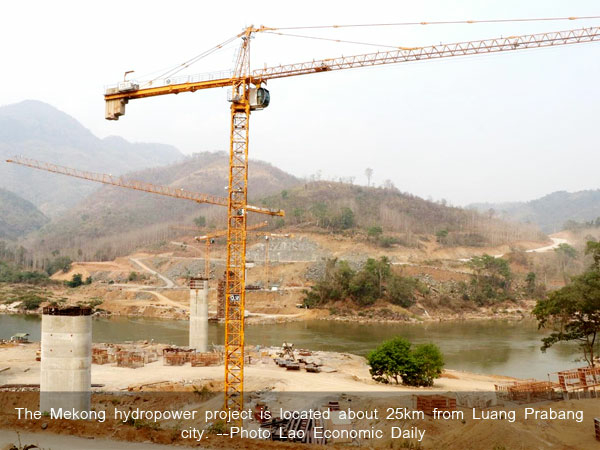
Preparation work for construction of the Mekong hydropower project in Luang Prabang province is now 80 percent complete, with all works expected to be finished in July.

Meanwhile, government approval for construction of the dam is awaited before work on the plant itself begins.

The 1,460MW Mekong hydropower project is located about 25km from Luang Prabang city and will generate electricity mainly for sale to Thailand and Vietnam when commercial operation begins in 2027.

Preparation work includes the construction of an 11-km access road, which is now 98 percent complete, and a 500-metre bridge over the Mekong River, which is 41 percent complete.

Three temporary ports have been built and construction of 115kV and 22kV transmission lines and a small electricity station is 64 percent complete.

Some 69 percent of compensation payments owed to people who had to give up their land or other property to the project has been made.

Other project components, such as location development, provision of dormitories for project staff, workers, electricity and water supply connections are 98-99 percent complete.

A project official outlined the progress of project preparation work last week when meeting the President of the Lao Front for National Development, Dr Xaysomphone Phomvihane, who visited the project site in Pak-Ou district.

Dr Xaysomphone advised project officials to adhere to the project timetable so that work was completed promptly. He also advised them to consider the possible effects on the environment, and the safety of workers and technicians with regard to Covid-19.

The Mekong hydropower project will be situated 2,036km from Vietnam’s Mekong Delta.

Last year, the Mekong River Commission (MRC) organised a forum for Lao authorities to hold talks with other Mekong nations before going ahead with construction of the Luang Prabang hydropower project.

The forum discussed the possible impacts of the dam and considered the draft Basin Development Strategy for 2021-2030, a 10-year strategic direction for development planning within the region.

The forum noted that the strategy was ambitious but considered it to be proactive in tackling basin-wide issues.

Among the many recommendations made were increased stakeholder engagement, strengthening cooperation among the four MRC member countries, and increasing open and transparent sharing of information.

Singapore is 8th most attractive country to relocate to for work: Survey #SootinClaimon.Com

#SootinClaimon.Com : ขอบคุณแหล่งข้อมูล : หนังสือพิมพ์ The Nation.

https://www.nationthailand.com/ann/30403839

Singapore is 8th most attractive country to relocate to for work: Survey

Mar 18. 2021Singapore jumped to eighth place, from 24th in 2014. PHOTO: ST FILESingapore jumped to eighth place, from 24th in 2014. PHOTO: ST FILE
By Sue-Ann Tan
The Straits Times/ANN

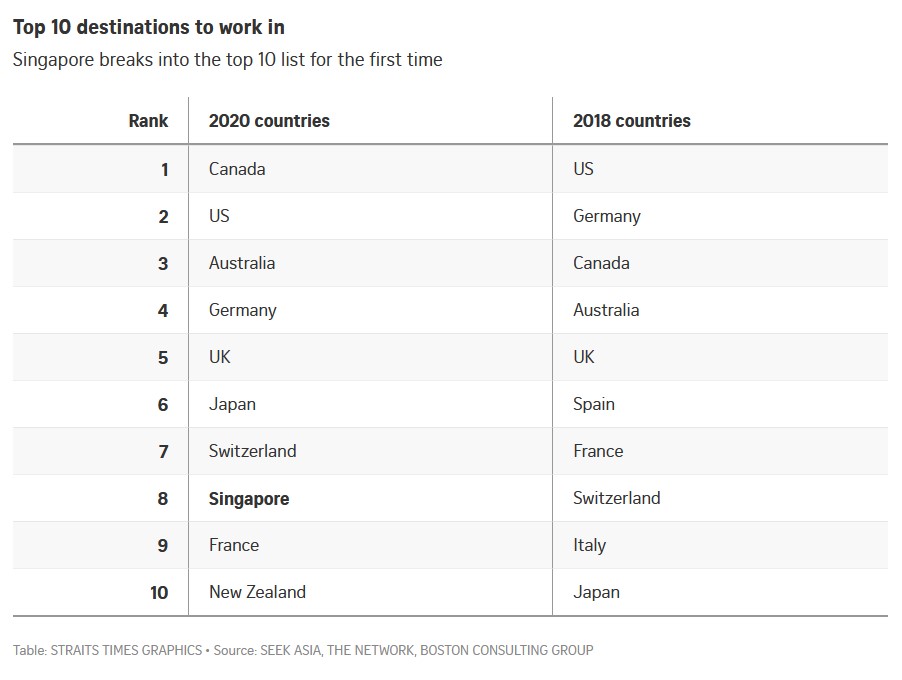
SINGAPORE – Singapore is the eighth most attractive country to relocate to for work – the first time it has broken into the top 10 in a global study that started in 2014.

But the report also noted on Wednesday (March 17) that fewer Singaporeans desire to work abroad.

The study, which polled around 208,800 respondents across 190 countries, found that the pandemic has changed people’s views on the top work destinations as virus containment measures become a priority.

Singapore jumped to eighth place, from 24th in 2014. Canada topped the list, followed by the United States, Australia, Germany and Britain.

“When it comes to employee relocation, several Asia-Pacific countries, such as Singapore and New Zealand, have become the preferred choices of talent in 2020,” said the report compiled by online employment marketplace Seek Asia, The Network and Boston Consulting Group.

“This is likely due to the countries’ management of Covid-19, which have largely registered low mortality rates and kept infection cases in check.”

Since the fourth quarter of last year, there has been an average growth of 28 per cent in job openings across Hong Kong, Indonesia, Malaysia, the Philippines, Singapore, Thailand and Vietnam compared with the second quarter of last year, according to JobStreet, of which Seek Asia is the parent company.

Besides good pandemic management, Singapore’s competitiveness is also a selling point for talent, the report said.

“Other than robust international trade and investment, Singapore’s digital infrastructure, national stability and culture of innovation also inspire confidence,” it added.

The report noted that professionals, managers, executives and technicians from China, Qatar, United Arab Emirates and Switzerland, for instance, are keen to come to Singapore to work as the standard of living here is comparable with their home countries.

OCBC Bank head of treasury research and strategy Selena Ling said: “Singapore has had good containment of coronavirus cases, excellent healthcare facilities and free vaccination.

“But a downside could be the perceived tightening of foreign manpower restrictions.”

Seek Asia chief executive Peter Bithos said the pandemic has also created a new kind of “virtual mobility”, where staff can work remotely from a different country.

Around 57 per cent of respondents said they were willing to work remotely for an employer that does not have a physical presence in their home country.

“For hirers who are struggling to fill job openings, the time is ripe to warm up to the option of offering virtual employment, so as to attract competent and suitable talent,” said Mr Bithos.

This trend also goes in tandem with a sharp decline in the willingness of job seekers to physically work abroad.

This is because of restrictions and uncertainty due to the pandemic and the emergence of virtual work where it becomes less necessary to move overseas to find jobs, the report said.

The emergence of nationalistic politics and tighter immigration regulations in key economies such as Britain and the US are also factors, it added.

Only 44 per cent of Singaporean respondents now want to work abroad, compared with 79 per cent in 2014.

Ms Ling said: “This may not be a long-term trend. It depends on when borders reopen and when vaccination passports gain traction. There are also policies encouraging local firms and workers to internationalise and gain international exposure.”

Australia still remains the preferred work destination for Singaporeans, followed by China, Taiwan and New Zealand, the report found.

China urges US, Japan to stop interfering in its internal affairs #SootinClaimon.Com

#SootinClaimon.Com : ขอบคุณแหล่งข้อมูล : หนังสือพิมพ์ The Nation.

https://www.nationthailand.com/ann/30403838

China urges US, Japan to stop interfering in its internal affairs

Mar 18. 2021Chinese Foreign Ministry spokesman Zhao Lijian speaks at a press briefing in Beijing, China, on March 17, 2021. (PHOTO / FMPRC.GOV.CN)Chinese Foreign Ministry spokesman Zhao Lijian speaks at a press briefing in Beijing, China, on March 17, 2021. (PHOTO / FMPRC.GOV.CN)

By China Daily/ANN

BEIJING – China is strongly dissatisfied with and firmly opposes the recent US-Japan joint statement, which maliciously attacked China’s foreign policy, seriously interfered in China’s internal affairs and attempted to damage China’s interests, a Chinese foreign ministry spokesperson said Wednesday.

Spokesperson Zhao Lijian said China urgedthe United States and Japan to immediately stop interfering in China’s internal affairs and stop forming “small cliques” targeting China.

Zhao made the remarks at a daily press briefing when asked to comment on a US-Japan joint statement, which was issued after the “2+2” talks on Tuesday between the foreign and defense ministers of the United States and Japan. The two countries expressed in the joint statement the two sides’ concerns over multiple issues related to China.

“We have lodged solemn representations separately with the United States and Japan,” Zhao said.

Firstly, he emphasized that the international system with the United Nations (UN) as its core is the only system in the world, and that the only set of rules in the world is the basic norms governing international relations, based on the purposes of the UN Charter.

“The United States and Japan have no right to unilaterally define international relations, let alone impose their own standards on others,” Zhao said.

Secondly, China has always been an important force in safeguarding world peace and promoting common development, he said. China has established partnerships with 112 countries and international organizations, joined more than 100 inter-governmental international organizations, signed over 500 multilateral treaties, and is the largest contributor of peacekeeping forces among the permanent members of the UN Security Council.

The United States has always followed double standards, applying international laws and rules when they suit its own interests and abandoning them when they don’t, according to Zhao. The United States has not been at war for only 16 years of its nearly 250-year history, and it has hundreds of military bases worldwide.

“The international community will have a fair judgement on who is the biggest threat to world peace,” Zhao said.

Thirdly, China’s position on issues related to Taiwan, Hong Kong, Xinjiang, the South China Sea and the Diaoyu Islands is consistent and clear, and China is firm in safeguarding its sovereignty, security and development interests.

China has indisputable sovereignty over the islands in the South China Sea and their adjacent waters, and over the Diaoyu Islands and adjacent waters, Zhao said.

Issues related to Taiwan, Hong Kong and Xinjiang are China’s internal affairs and brook no foreign interference, Zhao said, adding that the joint statement made by the United States and Japan ignored facts and truth, acting as further proof of collusion between the two countries, interfering in China’s internal affairs, and an unpleasant example of slandering and discrediting China.

Fourthly, the United States and Japan are sticking to the Cold War mentality, deliberately engaging in group confrontation and trying to create an anti-China encirclement.

“It is completely going against the trend of the times,” Zhao said, pointing out that the move by the two countries is against the common expectations of the vast majority of countries, both in the region and globally, for peace, development and cooperation.

“Their move will only bring chaos or even conflict to the region, revealing the truth to the world that it is the US-Japan alliance that undermines peace and stability in the region,” he said.

Fifthly, in order to satisfy its own interests in deterring China’s rise and rejuvenation, Japan is willing to rely on others and act as a strategic vassal of the United States. “It is shameful and repugnant for Japan to betray its promises and undermine China-Japan relations; and betray the overall interests of the region by inviting wolves into its house,” said Zhao.

China strongly urges the United States and Japan to immediately stop interfering in China’s internal affairs, stop forming “small cliques” targeting China and stop undermining peace and stability in the region.

“China will take all necessary measures to resolutely defend its sovereignty, security and development interests,” Zhao said.  

US reaffirms alliance with Seoul in countering Beijing, Pyongyang #SootinClaimon.Com

#SootinClaimon.Com : ขอบคุณแหล่งข้อมูล : หนังสือพิมพ์ The Nation.

https://www.nationthailand.com/ann/30403837

US reaffirms alliance with Seoul in countering Beijing, Pyongyang

Mar 18. 2021Foreign Minister Chung Eui-yong (right) and US Secretary of State Antony Blinken pose for the media before their meeting at the Foreign Ministry in Seoul on Wednesday. (Yonhap)
Foreign Minister Chung Eui-yong (right) and US Secretary of State Antony Blinken pose for the media before their meeting at the Foreign Ministry in Seoul on Wednesday. (Yonhap)Foreign Minister Chung Eui-yong (right) and US Secretary of State Antony Blinken pose for the media before their meeting at the Foreign Ministry in Seoul on Wednesday. (Yonhap) Foreign Minister Chung Eui-yong (right) and US Secretary of State Antony Blinken pose for the media before their meeting at the Foreign Ministry in Seoul on Wednesday. (Yonhap)

By Ahn Sung-mi
The Korea Herald/ANN

US Defense Secretary Lloyd Austin and Secretary of State Antony Blinken held talks with their respective counterparts in Seoul on Wednesday and reaffirmed their alliance as a bulwark against unprecedented challenges posed by Beijing and Pyongyang. 

The pair arrived in Seoul after a two-day visit in Tokyo, in the first overseas trip by top members of President Joe Biden’s cabinet since his inauguration in January. 

The high-profile trip in the region is seen as Washington’s apparent attempt to solidify key Asian alliances against China’s growing assertiveness and the nuclear-armed North Korea. 

Austin met with South Korean Defense Minister Suh Wook at the Defense Ministry in the afternoon, emphasizing the importance of the 70-year-old alliance given the “unprecedented challenges” posed by North Korea and China. 

“Our commitment to the US-ROK alliance, which has been steadfast for 70 years remains ironclad,” Austin said at the start of the meeting, stressing the alliance is a “linchpin” of the peace, security and prosperity for Northeast Asia and the free, open-Indo Pacific region. 

The ROK refers to South Korea’s official name, the Republic of Korea. 

“Given the unprecedented challenges posed by both the Democratic People’s Republic of Korea and China, the US-ROK alliance has never been more important,” the Pentagon chief said, adding that military readiness is a top priority.

“Over the course of developing the alliance, maintaining a strong deterrence against North Korea and combined defense posture is of utmost importance,” Suh said. 

The two reaffirmed their commitment to a complete denuclearization and for permanent peace on the Korean Peninsula. 

The military chiefs also vowed to continue efforts toward the transfer of wartime operational control of South Korean troops from Washington to Seoul. Both sides have agreed on a conditions-based transition, rather than a time-based one, though President Moon Jae-in has expressed hopes to regain military control before his term ends in May 2022. 

Later in the day, Blinken and South Korean Foreign Minister Chung Eui-yong held talks at the Foreign Ministry.

During the meeting, Blinken condemned human rights abuses in North Korea, China’s use of “coercion and aggression” on the international stage, and Myanmar’s military for repressing peaceful protesters. 

“The authoritarian regime in North Korea continues to commit systemic and widespread abuses against its own people,” Blinken said. “We must stand for fundamental rights and freedoms and against those who oppress it.”

He also slammed China’s use of coercion and aggression to “systematically erode the economy in Hong Kong, undercut democracy in Taiwan, abuse human rights in Tibet and asserting claims in the South China Sea that violate human rights law,” echoing a similar remark he delivered in Tokyo. 

In dealing with North Korea’s nuclear missiles and ballistic missiles program, Blinken stressed that the US will work together with South Korea and other allies and partners, including Japan, for the regime’s denuclearization. 

Chung emphasized that the alliance is the foundation of Seoul’s diplomacy and expressed hopes for a summit between Biden and Moon at an early date. 

On Thursday, Blinken and Austin are to meet with their counterparts together for the so-called “two-plus-two” dialogue with the foreign and defense ministers, with an emphasis on the bilateral alliance and countering regional challenges. 

In the afternoon, the two secretaries will pay a courtesy call on President Moon Jae-in at Cheong Wa Dae. They will also hold separate meetings with the president’s top security adviser Suh Hoon.

Singapore residents under ‘exceptional circumstances’ can apply for early Covid-19 vaccination #SootinClaimon.Com

#SootinClaimon.Com : ขอบคุณแหล่งข้อมูล : หนังสือพิมพ์ The Nation.

https://www.nationthailand.com/ann/30403792

Singapore residents under ‘exceptional circumstances’ can apply for early Covid-19 vaccination

Mar 17. 2021Priority will be given to those travelling to higher-risk areas due to limited vaccine supplies, said the Ministry of Health. PHOTO: ST FILEPriority will be given to those travelling to higher-risk areas due to limited vaccine supplies, said the Ministry of Health. PHOTO: ST FILE

By Ng Wei Kai
The Straits Times/ANN

SINGAPORE – Singaporeans and permanent residents under “exceptional circumstances” will now be allowed to appeal for early vaccination against Covid-19, the Ministry of Health (MOH) said in a press release on Tuesday (March 16).

MOH will consider the appeals of those who have an urgent need to travel overseas for formal education or to move overseas for work, or to travel to visit or care for a critically ill immediate family member, or for their own medical treatment if it cannot be accessed in Singapore.

“We have received appeals from members of the public who wish to receive their vaccination early for a variety of personal reasons,” said the ministry.

“While our focus has been to vaccinate identified priority groups on public health considerations, as more vaccine supplies arrive, we will consider allowing Singapore citizens and permanent residents with very exceptional circumstances to receive their vaccination earlier,” it added.

Those who plan to appeal should make sure that they will be in Singapore for the time it takes to complete the course of vaccination – which means applying at least eight weeks before their planned departure date.

For the currently available vaccines, two doses are required three to four weeks apart. The vaccines take a further two weeks after the second dose to become fully effective, said MOH.

Priority will be given to those travelling to higher-risk areas due to limited vaccine supplies, it added.

MOH also said it is working with hospitals and clinics to provide earlier vaccination for patients with complex chronic medical conditions as these patients would be more vulnerable to complications if they were to contract Covid-19.

“For such patients, their doctors will discuss with them whether they are eligible for vaccination, based on their individual circumstances,” it added.

The appeal form can be accessed at this website, and successful applicants will be notified via e-mail.