N. Korea has achieved ‘alarming success’ in nuclear, missile development: US commander #SootinClaimon.Com

#SootinClaimon.Com : ขอบคุณแหล่งข้อมูล : หนังสือพิมพ์ The Nation.

https://www.nationthailand.com/ann/30403791

N. Korea has achieved ‘alarming success’ in nuclear, missile development: US commander

Mar 17. 2021The captured image from the website of US Senate Committee on Armed Services shows Gen. Glen VanHerck, commander of US Northern Command and North American Aerospace Defense Command, testifying at a Senate hearing in Washington on Tuesday. (US Senate Committee on Armed Services)The captured image from the website of US Senate Committee on Armed Services shows Gen. Glen VanHerck, commander of US Northern Command and North American Aerospace Defense Command, testifying at a Senate hearing in Washington on Tuesday. (US Senate Committee on Armed Services)

By The Korea Herald/ANN

North Korea has achieved alarming success in its pursuit of nuclear and long-range missile capabilities and continues to expand its arsenal, which includes three ballistic missiles that can reach the US homeland, a US commander said Tuesday.

Gen. Glen VanHerck, commander of US Northern Command and North American Aerospace Defense Command, also noted the North may resume its long-range missile testing to check the capability of a newly unveiled intercontinental ballistic missile (ICBM).

“The Kim Jong-un regime has achieved alarming success in its quest to demonstrate the capability to threaten the US homeland with nuclear-armed ICBMs, believing such weapons are necessary to deter US military action and ensure his regime’s survival,” the four-star Air Force general said in a statement submitted to the Senate Armed Services Committee prior to a hearing later in the day.

“In 2017, North Korea successfully tested a thermonuclear device — increasing the destructive potential of their strategic weapons by an order of magnitude — as well as three ICBMs capable of ranging the United States,” he added.

North Korea staged its sixth and last nuclear test in late 2017 when it said it successfully detonated a hydrogen bomb.

North Korea has since maintained a self-imposed moratorium on nuclear and long-range missile testing.

VanHerck noted the North has already declared that it is no longer bound by such restrictions.

“The North Korean regime has also indicated that it is no longer bound by the unilateral nuclear and ICBM testing moratorium announced in 2018, suggesting that Kim Jong-un may begin flight testing an improved ICBM design in the near future,” he wrote.

Pyongyang recently unveiled a larger ICBM and submarine-launched ballistic missile at two military parades in October and January.

VanHerck reiterated the recently showcased ICBM now put to three the number of North Korean long-range missiles that can reach the US mainland.

“So in the parade, the public parade we saw on the 10th of October, we saw additional capabilities and an additional missile. Now they are up to three missiles, missiles that we assess could strike our homeland,” he later said in a press briefing at the Pentagon.

“Despite US efforts in 2020 to reach an agreement with Kim Jong-un, North Korea continued its development of ICBMs capable of striking targets in the United States,” he said in his submitted statement.

“As North Korea continues its pursuit of advanced long-range strategic weapons including the new systems displayed during their 10 October 2020 parade, USNORTHCOM remains committed to maximizing the capability and capacity of our ballistic missile defense systems.”

The NORTHCOM commander said the US stands ready and capable to detect and counter any threat from North Korea.

“We always maintain the ability to defend our homeland, and obviously the right to defend the homeland. We’re postured each and every day through ground based interceptors which create deterrence by denial,” he told the press briefing. (Yonhap)

China’s tourism sector reports accelerated recovery #SootinClaimon.Com

#SootinClaimon.Com : ขอบคุณแหล่งข้อมูล : หนังสือพิมพ์ The Nation.

https://www.nationthailand.com/ann/30403790

China’s tourism sector reports accelerated recovery

Mar 17. 2021People visit Yuyuan Garden, a historical tourist site in Shanghai, on Feb 6, 2021. (PHOTO / XINHUA)People visit Yuyuan Garden, a historical tourist site in Shanghai, on Feb 6, 2021. (PHOTO / XINHUA)

By China Daily/ANN

BEIJING – China’s tourism sector has reported a strong recovery so far this year and is expected to continue its current momentum as China further lifts travel restrictions amid a stable COVID-19 situation.

The tourism sector logged encouraging statistics during the Spring Festival holiday in mid-February, according to data from the China Tourism Academy.

Domestic tourism revenue recorded year-on-year growth starting from the third day of the weeklong holiday, while the number of tourists traveling to and from major tourist destinations like Guangdong, Shanghai and Beijing exceeded or almost reached the levels seen during the 2019 Spring Festival.

The demand for leisure city travel, vacations in the suburbs, family trips and study tours showed a strong upward trend, the academy said.

The country’s civil aviation industry handled approximately 23.95 million passenger trips in February, a jump of 187.1 percent year on year, the latest data from the Civil Aviation Administration of China showed.

Air travel picked up steam soon after the holiday, during which many Chinese people opted to stay put in response to the government’s call to avoid unnecessary gatherings.

Passenger traffic on domestic routes has returned to the level seen during the same period in 2019, according to data from online travel service provider qunar.com.

Increasing hotel bookings also pointed to people’s willingness to travel. Sanya, Wuxi and Lhasa are among tourists’ favored domestic destinations.

By March 9, hotel bookings for the Tomb-sweeping Day holiday in early April had increased to 4.5 times the number of bookings seen on the same date a year earlier.

The number of hotel reservations on May 1, the first day of the five-day May Day holiday, has exceeded the number from the same day in 2019, the data showed.

Beijing has relaxed COVID-19 restrictions as the Chinese capital has seen no new locally transmitted cases for over a month.

Those traveling from domestic low-risk areas and arriving in Beijing are not required to provide negative nucleic acid test results, and taxi and online car-hailing services between Beijing and other cities will resume.

Temperature checks will also be unnecessary at community and village entrances, while indoor and outdoor cultural and entertainment venues such as parks, scenic spots, libraries, museums and theaters will be allowed to hold up to 75 percent of their visitor capacities.

Data showed soaring air and train ticket bookings in and out of Beijing immediately after the announcement from the municipal government.

Industry insiders said people are using the coming holidays to make up for the trips they missed earlier.

The costs of travel, accommodation and entrance tickets to cultural and entertainment venues have declined significantly since the outbreak of COVID-19, and some local governments may continue offering travel vouchers to attract tourists, allowing people to take highly cost-effective vacations this year, said Ma Yiliang, an analyst with the China Tourism Academy.

According to a report from the academy, an estimated total of 4.1 billion domestic tourist trips will be made in China this year, up 42 percent from 2020.

Domestic tourism revenue is expected to surge 48 percent to reach 3.3 trillion yuan (about US$507.47 billion), read the report.

China’s economic growth gathered steam in the first two months of 2021, with major economic indicators such as industrial output, retail sales and fixed-asset investment all surging more than 30 percent, according to data released by the National Bureau of Statistics on Monday.

Japanese companies develop special syringes to reduce waste of COVID-19 vaccine #SootinClaimon.Com

#SootinClaimon.Com : ขอบคุณแหล่งข้อมูล : หนังสือพิมพ์ The Nation.

https://www.nationthailand.com/ann/30403789

Japanese companies develop special syringes to reduce waste of COVID-19 vaccine

Mar 17. 2021A new type of syringe developed by Top Corp. (Courtesy of Top Corp.)
A new type of syringe developed by Top Corp. (Courtesy of Top Corp.)

By The Japan News/ANN

Two Japanese medical device manufacturers have developed syringes that can draw seven doses from a single bottle of the novel coronavirus vaccine made by U.S. pharmaceutical giant Pfizer Inc., more than the previously estimated number of five or six doses.

The Health, Labor and Welfare Ministry has approved the syringes, and the two companies plan to supply a combined total of more than 40 million by the end of fiscal 2021. The government is expected to consider procuring the syringes.

The Pfizer-BioNTech vaccine is diluted with normal saline to produce 2.25 milliliters of the medication in one bottle. For a single dose, 0.3 milliliters is drawn into a syringe for an intramuscular injection.

Theoretically, seven doses can be drawn from one bottle if little is wasted. However, five doses have been the limit when common syringes are used, because liquid tends to remain in the tip. Even special syringes were said not to be able to draw out more than six doses.

One of the new syringes, developed by the Tokyo-based company Top Corp., was approved by the Health, Labor and Welfare Ministry in February after it was confirmed in tests that the syringe can withdraw seven doses from a bottle.

Top Corp. plans to begin shipments of the new syringe as early as May and expects to supply 20 million units by the end of 2021. It plans to increase shipment volume to 50-60 million annually from 2022 on.

Terumo Corp. also obtained approval from the ministry on March 5 for an improved type of syringe that can withdraw seven doses. The Tokyo-based company will begin manufacturing and shipping the syringes, and plans to supply 20 million within fiscal 2021.

Nipro Corp., based in Osaka Prefecture, is also working on the development of a similar syringe and is considering launching mass production in this year.

Philippines will suspend entry of travelers from abroad except returning OFWs starting March 20 #SootinClaimon.Com

#SootinClaimon.Com : ขอบคุณแหล่งข้อมูล : หนังสือพิมพ์ The Nation.

https://www.nationthailand.com/ann/30403788

Philippines will suspend entry of travelers from abroad except returning OFWs starting March 20

Mar 17. 2021Defense Secretary Delfin LorenzanaDefense Secretary Delfin Lorenzana

By Gabriel Pabico Lalu
INQUIRER.net/ANN

MANILA, Philippines — The Philipines will temporarily ban the entry of travelers, whether foreigners or Filipinos, from abroad — except returning overseas Filipino workers – starting March 20, the National Task Force (NTF) Against COVID-19 said on Tuesday night.

The temporary ban was based on the increasing number of COVID-19 cases in the country, according to a document posted on the Facebook page of the Department of Health (DOH).

In a memorandum circular, Defense Secretary Delfin Lorenzana, who chairs the NTF, said the ban would start at 12:01 a.m. on March 20, a Saturday, and end on April 19. Also, the number of inbound passengers before the suspension takes effect will be limited to only 1,500 per day.

According to Lorenzana, only the following would be exempted from the travel suspension:

  • holders of 9(e) visas
  • those under medical repatriation and their escorts as  endorsed by the Department of Foreign Affairs – Office of the Undersecretary for Migrant Workers Affairs (DFA-OUMWA) or the Overseas Workers Welfare Administration (OWWA)
  • distressed returning OFWs as endorsed by the DFA-OUMWA
  • those coming with under emergency, humanitarian, and other analogous cases as approved by the NTF

On Monday, Health Secretary Francisco Duque III said that this latest surge of COVID-19 cases would approach the peak levels recorded in August 2020.

Analytics group OCTA Research and other observers then warned that the current COVID-19 surge might have been caused by variants spreading undetected in the country.

As of this writing, DOH said that the Philippines had already registered at least one case each for the three variants of concern listed by global health authorities: the B.1.1.7 variant from the United Kingdom, the B.1.135 strain from South Africa, and the P.1 from Brazil.

On Sunday, OCTA Research member Professor Guido David said that, with a 1.9 reproduction rate, the country could see 8,000 new cases nationwide per day before April.

Just this Friday, Japan’s National Institute of Infectious Diseases (NIID) said that it had detected a mutated B.1.1.28 coronavirus strain — the strain that was the parent of the P.1 variant — in a traveler coming from the Philippines.

The mutated B.1.1.28 carried the same mutations found in the P.1 variant, which led Japan’s NIID to assume that the variant might also be more infectious.

Samsung ranks third in Q4 wearables market: report #SootinClaimon.Com

#SootinClaimon.Com : ขอบคุณแหล่งข้อมูล : หนังสือพิมพ์ The Nation.

https://www.nationthailand.com/ann/30403745

Samsung ranks third in Q4 wearables market: report

Mar 16. 2021The company's Galaxy Watch3 smartwatch. (Samsung Electronics Co.)The company’s Galaxy Watch3 smartwatch. (Samsung Electronics Co.)

By The Korea Herald/ANN

Samsung Electronics Co. was the third-largest vendor of wearable devices in the fourth quarter of 2020, a market report showed Tuesday, amid soaring global demand for wearbles despite the pandemic.

The South Korean tech giant shipped 13 million units of wearable devices in the October-December period, up 20.5 percent from a year earlier, although its market share dropped to 8.5 percent from 9 percent a year ago, according to the latest report from market tracker International Data Corp. (IDC).

“Samsung held the third position with growth coming from its wearables business,” IDC said. “Samsung’s low-cost wristbands also saw greater traction and were able to compete with the Chinese vendors in a few markets although overall volume for these devices was relatively low at 1.3 million units. Overall watch shipments declined to 2.9 million in the fourth quarter of 2020.”

Apple Inc. was the dominant leader with a 36.2 percent share after shipping 55.6 million wearable devices in the fourth quarter, up 27.2 percent from a year ago.

China’s Xiaomi Corp. was the runner-up with 13.5 million units of wearable shipments in the last three months of 2020, although its market share declined to 8.8 percent from 10.6 percent a year earlier, IDC data showed.

Another Chinese tech powerhouse, Huawei Technologies Co., ranked fourth with a 6.7 percent share, down from 7.9 percent a year earlier.

IDC said the global wearables market grew 27.2 percent on-year in the fourth quarter of 2020, with total shipments reaching 153.5 million units.

“While the holiday quarter was largely driven by new devices and lower prices, the broader trend for 2020 was the surge in consumer spending for electronics as disposable income was reallocated from leisure activities during the pandemic,” IDC said.

IDC said earwear devices accounted for 64.2 percent of shipments, followed by watches with a 24.1 percent share.

For the whole of 2020, the global wearables market grew 28.4 percent on-year to 444.7 million units.

By brand, Apple was No. 1 with a share of 34.1 percent, followed by Xiaomi with 11.4 percent, Huawei with 9.8 percent and Samsung with 9 percent. (Yonhap)

KLIA ranked among world’s top 10 airports in 2020 amid challenging conditions #SootinClaimon.Com

#SootinClaimon.Com : ขอบคุณแหล่งข้อมูล : หนังสือพิมพ์ The Nation.

https://www.nationthailand.com/ann/30403744

KLIA ranked among world’s top 10 airports in 2020 amid challenging conditions

Mar 16. 2021

By The Star/ANN

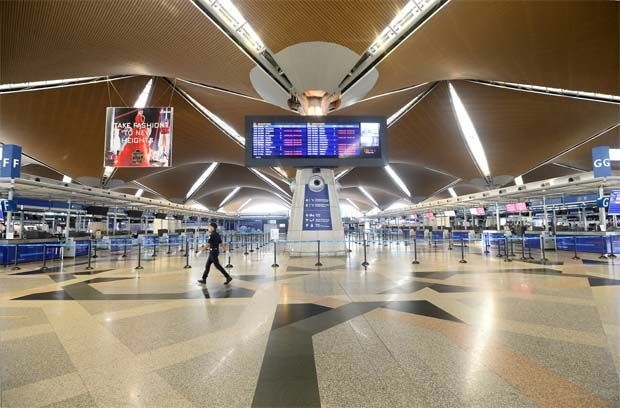
KUALA LUMPUR: Kuala Lumpur International Airport (KLIA) has been named as one of the world’s top 10 airports in the global Airport Service Quality (ASQ) survey by Airports Council International (ACI) for the category of over 40 million passengers per annum in 2020.

ASQ benchmarks the world’s best airports in terms of overall passenger satisfaction for terminal safety, facilities, services, and cleanliness.

In a statement today, Malaysia Airports Holdings Bhd (MAHB) said the achievement, announced by ACI early this month, was borne out by the airport’s continuous efforts in carrying out improvement initiatives despite being severely affected by the COVID-19 pandemic.

Group chief executive Datuk Mohd Shukrie Mohd Salleh said passenger traffic for the MAHB group remained low due to prolonged domestic and international travel restrictions with only 1.6 million passenger movements recorded in February.

Nevertheless, he said, the airport still forged ahead with mission critical projects, including the washroom refurbishment, formation of the operational excellence teams that diligently identified and designed improvement initiatives and the introduction of the Exceptional People Practice Playbook — a dual language manual to guide front liners in their interaction with passengers.

“This year, passengers can look forward to an improved journey including shorter wait times and facial recognition technology that are part of our Airports 4.0 digital transformation,” he said.

Mohd Shukrie said MAHB remained optimistic on the resiliency of the demand in air travel.

“We have seen strong revival when travel restrictions were lifted in previous times, and for that, we will continue to enhance our offerings.

“Staying cognisant with the evolving demands of passengers and the aviation industry will help us stay ahead of the competition as we aim to be among the top five airports this year,” he added. – Bernama

Australia eyes digital Covid-19 vaccine passport with Singapore #SootinClaimon.Com

#SootinClaimon.Com : ขอบคุณแหล่งข้อมูล : หนังสือพิมพ์ The Nation.

https://www.nationthailand.com/ann/30403743

Australia eyes digital Covid-19 vaccine passport with Singapore

Mar 16. 2021Australia hopes to set up a travel bubble that would include Singapore.PHOTOS: KELVIN CHNG, AFPAustralia hopes to set up a travel bubble that would include Singapore.PHOTOS: KELVIN CHNG, AFP

By Jonathan Pearlman
The Straits Times/ANN

SYDNEY – Australia’s Tourism Minister plans to travel to Singapore to discuss the creation of a digital vaccine passport system that would enable a travel bubble between the two countries by the middle of the year.

In an announcement that has raised the hopes of Australia’s ailing tourism sector, Mr Dan Tehan said on Monday (March 15) the country hopes to set up a travel bubble that would include Singapore and New Zealand, and perhaps other places such as Fiji.

Mr Tehan said Singapore has handled the Covid-19 pandemic in an “exemplary fashion” and is a strong potential partner for Australia’s first two-way travel bubble, which would eliminate the need for quarantine. He said he wants to travel to Singapore within the next two months to discuss the proposal.

“If we can continue to get the vaccine roll-out right here in Australia, they continue to do what they’re doing so well there with their vaccine roll-out in Singapore, I’m optimistic that we might be able to get something up and running by the middle of the year,” he told Channel Nine.

The key would be to ensure that travellers have valid vaccine credentials, he noted.

Mr Tehan said Australia wants to work with Singapore on developing a digital vaccine passport that will prove that a traveller has been vaccinated. “We really want that digital vaccination passport up and running, operating, and in a way that we know that we can trust it,” he said.

Australia imposed strict curbs on foreign travellers early last year and has also banned Australians from travelling overseas without an exemption from the government. This has had a heavy impact on the tourism and international student sectors.

The government is keen to open up borders as soon as possible but is also facing pressure to ensure that Australia remains effectively free of Covid-19. Most of the country has been free of locally transmitted cases for weeks or months and is operating as normal. In the past four weeks, there have been 10 locally transmitted cases, but no broader outbreak.

Australia earlier opened a one-way travel bubble for people from New Zealand, but this has been suspended several times due to outbreaks of Covid-19 clusters in New Zealand.

Canberra is now looking to potentially open its first two-way travel bubble with Singapore.

Media reports suggested that Canberra is also looking to allow travellers from other countries to complete their 14-day quarantine period in Singapore before travelling on to Australia. However, Singapore’s Ministry of Foreign Affairs (MFA) has said it is not discussing “the concept of a quarantine centre or vaccination hub” with Australia.

“Singapore is currently in discussions with Australia on the mutual recognition of vaccination certificates and resumption of travel, with priority for students and business travellers,” MFA said on Sunday. It added: “We are not in discussion on the concept of a quarantine centre or vaccination hub.”

Mr Tehan did not explicitly comment last Thursday on the possibility of a quarantine centre. His office referred The Straits Times to an interview with Channel Seven, in which he referred to Singapore’s current practice of testing incoming passengers on arrival.

“They (Singapore) have already got some steps in place,” he said. “This would be something that we’ll have as part of those discussions, but that would be the ideal scenario.”

In 2019, Australia had more travel to and from Singapore than with any other city. Almost 6.4 million passengers went between the countries on more than 24,700 flights.

But Australia’s slow start in vaccinations may pose a difficulty to creating the travel bubble with Singapore by July. Health officials admitted last week that initial plans to vaccinate the bulk of the country’s population by October may not be met and that some Australians may only have had their first dose by then.

[Philippines] Gov’t says no lockdown even as hospitals start hitting full capacity #SootinClaimon.Com

#SootinClaimon.Com : ขอบคุณแหล่งข้อมูล : หนังสือพิมพ์ The Nation.

https://www.nationthailand.com/ann/30403742

[Philippines] Gov’t says no lockdown even as hospitals start hitting full capacity

Mar 16. 2021PUBLIC ADVISORY Makati Medical Center in Makati City has advised the public that the hospital has reached capacity for COVID-19 patients as coronavirus infections in Metro Manila continue to increase. —RICHARD A. REYESPUBLIC ADVISORY Makati Medical Center in Makati City has advised the public that the hospital has reached capacity for COVID-19 patients as coronavirus infections in Metro Manila continue to increase. —RICHARD A. REYES

By Dona Z. Pazzibugan
Philippine Daily Inquirer/ANN

MANILA, Philippines — Hospitals in Metro Manila and the Cordillera Administrative Region are running out of beds for critically ill COVID-19 patients as coronavirus cases surge to post the highest daily count this year.

In Metro Manila, according to data as of the weekend from the Department of Health (DOH), seven out of 10 of the 679 intensive-care beds meant for COVID-19 patients are occupied.

Six out of 10 of the 4,094 isolation beds are being used by COVID-19 patients.

About a third of the 808 mechanical ventilators in Metro Manila’s hospitals are being used by COVID-19 patients, while about four out of 10 of the 3,006 ward beds for COVID-19 patients are occupied.

Out of 149 hospitals in Metro Manila, 40 are in danger of being overrun with COVID-19 cases.

Eighteen of these hospitals are in a “critical” situation with at least 85 percent bed occupancy, while 22 other hospitals are at “high risk” of being overrun, with bed occupancy of 70 percent to 84 percent.

In Cordillera, 77 percent of the 48 intensive-care beds allocated for COVID-19 patients are occupied, while the 426 isolation beds for COVID-19 patients are 53 percent occupied.

Out of the 250 ward beds for COVID-19 patients in the region, 138 or 55 percent are occupied, while 11 out of 39 mechanical ventilators, or 28 percent, are occupied.

In Metro Manila, hitting capacity are Philippine General Hospital (PGH) in Manila and St. Luke’s Hospital in Quezon City and Taguig.

Speaking for PGH in a radio interview on Monday, Dr. Jonas del Rosario said the hospital had 134 COVID-19 patients and more were scheduled to be admitted.

“This is our highest case number for the last four months. It has decreased before—we were only at 60 to 70 patients per day. But now it has doubled,” Del Rosario said.

The hospital has expanded its emergency room to stretch capacity to 180, now 75 percent occupied, he said.

But he just learned, he said, that the hospital’s intensive care unit (ICU) was already full.

Del Rosario said the hospital was accepting only emergency non-COVID-19 cases. Other cases are being referred to other hospitals, he said.

The hospital said 82 of its health workers were infected with the coronavirus.

Dr. Benjo Campomanes, vice president and chief medical officer of St. Luke’s, said the Quezon City and Taguig emergency rooms of the hospital were already full.

Waitlisted patients

In Quezon City, he said, 18 patients were waiting to be admitted and in Taguig 33 were waiting to be taken in.

“As of now we have no vacancy,” Campomanes said.

The government, however, is not considering a return to blanket lockdown.

“Going on a total lockdown is difficult. There are many more who are suffering due to the lockdown than those who get seriously ill due to COVID-19,” said presidential spokesperson Harry Roque, who announced earlier on Monday that he had tested positive for the coronavirus.

Roque said the country “could do better” with contact tracing to keep the virus from further spreading, monitoring communities and isolating the infected, and enforcing the minimum public health standards.

More cases

Whatever the Inter-Agency Task Force for the Management of Emerging Infectious Diseases will recommend to President Rodrigo Duterte will be the result of a “delicate balancing act” that will consider the number of cases but also health-care use rate, he said.

“If the number [of cases] rises and most of them are mild and asymptomatic, we should not close the economy if we have enough capacity to treat those who get seriously ill,” Roque said.

On Monday, a year after the government placed the entire island of Luzon on lockdown, the DOH logged 5,404 new coronavirus infections, the highest daily count this year and since Aug. 14, pushing the total number of confirmed COVID-19 cases in the country to 626,893.

The DOH said eight more patients had died, including three who were previously recorded as recoveries, raising the death toll to 12,837. It said 71 other patients had recovered, bringing the total number of COVID-19 survivors to 560,577.

The country still had 53,479 active cases, of which 92.4 percent were mild, 4 percent asymptomatic, 0.73 percent moderate, 1.4 percent severe, and 1.4 percent critical.

At an online briefing on Monday, Beverly Ho, director of the DOH Disease Prevention and Control Bureau, said hospitals in Metro Manila were at a “moderate risk” of being overrun, with intensive-care beds 65 percent occupied by COVID-19 patients.

The other regions with high numbers of cases of coronavirus infections are Cordillera, Central Visayas and Davao, she said.

In Metro Manila, she said, the average use of COVID-19 beds is 49 percent.

“However, we need to highlight that while hospital care utilization is 49 percent, ICU beds are already 65 percent occupied, which means moderate risk, while mechanical ventilators are 38 percent occupied,” Ho said.

Local lockdowns

An independent group of university experts said on Monday that local lockdowns such as those imposed in Pasay City and Navotas City could slow down the spread of the coronavirus in Metro Manila, likely triggered by new variants of the COVID-19 virus.

“[Local] lockdowns may work against variant-driven surges, but they are more effective in tandem with expanded testing, contact tracing and supported isolation. [Local] lockdowns are also more effective when communities support them,” OCTA Research said.

OCTA conducted its own assessment of the spike in infections in Metro Manila that started around Feb. 21.

In Pasay City, host to an international airport, the flare-up began around Feb. 22, with the reproduction rate increasing from 1 to 2.5. The spike in Navotas started a bit earlier and reached a reproduction rate of 2.4.

Reproduction rate refers to how fast the infection spreads.

“Both [cities] swiftly [placed barangays with infections on local lockdown]. These [local] lockdowns helped reduce the rate of transmission and the reproduction number to 1.8 so far,” OCTA said.

A graph released by the group showed that it took about two weeks of community restrictions in Pasay and Navotas before the numbers of cases went down.

Local governments in Metro Manila have imposed a 10 p.m. to 5 a.m. curfew to limit movement and reduce infections.

Currently, OCTA said, the reproduction rate in Metro Manila is 1.95 and the goal is to reduce this to 1.5 for the rest of March.

If this is achieved, “the projected number of new COVID-19 cases in [Metro Manila] will be reduced from 6,000 (with a reproduction rate of 1.95) … to 3,000 per day by March 31,” the group said.

—WITH REPORTS FROM JEROME ANING, MARICAR CINCO, CRISTINA ELOISA BACLIG AND JODEE A. AGONCILLO

65m doses of COVID-19 vaccines administered across China #SootinClaimon.Com

#SootinClaimon.Com : ขอบคุณแหล่งข้อมูล : หนังสือพิมพ์ The Nation.

https://www.nationthailand.com/ann/30403741

65m doses of COVID-19 vaccines administered across China

Mar 16. 2021

By China Daily/ANN

BEIJING – Nearly 65 million doses of COVID-19 vaccines had been administered across China as of Sunday, Li Bin, deputy head of the National Health Commission, told a press conference Monday in Beijing.

China will also continue to export COVID-19 vaccines, while ensuring domestic needs are met, said Tian Yulong, chief engineer at the Ministry of Industry and Information Technology.

“China’s production capacity will continue to be released and output will continue to expand, and so will our supply both at home and abroad,” said Tian at a press conference.

China has provided vaccine aid to more than 50 countries and exported the jab to 27 nations, data by the Foreign Ministry showed at the end of February, Tian said.

“I believe that China’s high-quality and safe vaccines will be welcomed by more countries, and we are willing to make more efforts in this regard,” Tian added.

Myanmar Crisis: News Analysis #SootinClaimon.Com

#SootinClaimon.Com : ขอบคุณแหล่งข้อมูล : หนังสือพิมพ์ The Nation.

https://www.nationthailand.com/ann/30403725

Myanmar Crisis: News Analysis

Mar 15. 2021

By Asia News Network/Bangkok

Foggyy road ahead in Myanmar crisis China and the US are rapidly zeroing in on the Myanmar crisis, threatening to derail initiatives by Asean, particularly those of Indonesia and Thailand. Asia News Network reports.

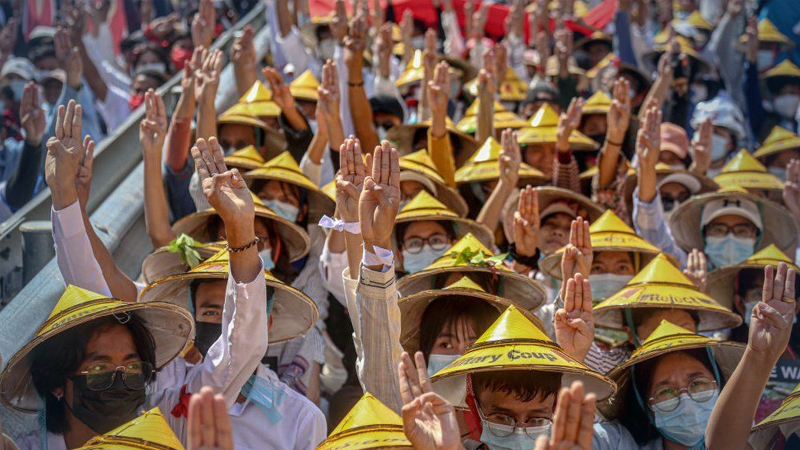
Four events on Sunday (March 14) are proving pivotal to the outcome of the escalating crisis in Myanmar.

First, the acting leader of Myanmar’s ousted lawmakers under an entity called the Committee for Representing Pyidaungsu Hluttaw (CRPH), backed by the US, issued a call to arms for the protesters to defend themselves in a “revolution”.

Second, unidentified assailants set fire to scores of garment factories in an industrial zone – some of which were Chinese-owned. Both the protesters and the junta are blaming the other for the arson attacks. The incidents followed weeks of “hate” messages in social media over China’s opposition alongside Russia when the UN Security Council sought to condemn and impose sanctions on the Myanmar military junta over the February 1 coup.

Third, deaths of anti-junta protesters on Sunday hit a high of at least 39, bringing the total death toll to well over 100.

Fourth, the Tatmadaw, as the Myanmar military is known, has imposed martial law in two townships, one of which is in Yangon. More were underway yesterday.

The upsurge in violence comes as blow to Asean, which was hopeful of further engaging the Tatmadaw to convince it to open a dialogue with all stakeholders, including the National League for Democracy; and also to allow a humanitarian channel to aid the people as Myanmar already faces an uphill task controlling the Covid-19 pandemic.

Separate initiatives by Indonesia and Thailand, which managed to establish preliminary “trust” with the junta as evidenced by the visit of Myanmar Foreign Ministry representative Wunna Maung Lwin to Bangkok on February 24 to meet Thai Foreign Minister Don Pramudwinai and Indonesian Foreign Minister Retno Marsudi, now appear to be in tatters following Sunday’s call to arms and the consequent violence.

Greater involvement by superpowers and their taking sides in the conflict could further complicate matters.

The US had earlier initiated a series of sanctions on Myanmar military personnel and stopped the military junta from withdrawing Myanmar’s US$1 billion deposit in New York, as well as a World Bank loan freeze. The US has backed the CRPH, which is now seeking recognition as a government in exile. It is also trying to bring on board the ethnic minorities, including those who have been fighting for independence under a federal principle.

These signals are heightening the challenges for the Tatmadaw to hold the country together and avoid a potential civil war, a scenario which Asean, especially Thailand as well as China, is most wary of. Unlike the 1940s when the Tatmadaw began as the only institution in Myanmar able to build a nation state, now the NLD and its allies have a blanket presence in all parts of the country, although with few arms.

Meanwhile China, with its controversial economic relations with Myanmar plus complex activities along the borders, is poised for greater intervention following Sunday’s arson attacks on the properties of Chinese investors.

China had earlier signalled its intention to enter the fray. Foreign Minister Wang Yi was unequivocal in stating: “China and Myanmar are a community with a shared future through thick and thin. China will not waver in its commitment to advancing China-Myanmar relations, and will not change the course of promoting friendship and cooperation, no matter how the situation evolves.”

One Thai diplomat, who did not want to be named, expressed his apprehensions. “We are naturally worried because as the conflict intensifies, the reactions from major nations, especially western ones, will increase, with the consequent danger of everything getting irretrievably out of control. As we are seeing, moral support, financing etc to keep the protests going may lead to supply of arms and weapons. The entire environment can lead to this as well as external interference reaching various groups of people, including ethnic minorities to fight the military government, triggering chaos. So, what does this lead to — a problem for Asean, particularly Thailand [sharing long borders with Myanmar].”

“If we talk about patience, we don’t want to say if they [the US] have or don’t have – but we would like them to have the same objectives and good aspirations for Myanmar. That’s what we would like to see,” he added.

Thai observers believe that co-existence of the Tatmadaw and the NLD is the best of the alternatives before Myanmar.
And there is nothing better than a return to normalcy. “It’s best for them to walk forward together, as it had proven throughout recent years that by sticking together, trying to depend on one another, or even with sporadic conflicts at times, it is the optimum option for their country,” Thai Foreign Minister Don Pramudwinai had said in an earlier interview with Asia News Network.

Don stressed the importance of dialogue and trust to achieve a peaceful resolution of the conflict in Myanmar.

Thais believe that if the two sides had tried to stay together and accommodated each other and not sought to annihilate the other, the crisis would not have taken place. And if they can nurture the relations as they did in the past several years, it would have created a “special” characteristic in themselves, and the role of the military would have then steadily evolved in tandem with domestic politics, benefiting the people in the process.

The failure at mutual accommodation had precipitated the present crisis, which is escalating by the day.

Amid threats of a civil war and martial law imposed on two townships on Sunday and more yesterday, the chance of the Tatmadaw imposing a nationwide martial law, blocking access to the internet and all communication with the outside world cannot be ruled out.

The Tatmadaw has woven tightly the fabric of the Myanmar nation for long and has become used to being in control of virtually every facet. The soldiers are industrious, serious, brutal, ruthless, and aloof, with distrust of everyone. It is as if the world changed little in the post-colonial time, and everybody is a virtual enemy.

But the world has changed from the time when the military held the country in a tight leash. The people of Myanmar strongly believe that life would be better for them with a democratically elected civilian government, and communication technology.

There is a fear in Asean that the crisis could spiral out of control and become complicated like in some other countries, such as foreign fighters intruding, or the use of drone bombs from outside. Even the Tatmadaw would not be in a position to tackle such a scenario.

A Thai diplomat added that Thailand had not talked to China, but if Beijing offered a solution that could work, it would be welcomed. And Bangkok is open to combining its approach with the Chinese and work together for mutual benefit.

But Thailand maintains that if trust and dialogue can be established without outside interference, it is best for Myanmar because it doesn’t have to share the “cake” with anyone.

While several Asean members have supported Indonesia’s initiative, they are sceptical of Thailand’s approach. “Yes, trust is key, but Thailand is mistaken in thinking that its special relationship with Myanmar could protect the region,” one Asean diplomat commented.

Meanwhile, on the ground the military still has the upper hand. A Myanmar source said the Tatmadaw is determined to carry out its objectives, despite the strong and inspired protests. There has been no significant switching of sides by soldiers and police to annul the coup, which is seen as a key determination of the outcome as international pressure has not been effective at the moment.

Some Myanmar analysts believe the best hope right now is to have a free and fair election after a year or two. The key challenge will be how best to hold the military accountable for its promises including maintaining basic human rights, freedom of the press and freedom of information flow. And also to make sure that Myanmar does not become a pariah state so that its citizens can recover from the Covid pandemic. Policy engagements are needed from the international community rather than isolation.

But they conceded that the fate of the NLD is not good unless something can be salvaged. In addition to voter fraud charges, the military is now piling on corruption charges. It is widely surmised that Ang San Suu Kyi’s political career is likely over. Some blamed her stubbornness and political naivete for a series of actions leading to the coup.

The events of Sunday have stirred more uncertainty about the end-game, as the competing interests and geopolitics of China and the US further muddy waters.