S. Korea to invest W200b in developing automotive chip technology
Mar 10. 2021Finance Minister Hong Nam-ki presides over a meeting on innovative growth at the government complex building in Seoul on Wednesday. (Yonhap)
By The Korea Herald/ANN
South Korea plans to invest more than 200 billion won ($176 million) in developing automotive chip-making technology by 2022 in an effort to nurture the next-generation vehicle sector, the finance minister said Wednesday.
Finance Minister Hong Nam-ki said the government plans to cooperate with local automakers to find ways to ease a current supply shortage of automotive chips that may last until the third quarter.
“As automotive chips are key parts of the car industry and demand for future-generation cars is high, it is urgent to ease a short-term supply shortage of such chips, enhance supply channels and preempt the market,” Hong said at a meeting with government officials on innovative growth.
South Korea has set the non-memory chip, bio-health and next-generation vehicle sectors as the “BIG 3” industries that it seeks to nurture for job creation and innovation-driven growth.
Hong said the government will focus on investing in developing automotive application processors and other key auto chip-making technologies.
The country plans to consider allowing state-run banks to offer loans with lower rates if companies seek to expand automotive chips-related foundry business. (Yonhap)
China, Russia to build scientific research station on moon
Mar 10. 2021
By China Daily/ANN
BEIJING – China and Russia on Tuesday signed a memorandum of understanding (MoU) on jointly building an international scientific research station on the moon, said the China National Space Administration (CNSA).
According to the MoU, space authorities of China and Russia will enhance their cooperation through the project, open the station to all interested countries and international partners, and strengthen scientific research exchanges, to promote the peaceful exploration and use of space by humankind.
Under the framework of the project, China and Russia will carry out close cooperation in the planning, demonstration, design, development, implementation and operation of the project, including promoting the project to the international space community.
The station will be focused on multidisciplinary scientific research activities on the lunar surface or in lunar orbit, including lunar exploration and utilization, moon-based observation, basic science experiments and technology verification, said the CNSA.
S. Korea to open new test bed for antivirus home products, promote exports
Mar 09. 2021
By The Korea Herald/ANN
South Korea said Tuesday it plans to establish new test facilities designed to verify the safety of antivirus home products to cope with their soaring demand amid the new coronavirus pandemic.
The country plans to allocate a 4.8 billion won ($4.23 million) budget to establish infrastructure to test products, such as hand sanitizers and protective masks, under cooperation with the Korea Testing & Research Institute, according to the state-run Korean Agency for Technology and Standards.
The project came as the country lacked infrastructure to test the safety of antivirus products despite the prolonged COVID-19 pandemic.”The center will not only protect consumers from unauthorized antivirus products but will also help beef up the competitiveness of South Korean-made products in the overseas market,” the agency said.
The agency said it plans to issue certificates that can be recognized globally for the qualified products to promote exports.
South Korea’s exports of hand sanitizers reached $250 million over the January-August period of 2020, soaring a whopping 6,100 percent on-year, according to separate data compiled by the Korea Trade-Investment Promotion Agency.
Outbound shipments of protective masks also jumped 385 percent over the period to reach $520 million. (Yonhap)
4.5 million Filipinos jobless in 2020; highest in 15 years
Mar 09. 2021
By Ben O. de Vera Philippine Daily Inquirer/ANN
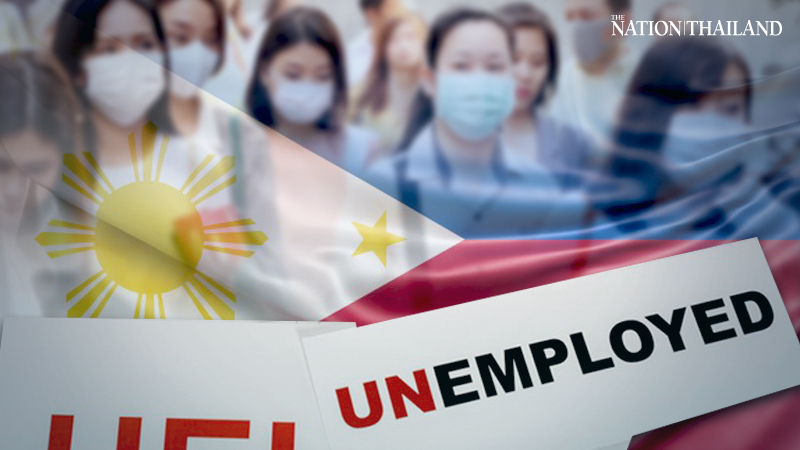
MANILA, Philippines — Some 4.5 million Filipinos were jobless last year for an average unemployment rate of 10.3 percent, the highest in 15 years, the Philippine Statistics Authority (PSA) said on Monday.
In 2020, the Philippines imposed the longest and most stringent lockdown in Southeast Asia to contain the spread of COVID-19, which, however, plunged the country into its worst postwar recession.
Citing the preliminary results of its annual estimates for the quarterly labor force survey rounds conducted last year, the PSA reported that of the 73.7 million in the labor force population or those age 15 and above, only 43.9 million or 59.5 percent were working or actively looking for a job, down from 61.3 percent in 2019.
“This translates to three in every five of the population 15 years and over who were either employed or unemployed. This annual labor force participation rate is lowest since the adoption of the new definition of unemployed in April 2005, reflecting the effect of the various community quarantine restrictions, business closures, and physical distancing measures that were put in place in the Philippines starting March 2020 amid the COVID-19 pandemic,” the PSA said.Underemployment
It added that the number of Filipinos with jobs last year also dropped to 39.4 million from 42.4 million in 2019 while the underemployment rate worsened to 16.2 percent compared to 13.8 percent in 2019.
The PSA defines underemployed as “employed persons who express the desire to have additional hours of work in their present job, or to have [an] additional job, or to have a new job with longer working hours.”In 2020, 6.4 million Filipinos considered themselves underemployed, up from 5.9 million in 2019.
While the prolonged lockdown halted the provision of nonessential services to promote social distancing and prevent the further spread of COVID-19 last year, the services sector still accounted for the biggest share of workers at 56.9 percent, although down from 58.4 percent in 2019.
“Among the workers in the services sector, those engaged in the wholesale and retail trade, and repair of motor vehicles and motorcycles made up the largest proportion (20.5 percent) of employed persons,” the PSA said.
The agriculture sector cornered 24.8 percent of the employed in 2020, a larger share than 22.2 percent in 2019. The industry sector, meanwhile, accounted for 18.3 percent of last year’s jobs, lower than 19.3 percent in 2019.
Among the employed, wage and salary workers remained the biggest class, accounting for 62.9 percent of the total, of which 48.9 percent worked in the private sector compared to 9.5 percent in government and state-run corporations, 4.2 percent in private households, and 0.3 percent in family-owned businesses.
In work hours, the number of full-time workers as a share of total employed people fell to 55.9 percent last year from 69.3 percent in 2019, while part-time employees climbed to 34.5 percent last year from 2019’s 29.9 percent.
Globally threatened species recorded in Lao national park
Mar 09. 2021
By Somsack Pongkhao Vientiane Times/ANN
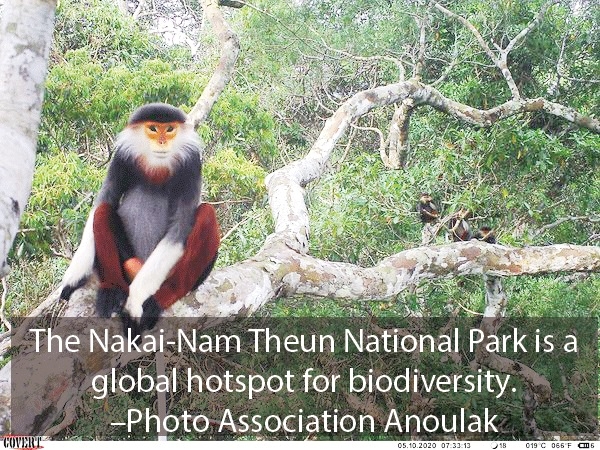
Some 36 endangered wildlife species, identified by the International Union for Conservation of Nature (IUCN) Red List of Threatened Species, have been recorded in the Nakai-Nam Theun National Park in central Laos.
The park’s Executive Director, Mr Savanh Chanthakoummane, told Vientiane Times last week that scientists who have been studying wildlife species acknowledge they have been unable to find these species anywhere elsewhere in the world.
In 2020, the Association Anoulak in cooperation with park authorities set up a second large-scale camera-trap wildlife monitoring programme in the national park.
From February to August 2020, the three biodiversity priority zones were surveyed with 133 camera-trap stations spaced roughly 2.5 kilometres apart. Two cameras were installed at each station. In total, 265 cameras were set up of which 255 were operational, according to the association’s annual report for 2020.
The cameras recorded globally threatened and near-threatened species which were identified by the IUCN Red List of Threatened Species.
These included the Red Shank Douc, Large-antlered Muntjac, Owston’s Civet, Annamite Muntjac, Annamite Striped Rabbit, Sambar Rusa unicolor, Roosevelts’-group muntjac, Northern Pig-tailed Macaque, Assamese Macaque, Sun Bear, White-cheeked Gibbon, and Luciocy fish.
Compared to the first systematic surveys conducted in 2018-2019, two more globally threatened and indicator species were recorded in 2020 – the endangered Annamite Striped Rabbit Nesolagus timminsi and vulnerable Coral-billed Ground Cuckoo Carpococcyx renauldi – according to the report.
The Nakai-Nam Theun was designated as a national park in February 2019. Covering an area of 4,270 square km within the provinces of Khammuan and Borikhamxay, the park is a global hotspot for biodiversity and is home to numerous rare and highly threatened species.
However, endangered species in Southeast Asia are under threat from unsustainable harvesting of forestry resources and illegal hunting of wildlife, triggered by the needs of local people and the international trade in these products.
Mr Savanh said “We need to protect these species. Wildlife conservation provides an opportunity for us to develop our nation and move towards sustainable development.”
“Our national park is unique in the way that these rare species cannot be found anywhere else.”
The Nakai-Nam Theun National Park has huge potential for the development of tourism activities, particularly night safaris similar to those organised in the Nam Et Phou Louey National Park, he added.
Night safaris allow visitors to get a firsthand experience of life in the jungle and learn how wild animals live in their natural habitat.
It is essential to encourage the participation of local communities in protecting forests and jointly patrolling national parks to prevent illegal logging and hunting.
It is also important to ensure tourism generates a fair income to local communities. If villagers earn sufficient income and realise the importance of wildlife and forestry resources, they will be less inclined to cut down trees and hunt wild animals.
Tengku Zafrul: Worst is behind us, Malaysia will emerge stronger by year-end
Mar 09. 2021
By The Star/ANN
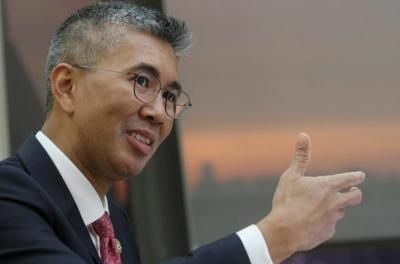
KUALA LUMPUR: The systematic roll-out of the National COVID-19 Immunisation Programme and the country’s economic recovery plan that embeds strict adherence to standard operating procedures (SOPs) will be the key to drive Malaysia back on its track, making it stronger by end-2021, Finance Minister Tengku Datuk Seri Zafrul Abdul Aziz said.
He said based on the current data, the country’s gross domestic growth has slowly shown signs of recovery since the movement control order (MCO) 1.0 in March 2020.
“We have many reasons to believe that the worst is behind us. I am certain that Malaysia will emerge stronger by the end of the year,” he told Bernama.
Tengku Zafrul said the economic sectors that were allowed to operate based on strict SOPs covers 93 per cent of the economy during MCO 2.0 and this has resulted to an output loss of RM300 million per day compared with the RM2.4 billion per day during MCO 1.0.
He also said the four economic stimulus packages totalling RM305 billion, or more than 20 per cent of gross domestic product (GDP), coupled with the gradual reopening of the economy since early May 2020 has supported the 2020 GDP by approximately four percentage points.
This has also contributed to the 24 per cent increase in the GDP from RM289.4 billion in Q2 2020, to RM357.4 billion in Q4 2020.
In addition, Budget 2021 tabled last year along with the PERMAI assistance package would further complement Malaysia’s economic recovery and cushion implications from the COVID-19 containment measures.
“Moreover, Malaysia’s National COVID-19 Immunisation Programme which has commenced since late February 2021 will support the reopening of our economy and spur business activities. This will be supported by a robust recovery in global trade and higher crude oil prices,” he explained.
Tengku Zafrul said the ministry is targeting the country’s deficit to be less than 6.2 per cent of GDP for 2021, depending on how fast the economy recovers and the government’s focus on supporting certain sectors to grow the local economy.
The country’s deficit rose to 6.2 per cent of GDP in 2020 from 3.4 per cent in 2019.
Meanwhile, Tengku Zafrul also encouraged all Malaysians to register for the vaccination through the MySejahtera app, or the official website as advertised by the Special Committee on COVID-19 Vaccine Supply Access Guarantee.
“It is crucial for the country to achieve herd immunity as soon as possible to ensure full recovery of the economy, including sectors that were hit hardest such as tourism, retail and aviation.”
On different development, the ex-banker said Bank Negara’s decision to maintain the overnight policy rate at 1.75 per cent at its recent monetary policy meeting would help ease the cashflow of individuals and businesses, encourage consumer spending and spur more lending activities by the financial institutions.
“This will provide an impetus towards our economic growth – complementing the government’s fiscal measures in ensuring a sustainable recovery of the economy.”
The Finance Ministry has released a one-year report of its accomplishments in conjunction with the Perikatan Nasional government’s first year anniversary.
In the report, Tengku Zafrul said the COVID-19 pandemic had resulted in an unprecedented socio-economic impact by Malaysia with huge risks to public health and a loss of about RM2.4 billion a day to the economy during MCO 1.0.
To address this pandemic, the government has formulated a 6R strategy, covering six levels: Resolve, Resilient, Restart, Recovery, Revitalise and Reform.
“The implementation of various types of initiatives including the PRIHATIN Economic Stimulus Package is supported by the use of current data, which enables immediate intervention and coordination to ensure effective delivery,” he said.
MCO 1.0 has resulted in a contraction in GDP of 17.1 per cent in the second quarter. However, the government’s swift action has yielded positive results as the country’s economy finally recorded a lower than expected contraction rate of 5.6 per cent for 2020.
The measures also helped lower the unemployment rate from 5.3 per cent (May 2020) to 4.8 per cent (December 2020).
“However, there is still a lot to be done. Budget 2021 and the PERMAI aid package will help. I am also confident that 80 per cent of Malaysians are expected to be vaccinated by early 2022 which will drive the country’s economic recovery.
“Meanwhile, the Finance Ministry and LAKSANA will continue to ensure that all initiatives are implemented and monitored properly so that our people and country can recover and emerge more resilient than before,” he said.
On March 16, 2020, an inter-agency economic stimulus implementation and coordination unit (LAKSANA) was formed to monitor the implementation of the economic stimulus packages. – Bernama
[Myanmar] Nearly 3,000 civil servants join strike in Taungdwingyi
Mar 09. 2021
By Eleven Media/ANN
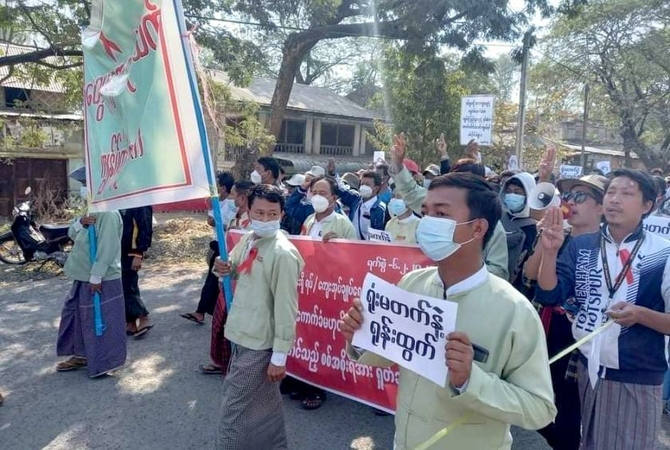
Twenty three staff members from Taungdwingyi Township General Administration Department in Magway Region joined the ongoing civil disobedience movement (CDM) on March 5 and 6 bringing the number of civil servants on strike to nearly 3,000 in the township.
Just before them, more than 1,000 education staff in the township also went on strike, followed by staff from Myanmar Economic Bank and other various departments such as health, forestry, irrigation, land record and Myanmar Railways.
On March 6 also, four corporals from Taungdwingyi Township Fire Service Department joined the CDM.
Well-wishers and aid organizations are providing cash assistance and food for the service personnel going on strike in opposition to the military takeover.
US is disrupting security in South China Sea: Chinese Foreign Minister Wang Yi
Mar 08. 2021
By Danson Cheong and Tan Dawn Wei The Straits Times/ANN
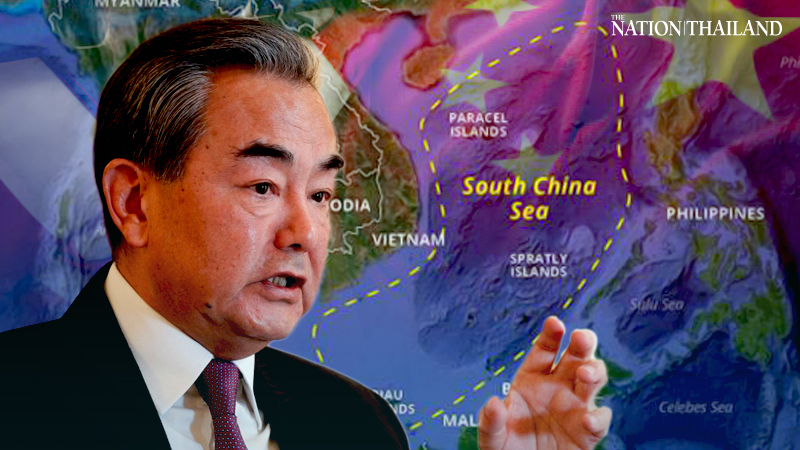
BEIJING – China’s top diplomat has accused the United States and other Western nations of disrupting regional stability in the South China Sea, even as he urged South-east Asian countries to “press ahead” with the negotiations on a code to manage maritime and territorial disputes in the contested waters.
In a wide-ranging annual press conference that lasted more than 90 minutes, Chinese Foreign Minister Wang Yi repeatedly warned the US of interfering in its domestic affairs, although he also held out an olive branch to the new Biden administration, calling for dialogue and cooperation.
Bilateral relations sank to a historic low under the previous Trump administration, with both sides engaged in disputes on issues including trade, technology, the pandemic and Taiwan.
“Countries in the region and around the world in recent years can all see clearly that the factors for instability and security risks in the South China Sea come mainly from outside the region,” he said on Sunday in response to a question by The Straits Times.
China and Asean have reached common understanding on maintaining peace and stability in the South China Sea, but “the US and some other Western countries want to see instability in the region”, he said, adding that they have used the freedom of navigation principle to “stir up the situation” and created divisions among the countries in the contested waters.
The US and its allies such as Australia and Britain have conducted frequent freedom of navigation operations there in a bid to challenge China’s territorial claims that overlap with Malaysia, Vietnam, Brunei, the Philippines and Taiwan.
The resource-rich region has become a potential flashpoint, and Beijing has laid claim to almost the entire South China Sea, building military bases on artificial islands there.
Since December 2019, an increasing number of countries, including Indonesia, Malaysia, the Philippines, Vietnam, the US, Japan, France, Germany and the United Kingdom, have filed diplomatic notes to the United Nations rejecting Chinese claims to the region.
Mr Wang urged countries to “press ahead” with negotiations to conclude a code of conduct between China and Asean states on the South China Sea, but experts say this would be unlikely, as negotiations over a code of conduct between China and Asean states have been hit by the Covid-19 outbreak.
Dr Collin Koh, a research fellow at the S. Rajaratnam School of International Studies (RSIS), said the fact that senior officials from Asean and China were unable to meet face-to-face in the past year have stalled talks.
“Most governments will want to get the pandemic under control before they will want to talk about the (code of conduct),” said Dr Koh, a maritime security expert.
On Sunday,Mr Wang also warned the US against supporting Taiwan’s pro-independence movement, saying it will take military action to safeguard its sovereignty.
“We have the capability to thwart separatist attempts for Taiwan independence forces in whatever form,” he warned, adding that he hopes the new US administration will abide by its one-China policy, which recognises Taiwan as part of mainland China.
He urged Washington to remove all its “unreasonable restrictions” on bilateral cooperation as early as possible, and not “create new obstacles”.
Both sides should engage in healthy competition fairly, he said, and cooperate on a Covid-19 response, economic recovery and climate change.
The new Biden administration has indicated that it will continue to be tough on China and may not roll back certain sanctions introduced by the previous president.
Associate professor Li Mingjiang from RSIS said that unlike during the Trump administration, there would would be “limited cooperation between both sides on issues where “there are no serious clashing interests” – such as on climate change and World Trade Organisation reforms.
But Beijing will be especially wary about Washington’s fresh focus on engaging Asean nations, he noted.
“This is something that China will be watching very closely – Washington’s new policy towards Southeast Asia and how it engages the region,” he said.
MH370 kin still searching for answers, seven years on
Mar 08. 2021
By MARTIN CARVALHO The Star/ANN
PETALING JAYA: Seven years may have passed since the fateful day Malaysia Airlines flight MH370 vanished, yet loved ones of those onboard are still struggling to cope with the loss.
This was the sentiment shared by Grace Nathan, 31, whose mother Anne Daisy, was among the 239 people on board the aircraft that vanished while flying from Kuala Lumpur to Beijing in 2014.
Grace said many of them were still waiting for closure.
“Some continue to wait and some have not accepted that their loved ones may not be coming home, ” she said while hosting the 7th Annual Remembrance Event for Missing Malaysian Airlines Flight MH370 by ‘Voice370’ yesterday.
While some could have accepted the reality of not seeing their loved ones again, Grace said, they all had a longing for answers.
“There is still this undying need or desire to know what happened to them so that we can understand why they are not coming home ever, ” she added.
Her mother Anne, 56, an executive with a learning and development firm, was on her way to to visit her husband, Department of Civil Aviation official VPR Nathan, 58, who had been posted to the Chinese capital.
There were also families of passengers from China, who were likewise struggling to cope, she said.
“A group of elderly next-of-kin are still looking for answers. They have been going to the MAS office every day for the last seven years to ask for updates, ” Grace said.
She said counselling should be provided to these families in China, to help them cope with their emotional anguish.
Grace also reiterated the request of families of those missing for the Malaysian government to release military radar data of Flight MH370 on March 7 and 8,2014.
“The data could be released on a non-disclosure basis to independent experts, ” she said, adding that individuals or governments with information should also come forward to help solve the mystery.
On a separate matter, independent expert Mike Exner yesterday said debris that likely came from MH370 was found washed along the beach in Jeffreys Bay, South Africa, sometime between August and September last year.
He said the debris – part of an aircraft’s wing – had been handed over to the South African authorities.
Meanwhile, Transport Minister Datuk Seri Dr Wee Ka Siong said Malaysia would take any reasonable effort to continue the search for MH370, in cooperation with China and Australia.
“We aspire towards closure as much as the families and friends.
“In the search for MH370, the governments of Malaysia, Australia and China have spared no expenses and resources in the collective effort to locate MH370.
“Our shared aim was always to find the aircraft and get the answers, ” he said in a special message to the next-of-kin during the virtual event.
Dr Wee said that the MH370 tragedy could never be forgotten and yesterday’s event was held in solemn remembrance and with prayers for those who were on board the plane.
“For many, the passage of time these seven years has not softened the painful memory of this tragedy, ” he added.
MH370 was on its way from Kuala Lumpur to Beijing with 239 passengers and crew on board when it disappeared from radar.
Investigators deduced that the aircraft had veered thousands of kilometers off course before crashing into the Indian Ocean.
Mar 08. 2021Ice tulips are in full bloom at Roppongi Hills in Minato Ward, Tokyo, on Friday. (The Yomiuri Shimbun)
By The Japan News/ANN
An abundance of ice tulips, which have undergone a special refrigeration process to adjust their blooming time, are in full bloom at Roppongi Hills in Minato Ward, Tokyo.
About 2,000 of the bulbs were planted in the outdoor flower beds but they bloomed about a week later than usual due to the cold wave at the beginning of the year, according to Mori Building Co., which manages them. The flower beds are now decorated with the red and pink flowers.
A 29-year-old company employee from Chiba City who was passing by said, “It was so pretty that I couldn’t help stopping to take a picture.”
The ice tulips will be at their best until the end of this month.

 Finance Minister Hong Nam-ki presides over a meeting on innovative growth at the government complex building in Seoul on Wednesday. (Yonhap)

 Ice tulips are in full bloom at Roppongi Hills in Minato Ward, Tokyo, on Friday. (The Yomiuri Shimbun)
