Chinese pharma Sinopharm’s Covid vaccine becomes 2nd to be approved for emergency use in Pakistan #SootinClaimon.Com

#SootinClaimon.Com : ขอบคุณแหล่งข้อมูล : หนังสือพิมพ์ The Nation.

Chinese pharma Sinopharm’s Covid vaccine becomes 2nd to be approved for emergency use in Pakistan

Jan 19. 2021
By Ikram Junaidi
DAWN/ANN

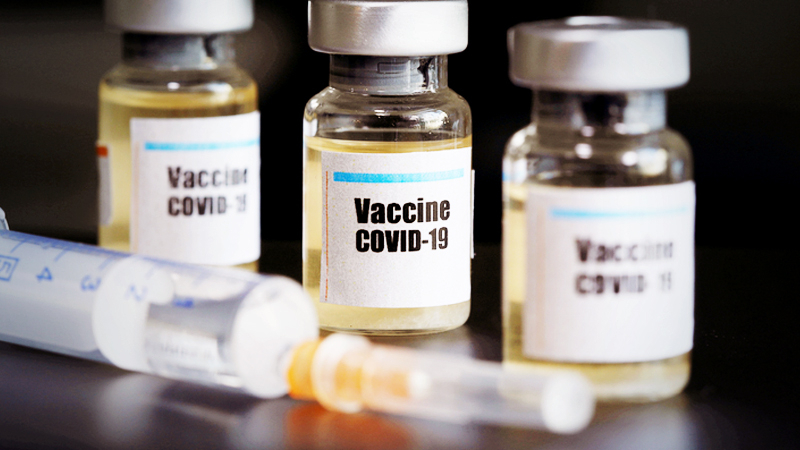
The Drug Regulatory Authority of Pakistan (Drap) on Monday approved Chinese state-owned firm Sinopharm’s Covid-19 vaccine for emergency use, the second shot to be given approval for use in the country.

On Friday, Drap had authorised the Oxford University-AstraZeneca Covid-19 vaccine for emergency use in Pakistan.

“In a meeting conducted by [the] Registration Board of Drap today January 18, 2021, another vaccine manufactured by China National Pharmaceutical Group (Sinopharm) has also been given EUA (emergency use authorisation),” a spokesperson for the regulatory body said in a statement.

Both the Oxford and Sinopharm vaccines were evaluated for their safety and quality and granted EUA “with certain conditions”, the statement added.

“This authorisation will be reviewed on quarterly basis keeping in view further data regarding safety, efficacy and quality,” it said.

The vaccine was developed by the Beijing Institute of Biological Products, a subsidiary of state-owned conglomerate Sinopharm. The company announced last month that preliminary data from last-stage trials had shown it to be 79.3 per cent effective.

Chinese health regulators had last month given conditional approval to the Sinopharm vaccine, the first to be approved for general use in China.

It is an inactive vaccine, which means the virus was grown in a lab and then killed. The germ is then injected into the body to generate an immune response.

Final proof of the two-dose vaccine’s effectiveness will depend on publication of more data.

On December 30, a special cabinet committee for procurement of Covid-19 vaccine, chaired by federal Minister for Planning and Development Asad Umar, had decided to procure 1.1 million doses of vaccine from Sinopharm. It was also announced that the vaccine would be provided to 500,000 frontline healthcare workers as two doses would be given to each worker and the margin of spoilage was 10pc.

Sinopharm’s vaccine is able to be stored at two to eight degrees Celsius, or a normal refrigeration temperature.

The jab has already been approved in the United Arab Emirates and Bahrain, and is slated for use next in Morocco.

Trial’s final stage

A member of the Scientific Task Force on Covid-19 constituted in March last year, Dr Ghazna Khalid, had told Dawn last week that the Phase-I trial of the Sinopharm vaccine that was being conducted in Karachi had reached the final stage.

“We have almost completed the trial as only 10 volunteers are left,” Dr Khalid said at the time. She said there was a requirement to hold a small Phase-I trial of the vaccine so it was decided to hold the trial at the International Centre for Chemical and Biological Sciences (ICCBS), Karachi, with the collaboration of Indus Hospital.

Asked about the sample size of the trial, she said the Phase-I trial should not be confused with the clinical trial as so far the vaccine had been administered to one million volunteers in China, Dubai and Abu Dhabi.

While talking to Dawn, ICCBS Director Prof Dr Iqbal Choudhary said the trial was being done on 150 healthy volunteers to see how the vaccine reacted on different ethnic groups.

An official of the Ministry of National Health Services, requesting not to be named, had earlier told Dawn there was almost no chance of getting the Oxford University-AstraZeneca vaccine as India had already purchased its research and was also manufacturing it. Besides, New Delhi has announced that it will give priority to its own population.

“Our only chance to get the vaccine is through Covax,” the official said.

Covax is an alliance that had been set up by Global Alliance for Vaccines and Immunisation (GAVI), Coalition for Epidemic Preparedness Innovations (CEPI) and World Health Organisation in April last year. It has pledged provision of free vaccine for 20 per cent of the population of around 190 countries, including Pakistan. It is hoped that the first consignment will be received just after the start of the second quarter of 2021.

On Saturday, federal minister Asad Umar had said that the federal government would not hold a monopoly on the import of coronavirus vaccines, adding that provinces and the private sector were free to import vaccines subject to Drap’s approval.

“From day 1, the NCOC has adopted the policy that the federal government shall not have the monopoly to import anti-coronavirus vaccines,” he said while speaking to Geo News. “Provinces and private entities including hospitals have been allowed to import the vaccines that are approved by Drap.”

Blow for Samsung as heir Lee sent back to prison for bribery #SootinClaimon.Com

#SootinClaimon.Com : ขอบคุณแหล่งข้อมูล : หนังสือพิมพ์ The Nation.

Blow for Samsung as heir Lee sent back to prison for bribery

Jan 19. 2021Samsung Group chief Lee Jae-yong (Yonhap)Samsung Group chief Lee Jae-yong (Yonhap)

By Bae Hyunjung
The Korea Herald/ANN

South Korea’s largest conglomerate, Samsung Group, is facing another watershed as chief Lee Jae-yong was once again taken into custody Monday after receiving a jail term for bribery and embezzlement.

The departure of Lee from the helm of the group comes at a time when the IT giant is seeking to make progress on its long-pending management succession and to press forward amid the post-coronavirus economic recovery.

“Lee should be held responsible for the suggested bribery and embezzlement charges,” the Seoul High Court said in its ruling, sentencing Lee to a jail term of two years and six months.

Following the verdict, Lee was immediately put under court detention, and is to be returned to the Seoul Detention Center, which he left in February 2018.

Apparently in shock over the stricter-than-expected sanctions, Samsung Group had not released a statement on the matter.

“The essence of this case is that the power abuse of former President Park Geun-hye has infringed upon the property rights of a company,” Lee’s lawyers told reporters, expressing regrets over the court’s decision.

When asked on whether or not Lee will make a final appeal, the lawyers refrained from answering, saying only that they will thoroughly review the written judgment.

Market observers said although each Samsung company has its own efficient and competent leadership team, Lee’s absence will have an impact on groupwide investment decisions such as corporate acquisitions.

Under Lee’s stewardship, Samsung has laid out a vision to take over the global No.1 position in the system-on-chip market by 2030, pledging investments of 13.3 trillion won.

Chiefs of local business associations expressed regrets.

“The latest ruling will create a management vacuum within Samsung Group, which will delay crucial business decisions and investments, and consequently deliver negative impact to the industry in general,” the Korea Enterprises Federation said in a statement.

“We request that (the government) give policy and administrative considerations in order to minimize the management setbacks in Samsung Group, as it has become vital to gain an upper hand in the post-coronavirus market through active business expansion and technology innovation.”

The Korea International Trade Association also issued its statement, expressing worries that the corporate chief’s jail term may harm Samsung’s credibility in the global market.

Prior to the court ruling, a number of business associations had expressed support for Lee, asking the court to give Lee and Samsung the opportunity to spearhead the nation’s economic rebound after the pandemic.

“We should give (Lee) the chance to contribute to the recovery of our economy,” said Korea Venture Business Association President Ahn Keon-joon upon filing a petition with the court last Wednesday.

His words were echoed by Korea Chamber of Commerce and Industry Chairman Park Yong-maan and Korea Federation of SMEs Chairman Kim Ki-mun.

Also, a number of online petitions have been made at Cheong Wa Dae’s website demanding that Lee be released, gaining more than 66,000 signatures as of 2 p.m. Monday. Another petition calling for stern punishment for Lee, on the other hand, had some 1,600 signatures.

The case of the Samsung Electronics vice chairman goes back to the former Park Geun-hye administration and the power-rigging scandal that led to Park’s impeachment in late 2016. The Samsung chief was charged with bribing Park’s former confidant, then known as Choi Soon-sil, to obtain the government’s help in securing control of Samsung Group.

He was initially sentenced to five years in prison in 2017, but was freed the following year after an appellate court reduced the term to 2 1/2 years, suspended for four years.

The case reached the Supreme Court but was returned to the appellate court in 2019 as the top court decided that some key bribery charges had been omitted. Samsung had also spent 3.4 billion won ($3.08 million) to purchase horses for Choi’s daughter and made a separate donation to a sports foundation, bringing the total amount to 8.6 billion won.

During the final hearing in late December, prosecutors demanded a nine-year term, down from the previous 12 years called for during the first and second trials.

Delivering his final statement, Lee expressed regrets and vowed to atone for his wrongdoings.

“I had to sit down with former President Park while I was in a difficult situation after my father suddenly collapsed. I will never repeat such an act again,” Lee said.

“I want to make a new Samsung that fits the country’s status, and repay my respected father.”

Following his father’s death in October, Lee was expected to be promoted to chairman after the retrial procedure wrapped up.

China’s GDP tops 100 trillion yuan for first time #SootinClaimon.Com

#SootinClaimon.Com : ขอบคุณแหล่งข้อมูล : หนังสือพิมพ์ The Nation.

China’s GDP tops 100 trillion yuan for first time

Jan 19. 2021Workers check product quality at the Hebei Xinglong Equipment Co Ltd in Fengrun District, Tangshan of North China's Hebei province, on Dec 17, 2020. [Photo/Xinhua]Workers check product quality at the Hebei Xinglong Equipment Co Ltd in Fengrun District, Tangshan of North China’s Hebei province, on Dec 17, 2020. [Photo/Xinhua]
By ZHOU LANXU
CHINA DAILY/ANN

‘Better-than-expected results’ signal high-quality growth momentum in 2021

China’s stronger-than-expected economic rebound and continuous structural improvements last year have signaled that the country’s pursuit of high-quality growth is set to gain more momentum in 2021, officials and experts said on Monday.

The world’s second-largest economy grew by 2.3 percent in 2020, and it should be the only major economy to have achieved annual growth, the National Bureau of Statistics said on Monday.

The country’s annual GDP came in at 101.6 trillion yuan ($15.7 trillion) last year, surpassing 100 trillion yuan for the first time and indicating that its overall national strength has reached a new level, the bureau said.

“Main targets and tasks for economic and social development have been accomplished with better-than-expected results,” said Ning Jizhe, head of the NBS.

Economic growth normalized to pre-COVID-19 levels in the fourth quarter last year and hit 6.5 percent year-on-year, up from 4.9 percent in the third quarter, Ning said, adding that the achievements were hard-earned amid the pandemic and global economic recession.

Multiple factors will help sustain steady economic recovery into 2021, he said, pointing to the country’s vast domestic market as having provided a strong buffer against external uncertainties while accelerating digitalization spurs high-quality development.

The government will further reform efforts to narrow income gaps and boost new consumption growth points, while expanding investment to address weak links in the economy, Ning said.

Experts said they expect reviving consumption to replace investment and exports as the main driver of economic growth in 2021, underpinning strong annual growth forecasts between 7 percent and 9 percent.

A low comparison base in 2020, ramped-up investment in manufacturing sectors and new types of infrastructure as well as exports buoyed by the global economic recovery will also help sustain China’s economic rebound, they said.

The country’s consumer market has gradually recovered from the effects of COVID-19, with the growth in retail sales recovering to 4.6 percent year-on-year in the fourth quarter, versus 0.9 percent in the third quarter, even as local COVID-19 cases constrained consumption in December, according to the NBS.

Recovering incomes and stabilizing employment have boosted experts’ confidence in the anticipated recovery in consumption. The surveyed urban jobless rate nationwide was 5.2 percent in December and 5.6 percent on average for the whole year, below the government’s annual control target of 6 percent, the NBS said.

Per capita disposable income grew by 2.1 percent in real terms to 32,189 yuan in 2020, with income growth for rural residents coming in at 3.8 percent and outpacing their urban counterparts, the bureau said.

“The narrowing income gap between urban and rural residents, in tandem with the quicker sales of goods related to consumption upgrades in the fourth quarter, signaled that consumption upgrading will percolate to lower-tier cities and rural areas, creating new growth points of consumption,” said Cheng Shi, chief economist at ICBC International.

Accelerating digitalization should be another key structural improvement in 2020 that will help bolster high-quality development this year, experts said, with the use of 5G, intelligent technologies and the internet of things to further inject economic momentum.

The value-added output of high-tech manufacturing sectors rose by 7.1 percent last year, outpacing the 2.8 percent growth for the whole industrial sector, according to the NBS. Investment in high-tech industries grew by 10.6 percent in 2020, versus 2.9 percent of total fixed-asset investment.

As the economy embarks on the 14th Five-Year Plan (2021-25), which turns self-reliance in science and technology into a strategic pillar for national development, investment in innovation and new types of infrastructure will be stepped up this year, experts said.

Iris Pang, chief China economist at Dutch bank ING, said she expects active fiscal stimulus in 2021 to support technology research and development, companies in difficulties and the development of green energy, while monetary policy is expected to remain unchanged given an upbeat growth picture.

China’s GDP is expected to grow by 12 percent year-on-year in the first quarter of 2021 and 7 percent for the whole year, Pang said.

Despite promising growth prospects, officials and experts highlighted the need to be wary of mounting uncertainties, especially the pandemic situation and geopolitical tensions.

Uncertainties to recovery

Recent local resurgence of COVID-19 cases in some areas has brought uncertainties to future economic recovery, but the impact should be limited as the country has established plans to rapidly contain the spread and minimize related economic losses, said Ning of the NBS.

“For this year, should global growth not recover, policymakers in China still have the tools to implement stimulus support, especially given that relative to other central bankers last year, they were very conservative with easing measures,” said Catherine Yeung, investment director at Fidelity International, a global asset manager.

Chen Jia and Shi Jing contributed to this story.

Vietnam to remain at centre of Asian supply chains: EIU #SootinClaimon.Com

#SootinClaimon.Com : ขอบคุณแหล่งข้อมูล : หนังสือพิมพ์ The Nation.

Vietnam to remain at centre of Asian supply chains: EIU

Jan 18. 2021

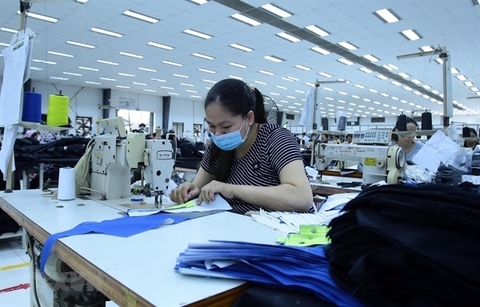
A garment and textile production line at Kydo Company at Pho Noi A Hung Yen Industrial Park. — VNA/VNS Photo Pham Kien

A garment and textile production line at Kydo Company at Pho Noi A Hung Yen Industrial Park. — VNA/VNS Photo Pham Kien

By Viet Nam News/ANN

Viet Nam will remain at the centre of Asian supply chains and one of the most competitive manufacturing locations in the Asia-Pacific region, said analysts at the Economist Intelligence Unit in a report on the country released this week.

The report entitled ‘Rising star: Viet Nam’s role in Asia’s shifting supply chains’, focused on examining Viet Nam’s labour market, investment attraction policy, and trade relationships.

Accordingly, low-skilled manufacturing wages will rise at a moderate pace relative to Viet Nam’s regional competitors. However, specialised labour in manufacturing and services professions will remain scarce. In the field of investment, high-tech manufacturers will continue to enjoy incentives for many years to come. In addition, Viet Nam has joined many trade agreements and maintained good relations with trading partners, helping to reduce transaction costs for local businesses.

EIU Senior Analyst John Marrett said tax and foreign direct investment policies, as well as measures to control foreign trade and exchange, are the main strengths of the Vietnamese business climate compared to other countries in the region.

These are underpinned by the country’s domestic political stability, which is higher than that of most other Southeast Asian countries with similar economic development level, he added.

The EIU is a global leading resource for economic and business research, forecasting and analysis. — VNS

Moon believes S. Korea will achieve faster herd immunity formation than other nations #SootinClaimon.Com

#SootinClaimon.Com : ขอบคุณแหล่งข้อมูล : หนังสือพิมพ์ The Nation.

Moon believes S. Korea will achieve faster herd immunity formation than other nations

Jan 18. 2021President Moon Jae-in speaks during a New Year's press conference at the presidential office Cheong Wa Dae in Seoul on Monday. (Yonhap)President Moon Jae-in speaks during a New Year’s press conference at the presidential office Cheong Wa Dae in Seoul on Monday. (Yonhap)
By The Korea Herald/ANN

President Moon Jae-in forecast Monday that South Korea will be able to achieve the formation of collective herd immunity against the new coronavirus faster than other countries under the government’s inoculation program.

“South Korea will definitely not lag behind (in achieving herd immunity), but rather will be able to achieve it much faster compared to other nations when considering the inoculation period and the time frame in achieving herd immunity,” Moon said during a New Year’s press conference held at Cheong Wa Dae.

Moon said he predicts the country will achieve complete herd immunity no later than late November.

“By beginning from February, we plan to complete preliminary vaccinations by September. I believe we will be able to reach a general level of herd immunity by then,” Moon said.

The president said the secondary phase of national inoculation, centered around those who hadn’t had the chance to be vaccinated, will be carried out in the fourth quarter.

Moon also cautiously projected that the government’s inoculation time schedule could be sped up if shipments from the World Health Organization’s global vaccine project, known as COVAX, arrive earlier than expected.

“There is a possibility that the shipments from COVAX could arrive the earliest. I’ve been briefed that the vaccine shipment inoculation period could be sped up if that is the case,” Moon said. (Yonhap)

Game-like app allows public to help study climate change in Japan #SootinClaimon.Com

#SootinClaimon.Com : ขอบคุณแหล่งข้อมูล : หนังสือพิมพ์ The Nation.

Game-like app allows public to help study climate change in Japan

Jan 18. 2021

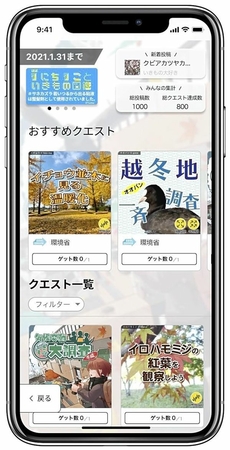
The Environment Ministry’s event is seen on the Biome app. (Courtesy of the Environment Ministry)

The Environment Ministry’s event is seen on the Biome app. (Courtesy of the Environment Ministry)

By The Japan News/ANN

Using a smartphone app that has the feel of a video game, the Environment Ministry has launched an ongoing event to encourage people to contemplate climate change.

Called “Kikohendo Ikimono Daichosa” (Great survey of living things and climate change), the free event is hosted on an app called Biome and asks participants to upload photos of local flora and fauna. To participate, users must download the app, created by a company in Kyoto. After downloading it, they simply choose a “quest,” take photos of the assigned plant or animal and upload them.

There are 25 quests to choose from, including one where you can help track the flight patterns of a duck whose migration and wintering spots are said to have changed and another that asks users to investigate an invasive species, the stink bug. Many quests pertain to living creatures that have been impacted by global warming.

Around 11,000 photos have been uploaded to the app since the event began in November. The deadline to join the first round is the end of this month. The ministry plans on keeping it going until fiscal 2022.

The Environment Ministry plans to compare uploaded photos with previous data and present its findings on any environmental changes it discovers.

“With the government’s plans to reduce greenhouse gas emissions to net-zero by 2050, we hope this event will help young people to see directly what climate change does to their surroundings,” a ministry official in charge said.

Malaysians in S’pore hope vaccinations will ease travel curbs #SootinClaimon.Com

#SootinClaimon.Com : ขอบคุณแหล่งข้อมูล : หนังสือพิมพ์ The Nation.

Malaysians in S’pore hope vaccinations will ease travel curbs

Jan 18. 2021

By The Star/ANN

SINGAPORE: A number of Malaysians working in Singapore have started receiving the Pfizer-BioNTech vaccine.

Some of them shared their experience getting their jabs on the Malaysian-Singapore Border Crossers Facebook page, which has almost 82,000 members.

According to Imra Astata Ibrahim, who works in the marine sector, he had his first injection on Jan 13 and would get the second dose after 21 days.

Imra Astata, 40, who is renting a room in Jurong West here, said he did not hesitate to get the vaccine with 10 of his Malaysian colleagues.

In fact, the father of three has high hopes that by getting vaccinated, it will be easier for him to travel back and forth to Johor.

“Who knows, there will be an understanding between the two countries to facilitate the movement of commuters, namely workers who have received this vaccine, ” he said.

Imra Astata, from Johor, only returned to the republic on Sept 24 last year after strict measures at both borders were introduced in March to curb the Covid-19 pandemic.

Asked if there were any side effects from his vaccination, Imra Astata said before taking it, he and his colleagues had been informed of the possible side effects.

“So far, my friends and I are healthy after getting the jab. Only on the first day did I feel slight numbness and pain at the injection area, ” he said.

The Singapore government has made provisions for all Singaporeans and long-term residents in the republic to get vaccinated by end-2021.

Singapore received the first shipment of Pfizer-BioNTech Covid-19 vaccine on Dec 21 last year.

To ensure accessibility of the vaccine and enable the republic to achieve a higher rate of inoculation for the population, the vaccination will be given free.

According to its Health Ministry, as of Jan 12, more than 6,200 individuals have received their first dose of the vaccine.

These numbers are expected to rise substantially in the coming weeks as it continues to ramp up its vaccination operations, it said.

In line with the recommendations by the Expert Committee on Covid-19 Vaccination to prioritise vaccinations of groups that are most at risk, Singapore has begun vaccinating healthcare workers progressively from Dec 30,2020. — Bernama

Travelers to Beijing to undergo extra 7-day health monitoring #SootinClaimon.Com

#SootinClaimon.Com : ขอบคุณแหล่งข้อมูล : หนังสือพิมพ์ The Nation.

Travelers to Beijing to undergo extra 7-day health monitoring

Jan 18. 2021

By China Daily/ANN

BEIJING – Beijing has required inbound travelers to undergo health monitoring for seven additional days following 21 days of medical observation, authorities said Saturday.

The latest requirement was announced following a meeting of the city’s COVID-19 prevention and control leadership group held on Friday.

The anti-epidemic management at the centralized quarantine venues will be further strengthened and nucleic acid tests targeting related personnel and surroundings will be conducted more frequently, according to the meeting.

Recently, there have been cases in Beijing and other cities across the country in which inbound travelers were confirmed as COVID-19 patients after 14 days of isolated observation, which led to a rebound in indigenous cases.

In response to the problem, Beijing extended the COVID-19 observation period for inbound travelers earlier this month to 21 days following sporadic locally transmitted cases.

Mask-wearing raises imports of eye makeup from S. Korea #SootinClaimon.Com

#SootinClaimon.Com : ขอบคุณแหล่งข้อมูล : หนังสือพิมพ์ The Nation.

Mask-wearing raises imports of eye makeup from S. Korea

Jan 17. 2021

By The Yomiuri Shimbun

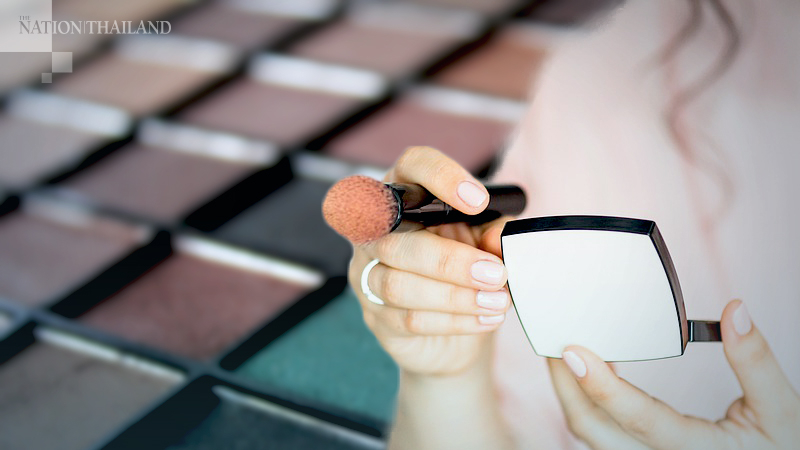
With widespread mask-wearing drawing more attention to people’s eyes, imports of makeup such as eye shadow and mascara, mainly from South Korea, are on the rise.

According to Osaka Customs, nationwide imports of cosmetics as a whole fell in the January-October period of 2020. Lipstick imports were down 28.2% and powder imports were down 23.5% from the same period in the previous year.

On the other hand, eye makeup imports grew significantly, up 10% to 2,246 tons. The annual import volume for 2020 appears to have surpassed that of 2019, the highest year on record.

Especially on the rise are imports from South Korea, which rose 19.9% to 599 tons in the January-October period, one of the factors pushing up the total volume of eye makeup imports.

At Nanohana Ebisubashi, a cosmetics specialty outlet in Chuo Ward, Osaka, South Korean products account for one-third of the about 200 brands displayed in the store. Many of the products are brightly colored and come in attractive packaging resembling magazine covers.

“The area around my eyes is important because I always wear a mask. South Korean brands are more affordable than Japanese products and the colors are bright,” a 24-year-old woman from Osaka said.

Behind the trend is a Korean boom in Japanese popular culture that began before the coronavirus crisis, spurred by South Korean TV programs and K-pop idol groups. There is even a magazine that gives advice on how to apply makeup like actress Son Ye-jin of the drama “Crash Landing on You.”

“Due to the influence of the Korean boom, more and more people are adopting eye shadow and other South Korean makeup, which comes in a wide variety of colors,” an official of the store’s operating company said.

Domestic manufacturers are also benefitting from the popularity of eye makeup. According to Tokiwa Pharmaceutical Co., sales of lip gloss and foundation were lower than before the virus outbreak, but domestic shipments of the eye makeup brand Sana New Born rose year on year in the July-November 2020 period.

Shiseido Co. has released a base makeup product that does not stick to masks, and the company has a dedicated website that offers tips on how to apply makeup when wearing a mask.

China to step up protection of rare earth resources #SootinClaimon.Com

#SootinClaimon.Com : ขอบคุณแหล่งข้อมูล : หนังสือพิมพ์ The Nation.

China to step up protection of rare earth resources

Jan 17. 2021

By China Daily

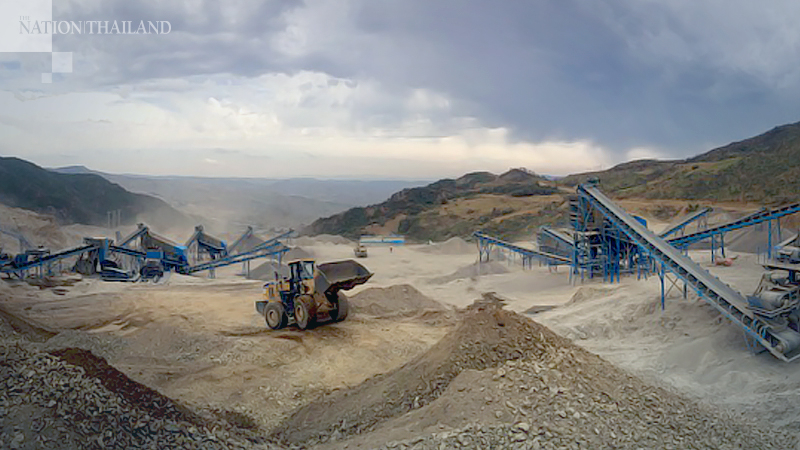
China will reinforce the protection of its rare earth resources, strengthen full industrial chain regulation and establish a mechanism under the State Council to decide and coordinate on major policy measures, according to a draft guideline published on Friday.

The guideline was published on the website of the Ministry of Industry and Information Technology and will be kept open for public opinion till Feb 15.

“Rare earths are important strategic resources that are not renewable, and it is necessary to reinforce the full industrial chain regulations targeting activities that are currently disrupting the healthy development of the industry and damaging the environment, such as illegal, destructive, unplanned and excessive mining, and illicit trading,” the ministry said.

The guideline aims to regulate the rare earth industry under the framework of laws and regulations, the ministry said.

A group of 17 metallic elements that have distinctive properties such as electrical conductivity and magnetism, rare earths are used in a wide variety of applications, ranging from cellphone batteries, computers, wind turbines and televisions, to fiber optics and missiles, and are widely considered important strategic resources.

Stating the prized resources’ irreplaceable significance for the upgrade of traditional industries, and the development of emerging industries and the national defense industry, the guideline said special measures must be taken to protect the resources.

It mentioned administrative license and project approval procedures for rare earth mining and the process of smelting and separation, and quotas respectively for mining, and for smelting and separation.

According to the guideline, any organization or natural person is prohibited from purchasing or selling rare earth products that are illegally mined, or smelted and separated.

It also stressed that rare earth import and export enterprises must abide by the foreign trade and export control laws and regulations.

As the world’s largest rare earth supplier, China produces around 80 percent of the world’s total supplies.

However, the country’s rare-earth industry faces problems such as smuggling, illegal mining and environmental damage issues.

To protect the important strategic resource, the rare earth industry should have more precise rules and regulations, and the government should encourage innovation and development of high-end rare earth products such as new materials to move up the global value chain, said Bai Ming, deputy director of the Institute of International Market Research at the Chinese Academy of International Trade and Economic Cooperation of the Ministry of Commerce.