Reform linked borrowing permissions are facilitating Ease of Doing Business reforms #SootinClaimon.Com

#SootinClaimon.Com : ขอบคุณแหล่งข้อมูล : หนังสือพิมพ์ The Nation.

Reform linked borrowing permissions are facilitating Ease of Doing Business reforms (nationthailand.com)

Reform linked borrowing permissions are facilitating Ease of Doing Business reforms

Dec 21. 2020
By The Statesman

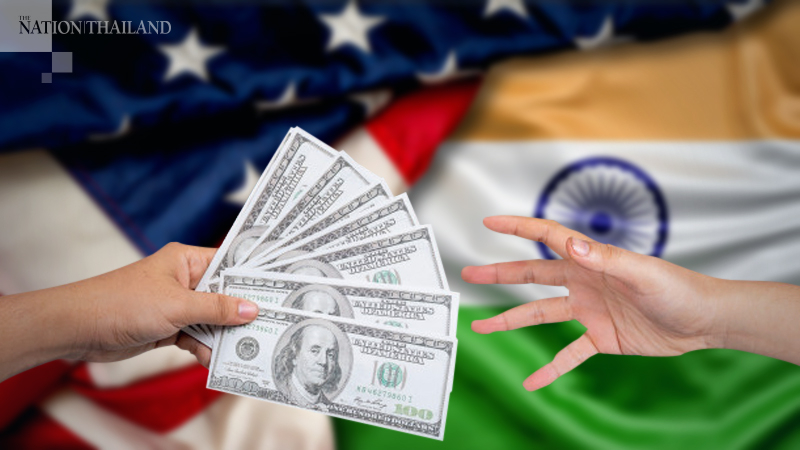
Linking the grant of additional borrowing permissions by the Government of India to the States to reforms in various citizen-centric sectors has motivated the States to undertake reforms to promote Ease of Doing Business.

5 States have so far completed the stipulated reforms in the Ease of Doing Business. These States have been granted permission to mobilize additional financial resources to the tune of Rs 16,728 crore through open market borrowings.

These states are Andhra Pradesh, Karnataka, Madhya Pradesh, Tamil Nadu and Telangana.

State-wise amount of additional borrowing permissions granted is as under:

State                     Amount (Rs in crore)

Andhra Pradesh             2,525

Karnataka                      4,509

Madhya Pradesh            2,373

Tamil Nadu                    4,813

Telangana                      2,508

The Ease of Doing Business is an important indicator of the investment-friendly business climate in the country. Improvements in the ease of doing business will enable faster future growth of the state economy. Therefore, the government of India had in May 2020, decided to link grant of additional borrowing permissions to States who undertake the reforms to facilitate ease of doing business.

The reforms stipulated in this category are:

(i) Completion of first assessment of ‘District Level Business Reform Action Plan’

(ii) Elimination of the requirements of renewal of registration certificates/approvals/licences obtained by businesses for various activities at least under the following Acts: –

  • The Shops & Establishment Act
  • The Contracts Labour (Regulation and Abolition) Act, 1970
  • The Factories Act, 1948
  • The Legal Metrology Act
  • The Inter State Migrant Workmen (RE&CS) Act, 1979
  • Drug Manufacturing/ Selling/ Storage License
  • Trade License issued by the Municipal Corporations.

(iii)    Implementation of computerized central random inspection system under the Acts wherein allocation of inspectors is done centrally, the same inspector is not assigned to the same unit in subsequent years, prior inspection notice is provided to the business owner, and inspection report is uploaded within 48 hours of inspection. This includes the inspection under:

  1. The Equal Remuneration Act, 1976
  2. The Minimum Wages Act, 1948
  3. The Shops and Establishments Act
  4. The Payment of Bonus Act, 1965
  5. The Payment of Wages Act, 1936
  6. The Payment of Gratuity Act, 1972
  7. The Contract Labour (Regulation and Abolition) Act, 1970
  8. The Factories Act, 1948
  9. The Boilers Act, 1923
  10. The Water (Prevention and Control of Pollution) Act, 1974
  11. The Air (Prevention and Control of Pollution) Act, 1981
  12. The Legal Metrology Act, 2009 and Rules

In view of the resource requirement to meet the challenges posed by the COVID-19 pandemic, the Government of India had on 17th May 2020 enhanced the borrowing limit of the States by 2 percent of their GSDP.

Half of this special dispensation was linked to undertaking citizen-centric reforms by the States. The four citizen-centric areas for reforms identified were (a) Implementation of One Nation One Ration Card System, (b) Ease of doing business reform, (c) Urban Local body/ utility reforms and (d) Power Sector reforms.

So far 10 States have implemented the One Nation One Ration Card System, 5 States have done Ease of Doing Business reforms, and 2 States have done local body reforms.

Besides additional borrowing permissions, the States completing three out of the four reforms are entitled to get additional financial assistance under the “Scheme for Financial Assistance to States for Capital Expenditure”. Under the Scheme, an amount of Rs.2,000 crore is earmarked for this purpose.

To facilitate more States to undertake the reforms and avail additional borrowings, The Department of Expenditure, Ministry of Finance had recently extended the deadline for the States to complete citizen-centric reforms in various sectors.

Now, if the recommendation from the nodal Ministry concerned regarding the implementation of the reform is received by 15th February 2021, the State will be eligible for reform linked benefits.

Vietnam regrets US’ decision to blacklist gas firm over deal with Iran: foreign ministry #SootinClaimon.Com

#SootinClaimon.Com : ขอบคุณแหล่งข้อมูล : หนังสือพิมพ์ The Nation.

Vietnam regrets US’ decision to blacklist gas firm over deal with Iran: foreign ministry (nationthailand.com)

Vietnam regrets US’ decision to blacklist gas firm over deal with Iran: foreign ministry

Dec 19. 2020Việt Nam Ministry of Foreign Affairs Lê Thị Thu Hằng responded to the media questions during the regular press briefing held in Hà Nội on Thursday. — VNA/VNS PhotoViệt Nam Ministry of Foreign Affairs Lê Thị Thu Hằng responded to the media questions during the regular press briefing held in Hà Nội on Thursday. — VNA/VNS Photo 

By Viet Nam News/ANN

HÀ NỘI — Việt Nam regrets the US’ decision to sanction a Vietnamese gas transportation firm for allegedly facilitating the export of petrochemical products from Iran in contravention of sanctions.

The spokesperson for the Việt Nam Ministry of Foreign Affairs Lê Thị Thu Hằng made the remark on Thursday during a regular press briefing in Hà Nội, where she commented that as a responsible member of the United Nations and of the international community, Việt Nam always fully observes the body’s resolutions.

Việt Nam-Iran relations are “always open, transparent and lawful,” Hằng said, adding that trade relations between the two countries are “strictly civilian” and involve goods that serve the essential needs of the peoples and do not run contrary to the many resolutions of the UN Security Council.

“Việt Nam finds it regrettable that the US has reached such a decision, and we strongly urge the US – with consideration towards the warm bilateral relations between the two countries – to contemplate removal of the sanction against the Việt Nam Gas & Chemicals Transportation Corporation without causing further difficulties to the Vietnamese businesses and companies engaging in ordinary business,” Hằng said.

Earlier on Wednesday, the US Treasury Secretary Steven Mnuchin announced it would “act against persons who support illicit actors engaged in the movement of Iranian petroleum sales,” blacklisting four entities – including China-based Donghai International Ship Management Limited, China-based Petrochem South East Limited, UAE-based Alpha Tech Trading FZE and UAE-based Petroliance Trading FZE, in addition to the Vietnamese company for alleged “significant transactions” for the transport of Iran’s oil products.

These companies are alleged to have had dealings with Iran’s Triliance Petrochemical, which was hit with sanctions by Washington in early 2020.

Currency manipulation

Also on Thursday, the Vietnamese foreign ministry responded to the US Treasury Department’s Wednesday decision to label Việt Nam as a currency manipulator for the first time after many threats.

Hằng said the State Bank of Việt Nam issued its statement regarding the matter this morning and local and foreign media have already widely carried the news.

“In the last 25 years, especially since the elevation of ties to the Comprehensive Partnership, the relations between Việt Nam and the US have witnessed strong growth across the board, including in the domain of economics, commerce and investment,” Hằng continued.

Việt Nam attaches special importance to trade relations with the US and always seriously implements high-level agreements and other bilateral trade commitments, according to Hằng.

Việt Nam always maintains dialogues and consultations with the US side in a constructive spirit to address issues in trade relations, with a view towards ensuring sustainability and harmonised interests between the two countries, the Vietnamese foreign ministry spokesperson added.

Mekong watch

Responding to a question over Việt Nam’s reaction to the December 15 launched US-backed Mekong Dam Monitor, aimed at tracking the activities of dams – especially China-run ones – in the upper parts of the Mekong River, Hằng said as a country in the Mekong region, Việt Nam welcomes all initiatives that contribute to the common efforts towards co-operation in the management and use of the Mekong water resources in a sustainable, fair and reasonable manner.

“We will look into the initiative and find ways to co-operate in a suitable fashion to help foster the sustainable development of the Mekong River basin,” she added.

Radioactive concerns

Asked for a response over recent reports from the Philippine Nuclear Research Institute showing high levels of radioactivity in the West Philippine Sea, part of the South China Sea and currently contested between China and the Philippines, the Vietnamese foreign ministry spokesperson stated that relevant authorities pay great attention to this matter and are looking into the veracity of the information.

“It should be noted that the 1982 United Nations Convention on the Law of the Sea (UNCLOS) clearly codified that countries and states have the obligation to protect and preserve the maritime environment, and respect the sovereignty, sovereign rights, and jurisdiction of other littoral states as identified in accordance with the 1982 UNCLOS,” Hằng said.

The use, exploitation, and transportation of devices, equipment and materials that contain the risks radioactive hazards need to follow international law and regulations, norms and rules on assurance of nuclear safety as put in place by the IAEA (International Atomic Energy Agency) without jeopardising the peace and security in the region, the spokesperson stated. — VNS

Japan finalizes policy to build 2 Aegis ships, develop long-range missiles #SootinClaimon.Com

#SootinClaimon.Com : ขอบคุณแหล่งข้อมูล : หนังสือพิมพ์ The Nation.

Japan finalizes policy to build 2 Aegis ships, develop long-range missiles (nationthailand.com)

Japan finalizes policy to build 2 Aegis ships, develop long-range missiles

Dec 19. 2020Prime Minister Yoshihide Suga, center, attends a Cabinet meeting on Friday at the Prime Minister’s office, Tokyo. (The Yomiuri Shimbun)Prime Minister Yoshihide Suga, center, attends a Cabinet meeting on Friday at the Prime Minister’s office, Tokyo. (The Yomiuri Shimbun) 
By The Japan News/ANN

Japan will build two Aegis-equipped ships to replace the ground-based interceptor system known as Aegis Ashore and also develop a long-range cruise missile that can strike beyond the range of enemy missiles, the government decided at a cabinet meeting on Friday.

In June, the government abandoned plans to deploy the Aegis Ashore system because of the risk of missile propulsion units landing outside bases, endangering nearby residents.

Three alternative proposals were studied: deploying destroyers including Aegis ships; using private ships; and building floating facilities offshore. A decision was made to install the system on destroyers, which are more resistant to enemy attacks and can be flexibly deployed across wide areas.

The Aegis ships will be equipped with the Aegis Ashore’s SPY7 radar and missile launchers and SM6 multifunctional antiaircraft missiles that can intercept ballistic and cruise missiles, to defend against possible attacks by North Korea and China.

The government will study further whether the new ships will have anti-ship and anti-submarine capabilities, as well as missile defense capabilities, earmarking ¥1.7 billion for research and other expenses in the next fiscal year’s budget.

The long-range cruise missile will be based on the Ground Self-Defense Force’s Type 12 surface-to-ship guided missile, and is expected to take five years to develop. The Type 12 has a range of just over 100 kilometers. The new missile is expected to have a range of about 1,000 kilometers and also have stealth capability. Development costs of ¥33.5 billion will be included in next year’s budget plan.

The Defense Ministry is also moving ahead with plans to introduce long-range missiles such as the U.S.-made JASSM air-to-ground missile with a range of about 900 kilometers to be mounted on F-15 fighters. The government is aiming to further strengthen Japan’s deterrence capability through the introduction of various types of missiles.

Former Prime Minister Shinzo Abe had said in a statement before leaving office in September that the government would finalize by the end of this year a new missile defense policy, that could include possession of capabilities to attack enemy territory. However, the government decided at Friday’s Cabinet meeting to continue studying the policy next year.

The cabinet meeting did not refer directly to the new policy on missile defense out of consideration for the ruling Liberal Democratic Party’s junior coalition partner Komeito, which has been cautious about Japan’s possessing capabilities to attack enemy bases. Instead, discussions referred to efforts to “continue studying deterrence enhancements.”

ADB: 2.1b people in Asia-Pacific lack water supply, sanitation #SootinClaimon.Com

#SootinClaimon.Com : ขอบคุณแหล่งข้อมูล : หนังสือพิมพ์ The Nation.

ADB: 2.1b people in Asia-Pacific lack water supply, sanitation (nationthailand.com)

ADB: 2.1b people in Asia-Pacific lack water supply, sanitation

Dec 19. 2020

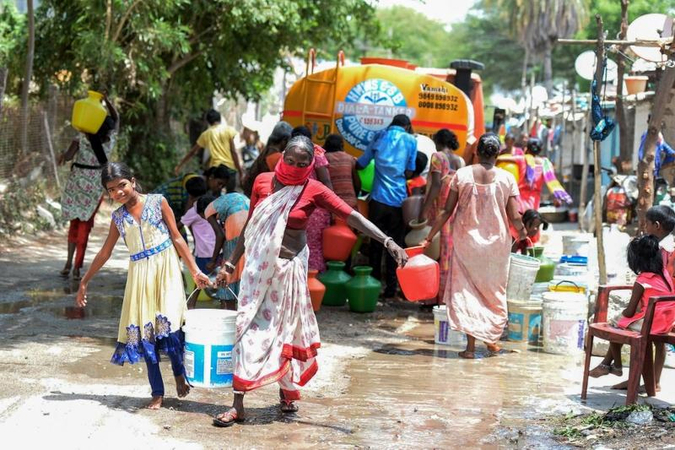
Residents carry drinking water in plastic containers during a free supply distribution organized by the Hyderabad Metropolitan Water Supply and Sewerage Board Government of Telangana at a slum in Secunderabad, the twin city of Hyderabad, India, on May 20, 2020. (NOAH SEELAM / AFP)

Residents carry drinking water in plastic containers during a free supply distribution organized by the Hyderabad Metropolitan Water Supply and Sewerage Board Government of Telangana at a slum in Secunderabad, the twin city of Hyderabad, India, on May 20, 2020. (NOAH SEELAM / AFP)

By China Daily/ANN

MANILA – Despite achievements in Asia and the Pacific region over the last few decades, 1.5 billion people living in rural areas and 600 million in urban areas still lack adequate water supply and sanitation, the Asian Development Bank (ADB) said in a report released on Friday.

Of the 49 ADB regional members, the Manila-based bank said that 27 members face “serious water constraints on economic development,” and 18 are yet “to sufficiently protect their inhabitants against water-related disasters”.

According to the Asian Water Development Outlook (AWDO) 2020 report, the economies in Asia and the Pacific must put water security at the top of their agenda to recover from the fallout from the COVID-19 pandemic and adapt to climate change.

In the report, the ADB set out the status in the region of water security, which measures the availability of safe and affordable water supply, sanitation for all, improved livelihoods, and healthy ecosystems, with reduced water-related diseases and floods.

It stressed the need to put water at the center of sustainable rural development by promoting water-effective irrigation agriculture, community-based water and sanitation services, and locally resilient disaster risk reduction.

It further stressed the need to achieve urban water security by investing in water, sanitation, and disaster risk reduction infrastructure services not only in cities but also in slums and peripheral areas.

In the report, the ADB called on the region to “provide a healthy environment by drastically reducing pollution, stimulating a circular economy, increasing land protection, and embracing nature-based approaches”.

It stressed the importance of increasing the resilience of water systems to avoid water-related disasters.

To improve the region’s water security, ADB said it has programmed more than US$6 billion in financial and technical assistance between 2020 and 2022 to support safe water supply, sanitation, and wastewater measures.

The ADB said it has also programmed more than US$2 billion for flood risk management in the same period, together with tailored knowledge services that promote innovation and forge partnerships.  

Hyundai Motor Group unveils AI-based Korean-English translation app #SootinClaimon.Com

#SootinClaimon.Com : ขอบคุณแหล่งข้อมูล : หนังสือพิมพ์ The Nation.

Hyundai Motor Group unveils AI-based Korean-English translation app (nationthailand.com)

Hyundai Motor Group unveils AI-based Korean-English translation app

Dec 19. 2020H-Translator (Hyundai Motor Group)H-Translator (Hyundai Motor Group) 

By Jo He-rim
The Korea Herald/ANN

Hyundai Motor Group said Friday it has developed a Korean-English translation app to support smooth communication among its employees in local and overseas offices.

Dubbed the H-Translator, the app is based on artificial neural network (ANN) algorithm and is specialized in the automobile industry, the South Korean automaker said.

Hyundai explained that it has come to develop the translator to support timely communication and strengthen work efficiency, as the company has been actively recruiting foreign employees.

According to Hyundai, the H-Translator is not only capable of translating written text, but also recognize writing from images.

It is also capable of translating conversations on online chat rooms, allowing its employees in different countries to communicate in two different languages instantly, the company said.

Hyundai started to work on the ANN algorithm-based machine translation in 2019.

The company said its technology has proved of its quality, as it placed in the first rank in all of the five contests of patent translation of the Workshop on Asian Translation last year.

“We will not only continue to advance related ANN-based machine translation technologies, and expand the number of languages for translation, but also plan to feature these technologies to wearable devices,” a Hyundai Motor Group official said.

According to Hyundai, the H-Translator is an updated version from the company’s web-based translation system, developed by AIRS Company, applied for their internal network in November.

AIRS Company was established as a division for artificial intelligence technology for the automotive firm in 2018.

India planning strike against Pakistan, seeks approval of partners: FM Qureshi in Abu Dhabi #SootinClaimon.Com

#SootinClaimon.Com : ขอบคุณแหล่งข้อมูล : หนังสือพิมพ์ The Nation.

India planning strike against Pakistan, seeks approval of partners: FM Qureshi in Abu Dhabi (nationthailand.com)

India planning strike against Pakistan, seeks approval of partners: FM Qureshi in Abu Dhabi

Dec 19. 2020

By DAWN/ANN

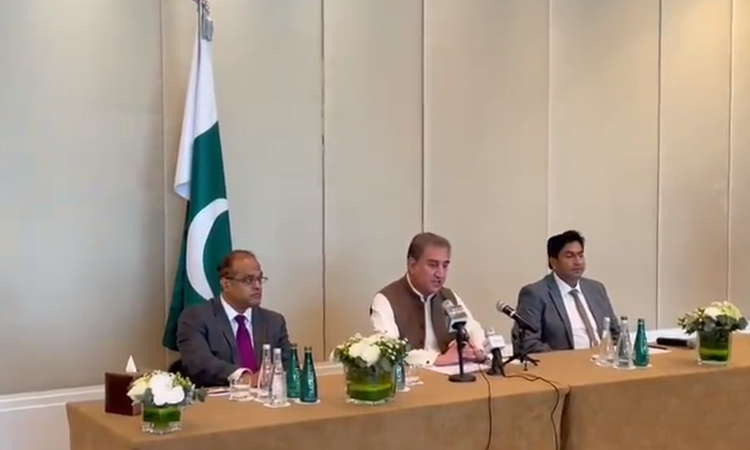
Foreign Minister Shah Mahmood Qureshi on Friday said he had credible information that India was planning a surgical strike against Pakistan to divert attention from its internal affairs and that it was trying to seek “tacit approval” for the move from its “partners”.

The foreign minister made this statement at a press conference in Abu Dhabi, where he is ending a two-day visit during which he held meetings with the top brass of the Emirati leadership.

At the presser, Qureshi summed up his engagements with the UAE leadership over the last two days but also touched on the designs of India, which he said were “picked up by intelligence”.

“An important development has cropped up […] I’ve learned through our intelligence forces […] that India is planning a surgical strike against Pakistan,” said Qureshi.

Terming it a “serious development” he further elaborated that India is already “trying to seek tacit approval” from what Qureshi said were “important players who they consider to be their partners”.

The minister said in his opinion this operation was being planned so India could divert attention from “serious internal issues” and as a means to unify divisions in the country.

Qureshi noted that Pakistan had revealed “India sponsoring terrorism in Pakistan” through a dossier that it shared with the international community.

He also mentioned the recent report by the EU DisinfoLab which exposed an Indian disinformation network of “fake websites and fake NGOs that they had launched with a sole objective to malign Pakistan”.

Elaborating on the “serious internal issues” facing India at the moment, Qureshi said the situation in Indian occupied Kashmir “was never good but has deteriorated further”.

The ongoing farmers’ protests in Punjab, Qureshi said, was a “country-wide protest” resulting from “the policies of this regime, the BJP regime”. He said the protest was growing, with various segments of India such as “opposition parties, lawyers, civil society and trade unions” expressing their support for it.

“The mishandling of the coronavirus by Indian authorities is known to everyone. The impact that it is having on their economy is known to all.”

The situation of the minorities in India, the foreign minister said, was also “increasingly uncomfortable”, referring to the protests in Assam and the situation of Dalits, Sikhs and Muslims.

Qureshi said “Pakistan is fully prepared to respond to and defeat India’s designs.”

“We will do it […] as we did respond immediately and effectively in February 2019,” he warned.

The foreign minister said this information, of an imminent strike against Pakistan, had been shared with relevant capitals, who had been apprised of India’s plans and Pakistan’s willingness to respond.

He said any “misadventure” could seriously undermine and set back the Afghan peace process and “India will be held responsible for this.”

“I warn my eastern neighbour, we are aware of their mindset and we are aware of their designs […] and Pakistan will respond.”

Visas issue

Apprising the room on developments during his two-day visit to the UAE, Qureshi said he had “good meetings” with Mohammed bin Rashid Al Maktoum, Dubai’s ruler, and that they discussed not only bilateral relations but also “opportunities […] for trade and investment”.

He thanked the ruler of Dubai for his support and the support that UAE had provided to Pakistan over the years during difficult times, calling the two countries “destined strategic partners”.

The foreign minister said he would be meeting with the head of UAE intelligence after the media briefing where he would take up the visas issue with him.

Weeks earlier, the UAE included Pakistan among the 12 countries for whose nationals it had suspended issuing visit visas. The move had raised eyebrows as it was not immediately clear why the measure had been applied to Pakistan. The Foreign Office had at the time said it was seeking more clarity from Emirati authorities but that it appeared to be a coronavirus related move.

Days after the suspension of visas, a report published by Reuters said the move was implemented due to “security concerns” without elaborating on what those concerns were.

Qureshi ended the briefing by reaffirming the contributions Pakistan has made in the “progress and development of UAE” and hoped to resolve the few issues that remain.

Army on high alert

Qureshi’s stern remarks against India while on a trip to UAE come on the heels of an already tense atmosphere.

Informed sources told Dawn earlier this month that the Pakistan Army had been put on high alert amidst a possible threat of another attempt by India to conduct a surgical strike inside Pakistani territory.

They said that after facing a humiliating defeat in Ladakh and Doklam, India was preparing to launch another attack on the Line of Control (LoC) and across the Working Boundary at Pulwama, posing a threat to the regional peace and stability.

An official said a “false flag operation” was being planned by India to divert the world’s attention from several of its internal issues, including the ongoing farmers’ protest, its treatment of minorities, atrocities committed by Indian forces in occupied Kashmir and criticism of its policies by international institutions and media.

“India may at any time repeat a Pulwama-like drama to divert attention from the internal problems and was planning an action along the LoC and Working Boundary,” he said.

In 2016, India had claimed to have carried out a surgical strike on the LoC, a claim rubbished by Pakistan. Similarly, on Feb 26 last year, India had tried to launch a similar operation against Pakistan but failed and two of its planes had been shot down by Pakistan Air Force. Indian pilot Wing Commander Abhinandan was arrested and later released.

The decision to put the army on high alert came days after the Indian government approved the creation of a new post of deputy chief of strategy at the army headquarters as per a plan envisaged during the Doklam crisis with China in 2017, besides creating the position of director general information warfare who will also be dealing with media affairs.

India pledges vaccine support to Bangladesh #SootinClaimon.Com

#SootinClaimon.Com : ขอบคุณแหล่งข้อมูล : หนังสือพิมพ์ The Nation.

India pledges vaccine support to Bangladesh (nationthailand.com)

India pledges vaccine support to Bangladesh

Dec 18. 2020

By Porimol Palma
The Daily Star/ANN

Timely, effective delivery when ready; connectivity, resolving water sharing, border killing discussed

India promised to promptly and effectively deliver to Bangladesh the Covid-19 vaccines it is producing as Prime Minister Sheikh Hasina and her Indian counterpart Narendra Modi held a virtual summit yesterday.

The two PMs also expressed their interest in expanding the already-strong bilateral and regional economic cooperation by improving connectivity while resolving existing issues, including water sharing and management and bringing down border killings to zero.

Stating that Bangladesh is a significant pillar of India’s “Neighbourhood First” policy, Modi said pharmaceutical companies on both sides have already arranged plans for supply of vaccines. The prospect of cooperation in production will also be explored, he added.

The Bangladesh government and a local pharmaceutical company have already signed an agreement with Serum Institute of India for Covid-19 vaccines.

“Whenever vaccine is produced, India will give us three crore vaccines,” said Foreign Minister AK Abdul Momen at a press conference at State Guesthouse Padma after the PM-level summit, which lasted for an hour and 15 minutes.

The vaccines will be purchased at a “friendship price”, he said.

In a separate press conference, Indian High Commissioner Vikram Doraiswami said India is working quietly and strategically on best practices, supply chain and management of the vaccine not only with Bangladesh, but also with Nepal, Bhutan, the Maldives and Mauritius.

“We will be very willing if the Bangladesh side wants us to help improve facilities and also facilitate co-production here,” he said.

The summit was held at a historical time as the countries are in their 50th year of diplomatic relationships. Bangladesh is also celebrating the birth centenary of Bangabandhu Sheikh Mujibur Rahman and preparing to celebrate its 50th independence anniversary next year.

Sheikh Hasina said India is a true friend of Bangladesh and expressed her gratitude to the country and the Indian Army for their support during the 1971 Liberation War.

The two premiers inaugurated a postal stamp of Bangabandhu and the Bangabandhu-Bapu digital exhibition. They also inaugurated the Holdibari-Chilahati rail link, which remained unused since the India-Pakistan war in 1965, and inaugurated two community development projects.

They also signed seven MoUs and adapted a 39-point joint statement following the meeting.

Both countries will also organise commemorative activities next year, including a biographical film on Bangabandhu by acclaimed director Shyam Benegal, to be shot in Bangladesh and India early next year.

TEESTA AND OTHER RIVERS

According to the joint statement, Hasina sought early signing of the interim agreement for sharing of the Teesta waters, as agreed upon by both governments in 2011.

In response, Modi reiterated India’s sincere commitment and continued efforts in that regard.

Indian High Commissioner Doraiswami said he could not give any specific timeframe for signing of the deal, but was working on it.

However, he said that a joint technical committee is working on water sharing of six other rivers — Manu, Muhuri, Khowai, Gumti, Dharla and Dudhkumar. The committee would meet before the Joint Rivers Commission at the soonest possible time.

Dhaka requested Delhi to allow excavation work on the remaining portion of the Rahimpur Khal for utilisation of the water of Kushiyara river for irrigation.

Both countries agreed to carry out necessary work to convert the international boundary along the Kuhsiyara river into a fixed boundary.

Bangladesh reiterated its request for 1.3km of “Innocent Passage” along the Padma river near Rajshahi. The Indian side assured that they would consider the request.

Momen said Bangladesh also requested the early demarcation of Muhuri, Ichhamoti, Kalindi, Raimangal and Hariabhanga rivers.

He said both sides agreed to hold an early meeting of the Joint Boundary Conference to prepare a new set of strip maps along the stretch of the rivers. The joint statement, however, omitted the river Muhuri.

BORDER KILLINGS

Bangladesh expressed concern over the loss of civilian lives at the India-Bangladesh border. India shared the concern and directed border forces concerned to enhance coordination measures to work towards bringing such border incidents to zero.

Doraiswami said Modi gave clear instructions to the Border Security Force (BSF) that lethal force is to be used only as the last resort. PM Hasina also acknowledged that Indians are also killed and injured in such incidents.

“We don’t want any black spots in our relationship,” Foreign Minister Momen said, adding that some criminal activities also take place at the borders where some illegal traders from Bangladesh are also to blame.

Both sides agreed to facilitate the completion of border fencing at all pending sectors as soon as possible, beginning with the Tripura-Bangladesh sector.

TRADE, ECONOMY, CONNECTIVITY

Both countries expressed their commitment to strengthening bilateral and regional cooperation on trade and connectivity, emphasising on removing non-tariff barriers so that both countries can take full advantage of the South Asian Free Trade Area (SAFTA) flexibility.

Momen said Dhaka requested Delhi to remove anti-dumping/anti-circumvention duties on export of jute products from Bangladesh. Delhi expected a quick resolution.

Bangladesh requested India to convey in advance any amendments to India’s export policy of essential commodities to Bangladesh. The Indian side took note of this request.

Momen said the issue was significant as Bangladesh had to face trouble after India this year restricted onion exports without prior information.

Both prime ministers directed officials to expeditiously conclude the ongoing joint study on the prospects of entering into a bilateral Comprehensive Economic Partnership Agreement as Bangladesh graduates from the LDC list in four years.

The two leaders welcomed the signing of the second addendum to the Protocol on Inland Water Transit and Trade (PIWTT), trial run of trans-shipment of Indian goods from Kolkata to Agartala via Chattogram and the operationalisation of the Sonamura-Daudkandi Protocol route, and sought speedy operationalisation of trans-shipment of Indian goods through Chattogram and Mongla Ports.

Doraiswami said Bangladesh can also use the Indian ports for third-country export.

Bangladesh sought quick operationalisation of BBIN (Bangladesh, Bhutan, India, Nepal) Motor Vehicle Agreement through signing of protocols among India, Bangladesh and Nepal to commence movement of goods and passengers, with provisions for Bhutan to join at a later date.

Hasina sought to join the ongoing India Myanmar Thailand trilateral highway project to enhance connectivity between the regions of south and south-east Asia.

The Indian side requested Bangladesh to allow connectivity from West Bengal (Hilli) to Meghalaya (Mahendraganj) via Bangladesh.

Hasina proposed that Bangladeshi trucks avail the Feni Bridge, once completed, for transportation of goods from Chattogram port to north-eastern India.

Modi invited Bangladesh to join the New Development Bank of the BRICS (Brazil, Russia, India, China and South Africa). Hasina expressed willingness to join it considering concessionary loans for infrastructure projects.

In response to Bangladesh’s request for India’s assistance in quick Rohingya repatriation, India said they agree that the solution to the crisis lies in sustainable repatriation.

Indian High Commissioner Dowaiswami said India, alongside Japan, is investing for development in Rakhine for creating a conducive environment for repatriation.

More Singapore workers to be recruited for solar industry #SootinClaimon.Com

#SootinClaimon.Com : ขอบคุณแหล่งข้อมูล : หนังสือพิมพ์ The Nation.

More Singapore workers to be recruited for solar industry (nationthailand.com)

More Singapore workers to be recruited for solar industry

Dec 18. 2020NTUC's Secretary-General Ng Chee Meng (centre) observes workers as they install a solar panel during the Career Development Plan for the Solar Industry event on Dec 17, 2020. ST PHOTO: CHONG JUN LIANGNTUC’s Secretary-General Ng Chee Meng (centre) observes workers as they install a solar panel during the Career Development Plan for the Solar Industry event on Dec 17, 2020. ST PHOTO: CHONG JUN LIANG 
By Liew Ai Xin
The Straits Times/ANN

SINGAPORE – A solar industry recruitment drive on Thursday (Dec 17) saw more than 200 residents sign up for jobs, with agencies here announcing plans to build skills and experience for Singaporeans to manage solar projects in its entire cycle, from installation to maintenance.

This is to meet the Republic’s growing renewable energy needs as it strives to achieve 2 gigawatt-peak (GWP) by 2030, almost five times the current solar usage.

Between 3,000 and 4,000 jobs will be created in the solar industry in the next two to three years, said Mr Gilbert Tan, chief executive of the labour movement’s Employment and Employability Institute (e2i) and assistant director-general of the National Trades Union Congress.

To build up the skilled workforce for the industry, e2i and the Sustainable Energy Association of Singapore (SEAS) signed two memoranda of understanding (MOU) with nine solar companies and two training providers.

NTUC secretary-general Ng Chee Meng witnessed the signing.

The agreements are aimed at tackling manpower challenges and to build up the skills, training and job prospects for the solar industry.

The MOUs also see a career plan developed for solar technologists, to ensure well-defined progression in skills, job role, wages and productivity for the industry.

Of 430 available jobs at the recruitment drive held at the Singapore Sustainability Academy in City Square Mall, 405 vacancies were for solar technologists.

A solar technologist, who would have a diploma, Nitec or Higher Nitec qualification, will be involved in installing and maintaining solar photo-voltaic (PV) systems.

With a diploma or a degree with relevant experience, a senior solar technologist will progress to designing PV systems and performing data analysis.

A principal solar technologist will have the responsibility of assessing the feasibility of PV installations, as well as plan, execute and manage projects.

They would have at least eight years of relevant experience, regardless of whether they have a diploma, degree or higher Nitec qualifications.

Mr Frank Phuan, CEO and co-founder of local solar energy firm Sunseap Group, a signatory of the MOU, said the solar industry has been heavily reliant on foreign workers under the construction sector to install solar panels.

However, that means that their job is transient in nature, added Mr Phuan, who is also vice chairman of SEAS.

“They (the workers) will leave somehow, someday. So there’s hardly any career development we can talk about,” he added.

Mr Steven Lau was among those who signed up for a job at the recruitment drive.

The 33-year old, who currently works part-time in a logistics company, has a degree in electrical and electronics engineering from Nanyang Technological University (NTU).

He said the solar industry was what he pictured himself being involved in when he graduated four years ago.

“I hope to secure a role (as a solar technologist) by the end of the year, although time is tight.”

Tokyo raises alert for medical system to highest level #SootinClaimon.Com

#SootinClaimon.Com : ขอบคุณแหล่งข้อมูล : หนังสือพิมพ์ The Nation.

Tokyo raises alert for medical system to highest level (nationthailand.com)

Tokyo raises alert for medical system to highest level

Dec 18. 2020

By The Japan News/ANN

The Tokyo metropolitan government raised the alert for the city’s medical system to the highest of four possible levels on Thursday due to the spread of the novel coronavirus, marking the first time it has done so since the current evaluation system was introduced in July.

The decision was made at a monitoring meeting with experts held on Thursday afternoon. It came as the city set a new daily record for newly confirmed cases, with Tokyo logging 822 cases Thursday, a significant increase over the previous record of 678 set the day before.

In keeping with the higher alert level, the metropolitan government will increase the number of hospital beds reserved for coronavirus patients to 4,000 from the current 3,000, including an increase of 50 beds for severely ill patients.

The number of hospitalized patients exceeded 2,000 for the first time on Monday. On Tuesday, the number of seriously ill people jumped to 78, the highest level since the state of emergency was lifted in May.

By Dec. 10, the metropolitan government had asked medical institutions to set up more beds. As a result, the number of beds for the severely ill has increased from 150 to 200 and the figure for the mildly and moderately ill has jumped from 2,640 to 3,000.

The number of infected has remained high since then, and the government decided that it was necessary to further strengthen the medical system. The government therefore asked medical institutions in Tokyo to further increase the number of beds, including those for the severely ill.

The alert level regarding the status of infections in Tokyo has remained at the highest level on a four-rank scale since Nov. 19.

S. Korea, France vow to support multilateralism to overcome pandemic fallout #SootinClaimon.Com

#SootinClaimon.Com : ขอบคุณแหล่งข้อมูล : หนังสือพิมพ์ The Nation.

S. Korea, France vow to support multilateralism to overcome pandemic fallout (nationthailand.com)

S. Korea, France vow to support multilateralism to overcome pandemic fallout

Dec 18. 2020South Korea's exports (Yonhap)South Korea’s exports (Yonhap) 

By The Korea Herald/ANN

South Korea and France on Friday agreed to continue to support multilateralism over protectionism to overcome the economic fallout from the virus pandemic, and to expand cooperation in various areas from vaccines to green cars.

“This year, the two countries have worked deeply together in multilateral frameworks, such as the Group of 20 and the OECD, to promote the travel of products, services and workforces despite the COVID-19 pandemic,” Trade Minister Yoo Myung-hee said during her meeting with her French counterpart, Franck Riester, in Seoul.

The two trade chiefs acknowledged that the COVID-19 pandemic has sparked protectionism in global trade, with the escalating tension between the United States and China still being a threat.

“We also hope that the on-going joint project in developing COVID-19 treatments makes progress soon,” Yoo added, expressing hope that the two countries can join hands in supplying vaccines as well.

South Korean and Senegalese branches of the Institut Pasteur have been working together since March to develop cures for COVID-19, under cooperation with France.

The two countries discussed ways to revitalize virus-hit economies through digital and green industries as well.

South Korea also requested that France expand its support on building infrastructure for eco-friendly automobiles, such as charging stations, pointing out the industry has been growing at a fast pace. (Yonhap)