Main points of draft Brexit agreement

ศาสตร์เกษตรดินปุ๋ย : ขอบคุณแหล่งข้อมูล : หนังสือพิมพ์ The Nation

http://www.nationmultimedia.com/detail/asean-plus/30365520

  • British MPs will vote on a draft Brexit deal on Tuesday aimed at ensuring a smooth exit from the European Union to be followed by a transition period that could last until 2022. Photo/AFP
    British MPs will vote on a draft Brexit deal on Tuesday aimed at ensuring a smooth exit from the European Union to be followed by a transition period that could last until 2022. Photo/AFP

Main points of draft Brexit agreement

ASEAN+ March 10, 2019 13:33

By Agence France-Presse
London

British MPs will vote on a draft Brexit deal on Tuesday aimed at ensuring a smooth exit from the European Union to be followed by a transition period that could last until 2022.

The agreement was voted down overwhelmingly by parliament in January but the government is hoping that the looming March 29 Brexit deadline will persuade many MPs to change their minds.

Brexit hardliners have objected in particular to the agreement’s “backstop” provisions on the Irish border, which they fear could lock Britain indefinitely into a customs union with the EU.

The government has been holding more discussions with EU officials in an attempt to agree a compromise on the backstop.

The other main points in the agreement are the protection of citizens’ rights and Britain’s final bill to the EU.

Following are the main points of the deal:

Transition period 

A transition period lasting until December 31, 2020 would preserve the status quo and allow time for Britain and the EU to negotiate their future relations.

It would also allow governments, businesses and individual citizens to adapt to life after Brexit.

The only major difference during that period is that Britain would no longer be represented in the EU institutions.

Britain will continue to participate in the EU Customs Union and the Single Market and must respect EU rules on free movement of goods, capital, services and labour.

The transition period can be extended once for a period of one or two years, meaning it could last until December 31, 2022.

 Irish ‘backstop

The deal outlines a “backstop” arrangement to prevent the return of border checks between the British province of Northern Ireland and the Republic of Ireland if the sides fail to agree a free trade pact following the transition period.

Under the arrangement, Britain and the EU would form a single customs territory and Northern Ireland would also follow EU single market rules on the movement of goods to allow the border to remain free-flowing.

Northern Irish businesses would be able to bring goods into the single market without restrictions.

At any point after the transition period, the EU or Britain can decide that the arrangement is no longer necessary, but they must take the decision together.

Some British MPs fear Britain could be stuck in the arrangement indefinitely, which would hamper its ambition to develop an independent trade policy.

 ‘Citizens rights’ 

The draft deal preserves the rights of the more than three million EU citizens living in Britain and the one million British citizens living in the EU.

EU and UK citizens, as well as their family members, can continue to live, work or study enjoying equal treatment to host nationals under the respective laws.

It covers all such citizens who arrive before the transition period ends. They will maintain their right to healthcare, pensions and other social security benefits.

EU citizens arriving in Britain after the end of the transition period — whenever that is — will be subject to more stringent immigration rules that are currently being debated in the British parliament.

 Brexit bill 

Covering Britain’s outstanding financial obligations to the bloc, it calls for a fair settlement for UK taxpayers that the British government estimates to be up to £39 billion (44 billion euros, $51 billion).


Gibraltar 


With longstanding Spanish claims to Britain’s neighbouring Mediterranean outcrop of Gibraltar, all sides sought to defuse any future tensions.

The deal provides for Spanish-British cooperation on citizens’ rights, tobacco and other products, environment, police and customs matters.

It sets the basis for administrative cooperation for achieving full transparency in tax matters, fighting fraud, smuggling and money laundering.

British bases in Cyprus

The deal aims to ensure no disruption or loss of rights for the 11,000 Cypriot civilians living and working in the areas of the British sovereign military bases.

It aims to ensure that EU law will continue to apply in the base areas, including on taxation, goods, agriculture, fisheries and veterinary and phytosanitary rules.


Other points 

It oversees the UK’s withdrawal from Euratom, the EU treaty on nuclear energy and protects intellectual property, including trademarks as well as more than 3,000 EU geographical indications.

The latter cover regional brands such as Welsh lamb, Parma ham, Champagne, Bayerisches beer, Feta cheese, Tokaj wine, Jerez vinegar.
Nine police killed in attack in Myanmar’s Rakhine: police

ศาสตร์เกษตรดินปุ๋ย : ขอบคุณแหล่งข้อมูล : หนังสือพิมพ์ The Nation

http://www.nationmultimedia.com/detail/asean-plus/30365519

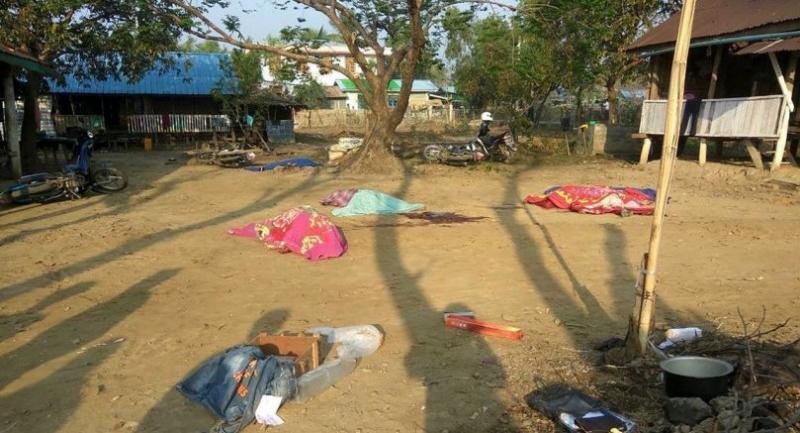
Bodies of policemen, killed a millant sttack, are covered at the Yotayoke police station, near Sittwe in Rakhine State on March 10, 2019. Photo/AFP

Nine police killed in attack in Myanmar’s Rakhine: police

ASEAN+ March 10, 2019 13:08

By Agence France-Presse
Yagon

Nine policemen have been killed in a militant attack in Myanmar’s western Rakhine state, police said on Sunday, as tensions ratchet up in a state riven by ethnic and religious conflict.

A bloody military crackdown in 2017 forced some 740,000 Rohingya Muslims over the border into Bangladesh in violence UN investigators have said warrants the prosecution of top generals for genocide and crimes against humanity.

But the armed forces are now waging a war against a militant group claiming to represent the state’s ethnic Rakhine Buddhists, a population that also stands accused of aiding soldiers in their expulsion of the Rohingya.

The Arakan Army (AA) has in recent months mounted several attacks on security forces and officials in its struggle for more autonomy and rights for Rakhine people.

The attack late Saturday took place in Yoetayoke village, just an hour north of Rakhine state’s capital Sittwe.

Images seen by AFP showed bodies lying on the ground, covered in blankets with a pool of blood soaking into the dust in the grounds of the ramshackle police station.

“Nine police were killed, one was injured and another one is missing,” a senior police officer told AFP, not wanting to be named.

A leaked police report said weapons were also taken from the police post.

No group has yet claimed responsibility and the AA could not immediately be reached for comment.

A local administrator confirmed investigations are under way.


Engulfed in conflict

Northern Rakhine state is inaccessible outside of carefully government-chaperoned trips and information is difficult to verify independently.

But swathes of the state’s north are once again engulfed in conflict.

The military has brought in thousands of reinforcements and is bombarding AA positions with heavy artillery.

Several thousand people have been forced from their homes by the violence.

Yet there is widespread support for the AA’s cause across much of Rakhine, one of the poorest states in the country, where many feel they have suffered decades of discrimination by the state.

Some 100 local administrators submitted their resignation en masse this month calling for the release of four colleagues reportedly arrested for having links with the AA.

The verdict in a treason trial against a popular Rakhine politician is also expected in the coming days and could prove to be a further flashpoint.

Aye Maung stands accused of treason after allegedly inciting Rakhine people in a speech last year to take arms and rise up against the country’s ethnic-Bamar (Burmese) majority.

The AA has expanded its ranks since its formation in 2009 and is now believed to have several thousand recruits.

The group ramped up operations at the end of last year, but it was a deadly attack on four police posts on Independence Day early January that focused the country’s attention and triggered the military’s swift retaliation.

Thirteen police officers were killed in the brazen attack and in an unprecedented move the civilian government instructed the military to crack down on the insurgents.

This came just a couple of weeks after the military declared a unilateral ceasefire against ethnic armed groups on the other side of Myanmar, allowing the army to concentrate its efforts in Rakhine.

Myanmar’s restive borderlands have been plagued by conflict since independence from British colonial rule 70 years ago.

Violence in strife-torn Rakhine was glossed over by Myanmar’s leader Aung San Suu Kyi at a recent investment forum where she touted the state’s “untapped” economic potential and blamed the international community for focusing “narrowly” on its problems.

Iranian President, PM Khan agree on closer cooperation in combatting terrorism

ศาสตร์เกษตรดินปุ๋ย : ขอบคุณแหล่งข้อมูล : หนังสือพิมพ์ The Nation

http://www.nationmultimedia.com/detail/asean-plus/30365512

PM Khan underscores the role of the important brotherly countries like Iran to help resolve strained Pakistan-India relations. Photo/AFP

Iranian President, PM Khan agree on closer cooperation in combatting terrorism

ASEAN+ March 10, 2019 11:44

By Sanaullah Khan
Dawn
Asia News Network

Prime Minister Imran Khan on Saturday had a telephonic conversation with Iran’s President Hassan Rouhani as part of his efforts to apprise important regional countries and their leadership of the regional situation, read a statement issued by the Prime Minister’s Office.

The statement noted that the two leaders acknowledged the need to strengthen bilateral relations and to that end, “both sides look forward to the visit of Prime Minister Imran Khan to Iran in the near future”.

With the visit, it is expected by both countries that bilateral coordination and cooperation will deepen.

The premier expressed his heartfelt condolences on the recent terrorist attack in Iran in which 27 Revolutionary Guards were killed, the PM Office statement said.

Humans, AI compete to predict cherry blossom dates

ศาสตร์เกษตรดินปุ๋ย : ขอบคุณแหล่งข้อมูล : หนังสือพิมพ์ The Nation

http://www.nationmultimedia.com/detail/asean-plus/30365511

  • File photo/AFP
    File photo/AFP

Humans, AI compete to predict cherry blossom dates

ASEAN+ March 10, 2019 11:32

By The Yomiuri Shimbun
Asia News Network

Who can more accurately predict when Japan’s cherry trees will bloom, artificial intelligence or humans? Shimadzu Business Systems Corp., a Kyoto-based subsidiary of Shimadzu Corp., started a unique competition between the two sides.

As of March 1, both human and AI prognosticators were calling for the flowers to appear earlier than in an average year nationwide. But in some locations, the expectations differ by a few days. The results of the competition will be announced on April 5 on the company’s Otenki Japan weather forecast website.

In the company, human weather forecasters had predicted the blooming dates until 2017, but in 2018 the AI replaced them for the first time. However, its 2018 predictions for only 31 percent of 45 locations in the country came within two days of the actual blooming dates. The hit ratio of the AI predictions is lower than the ratio for predictions by Hisashi Kataoka. Kataoka, 41, is the company’s group leader and has worked as a weather forecaster for 17 years. His average hit ratio was 37 percent from 2010 to 2017.

So, the company gave its AI additional information about cherry blossoms’ cycle of being dormant in autumn and winter and developing flower buds in early spring, and about changing weather patterns, such as temperature data. As a result, the ratio improved to 60 percent in a simulation based on last year’s blossoming dates.

Kataoka said: “I held a 63 percent hit record in the past. I’m looking forward to the results.”

Malaysia is fifth safest country in Asia-Pacific for women, says

ศาสตร์เกษตรดินปุ๋ย : ขอบคุณแหล่งข้อมูล : หนังสือพิมพ์ The Nation

http://www.nationmultimedia.com/detail/asean-plus/30365510

File photo/AFP
File photo/AFP

Malaysia is fifth safest country in Asia-Pacific for women, says

ASEAN+ March 10, 2019 11:16

By The Star
Asia News Network

Malaysia has been ranked the fifth safest country for women out of 14 countries in the Asia Pacific.

However, our nation is 11th place when it comes to opportunities and healthcare for the fairer sex, says a study by ValueChampion, a personal finance website that conducts in-depth research and analysis on various topics.

Singapore topped the list as the safest place to live for women, followed by Australia, New Zealand, Taiwan and Malaysia. India was ranked at the bottom in terms of safety.

Anastassia Evlanova, the author of the study, says Malaysia ranked fifth in safety because it had fairly strict laws against sexual harassment and violence against women.

“Furthermore, while it scored around average for the Human Development Index, it scored fairly well in the Global Peace Index.

“Its Gender Development Index score also saw an improvement of 5.4% between 2010 and 2017, which indicates that gender inequality may be decreasing and women are experiencing a better standard of living,” she tells Sunday Star when asked to comment on the findings.

In the opportunity rankings, the study placed Malaysia in the 11th spot due to several factors.

“Malaysia fared around average for mean years of schooling (10 years for females) and employment participation rate for women (which is around 50%),” she explains.

Malaysia also had a rather high wage gap, where women earned 37% less than men when looking at the gross national income per capita compared to other countries analysed, she says.

“Lastly, Malaysia scored in the bottom five for female literacy rates (93.2%) out of the countries we analysed,” adds Evlanova, who is also a research analyst at ValueChampion Singapore.

In terms of healthcare rankings, Malaysia’s female life expectancy was below average compared to the countries analysed (Malaysia’s 77.4 versus 81.1 years in other countries).

“The latest government data showed that the maternal mortality (6.7 deaths per 1,000 births) and infant mortality rates (40 deaths per 100,000 pregnancies) were relatively high among the 14 countries,” she says.

She points out that there are also strict laws restricting family planning rights, including abortion, and religious law or third party consent may apply in instances of getting contraception.

“This can make it difficult for women to claim full independence over their bodies,” she says.

Satellite mission marks 300th launch of Long March rocket

ศาสตร์เกษตรดินปุ๋ย : ขอบคุณแหล่งข้อมูล : หนังสือพิมพ์ The Nation

http://www.nationmultimedia.com/detail/asean-plus/30365509

  • The
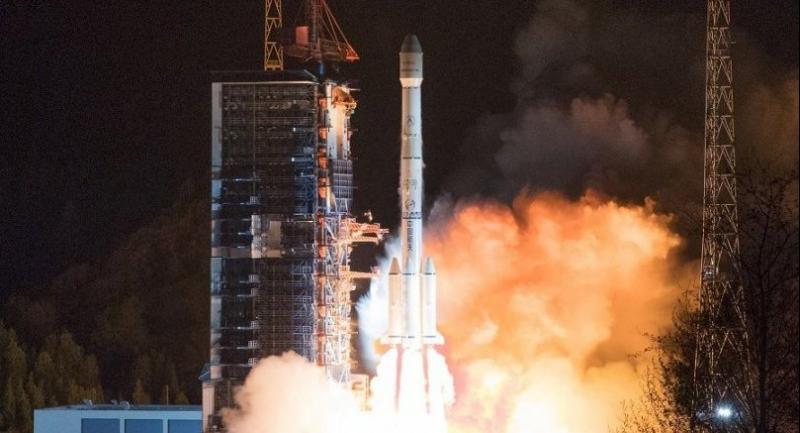
    The “ChinaSat 6C” satellite is launched by a Long March-3B carrier rocket from the Xichang Satellite Launch Center in southwest China’s Sichuan Province, March 10, 2019. Photo/China Daily

Satellite mission marks 300th launch of Long March rocket

Breaking News March 10, 2019 10:34

By Zhao Lei
China Daily
Asia News Network

China lifted into space a Long March 3B carrier rocket early Sunday morning to place a communications satellite into a geostationary orbit, marking the 300th launch in the Long March family.

The 19-story-tall rocket blasted off at 0:28 am at the Xichang Satellite Launch Center in Southwest China’s Sichuan province, ripping apart the night sky with its orange-red flame and echoing thunder, a video published by China Aerospace Science and Technology Corp in Beijing, maker of the Long March series, showed.

The mission was announced as a success about one hour after liftoff as the satellite’s solar arrays unfolded in orbit, according to the State-owned space conglomerate.

China launched its first carrier rocket – a Long March 1 that was a de facto modified ballistic missile –in April 1970 to send its first satellite, Dongfanghong 1, or East Red 1, into space.

Since then, the country has developed and built 17 types of Long March rocket; five of them have retired. The Long March family has comprised nearly 97 percent of the nation’s total launch missions, leaving a very small proportion to other series, such as the Kuaizhou.

In the 300 liftoffs, 197 were carried out by models developed by the China Academy of Launch Vehicle Technology in Beijing, and 103 by the Shanghai Academy of Spaceflight Technology.

By now, Long March rockets have ferried 506 Chinese and foreign spacecraft into space, including six manned spaceships, two space laboratories, and four lunar probes.

Li Hong, deputy general manager at China Aerospace Science and Technology Corp, said the advances made by the Long March series represent the nation’s rising status and growing prowess in the global space arena.

“It took 37 years for the Long March family to perform 100 launches. The next 100 launches used seven years,” he said. “By comparison, the third 100 launches were made in the past four years.

Li noted that in the early years of China’s space industry, engineers took several months to build and check a rocket before its flight and they could produce only a handful of rockets each year. Now, the nation can construct and launch 40 rockets annually.

In 2018 alone, China made 39 orbital launches, exactly the same number of the nation’s total space missions in the entire 1990s, marking the first time China has launched more rockets into orbit than any other country in a year. Among them, 37 were done by Long March models.

He also added that the Long March 1 was able to carry only 300 kilograms of payload, which just allowed the lift of a small satellite. After developments over the past nearly half-century, the Long March 5, the biggest and strongest in the family, is capable of carrying as much as 25 metric tons of payload, earning it the honor to transport the nation’s first manned space station into orbit.

Li said that Long March rockets maintain a 96 percent success rate.

US sanctions against Venezuela scaring off banks

ศาสตร์เกษตรดินปุ๋ย : ขอบคุณแหล่งข้อมูล : หนังสือพิมพ์ The Nation

http://www.nationmultimedia.com/detail/asean-plus/30365508

  • Supporters of Venezuela's President Nicolas Maduro hold a banner that reads 'Out of Venezuela Woody Woodpechker Trump' during a rally at the Miraflores Presidential Palace in Caracas.
Photo/AFP
    Supporters of Venezuela’s President Nicolas Maduro rally at the Miraflores Presidential Palace in Caracas. Photo/AFP

US sanctions against Venezuela scaring off banks

ASEAN+ March 10, 2019 10:08

By Agence France-Presse

As the United States has quickly ratcheted up sanctions against Venezuela to pressure Nicolas Maduro, bankers say they are shying away from doing even legitimate business with the crisis-wracked oil-producing country for fear of getting caught in the crossfire.

The sanctions target a growing list of individuals and companies linked to the Maduro regime — including state oil company PDVSA, the lifeblood of the Caribbean nation’s crumbling economy.

But because the penalties are complex and the cost of a violation is so high, some banks are beginning to avoid doing any business with Venezuela at all, said Daniel Gutierrez, head of the Florida International Bankers Association’s anti-money laundering committee.

Banks must review each transaction and examine the sanctions one by one, consulting lawyers to verify exemptions and requirements, at the risk of being hit with a fine of more than $1 million by the US Treasury Department if they get it wrong, Gutierrez told AFP.

That not only presents a challenge for banks and businesses but for families in the United States, many in Florida, who send money to relatives left in Venezuela to help them weather the nation’s widespread food shortages and hyperinflation that could reach 10 million percent this year.

As a result, “there are many major banks in the United States that have made the decision to decouple from Venezuela,” said Gutierrez, who works with 60 domestic and international banks in Florida.

Washington targeted PDVSA in sanctions announced January 28 but granted a handful of exemptions, such as one that allows the banks to work with US oil industry giants Chevron and Halliburton, but forbids transactions involving diluents — chemicals used the thin the heavy crude that dominates Venezuela’s reserves.

“How am I supposed to know, as your bank, if for example a wire transaction is for the purposes of exporting a diluent?” Gutierrez asked.

 Huge business in remittances

“The banks find themselves in a situation where they have to do a cost/benefit analysis on their clients.”

But the potential vacuum opens opportunities for some banks willing to take the risk, especially in the massive market for remittances.

Martin Litwak, lawyer based in Miami who specializes in offshore investments and anti-money laundering regulations, said the banks could begin “de-risking” — cutting off all operations — if the Venezuelan crisis is prolonged.

Otherwise, banks will “try to combat the situation and not take any drastic measures,” Litwak told AFP.

“This is a business opportunity,” he said. “If a lot of banks back off, then some will continue doing transaction because they will be able to charge more or have more business” including handling remittances.

Manuel Orozco of the Inter-American Dialogue told AFP there was a conservative estimate showing $2.2 billion was sent to Venezuela from abroad last year and of that an estimated $650 million was from the United States.


Christine Savage, a partner at the law firm King & Spalding, said the US Treasury was “acting quickly” to roll out sanctions as the situation in Venezuela was changing rapidly.

But now they are “working out some of the unintended consequences of the rapid moves.”

The Venezuelan firm Ecoanalitica estimates 80 percent of cash payments from the country’s oil sales come from trade with the United States, since exports to Russia and China are primarily used to pay off debt.

Venezuela’s Guaido calls for nationwide march on Caracas

ศาสตร์เกษตรดินปุ๋ย : ขอบคุณแหล่งข้อมูล : หนังสือพิมพ์ The Nation

http://www.nationmultimedia.com/detail/asean-plus/30365507

  • Venezuela's Guaido calls for nationwide march on Caracas.
Photo/AFP
    Venezuela’s Guaido calls for nationwide march on Caracas. Photo/AFP

Venezuela’s Guaido calls for nationwide march on Caracas

ASEAN+ March 10, 2019 09:11

By Agence France-Presse
Venezuela

Venezuela’s opposition leader Juan Guaido on Saturday announced a nationwide march on Caracas as thousands of people took to the capital’s streets to crank up the pressure on beleaguered President Nicolas Maduro.

Venezuela's Guaido calls for nationwide march on Caracas.
Photo/AFP

Brandishing a loud speaker, Guaido told thousands of supporters he would embark on a tour of the country before leading a nationwide march on the capital.

“Once we’ve finished the tour, the organization in every state, we’ll announce the date when all together we’ll come to Caracas,” said the 35-year-old leader of the legislature, who is recognized as interim president by more than 50 countries.

“Miraflores, Miraflores!” chanted Guaido’s supporters in response, a reference to the presidential palace currently occupied by Maduro.

Guaido threatened to call on outside intervention “when the time comes,” pointing to the constitution, which authorizes “the use of a Venezuelan military mission abroad, or foreigners inside the country.”

“Intervention, intervention!” cried his supporters.

“All the options are on the table,” added the National Assembly president, using a phrase employed by US President Donald Trump, who has consistently refused to rule out a military intervention in Venezuela.

 ‘We will never surrender’

Guaido was speaking from the back of a pick-up truck after security services prevented the opposition from setting up a stage at their original protest site, arresting three people.

Some 20 armored anti-riot vehicles were stationed on a highway that leads to the main avenue in the east of Caracas, where the opposition march was due to take place.

Guaido is trying to force out Maduro — whose May re-election he deems illegitimate — in order to set up new polls.

Maduro also called out his supporters to protest against “imperialism” in a march that marks four years since the United States branded Venezuela a “threat” to its security and imposed sanctions.

“Today, more than ever, we’re anti-imperialists. We will never surrender!” Maduro wrote on Twitter.

The mounting political pressure comes as authorities struggled to restore power following a major electricity outage that began on Thursday afternoon.

Maduro told supporters that almost 70 percent of power had been restored but at midday there was another cyber “attack at one of the generators that was working perfectly and that disturbed and undid everything we had achieved.”

Although Caracas and the states of Miranda and Vargas — home to the country’s international airport and main port — had intermittent power, the western regions of Barinas, Tachira and Zulia remained without electricity.

It was one of the worst and longest blackouts in recent memory in Venezuela and paralyzed most of the country.

Communications Minister Jorge Rodriguez blamed it on a cyber attack against the automated control system in the central generator at the Guri hydroelectric plant in the country’s south, which serves 80 percent of Venezuela.

Hospitals had reported terrible problems and those with generators were using them only in emergencies, while flights were canceled, leaving hundreds of travelers stranded at airports.

The Caracas subway, which transports two million people a day, remained suspended and shops were closed.

“The problem is food, I’d bought meat and it’s going bad. I’m going to the march because we need change. We’re fed up,” Luis Alvarez, a 51-year-old truck driver, told AFP.

 ‘I share the despair’ 

Venezuela has suffered more than four years of recession that has seen poverty soar as citizens struggle with food and medicine shortages.

Problems have been exacerbated by hyperinflation the International Monetary Fund says will reach 10 million percent this year.

An estimated 2.7 million people have left the country since 2015.

“I share the feeling of despair, I have lost relatives due to the lack of medicine,” said Guaido, who told supporters that “there’s no other option to get out of this without street mobilization.”

During the blackout, witnesses described scenes of chaos at several hospitals as people tried to move sick relatives in the dark to clinics with better emergency power facilities.

Ecuador’s foreign ministry issued a statement claiming 79 Venezuelans had died as a result of the power cut, which Rodriguez denied.

Critics blame the government for failing to invest in maintaining the electrical grid, although authorities often points the finger at external factors when the lights go out.

Malaysian jailed for more than ten years for insulting Islam

ศาสตร์เกษตรดินปุ๋ย : ขอบคุณแหล่งข้อมูล : หนังสือพิมพ์ The Nation

http://www.nationmultimedia.com/detail/asean-plus/30365501

File photo/AFP
File photo/AFP

Malaysian jailed for more than ten years for insulting Islam

ASEAN+ March 10, 2019 01:00

By Agence France-Presse
Kuala Lumpur

A Malaysian citizen was given more than 10 years in jail for insulting Islam and the Prophet Muhammad on social media, police said Saturday, one of the country’s harshest such sentences in recent years.

Issues related to race, religion and language are very sensitive topics in multiracial Malaysia. Critics say Malaysia’s traditionally tolerant brand of Islam is being eroded by increasingly influential Muslim hardliners.

The person found guilty, known only as Facebook user “Ayea Yea”, was jailed for 10 years and 10 months after pleading guilty to ten charges of anti-religious activity and the misuse of communications networks, said national police chief Mohamad Fuzi Harun.

In a statement, Mohamad did not specify the number of charges for each offence, but said they would be served consecutively.

Under Malaysian law, those found guilty of anti-religious activity can be punished with a jail term of two to five years.

The misuse of communication networks carries a maximum one year in jail or a fine of up to 50,000 ringgit ($12,200), or both.

Three other social media users have also been charged with insulting Islam and the Prophet Muhammed, as well as causing racial disharmony.

One who pled guilty will be sentenced next week, while the other two will be held without bail.

“The police advise the public not to misuse social media or communication networks by uploading or sharing any form of provocation that can touch racial and religious sensitivities,” Mohamad said.

In 1969, deadly riots erupted between members of the majority Malay community and ethnic Chinese, which still haunt the country.

N. Korea may be preparing a missile or space launch: NPR

ศาสตร์เกษตรดินปุ๋ย : ขอบคุณแหล่งข้อมูล : หนังสือพิมพ์ The Nation

http://www.nationmultimedia.com/detail/asean-plus/30365504

This satellite image provided by 2019 DigitalGlobe, a Maxar company, shows the Sohae Satellite Launching Station in North Korea, on March 2, 2019./AFP

N. Korea may be preparing a missile or space launch: NPR

Breaking News March 10, 2019 01:00

By Agence France-Presse
Seoul

2,359 Viewed

North Korea may be preparing for a missile or space launch, US news outlet NPR has reported, based on satellite image analysis of a key facility near Pyongyang.

NPR said the images of Sanumdong, one of the facilities Pyongyang has used to produce inter-continental ballistic missiles and space rockets, were taken days before US President Donald Trump and North Korean leader Kim Jong Un met in Hanoi for their high-stakes summit, which ended in failure.

The photos by the firm DigitalGlobe show the presence of cars and trucks at the site on February 22, said NPR — which has exclusive access to the imagery.

It added that rail cars and cranes can also be seen at a yard.

“When you put all that together, that’s really what it looks like when the North Koreans are in the process of building a rocket,” Jeffrey Lewis, a researcher at the Middlebury Institute of International Studies at Monterey, was quoted as saying by NPR on Friday.

The Sanumdong analysis comes days after the specialised website 38 North and the Center for Strategic and International Studies said Pyongyang may have resumed operations at its long-range rocket launch site at Sohae, based on their study of satellite imagery from March 6.

The development is likely to further compound Washington’s frustration over the lack of progress in its bid to get the North to give up its atomic arsenal, especially after the February 27-28 summit between Trump and Kim collapsed without so much as a joint statement — let alone an agreement on nuclear disarmament.

According to senior US officials, in the week leading up to the Hanoi summit, the North Koreans had demanded the lifting of effectively all UN Security Council economic sanctions imposed on Pyongyang since March 2016.

In return, Pyongyang offered only to close part of the Yongbyon complex, a sprawling site covering multiple facilities. The North is also believed to have other uranium enrichment plants.

But North Korean foreign minister Ri Yong Ho disputed the US account, saying Pyongyang offered to dismantle all “nuclear production facilities in the Yongbyon area” in exchange for partial sanctions relief.

Trump said Friday that his relationship with Kim “remains good”, despite the setback in Hanoi.

US officials have said Washington believes the “final, fully verified denuclearisation” of North Korea is still possible by the end of Trump’s first term.

Kim released his first public message since the Hanoi summit on Saturday earlier this week, instructing propaganda officials to conduct “positive information” activities to spur scientific and technological development, according to a Saturday report by North Korean state media outlet KCNA.