HCM City faces difficulties in relocating nearly 20,000 low quality homes

#SootinClaimon.Com : ขอบคุณแหล่งข้อมูล : หนังสือพิมพ์ The Nation.

https://www.nationthailand.com/international/ann/40019122


The city administration began the project in 2016 aim to improve the look of the area and bring better quality of life for local people, but a lack of funds has meant the process has been extremely slow.
HCM City faces difficulties in relocating nearly 20,000 low quality homes

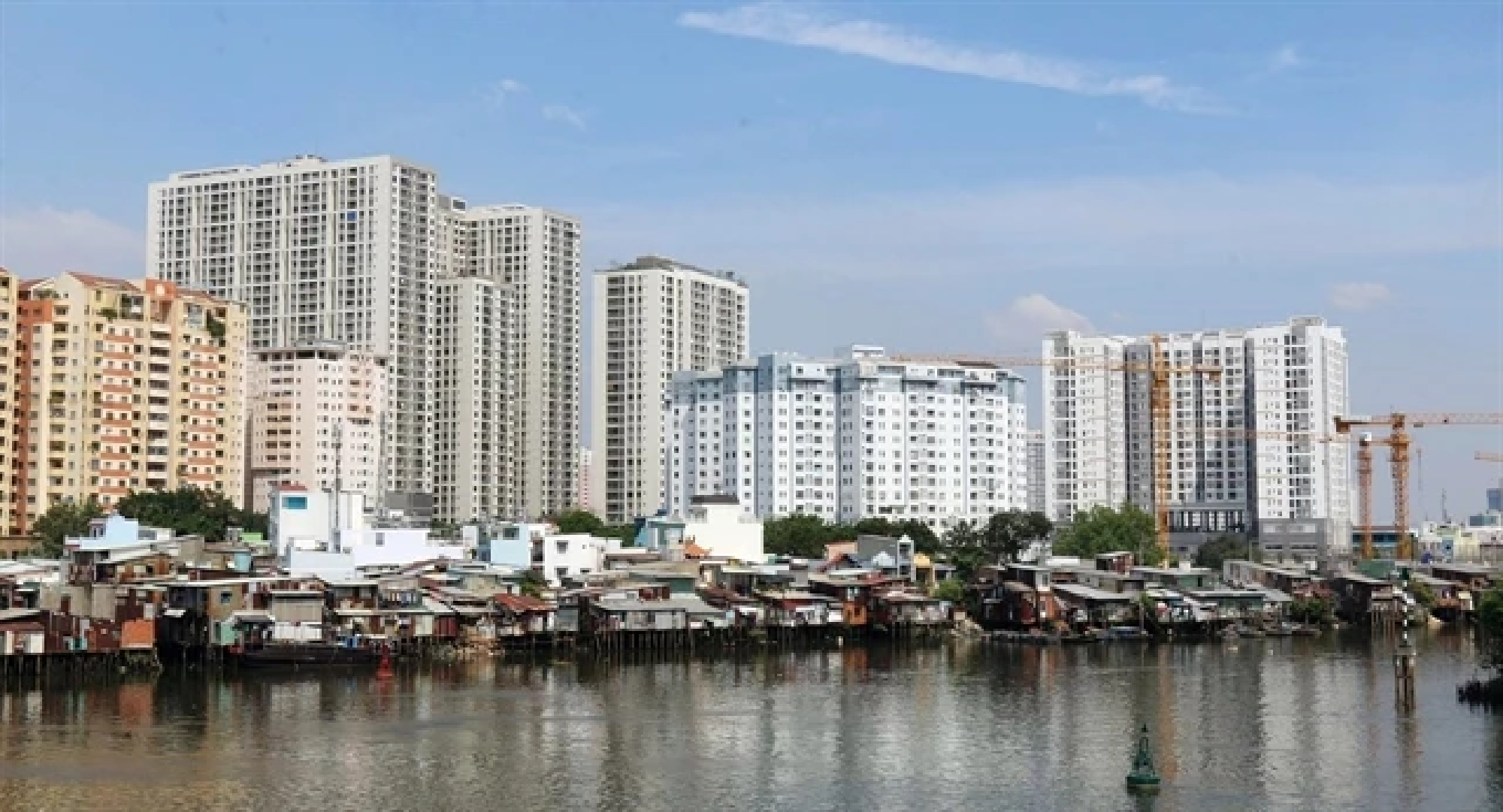
HCM CITY — HCM City is struggling to relocate nearly 20,000 slum homes situated on and along local canals.

The city administration began the project in 2016 with the aim to improve the look of the area and bring better quality of life for local people, but a lack of funds means the process has been extremely slow.

Data from the city’s Department of Construction showed that as of July 2022, the city had only relocated a total of 2,479 out of nearly 20,000 of the homes, equal to 12.4 per cent.

Only in District 8, there are more than 12,300 poor properties along the canals.

Trần Thanh Tùng, chairman of the district’s People’s Committee told Thời Nay online newspaper that it needs at least VNĐ9 trillion (US$385.7 million) to relocate people living along the south bank of Đôi Canal and build an embankment.

The committee has coordinated with relevant agencies to call upon for investment from the private sector but failed, he said.

Huỳnh Thanh Khiết, deputy director of the construction department said the project’s implementation was slow although the city had ordered districts to actively carry out relocation work.

But it still faced problems in compensation and land clearance, he said.

Most of the low end homes have a very small area of land and are mainly built on the water. So, the relocation faces many difficulties in terms of paperwork, he said.

The main difficulty is that it requires a huge amount of capital, but the city budget is having to prioritise urgent infrastructure and social projects.

In the meantime, it is difficult to attract capital from the private sector because investors have not seen benefits when participating in the projects.

HCM City faces difficulties in relocating nearly 20,000 low quality homes

Solutions

The department’s Urban Development Office said from now to 2025, the city will focus on implementing three projects to solve the dual goals of improving the water drainage to combat floods and relocation to refurbish the urban areas.

The three projects consist of dredging, environmental improvement and infrastructure construction on Xuyên Tâm Canal, Văn Thánh Canal in districts of Bình Thạnh and Gò Vấp, and Hy Vọng Canal in Tân Bình District.

The estimated investment capital for the projects are VNĐ9.3 trillion ($398.4 million), VNĐ1.98 trillion ($84.8 million) and VNĐ1.2 trillion ($51.4 million) respectively.

The three projects are set to relocate a total of 3,220 poor houses. 

Nguyễn Chí Thiện, deputy head of the office said there are many large enterprises interested, but so far the projects failed to attract firm investment, he said.

To fix the situation, the department has advised the People’s Committee of the city to call for investment for the projects, such as expanding the canals’ corridor to create a commercially-exploitable land fund that is attractive.

Chairman of the HCM City Real Estate Association (HoREA) Lê Hoàng Châu said the most important thing in implementing projects is land clearance.

Therefore, the association suggested the city administration to separate the work of land clearance and compensation into an independent project, he said.

After the land fund is available, the city could open a bidding to select investors, he said.

In a related move, the committee has already submitted to the Government’s Office and the Ministry of Construction several solutions to mobilise non-budget capital for the projects, said Trần Hoàng Quân, director of the department said.

The city proposed to use public-investment capital for land clearance, building embankments to create land fund to attract enterprises to invest in the projects; resettlement for people living in the areas along the canals with available housing funds, he added.

Chairman of the municipal People’s Committee Phan Văn Mãi said that the city is determined to implement the programme.

The city is calculating and adjusting the planning to exploit the riverside land fund and make auction to gain funding, he said.

The city strives to relocate a half of the total 20,000 poor quality home along and on canals by 2025, he said. — VNS

Asia News Network: The Nation (Thailand), The Korea Herald, The Straits Times (Singapore), China Daily,  Jakarta Post, The Star and Sin Chew Daily (Malaysia), The Statesman (India), Philippine Daily Inquirer, Yomiuri Shimbun and The Japan News, Gogo Mongolia,  Dawn (Pakistan),  The Island (Sri Lanka), Kuensel (Bhutan), Kathmandu Post (Nepal), Daily Star (Bangladesh), Eleven Media (Myanmar), the Phnom Penh Post and Rasmei Kampuchea (Cambodia), The Borneo Bulletin (Brunei), Vietnam News, and Vientiane Times (Laos).

Published : August 20, 2022

By : Vietnam News

Seoul to offer subsidies to babysitting family members

#SootinClaimon.Com : ขอบคุณแหล่งข้อมูล : หนังสือพิมพ์ The Nation.

https://www.nationthailand.com/international/ann/40019121


The Seoul Metropolitan Government on Thursday announced that the government would provide a 300,000 won ($226) monthly subsidy to babysitting family members to help young parents find child care.

Seoul to offer subsidies to babysitting family members

But, concerns have already mounted that the system could be abused.

According to the city government, Seoul will provide a monthly subsidy of 300,000 won to those looking after a relative’s child under three for over 40 hours per month. The household’s combined earnings must be less than 150 percent of the standard median income to apply for the subsidy, which can be provided for up to 12 months. When non-custodial family members take care of two or three children, the subsidy can increase to 450,000 or 600,000 won, respectively.

The city government plans to subsidize some 16,000 citizens next year and expand the program so that around 49,000 citizens can benefit from the program by 2026.

Yet, concerns have been raised that some people may take unfair advantage of the subsidy as it is difficult for the government to check who non-custodial family members are and how many hours they spend caring for the children.

The city government said it would require a written pledge and a working plan from people who apply for the program while rescinding the subsidy if they are found to have broken the rules and taken undue gains.

This 12-month-long subsidy is part of the city government’s five-year welfare program to support parents with children under 10. The government will inject a total of 14.7 trillion won over the five-year period.

As part of the program, the Seoul city government will also operate a service that will take sick and injured children to hospitals in the absence of their parents. The service will be available in five districts before later being expanded.

The city government has also prepared a service in which employees accompany children to and from learning facilities and other child care locations. The government will initially secure 500 staff members in 25 districts and will expand the number to 800 by 2026.

In addition, the city government will encourage maternity and paternity leave by providing a subsidy worth a maximum of 1.2 million won. Households with expectant parents, working parents or multiple children will be eligible to apply for housekeeping services offered by the government.

Seoul city government will create a website with further details on its parenting support program by August next year.

By Shim Woo-hyun

Asia News Network: The Nation (Thailand), The Korea Herald, The Straits Times (Singapore), China Daily,  Jakarta Post, The Star and Sin Chew Daily (Malaysia), The Statesman (India), Philippine Daily Inquirer, Yomiuri Shimbun and The Japan News, Gogo Mongolia,  Dawn (Pakistan),  The Island (Sri Lanka), Kuensel (Bhutan), Kathmandu Post (Nepal), Daily Star (Bangladesh), Eleven Media (Myanmar), the Phnom Penh Post and Rasmei Kampuchea (Cambodia), The Borneo Bulletin (Brunei), Vietnam News, and Vientiane Times (Laos).
 

Published : August 20, 2022

By : The Korea Herald

China vows to strengthen cybersecurity

#SootinClaimon.Com : ขอบคุณแหล่งข้อมูล : หนังสือพิมพ์ The Nation.

https://www.nationthailand.com/international/ann/40019120


Supervision and regulation in focus to better protect internet enterprises

China vows to strengthen cybersecurity

China will continue strengthening the capacity building of its cybersecurity system, with a focus on the stronger protection of internet enterprises and more efforts to promote the sector’s development, a senior official said on Friday.

“While ensuring the growth of the internet industry, we’ll also focus more on supervision and regulation to guarantee economic and social interests at the same time,”Niu Yibing, spokesman of the Cyberspace Administration of China, said at a news conference.

He said that authorities will intensify the cybersecurity of internet enterprises, protecting the legitimate rights of those companies and entrepreneurs, and added that “our aim is to create a healthy, ‘get-to-the-top’, ‘can-do’ entrepreneurial atmosphere”.

Recalling the optimized supervisory means and a series of rules made by the administration and related government agencies in recent years, Niu underlined that the measures not only draw a clear bottom line for internet enterprises to operate within the regulations, but also helped them eliminate lurking risks.

Over the past decade, the country has stepped up efforts and taken various measures to guarantee cybersecurity, “as there is no national security without online security, let alone stable socioeconomic growth and benefit to the people”, he said.

So far, a cybersecurity system has been put in place nationwide, while the protection of key infrastructure in finance, energy, electricity, telecommunications and transportation has also been boosted, according to a statement by the administration.

Additionally, more than 100 laws and rules, including the Cybersecurity Law, Data Security Law and Methods on Cybersecurity Review, have been promulgated, meaning that cyberspace governance by the rule of law has been accelerated and the punishment against those who harm or potentially harm the national security has become harsher, it said.

Under the Methods on Cybersecurity Review, for example, internet platform operators with the data of more than 1 million users must seek official clearance via a security review before being listed in overseas stock exchanges.

“We’ve always supported domestic enterprises to rationally utilize overseas capital markets for financing and development in line with rules and the law,” Sun Wei–min, head of the administration’s cybersecurity coordination bureau, told the media on Friday.

“China’s determination of opening up at a higher level, sharing development opportunities with the world and making economic globalization more open, inclusive, balanced and beneficial will not change.”

In regard to the fine of over 8 billion yuan ($1.19 billion) imposed on ride-hailing giant Didi Global Inc last month, she said that it was the result of the implementation of the rules and laws with regard to data security, and that the next step “is to guide and urge the company to better rectify and eliminate hidden security risks”.

“We’ll safeguard national security, data security, social interests and people’s legitimate rights by effectively dealing with irregularities and illegal behaviors in these sectors,” she added.

In the past 10 years, China has seen a rapid growth of internet users. The number of internet users rose to 1.03 billion last year from 564 million in 2012, while the internet usage rate among the population increased to 73 percent from 42.1 percent during the same period, the statement said.

China has the world’s largest and most advanced optical fiber broadband and mobile communications network, with 1.85 million 5G base stations, it added.

Asia News Network: The Nation (Thailand), The Korea Herald, The Straits Times (Singapore), China Daily,  Jakarta Post, The Star and Sin Chew Daily (Malaysia), The Statesman (India), Philippine Daily Inquirer, Yomiuri Shimbun and The Japan News, Gogo Mongolia,  Dawn (Pakistan),  The Island (Sri Lanka), Kuensel (Bhutan), Kathmandu Post (Nepal), Daily Star (Bangladesh), Eleven Media (Myanmar), the Phnom Penh Post and Rasmei Kampuchea (Cambodia), The Borneo Bulletin (Brunei), Vietnam News, and Vientiane Times (Laos).
 

Published : August 20, 2022

By : China Daily

Japan, China move to rebuild relationship ahead of diplomatic milestone

#SootinClaimon.Com : ขอบคุณแหล่งข้อมูล : หนังสือพิมพ์ The Nation.

https://www.nationthailand.com/international/ann/40019119


Recent high-level talks between Takeo Akiba, secretary general of the National Security Secretariat, and China’s top diplomat Yang Jiechi were aimed at rebuilding relations between Japan and China, which had lacked momentum for dialogue in the run-up to the 50th anniversary of the normalization of diplomatic ties.

Japan, China move to rebuild relationship ahead of diplomatic milestone

With many issues pending between the two countries, realizing constructive and stable bilateral relations is likely to prove challenging.

The Japanese government had proposed holding a foreign ministerial meeting with China on Aug. 4 on the sidelines of an international conference in Cambodia. Tokyo had hoped the meeting would be “a first step toward laying the groundwork” ahead of the milestone anniversary, according to a Japanese Foreign Ministry source. However, China canceled the meeting following U.S. House of Representatives Speaker Nancy Pelosi’s visit to Taiwan.

The talks between Akiba and Yang, which lasted for seven hours on Wednesday, became an opportunity to launch efforts to rebuild bilateral ties.

It was the first in-person meeting in about 2½ years between a secretary general of the National Security Secretariat and Yang, a member of the Chinese Communist Party’s Politburo. Yang visited Japan in February 2020 and met with then National Security Secretariat secretary general Shigeru Kitamura.

Some members of the Japanese government viewed Wednesday’s high-level talks positively, with one saying, “It was good that both sides exchanged views on pending issues between Japan and China.”

The focus will now be on whether a summit between Prime Minister Fumio Kishida and Chinese President Xi Jinping will be realized leading up to the 50th anniversary of the normalization of diplomatic ties in September.

Japan is likely to engage in diplomacy with China cautiously, while keeping a watchful eye on Beijing’s activities, such as intrusions by China Coast Guard vessels into Japan’s territorial waters around the Senkaku Islands in Ishigaki, Okinawa Prefecture.

China, for its part, apparently wants to stabilize relations with Japan as its confrontation with the United States has deepened over Taiwan. Xi is facing a situation in which he needs to demonstrate stability both at home and abroad ahead of a party congress this autumn where he is expected to seek a third term.

During the talks with Akiba, Yang stressed the importance of stable relations between Japan and China, saying that peaceful coexistence and friendly cooperation are the only options for the relationship between the two countries. The Chinese side avoided direct criticism of Japan in a statement released after the talks.

On the other hand, Yang said during the talks that both countries should maintain their own views and eliminate domestic and external distractions, while calling for Japan to “move in the right direction of peaceful development.”

These remarks were apparently intended to caution Japan over its efforts to strengthen cooperation with the United States in such fields as security and increased defense spending.

Asia News Network: The Nation (Thailand), The Korea Herald, The Straits Times (Singapore), China Daily,  Jakarta Post, The Star and Sin Chew Daily (Malaysia), The Statesman (India), Philippine Daily Inquirer, Yomiuri Shimbun and The Japan News, Gogo Mongolia,  Dawn (Pakistan),  The Island (Sri Lanka), Kuensel (Bhutan), Kathmandu Post (Nepal), Daily Star (Bangladesh), Eleven Media (Myanmar), the Phnom Penh Post and Rasmei Kampuchea (Cambodia), The Borneo Bulletin (Brunei), Vietnam News, and Vientiane Times (Laos).
 

Published : August 20, 2022

By : The Japan News

Malaysia’s coffee shops to charge for not ordering drinks

#SootinClaimon.Com : ขอบคุณแหล่งข้อมูล : หนังสือพิมพ์ The Nation.

https://www.nationthailand.com/international/ann/40019106


Coffee shop owner Micah Ooi, 37, often does not mind when patrons occupy a table without ordering any drinks. But it soon became a habit. Customers would come in and order food from the hawker stalls, but not cough up a single sen for a drink.

Malaysia’s coffee shops to charge for not ordering drinks

Coffeeshop owners who usually only sell drinks, earn their income through rental from food stall owners and selling drinks.

Frustrated, Ooi decided to put up a sign telling those who don’t order drinks that they must pay a 50sen fee per person.

“Sometimes, up to five customers would sit at a table without ordering any drinks.

“Most of these customers were tourists and I felt they should order something at the very least,” he said.

The Star 

Asia News Network

Asia News Network: The Nation (Thailand), The Korea Herald, The Straits Times (Singapore), China Daily,  Jakarta Post, The Star and Sin Chew Daily (Malaysia), The Statesman (India), Philippine Daily Inquirer, Yomiuri Shimbun and The Japan News, Gogo Mongolia,  Dawn (Pakistan),  The Island (Sri Lanka), Kuensel (Bhutan), Kathmandu Post (Nepal), Daily Star (Bangladesh), Eleven Media (Myanmar), The Phnom Penh Post and Rasmei Kampuchea (Cambodia), The Borneo Bulletin (Brunei), Vietnam News, and Vientiane Times (Laos).

Published : August 19, 2022

By : The Star

US universities facing sharp fall in Chinese students

#SootinClaimon.Com : ขอบคุณแหล่งข้อมูล : หนังสือพิมพ์ The Nation.

https://www.nationthailand.com/international/ann/40019102


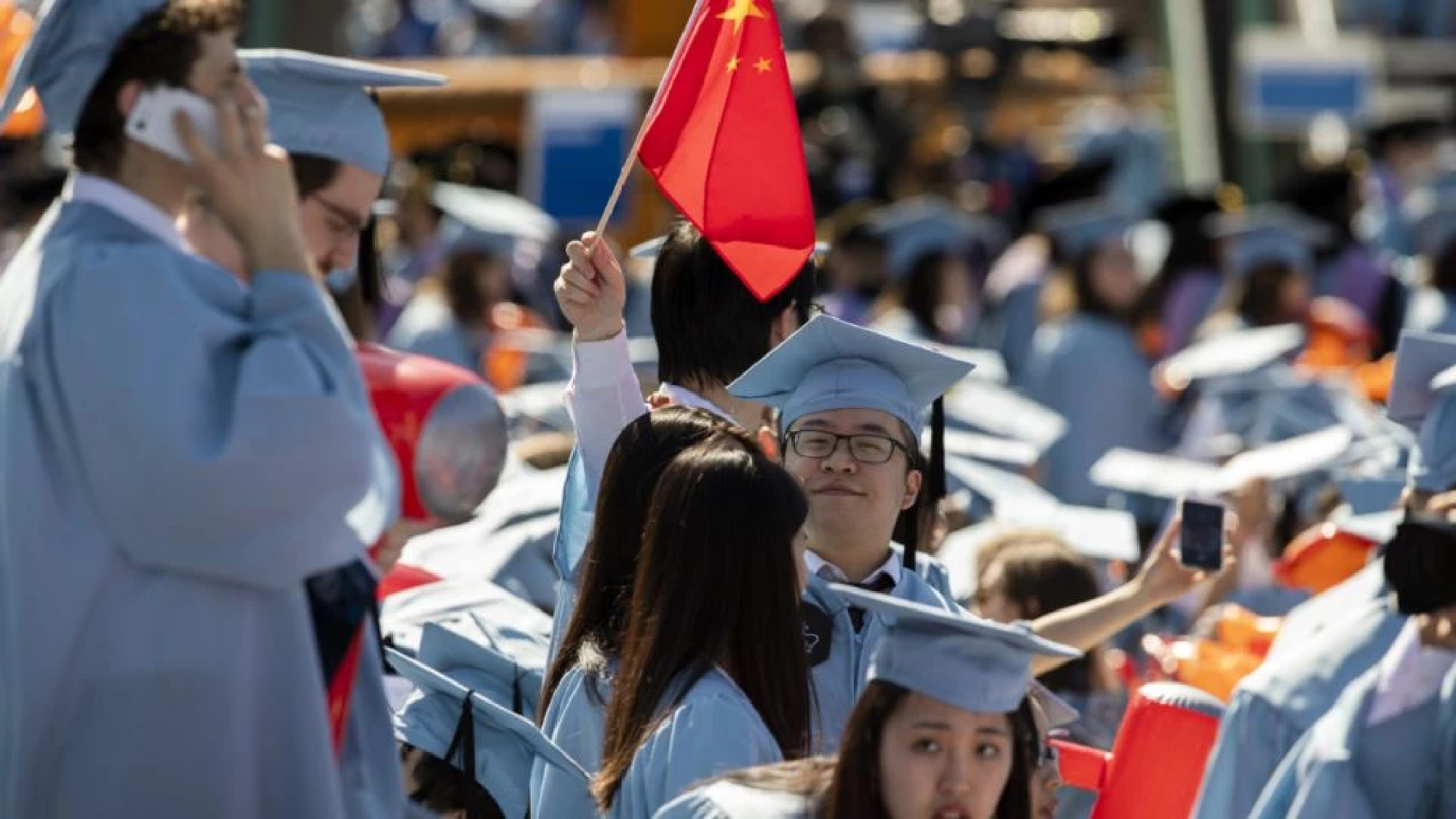
In the Chinese movie American Dreams in China, three young men in the 1980s opened a language school to prepare Chinese students for TOEFL. The school helped generations of Chinese students to go to study in the US. Four decades later, the dream seems to be fading in the minds of many Chinese students.

US universities facing sharp fall in Chinese students

Arecent report by The Wall Street Journal said that during the first half of 2022, US student visas issued to Chinese nationals dropped more than 50 per cent compared with pre-pandemic levels.

In the first six months of 2022, the US issued 31,055 F-1 visas to Chinese nationals, down from 64,261 for the same period in 2019, according to data from the US State Department. F-1 visas allow foreigners to study in schools in the US.

The University of Miami Herbert Business School, which is ranked No 1 in Florida and No 26 globally in Business Administration based on the 2021 Academic Ranking of World Universities, has seen a 30 per cent drop in Chinese graduate students this year.

“At the peak maybe four years ago, we maybe had as many as 300 Chinese students,” John Quelch, dean of the University of Miami Herbert Business School, told China Daily. This year, the university has about 140 Chinese students, he said, adding that is a rough estimate.

“We believe that we are not as badly off here because we are well-known in China as a China-friendly business school,” said Quelch. “We’re very culturally diverse. The Coral Gables campus south of Miami is self-contained and very safe and beautiful.”

For more than a decade, China has been the largest source of US international students. They provide crucial tuition fees for colleges as many international students pay close to the full sticker price, particularly at public universities where most international students pay much higher nonresident tuition rates-as do nonresident US citizens than in-state students.

During the 2020-21 school year, 317,299 Chinese nationals enrolled in US institutions, representing about a third of all international students studying in the US, a Pew Research study in 2021 said.

In the 2019 academic year, Chinese students contributed $15.9 billion in economic value, according to a report by the Institute of International Education’s Open Doors.

The deterioration of China-US relations is one of the reasons prompting Chinese students to seek higher education elsewhere.

“The decision to go to graduate school, it’s usually at least one year and sometimes two years in the making. People do not decide on Friday and go on Monday,” said Quelch. “So, I do feel that the cumulative weight of deteriorating US-China relations has definitely caused more potential students and parents in China to question whether the US is a hospitable place.”

Biases are also affecting where Chinese students choose to study.

A 2021 report from the Carter Center found that 62 per cent of the Chinese internet-using population had a negative perception of the US. Research published in March shows that younger Chinese, those born in the 1990s and later, tend to have a more negative impression of the US than their parents do.

“We are very keen to maintain the flow of Chinese graduate students to a school. It’s just very important for people-to-people exchanges and mutual understanding,” said Quelch, who served previously as dean at both the London Business School and the China Europe International Business School in Shanghai, and as senior associate dean at Harvard Business School.

“The China-US relationship is the single most important bilateral relationship. And it’s essential that we have as many Chinese students as possible developing their understanding of American culture and the way Americans think and behave in business. And I wish that we had the same number of Americans who were willing and eager to study in China,” he said.

The language school that opened in the 1980s to help Chinese students study in the US is now the New Oriental Education Technology Group, a Chinese education company. The company’s recent study showed the interest of Chinese students in studying in the US has been in decline since 2017, even as overall Chinese interest in studying abroad has been surging.

These days, more students express interest in going to the UK than the US, while interest in Hong Kong and Singapore is climbing steadily, the report says.

One of the reasons why these regions and countries are of interest to Chinese students is because they are English-speaking places, said Quelch.

“English is the primary currency of business, the language of business worldwide. And so it makes sense from the point of view of developing your language capability,” he said.

Published : August 19, 2022

By : China Daily

Cambodia’s fishery exports dive amid dearth of processing experts

#SootinClaimon.Com : ขอบคุณแหล่งข้อมูล : หนังสือพิมพ์ The Nation.

https://www.nationthailand.com/international/ann/40019062


Cambodian exports of fresh and processed fisheries products saw a marked year-on-year drop in the January-July period, barely missing the 2,000-tonne mark.

Cambodia's fishery exports dive amid dearth of processing experts

Asenior official noted that the country lags behind in technical expertise when it comes to turning raw fish and other aquatic species into higher-value items.

In the first seven months of 2022, total freshwater and marine fishery production amounted to 24,500 tonnes and 6,860 tonnes, respectively, falling by 7,410 tonnes and 100 tonnes on a yearly basis, reported the Fisheries Administration (FiA), which is under the Agriculture, Forestry and Fisheries Ministry.

During the same period, fresh and processed fisheries exports weighed in at 1,933 tonnes and 41 tonnes, respectively, with the former decreasing by 326 tonnes compared to the same time last year.

Ministry data shows that in 2021 fresh-capture fisheries exports were 2,916 tonnes, or 36.45 per cent, of the annual target of 8,000 tonnes. This marked a 971 tonne, or 50 per cent, increase over 2020.

Processed fisheries exports reached 150 tonnes, or 7.50 per cent, of the 2,000-tonne annual target, representing a decrease of 84 tonnes compared to 2020.

FiA deputy director Hav Viseth told The Phnom Penh Post on August 17 that fresh fisheries exports are for the most part organic, while the processed items include dried and smoked fish, along with the fermented-fish products prahok and pha’ak. These goods are shipped in yet-limited quantities to the US and other countries with a sizeable Cambodian diaspora, he said.

He underscored that processed fisheries exports have been held back due to a lack of technical experts in processing fish for the international market, calling on companies intending to ship these products overseas to train more professionals in the field to make certain that the endeavour comes to a satisfactory conclusion.

Viseth said the FiA “has been negotiating to open the gates for the private sector to be able to export products abroad, but private companies also need to actively participate in this work to ensure the success of the exports.

“Hence more human resource training is essential.”

Chav Soursdey, CEO of Cambodia Fresh Farm, whose plans to export processed tilapia to Japan were recently pushed back to later this year, said that although there is high demand for processed fish, processors have been reluctant to diversify their offerings due to steep capital requirements and market uncertainty.

He called on prospective exporters of processed fisheries products to gauge their target markets thoroughly, noting that variations in quality standards across localities are negligible compared to the differing tastes and preferences of consumers.

Soursdey said plans to ship tilapia to Japan were put on ice after an inspection by the UN Industrial Development Organisation, which required adjustments to the farm’s recently completed processing plant, which he expects to be completed “within a month”.

The Phnom Penh Post

Asia News Network

Asia News Network: The Nation (Thailand), The Korea Herald, The Straits Times (Singapore), China Daily,  Jakarta Post, The Star and Sin Chew Daily (Malaysia), The Statesman (India), Philippine Daily Inquirer, Yomiuri Shimbun and The Japan News, Gogo Mongolia,  Dawn (Pakistan),  The Island (Sri Lanka), Kuensel (Bhutan), Kathmandu Post (Nepal), Daily Star (Bangladesh), Eleven Media (Myanmar), The Phnom Penh Post and Rasmei Kampuchea (Cambodia), The Borneo Bulletin (Brunei), Vietnam News, and Vientiane Times (Laos).

Published : August 18, 2022

By : The Phnom Penh Post

Highly popular ‘blind boxes’ under the microscope in China

#SootinClaimon.Com : ขอบคุณแหล่งข้อมูล : หนังสือพิมพ์ The Nation.

https://www.nationthailand.com/international/ann/40019060


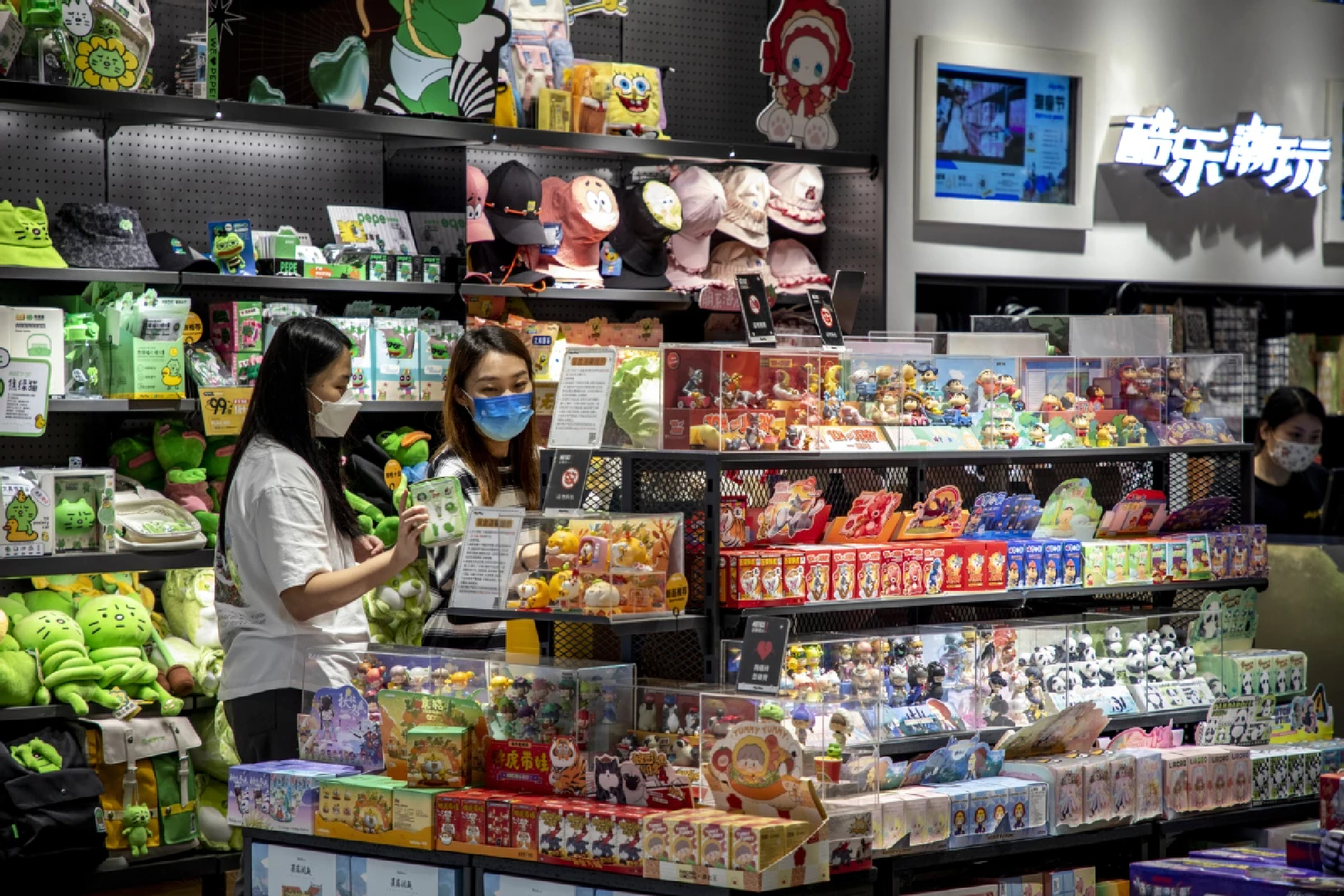
The State Administration for Market Regulation, China’s top market regulator, stipulated that businesses should not sell “blind boxes” to juveniles under eight years old, as part of broader efforts to regulate the country’s billion-dollar industry.

Highly popular ‘blind boxes’ under the microscope in China

Ablind box is a popular way of packaging toys and other products to keep their contents hidden. The Chinese Academy of Social Sciences estimated that the market size of China’s trendy toys, mainly blind boxes, is expected to hit 47.8 billion yuan (249.1 billion baht) this year.

According to a draft guideline, businesses can only sell blind boxes to those aged eight and above after obtaining the consent of their guardians.

The guideline said companies should not bid up prices and should reasonably determine prices of blind boxes based on production and operation costs as well as market supply and demand. Prices of blind box products should not have a big gap from that of non-blind box products of the same quality, it said.

“The guideline will effectively regulate prices based on the value of blind boxes. Currently, prices of some boxes are inconsistent with their value,” said Chen Jianjie, a lawyer with Brighteous Law Firm.

In January, the China Consumers Association said that blind box consumption was expanding in a disorderly manner, from pets to air tickets, and increasing problems are also arising, including illegal sales, unknown probabilities and consumption addiction.

China Media Group reported a case in which a blind box was priced at 800 yuan but the actual cost was only about 30. Some consumers spend more than 10,000 yuan to buy blind boxes in order to get a limited-edition toy.

“It will also prevent the sector from becoming a gambling tool that infringes upon consumer rights,” Chen said.

As some business operators sold blind boxes with pets inside, the draft guideline also clarified that live animals, drugs, medical devices, special cosmetics and unmarked express parcels cannot be sold in the form of blind boxes.

Following the news, Pop Mart, the Chinese mainland’s leading blind box company, started with a slight drop but closed with a 3.3 per cent increase in share price on the Hong Kong stock exchange.

The company said in a statement that the draft guideline is of positive significance and can offer clear directions to companies to operate in a standardised way, which helps the sector create a better business environment.

China Daily

Asia News Network

Asia News Network: The Nation (Thailand), The Korea Herald, The Straits Times (Singapore), China Daily,  Jakarta Post, The Star and Sin Chew Daily (Malaysia), The Statesman (India), Philippine Daily Inquirer, Yomiuri Shimbun and The Japan News, Gogo Mongolia,  Dawn (Pakistan),  The Island (Sri Lanka), Kuensel (Bhutan), Kathmandu Post (Nepal), Daily Star (Bangladesh), Eleven Media (Myanmar), The Phnom Penh Post and Rasmei Kampuchea (Cambodia), The Borneo Bulletin (Brunei), Vietnam News, and Vientiane Times (Laos).

Published : August 18, 2022

By : China Daily

Headache in Malaysia’s Johor Baru over paracetamol shortage

#SootinClaimon.Com : ขอบคุณแหล่งข้อมูล : หนังสือพิมพ์ The Nation.

https://www.nationthailand.com/international/ann/40019056


Pharmacies in the Malaysian state of Johor Baru are facing a paracetamol shortage as demand for the drug commonly used to relieve headaches and fever has skyrocketed over the past few months.

Headache in Malaysia’s Johor Baru over paracetamol shortage

Acheck at pharmacies around the city found most shelves emptied out, especially for leading brands.

Pharmacist G Navin Shankar, 31, said the shortage had become more severe over the past few months.

“The demand for paracetamol has been on the rise since last year but the situation has got worse lately.

“We have been running out of the drug for close to two months and prior to that, the stock we received is also a lot less compared to pre-pandemic times.

“For example, if we used to get about 100 boxes previously, we now receive only about 10 boxes,” he said at a pharmacy in Taman Nong Chik.

Navin added that fever, cough and flu medication are also running low while demand continues to rise.

Assistant pharmacist Khairullisa Abdullah, 24, said that diarrhoea and anti-inflammatory medicines are also in high demand.

“At the moment, we have run out of flu, fever, cough, diarrhoea and anti-inflammatory medication.

“For paracetamol, we have some stocks of lesser-known brands. However, they still work the same as leading brands. We notice that herbs that are commonly used to relieve fever and cough are also in high demand since the influenza outbreak,” she said.

Another pharmacist who only wanted be known as Tan said the paracetamol supply has shrunk significantly since the beginning of the year.

“The supply for fever, flu and cough medicine has also dropped since around April.

“Suppliers are unable to deliver the required amount of medicine we request as they have to divide the limited stock of medicine they have to other pharmacies as well,” he said.

Checks for paracetamol at convenience stores, including those at petrol stations, also found most shelves emptied.

On Tuesday, Health Minister Khairy Jamaluddin said in Parliament that sales of paracetamol jumped by 238 per cent in the first quarter of the year compared to the previous year.

The Star

Asia News Network

Published : August 18, 2022

By : The Star

All Mongolian citizens over 16 to have e-mail address and get State services online

#SootinClaimon.Com : ขอบคุณแหล่งข้อมูล : หนังสือพิมพ์ The Nation.

https://www.nationthailand.com/international/ann/40019046


L.Enkh-Amgalan, the Minister of Education and Science, and acting Minister of Digital Development reported the decision made by today’s Cabinet meeting.

All Mongolian citizens over 16 to have e-mail address and get State services online

He reported “The national e-mail service of Mongolia is being introduced today. All citizens over the age of 16 will be given e-mail addresses through the E-Mongolia system and will access State services online”.

Nationwide, 3.8 million citizens use smartphones and 1.5 million are using E-Mongolia. If every citizen has an e-mail address, they will be able to communicate directly with the government. Starting from today, the information is being transferred to the system of direct e-mail delivery to citizens such as

Foreign passports of 61,000 citizens have expired

4950 national ID have expired

Furthermore, companies don’t know that their special licenses have expired. This information will be sent via email.

About 680 State services are currently included in the e-Mongolia system. It will be increased to 1200 services in further.

” About 80,000 kindergarten children have been registered online in Ulaanbaatar city. On August 25, information about which kindergarten your child will attend will be sent electronically,” He added.

Gogo Mongolia

Asia News Network

Asia News Network: The Nation (Thailand), The Korea Herald, The Straits Times (Singapore), China Daily,  Jakarta Post, The Star and Sin Chew Daily (Malaysia), The Statesman (India), Philippine Daily Inquirer, Yomiuri Shimbun and The Japan News, Gogo Mongolia,  Dawn (Pakistan),  The Island (Sri Lanka), Kuensel (Bhutan), Kathmandu Post (Nepal), Daily Star (Bangladesh), Eleven Media (Myanmar), The Phnom Penh Post and Rasmei Kampuchea (Cambodia), The Borneo Bulletin (Brunei), Vietnam News, and Vientiane Times (Laos).

Published : August 18, 2022

By : Gogo Mongolia