Teslas go much farther on a single charge than their competitors. But the strategy carries risks. #ศาสตร์เกษตรดินปุ๋ย

#ศาสตร์เกษตรดินปุ๋ย : ขอบคุณแหล่งข้อมูล : หนังสือพิมพ์ The Nation

https://www.nationthailand.com/auto/30380391?utm_source=category&utm_medium=internal_referral

Teslas go much farther on a single charge than their competitors. But the strategy carries risks.

Jan 11. 2020
File Photo: Tesla car

File Photo: Tesla car
By The Washington Post · Faiz Siddiqui 

Tesla’s long-range Model S promises to drive roughly 370 miles without stopping for a charge – about the distance from San Francisco to Los Angeles.

Its closest electric car competitors on range, from companies such as Chevrolet, Jaguar and Nissan, can only make it about 240 miles – or a little farther than a drive from Washington, D.C., to New York City, though some individual models top out around 260. Most others are behind, barely topping 200 miles.

Tesla is leading the electric vehicle race because it has more high-powered battery tech – and it takes more risks. For more than a decade, Tesla has been designing battery-powered vehicles from the ground up and using software to make the batteries more efficient. It has scrapped many weighty, traditional luxury features in favor of aerodynamics, taken measures such as ditching multi-gear transmissions in favor of dual motors programmed to send varying power ratios to the front and rear wheels.

But car industry experts also say the company has taken more risks than traditional automakers, making its batteries ever-denser and out of different materials than competitors. Some point to a handful of spontaneous battery fires under investigation by federal regulators as potential fallout. And it’s too soon to know – as with any new vehicle – what kind of durability the vehicles may offer in the long run. Even the oldest Tesla sedans have been on the road for less than eight years.

Battery range has helped Tesla maintain its grip on the electric vehicle market at nearly 60 percent of new sales in the first nine months of 2019, according to data from the website InsideEVs, as new electric vehicle models from at least four major car companies have hit the U.S. market over the past year or so, and the company gears up to face its first real challenge.

“My belief is that Tesla is more willing to risk their battery not lasting 8 to 10 years and just dealing with the consequences on the back-end,” said Michael Ramsey, a senior director and analyst specializing in the evolution of the auto industry with Gartner’s CIO Research Group. “Part of their success is related to their willingness to go way past what the industry would normally would do,” he said.

Tesla did not respond to repeated requests for comment.

Tesla isn’t the only electric vehicle company under scrutiny for its batteries. Nissan had to change its battery chemistry on its early Leaf model because of significant battery degradation over a short time period, particularly in warmer climates. And Audi recalled its e-tron SUV last year because of the potential for moisture to seep into battery packs and create a fire risk, Bloomberg News reported. Audi said it was because of a wiring harness glitch.

Federal regulators have also investigated General Motors for battery fire risks in cars including its plug-in hybrid Chevrolet Volt in 2011, which GM agreed to fix.

Nissan declined to comment on its early Leaf battery issues. General Motors did not respond to requests for comment. Audi spokesman Mark Dahncke said the issue has been fully resolved.

Tesla was the company that brought the electric car to the masses, first with the launch of its sporty Roadster in 2008 when traditional car manufacturers were still largely focused on hybrids. In 2012, it launched its flagship Model S, followed in 2017 by its more affordable Model 3. The company’s market capitalization recently reached $87 billion, exceeding the combined value of Ford and General Motors. And it’s expanding in the all-important market of China, where CEO Elon Musk performed a revelatory dance that went viral this week.

People buy Teslas not just for their battery range. It has features like Autopilot, which steers the car on highways and executes lane changes. The cars are also less visually jarring than many competitors, some of which eschewed traditional designs while working on aerodynamics.

But in a key development, it helped eliminate range anxiety by helping reduce the possibility that its vehicles wouldn’t run out of juice in the middle of a road trip. The batteries are tucked under the floor of the main body of the car.

The Palo Alto, California-based company has made substantial investments in battery technology and research. Last year, Tesla announced it would buy Maxwell Technologies, a firm focused on energy density and breakthrough storage technology that Musk has championed. In 2015, the company entered into an agreement with Canada-based Dalhousie University professor Jeff Dahn, a world-renowned battery researcher, to make lower-cost lithium-ion batteries that last longer and have higher energy densities.

Tesla’s improvements have added up to industry-leading energy densities, referring to the amount of energy that is stored in a particular battery unit, said Logan Goldie-Scot, head of clean power research at BloombergNEF.

Tesla also opened its Sparks, Nevada, Gigafactory in 2016, a dedicated large-scale battery plant that it says became the world’s highest-volume battery plant in 2018. Panasonic produces the battery cells, which Tesla assembles into packs and modules for its vehicles.

Most other major EV makers contract battery production with companies like South Korea-based LG Chem, which in December announced a joint venture with General Motors to build a battery-production plant in northeast Ohio.

Rich Benoit, who runs Electrified Garage, an independent Tesla repair shop in New Hampshire, said incremental improvements over time have led to a sizable advantage for Tesla. One example is Tesla’s decision to opt for dual-motors for its front and back wheels over using multispeed transmissions to increase power.

He said Tesla has learned how to gain efficiencies in the interaction of those two motors – what the power ratio should be between the front and back wheels for the best control, acceleration, power and range, for example. Its Internet-connected cars have gathered data to fuel those improvements.

“They’ve had absolutely the longest lead time of anyone else – any other manufacturer out there,” said Benoit, who has taken apart dozens of Teslas to see how they work for his YouTube channel “Rich Rebuilds.” “When Porsche was still making Caymans and Boxsters, the Tesla Roadster came out,” referring to Tesla’s debut 2008 sports car – “they’ve had years of [research] and development and sourcing different vendors to kind of perfect their technology.”

In electric vehicles, a higher energy density means more potential range from a smaller package, saving weight and improving efficiency, according to analysts and battery researchers.

Tesla’s Model 3 carries roughly 24 percent higher pack energy density as compared with a 2018 Nissan Leaf, according to data compiled by BloombergNEF research. That resulted in about 90 miles more range, though weight considerations and Nissan’s smaller battery size also factor in.

Tesla also uses a different battery chemistry – aluminum, in addition to the standard nickel and cobalt – than other major automakers. The battery researchers said that choice has led to maximum range because of a higher-capacity battery chemistry, though downsides included a higher fire risk and shorter cycle life, or life span over hundreds of charges.

Other automakers have opted for manganese instead of aluminum, with lower storage capacity, portending less range but potentially longer life cycles, those researchers said.

The tradeoff for Tesla: higher energy densities and higher-capacity materials tend to put out more heat, requiring more advanced cooling systems and temperature management systems to preserve the battery, the researchers and analysts said.

Will Chueh, a Stanford University’s Department of Materials Science and Engineering professor who focuses on lithium-ion batteries, said Tesla’s choice of battery material also represents another bet: more range means less charging, offsetting some concerns about cycle life. Consumers won’t have to charge their cars as much if they have 300 miles of available range, so Tesla can afford to use a battery with a shorter cycle life, in addition to taking proactive measures such as active cooling to preserve the life of the battery. “The larger the battery is the fewer times you have to cycle it,” he added.

As the batteries age, however, they become less potent, which can affect the driving experience. “As the battery degrades, you won’t be able to do the 2.5 seconds-fast acceleration because the battery can’t deliver as much power in that time as it did before,” he said. The range decreases and charging time goes up and available power lessens – which can translate to the driving experience, he said.

And some Tesla owners are already reporting battery issues as their cars age.

Harpreet Singh bought a Tesla certified pre-owned 2013 Model S with around 34,000 miles on it a year ago for nearly $46,000. The 32-year-old IT engineer says that his battery range has fallen as his charge times have gone up.

The car originally had 265 miles of range, he said. But in April Tesla pushed a software update aimed at protecting the battery from an unspecified issue and to improve its overall life. Singh said the updates took away about 40 miles of range.

“They have full control of how the car will behave,” he said. “I purchased the iPhone and Apple did the same,” he said, referring to Apple’s throttling of older phones.

The National Highway Traffic Safety Administration confirmed in the fall it is investigating Tesla Model S sedans and Model X SUVs after Tesla owners brought a petition alleging battery faults to the agency’s Office of Defects Investigation. The NHTSA petition alleged the updates reduce the driving range of affected vehicles.

An attorney representing those owners also filed a class action against Tesla regarding the 2019 software changes. The NHTSA petition alleged that the software tweak was in response to “a potential defect that could result in non-crash fires in the affected battery packs” that should have resulted in a safety recall, citing an “alarming number of car fires” in 2012 through 2019 model-year vehicles.

Most of those blazes appeared to be spontaneous – several of them high-profile and documented on social media. In one instance, a parked Tesla Model S exploded in a Shanghai garage. In another, a Model S burst into flames while driving in Los Angeles, according to news reports.

Vehicles have also caught fire upon impact. For example, in South Florida a Tesla driver was killed after the vehicle swerved through traffic and struck a median and trees, before catching on fire. Another wreck in South Florida led a family to sue the company alleging the battery pack was defective. That firm representing them alleged there were at least a dozen cases of Model S batteries catching fire either after a collision or while parked.

Tesla said at the time its cars were 10 times less likely to catch fire than gas-powered cars, though the fires can be harder to fight because of the concentrated build up of heat.

After the deadly South Florida crashes, Tesla told media outlets that the vehicles are engineered to be the safest in the world and, in the second, that no car could have withstood such a high-speed crash. Tesla has also previously said it has investigated spontaneous battery fires. In one case, Tesla told CNN the fire was “an extraordinarily unusual occurrence” and that the cabin was protected from the fire due to the battery’s design

The Environmental Protection Agency made waves in December when it announced that Porsche’s highly anticipated all-electric Taycan Turbo sports car would carry a range of only 201 miles-with a $150,000 price tag. Porsche’s range estimates were initially set around 280 miles. Porsche did not respond to a request for comment.

“This will give you range anxiety in a hurry,” tweeted Tesla investor Ross Gerber, a vocal Tesla booster on social media. “Taycan is DOA.”

Many traditional competitors have been launching electric SUVs, banking on appealing to consumer demand for bigger, greener vehicles. Because they’re larger and heavier, they face greater challenges on range, according to experts. Still, the base-model Tesla Model X SUV, with a smaller battery pack than competitors, delivers an EPA-rated range of 238 miles. Tesla’s Model Y crossover, set to arrive later this year, is expected to carry a 280 to 300-mile range, though the automaker has also promised a cheaper standard-range version at 230 miles.

The Model Y’s closest competitor, Ford’s upcoming Mustang Mach-E crossover, is targeting ranges in the same ballpark at the Model Y – representing the top end of what the Tesla competitors can produce – for late 2020. Ford did not have immediate comment.

BMW-owned MINI, which plans to soon introduce its electric MINI Cooper SE in the United States, revealed last year its range would be just 110 miles. BMW did not respond to a request for comment.

Jaguar’s I-Pace SUV is among the closest, with a range of about 240 miles. Jaguar spokesman Taylor Hoel said the company opted to use a different battery cell type in an effort to ensure the cars could be driven hard for longer periods of time, citing what he said were temperature management advantages. (Hyundai’s Kona EV has an EPA-rated range of 258 miles, but has only been available in limited, electric-friendly markets.)

Explaining the e-tron’s SUV’s 204-mile range, Dahncke, the Audi spokesman, said the company focused on maximizing battery longevity rather than range, illustrated by the preference for the less energy dense manganese battery chemistry. Audi also limited how much of the battery was usable to 88 percent to better preserve it, and sacrificed some aerodynamics to maintain a traditional SUV shape familiar to buyers.

Goldie-Scot, the analyst at BloombergNEF, says he expects the range gap to narrow in coming years as traditional rivals catch up and Tesla’s innovations inevitably slow down.

“Tesla clearly has had a large number of years to build up core competencies around the battery, the electric motor, that is resulting in it generally scoring at the top end on range,” he said. “As you look at technology advancements over the coming years – you start seeing a more blurred line between them.”

Still, EV shoppers like Dali Dimovski of Macomb, Michigan, say Tesla’s superior range makes it the only option. He has been considering an electric vehicle for his 65-mile one-way commutes to the Ann Arbor area, where the 41 year-old is an automotive designer focused on interiors.

“One of the things about living in the Midwest is you’re always traveling to other parts of the Midwest,” he said. “That 300 [miles] is a magic number for a lot of us.”
Automakers sow worry on future as discounts prop up U.S. sales #ศาสตร์เกษตรดินปุ๋ย

#ศาสตร์เกษตรดินปุ๋ย : ขอบคุณแหล่งข้อมูล : หนังสือพิมพ์ The Nation

https://www.nationthailand.com/auto/30380124?utm_source=category&utm_medium=internal_referral

Automakers sow worry on future as discounts prop up U.S. sales

Jan 04. 2020
File Photo
By Syndication Washington Post, Bloomberg · Craig Trudell, Keith Naughton 

Carmakers likely extended a streak of strong U.S. sales by slathering on the incentives and pumping up deliveries to fleet customers in 2019, calling into question whether the companies can maintain momentum into the new decade.

While industrywide deliveries are expected to exceed 17 million for an unprecedented fifth consecutive year, sales slowed in the final months of 2019. General Motors and Fiat Chrysler Automobiles reported fourth-quarter sales declines that were largely in line with analyst estimates, while Toyota and Honda posted surprise December decreases.

The good run automakers have been on the last few years is also less impressive beneath the surface. While the number of new vehicles consumers are buying at retail peaked years ago, manufacturers have propped up sales by selling to rental-car companies. Market researcher J.D. Power estimates carmakers spent about $4,600 on incentives per vehicle in the last month of the year, a record.

GM, Fiat Chrysler and Ford Motor Co. shares fell by more than benchmark indexes after a gauge of U.S. manufacturing activity unexpectedly dropped to the worst reading since June 2009. All three stocks trailed the S&P 500 in 2019.

Nissan reported the biggest decline among major automakers, limping over the finish line last year with an almost 30% plunge in December sales. In its first full year without longtime leader Carlos Ghosn, deliveries dropped 9.9%.

A softening economy probably won’t be to blame for sales dipping below 17 million this year, says Jeff Schuster, senior vice president of forecasting for researcher LMC Automotive. Instead, he points to sticker shock for buyers on a budget.

“We’re expecting a decline to 16.8 million for 2020 because transaction prices are continuing to rise,” Schuster said. “The affordability problem is affecting those first-time and entry-level buyers, pushing them to the used-car market. It’s not a massive exodus from new-car sales, but that adds additional pressure to that 17 million level and that’s why we’ll see a dip.”

Tesla deliveries set a record and extend red-hot run for shares #ศาสตร์เกษตรดินปุ๋ย

#ศาสตร์เกษตรดินปุ๋ย : ขอบคุณแหล่งข้อมูล : หนังสือพิมพ์ The Nation

https://www.nationthailand.com/auto/30380110?utm_source=category&utm_medium=internal_referral

Tesla deliveries set a record and extend red-hot run for shares

Jan 04. 2020
New Tesla Model 3's sit m a service road at the company's new factory in Shangha on Dec. 30, 2019. MUST CREDIT: Bloomberg photo by Qilai Shen.

New Tesla Model 3’s sit m a service road at the company’s new factory in Shangha on Dec. 30, 2019. MUST CREDIT: Bloomberg photo by Qilai Shen.
By Syndication Washington Post, Bloomberg · Dana Hull 

Tesla shares opened at new highs after the electric-car maker reported a new record for quarterly deliveries of 112,000 units in the final three months of 2019.

The electric-vehicle maker handed over 92,550 Model 3 and 19,450 Model S and Model X electric vehicles in the fourth quarter, according to a statement, eclipsing its previous total best of 97,000 set in the prior three months. Tesla delivered 367,500 vehicles total in all of 2019, topping the low end of its forecast for at least 360,000.

The results add to the momentum Chief Executive Officer Elon Musk ended last year with following a surprise quarterly profit reported in late October. To stay on a roll, Tesla will have to overcome the ceasing of federal tax credits for its vehicles in the U.S. and less-generous support from the Netherlands, which generated huge demand with tax incentives that expired at year-end.

Tesla shares climbed as much as 5.5% to $454 shortly after the start of regular trading. The stock rose 26% in 2019.

Tesla delivered about 7,000 more cars than it produced in the quarter, meaning the automaker managed to reduce inventory. The Palo Alto, California-based company hasn’t scheduled a date yet for the release of fourth-quarter earnings.

The outlook for government incentives to support burgeoning electric-vehicle demand is positive in parts of the world, including Germany, where Musk has announced Tesla will build its next factory. And while policymakers in China have mulled further reducing subsidies, a new plant Tesla has built near Shanghai is making Model 3s assembled there eligible for handouts, and locally built sedans will be exempt from a purchase tax.

International deliveries of the Model 3 sedan began in early 2019 and became a significant source of sales over the course of the year. While Tesla doesn’t release a breakdown of deliveries by region or country, the company disclosed in October that revenue in the U.S. plummeted by almost 40% in the third quarter from the year-earlier period. That drop more than offset growth in other geographies.

In the Netherlands, 12,062 Model 3s were registered in December alone, according to Kentekenradar, which publishes daily Dutch fleet data updates. That’s more than double the car’s previous best month in September.

U.S. buyers were still eligible for $1,875 federal tax credits for the last six months of 2019. While that perk went to zero as of Jan. 1, some state incentives are still available.

Tesla went to great lengths to help some customers take delivery of their car in time to get the tax credit, paying one journalist who lives in Florida to fly to St. Louis so he could pick up his car before the end of the year.

Customers flocked to Tesla’s factory and delivery hub in Fremont, California, on New Year’s Eve to take delivery of their cars, with many staying past midnight to complete paperwork.

Tesla has said that China could become the biggest market for Model 3s, which are now being assembled at the factory near Shanghai. Prospects for growth in the market helped buoy the stock leading up to the company handing over the first locally made sedans to 15 of its own employees on Dec. 30.

The plant has assembled just short of 1,000 cars for sale to customers and demonstrated an ability to make more than 3,000 a week, excluding local battery-pack production that began late last month, according to the company.

Heading into Tesla’s report, analysts were divided over where the carmaker’s deliveries are headed next. Canaccord Genuity raised its price target by more than $100 on Thursday to $515, telling clients that the shift in demand toward electric vehicles will only accelerate this year. JMP Securities wrote that Wall Street’s expectations for this year were “oddly low.”

Others aren’t so sure. Cowen & Co. recently expressed caution about “demand saturation” across most mature markets. Analyst Jeffrey Osborne predicted fourth-quarter Model 3 deliveries would drop both sequentially and from the year-earlier period when excluding the Netherlands and China.

The average price target for Tesla shares is $301.83, according to data compiled by Bloomberg. Eleven analysts recommend buying the shares, compared with 10 holds and 15 sells.

As Tesla gets production ramped up in China, one key question will be whether the company can generate enough demand there to offset what is seasonally the slowest time of year for all automakers in the first months of each year.

Musk, 48, followed up two straight record quarters of deliveries at the end of 2018 with a disappointing first three months of deliveries last year, sending shares on a slide that took much of 2019 to come back from.

“Many investors remain snake bitten by this stock,” Dan Ives, an analyst at Wedbush Securities who rates Tesla the equivalent of a hold, wrote in a report Thursday. “Every time optimism grows and it looks like bright skies over Fremont, unfortunately some negative variable has come out of left field and created an overhang on the story.”

Electrification of mobility can help your children breathe greener air #ศาสตร์เกษตรดินปุ๋ย

#ศาสตร์เกษตรดินปุ๋ย : ขอบคุณแหล่งข้อมูล : หนังสือพิมพ์ The Nation

https://www.nationthailand.com/auto/30379786?utm_source=category&utm_medium=internal_referral

Electrification of mobility can help your children breathe greener air

Dec 24. 2019
Ramesh Narasimhan, president of Nissan in Thailand

Ramesh Narasimhan, president of Nissan in Thailand
By Ramesh Narasimhan
Special to the Nation

826 Viewed

Did you know that just one EV is able to reduce 4.5 metric tons of greenhouse gases a year (footnote 1), equal to growing up 205 trees?

As the festive season approaches, I have taken time to pause and reflect on what my New Year’s resolution should be.

As a father of two children, I truly want to be part of creating a greener and a low-carbon society – not just for them but for all of us – a world where everyone, everywhere can breathe clean air without having to worry about the health risks associated with pollution.

But we are sadly a long way from that goal. Sadly, more people are dying from air pollution related disease than from road traffic injuries or malaria (footnote 2).

Some 91 per cent of the world’s population also lives in places where air pollution quality exceeds the World Health Organization’s (WHO) guideline limits, with over 4.2 million deaths globally every year as a result of exposure to outdoor air pollution (footnote 3).

This year alone, Thailand has twice seen the return of PM2.5 fine dust particles in many cities, spiking

to unhealthy levels, and a myriad of solutions are needed for the long-term management of these air pollutants.

Construction of infrastructure and property developments, as well as traffic congestion, are considered to be the root cause of this air pollution – a major environmental health problem affecting not just Thailand but many other low, middle, and high-income countries.

This recurring environmental issue is now being addressed at the national level, with the Thai government agreeing on an action plan to tackle air pollution – but both public and private sectors also need to unite on solutions to ensure long-term improvement.

And I believe that the introduction of the all-new Nissan LEAF, a full-battery Electric Vehicle, together with the upcoming debut of our e-POWER technology, will help millions of people breathe better air.

Why do I say this? Did you know that just one EV can save approximately 4.5 metric tons of greenhouse gases per year? To put this in perspective, one mature tree can offset as much as 22 kilograms of carbon dioxide (CO2) per year, which means that the benefits of one EV is equal to that of 205 trees (footnote 4).

Nissan, with our mission to sell 1 million EVs annually, will jointly save the planet 4.5 million metric tons of greenhouse gases each year by 2022, which translates to some 2.05 billion trees planted.

That is in addition to the 810 million metric tons of greenhouse gases already saved – equal to 369 billion trees – that EVs across the industry have already saved the planet (footnote 5).

This truly shows the huge positive impact EVs can have on reducing air pollution. Nissan, as the global EV leader with more than 430,000 Nissan LEAF sold globally, and our LEAF owners, jointly save 3.8 million barrels of oil every year, or one million metric tons of CO2, thus. In addition, we aim for 90% reduced product CO2 emissions by 2050.

In the past five years, global battery-only electric vehicle sales have increased 23-fold and, last year alone, global cumulative passenger EV sales surpassed 4 million (footnote 6) .

And whereas it took the industry six years to collectively sell the first million electric cars, it now takes only six months on average sell a million zero-emission vehicles (footnote7).

The EV sector’s disruption is in overdrive, with a Deloitte report on EVs projecting that we may reach the tipping point where EVs sales can begin to overtake traditional cars within the next three years.

Another of Nissan’s important steps towards achieving its zero-emission vision lies in Nissan’s e-POWER technology, arriving on Thai roads in the near future. Nissan’s e-POWER electrified powertrain system utilizes a gasoline engine to charge the high-output battery, giving the driver a 100% electric driving experience and leading to better fuel efficiency and lower emissions compared with a traditional internal combustion engine.

I wholeheartedly support Thailand’s electrification goal of 1.2 million EVs on the road by 2036, and Nissan is playing out part here: we expect 25% of all Nissan vehicles sold in the A&O region to be electrified by 2022 . And, at a global level, Nissan has also announced plans to introduce eight new pure electric vehicle models and a goal of selling one million electric vehicles annually by 2022.

So, as we move towards the holiday season, I would like to invite you to join with me in resolving to change our behaviour and committing to doing our part to help create cleaner air in our cities for us, our children, and generations to come.

Ramesh Narasimhan is the president of Nissan in Thailand

1 https://www.epa.gov/greenvehicles/greenhouse-gas-emissions-typical-passenger-vehicle 

2 http://www.healthdata.org/news-release/state-global-air-2019-report


3 https://www.who.int/airpollution/en/

4 http://greenyatra.org/plantatree/offset.php

5 https://www.epa.gov/greenvehicles/greenhouse-gas-emissions-typical-passenger-vehicle

6 https://about.bnef.com/blog/cumulative-global-ev-sales-hit-4-million/

7 https://cleantechnica.com/2018/09/03/4-million-electrified-vehicles-sold-globally-5-million-expected-in-6-months-bnef/

Chrysler discounts are biggest in a decade #ศาสตร์เกษตรดินปุ๋ย

#ศาสตร์เกษตรดินปุ๋ย : ขอบคุณแหล่งข้อมูล : หนังสือพิมพ์ The Nation

https://www.nationthailand.com/auto/30379688?utm_source=category&utm_medium=internal_referral

Chrysler discounts are biggest in a decade

Dec 21. 2019
Several Dodge Challengers sit on display at Bettenhausen Motor Sales Jeep Chrysler Dodge RAM in Tinley Park, Ill., in September. MUST CREDIT: Bloomberg photo by Daniel Acker

Several Dodge Challengers sit on display at Bettenhausen Motor Sales Jeep Chrysler Dodge RAM in Tinley Park, Ill., in September. MUST CREDIT: Bloomberg photo by Daniel Acker
By Syndication Washington Post, Bloomberg · Gabrielle Coppola

400 Viewed

Fiat Chrysler Automobiles NV is making an all-out push to clear away tens of thousands of vehicles that its dealers haven’t ordered, adding to tensions over a new data-driven production strategy that can lead to swelling inventory.

The Italian-American automaker is offering its most aggressive discounts since the financial crisis to sell certain 2019 model-year cars under its Dodge, Jeep and Ram brands, internal marketing documents show. In a conference call last week, sales staff were asked to work overtime to press the company’s network of 2,400 dealers to take more vehicles and shrink the unassigned inventory to zero before Christmas.

For Fiat Chrysler, now in a merger deal with France’s PSA Group, the sales blitz marks a costly scramble after it accumulated a stock of as many as 70,000 unassigned cars for the month of December. The company says the build-up is the result of a year-old system to streamline manufacturing by using data analytics to forecast demand, which can cause supply to wax and wane. But it’s also leading to internal strains, with some employees expressing frustration that the cars produced don’t match market preferences, according to the conference call and people with knowledge of the matter.

The magnitude of discounts Fiat Chrysler is resorting to in order to coax dealers to take on the vehicles sends a troubling signal for the automaker’s most important region. Spending on incentives impinges on earnings, and the company is almost entirely reliant on the money it’s making in North America. The situation also shows the challenges carmakers face when adopting new technology to overhaul entrenched practices.

In a perfect world, auto companies manufacture only as many cars as the market is willing to absorb, based on dealer orders. If they make too many, they may ply consumers with incentives to move metal, or lay off factory workers and cut production; too few, and they can either raise prices, or ramp up output to meet demand. The problem is that cutting production means a lower return on the billions invested to produce a vehicle, so it’s often cheaper to overproduce and then use incentives to subsidize sales.

Four dealers told Bloomberg last month that they were being prodded to take cars from what they called a sales bank — a stock of vehicles the manufacturer built despite lacking orders for them from retailers. The decades-old practice is frowned upon in the industry because it can obscure supply figures and increase pressure on dealers to take vehicles they don’t want. Inventory numbers reported to third-party researchers only count cars on dealer lots.

Fiat Chrysler disputes that it’s operating a sales bank. It says the car build-up is a temporary side effect of the predictive analytics system, which saved the company 400 million euros ($445 million) through the third quarter, and trimmed 140,000 units from its total inventory. It was put in place by North America Chief Operating Officer Mark Stewart, who joined last year from Amazon.com Inc.

“Our new supply chain management strategy based on predictive analytics continues to work well for us, even as we continue to refine it,” said Niel Golightly, Fiat Chrysler’s global chief communications officer.

The automaker’s shares are up 4.5% this year, trailing a 28% gain for the S&P 500 Index.

Fiat Chrysler’s stock of excess inventory can fluctuate. The company had a supply of 40,000 unassigned cars in the third quarter that eventually was whittled down to 5,000. The number swelled to 60,000 in November, and 70,000 in December, according to a person with knowledge of the matter, who asked not to be named because the figures are private. It was down to 25,800 vehicles this week.

In the internal marketing email last month, the company outlined new incentives to move “bank units.” Fiat Chrysler has been offering employee pricing that it’s touted as the most aggressive since 2008, shaving 5% off what the dealer pays, plus applying additional rebates to certain vehicles.

Employee pricing is “pretty rare” and was a big boost to sales in November, said Josh Towbin, co-owner of Towbin Automotive in Las Vegas. “It’s working for us, we like it a lot,” said Towbin, who added he hasn’t felt pressured to take unassigned cars.

Still, a Dec. 11 conference call with field sales staff revealed representatives in the automaker’s nine sales regions are working overtime, including during the weekend, to urge dealers to take more cars and empty out the bank by the end of this week.

Several staff expressed frustration on the call that the vehicle configurations dictated by the analytics system don’t match market demand, undermining the company’s claims that its supply is based on software that predicts the most-wanted packages. For instance, the inventory includes 2019 heavy-duty Ram Bighorn trucks with 20-inch wheels that cost $1,600, while dealers want trucks with 18-inch wheels that come standard, one sales executive separately told Bloomberg.

Even dealers who do need fresh inventory aren’t willing to take vehicles from the bank because of the undesirable configurations, people said during the call.

“I know that not all the dealers are playing ball,” Mike Koval, U.S. director of Ram brand product marketing, said on the call. Of the 2,400 Fiat Chrysler dealerships in the U.S., more than 60% have refused to take more than five units in December, he said. “I don’t know what the magic formula is, but we need to work together to crack that code.”

Fiat Chrysler put a limit on dealer orders in December to instead work through existing cars in the sales bank, Bloomberg reported last month. Going forward, dealers will again be able to order cars from the plants, in tandem with production dictated by the analytics system, Koval said on the call. However, the surplus of cars is likely to continue.

“As we look forward to Q1 2020, it looks like there’s really no end in sight on this stuff,” he said. “This might be the new normal for a while.”

Tesla bucks China car slump as November registrations soar #ศาสตร์เกษตรดินปุ๋ย

#ศาสตร์เกษตรดินปุ๋ย : ขอบคุณแหล่งข้อมูล : หนังสือพิมพ์ The Nation

https://www.nationthailand.com/auto/30379687?utm_source=category&utm_medium=internal_referral

Tesla bucks China car slump as November registrations soar

Dec 21. 2019
File Photo/Getty Images

File Photo/Getty Images
By Syndication Washington Post, Bloomberg · No Author 

466 Viewed

Tesla Inc. bucked the downturn in the world’s biggest electric-vehicle market last month as its new-car registrations in China soared 14-fold, giving the Model 3 maker some momentum as it prepares to begin deliveries from its Shanghai factory.

Registrations of Tesla vehicles climbed to a five-month high of 5,597 in November, compared with 393 a year earlier, according to state-backed China Automotive Information Net, which gathers and reports car-industry data. Tesla shares rose a fifth consecutive day, opening up as much as 2.2% to $413, a new intraday record.

Fears that China, the world’s biggest auto market, would raise tariffs on U.S.-made cars in December probably helped bolster sales, according to Bloomberg Intelligence auto analyst Steve Man. But that threat subsided last week after the U.S. and China agreed to the first phase of a broader trade agreement.

The figures add to the recent optimism that’s helped Tesla’s stock surge. They also stand out because the Chinese electric-car market has been shrinking for five months straight. Still, billionaire Elon Musk’s success in the country will largely hinge on how soon he can get Tesla’s new Shanghai plant, its first outside America, up and running so the company can lower prices and spur demand for its cars.

There’s much at stake for Tesla in China as the country accounts for about half of the world’s electric-vehicle sales and represents the company’s biggest market after the U.S.

Tesla’s China-built Model 3s are set to start at about $50,000, slightly cheaper than imported versions. The company may lower the locally built model’s price by 20% or more next year as it starts using more local components and reduces costs, according to people familiar with the matter.

Last year, sales of Tesla and other American-made vehicles were subject to a 25% punitive tariff that was rolled back at the start of 2019 as China and the U.S. moved closer to a trade agreement.

Registrations are among the few high-frequency indicators of demand for Tesla’s cars in China, as the company doesn’t report monthly sales. But registrations and sales figures don’t always end up matching up.

A Tesla representative in China declined to comment on the CAIN data.

Automatic brakes to become mandatory for new domestic cars from Nov. 2021

#ศาสตร์เกษตรดินปุ๋ย : ขอบคุณแหล่งข้อมูล : หนังสือพิมพ์ The Nation

https://www.nationthailand.com/auto/30379566?utm_source=category&utm_medium=internal_referral

Automatic brakes to become mandatory for new domestic cars from Nov. 2021

Dec 18. 2019
By Syndication Washington Post, The Japan News-Yomiuri 437 Viewed

The Land, Infrastructure, Transport and Tourism Ministry has announced that it will require automatic brakes to be installed on new automobiles produced in Japan in November 2021 and later.

The ministry will make it mandatory to install the automatic brakes on imported new cars from around June 2024. It plans to apply for public comments on the issue and revise related regulations in January 2020.

Newly imposing on automobile manufacturers a qualifying test for automatic brakes that meets stricter standards, the ministry intends to make efforts to reduce accidents mainly caused by elderly drivers.

Mindful of international standards on advanced emergency braking systems taking effect in January next year, the ministry will seek the following functions for automatic brakes:

– When an automobile running at a speed of 40 kph approaches a parked car, it will be prevented from hitting it.

– When an automobile running at a speed of 60 kph approaches from behind another car running at a speed of 20 kph, it will be prevented from hitting it.

– When an automobile running at a speed of 30 kph comes close to pedestrians crossing a road at a speed of 5 kph, it will be prevented from hitting them.

Automatic brake systems detect automobiles and people with a combination of cameras and radar to prevent or reduce collision damage. The percentage of new cars equipped with automatic brakes by domestic manufacturers was 84.6% as of 2018.

Cautious spending leads to drop in bookings at Motor Expo

#ศาสตร์เกษตรดินปุ๋ย : ขอบคุณแหล่งข้อมูล : หนังสือพิมพ์ The Nation

https://www.nationthailand.com/auto/30379296?utm_source=category&utm_medium=internal_referral

Cautious spending leads to drop in bookings at Motor Expo

Dec 11. 2019
By THE NATION

783 Viewed

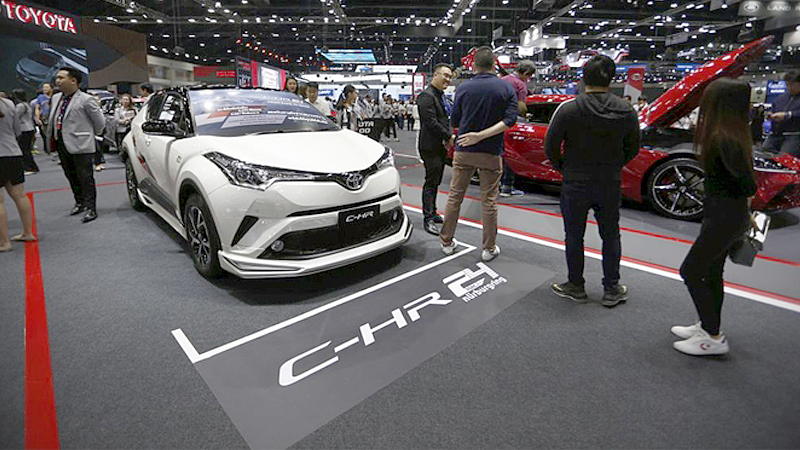
The 36th Thailand International Motor Expo 2019 event at Impact Challenger, Muang Thong Thani, which ended yesterday (December 10), saw a combined booking of cars and motorcycles of 44,740, down 16.2 per cent from the show last year.

Kwanchai Paphatphong, the organising chairman, said the drop was due to many factors, including the declining economy and the ongoing trade wars, which made people more cautious about spending.

Thirty four car exhibitors saw combined bookings declining by 15.2 per cent to 37,489. However, passenger car bookings rose slightly to 45.5 per cent from 38.9 per cent last year.

Toyota gained the highest overall car booking of 6,243 units, followed by Honda at 5,766, Mazda at 3,998, Isuzu at 3,716, and Mitsubishi at 2,959.

In the luxury segment, Mercedes-Benz topped the bookings with 1,862, followed by BMW with 969, Volvo with 474, Audi with 278, and Porsche with 257.

The motorcycle segment also saw a small drop to 7,251 booking

Carmakers shedding 80,000 jobs as electric era upends industry

#ศาสตร์เกษตรดินปุ๋ย : ขอบคุณแหล่งข้อมูล : หนังสือพิมพ์ The Nation

https://www.nationthailand.com/auto/30379107?utm_source=category&utm_medium=internal_referral

Carmakers shedding 80,000 jobs as electric era upends industry

Dec 05. 2019
Demonstrators holds signs reading

Demonstrators holds signs reading “UAW On Strike” outside the General Motors Flint Assembly plant in Flint, Mich., on Sept. 16, 2019. MUST CREDIT: Bloomberg photo by Anthony Lanzilote.
By Syndication Washington Post, Bloomberg · Christoph Rauwald, David Welch, Anurag Kotoky

874 Viewed

It’s turning out to be one of the worst years ever for auto workers across the globe amid shrinking demand and a tectonic shift in vehicle technology, with Daimler and Audi announcing almost 20,000 job cuts in just the past week.

All told, carmakers are eliminating more than 80,000 jobs during the coming years, according to data compiled by Bloomberg News. Although the cuts are concentrated in Germany, the U.S. and the U.K., faster-growing economies haven’t been immune and are seeing automakers scale back operations there.

The German companies joined General Motors Co., Ford Motor Co. and Nissan Motor Co. in massive retrenchments put in motion over the past year. The industry is sputtering as trade tensions and tariffs raise costs and stifle investment, and as manufacturers reassess their workforce in an era of electrification, autonomous driving and ride-on-demand services.

The global auto industry will produce 88.8 million cars and light trucks this year, an almost 6% drop from a year ago, according to researcher IHS Markit. German auto-industry lobby VDA on Wednesday predicted that the decline will continue next year, forecasting global deliveries of 78.9 million vehicles, the lowest level since 2015.

The pace of job cuts in the home of Mercedes-Benz, Porsche and BMW is expected to be “more pronounced in 2020,” VDA President Bernhard Mattes said at a press conference in Berlin. The technology shift alone is expected to put 70,000 jobs at risk over the next decade.

“A fundamental structural change with enormously high investments at a time of deteriorating market dynamics — the tension is being felt at many companies,” said Mattes.

Cuts are also being carried out in China, which employs the largest number of people in the industry and has been mired in a sales slump. Electric-vehicle startup NIO Inc., which has lost billions of dollars and watched its New York-listed shares plummet, dismissed about 20% of its workforce by the end of September, shedding more than 2,000 jobs.

“The persistent slowdown in global markets will continue to dent automakers’ margins and earnings, which have already been hurt by increased R&D spending for autonomous-driving technology,” said Gillian Davis, an analyst with Bloomberg Intelligence. “Many automakers are now focused on cost-saving plans to prevent margin erosion.”

Being an early leader in electrification hasn’t spared Nissan, which has been in turmoil since the arrest of former Chairman Carlos Ghosn a year ago.

With profits plumbing decade lows, the Japanese automaker is shedding 12,500 positions in the coming years, mostly at factories across the globe, to reduce costs as it rushes to refresh an aging model lineup. A redesigned version of the battery-powered Leaf, which debuted later than planned because of the loss of the company’s longtime leader, isn’t giving the company much of a boost this year.

Factory-floor workers have been rising up against the retrenching. GM’s more than 46,000 U.S. hourly workers staged a 40-day-long strike this fall – the longest against the company in almost half a century – but managed to coax the company into keeping open only one of the four American factories it made plans to shutter a year ago.

On Nov. 22, about 15,000 people marched in the streets to protest job cuts and factory closures in Stuttgart, the German city that’s home to the global headquarters of Daimler, Porsche and major parts supplier Robert Bosch.

Protesters in the historic downtown square of Schlossplatz wore red scarfs, blew whistles and waved red flags in support of Germany’s powerful labor union IG Metall, which organized the demonstrations. Top union officials who represent workers at Mercedes-Benz, Audi and many parts makers claim the companies are using the shift toward EVs as an excuse to push through deeper cuts and boost profits.

“We don’t let our jobs be taken away just because some managers haven’t done their homework,” Roman Zitzelsberger, the regional head of IG Metall in the state of Baden-Wuerttemberg and the worker representative on Daimler’s supervisory board, told the crowd.

The job concerns proved to be justified. Audi announced a week later it will eliminate as many as 9,500 positions in Germany through 2025 as parent Volkswagen AG prepares for a costly transition to electric vehicles. Daimler announced plans to shed more than 10,000 worldwide.

If it were a country, the auto industry would be the world’s sixth-largest economy, according to Fircroft, a technical job-placement firm. In Germany alone, when including local operations of foreign manufacturers, about 150,000 jobs might be at risk in coming years, according to estimates by the Center of Automotive Management, near Cologne.

The clouds started to form for U.S. carmakers last year, when Ford revealed plans for a years-long, $11 billion restructuring. The company has made a series of piecemeal announcements since then, slashing roughly 10% of its global salaried ranks and shutting six plants: three in Russia and one apiece in the U.S., U.K. and France. Of roughly 17,000 jobs Ford is eliminating, 12,000 will be in Europe.

The state of car-factory jobs in the U.S. is less clear, mainly thanks to the new contracts Detroit-area automakers have been negotiating for the next four years.

The prospects looked somewhat bleak for the United Auto Workers union when talks began this summer. With vehicle demand slowing, production shifts were being pared back across the country – by Nissan at its truck-and-van plant in Mississippi, Fiat Chrysler Automobiles NV at its Jeep Cherokee SUV factory in Illinois and Honda at an Ohio plant that mostly makes Accord sedans. Workers fear plug-in cars, which have fewer parts and require less labor to build, will doom auto jobs.

In the end, the UAW has announced commitments by GM, Ford and Fiat Chrysler to invest almost $23 billion in U.S. facilities over the course of the next four years, and to add or retain more than 25,000 jobs. While that sounds like a lot, it remains to be seen whether the spending will actually boost production. It costs the companies billions to convert or retool existing factories for them to make new cars and powertrains.

The union also didn’t emerge without some bruising losses, with the most notably being its lost battle to save GM’s spacious car plant in Lordstown, Ohio. The factory, opened in 1966, became a political football when the company announced production of Chevrolet Cruze sedans would end in March. President Donald Trump told supporters a year and a half earlier not to sell their homes, assuring them his administration would bring jobs back. GM sold the complex to cash-strapped electric-truck startup Lordstown Motors Corp. last month.

For Scott Brubaker, GM’s offloading of the Lordstown plant could be a one-way ticket out of the auto industry. The automaker transferred him to its Corvette sports-car plant in Bowling Green, Kentucky, which meant leaving an Ohio farm his family has owned for four generations.

The idling of the factory left him with two options: live in his camper trailer in Bowling Green and commute home on weekends, or take a $75,000 severance check from GM and find a new job near Lordstown. He has an offer to work for a company clearing land for developers, but it pays $5 an hour less than GM, and he says it would cost him his pension. Lordstown Motors is still raising money for its electric trucks, and Brubaker has his doubts it will succeed.

“I went to GM for good pay and benefits,” Brubaker said. “What we did in the plant we did successfully, and GM still pawned us off.”

KLeasing marks Motor Expo with generous hire-purchase offer

ศาสตร์เกษตรดินปุ๋ย : ขอบคุณแหล่งข้อมูล : หนังสือพิมพ์ The Nation

https://www.nationthailand.com/auto/30378794?utm_source=category&utm_medium=internal_referral

KLeasing marks Motor Expo with generous hire-purchase offer

Nov 27. 2019
By THE NATION

119 Viewed

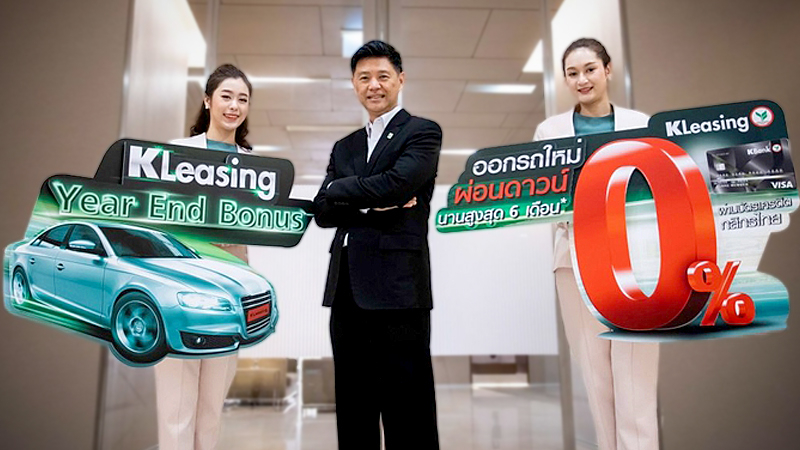
KLeasing has introduced its new “KLeasing Year End Bonus” campaign, which offers special privileges for customers buying new cars at the 36th Thailand International Motor Expo 2019.

Under the campaign, customers signing up for an Auto Loan (New Car) with KLeasing from November 28 to December 16, 2019, with loan approved and hire-purchase contract signed by February 15, 2020, are entitled to make an interest-free down payment under a six-month installment plan.