SiamCarDeal slips into higher gear with $300,000 funding from 500 TukTuks and angel investors

ศาสตร์เกษตรดินปุ๋ย : ขอบคุณแหล่งข้อมูล : หนังสือพิมพ์ The Nation

http://www.nationmultimedia.com/auto/30372287

SiamCarDeal slips into higher gear with $300,000 funding from 500 TukTuks and angel investors

Jul 04. 2019
By The Nation

77 Viewed

SiamCarDeal, a Thailand-based automotive digital services provider, said it has received US$300,000 in seed funding from 500 TukTuks, the local operating unit of US venture capital fund 500 Startups, and angel investors.

Damien Kerneis, the firm’s co-founder, said that, when launching siamcardeal.com in 2016, the aim was to be a platform for those who wanted to buy a new car and search for the best deals.

“We received a lot of positive feedback from both consumers and dealers. Consumers got their new car at a great price while dealers increased their sales with this new channel,” he said. “As we went along, we saw opportunities to go deeper in the value chain and developed more products and services to support car dealers.”

In 2018, SiamCarDeal supported its nationwide partners to sell over 3,000 cars, representing US$75 million in deals.

“We currently partner with over 100 car dealers across the country and provide more than 1,500 offers for consumers,” Kerneis said. “When a potential buyer shows interest in the deal on our website, we will qualify the inquiry and send it in real-time to the showroom with our in-house developed software called LMS (Lead Management System). With this system, our partner showrooms can conveniently manage their database of prospects, and their salespeople can follow up more efficiently, resulting in an increased sales closing ratio. Now our LMS system is extensively used by our customers in Thailand and across CLMV” added Kerneis, referring to Cambodia, Laos, Myanmar and Vietnam.

Natavudh Pungcharoenpong, a managing partner at 500 TukTuks, said SiamCarDeal is a unique platform in the Thai automotive market, which is highly competitive as car manufacturers compete for market share, offering promotions for different types of buyers to boost sales.

“SiamCarDeal seamlessly helps to allocate sales opportunities to dealers with its real-time LMS technology. We can see that SiamCarDeal has the potential to grow in a very good direction,” he said.

Krating Poonpol, also managing partner of 500 TukTuks said: “We believe that SiamCarDeal’s LMS software offers a forward-looking perspective for the industry since it can be used by all automotive businesses. With this end-to-end solution SiamCarDeal has developed. We see big market opportunities for them domestically and abroad where SiamcarDeal can further expand to the regional level.”

Kerneis said: “In 2019, SiamcarDeal will embark on the journey of digital transformation for automotive businesses by expanding more services which will help the showrooms to improve their overall efficiency and increase their sales volume. In addition, we also have plans to bring technology to help support the used car market.”

Charging up for the Thai market

ศาสตร์เกษตรดินปุ๋ย : ขอบคุณแหล่งข้อมูล : หนังสือพิมพ์ The Nation

http://www.nationmultimedia.com/detail/Auto_ADO/30371921

Charging up for the Thai market

Auto & Audio July 01, 2019 01:00

By KINGSLEY WIJAYASINHA
THE NATION

LIKE IT OR NOT, EVs (electric Vehicles) are starting to make their presence felt in the Thai auto market, with a good number of brands offering practical electric cars and SUVs, while other automakers are speeding up development in order to catch a slice of the market as well.

Replacing conventional internal combustion engines are electric motors powered by large capacity, mostly lithium-ion, batteries. There is also a much smaller number of parts, and the package dramatically helps lower the vehicle weight, as well as the amount of energy needed to propel it.

But the main advantage of EVs is their emission-free nature as their battery-powered motors help move |pollution out of the city. While several charging networks are being set up by auto companies as well as by energy |companies like Energy Absolute (which plans to set up as many as 400 stations around the country by next year), it is also important to raise the overall level of renewable energy use in order to ensure the pollution is not just relocated to rural areas. While many EVs are based on regular models (such as the MG ZS EV that was launched earlier this month with a big bang), newer generations are being developed from square one (such as the Mercedes-Benz EQC to be officially introduced later this year).

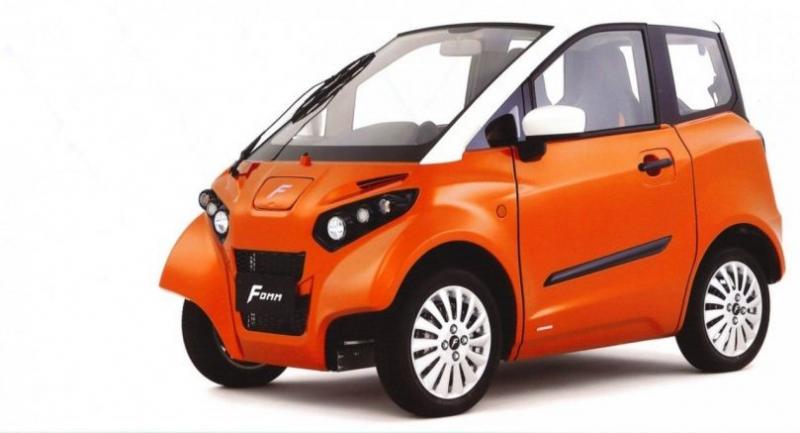
Smaller EV makers are also stepping into the market, such as FOMM, a Thai-Japan joint venture that offers a super-compact model priced at Bt664,000.

Meanwhile, EVs have also been attractive for fleets. Expect mainstream EVs to have the same level of features as conventional auto models, and even more, as |manufacturers like to introduce their latest technologies through these futuristic vehicles. Apart from applications and navigation, many also come with auto pilot functions ranging from highway driving to full-scale. Tesla, the American EV producer led by Elon Musk, offers autonomous driving in its products. It has yet to start officially selling vehicles in Thailand, although Teslas are offered by several grey-market importers.

Among the important specifications for EVs are power and torque from the motor(s), as well as acceleration, |battery capacity, charging time and driving range. Driving range can vary significantly depending on how the vehicle is driven, with high speeds and quick acceleration draining the battery.

EVs only the beginning of high-tech journey

ศาสตร์เกษตรดินปุ๋ย : ขอบคุณแหล่งข้อมูล : หนังสือพิมพ์ The Nation

http://www.nationmultimedia.com/detail/Auto_ADO/30371920

EVs only the beginning of high-tech journey

Auto & Audio July 01, 2019 01:00

By   KINGSLEY WIJAYASINHA
THE NATION

WHILE consumers are well aware of the arrival of electric vehicles (EVs), automobiles of the future promise more |benefits than just energy efficiency.


Electrification is just one of the trends taking hold in the automotive world. Being a manufacturing hub for |automobiles, Thailand needs to fully understand these developments to ensure its role as a major vehicle producer and exporter.

Although major automobile brands have yet to launch fully-electric models in the Thai market, many are offering hybrids and PHEVs (Plug-in Hybrid Electric Vehicles), including BMW, Honda, Mercedes-Benz and Toyota.

Nissan became the first Japanese brand to offer an EV (the LEAF), while luxury brands Audi and Jaguar as well as Korea’s Hyundai and Kia have |introduced EV models in the Thai |market.

MG is the latest entry in the local electric car market with the launch of its ZS EV in Bangkok on June 20.

However, electrification isn’t all we can expect from cars in the next 10 to 20 years.

According to Dr Janekrishna Kanatharana, executive vice president of the National Science and Technology Development Agency (NSTDA), future cars will come with a heap of improvement in smart safety systems, while more transportation services and options will be offered.

“The electric vehicle has arrived, the next trend will be the Automated Vehicle [AV],” he said at a recent seminar on |EVs.

He said data-sharing between |vehicles (V2V) and with “everything else” (V2X) will grow, while information collected from vehicles and its users can be put into use and generate revenue.

Meanwhile, more car sharing is also expected. “For example if you park your car at the office for most of the day, then it can be lent out to others during that time,” he stated.

Although Tesla has already marketed its autonomous electric vehicles, it is |taking more than a decade for them to gain global popularity.

By 2030, Thailand would be able to provide “level 3” autonomous capability for limited distance drive, such as on highways and motorways, according to Adisak Rohitasune, acting president of the Thailand Automotive Institute |(TAI).

He also said 53 per cent of global auto production will be EVs by 2030, and Thailand needs to adapt quickly and make major preparations in terms of human resources. Apart from autonomous vehicles, robots will play a growing role in the production process – one of the areas where the local auto industry needs to catch up, he said.

“It is very important that we study these developments, including the different production processes [required for] EVs,” Adisak said. “We must also give importance to soft skills, something artificial intelligence cannot provide.”

Colin McKerracher, head of advanced transport for BloombergNEF (BNEF), said in a recent report: “Our conclusions are stark for fossil fuel use in road |transport. Electrification will still take time because the global fleet changes over slowly but, once it gets rolling in the 2020s, it starts to spread to many other areas of road transport. We see a real possibility that global sales of |conventional passenger cars have already passed their peak.”

McKerracher added that the role of shared mobility services such as |ride-hailing and car-sharing will be important in this evolving picture.

“These services account for less than 5 per cent of all passenger miles |travelled globally at the moment, but this is set to rise to 19 per cent by 2040.

The BNEF team does not expect autonomous driving to have an impact on global transport and energy patterns until the 2030s,” he said.

BNEF expects passenger EV sales to rise from 2 million worldwide in 2018 to 28 million in 2030 and 56 million by 2040, while conventional passenger vehicle sales would fall to 42 million by 2040, from around 85 million in 2018.

Used cars join new models at FAST show at Bitec

ศาสตร์เกษตรดินปุ๋ย : ขอบคุณแหล่งข้อมูล : หนังสือพิมพ์ The Nation

http://www.nationmultimedia.com/detail/Auto_ADO/30371806

Used cars join new models at FAST show at Bitec

Auto & Audio June 27, 2019 16:13

By THE NATION

A GOOD number of new models as well as used cars are being highlighted at the FAST Auto Show Thailand 2019, which kicked off yesterday at the Bangkok International Trade and Exhibition Centre (Bitec).

The event, which goes on until June 30, features a mix between new vehicles represented by official distributors, as well as previously-owned cars from leading used car dealers.

New models expected to draw many potential customers include the MG ZS EV (all-electric and priced at Bt1.19 million), Toyota Commuter van boasting upgraded safety levels, and the Honda Accord midsize sedan that is also available in a hybrid version.

Nissan is also promoting its Leaf EV by bringing EV experts and offering short-distance test drives and rides.

Organiser Pattanadesh Asasappakij says that 11 car companies are coming along with 18 used car dealers.

“Visitors are able to compare different models and makes before making a decision,” he said. “This is like a meeting place for buyers and sellers of both new and used vehicles.”

He added that the show helps stimulate car sales and so helps support the country’s economic growth.

Auto companies taking part this year include Audi, Honda, Hyundai, Isuzu, Mazda, MG, Mitsubishi, Nissan, Suzuki, Subaru and Toyota.

The 18 used car dealers are AT Carsale, Unique Autocars, VisarnAutocar, DDS Car Centre, YoRachada, 54 Niwat Car Centre, The One, CarDeeSukeOK, J Motortrade, Amorn Warranty by Benz AmornRachada, Rot Sethi, Best Service, Keng Rama 9, 999 Rot Ban Suwit Took Lae Dee, Rot Ban Khun X by Auto Master, Panda Speed, NBP CAR and SmartCar. MG also has also set up a used car booth.

“This year, customers who place orders for vehicles at the show are entitled to [a chance to win] the Isuzu pick-up truck grand prize. Krungsri Auto is providing special car loan offers and PTT is introducing a new lubricant product,” Pattanadesh said.

Apart from attractive sales promotions for both new and used vehicles, used-car buyers also enjoy a 100-per cent buy-back policy if the vehicles are found to have major deficiencies such as those caused by heavy accidents or floods.

Used car dealers are offering cash discounts as well as interest-free instalment offers, along with other incentives.

For example, a BMW 330e M Sport plug-in hybrid offered from Amorn Warranty by Benz Amorn Rachada, is retailing at Bt3.09 million for a new car and Bt2.58 million for used. Only at the show, the price is further reduced by Bt200,000 to Bt2.38 million, with 0-per cent interest for 48 months and one year of first-class insurance.

Yo Rachada is offering a five-month-old Toyota C-HR with 8,000km on the clock at Bt829,000 with no down-payment required, compared to the Bt979,000 new car price.

Panda Speed, meanwhile, is offering an 84-month instalment plan, while BB Smart Car’s campaign allows customers to make a purchase (inclusive of a one-year engine and transmission warranty) with just a Bt10,000 cash payment. –

Car giants examine smart battery investment

ศาสตร์เกษตรดินปุ๋ย : ขอบคุณแหล่งข้อมูล : หนังสือพิมพ์ The Nation

http://www.nationmultimedia.com/detail/Auto_ADO/30371866

x

Car giants examine smart battery investment

Auto & Audio June 27, 2019 15:12

By The Nation

Alliance Ventures, the venture capital arm of Renault-Nissan-Mitsubishi, has announces an investment in the Mobility House, a technology company that provides a platform for integrating vehicle batteries into power grids using intelligent charging, energy and storage solutions.

That investment is the latest by Alliance Ventures in start-ups, early-stage development and entrepreneurs at the cutting edge of next-generation technology for the automotive industry. The Mobility House is based in Germany, Switzerland and California’s Silicon Valley.

“Alliance Ventures aims to provide the right ecosystem of open innovation to ensure Alliance member companies deliver mobility for tomorrow,” said François Dossa, Alliance Global vice president . “The Mobility House’s expertise in e-mobility and energy transition will contribute to the Alliance commitment to zero-emission vehicles and to the achievement of our vision: shaping the future of mobility.”

Alliance member companies and The Mobility House have already embarked on several projects together. For instance, through collaboration with The Mobility House, the Nissan LEAF was the first electric car to be used in a Vehicle-to-Grid (V2G) project in Germany, in Hagen. Cooperating with Groupe Renault, The Mobility House will market the biggest stationary energy storage systems made with electric vehicle batteries in Europe and contribute through its smart energy platform to make the Portuguese island of Porto Santo, near Madeira, the first “smart island” in the world.

The investment in The Mobility House follows 11 others by Alliance Ventures, including start-up based in North America, Europe and China.

Latest Honda models on show in Bangkok

ศาสตร์เกษตรดินปุ๋ย : ขอบคุณแหล่งข้อมูล : หนังสือพิมพ์ The Nation

http://www.nationmultimedia.com/detail/Auto_ADO/30371786

Latest Honda models on show in Bangkok

Breaking News June 26, 2019 12:54

By The Nation

3,065 Viewed

Honda Automobile (Thailand) Co Ltd is exhibiting eight models, including three launched this year, at the Fast Auto Show Thailand in Bangkok.

The new models are the Honda Accord, Honda BR-V and Honda HR-V with a new interior colour.

The exhibition and sale of new and used cars from leading auto runs Wednesday through Sunday (June 30) at BITEC in Bang Na.

The Accord, a premium sports sedan that fits customers’ different lifestyle needs, offers advanced technologies and is available with two power options.

The Accord Turbo EL at Bt1.475 million comes with a 1.5-litre Di VTEC turbo engine. It is highly responsive with maximum torque of 243 Newton-metres produced by Honda’s advanced Direct Injection, with instant response from the Continuously Variable Transmission (CVT).

The powerful turbo engine offers better performance than the 2.4-litre engine of the previous generation, as well as impressive fuel efficiency of 16.4 kilometres per litre, again better than the previous two-litre engine.

In addition, the turbo engine is environmentally friendly and E85-compatible.

The Accord Hybrid comes with a Sport Hybrid Intelligent Multi- Mode Drive (i-MMD) System with a two-litre Atkinson Cycle DOHC i-VTEC four-cylinder, 16-valve engine with two electric motors, E-CVT, and a lithium-ion battery.

The Hybrid is available as a Hybrid fo Bt1.639 million and a Hybrid Tech for Bt1.799 million.

Hybrids flagged as best hope for faster action on emissions

ศาสตร์เกษตรดินปุ๋ย : ขอบคุณแหล่งข้อมูล : หนังสือพิมพ์ The Nation

http://www.nationmultimedia.com/detail/Auto_ADO/30371555

Hybrids flagged as best hope for faster action on emissions

Auto & Audio June 22, 2019 10:13

By The Nation

3,807 Viewed

The most effective way to reduce global vehicle emissions for the foreseeable future is not through use of full battery BEVs, but rather the mass adoption of hybrid vehicles, according to a report by Emission Analytics.

The firm, which specialises in scientific measurement of real-world emissions, stated in its latest report that with automotive battery capacity currently scarce, expensive and suffering supply problems, the deployment of this limited resource is critical to maximising CO2 reduction.

With tardy consumer adoption of BEVs (battery electric vehicles) and slow infrastructure roll-out compounded by concerns around an economical supply of batteries, it is essential to find the fastest, most efficient way to reduce CO2 now, the report found.

“One of our biggest challenges is fleet turnover, with vehicles staying on the road typically for up to 12 years,” said Nick Molden, CEO of Emissions Analytics. “It means that refreshing the entire fleet is a very slow process. Given reservations about current BEVs, we require an alternative that will have a more immediate impact.

“Due to CO2’s long life in the atmosphere, a small change now is far better than a large change in the future. We need to optimise the use of the industry’s available battery capacity to facilitate a critical early reduction.”

Through extensive real-world testing of electrified vehicles, Emissions Analytics has found that hybrids, whether in gasoline or diesel form, offer the highest CO2 reduction per kWh across all electrified powertrains.

Using mild, full and plug-in hybrid real-world emissions test data from both European and US vehicles, Emissions Analytics compared hybrids with their internal combustion engine equivalents. Using the company’s standardised on-road cycle, it determined the average CO2 reduction from hybridisation was 23 per cent for the EU and 34 per cent for the US, with an average of 30 per cent across all pairings.

It then calculated the distance-specific CO2 reduction per unit of battery size (capacity), in g/km/kWh, for mild, full, plug-in hybrids and BEVs. The results indicated that mild hybrids are the most efficient way to reduce CO2, given limited global battery capacity. With a CO2 reduction of 73.9g/km/kWh, the technology was a clear favourite, with full hybrids coming in second at 50.5g/km/kWh.

Due to their disproportionately large batteries, BEVs were the worst of the available options, with a mere 3.5g/km/kWh reduction. The size of BEV batteries tends to be large to accommodate infrequent, extreme use cases – like high-mileage trips, not often undertaken by average drivers – and do not make the best use of limited supply.

The calculations did not take into account the upstream CO2 in fuel extraction, refining and transportation, or the production and distribution of electricity. Some studies suggest the upstream CO2 of electricity is greater than for gasoline, but the relative efficiency calculations here implicitly assume they are equal.

“Electrification has proved to be a promising path to reducing tailpipe emissions,” said Molden. “The most extreme form of the technology – fully-electric vehicles – are often hailed as the solution. Paradoxically, full BEVs appear to be a highly inefficient way to achieve an urgent and meaningful CO2 reduction. With supply chain issues and consumer acceptance challenges including range and price, there is cause to investigate alternative use of our limited battery capacity.”

He said improving the air quality in cities is another popular reason for those championing BEVs. It is, however, a false assertion that they are needed to fulfil this purpose. Existing technology is more than capable of bringing European cities within compliance, the primary polluters being vehicles with older internal combustion engine technology.

Molden outlined two potential paths that are immediately available. One is a switch from gasoline to diesel, reducing CO2 by 11 per cent, coupled with a mild hybrid system, providing a further 6 per cent reduction. A final swap to full hybrids would deliver an addition 16 per cent reduction for a 34 per cent total. Alternatively, switching directly from gasoline to gasoline mild hybrids provides an 11 per cent reduction, with a further 23 per cent from the move to full hybrid.

The EU’s post-2021 CO2 reduction target for passenger cars is 37.5 per cent by 2030. Emissions Analytics tests clearly shows that, even with current technology, widespread hybridisation would achieve over three-quarters of that target.

Given a decade of further advances and innovations, it is possible that the goal could be met without the need for BEVs at all. Beyond the 37.5 per cent reduction target, more extensive electrification would be required to bring whole fleet emissions down.

“The ideal solution is an immediate transition to petrol and diesel hybrids, with a further decade spent refining the technology, infrastructure and battery supply chain to allow the adoption of BEVs,” said Molden.

“By 2030, the EU and the US would have had another decade to develop expanded, cleaner electricity generation capacity, improving the life cycle emissions of BEVs.

“Alternatively, by 2030 the availability and price of renewable energy may well fall to a level at which hydrogen fuel cells could be economically viable.

“These avoid the environmental and geopolitical issues caused by large-scale battery production and would likely offer even lower life cycle emissions. The overall message is this though: it is paramount that governments and industry take into consideration real-world data when promoting technologies to efficiently reduce CO2.”

BMW ramps up EV options for Thais

ศาสตร์เกษตรดินปุ๋ย : ขอบคุณแหล่งข้อมูล : หนังสือพิมพ์ The Nation

http://www.nationmultimedia.com/detail/Auto_ADO/30371554

  • Dr. Aumann
  • Dr. Yossapong (centre)
  • Wiedman

BMW ramps up EV options for Thais

Auto & Audio June 22, 2019 10:10

By The Nation

4,548 Viewed

With the European HQ rapidly moving to serve an electric auto world, the local unit joins partners on charging station and battery plans

BMW plans to be significantly involved in electric vehicle (EV) technology in Thailand in the coming years.

The German automaker recently organised “The Future of Mobility” forum, which saw company executives and industry experts give their perspectives on the era of electromobility.

BMW Group Thailand president Christian Wiedmann underlined the interest last year when he said the company enjoyed as much as 20 per cent growth, with PHEV (plug-in hybrid electric vehicle) model sales jumping by 122 per cent.

“Further PHEV models will be launched to the Thai market in due course,” he said. “As we ceaselessly drive our international standing as a pioneer in the field of sustainability, we have continued to support Thailand’s charging infrastructure with the launch of ChargeNow in 2017.”

Wiedmann said ChargeNow has 121 chargers at 57 locations nationwide.

“BMW Group Manufacturing Thailand has also set its sights on another milestone in Thailand’s journey towards a future of electromobility with local high-voltage battery assembly – which comprises assembly of the battery modules and the battery packs – from 2019 onwards,” he said. “BMW Group Manufacturing Thailand, together with DRAXLMAIER Group, have invested over Bt400 million to establish this new beacon for e-mobility innovations in Thailand and the region.”

A new production facility, in partnership with DRAXLMAIER Group – one of the world’s leading automotive suppliers and a strong systems partner with BMW Group since 1966 – will commence its full operation in this year. Finished batteries will be transported to BMW Group Manufacturing Thailand for the production of the PHEVs in the first phase from 2019.

The model is based on the BMW 5 Series and BMW 7 Series.

BMW has already been granted approval for government-backed incentives from the government’s Board of Investment (BoI) to cover a further investment of over Bt700 million to assure assembly of more BMW PHEV models in the future.

Dr Andreas Aumann, vice president of Product Management BMW i and E-Mobility for BMW Group, said BMW Group on a global scale sold more than 140,000 electrified (battery-electric and plug-in hybrid) vehicles in 2018. In total, 142,617 electrified BMW and MINI vehicles, up 38.4 per cent, were delivered to customers around the world last year.

“Electromobility is an essential pillar of the BMW Group’s Number ONE>NEXT corporate strategy and one of the company’s four key future-focused ACES topics (autonomous, connected, electrified and services/shared),” Aumann said.

“With the launch of the BMW i3, the BMW Group established itself early as a pioneer in the field of electric mobility. By 2021, the BMW Group will have five all-electric models: the BMW i3, the MINI Electric, the BMW iX3, the BMW i4 and the BMW iNEXT.

“By 2025, that number is set to grow to at least 12 models. Including plug-in hybrids, the BMW Group’s electrified product portfolio will then comprise at least 25 models.”

From 2021, the BMW Group will be capable of manufacturing models with all-electric (BEV), plug-in hybrid (PHEV) and conventional (ICE) drivetrains on a single production line. Aumann said the ability to integrate e-mobility in the production network enables the group to respond even more flexibly to the increasing demand for electrified vehicles. By the end of 2019, the group expects to have more than half a million electrified vehicles on the roads.

“In future, we will be able to swiftly decide which models we are going to equip with what mix of all-electric drive, plug-in hybrid drive or exceptionally efficient combustion engines. This will let us partially or fully electrify each model in accordance with market demand, creating the basis for the mass-market introduction of pure battery electric vehicles in the future,” Aumann said.

Meanwhile, BMW Group Thailand has been collaborating with the public sector and business partners to support EV-related development efforts and to provide charging station services in Thailand. In 2016, it signed a memorandum of understanding (MoU) with King Mongkut’s University of Technology Thonburi (KMUTT) to study the prospects of electric vehicles and car sharing programmes in Thailand under the “Electric Vehicle Charging and Car Sharing Zones” or “Charge & Share” initiative.

Yossapong Laoonual, president of the Electric Vehicle Association of Thailand, said: “Charge & Share is an initiative led by the Automotive Research Cluster Working Group at KMUTT. Our goal is to support EV deployment in the university, encourage commuting via car sharing, and conduct research on public transit behaviour in Thailand.

“This is a great starting point and we are pleased to be able to partner with BMW Group Thailand on the Charge & Share initiative,” said Yossapong, who chairs the working group at KMUTT. “Under this initiative, KMUTT has set up charging stations to offer car-sharing services at the university.

“We strongly believe that this project will significantly drive Thailand towards a sustainable future.”

The BMW PHEV vehicle enables KMUTT to record drivers’ behaviour as well as public behaviour in car-sharing and EV car-sharing systems – all of which contribute to the Charge & Share project as well as the analysis of future EV utilisation in Thailand. Additionally, Haupcar – Thailand’s first car sharing service and application – is working with the university to facilitate the vehicle reservation, return, and general service management systems.

Haupcar has a fleet of 200 vehicles for rent, most of which are subcompact, compact and sedan models. The startup has signed up over 60,000 users, most based in Bangkok, and aims to expand service locations for the electric car-sharing service. With the BMW i3 now involved in the pilot phase, the company aims to increase the use of electric vehicles over the coming years.

To further support the infrastructure for EV car sharing, encourage the growth of electric vehicles in Thailand, and contribute to the Energy Policy and Planning Office’s (EPPO) goal of having 1.2 million EVs and PHEVs on Thai streets by 2036, BMW Group Thailand and its ChargeNow partners have been expanding the ChargeNow public charging station network across Thailand following its official launch in August 2017.

There are now 121 ChargeNow and other charging outlets at BMW authorised dealers ready for service in 57 locations nationwide, with the aim of reaching 150 chargers by year’s end.

MG makes its ZS electric vehicle affordable

ศาสตร์เกษตรดินปุ๋ย : ขอบคุณแหล่งข้อมูล : หนังสือพิมพ์ The Nation

http://www.nationmultimedia.com/detail/Auto_ADO/30371458

MG makes its ZS electric vehicle affordable

Auto & Audio June 20, 2019 15:53

By The Nation

MG has shocked the market with the pricing of its ZS EV (electric vehicle), but in a good way.

The ZS EV, imported from China, now comes with a highly attractive price tag of Bt1.19 million, making it one of the cheapest EVs in the market.

Plus, for the first 1,000 customers, MG is giving a free home-charging unit worth Bt45,000, free installation worth Bt20,000 as well as free insurance and unlimited mileage warranty on the battery for eight years.

The ZS EV gets its power from a 44.5kWh water-cooled battery with a rapid charging ability (0 to 80 per cent in 43 minutes). A normal charge from a 7kWh wall unit can take up to 6.5 hours (0 to 100 per cent).

Maximum output is declared at 150 horsepower, while MG claims a range of as much as 428km (down to 335km according to the NEDC standard).

Nissan, PEA sign agreement for electric vehicle charging facilities

ศาสตร์เกษตรดินปุ๋ย : ขอบคุณแหล่งข้อมูล : หนังสือพิมพ์ The Nation

http://www.nationmultimedia.com/detail/Auto_ADO/30371320

Nissan, PEA sign agreement for  electric vehicle charging facilities

Auto & Audio June 19, 2019 01:00

By   THE NATION

2,641 Viewed

NISSAN Leaf customers worried about getting their next recharge had some good news yesterday, as Thailand’s Provincial Electricity Authority (PEA) inked an agreement with Nissan Thailand to ensure that home-charging options and correct electrical infrastructure is in place in upcountry areas.

The memorandum of understanding (MoU) commits them to work together to ensure easy access for electric vehicle (EV) customers, along with service manuals for charging systems, technical skills training and public charging stations.

“PEA envision that EV cars will continue to increase in popularity in the coming years,” said PEA governor Sompong Preeprem, so the government enterprise has developed the PEA Volta Platform to support a network of EV charging stations across Thailand.

“We have a master plan to support charging stations nationwide, covering all provinces, as well as offering highly trained and experienced staff who can provide expert advice for home charging installation to power EVs. We will provide full support in readying the power system for EV usage in Thailand.”

PEA ENCOM International Co Ltd, a PEA subsidiary, will be responsible for installing and wiring electrical cables and power supplies from switchboards to industrial sockets to meet the needs of Nissan EV customers, Sompong added.

Ramesh Narasimhan, president of Nissan in Thailand, said the agreement between the companies demonstrated a continuing partnership between the automaker, the government, state enterprises and the public sector to support the country’s electrification road map. It also represents another example of how Nissan is bringing its EV global leadership to Thailand, he said. He also emphasised the importance of building the EV ecosystem for Nissan Leaf customers across the Kingdom.

“We recently started delivering the all-new Nissan Leaf to our valued Thai customers, and 20 per cent of those were upcountry. This reinforces how important this deal with PEA is, to ensure all our customers have access to a robust and trustworthy charging infrastructure,” Narasimhan explained.

Nissan was continuously evolving its electrification strategy and portfolio, with the goal of making it accessible, attractive, and convenient for all driving needs, he said.

“Here in Thailand we are working with local governmental agencies, policymakers and dealers to help drive EV adoption and provide the infrastructure and ecosystem necessary to make that successful.”

The deal with PEA follows a 2018 MoU Nissan signed with the Metropolitan Electricity Authority (MEA) to provide home-charging solutions for Leaf owners in the greater Bangkok area. Last month Nissan also signed an Electro Mobility Operator agreement to appoint Delta Electronic Thailand as the official EV charging provider for Nissan Leaf customers.

Nissan also continues to develop its EV dealership network across the country, with 32 certified Nissan EV showroom and service centres nationwide. Customers in all parts of the nation will be able to access professionally trained service staff and charging facilities tailored specifically for them, he added.

“We are very positive about the EV outlook for Thailand. A recent Nissan-commissioned study by Frost & Sullivan showed that the Thai government plans to strengthen EV use, and is gearing up for the era of EVs. By 2036, the Thai government expects there to be 1.2 million electric vehicles nationwide and we are proud to help support this evolution,” Narasimhan added.