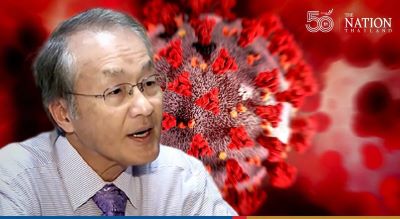
The Omicron variant will create natural herd immunity in one or two months if it is not severe, Vichaiyut Hospital respiratory specialist Dr Manoon Leechawengwongs wrote on his Facebook page.
The post said the variant has now spread to more than 50 countries in one month. Thailand has already found three Omicron cases.
Omicron can spread twice as quickly as the Delta variant and two doses of current vaccinations are unlikely to provide immunity against it.
However, the latest Covid-19 variant is thought to be less severe than Delta, according to available information from Africa. African patients have shown few symptoms such as a cold, sore throat, runny nose, coughing, sneezing, tiredness, headache and body ache. And there have been no reports so far of Omicron causing any deaths.
Manoon expects the variant to spread rapidly worldwide in two or three months. It will be good news if it is not severe, he wrote, adding that it will then create herd immunity and make Covid-19 become endemic.
Manoon said Thais should not worry about Omicron too much. But he urged people to be cautious by wearing masks, keeping a distance from others, washing hands, avoiding closed or crowded places, and getting fully vaccinated.
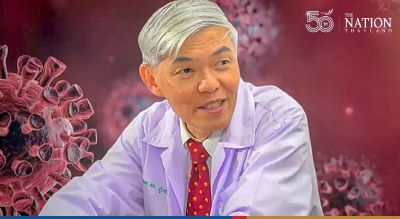
The Covid-19 Omicron variant may likely be less severe than Delta, expert virologist Dr Yong Poovorawan wrote on his Facebook page on Wednesday.
Yong pointed out that the Delta variant was found in 99 per cent of cases across the globe.
He also said the world was now seeing the seasonal H1N1 flu before the 2009 H1N1 flu spread.
Yong said the Delta variant would of course be replaced by Omicron if the latter spreads more easily.
Outside Africa, about half of the total patients in the UK, Norway and Denmark have shown no symptoms, while the other half have seen a small number of symptoms when compared to the Delta variant, he wrote.
Meanwhile, the number of Omicron patients requiring hospitalisation in southern Africa is so far less than the Delta variant.
Yong also said it would be good news if Omicron was “truly not severe”. If the disease is not severe and spreads to a large number of people, it will create herd immunity. The need for vaccines will be reduced, especially for people who have been infected before, and vaccine buyers will have the upper hand.
Present information about the severity of Omicron might take some time to prove, he added.
One year ago, a grandmother named Margaret Keenan, then 90 years old, rolled up her sleeve at University Hospital Coventry in the English midlands to take her place in history.
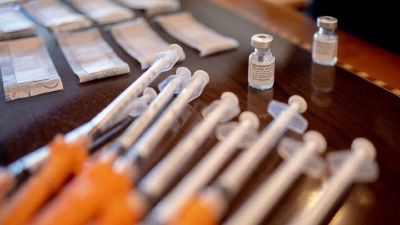
Keenan became the first person in the world to receive Pfizer’s Covid vaccine outside a clinical trial. It was a turning point in the pandemic, raising hopes that there was a path out of the crisis, along with questions about how well the rapidly-created shots would perform.
Now, after 8 billion doses, the impact is clear. The vaccines – not just from Pfizer but also Moderna, AstraZeneca, Johnson & Johnson and others – have slashed hospitalizations and deaths in countries where they’ve been rolled out widely. In Europe alone, research shows they’ve saved about half a million lives among people age 60 and over.
But they haven’t vanquished the virus. Cases have quadrupled in the past year, vast parts of the globe haven’t gained access to vaccines and concerning variants keep emerging, bringing new waves of infections, the return of lockdowns and restrictions on travel.
And now, two years into the pandemic, there is omicron, a heavily mutated variant that emerged in recent weeks. It’s put the world on edge, leaving everyone desperately waiting for information on the severity of the strain and how well vaccines will work against it.
“Vaccines are a major miracle of modern science,” said Sarah Pitt, a virologist at the University of Brighton in England. But some governments “decided they were going to vaccinate their way out of the pandemic. What we’ll do is vaccinate everybody, and it will all be fine. Of course, that was never going to work.”
The first Pfizer shot in the U.S. came a week after Keenan, on Dec. 14, 2020. China had started doling out its own vaccines in the summer of 2020 under an emergency use authorization.
Since Keenan’s moment, many developed nations, including the U.K., have immunized the majority of their populations.
But the rollout over the past year hasn’t been smooth, partly due to delivery snags and very rare but potentially serious side effects that have fueled hesitancy in some quarters. Scientists also worry that vaccine disparities will breed more dangerous strains that pose a risk to all nations.
The Covid-19 shots, developed in record time, are remarkable achievements. Yet they aren’t 100% effective, and some people who are protected can still become infected and transmit the illness to others.
Those cases appear to be more frequent with the delta variant surging and immunity waning in people who were vaccinated months ago. In Europe, the latest surge in infections has put Austria back in lockdown, while Germany may be about to make vaccines compulsory.
Scientists are now racing to update the current shots to combat omicron if necessary, and some are aiming to target multiple variants in one shot. Omicron’s mutations suggest that it is likely to evade the protection of vaccines to at least some extent, but there is also some very tentative evidence that it won’t cause more severe illness than previous versions of the virus. Answers to some of those key questions are expected in the coming days.
With studies showing that vaccine effectiveness wanes over time, governments are accelerating booster campaigns. Pills from Merck and Pfizer are on the way, adding to the arsenal against the virus.
Given that vaccines aren’t a silver bullet, some health experts say that, rather than counting so heavily on shots, governments should have maintained other measures, from masks to testing, for longer.
“We’re so fortunate to have vaccines,” said David Heymann, a professor at the London School of Hygiene and Tropical Medicine and former World Health Organization official. “In the U.K. and many countries with high vaccination levels, public health leaders believe, and I think they’re probably right, that they’ve been able to de-link serious illness from infection because of vaccines. But they haven’t been able to prevent infection with this generation of vaccines.”
Inequality has also been an issue in the drive to inoculate populations. Instead of vaccines being distributed evenly, rich countries raced ahead, creating a glaring gap in access. Health advocates have pushed to expand shipments, technology and production capacity.
Bruce Aylward, senior adviser to the WHO’s director-general, says more affluent countries should focus on helping lower-income nations that are struggling with a “toxic mix” of low vaccination levels, weak testing, fragile health systems and other factors. Otherwise, the virus will continue to have places to take hold and adapt.
“You are playing with fire” if you don’t keep pressure on the virus in all parts of the world, he said. “This virus will mutate, and if any of those mutations are favorable to transmission, they will emerge and they will dominate, and then you run into potential problems.”
But richer countries may be even more inclined to hoard shots now, given the recent surge in cases in Europe and elsewhere, and the fresh omicron threat.
In the U.S., the variant is prompting concerns about capacity in already-strained health-systems. Almost four out of five intensive care beds across the country are currently occupied, with Covid patients accounting for a significant proportion.
China, whose shots are less effective than the messenger RNA shots used in the West, marked the astonishing milestone of having 1 billion people fully vaccinated in September. Yet despite high coverage, its borders remain tightly sealed and Beijing continues to meet flareups with the same pre-vaccine playbook of strict lockdowns and mass testing to stamp out every infection.
Britain, the first country in the western world to approve and deploy Covid vaccines, is recording more than 50,000 cases a day, moving closer to a 2021 high.
“The good news is that these vaccines have overperformed relative to what we expected,” said Michael Kinch, a vaccine specialist at Washington University in St. Louis. But “we need to try to try to stay one step ahead of this thing, and there we’ve taken our eye off the prize.”
The worry now is that omicron makes that even harder, and that the effectiveness of vaccines gradually declines over time in the face of new variants.
“Whether we like it or not, this is here to stay,” he said.
In a Facebook post on Tuesday, expert virologist Dr Yong Poovorawan answered some key questions about the Omicron Covid-19 variant.
He said Omicron has mutated far more than other variants of the virus, and the key questions that require answers are:
• Is Omicron more infectious?
After Omicron was detected in South Africa late last month, it has spread to almost 50 countries, including Thailand. This proves that Omicron is twice as infectious as the Delta variant and will replace it in the future.
• Can Omicron skip the immunity provided by a previous infection or vaccine?
Some Omicron patients were fully vaccinated or had recovered from a Covid-19 infection. Obviously, they are not immune to Omicron, but since most of them developed little or no symptoms, the vaccines are clearly very effective at protecting against severe symptoms or death.
• How severe is the Omicron variant?
More than 1,000 patients outside Africa have developed little or no symptoms. In Africa, almost half of the patients showed no symptoms, while the rest showed few symptoms. However, this is just the beginning phase of the variant, so symptoms may worsen in the future. Though it will take two weeks before things become clearer, the likelihood is that this variant will cause less severe symptoms.
In summary, Yong said though this disease is highly transmissible, and may partially skip immunity, people who have been double jabbed or previously infected may develop few or no symptoms.
He said this virus will eventually develop into a seasonal respiratory disease and only affect those with little or no immunity.
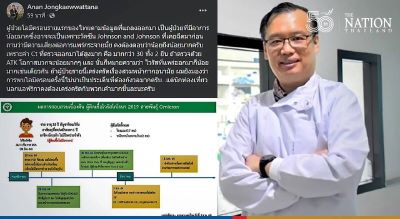
There is low to very low risk of Thailand’s first Omicron case infecting others as the cycle threshold in the RT-PCR test is very high, Dr Anan Jongkaewwatana from the National Centre for Genetic Engineering and Biotechnology said in a Facebook post on Monday.
He made this remark after the Public Health Ministry announced that the country’s first Omicron infection was detected in a foreigner who had arrived from Spain on November 30.
Anan said the patient did not develop any symptoms possibly because he had taken the Johnson & Johnson Covid-19 vaccine.
“If the patient wears a face mask at all times, then I believe this discovery is not worrisome,” he said.
However, Anan has advised the authorities to strictly screen all tourists, not just those arriving from Africa.
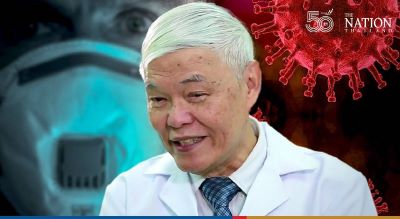
Covid-19 will become a seasonal disease once everybody has developed an immunity against the virus, expert virologist Dr Yong Poovorawan said in a Facebook post on Monday.
He said about 1,000 Covid-19 patients with mild symptoms and zero or deaths in single digits can be expected as it is not possible to completely eliminate the virus.
For instance, he said, influenza claims approximately 200 lives in Thailand every year, especially among patients with underlying diseases, the elderly, children, obese people and pregnant women.
Dr Yong added that children are given the flu vaccine and booster shots yearly to cut down on deaths.
“In the future, when everybody has developed an immunity to Covid-19, it will become a normal viral infection like influenza, which infects people during the rainy season from June to September and the cool season from January to March,” he said.
The Chulalongkorn University expert also advised people to get their Covid-19 shots as it is more beneficial than getting infected by the virus.
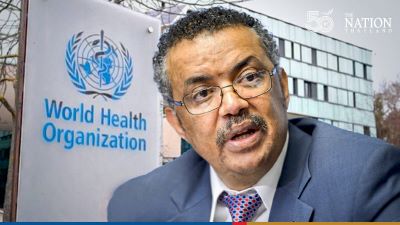
Though the Omicron variant of Covid-19 has been detected in at least 38 countries, nobody has died from it, the World Health Organisation (WHO) said.
However, WHO warned that the highly-infectious Omicron strain will affect the global economic recovery.
“The Omicron variant pushed the total number of Covid-19 infections in Africa above the 3 million level,” WHO said.
“It will take at least a week to identify how the Omicron variant spreads, if it can develop severe symptoms and the treatment efficacy plan in the long term.”
WHO also predicted that more than half of the Covid-19 patients in Europe will be infected with Omicron in the next two to three months.
Expert advisers to the Food and Drug Administration on Tuesday recommended authorization of the first coronavirus pill to prevent high-risk people from developing severe illness in a divided vote that reflects the complicated mix of benefits and risks of a new and easy mode of treatment.
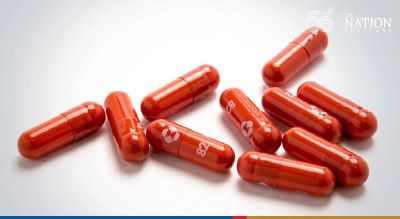
The drug, molnupiravir, was developed by Merck and Ridgeback Biotherapeutics as a five-day regimen to be taken at home within five days of the onset of coronavirus symptoms. The FDA is not bound by the 13 to 10 vote but typically follows its external advisers’ recommendations. The drug could have an immediate impact on the pandemic if authorized – just as the ominous new omicron variant has emerged, jolting the world with the prospect of a longer and more complicated pandemic.
Merck has pledged to manufacture enough medicine to treat 10 million patients by the end of the year, and the United States has preordered enough medicine to treat 3.1 million people. There are other treatments, monoclonal antibodies, that are harder to administer but are more effective, which led experts to debate who should receive the drug. An easy-to-use medicine that could be taken at home would offer an additional tool to reduce the strain on hospitals as a potential winter surge looms.
When given to people at high risk of developing severe illness, molnupiravir cut the risk of death or hospitalization by 30 percent in patients infected with a range of variants including delta, gamma and mu. Molnupiravir has not yet been tested against the omicron variant, but because it works in a different way than vaccines and monoclonal antibodies that train their firepower on the coronavirus spike protein, it is expected to hold up against a wide range of variants.
“As new variants have been becoming available, we have been testing them for the activity of molnupiravir,” said Nicholas Kartsonis, senior vice president of clinical research for infectious diseases and vaccines at Merck. “We expect, based on what we know about the omicron variant, that molnupiravir would be effective against this particular variant.”
But one committee member cautioned that it was an assumption that the drug would be more variant-proof than vaccines or other treatments.
“If we take a look at the omicron variant and see the number of mutations that virus has, I think in many ways we don’t really understand which direction the virus may even be going in terms of changing,” said W. David Hardy, a scientific and medical consultant at Charles Drew University School of Medicine and Science. “To assume this drug . . . is going to work when the monoclonals don’t is a big jump. We have no assurance of that.”
A second oral pill regimen – it was developed by Pfizer – is also being reviewed by the FDA. That drug could offer advantages that will make it the choice of physicians: That medicine was more effective at preventing hospitalization and death and doesn’t carry safety concerns about its use in pregnant patients. The advisory committee debated whether people who are pregnant should be eligible to receive molnupiravir.
Much of the expert committee’s debate Tuesday focused on the many unknowns about those safety issues, which are intertwined with how molnupiravir works. The drug becomes incorporated into the viral genome, causing genetic mistakes that disable the virus.
There are two concerns about potential unintended consequences: first, that molnupiravir could scramble the genome in the patient’s own cells, causing cancer, genetic diseases or birth defects. The company requested authorization for adults, but said that it should not be recommended for people who are pregnant or breastfeeding and said that people of childbearing age should use contraception during the treatment.
But the short duration of treatment and a gold standard laboratory test in rats designed to flag drugs that have the potential for mutagenesis – the process in which genetic change happens – suggested there was not a major risk to adult patients.
The concern that the drug could cause genetic mutations “in a clinical setting appears to be low,” said Robert H. Heflich, director of the Division of Genetic and Molecular Toxicology at the FDA’s National Center for Toxicological Research.
The second concern is that the drug might induce genetic changes to the virus that fuel the rise of new, threatening variants. FDA reviewers showed data demonstrating that in seven people treated with the drug, viral samples taken after treatments contained worrisome mutations seen in known variants, although the patients cleared the virus.
“Even if the probability is very low, 1 in 10,000 or 1 in 100,000, that this drug would induce an escape mutant for which the vaccines we have do not cover, that would be catastrophic for the whole world,” said James E.K. Hildreth, president of Meharry Medical College.
But FDA reviewers said those mutations also emerge naturally.
“It is unclear to us if molnupiravir would have a substantial impact on the evolutionary patterns that are already happening,” said Patrick R. Harrington, senior clinical virology reviewer at FDA.
Other questions that arose, without resulting in satisfying answers, included why the drug didn’t appear to work in people with type 2 diabetes. It also was less effective against the delta variant.
Additionally, when preliminary data on the drug was released in early October, molnupiravir appeared to cut risk of death and hospitalization in half, a finding so persuasive that the trial was halted at its midpoint. After continued follow-up of patients, the drug appeared less impressive, with risk of death and hospitalization reduced by 30 percent.
There are already three treatments, called monoclonal antibodies, authorized in the United States to help keep high-risk people from ending up in the hospital. Monoclonals are highly effective, but they are more cumbersome to administer and their uptake has often been uneven. Unlike pills that can be picked up at a pharmacy and taken at home, monoclonals are given through lengthy infusions or injections that are less convenient than a doctor prescribing a pill – and new variants can pose a threat to their use.
“As we enter the winter months, another surge is imminent, potentially in the setting of emerging new variants of concern,” Kartsonis said. “We remain in dire need of novel, effective, well tolerated and conveniently administered therapies to treat covid-19 in the outpatient.”
People infected by omicron in South Africa are showing very different symptoms to those suffering from the delta strain, said the doctor who alerted government scientists to the possibility of a new variant.
Patients who contracted it complain of fatigue, head and body aches and occasional sore throats and coughs, said Angelique Coetzee, who is also chairwoman of the South African Medical Association. Delta infections, by comparison, caused elevated pulse rates, resulted in low oxygen levels and a loss of smell and taste, she said.
After weeks of almost no Covid patients at her practice in Pretoria, the capital and epicenter of South Africa’s current surge, Coetzee said she suddenly started seeing patients complain of the symptoms on Nov. 18. She immediately informed the government’s Ministerial Advisory Council on Covid-19, and laboratories the next week identified a new variant, she said.
“I said these different symptoms can’t be delta, they are very similar to beta or it must be a new strain,” she said in an interview on Monday. “I don’t think it will blow over but I think it will be a mild disease hopefully. For now we are confident we can handle it.”
The World Health Organization is analyzing the new mutation, and has said it’s too early to say how transmissible and severe it is. It’s called on countries to start testing widely for omicron, saying the divergent design could fuel future surges of Covid-19.
South Africa announced the identification of a new variant on Nov. 25, saying a few cases had first been identified in neighboring Botswana and then others had followed in Tshwane, the municipal area in which Pretoria is located. The announcement caused a global panic, roiling markets and resulting in travel bans on southern African nations.
Scientists advising South Africa’s government told a media briefing on Monday that while omicron appeared to be more transmissible, cases appeared to very mild.
Coetzee’s patients have been relatively young. A vaccinated 66-year-old patient did return a positive test on Monday but was only mildly ill, she said.
BioNTech, Moderna and Johnson & Johnson are working to adapt their Covid-19 vaccines to address the omicron variant, with the German partner of Pfizer saying it could have a new version ready within 100 days if necessary.
BioNTech said Monday that it has started development in order to move as quickly as possible. The first steps of developing a new vaccine overlap with the research necessary in order to evaluate whether the shot will be needed – a process that both it and Moderna began last Thursday as news of the new variant began to spread around the world.
Drugmakers have been preparing for months for the possibility of needing to tweak their vaccines to deal with a new variant. BioNTech, Pfizer and Moderna will be able to move at unprecedented speed: Both vaccines use messenger RNA technology, which shortens the timeline for a new shot to only a few months.
J&J’s vaccine relies on a different technology called a viral vector. The company said it’s testing immune blood components from participants in trials of its booster to look for responses to omicron and is pursuing a vaccine that specifically targets the variant that it will take into human studies if needed.
Omicron has raised concerns around the world, with countries implementing travel bans to buy time as researchers race to study whether it will evade vaccines and spread more rapidly. Understanding the new strain will probably take several weeks, according to scientists.
BioNTech’s American depositary receipts climbed 5.6% in trading before U.S. exchanges opened, extending a 14% jump on Friday. Moderna shares surged more than 10%. J&J was little changed before U.S. markets opened.
BioNTech and Moderna have both said it should become clear within weeks whether they’d need to adjust their shots. Pfizer and its partner put plans in place months ago to be able to ship a new version of their shot within 100 days if necessary, according to a spokeswoman.
It’s standard procedure to begin developing an updated vaccine in parallel with running tests of how the new strain reacts with the existing shot “in order not to waste any time,” BioNTech said. “Lab tests will deliver more information on whether or not adaption of the vaccine will be necessary.”
Vaccinated people should still be protected, depending on how long ago they got their shots, and for now the best advice is to take one of the current Covid vaccines, Moderna Chief Medical Officer Paul Burton said on Sunday on the BBC’s “Andrew Marr Show.”
Pfizer’s and BioNTech’s vaccine is on track to be the best-selling pharma product ever on a yearly basis. Another vaccine maker, AstraZeneca, said Friday it’s also investigating the variant.




 SootinClaimon.Com