
What a decade of Netflix did to Hollywood #ศาสตร์เกษตรดินปุ๋ย

#ศาสตร์เกษตรดินปุ๋ย : ขอบคุณแหล่งข้อมูล : หนังสือพิมพ์ The Nation

https://www.nationthailand.com/business/30379933?utm_source=category&utm_medium=internal_referral

What a decade of Netflix did to Hollywood

Dec 28. 2019
By Syndication Washington Post, Bloomberg Opinion · Tara Lachapelle · OPINION
It was the decade that altered the very definition of “TV” – Noun: Netflix. Verb: to stream.

The industry’s struggle to adapt to the new terminology sparked a merger mania that has rapidly condensed the market for entertainment content and pay-TV services into the hands of a powerful few. Here’s a look at what the rise of Netflix Inc., the intrusiveness of Big Tech and a decade of dealmaking did to the media and entertainment landscape:

Of course, the big screen isn’t quite so big anymore: Netflix alone generates more revenue than the entire North American box office. Originally a DVD-by-mail service whose biggest competitor was the Blockbuster store, Netflix is now nearly as valuable as Comcast Corp. (For a time, it was even worth more than the cable behemoth.) It has also lured some of Hollywood’s most sought-after directors and actors, while others have taken their movie-making talents to Apple Inc. and Amazon.com Inc. That’s as Lions Gate Entertainment Corp., the studio that produced “The Hunger Games,” is barely able to hang on to its independence. CBS and Viacom recently became ViacomCBS Inc., but they, too, may be industry prey. Discovery Inc. was able to corner the market for unscripted domestic and culinary programming by taking ownership of HGTV and the Food Network. But the mega-deal of the decade was AT&T Inc., a once prosaic phone company, swallowing Time Warner, the parent of HBO.

The so-called streaming wars didn’t begin on any particular date, but an important one was April 2, 2010. That was the day the Netflix app appeared on the Apple iPad. Within a few months it was in the iPhone app store and suddenly streaming could fit right in our pockets, traveling wherever we went. Not long before, Netflix had struck a fateful distribution agreement with the Starz premium cable channel, which held the rights to major movies months after they left theaters. Starz would later regret the arrangement, but for Netflix, it meant gaining backdoor access to thousands of films, including hits made by Disney (which would later ink its own deal with the service). And just like that, a $9-a-month app became a viable and satisfying alternative to cable TV.

Then came the mergers.

Few industries were maimed by technology these last 10 years more than media – print media absolutely, but also the entertainment giants, where the figures at stake were even larger. By 2015, the industry’s center of power was shifting as cracks formed in the traditional pay-TV model. A now-infamous earnings report that summer from Disney showed that cable subscribers were dropping the company’s ESPN channel, the most valuable network on the air – what was supposed to be the Teflon of TV. The typical $100-a-month-or-so cable bundle that force-fed consumers far more channels than they ever needed was going the way of antennas. AT&T, which had just bet big on satellite dishes by acquiring DirecTV, turned its focus to content assets and spent 857 days straining to close its deal for Time Warner.

Sprouting from all these mergers are new Netflix-copycat services, such as the Disney+ app that launched in November and AT&T’s HBO Max, which is set to launch in May. Apple TV+ subscriptions also went on sale last month, while Comcast’s Peacock service – named for the logo of its NBCUniversal division – arrives in April.

Cord-cutting and consolidation redefined the media landscape in the 2010s. The next decade will usher in a new roster of leaders tasked with trying to make financial sense of the industry shape-shifting. Longtime media moguls such as Disney CEO Bob Iger and John Malone, the influential owner of Charter and Discovery, are on their way toward retirement; Iger, 68, has a scheduled date of December 2021, while the 78-year-old Malone has started to lighten his load. A bedridden Sumner Redstone is 96 and his daughter Shari Redstone is 65; AT&T CEO Randall Stephenson is 59; and Charter CEO Tom Rutledge is 66. Comcast Chairman and CEO Brian Roberts is 60, though the company’s unusual articles of incorporation say he can hold onto his job for the rest of his life. However, Comcast did recently announce that Steve Burke will retire as NBCUniversal’s CEO at the start of the new year.

For investors and consumers alike, it’s an uncertain road ahead. My cynical prediction: An already shrinking industry will get even smaller.
Outlook of the new emerging market landscape in 2020 #ศาสตร์เกษตรดินปุ๋ย

#ศาสตร์เกษตรดินปุ๋ย : ขอบคุณแหล่งข้อมูล : หนังสือพิมพ์ The Nation

https://www.nationthailand.com/business/30379835?utm_source=category&utm_medium=internal_referral

Outlook of the new emerging market landscape in 2020

Dec 26. 2019
By Manraj S. Sekhon,
Chief Investment Officer
Franklin Templeton Emerging Markets Equity

880 Viewed

“Emerging markets are at a rare inflection point with multiple crosscurrents. We believe they remain promising for investors who can overlook near-term volatility and invest for the long term.”

Emerging markets are at a rare inflection point with multiple crosscurrents. A combination of the ultra-loose monetary policy hangover from the global financial crisis, a low global growth environment from weak manufacturing and industrial activity, the continued rise of the consumer, and the disruption and opportunities of the new economy have provided a heady mix, said Manraj Sekhon,

Chief Investment Officer of Franklin Templeton Emerging Markets Equity.

Addressing uncertainties

While market sentiment in 2019 was weighed down by easing growth concerns, emerging market growth is forecast by the International Monetary Fund to accelerate in 2020 and remain more than double that of developed markets. Improving fiscal, economic and monetary policies and a renewed focus on structural reforms in many emerging markets has been gaining traction.

Supported by more conducive monetary policies in developed economies and easing inflationary pressures, central banks in emerging markets generally turned more dovish in 2019. We expect this trend to continue in 2020, as policymakers have greater flexibility in stimulating economic activity.

Although US-China trade tensions have de-escalated in the short term on rising expectations of a partial trade deal and plans for both countries to scale back tariffs, we expect the broader economic conflict to remain for some time. The impact from the trade conflict has not been limited to China. While US imports from China over the last year declined US$35 billion to US$497 billion, China’s imports from the United States decreased by more than US$40 billion to US$125 billion.Therefore, we believe a comprehensive agreement remains in the best interests of both sides. The Trump administration will be acutely aware of this heading into an election year.

Opportunities in 2020

China’s initiatives to strengthen and diversify its economy have been largely overshadowed by trade and slowing growth fears. The government’s focus on economic restructuring and long-term sustainable growth has led to an acceleration in the implementation of structural reforms and widespread industry consolidation, as well as the development of local supply chains in the technology space to replace US sources.

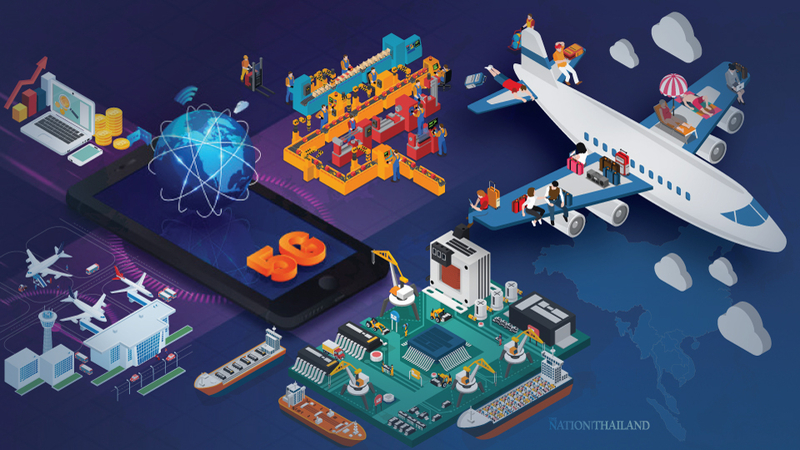
China will be a frontrunner in the 5G arena and is expected to have some 600 million 5G subscribers by 2025, or about 40 per cent of the forecasted 1.6 billion subscribers globally.

Together with artificial intelligence (AI) and robotics, this will help drive growth in China’s new economy as it strives to become less reliant on the United States. In our view, China will emerge stronger and more self-reliant with multiple pillars of economic support through this crisis.

Taiwan is seeing some spillover benefits from the trade war as its companies start onshoring some operations. Government incentives to attract operations back to Taiwan mean that this will have ripple effects on the domestic economy.

As one of the largest and fastest growing markets for digital consumers, India is a market where disruptive technology is driving productivity and deflation more than generally expected, with value accruing to end-users. Key reforms including the recent reduction in corporate tax rates, measures to improve the regulatory environment and monetary easing will likely steady its economy.

In Brazil, optimism surrounding the government’s economic agenda has resulted in a more favorable investment climate. While the country’s economic recovery has been slower than expected, we believe government and central bank efforts are improving the country’s longer-term growth potential. Inflation has remained under control, allowing the central bank to ease rates to record lows to stimulate the economy. Social security reform is key to stimulating investment and credit, which will help improve economic activity and can significantly reduce Brazil’s fiscal deficit. A major privatisation plan has also been announced, and tax and other structural reforms should improve the ease of doing business.

New emerging market Landscape

The emerging market landscape continues to transform as policymakers focus on building resilience during times of stress. Emerging market economies are more diversified now, with domestic consumption and technology offering new drivers of growth, and are growing less reliant on low-cost manufacturing and commodities. Since the turn of the century, we have witnessed a significant increase in the trade value of high-tech goods being exported by emerging market countries.

We have also seen how companies are using innovation and technology to leapfrog and disrupt traditional business models. Areas such as e-commerce, digital banking and mobile computing will be fundamental drivers of emerging markets for years to come. Equally, fields such as AI, autonomous driving, robotics and the “Internet of Things” continue to attract investment, signaling strong longer-term prospects.

Staying the course

Much noise and conflicting signals dominated 2019, which led many investors to limit their risk appetite and discount the long-term growth drivers in emerging markets. While some of these uncertainties may persist in the near term, we believe it is essential to stay the course. The markets are just beginning to realise opportunities from technology disruption and the transition of businesses away from traditional models.

We believe the investment scope in the emerging world is wide and promising for investors who can overlook near-term volatility and invest for the longer term.

What are the risks?

All investments involve risks, including possible loss of principal. Stock prices fluctuate, sometimes rapidly and dramatically, due to factors affecting individual companies, particular industries or sectors, or general market conditions.

Special risks are associated with foreign investing, including currency fluctuations, economic instability and political developments. Investments in developing markets, of which frontier markets are a subset, involve heightened risks related to the same factors, in addition to those associated with these markets’ smaller size, lesser liquidity and lack of established legal, political, business and social frameworks to support securities markets. Because these frameworks are typically even less developed in frontier markets, as well as various factors including the increased potential for extreme price volatility, illiquidity, trade barriers and exchange controls, the risks associated with developing markets are magnified in frontier markets.

Digital transformation in finance #ศาสตร์เกษตรดินปุ๋ย

#ศาสตร์เกษตรดินปุ๋ย : ขอบคุณแหล่งข้อมูล : หนังสือพิมพ์ The Nation

https://www.nationthailand.com/business/30379663?utm_source=category&utm_medium=internal_referral

Digital transformation in finance

Dec 20. 2019
Montri Khongkruephan is a Partner in Audit & Assurance of Deloitte Thailand

Montri Khongkruephan is a Partner in Audit & Assurance of Deloitte Thailand
By Montri Khongkruephan
Special to The Nation

93 Viewed

Organizations today face many challenges related to finance and accounting and the account closing process is perhaps the most challenging of these.

The current process requires high detail and is time consuming, while the reconciliation process is also tedious. Moreover, with deadlines inevitably tight at the end of the month, the CFO will not be able to ensure that the process has been properly carried out.

This article addresses the challenges faced during the account closing process and how the organization is able to tackle such challenges and problems from a digital transformation perspective.

The main challenges during the account closing process can be categorized into four main areas. The first is timeliness.

Organizations usually solve the issue of the account closing’s tight schedule by increasing the number of staff to handle it though this still does not ensure that the closing process will be completed on time.

The second is the lack of visibility in the closing process. The CFO will not know what progress the team has made, whether the work will be finished prior to the deadline or not and what remains to be done. He or she will also not be able to fully control the quality and accuracy of l the reconciliation.

Because of the tight timeline for the closing, the CFO will not know whether reconciliation has been completed or whether any adjustments have been raised.

The combination of these three issues leads to a fourth challenge: lack of proper governance.

Segregation of duties is one of the key controls during the closing process. The inability to track the responsible personnel at each step of the reconciliation process, e.g. preparer, reviewer, and approver, during a tight schedule can cause a high probability of ending up adjusting and resubmitting the report.

This results in a negative effect on the CFO’s performance and credibility.

However, a clever organization can enhance its existing process by applying automation technology.

Financial close automation software helps organizations govern and automate the financial accounting processes, reconciliations, controls, and monitoring.

It is a solution that provides the CFOs and the executives with visibility throughout the account closing process, which finally leads to better governance. Furthermore, transforming the organization’s financial processes to automation reduces manual works.

With the application of financial close automation, CFOs will be able to tackle the challenges and improve the organization’s current account closing process.

In terms of the timeliness and quality issue where CFOs and controllers are under a lot of pressure to shorten their closing period, the software will speed up management reporting and increase meaningful metrics, while having a little time left over to dedicate to the strategic projects.

The financial close automation can improve the efficiency and quality and also eliminates the issue of managing team members to align with the workload. It also increases the report quality and decreases the number of adjustments due to reduced human error. The lack of visibility in the account closing process can be improved by monitoring through the financial close automation solution.

The CFO and the controller will be able to track the progress of the closing process, enabling them to support the team when needed

Moreover, the visibility provided by the solution results in a better governance for the organizations.

The solution could also provide the CFO with clearer visibility throughout the closing process and with the support from the solution, the CFO will be able to govern the team better than ever.

In conclusion, all finance departments face four main challenges from the account closing process, which are timeliness, visibility, quality and accuracy, and governance. The four challenges may result in high possibility of adjustments and resubmission of the report, causing an adverse impact on the CFO’s performance and credibility.

The organization can enhance its existing process by applying automation technology. With the finance close automate solution, the organization can solve the issues by increasing governance and visibility from automating the financial closing process, reconciliation, control, and monitoring. That said, financial transformation is not about simply implementing the organization’s existing accounting system. Instead, the project plan must be carefully reviewed and the accounting process, workflow, and policy made more supportive for the technology.

Technological solutions, combined with an effective accounting process, will build the optimal solution for the organization, enabling financial enterprises to accelerate the complex financial closing process, increase efficient usage of valuable resources and lead to controls and compliance.

Montri Khongkruephan is a Partner in Audit & Assurance of Deloitte Thailand

Revenue tightens code on e-commerce transactions #ศาสตร์เกษตรดินปุ๋ย

#ศาสตร์เกษตรดินปุ๋ย : ขอบคุณแหล่งข้อมูล : หนังสือพิมพ์ The Nation

https://www.nationthailand.com/business/30379638?utm_source=category&utm_medium=internal_referral

Revenue tightens code on e-commerce transactions

Dec 19. 2019
Ekniti Nitithanprapas

Ekniti Nitithanprapas
By The Nation

1,378 Viewed

The Revenue Department has revised the Revenue Code on tax collection from e-commerce transactions of businesses not based in Thailand, bringing fairness to the process, said director-general of the Revenue Department Ekniti Nitithanprapas.

The Council of State is considering the measures and will present the new act to the House of Representatives.

The department expected the measures to become effective in September 2020, boosting tax collection of e-business to a total of Bt4 billion in fiscal year 2021.

Moreover, it will allow the department to exchange information with counterparts in other countries to help prevent international companies from dodging tax payments.

With regard to taxation on online vendors, Ekniti said 100,000 online vendors presented their revenues in fiscal year 2019 with the department collecting Bt1 billion on personal incomes and vendors’ revenues.

In the fiscal year 2020, 170,000 are expected to join the taxation system and tax of online vendor revenues is expected to reach Bt1 billion again.

The department reportedly will use AI to check information submitted by financial institutions under an e-payment law ordering financial institutions to hand in reports of individual transactions. It will help verify the number of online vendors not in the taxation system.

From Lincoln Logs to luggage, U.S.-China trade deal still leaves huge cloud over American business

#ศาสตร์เกษตรดินปุ๋ย : ขอบคุณแหล่งข้อมูล : หนังสือพิมพ์ The Nation

https://www.nationthailand.com/business/30379457?utm_source=category&utm_medium=internal_referral

From Lincoln Logs to luggage, U.S.-China trade deal still leaves huge cloud over American business

Dec 15. 2019

Rachel Siegel is a national business reporter. She previously contributed to the Post's Metro desk, The Marshall Project and The Dallas Morning News.

Rachel Siegel is a national business reporter. She previously contributed to the Post’s Metro desk, The Marshall Project and The Dallas Morning News.
By The Washington Post · Rachel Siegel
TRADE-ANALYSIS
1,109 Viewed

Classic toys such as Lincoln Logs and My Little Pony bring children smiles every holiday season. But for the company that makes them, Florida-based Basic Fun! Toys, President Donald Trump’s trade war with China promised to make this December a decidedly less joyful time.

The company’s president and chief executive, Jay Foreman, had to lay off a dozen workers recently, in part on fears that another round of China tariffs would take effect Sunday and hit his business hard.

Foreman won a reprieve Friday when Trump canceled those tariffs and announced the details of a “phase one” China trade deal that would ease economic hostilities. But he’s not breathing a full sigh of relief amid anxiety that the truce with China could prove fleeting.

“In relation to tariffs, it’s really been like Mr. Trump’s wild ride,” Foreman said. “It’s like somebody is holding a stone over your head. Please don’t ask me to thank you for not dropping it on my head. You shouldn’t be holding the rock over my head to begin with.”

The deal with China, which was confirmed Friday, offered Trump an opportunity to claim that he is making progress toward fulfilling a major campaign promise as he gears up for reelection. And major business groups welcomed an agreement that would reduce trade tensions that were slowing the economy.

But the pact, which needs to be officially signed and is only the first part of a long-running negotiation, still leaves a huge cloud over the U.S. business community, which has come to rely on China for low-cost manufacturing labor and know-how.

American businesses now are scrambling to anticipate what the next moves will be. While the president can change policy with the speed of a tweet, companies are working to adapt supply chains developed over decades.

The pain is especially acute for companies that are still pinned under a 25 percent tariff on $250 billion in Chinese goods that went unchanged by Friday’s announcement, including in industries such as autos and equipment manufacturing. Others saw their tariff burden reduced: Negotiators agreed to halve the 15 percent tax on about $120 billion in Chinese products that took hold in September.

Even the farming industry, which in some ways has the most to gain under the deal, is taking a wait-and-see attitude.

“[A]ny improvement in relations is likely to be temporary with tensions, on both trade and other issues like technology, continuing to wax and wane for the foreseeable future,” Elena Duggar, associate managing director at Moody’s, said in a research note Friday. “Any partial deal in the short term will not resolve the fundamental differences in the two countries’ economic, political and strategic interests.”

As Foreman drove to the airport for a business trip to China, he was glad to have dodged a new round of tariffs this Sunday. “But obviously everybody wants a final resolution,” he said.

It was particularly true for business owners who weren’t so lucky.

– – –

When he announced the phase one agreement on Friday, Trump tweeted, “This is an amazing deal for all.”

Joe Shamie counted himself out.

His company, Delta Children, manufacturers baby and kids furniture. His cribs, bassinets and other safety products have been weighed down by a 25 percent tariff, and he worries that higher prices will prompt parents to start using old or unsafe cribs.

Delta Children has nine test labs in China and hundreds of employees carrying out inspections. Shamie said he can’t just relocate production to another country because he relies on China’s infrastructure to guarantee his products are safe.

“I’m stuck between a rock and a hard place,” Shamie said. “I can’t move. What do I do?”

Small and midsize business owners say the remaining tariffs are especially brutal for them. Larger companies may have more leverage to work with suppliers or retailers or have more room to absorb price increases before passing them on to consumers.

But Tiffany Zarfas Williams, owner of the Luggage Shop of Lubbock in Texas, must raise prices in concert with her manufacturers. The vast majority of luggage and travel accessories are made in China, and Friday’s deal did nothing to ease the tariff burden for Williams and her five-person company.

She doesn’t think she can increase prices any higher, raising the possibility that the quality of her products will suffer.

“Our manufacturers are going to have to cut corners to keep prices from going up,” Williams said. “It’s hard to have a positive attitude when our tariffs are still there.”

– – –

Of all the winners and losers from Friday’s deal, farmers who have been hard hit during the trade war said they were encouraged that some kind of preliminary deal had been reached.

But some remained skeptical about the amount of agricultural purchases by China that were outlined in the agreement. U.S. officials said Friday they expected such purchases to grow to $40 billion per year, while Trump has repeatedly suggested it could be as high as $50 billion.

That’s more than double the amount of agricultural products that China purchased from the United States in 2017, before the trade war began, experts said.

Blake Hurst, president of the Missouri Farm Bureau – and a corn and soybean farmer – said he was taking a “wait-and-see attitude.”

“I’m struggling with what to say because we’ve been promised a trade deal several times before, although we seem to be further along toward an agreement this time,” he said. Most farmers say Trump’s claim of $50 billion in agriculture exports to China seems “aspirational” at best.

The Trump administration has already doled out more than $26 billion in trade aid to farmers hurt by the tit-for-tat tariffs and plummeting exports.

Doug Sombke, president of the South Dakota Farmers Union, said he was a long way from betting on a lasting truce.

“I’m more skeptical now than I’ve ever been,” said Sombke, a corn and soybean farmer and cattle rancher. “I’ve been let down twice already by these [Trump] tweets. If it happens great, good deal. But until it happens, not going to hold my breath. ”

– – –

The Dec. 15 deadline, which would have included tariffs on cellphones, laptops and other electronics, was slated to hit tech companies such as Apple especially hard. But CEO Tim Cook has largely been able to shield the Silicon Valley giant from Trump’s trade agenda, cultivating a relatively close relationship with the president.

It’s that kind of access that remains elusive for many companies struggling under the trade war.

“Herein speaks to why Cook has become so crucial in these ongoing China negotiations, as Cupertino more than any company out there has the most to lose if this tariff war does not see a truce going forward,” Daniel Ives of Wedbush Securities wrote in an analyst note Friday.

Still, simply being a large company doesn’t guarantee anything in a protracted trade war. Columbia Sportswear, which reeled in $2.8 billion in sales in 2018 and sells products in 90 countries, was mostly affected by the 15 percent tariffs that went into place in September and were reduced on Friday to 7.5 percent.

Peter Bragdon, the company’s executive vice president, chief administrative officer and general counsel, acknowledged that Columbia has a more diversified source base than smaller companies, as well as a roster of experts specializing in trade issues.

But the sportswear giant still has to weigh whether to move manufacturing out of China, raise prices for customers or change products altogether.

“You can try to engineer some products [differently],” Bragdon said, “but you can’t engineer your way around chaos.”

TRADE-COMMENT : Trump is getting played by China

#ศาสตร์เกษตรดินปุ๋ย : ขอบคุณแหล่งข้อมูล : หนังสือพิมพ์ The Nation

https://www.nationthailand.com/business/30379386?utm_source=category&utm_medium=internal_referral

TRADE-COMMENT : Trump is getting played by China

Dec 13. 2019
Josh Rogin is a columnist for the Global Opinions section of The Washington Post. He writes about foreign policy and national security. Rogin is also a political analyst for CNN. He previously worked for Bloomberg View, the Daily Beast, Foreign Policy, Congressional Quarterly, Federal Computer Week and Japan's Asahi Shimbun newspaper.

Josh Rogin is a columnist for the Global Opinions section of The Washington Post. He writes about foreign policy and national security. Rogin is also a political analyst for CNN. He previously worked for Bloomberg View, the Daily Beast, Foreign Policy, Congressional Quarterly, Federal Computer Week and Japan’s Asahi Shimbun newspaper.
By The Washington Post · Josh Rogin · OPINION, OP-ED · Dec 13, 2019

348 Viewed

The Trump administration seems to have reached terms with Beijing over a “Phase One” China trade deal, which President Donald Trump will surely tout as a victory for himself and the United States.

But if the president strikes the deal on the terms being reported, he will actually be making a huge concession to Beijing that achieves few U.S. goals, and is so bad that even Trump will have trouble spinning it as a political win.

On Thursday afternoon, several media outlets reported that the United States and China have agreed to a limited interim trade deal that will surely boost markets in the short term and provide a temporary de-escalation of the U.S.-China trade war. For more than two months, sources briefed on the negotiations told me, the two sides had been stuck. The Trump administration wanted to freeze tariffs in exchange for Beijing agreeing to purchase more U.S. agricultural products and granting more market access for U.S. financial firms. But China wouldn’t sign off, demanding the White House sweeten the pot by offering substantial tariff rollbacks, as well.

On Thursday, The Wall Street Journal reported the Trump team caved on that huge point. If true, the result would be a deal that immediately relieves major pressure on the Chinese economy in exchange for future promises the Chinese side may never fulfill. Beijing’s concessions also don’t address the bulk of the structural issues and abuses that make Chinese economic aggression a long-term threat to the U.S. economy.

Of course, we know that no Trump decision is final until he announces it. He could still reject what his officials have brought him.

“It’s all Trump’s call,” said Derek Scissors, a senior fellow at the American Enterprise Institute. “He either makes a call that’s consistent with decades of his beliefs or he’s getting played. . . . But he hasn’t gotten played unless he rolls back tariffs.”

Some reports said the interim deal includes some promises by Beijing to better secure intellectual property rights. But China has made and broken such promises many times before. Also, administration officials say the tough structural issues, including China’s economic espionage, forced technology transfer and unfair subsidies would be tackled in a subsequent Phase Two agreement. But few believe that will ever happen.

“There is pretty much consensus there’s not going to be any meaningful ‘Phase Two,’ “Scissors said.

If Trump substantially reduces tariff pressure on China as part of the Phase One deal, Beijing’s incentive to make future concessions as part of any Phase Two negotiation disappears.

The conventional wisdom is that Trump is prioritizing his reelection prospects and needs a big win to brag about on the campaign trail. That’s why he is lowering his terms for a deal. The Phase One deal was already a huge concession compared to the more comprehensive deal the two sides were closing in on in May.

If the president strikes the deal now, markets will surely go up in the short term – but late next year, the deal’s weaknesses will be laid bare. If China doesn’t do everything it’s promised by the time voters go to the polls, Trump will bear the brunt.

As the election nears, the pressure on Trump to keep the market up and avoid any crises will only increase. Beijing knows that – and it’s calculating that the U.S. president will have little leverage if China doesn’t hold up its end of the bargain.

A bad deal is worse than no deal. That’s why Trump was right when he said last week he likes the idea of waiting until after the election to make a deal with China.

“He is trying to pivot to negotiating and dealmaking for the last year of the first term. He wants to show he’s the dealmaker in chief,” said Tom Wright, a senior fellow at the Brookings Institution. “But he doesn’t necessarily need [signed] deals for that strategy to work.”

Trade hawks inside the administration have long argued that a deal on these poor terms will be a bad story for Trump – and they are right. He would be much better off turning down the deal on the table, maintaining the pressure and keeping the negotiations alive.

If he gets reelected, Trump will have all the leverage in the world to do what he’s wanted to do for more than 30 years – finally stop China from taking advantage of the U.S. economy. But if he gets played now, the best and perhaps last opportunity to pressure Beijing to really change its bad economic behavior could be lost forever.

Redefining work with smart move

#ศาสตร์เกษตรดินปุ๋ย : ขอบคุณแหล่งข้อมูล : หนังสือพิมพ์ The Nation

https://www.nationthailand.com/business/30379365?utm_source=category&utm_medium=internal_referral

Redefining work with smart move

Dec 12. 2019
Kessara Sakmaneevongsa

Kessara Sakmaneevongsa
By Kessara Sakmaneevongsa
Partner, Consulting Services
Deloitte Thailand
Special to The Nation

639 Viewed

Future of work is not only about growing an adoption of digital and technology, but more into a significant change of workplace, workforce and the nature of work owing to the influence of a rapid social and environmental shift as well as emerging technologies, such as robots, artificial intelligence and automation, that could be worked alongside humans to assess, develop and deliver new value around expanded work outcomes.

In order to be ready and be well prepared for changing external factors, it is a need for business itself to rethink and redefine its existing way of working and step ahead in the digital era.

Prior to redefining work in practical approach, enterprises should come up with solid vision and expectation of what your future of work and organisation might look like in consideration of two major trends: a capability to handle a changing of customer expectation and preference with a wider array of options provided in the market, and a pressure of corporate performance to no longer delivering diminishing returns but increasing improvement and marginal outputs not only for customers and shareholders but also for employees to work in a better environment. These two trends significantly lead to a new non-linear value for future of work by emphasising on reorienting the organisation, systems and processes around learning, adapting and transforming in time for the changing environment. Lagging in execution seems to be a significant loss of opportunity for companies, not only to satisfy customers but also to develop itself.

Redefining work is to re-imagine what work should be shifted to create a big impact with smart moves. Big impact doesn’t mean spinning up large or major changes and creating big investment. It rather means to demonstrate a significant impact with actual planning and monitoring before, during and after execution, to ensure a success of future change and generate further momentum in a timely manner. Going with big moves without well-designed working processes, less-talented workers and unstructured organisation might create an imbalance between spending a big investment and achieving the desired results. There are three key shifts to create redefining work efficiently; shift the objective, shift the focus and shift the requirement.

First, shift the objective of work from traditional linear development, focusing heavily on efficiency and cost saving of sales and product development, to boarder non-linear value creation. Spreading an idea of transformation on both business and support functions, such as IT, HR and Finance, to optimise way of working and support sustainable growth and, at the same time, build internal development in a long term. Actions can be taken without starting from scratch or doing everything at once. Proof of concept becomes a meaningful tool to help targeting on the right issues, shortening time to identify pain points and seek out improvement opportunities.

The second is to shift the focus. The organisation needs to know how to best redefine way of working to rapidly respond to rapidly changing customer expectations and a more complex environment by freeing up workers to do more value-added and/or insight-driven activities instead of executing routine and/or standardised tasks. Digital technologies and automation are applied to optimise many processes. Robotic process automation, for example, can take part of the repetitive work. BI tools can be applied on reporting for better visualisation to support routine forecast and constant performance evaluation. Technologies give humans an opportunity to identify and address unseen opportunities that could contribute sustainable differentiation and create new value across systems, practices, and infrastructure as long as it has been used wisely.

Lastly, shift the requirement of workers beyond specific skills to build and train them on core human capabilities to learn fast and adapt quickly to context. Organisation must drive fast learning and problem-solving skills among workers and, at the same time, promote collaboration between humans and machines plus humans and humans to better address and diagnose previously unknown opportunities that have never been considered before. Then, develop roadmap, test a pilot initiative and implement quick-wins/initiatives in a timely manner.

It’s a need for business to grow and change in a promptly manner in response to external changes. Redefining work is relevant for many organisations to shift from old school practice to the future-state working culture considering three key shifts: shift the objective, shift the focus and shift the requirement across process, system and people in order to create a smart move and deliver a big positive impact on the organisation and ecosystem in a long run. It’s time for management to either plan upfront for change or stand behind.

The Year of two Rats for Thai economy

#ศาสตร์เกษตรดินปุ๋ย : ขอบคุณแหล่งข้อมูล : หนังสือพิมพ์ The Nation

https://www.nationthailand.com/business/30379362?utm_source=category&utm_medium=internal_referral

The Year of two Rats for Thai economy

Dec 12. 2019
Amonthep Chawla

Amonthep Chawla
By Amonthep Chawla, Ph.D.
Head of Research, CIMB THAI Bank

1,165 Viewed

When exports decline along with softening global demand and the on-going trade war uncertainty, exporters would likely order less from manufacturers.

Then, investors tend to experience a problem of excess supply and could start to lower their production as seen in the lower capacity utilisation rate and the shrinking Manufacturing Production Index (MPI). Companies cut working hours, resulting in a decline in overtime payment.

Consumers then get hit because of declining non-farm income whereas farm income remains volatile from drought and floods, affecting agricultural production.

Meanwhile, the government has tried to provide cash transfers to the poor and introduced consumption stimulus packages which could somewhat help stabilise purchasing power.

However, it may be hard to revive spending when income remains low amid weak confidence.

The BOT cut the policy rate twice this year from 1.75 per cent to 1.25 per cent while we would wait and see the transmission of higher liquidity to the financial market that could stimulate investment and consumption.

Despite rate cuts and relaxation of capital outflows by the BOT, the baht has remained strong against regional peers, deterring competitiveness on top of global economic slowdown.

Will the economy slow down further?

The National Economic and Social Development Council (NESDC) reported that the Thai economy in the third quarter of 2019 expanded by 2.4 per cent from the same period last year or increased by 0.1 per cent from the second quarter after seasonal adjustment.

The slow quarterly growth is quite alarming because Thailand could experience a technical recession — two consecutive quarters with negative quarter-on-quarter growth — if the downward trend persists.

We do not think so. We still look at the Thai economy on the bright side – continual slow growth.

Some good signs to expect in 4th quarter

Despite softening growth, there are some indicators pointing towards rebounding economic activities.

First, we could expect continual positive contribution to growth from external factors. Export growth would likely fall modestly while imports could fall more than exports, causing a large trade balance surplus.

Stronger tourism revenue could be a positive factor to growth. Local investors could run down inventory before accelerating their production, which could cause continued negative import growth for the next few quarters.

Second, investment could likely pick up, especially projects that are a collaboration between the private sector and the government or public-private partnership.

An increase in project approval by the Board of Investment (BOI) for the Eastern Economic Corridor (EEC) and other areas signalled higher private investment going forward.

However, we could watch out for residential construction as problems of oversupply could linger.

Third, private consumption grew well for tourism-related spending, such as hotels and restaurants, food and non-alcoholic beverage, whereas some items could continue slowing down amid weak purchasing power among low-income households.

Car sales may fall further amid lower consumer confidence. Fourth, public spending could be stronger to drive growth, especially when we could expect the budget bill to pass by January 2020.

Outlook for 2020 – the year of 2 Rats

The year 2020 in the Chinese zodiac is the Year of the Rat. In economic outlook, we could look at it as both positive outcome and risk factors for RAT. For positive outcome, we could expect Relocation, Active stimulus and Tourism. We could expect industry relocation from China to Thailand, especially to the EEC area to avoid the US-China trade war and use Thailand as a connectivity hub for Asean.

Investors could resume increasing their production, which could generate higher income for households and contribute to higher exports.

The government would likely be more active in terms of fiscal stimulus when the budget bill is passed by January 2020.

The BOT would likely hold the rate unchanged at 1.25 per cent throughout the year but they may cut the rate if the economy decelerates further, as they still have policy space to employ when necessary.

Tourism would likely remain a growth driver for the Thai economy, especially after the number of Chinese tourists rebounded sharply in the third quarter.

Risks that could restrain Thailand’s economic growth are real estate, the appreciating baht and the trade war.

The problem of over-supply in residential real estate with tight regulation on mortgage by the BOT could lower outlook on private construction.

The strong baht against peers could hurt exports, especially commodity exports which could subsequently lower outlook for farm income.

Tourism may suffer a slight hit from the stronger baht against peers but the number of tourists would likely grow along higher Chinese demand for travelling.

Meanwhile, at present, we don’t expect the trade war to escalate, which could allow exporters and investors to adjust themselves no matter what tariff rates could be set.

However, if trade wars escalate to higher tariffs or more countries are added to US President Donald Trump’s list or trade wars lead to currency wars and technological wars, the global economy could decelerate which could subsequently hurt Thailand’s exports and domestic market.

In sum, we would project a moderate positive outcome with low likelihood for risk factors. We projected the Thai GDP to grow by 2.7 per cent in 2020 from 2.4 per cent in 2019.

Outlook for FX and interest rate

The BOT would likely hold the rate unchanged at 1.25 per cent throughout 2020. The BOT would monitor the transmission of interest rate cut on the financial market before taking another step to loosen monetary policy.

Meanwhile, liquidity in the market is rather high due mainly to slow business loan growth, especially from small enterprises.

Consumer loan growth would likely soften from tight regulation on mortgage from the BOT together with more caution by commercial banks for fear of rising NPLs.

Thus, Thailand would not have a problem of tight liquidity which requires another rate cut.

On the other hand, Thailand’s financial market is likely to experience a challenge of stability due to the prolonged low interest rate environment which could induce investors to invest in risky assets without properly understanding risks.

Meanwhile, the BOT could encourage more capital outflows from local investors so as to allow the baht to weaken or slow the pace of appreciation against the US dollar and regional peers.

In line with the attempt by the BOT, we project that the baht would strengthen to Bt29.50 to the US dollar by year-end 2020 amid the large current account surplus.

Net exports could remain large due mainly to slow import growth from high inventory and low oil prices while tourism revenue could grow moderately from rebounding Chinese tourists.

In addition to trade flows, foreign direct investment could accelerate amid higher project approval by the BOI in line with industry relocation.

TRADE-ANALYSIS : Struggling to negotiate, Trump often claims countries are eager to talk

#ศาสตร์เกษตรดินปุ๋ย : ขอบคุณแหล่งข้อมูล : หนังสือพิมพ์ The Nation

https://www.nationthailand.com/business/30379055?utm_source=category&utm_medium=internal_referral

TRADE-ANALYSIS : Struggling to negotiate, Trump often claims countries are eager to talk

Dec 04. 2019
Toluse

Toluse “Tolu” Olorunnipa is a White House reporter for The Washington Post.
By The Washington Post · Toluse Olorunnipa

434 Viewed

WASHINGTON – In President Donald Trump’s telling, everyone he’s negotiating with has something in common: They’re all dying to make a deal with him.

Whether it’s Iran, China, Japan, Russia or the Taliban – Trump claims there’s a mad rush by foreign friends and foes alike to sit at the table with him and negotiate under his terms. He has repeated the same boastful talking point even as he’s struggled to finalize major deals.

“Let me tell you, the China trade deal is dependent on one thing, do I want to make it?,” Trump said Tuesday during a summit of the North Atlantic Treaty Organization alliance in London. The Chinese, he added, “want to make a deal now.”

Minutes later, Trump said that Saudi Arabia was “very happy” to agree to pay the United States for military protection and that Russia “very badly” wanted to strike an arms control agreement.

“Russia wants to make a deal as recently as like two weeks ago,” he said.

But as Trump campaigns for his reelection, he has abandoned more deals than he has struck, and his boasts about eager negotiating partners could face scrutiny from voters who expected more results from the self-described master dealmaker, said Barbara Perry, a presidential historian at the University of Virginia’s Miller Center of Public Affairs

“Three years into his term, are there going to be people who say ‘He promised me X, and I didn’t get it, and now I’m not voting him’?” she said. “It’s certainly a high-wire act.”

In some cases, other countries have flatly contradicted Trump or expressed surprise about his assertions, indicating that some of his claims of favorable negotiating conditions are more wishful thinking than reality.

During a Thanksgiving Day visit to troops in Afghanistan, Trump said that the Taliban “wants to make a deal” and that “tremendous progress” had been made.

“They didn’t want to do a cease-fire, but now they do want to do a cease-fire,” Trump said of the militants.

But the next day, neither the Taliban nor the government of Afghan President Ashraf Ghani indicated that a cease-fire was even under discussion.

More than 100 times over the past two years, Trump has claimed that China was anxious to end the trade war by capitulating to his demands. In one case this summer, he claimed that he had received high-level phone calls from Chinese officials pining for a deal – something that China immediately denied.

“China is dying to make a deal with me,” Trump told reporters on July 30.

Months earlier, China was also desperate to strike a deal – at least in Trump’s telling.

“China wants to make a deal very badly,” Trump said on Nov. 20, 2018. “They might not say that to you, but they want to make it very badly.”

But Trump has not secured such a deal, and the trade war has only escalated with both sides imposing tariffs on imported goods. Trump has repeatedly hailed some intermediate steps, including Chinese pledges to purchase American agriculture, while the broader negotiations have failed to sustain momentum.

On Tuesday, Trump indicated the long-awaited deal with China may not happen for another year, but said he’s fine with that despite his boasts about Beijing’s desperation to get a deal done.

“I have no deadline,” he told reporters. “In some ways, I think it’s better to wait until after the election, if you want to know the truth.”

While Trump previously has pointed to his “great friendship” with Chinese President Xi Jinping as a reason for optimism about a trade agreement, on Tuesday he said the relationship has soured.

“I don’t think he likes me so much anymore,” Trump told reporters.

The shift from ambitious claims about soon-to-be-announced deals to more realistic assessments about their slim prospects has become a familiar one in the Trump administration.

The president has claimed that the Palestinians want to make a deal with Israel; that Iran was eager to meet with him to renegotiate the nuclear agreement he abandoned; that North Korea’s Kim Jong Un wanted to abandon his nuclear program; and that Japan was ready to capitulate to his demands to avoid car tariffs.

But deals with all of those actors have been elusive and in some cases, Trump has lost ground after touting progress.

“We’re getting close. And they want to make a deal,” Trump said in August when asked about France’s digital services tax. “And we’ll see if we can make a deal. We’re getting close.”

On Tuesday, Trump said he would slap tariffs on French wine and other products as a retaliation for the digital services tax, which hits American technology companies. Trump’s administration said Monday that the French tax should be met with tariffs on $2.4 billion in imports, a significant escalation that indicated a deal with France had become unlikely.

In his 1987 book “The Art of the Deal,” Trump encouraged aspiring dealmakers to “use your leverage,” advocating a high-pressure approach to forcing a competitor’s hand. Trump’s continues to embrace the themes of his book as he tries to strike deals from the White House, Perry said.

Trump often credits himself with creating favorable negotiating conditions, claiming that he has forced other countries to the table by pressuring them with drastic moves.

Trump said Russia wanted to strike an arms deal only because he had pulled out of the existing treaty. He said China wanted to make a deal because his tariff campaign had tanked its economy. He said the Palestinians would be eager to negotiate a peace deal with Israel because he had moved the U.S. Embassy to Jerusalem, taking that contentious issue off the table. He claimed the Taliban was ready to strike a cease-fire only because he increased military pressure on the militants after a potential agreement fell through in September.

“Everybody wants to make a deal,” Trump told WITN-TV in Greenville, North Carolina, in July.

There’s little proof any of that has actually worked to secure the deals that Trump seeks. In many cases, his moves have angered the other party or pushed it to consider new alternatives.

Trump has repeatedly highlighted the victories from his unorthodox negotiating strategy, including Mexico’s willingness to deploy troops to stop migrants from crossing the border and the U.S.-Mexico-Canada trade agreement that’s pending before Congress.

And Trump’s showmanship has worked with his core supporters, who continue to believe in his dealmaking abilities, said Perry.

“As he sees the clock running out on the final year of his term, now he will turn to the next argument,” she said. “Which is: ‘Well, I haven’t gotten the best deal that I wanted. . . so of course you need to reelect me to make sure that great deal that I assured you would happen, will happen.'”

Trust in AI and grow with it

ศาสตร์เกษตรดินปุ๋ย : ขอบคุณแหล่งข้อมูล : หนังสือพิมพ์ The Nation

https://www.nationthailand.com/business/30378924?utm_source=category&utm_medium=internal_referral

Trust in AI and grow with it

Nov 30. 2019
By Rob Newell
Special to The Nation

1,209 Viewed

One of the most challenging technologies of the Fourth Industrial Revolution is artificial intelligence (AI) because of its potential to radically alter the way people live and work.

And as Thailand plots its way towards its Thailand 4.0 objectives, AI is becoming one of the key facets within the area of digitalisation, bringing opportunities and concerns with it.

Trust in AI strongly correlates to how well consumers understand the technology and the higher the level of understanding, the higher the trust. While most Asian consumers are aware of AI, only two in five admit to having an understanding of what AI really is.

A recent survey by Salesforce, titled “Artificial Intelligence in Asia: Trust, Understanding and the Opportunity to Re-Skill”, involved 1,000 participants from Thailand and the feedback outlined that Thais see a very positive future with AI and all of its implications.

This is no surprise as Thailand is focused on educating and engaging its workforce in its commitment to accelerate digitalisation across industries. This is, of course, not a challenge without hurdles as it requires financial resources and in-depth transition across the workforce and the education system.

According to McKinsey, automation backed by AI is poised to affect an estimated 75 million to 375 million people worldwide by 2030. With a large proportion of the workforce to be impacted by this wave of new technology, people expect business leaders to have solutions for transitioning employees to new jobs.

But is Thailand’s workforce ready for it? According to our survey, a large proportion of Thais (68 per cent) are aware of AI and close to half (45 per cent) think they understand it well. Further positivity comes with the findings that overall sentiment towards AI is very positive and many Thais believe that AI will greatly improve their lives and the world in the future. Only two per cent of those surveyed had a negative feeling towards AI.

Trust varies dramatically across different AI applications. Thai consumers tend to trust AI for simple and rudimentary tasks such as alarms, appointments and controlling domestic appliances but few are aware of AI-powered content recommendations, which could indicate that they might not be aware of the ubiquity of AI embedded deep in their lifestyles in Thailand.

The outlook for Thailand is excellent if AI has anything to do with it. Thais see a bright future for AI in terms of convenience, business opportunities, and creating a smarter society. With urbanisation, a major factor in the country’s development and smart cities being at the top of the agenda for Thailand 4.0, a belief in AI and its support for a smarter urban society is a positive stance and a great platform to build on.

When general business users are able to take on new tasks in a few clicks that used to require weeks or work, everyone benefits. Each employee is able to up-level their skills when there is technology to guide them. And this opportunity has not been overlooked by Thais. Almost 60 per cent of Thais in the survey said that AI would give them the freedom to do a better or more interesting job in the future. A similar percentage also recognized that they needed to improve their technology skills and were willing to do so.

I predict that Thais are ready and willing to take advantage of the AI opportunity that now sits on the doorstep of Asia and there are huge benefits to be made by employees and the industries that they are employed in.

If we embrace AI and combine it with the positive outlook of Thai people, we can gain massively from the wealth of digital benefits AI supports. This in turn will alter how we work and completely change the world we live in.

Rob Newell, Vice President, Solution Engineering, Asia Salesforce