The genie is out of the bottle: digital assets will thrive in the digital age

#SootinClaimon.Com : ขอบคุณแหล่งข้อมูล : หนังสือพิมพ์ The Nation.

https://www.nationthailand.com/business/40014046


Players in the market as well as knowledgeable experts asked society, the authorities and corporates to be prepared for the rapid growth of digital assets in the digital age.

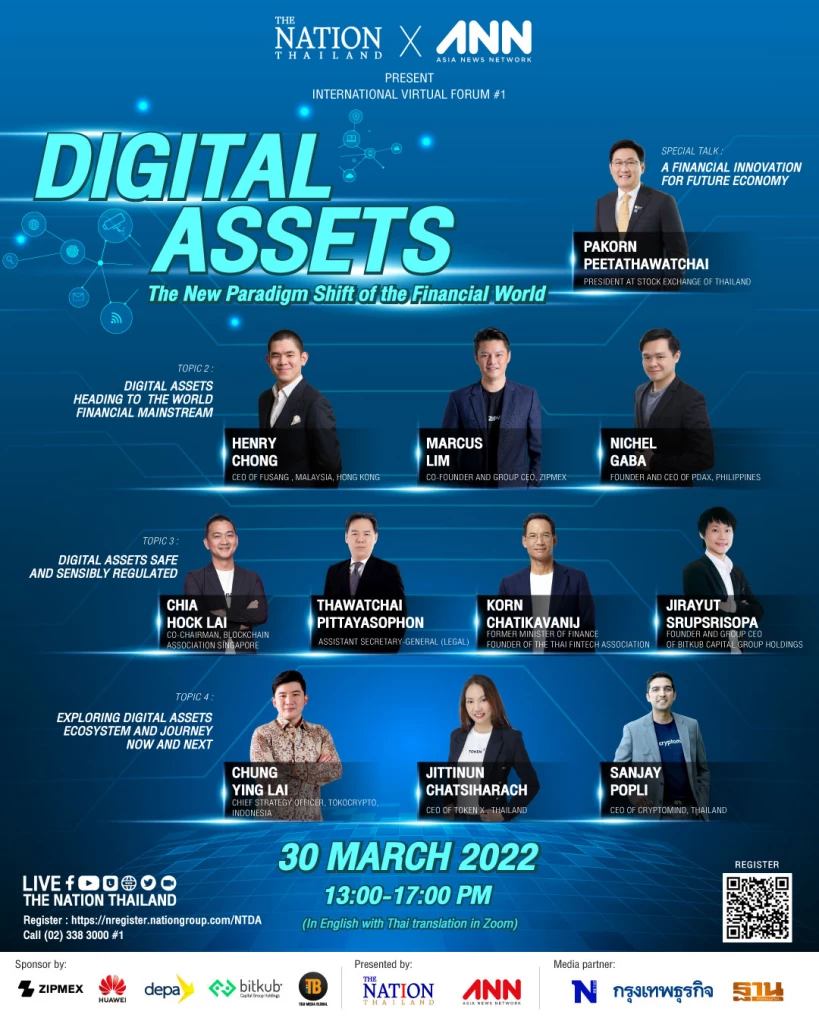
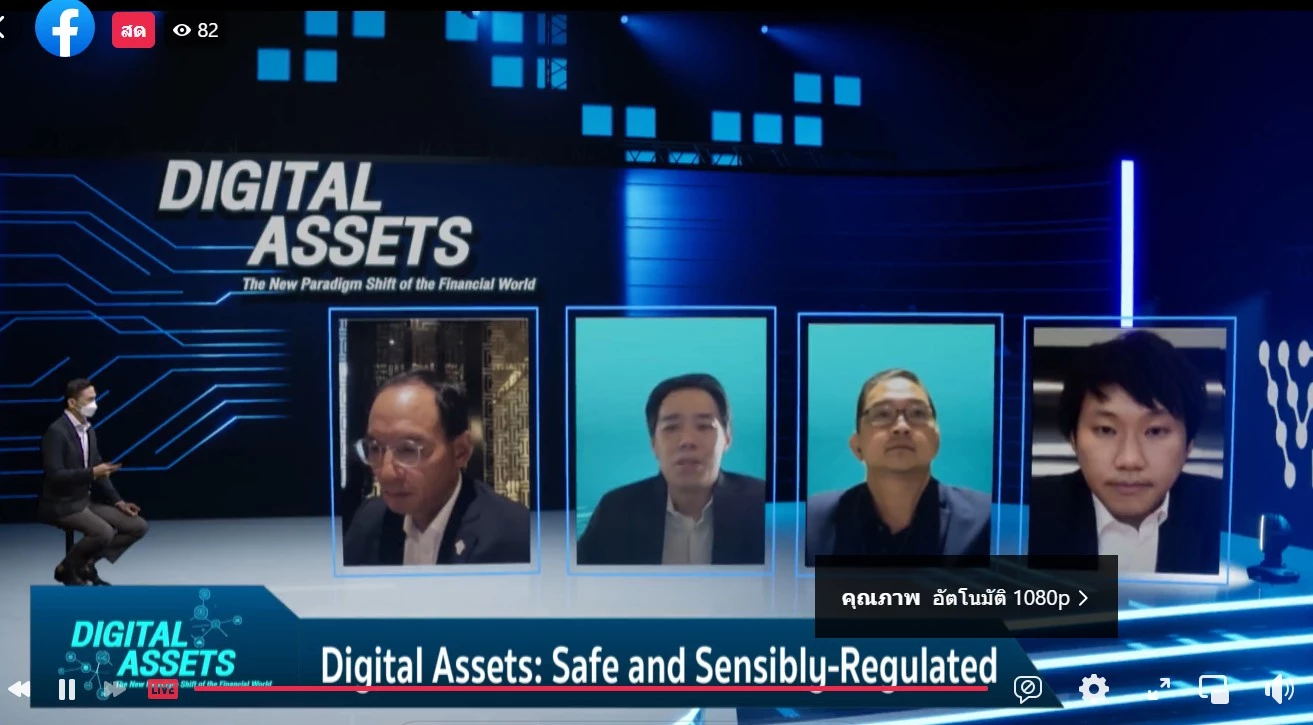
They were speaking at a virtual forum “Digital Assets: The New Paradigm Shift of the Financial World” organised via Zoom by The Nation and Asia News Network on Wednesday.

Digital Assets are increasingly gaining in popularity and growing at a tremendous pace. Millennials are showing a preference for digital assets over the traditional financial markets.

According to a report by Verified Market Research, the global digital asset management market size is projected to reach nearly US$14 billion by 2028.

Despite the increasing global interest, digital assets face high risks, such as volatile investments, unstable prices, safety issues and international conflicts.
The genie is out of the bottle: digital assets will thrive in the digital age

Financial innovation

Speaking at the event, the president of the Stock Exchange of Thailand (SET), Dr Pakorn Peetathawatchai, said the exchange wanted the traditional and digital asset markets to coexist. The SET is launching the Thailand Digital Exchange (TDX), an open platform to link traditional and digital asset markets, in the third quarter of this year.

He said the digital asset market is growing and becoming a part of the global market even though the market capitalisation of the digital asset market, as of March 11, was only $1.79 trillion compared to $123 trillion in the stock market.

He explained that there are currently three main digital assets:

Investment token, which gives the holder the right to invest in any project or underlying asset.

Utility token, which gives the holder the right to acquire goods, services and any other specific right.

Cryptocurrency, which is a digital virtual currency secured by cryptography.

He believes that traditional and digital asset markets can coexist even though there are many differences between the two markets, such as market types, regulations, investor base and involved businesses.

“When compared piece by piece, there are a lot of similarities, but the players will be different,” he said. As an example, he said that fundraisers in the capital market usually seek advice from brokerage firms, while those in the digital assets market seek advice from token issuers.

He expected business and investment opportunities in both traditional and digital asset markets to be more open to all people in the coming years.

Pakorn revealed that TDX will focus on investment and utility tokens, adding that it will serve as an application programming interface platform and portal for collaborators.

“Investors will be able to use the platform to access investment either locally, globally, traditionally or digitally,” he added. “We will not touch cryptocurrency,” he said. 

Digital assets and financial mainstream

Digital assets are growing fast in many countries worldwide, especially among Generation Z and millennials, said Zipmex CEO and co-founder Marcus Lim, PDAX founder and CEO Nichel Gaba, and Fusang CEO Henry Chong.

Henry said the security token market globally is moving at an incredible speed, adding that banks or countries are looking to use tokenisation technology to represent traditional assets, such as shares, bonds and funds.

He estimated that a quarter of all publicly listed securities around the world would be tokenised by 2030.

“We can really live with a vision of all assets being digitised,” he said.

Marcus said Zipmex digital asset platform has grown fast in the Asia Pacific in March this year with more than 1.9 million registered users, a total cumulative trading volume of more than $7 billion and a presence in four countries, namely Thailand, Indonesia, Singapore and Australia.

Nichel said the growth of cryptocurrency in the Phillippines is around $3 million and $3.5 million, thanks to a strong cryptocurrency-friendly and savvy base.

“Having been in the market throughout my career, I know how fast the weather can change. New investors should focus on developing real skills,” he said.

“The genie is out of the bottle. It is a magic that is evolving very quickly,” he said.

Safe and sensible regulation

Finding the right balance and looking at different angles are keys to regulating digital assets, Bitkub Capital Group Holdings founder and Group CEO Jirayut Srupsrisopa said.

He said at the same time regulations have to adapt quickly, too, because of the speed of innovation.

“Too much regulation would strangle innovation and it could move elsewhere, but too little regulation also raises risks of scams,” he said.

He emphasised that it was important for regulated players and regulators to work together to find the right balance and make sure that trade activities are on the ground, otherwise it will be harder to control.

“We should bridge the communication gap and the mindset to benefit the country, allow the technology to foster and protect investors,” he said,

“Meanwhile, we have to make sure that illicit activities are not happening on the platform, especially overseas.”

He added that a strong digital infrastructure is necessary as cryptocurrencies and blockchain would be the new key to growth of Thailand’s economy in the future. He said Thailand had missed the Web 1.0 and 2.0 bus, and it could not afford to miss 3.0.

He said Thailand’s growth in the past had depended on the country becoming an auto manufacturing hub and a major tourist centre. Thailand should strive to become the digital hub in the future, he said.

Blockchain Association co-chairman Chia Hock Lai said regulations should look at risks, but it should not ruin innovation.

He explained that in Singapore, cryptocurrency trading as of now accounts for less than 2 per cent of overall trading.

He said there was a case to be made for the industry regulating itself. “Let them come up with their own code of practice. That might be a better way to manage risks and eventually achieve consumer protection,” he said.
The genie is out of the bottle: digital assets will thrive in the digital age

Former finance minister and Thai Fintech Association chairman Korn Chatikavanij expressed concern with the overzealous regulation in Thailand, as a result people trade digital assets elsewhere.

“Regulators should tread carefully in terms of trying to impose their will on an industry that they cannot fully control. Attempting to do so may push the industry offshore or underground,” he said.

He said it would be better to monitor the cryptocurrency growth and benefit the country for two to three years.

He added that the government should not have rushed to impose capital gains tax on cryptocurrency trading, after just a couple of years, when the equity market has not been taxed for decades.

Securities Exchange Commission Assistant Secretary-General (Legal) Thawatchai Pittayasophon said the agency is open to hearing comments from others and studying international laws, so it can adapt the regulations to the Thai context.

“Being a regulator is not easy as there are conflicting demands with many stakeholders, and it is challenging to strike the right balance,” he said.

Digital assets ecosystem

Cryptomind CEO and co-founder Sanjay Popli expected a lot of security firms to explore asset tokenisation models.

“Digital currencies, securities and commodities, such as gold, silver or copper, will converge and as a whole they will hold a lot of potential,” he said.

He explained that the digital asset industry was not just about speculation and investment, but also about fans, artists and gamers who can monetise their assets.

“We are going to move to the next frontier of the digital asset era, so global companies should take it seriously now,” he added.
Sanjay wants global players to be allowed into Thailand, because it will help local talent too.

He believes that the crypto industry will explore new models that we cannot imagine now. He said a lot of corporates missed the bus from Web 1.0 to 2.0. They don’t want to miss 3.0. “But you can’t carry 2.0 mindset to 3.0,” he cautions

Token X CEO Jittinun Chatsiharach said digital assets can benefit anyone, as these assets are playing an important role in the digital economy.

Tokocrypto chief strategy officer Lai Chung Ying said unbanked people will benefit the most from digital assets due to the low entry barrier. These are people who previously did not have access to banks because of geographical location or other reasons.

“This group can actually get access to work on crypto financial space where minimum capital is not a requirement,” he said.

Lai says there has been a 100-fold growth in Indonesia in digital assets with over 2 million accounts. He said NFT projects are taking off in Indonesia because of a lot of creativity. He predicts that the future will see hybrid use of tokens.

He said traditional companies will have to catch up with the ecosystem and for that they have to be more flexible.  He rejected some of the worries about cryptocurrencies, saying they were more transparent than traditional transactions.

Published : April 01, 2022

By : THE NATION
Building a sustainable digital business

#SootinClaimon.Com : ขอบคุณแหล่งข้อมูล : หนังสือพิมพ์ The Nation.

https://www.nationthailand.com/business/40013807


Huawei definitely plays a leading role in this area, not only in products and solutions, but in fundamental theory research and industrial design as well.

Building a sustainable digital business

Asia-Pacific is ripe with opportunities for digital transformation, and the pandemic has accelerated this change. As 5G rolls out at scale, connectivity, cloud, AI, computing, and industry applications have all come together to create unprecedented opportunities for the ICT sector.
According to the Asian Economic Integration Report 2021, Asia Pacific will reap an economic dividend of more than $1.7 trillion per year or more than $8.6 trillion through 2025. The increased use of digital technologies will result in about 65 million new jobs created every year in the region until 2025.
With stable human, financial and business fundamentals, the highest net profit in history, and our continued efforts to globalise under pressure and increase R&D investment, Huawei’s unwavering business strategy, focused on connectivity and computing and rapidly developing new businesses including digital power and cloud, is perfectly aligned to drive the digital economy in Asia Pacific.

Leveraging key digital trends
As we shift gears from Covid-19 being a great disruptor to focusing on new opportunities from the acceleration towards digital transformation, I’m re-energised with the possibilities of our digital future. In 2022, our Huawei vision and mission continues, that is to bring digital empowerment to every person, home and organisation for a fully connected, intelligent world. This year, with the Mobile World Congress 2022 now behind us, brings the perfect opportunity to re-emphasise this vision and extend it to our view for the future world of 2030.
Looking at the future world in 2030, its characteristics and how it will impact every aspect of life, industry, society and economy, Huawei is predicting various indicators across four broad areas – Digital Life, Digital Industries, Digital Infrastructure and Digital Carriers.
For Digital Life, new XR and enhanced multimedia experiences will scale to 1 billion users and offer immersive solutions that will redefine everything from museum visits to shopping. Combining the data required for this with Digital Industry will mean the amount of data generated worldwide each year will likely exceed one trillion gigabytes and cloud services will account for more than 87 per cent of enterprise application spending.

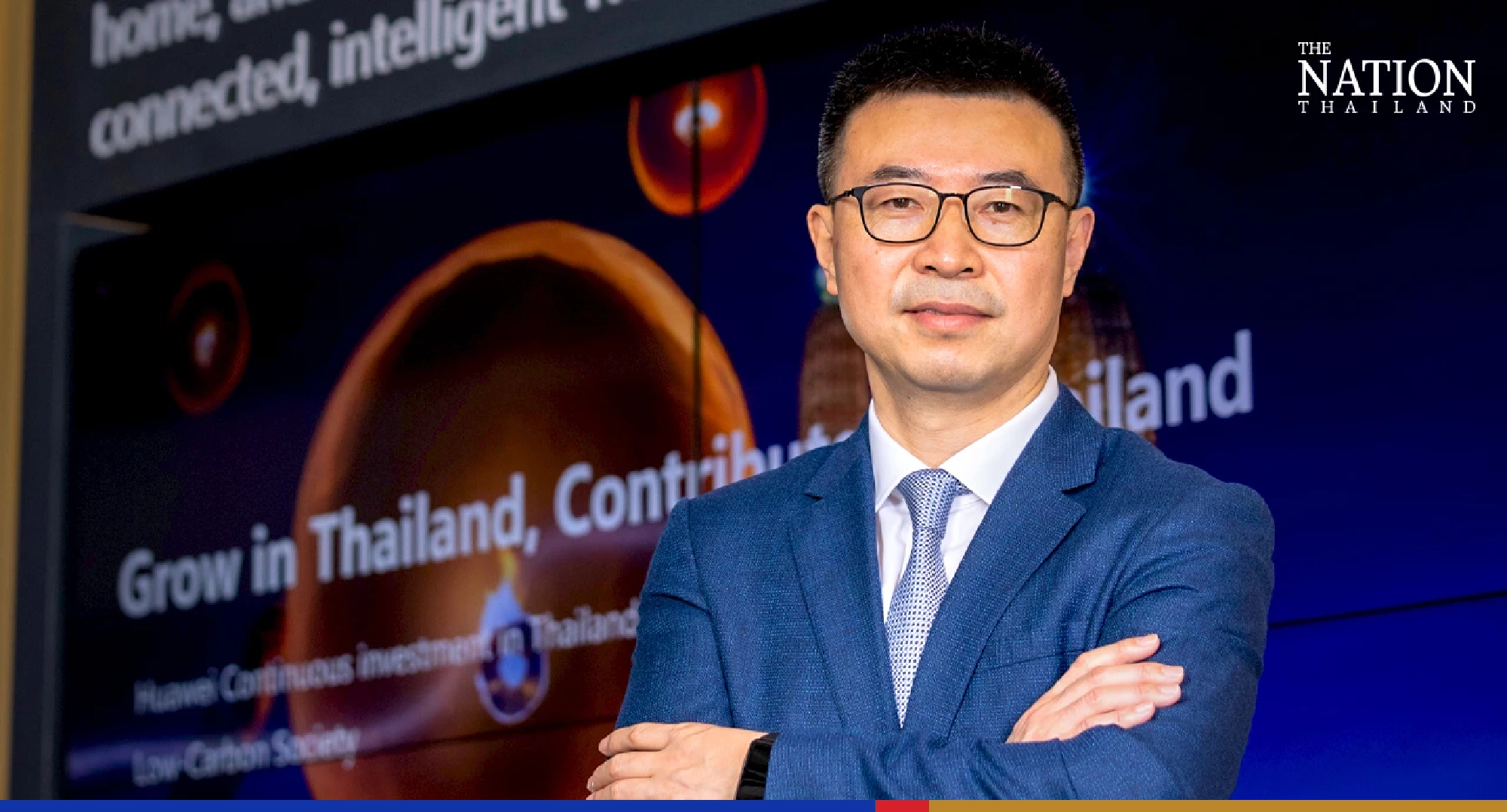
Simon Lin, president of Huawei Asia PacificSimon Lin, president of Huawei Asia Pacific

Digital Infrastructure will improve energy conservation and emission reduction with renewable energy accounting for 42 per cent of the industry’s electricity generation. ICT technologies, while consuming only 2 per cent of global energy, will help reduce CO2 emissions by 20 per cent.
Underpinning all this will be Digital Carriers, supporting more than 200 billion connections and providing more computing and storage capabilities to industries.
The Intelligent World will redefine experiences, optimise operations, and ignite new business. Embracing business, technology and sustainability we hope to work together with customers, partners, governments, industry and consumers to enrich lives through this new digital future.

Driving innovation in digital infrastructure
Fundamentally, our future world will be based on three driving forces: business, technology and sustainability. First, business-driven forces will arise from the application of digital technologies in various industries to drive digitalisation and improve services.
Second, technology-driven forces will emerge from new connectivity including 5G Advanced, 6G and IPv6+ and computing technologies that are evolving to enable new applications.
Lastly, sustainability-driven forces including green development, social responsibility, and fast response to emergency situations will profoundly change people’s lives.
Connectivity and cloud are the lifeblood of the digital frontier; however, the digital readiness of the region varies greatly. Huawei’s Global Connectivity Index (GCI) shows that India, Indonesia and Philippines ranked 63, 58 and 59 respectively out of all countries, while Singapore ranked No 2. Philippines and Indonesia are the lowest in fixed broadband speeds compared to Singapore, and Thailand at the front. More broadly, cloud penetration in the region is less than 20 per cent, 4G mobile coverage is slightly above half, and FBB reaches barely one-third of households.
Under our Tech4All initiative, for example, Huawei’s RuralStar programme, with the aim to provide internet and connectivity for underdeveloped regions since 2017, has successfully cooperated with 12 operators in eight countries, including Thailand and Indonesia, in its first year.
In the remote mountains of Chiang Mai, Thailand, for example, Huawei’s AirPON solution reuses existing poles and fibre resources, creating an “air network equipment room” that has provided connectivity to more than 10,000 villages.
As part of its efforts to create a greener and more sustainable digital world, Huawei will increase its investment in sustainable green solutions, leveraging clean power generation, electric transportation, and smart energy storage, to support the Asia Pacific region’s goals of cutting carbon emissions, promoting renewable energy, and contributing to a circular economy.

Lighting up Asia Pacific
As one of the most populous and diverse regions in the world, Asia Pacific’s fast-growing economies are at the forefront of the global digital landscape. We are seeing huge opportunities for digital economy growth and digital transformation in the region, while many countries in the region have also issued national digitalisation strategies.
For example, Singapore released its Smart Nation 2025 blueprint. Indonesia and Malaysia released strategies to go digital, Bangladesh has released a strategy called Digital Bangladesh, and Thailand announced its vision to become a digital hub in Asean.
In this great journey, we are committed to supporting the region’s digital vision as a key contributor. Towards this goal, we will focus on three key areas: Connectivity and Intelligence, Low-Carbon Development, and Digital Inclusion initiatives.
Digital Connectivity, including 4G, 5G, fibre and IoT is fundamental to the success of the digital economy and has been further accelerated by Covid-19 with the demand from digital subscribers and for digital services growing significantly. Huawei definitely plays a leading role in this area, not only in products and solutions, but in fundamental theory research and industrial design as well.
Cloud Computing and Intelligence is the cloud infrastructure for an intelligent Asia Pacific, including data centres, cloud services and AI enablement to support data monetisation and promote industry digitalisation. According to Gartner’s latest report, HUAWEI CLOUD was the fastest growing cloud in the global IaaS market with a growth rate of more than 220 per cent. We are currently ranked 5th in global market share, and in Asia Pacific we operate seven Availability Zones in Thailand, Hong Kong and Singapore and have local service teams in over 10 countries.
Through heavy R&D investment, the carbon emission for our E2E products and services has been reduced by over 80 per cent while retaining the same capacity. Huawei combines digital and electronic technologies to develop innovative digital power services to use energy as efficiently as possible, and minimise the carbon footprint of ICT infrastructure, by leveraging clean power generation, electric transportation, and smart energy storage. By the end of 2021, Huawei had helped global customers reduce carbon emissions by 230 million tons. Meanwhile in Singapore, we supported Sunseap Group with industry-leading solar inverters to build one of the world’s largest offshore floating farms, contributing to the clean energy landscape in Asia Pacific.
Lastly, we will keep driving digital innovation for an inclusive Asia Pacific and leave no one behind. In our vision, a digital world is not just about technology, it is about people and humanity. Over the next three years Huawei will invest US$100 million to build the startup ecosystem in Asia Pacific, and over the next five years we will invest $50 million to develop 500,000 digital talents. In Malaysia, we launched our TECH4ALL initiative to help bridge the digital divide, and with our Huawei IdeaHub smart screen, we have connected students in remote areas to digital interactive learning centres.

Huawei’s outlook
Huawei’s Carrier business continues to benefit from 5G network infrastructure construction and remains robust, with 13 overseas countries having the best experience of Huawei’s 5G network in third-party tests. Overseas, along with our operators and partners, we promoted 3,000 5G applications, including many applications for industry commercialisation.
Our Enterprise business, established in 2011, has exceeded expectations and already includes more than half of the top Fortune Global 500 companies and more than 30,000 partners, helping transformation in various industries including education, government, finance, energy, transportation and more.
Cumulative shipments of smart wear devices now exceed 100 million worldwide, driving our Consumer business and we continue to expand our footprint with new devices that include premium smartphones and tablets, smart screens, audio, printers, laptops, desktops and more. Our Harmony operating system has surpassed 220 million users globally and Asia Pacific continues to lead with the rapid development of our consumer HMS ecosystem.
Our Cloud and Digital Energy businesses achieved double-digit growth in part due to a community of over 8 million Huawei Cloud developers and green sites deployed in more than 100 countries worldwide.
Certainly, the political climate has impacted Huawei’s ability to do business as we would like. But even in the face of adversity, we have achieved the highest net profit in history, hold sufficient net cash, and maintain a healthy financial position of the company.
Going forward Huawei will adapt to this new environment with an optimised organisational structure and continuously improve our operating capabilities and organisational efficiency. While maintaining the advantage of a large platform, we have shortened the management chain through the pilot operation of industrial subsidiaries that are able to respond more quickly to customer needs. Huawei has both the capabilities and confidence to continue serving our customers with innovative, business-aligned, sustainable solutions.
Huawei’s business strategy is clear, focusing on connectivity and computing, and developing new businesses that include digital energy and cloud. More importantly, we will support industry transformation by leveraging our more than 3,000 5GtoB projects to offer guidance and solutions for Smart Mining, Smart Manufacturing, and Smart Ports, helping operators launch 5GtoB services more successfully.
We are committed to driving innovation, attracting top and outstanding global talent, and supporting the continuous operation of hundreds of operators, millions of businesses and billions of consumers.
We continue to be guided by our commitment to innovation, openness, collaboration and shared success. Even under heavy pressure, we leverage our world-leading strong investment in R&D and drive the implementation of our globalisation strategy that includes standards, talent and supply chain. Through this, we maintain our ability to create value for customers, cooperate with partners for shared success, and contribute to society as a whole. Only by working together can we build the infrastructure, services and trust that will power us into the Intelligent World.

Published : March 25, 2022

With push towards Node Validators, Bitkub ready to explore new tech frontiers

#SootinClaimon.Com : ขอบคุณแหล่งข้อมูล : หนังสือพิมพ์ The Nation.

https://www.nationthailand.com/business/40013651


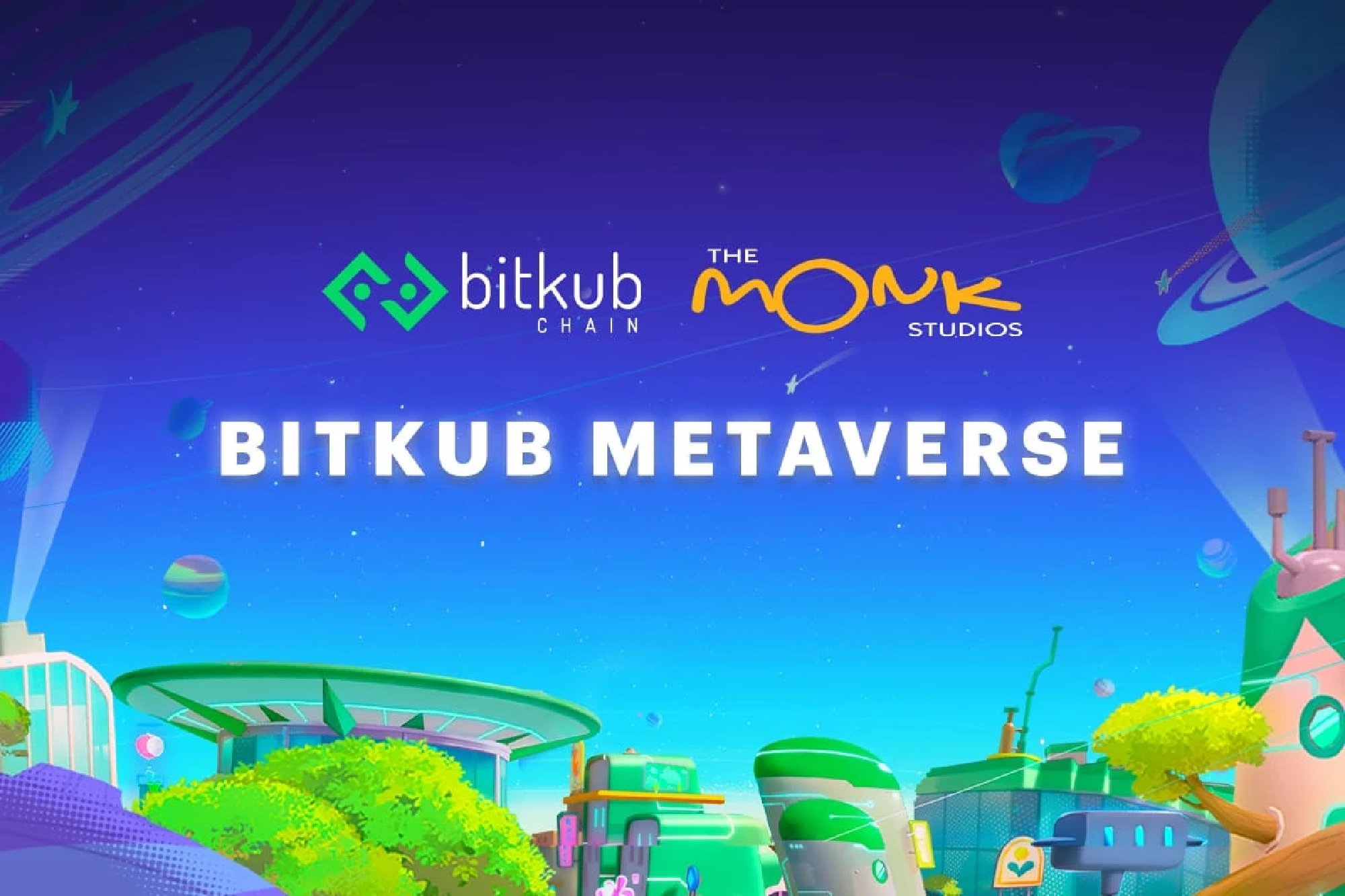
The group also revealed the Bitkub Metaverse project in association with The Monk Studio, a Thai company behind world-class animations.

With push towards Node Validators, Bitkub ready to explore new tech frontiers

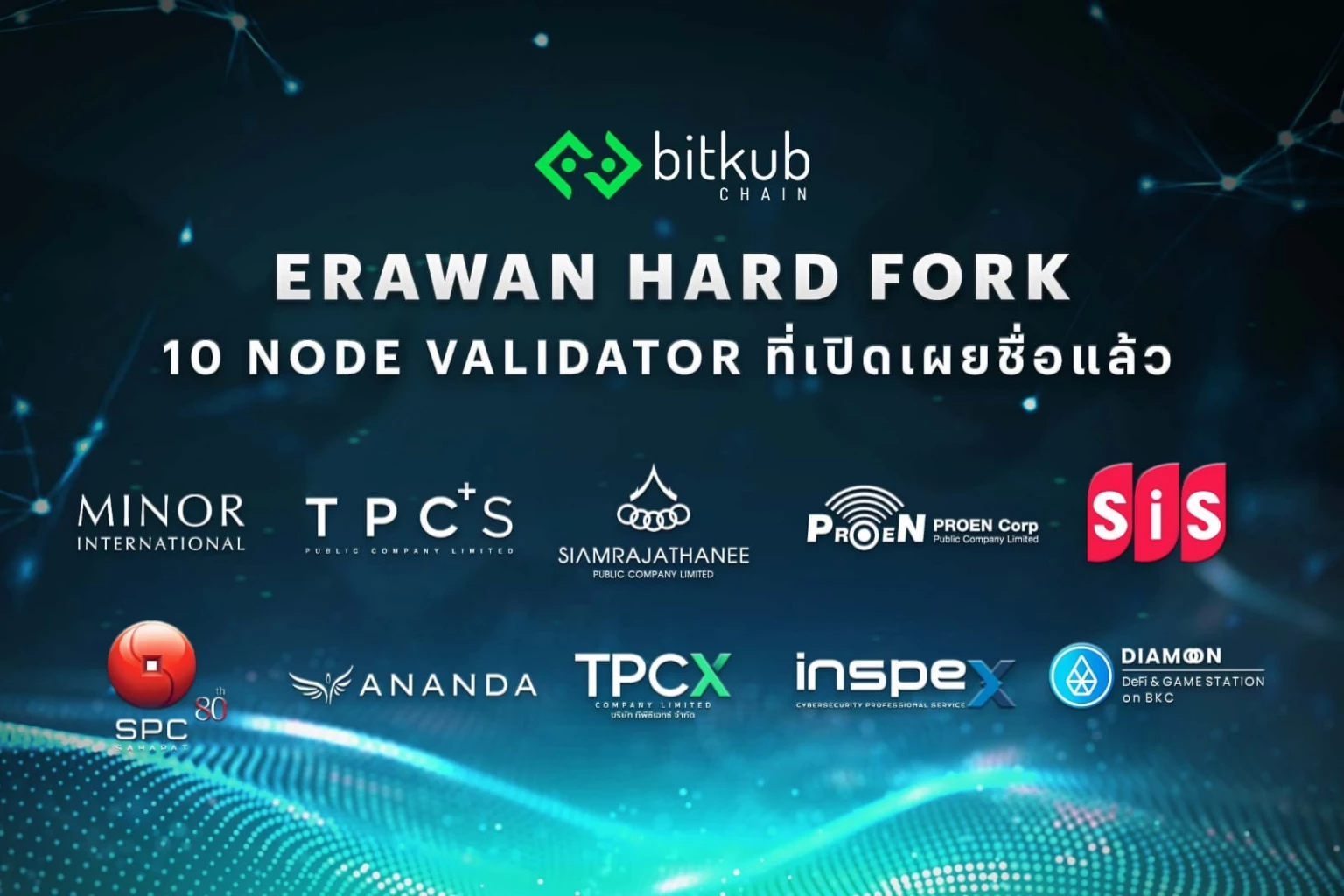
Bitkub Chain Technology Co. Ltd, a subsidiary of Bitkub Group, is taking major strides towards building digital economy infrastructure by launching public firms and leading IT organisations as Node Validators. The group also revealed the Bitkub Metaverse project in association with The Monk Studio, a Thai company behind world-class animations.

Bitkub Chain saw extensive moves last week towards its future direction.
It was revealed that the Erawan Hard Fork process has begun to transform Bitkub Chain’s consensus system from Proof of Authority to Proof of Stake Authority with 21 Node Validators, which are all secure and reliable companies. For instance:
▪️Minor International Plc (MINT) engages in investment in hospitality, restaurant, and lifestyle brands distribution. MINT operates over 520 hotels and service suites in self-owned, joint venture hotels, and management hotels.
▪️Saha Pathanapibul Co Ltd (SPC) is a distributor of various products. The company’s products are divided into four categories: household goods, food, personal hygiene items, and infant products. Sahapat has comprehensive distribution networks throughout the country.

With push towards Node Validators, Bitkub ready to explore new tech frontiers

▪️TPCS Plc is a manufacturer and distributor of B2B and B2C products in a variety of industries comprising fabrics in automobile, textiles for industrial applications, health products, household products, baby and kids’ products, and lifestyle products. TPCS is well-recognised and trusted by leading multinational lingerie and automotive companies.
▪️Siamrajathanee Plc (SO) is Thailand’s biggest outsourcing service provider. Its main businesses are SO People (personnel management), SO Wheel (varied car rental services), SO Next (electronic data and document), and SO Green (comprehensive landscape management).
▪️Proen Corp Co Ltd (Proen) is a provider of Internet Service, Internet Data Centre, ICT solutions, cloud service, and integrated telecommunication. The company also offers computer system equipment, information technology, and the supply of telecommunication contractual services, as well as extensive infrastructure.
▪️SiS Distribution (Thailand) Plc is a company selling IT goods to entrepreneurs. The company distributes technology products to over 100 of the world’s leading manufacturers, with the purpose of being the pioneer in integrating technology to help users and organisations increase efficiency. The company also offers goods and services to over 7,000 business owners.
▪️Ananda Development Plc specialises in property development and project management. The company is engaged in the development of condominiums in Bangkok and its surrounding areas, primarily around railway mass-transit hubs. Ananda has continued to develop its brand and its unique Urban Living Solutions with a distinctive, modern style that is designed to meet the expectation of Gen C.

With push towards Node Validators, Bitkub ready to explore new tech frontiers

▪️TPCX Co Ltd invests in startups, digital assets, crypto mining, decentralised finance, non-fungible tokens and metaverse. It also focuses on marketing and trading advisory with the intention of becoming a one-stop service agency to fulfil the demands of the business in the digital world.
▪️Inspex is a company focused on blockchain and smart contract security with a team of founders who have prior expertise working in security fields. Smart Contract Audit Service is one of Inspex’s well-known services, which is provided to many platforms on varied networks, including Alpaca Finance on BNB Smart Chain and Fantom Opera, GuildFi on Ethereum, Saros Finance on Solana, Thorus on Avalanche, and Yuemmai on Bitkub Chain.
▪️Diamon Finance is a company that specialises in managing and trading on blockchain and provides decentralised financial services and ecosystems.
More than half of the initial list of Node Validators are yet to be revealed. The initial list shows this is a major move due to the credibility of each Node Validator’s hold. These companies are leading players in their respective industries, each having a vast customer base and partnering organisations, and will play a vital role in pushing forward Bitkub Chain’s technology in the future, including game, NFTs, and so on.
On March 18, Bitkub Group signed a memorandum of organisation with The Monk Studio, the creator of world-class animation and game assets. 
Sakolkorn Sakavee, the chairman of Bitkub Group, posted a message on his channel, asking his followers; “If Bitkub were to have its own Metaverse, what would the Bitkub Metaverse look like? What benefits would it offer to Bitkub, to the community, and to the country? Therefore, the first problem we’d like to solve is to push Bitkub Metaverse to stimulate the change of every ecosystem of Bitkub and Bitkub Chain from Web 2.0 to Web 3.0”.
“Try to imagine that you own an NFT on Bitkub Chain. Normally you would keep it on Bitkub Next, but after Bitkub Metaverse is launched, you might be able to build your own NFT Gallery, on your virtual land or house,” Sakolkorn said.
“If you are partnering Bitkub, normally you can open your own store on Bitkub’s NFT store or bitkubnft.com, but if it were Bitkub Metaverse, you can build your store as a landmark on Bitkub NFT Square where everyone can participate in buying and selling freely.”
He said any partners who are interested can build their own building in order to house their community. There will be lands of Bitkub Metaverse that everyone can buy and own to customise them to suit their needs.
All of these run and interconnect with other projects on Bitkub Chain. Bittoon’s NFT, or accessories from Morning Moon Village game, can run on Bitkub Metaverse, he added.
“There are many other features, including meeting room, party room, event, concert, and many more,” Sakolkorn added.

Jirayut Srupsrisopa, the founder and group CEO of Bitkub Capital Group Holdings, shared his opinion on “How would Metaverse change business and finance in the next three years?” during a “Money Matters” live session with Paul Pattarapon Sinlapajan.
“After Covid-19, it is clear that the digital economy has been growing exponentially. What will be next for the whole world is that the country must invest more in the digital economy. A digital infrastructure will be vital to support Thailand to be a leader in the Web 3.0 economy — we failed in Web 1.0 and 2.0.
“Many times, opportunities were wasted due to the government being unable to understand the technology, policies were created to control technology instead of supporting their development, resulting in Thailand being the user of technology instead of being the provider.
“The government’s support can play an important role in supporting the young generation to start their startups domestically, otherwise they would leave for other countries.
“I believe the ability and skills of Thais are second to none. Take NFT art creators, for example. Some Thai artists can make millions by minting their works into NFT and selling it on global platforms. There are also many Thai developers who understand and are passionate about DApps and De-Fi as well.
“Not only has Bitkub Chain been built to be the blockchain infrastructure of the country, there is also Bitkub Ventures, one of the subsidiaries within the Bitkub Group, which will financially support Thai startups with innovative minds and aim to create more opportunities for the country.”
Joining as a Node Validator on the Bitkub Chain of 21 leading enterprises is a milestone in business and technology due to the massive, dependable and varied businesses with an immense customer base, resulting in more confidence and possibility in blockchain technology. 
Bitkub Group believes that in the future, there will be more widespread acceptance and mass adoption.
For instance, the development of Bitkub Metaverse will create another platform that provides new business prospects and also establishes a strong digital economy to benefit the country’s next generation.
An official partnership press conference will be held on March 29 at the Conrad Hotel, Wireless Road, Bangkok. Those interested in following the conference can visit Bitkub Chain Facebook, or www.bitkubchain.com

Published : March 22, 2022

How semiconductors play a crucial role in global economy

#SootinClaimon.Com : ขอบคุณแหล่งข้อมูล : หนังสือพิมพ์ The Nation.

https://www.nationthailand.com/pr-news/business/40013620


A surge in demand for smart devices, automobiles and other products requiring chips has caused manufacturing delays and shutdowns. Reports of buyers waiting as long as 20 to 52 weeks for different types of semiconductors have ultimately resulted in plummeting revenue globally to the tune of hundreds of billions of dollars.

How semiconductors play a crucial role in global economy

Geopolitical risks have also played a key part, especially when the Trump administration began regulating the sale of semiconductors to Chinese firms, and they later began stockpiling chips essential to 5G smartphones and other products.

Subsequently, US companies were cut off from chips made by China’s Semiconductor Manufacturing International Corporation after it was blacklisted by the US government.

In moves to alleviate the problem, manufacturers of automobiles and medical devices are now in talks with the Biden administration to subsidise new US semiconductor manufacturing capacity.

Though the world’s largest semiconductor manufacturer, Taiwan Semiconductor Manufacturing Company (TSMC), has increased its capital spending budget to US$28 billion, it will still need at least five years to build a new semiconductor fabrication plant.

All these factors have led to the world’s ongoing semiconductor shortage.

According to Deloitte, many kinds of chips are also expected to be in short supply throughout 2022, with some component lead times pushing into 2023. However, it will be less severe than in 2021 and will not affect all chips.

The Semiconductor Industry Association reported that in 2020, global semiconductor sales rose 6.6 per cent to $440 billion, even though global GDP contracted 3.5 per cent. This size and value imply the role that semiconductors play in global products and operations, or the economy in general, are important to leaders across industries.

Semiconductors may contribute to only a small percentage, but they power trillions of dollars of goods and processes. Semiconductor demand is also heavily driven by digital transformation and further accelerated by the pandemic.

For instance, chip demand for both devices and data centres soared in 2020 and 2021. In early 2021, the pandemic caused PC purchases to shoot up by more than 50 per cent year over year, while chip sales increased by 30 per cent for cloud computing data centres.

In the automotive industry, the average car in 2010 contained $300 worth of microchips. This will likely rise to more than $500 in 2022, totalling over $60 billion for 2022. Still, the early 2021’s supply chain issues have illustrated that a lack of critical chips could result in a $61 billion shortfall in global automotive sales this year.

Semiconductor situation in Thailand

As an export hub for semiconductor parts, the industry seems promising as a result of rising global demand. In the first nine months of 2021, Thailand’s export of electronic parts grew 8.2 per cent year over year. The electronic parts industry in Thailand is mainly manufactured for export, totalling 80 per cent of total local production, with midstream products such as integrated circuits, semiconductors, and printed circuit boards.

SCB EIC also predicted that the export of Thai electronic parts would grow approximately 7 per cent year over year, backed by growing demand, an increasingly digitalised economy and the work from the home trend.

In the longer term, Thailand’s electronic parts might play a higher role downstream, such as in automotive, healthcare and electronic appliances, which would be both an opportunity and challenge for entrepreneurs for research and development amid the fast-paced changing market.

Semiconductor shortages have also impacted Thailand’s downstream production, especially the automotive industry. The pandemic’s new wave in 2021 had further contributed to already increasing labour shortages and halted manufacturing productions for cars and parts, particularly in the second and third quarters.

Toyota had ceased production in Thailand in July 2021, while AutoAlliance, the Ford and Mazda manufacturer, had shut its production for two weeks during June to July 2021.

Published : March 21, 2022

By : THE NATION

Thailand’s BCG model perfect for green development: Huawei CEO

#SootinClaimon.Com : ขอบคุณแหล่งข้อมูล : หนังสือพิมพ์ The Nation.

https://www.nationthailand.com/business/40013509


Huawei’s chief executive officer Abel Deng said that Thailand has set the best example for green development.

Thailand's BCG model perfect for green development: Huawei CEO

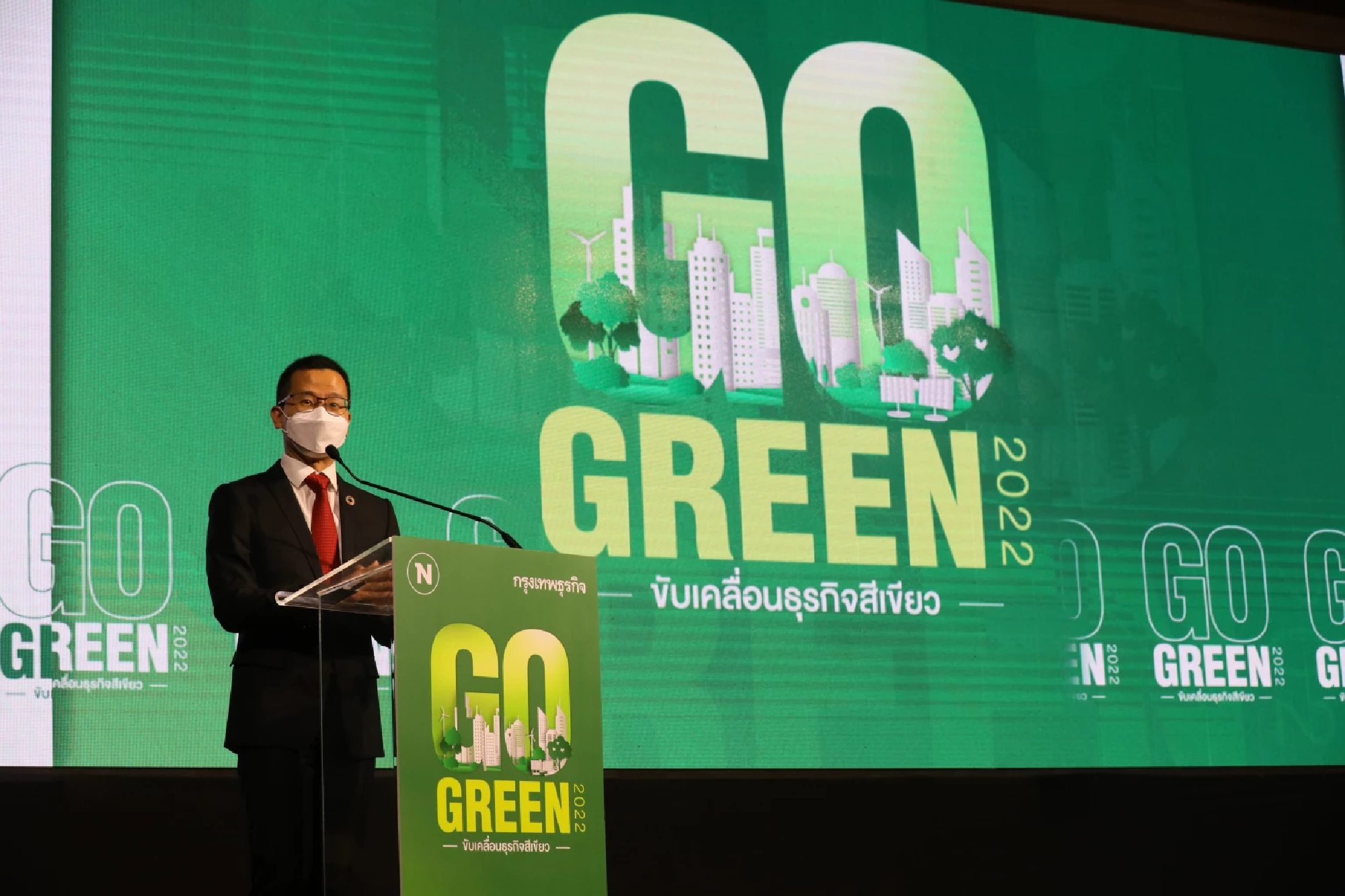
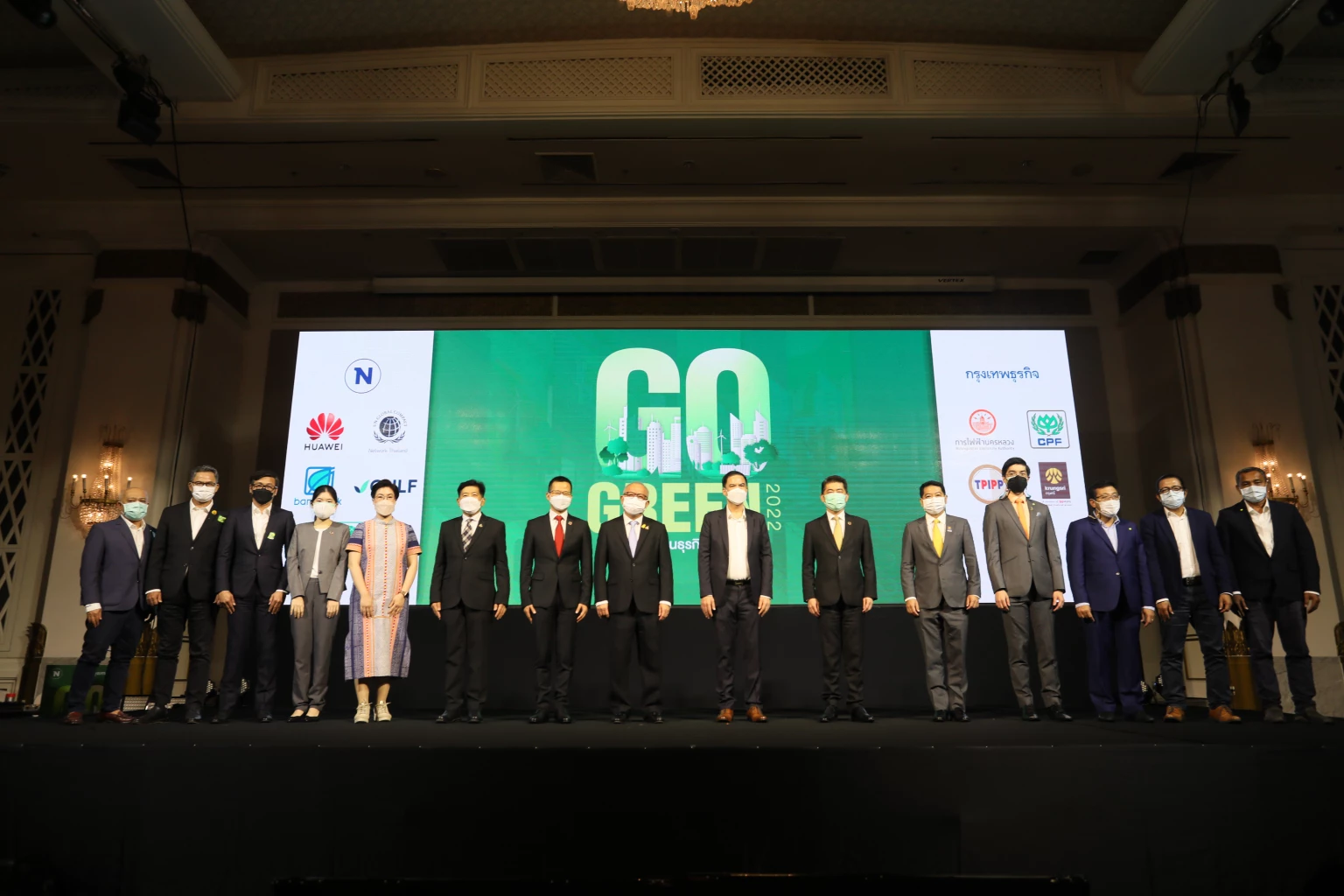
Bangkokbiznews and Nation TV held a seminar “Go Green 2022” at The Athenee Hotel, a Luxury Collection Hotel, in Bangkok on Thursday.

In his opening speech, Deputy Prime Minister and Energy Minister Supattanapong Punmeechaow said that going green is not an option but necessary for survival and an opportunity.

He said Prime Minister Prayut Chan-o-cha had declared at the 26th United Nations Climate Change Conference of the Parties held in November 2021 in Glasgow, Scotland that Thailand aims to reach carbon neutrality in 2050, and net-zero greenhouse gas emissions before 2065.

Abel Deng, the CEO of Huawei Technologies (Thailand), gave a special talk on “Green for Future”, stating that Thailand’s Bio-Circular-Green (BCG) model is perfect for green development.

According to the Organisation for Economic Cooperation and Development (OECD), green development presents a new approach to economic growth, putting well-being at the centre of development while ensuring that natural assets continue to provide the resources and environmental services to support sustainable development.

Deng explained that digitalisation stands for development while low-carbonisation stands for green, and they were the hottest topics in the world because they are the main approach for green development and the BCG business model.

In the past two years, he said more than 66 countries and regions have set up national carbon neutrality goals while more than 170 countries have announced national digital strategies including Thailand.

Deng said the Covid-19 situation has had a massive and disruptive impact on our lives, but it has also facilitated and accelerated digitalisation worldwide, which make it the main driving force of economic resilience and GDP growth.

According to the International Telecommunication Union, the digital economy growth rate is 2.5 times higher than the average GDP growth rate, which means GDP growth is driven by digital technologies.

As an example, he cited that 10 per cent of mobile broadband penetration will bring 1.5 to 2.8 per cent of GDP growth and 10 per cent of fixed broadband penetration will bring 0.8 to 2.3 per cent of GDP growth. He added that a 7 per cent increase in cloud adoption will bring 1.1 per cent GDP growth.

Digital technologies mainly comprise 5G, cloud, and AI technologies. He praised Thailand as the 5G leader of Asean and in the world.

The World Bank said in February that digital technologies could generate up to US$3.4 billion for Thailand.

Deng said digital technologies also play an important role in reducing carbon emissions. An average of 2 per cent carbon emissions are caused by ICT, but the application of ICT technology enables carbon reduction up to 10 times, or 20 per cent.

By 2030, ICT will enable industrial reduction of 12.1 billion tonnes of carbon (from 63.5 billion to 51.4 billion tonnes).

Moreover, digital technologies are also evolving to reduce carbon emission. He said that Huawei is committed to becoming 2.7 times more energy efficient with its new technologies.

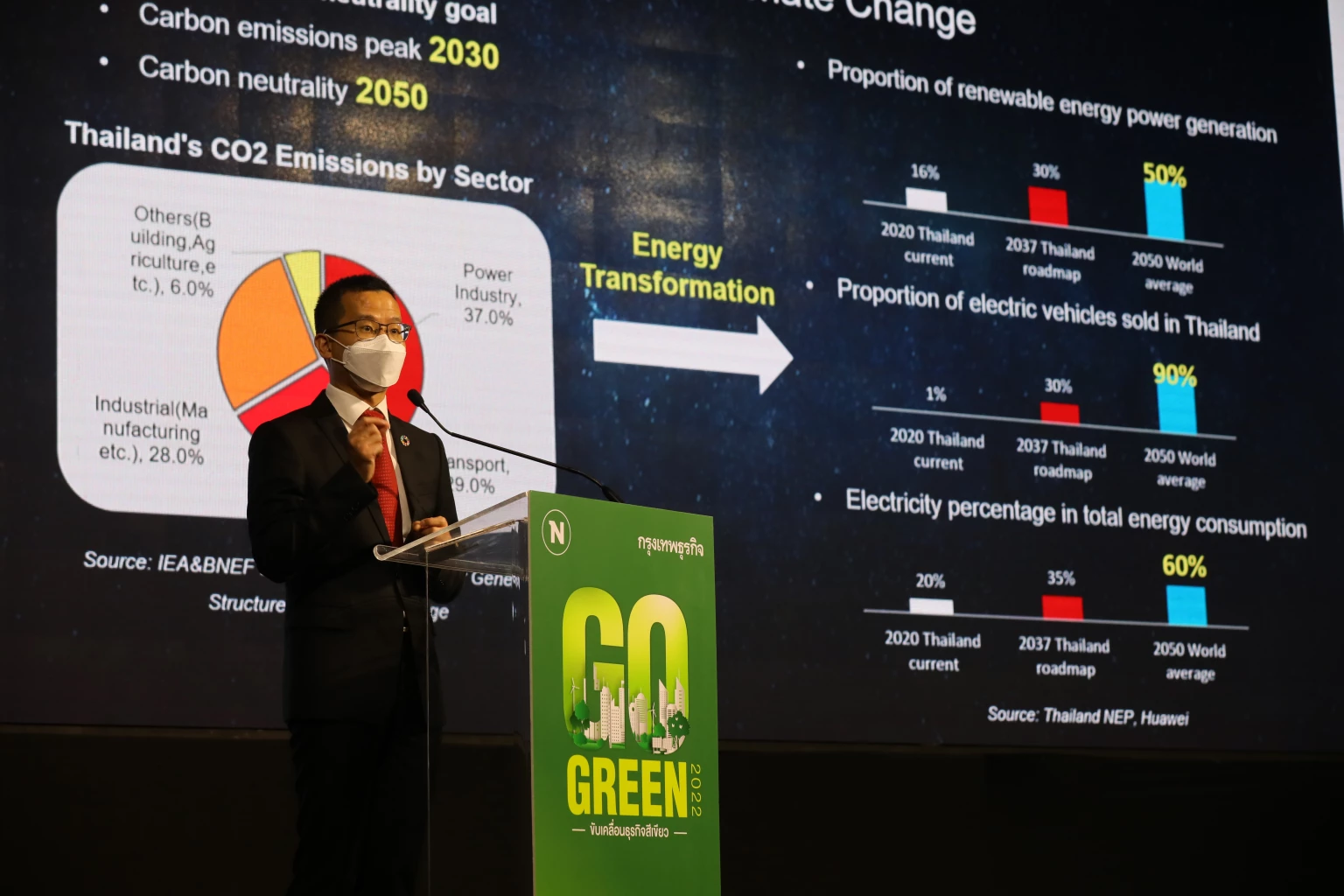
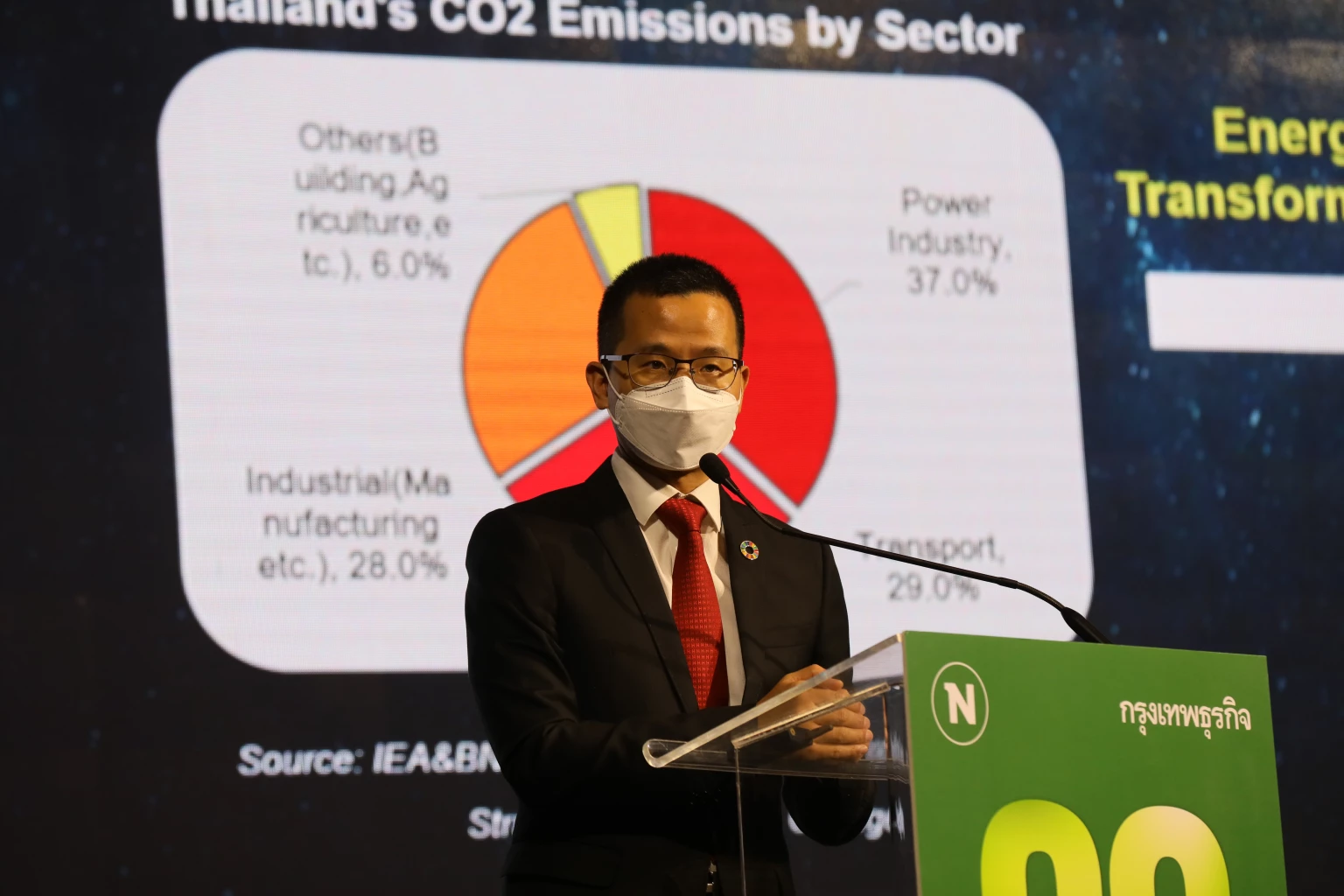
Regarding Thailand’s carbon neutrality goal, Deng said the power industry, transportation, and industrial sector were major CO2 emitters.

To reach carbon neutrality in 2050, Thailand will be reducing CO2 emissions in these sectors so the key task will be energy transformation from green sources.

He said in 2050 the proportion of global renewable energy power generation will be 50 per cent, the proportion of electric vehicles sold globally will be 90 per cent, and the global percentage of electricity in total power consumption will be 60 per cent.

Deng said Huawei has set up a digital power company as digital power technology has been popular for the past 10 years. He explained that digital power technology combined electric power technology with digital technology.

As an example, he said that Huawei has the fourth generation of photovoltaics (PV) solution, which has levelised cost of energy (LCOE) of THB1.3 per kilowatt hour.

Huawei also has a smart string energy storage system (ESS), which is a battery to provide solar energy use at night.

It is also providing all scenarios and modular green solutions to reduce the power consumption of data centres, 5G stations, and equivalent.

Lastly, Huawei is trying to introduce an economical EV for US$4,000, with 1,000km of driving. Its battery has super-fast charging capacity, in just 35 minutes.

For the digital economy and green economy, it is all driven mainly by two technologies — information technology and energy technology.

He said we are part of the fifth industrial revolution with digitalisation and low-carbonisation. They are major forces and will go hand in hand to bring us to the low carbon intelligent world.

Deng shared the report by Huawei “Exploring the Intelligent World 2030”. It will demonstrate what 2030 will look like with digitalisation and low-carbonisation. The report is available at the website https://www.huawei.com/en/giv

There was also a panel discussion on “Green Strategy”. Kiatchai Maitriwong, executive director of Thailand Greenhouse Gas Management Organisation, Thanyaporn Krichtitayawuth, executive director of Global Compact Network Thailand, and Aphinya Siranart, head of Exploration at UNDP Accelerator Labs, took part in the discussions.

The panel discussed Thailand’s policies to support CO2 emission reduction and how the business sector is involved with this issue.

The second special talk was “Driving Green Business”. Prasit Boondoungprasert, the CEO of Charoen Pokphand Foods Plc, Yossapong Laoonual, the head of Mobility and Vehicle Technology Research Centre (MOVE) of the King Mongkut’s University of Technology Thonburi and honorary chairman of Electric Vehicle Association of Thailand, Prakob Phiencharoen, the head of Corporate and Investment Banking Group of Bank of Ayudhya, and Pakkapol Leophairatana, executive vice president, Accounting and Finance at TPI Polene Power Pcl took part.

The talk discussed on how each company will operate its business while preserving the environment.

Thailand's BCG model perfect for green development: Huawei CEO

Published : March 17, 2022

By : THE NATION

Spending on media expected to maintain growth trend in 2022

#SootinClaimon.Com : ขอบคุณแหล่งข้อมูล : หนังสือพิมพ์ The Nation.

https://www.nationthailand.com/pr-news/business/40013465


Expenditure on Thailand’s media in 2022 is on a positive trajectory, growing by 2.1 per cent to 5 per cent, although the level of daily infections and the Russia-Ukraine conflict could influence the growth direction, Media Agency Association of Thailand (MAAT) president Tharaputh Charuvatana said on Tuesday.

Spending on media expected to maintain growth trend in 2022

“The total industry media expenditure in 2021 was at 1.1 per cent, led by health businesses, consumer and household products, and electric appliances,” he said.

He explained that the growth trend is continuing in 2022, particularly in businesses that serve the shift in consumer behaviour, who prefer “in-home-consumption” and “health” categories, while online channels are the most ‘go-to’ sources amongst media outlets.

The business sectors that will continue high spending on media includes non-alcoholic beverages, retail shops and stores, vitamins and supplements, oral products, and websites and applications, he added.

Spending on media expected to maintain growth trend in 2022

As for advertisement expenditure in 2022, growth will largely depend on the level of new Omicron infection cases per day. There are three scenario-projections as follows:

• Level 1, if the maximum number of infections is 11,000 per day. Ad market will likely grow up to 5 per cent.

• Level 2, if the maximum number of infections is 17,000 people per day. Ad market will likely grow up to 4 per cent.

• Level 3, if the maximum number of infections is 32,000 people per day. Ad market growth is reduced to 3 per cent.

Spending on media expected to maintain growth trend in 2022

He said another important factor is the war in Ukraine, as it will directly affect oil prices and the prices of consumer goods if the conflict prolongs, adding that MAAT viewed it as the worst scenario.

“However, the overall ad spending will remain positive, but growth will decline to 2.1 per cent,” he said

Tharaputh added that out-of-home media will possibly grow the most, as travelling will become more common.

“As more people travel, people must be very careful by wearing a mask and strictly comply with government preventive measures,” he said.

He said the online platform continued to grow, although not as much as last year, adding that a 10.2 per cent growth could be achieved.

Spending on media expected to maintain growth trend in 2022

“The total media market inflation in 2022 will be 5 per cent, with TV approximately 6.39 per cent inflation and out-of-home 3 per cent, while other media will have no inflation except media. Publications will be minus 5 per cent,” he said.

Spending on media expected to maintain growth trend in 2022

Tharaputh emphasised that Thailand has passed the worst period from the pandemic and entered the third year, adding that the Omicron variant has not been able to infect people who have received three or more doses of vaccination.

However, he pointed out that tourists still travel to the country under the strict measures of the government.

“Currently, the main factor directly affecting business sentiment is the war between Russia and Ukraine, with other countries being dragged in. Therefore, the most important thing we can do is to support and promote domestic tourism and goods while the marketers may be agile and adaptive according to the current situation and we must believe that we can get through the tough times together,” he concluded.

Published : March 16, 2022

By : THE NATION

PTT’s gains from rising oil prices to be offset by support of subsidiaries, says ratings firm

#SootinClaimon.Com : ขอบคุณแหล่งข้อมูล : หนังสือพิมพ์ The Nation.

https://www.nationthailand.com/pr-news/business/40013175


The spike in crude oil prices driven by the Russia-Ukraine war will boost earnings for PTT Plc this year, though this uplift may be offset by squeezed margins in PTT’s downstream subsidiaries, a ratings company said on Tuesday.

PTT’s gains from rising oil prices to be offset by support of subsidiaries, says ratings firm

“In our view, PTT’s earnings boost may not be proportionate to the increase in crude oil prices and natural gas prices. This is because a high oil price environment will likely erode margins in refining, petrochemical and power businesses,” S&P Global Ratings said.

“Plus, petrochemical capacity additions, particularly in olefins and polyolefins chains, should result in an unwinding of petrochemical spreads over the next one to three years. About 30 per cent of PTT’s earnings before interest, tax, depreciation, and amortisation [EBITDA] comes from downstream operations.”

S&P Global Ratings expects PTT to remain comfortably within the rating tolerance of “BBB” stand-alone credit profile.

Under revised oil price assumptions of US$85 per barrel in 2022, PTT is likely to maintain an ample cash balance and debt-to-EBITDA ratio at 2 to 2.2 times in 2022-2023, it added.

“Our projections include annual EBITDA of between 389 billion and 410 billion baht in 2022 and 2023, largely backed by earnings from its upstream subsidiary, PTT Exploration and Production [PTTEP],” the ratings firm said, that PTT recorded S&P-adjusted EBITDA of 397.8 billion baht as of December 31, 2021.

Despite robust earnings forecast on PTT, S&P Global Ratings expects the group leverage to remain largely unchanged from the 2021 level. This reflects the group’s recent increased investment profile, which had included PTTEP’s acquisition of Block 61 and PTT Global Chemical (GC)’s acquisition of Allnex Holding GmbH in 2021.

“At the same time, capital expenditure remains sizable in the group’s refining subsidiary, Thai Oil, because of a greenfield development in its Clean Fuel Project,” S&P Global Ratings said.

“Amid a period of elevated crude prices, we expect PTT to extend more support to its downstream subsidiaries, Thai Oil and GC, in addition to the support already granted to unrated IRPC. The support will be provided in the form of an extension of payment terms for crude oil supplied by PTT to its downstream subsidiaries.”

Concurrently, PTT plans to securitise related accounts receivable to facilitate early cash receipt and offset the cash flow impact of the extended payment terms.

S&P Global Ratings believes the Thai national oil company can absorb some inventory losses at its downstream subsidiaries if crude oil prices correct sharply. PTT reported 361.6 billion baht in cash and cash equivalents as of December 31 last year.

The Finance Ministry owns 51.1 per cent of PTT, and S&P Global Ratings views it as having a critical role in maintaining the country’s energy supplies and a strong link with the government

“We do not expect any negative government intervention, such as imposing additional cash call from the group beyond its dividend payout ratio, which has historically been 45-50 per cent,” it said.

Published : March 08, 2022

By : THE NATION

ONDA launches South Korea’s No. 1 online hotel-booking solution in Thailand and Southeast Asia

#SootinClaimon.Com : ขอบคุณแหล่งข้อมูล : หนังสือพิมพ์ The Nation.

https://www.nationthailand.com/pr-news/business/40012780


ONDA is the only company in South Korea providing hotels with a Korean customer base following the Covid-19 pandemic and offering international markets one of Korea’s largest lodging sales networks (ONDA GDS) as its main product.

ONDA launches South Korea's No. 1 online hotel-booking solution in Thailand and Southeast Asia

ONDA, South Korea’s No. 1 hotel booking solution provider, is launching a new hotel booking solution optimised to attract tourists to hotel and accommodation businesses in Thailand.
ONDA is planning to offer a marketing budget on Google Hotel for hotels in Thailand in order to increase its market share from direct booking.
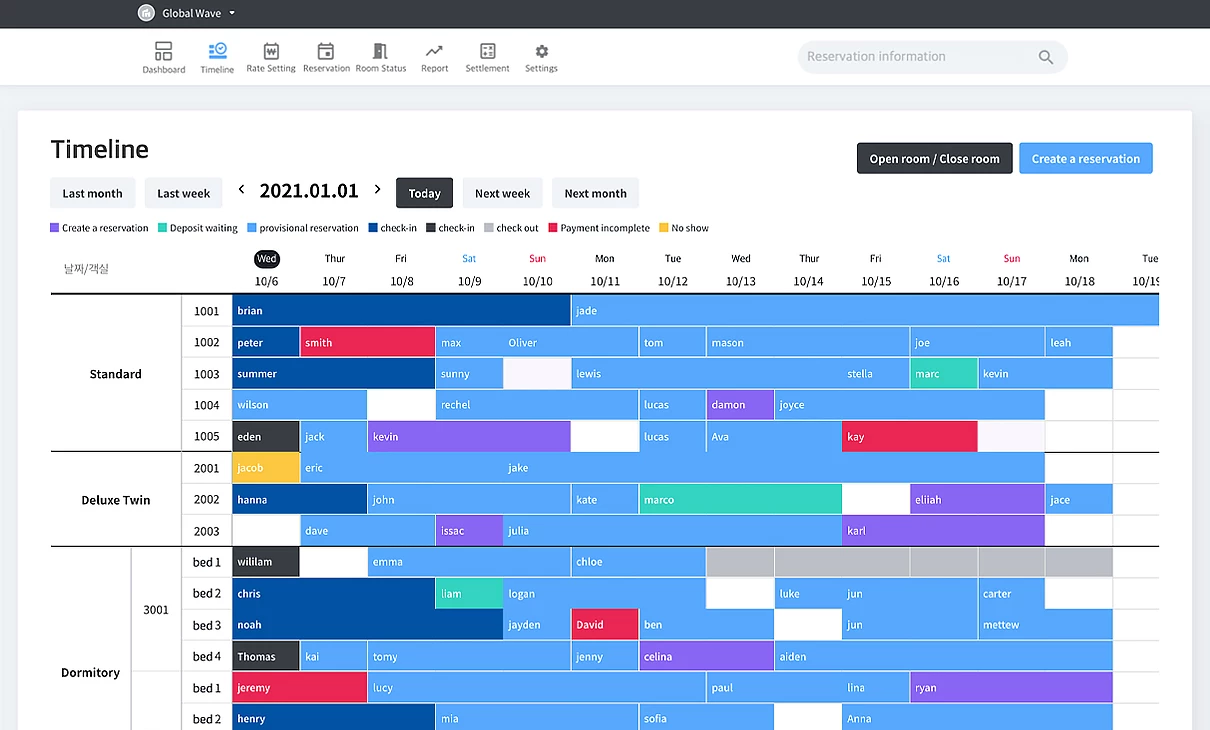
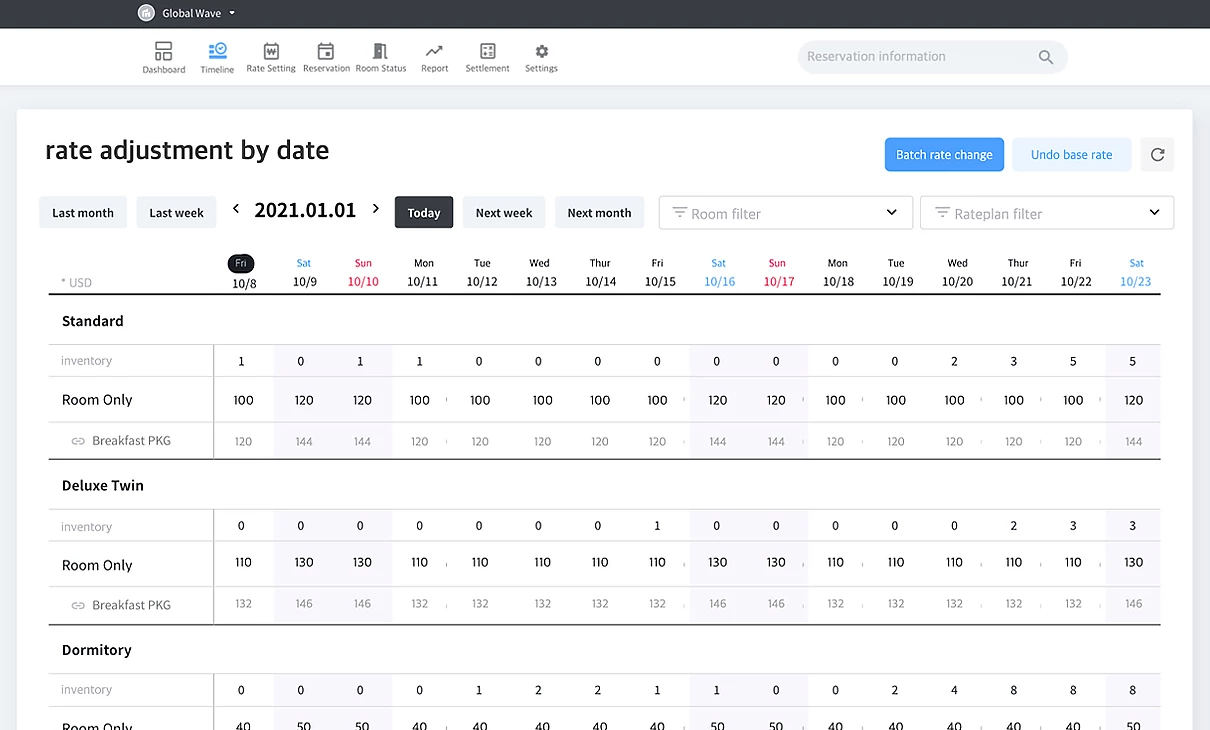
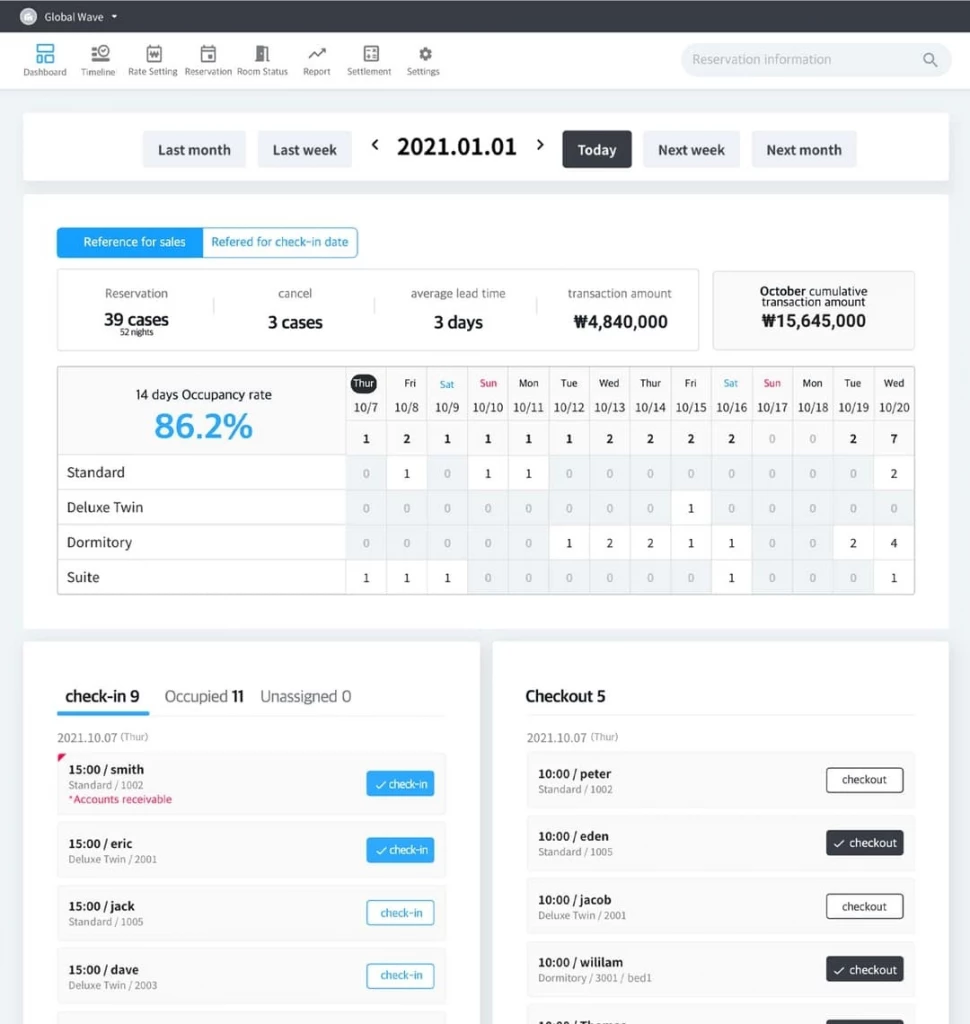
On December 22, ONDA announced that it had created a pre-register page (global.wave.onda.me) where Thai hotels could register to get access to ONDA’s booking solution and begin accepting early reservations.
ONDA is a five-year-old hospitality technology startup that specialises in Online Booking Solution (OBS), Global Distribution System (GDS), and Property Management System (PMS).

Recently, it attracted a pre-series B investment of US$8 million (260 million baht) to further enhance products and expand internationally. The company has raised $15 million to date since its inception and the company’s vision remains unchanged, which is to be the leader in the digital transformation of the hospitality industry.

ONDA launches South Korea's No. 1 online hotel-booking solution in Thailand and Southeast Asia

ONDA is the only company in South Korea providing hotels with a Korean customer base following the Covid-19 pandemic and offering international markets one of Korea’s largest lodging sales networks (ONDA GDS) as its main product.
ONDA GDS (Global Distribution System) is a service that relays hotel products to online sales channels in real-time.
ONDA GDS is currently selling 380,000 rooms from approximately 38,000 hotels and other types of accommodations through South Korea’s top 31 web portals, Online Travel Agencies (OTAs), and e-commerce platforms such as Naver, 11st, Tmon, and Yeogi Ottae (good choice), etc.

ONDA launches South Korea's No. 1 online hotel-booking solution in Thailand and Southeast Asia

Additionally, hotels can also register for free to use ONDA CMS (channel manager), which is integrated with Agoda, Booking.com, Expedia, and Airbnb.
ONDA’s accumulated volume of room transactions has reached 5 billion baht as of 2021, and the company has grown the volume at a rate of more than 60 per cent per year over the last three years.
Over the same period, the volume of transactions per room increased by 140 per cent, helping its hotel partners expand at the same time.

ONDA launches South Korea's No. 1 online hotel-booking solution in Thailand and Southeast Asia
Furthermore, ONDA was the first company in South Korea to be selected as a Google Hotel Partner. When using ONDA Booking Engine, hotels will be automatically exposed to Google Hotel, Google’s D2C (Direct to Customer) hotel search and reservation service.
The booking engine can be added to the hotel’s official website and can also be customised if necessary. ONDA plans to promote direct-to-consumer (D2C) transactions using Kakao Talk, which is South Korea’s top chat application.
D2C sales channels, such as Google Hotel and Kakao Talk, have a great advantage of directing customers to official hotel websites rather than alternative platforms. They help save money on commissions paid to intermediary sales channels while simultaneously building a client database for direct marketing.
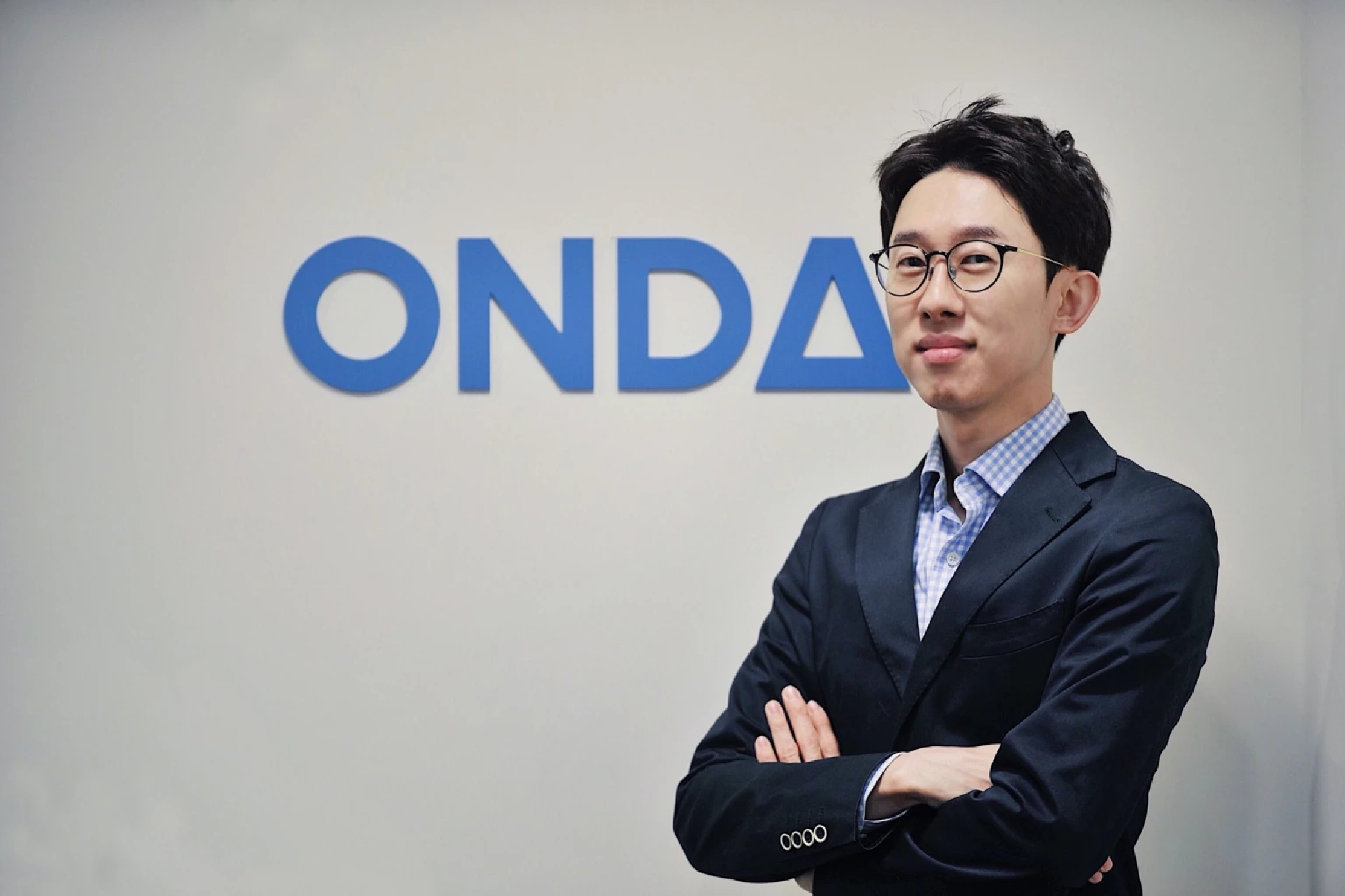
“When the Covid-19 quarantine is lifted, the most popular tourist destinations where Koreans would want to visit would be a number of Southeast Asian tourist attractions,” said Hyunseok Oh, CEO of ONDA. “Don’t miss this chance to communicate with Korean clients and be provided with a convenient reservation system through ONDA’s hotel booking solution.”
For more information regarding ONDA Thailand please contact https://bit.ly/3vlJWiB

Published : February 28, 2022

Consumers council calls for close scrutiny of True-DTAC merger deal

#SootinClaimon.Com : ขอบคุณแหล่งข้อมูล : หนังสือพิมพ์ The Nation.

https://www.nationthailand.com/business/40012513


The merger deal between True Corporation (True) and Total Access Communication (DTAC) must be transparent, while the telecom watchdog must listen to consumers, the Thailand Consumers Council (TCC) said on Friday.

Consumers council calls for close scrutiny of True-DTAC merger deal

Saree Ongsomwang, the council’s secretary-general, said they disagreed with the deal struck last year as it will reduce consumers’ alternatives and increase costs for them.

Citing a study in Britain, she said consumers will have to bear a 20 per cent rise in expenses due to the reduction in mobile operators from four to three.

She pointed out that the number of large mobile operators in Thailand will decrease to two operators if the merger deal is allowed: the new entity and Advanced Info Services (AIS).

“Hence, the council has urged the watchdog – the National Broadcasting and Telecommunication Commission (NBTC) – and related agencies to act on this deal carefully,” she said.

Thailand Development Research Institute (TDRI) president Dr Somkiat Tangkitvanich said the merger deal would result in two scenarios: boost mobile companies’ potential in various aspects, such as cost management and innovation, or cause market domination.

He explained that agencies responsible for telecommunication in many countries usually revoke a merger deal if other mobile operators oppose it.

“However, no one has opposed the True-DTAC merger deal as AIS’ share price has risen in response to the merger news,” he said.

Somkiat said the True-DTAC merger deal will benefit the three large mobile operators, adding that this move also affects startups and innovators as they have to bear the rise in production costs.

“Meanwhile, during the transition to the digital economy, Thailand will face market domination both domestic and overseas, resulting in difficulties in competition,” he said.

He also had three advices for the NBTC regarding the True-DTAC merger deal:

– Revoke the deal and reduce the infrastructure cost. If DTAC wants to quit the Thailand market, it should sell the company to other entrepreneurs, other than True and AIS.

– Allow the merger, but the NBTC must allocate spectrum licences to cover new entrepreneurs.

– Allow the merger, but it must come with promotion of new competitors.

Consumers council calls for close scrutiny of True-DTAC merger deal

Sarunee Achawanantakul, an independent academic in economics, said the NBTC should take action on this merger deal.

She pointed out that True and DTAC may have shared their secret information which could lead to unfairness in competition.

However, NBTC commissioner Dr Prawit Leesatapornwongsa said the watchdog has to consider various aspects of the merger deal, both short term and long term, based on benefits to consumers, such as impact on market, the number of competitors, infrastructure management and secret benefits between two mobile operators.

He said the NBTC also has to conduct a parallel study, such as setting up advisers or committees consisting of independent experts to consider this issue.

“In case the deal is revoked, the consideration must cover how to reduce entrepreneurs’ infrastructure cost and how to promote new competitors,” he said.

He explained that merger deals in many countries resulted in allowing two mobile operators to merge, while some countries attached conditions, or revoked the deal.

He added that the matter would be considered by the newly appointed NBTC members. The names of the new members are expected to be announced within two weeks.

Published : February 18, 2022

By : THE NATION

XSpring enters 2022 with plans to turn into a comprehensive financial solutions provider

#SootinClaimon.Com : ขอบคุณแหล่งข้อมูล : หนังสือพิมพ์ The Nation.

https://www.nationthailand.com/pr-news/business/40012111


In 2022, XSpring will move deeper into the digital asset business via its subsidiary XSpring Digital, operator of the Initial Coin Offering (ICO) Portal.

XSpring enters 2022 with plans to turn into a comprehensive financial solutions provider

After announcing its achievements in 2021, XSpring Capital Plc (XSpring) said on Monday that it is moving towards its goal of “One-Stop Financial Solutions” this year.
The company’s president Varangkana Artkarasatapon said 2021 was a successful year for the company.
It was a “business expansion phase” that involved the deployment of several new service channels, the introduction of more financial services and significant investment in new technological platforms to pave the way for XSpring to become the provider of “One-Stop Financial Solutions”.
“XSpring does not only focus on the local market, but it also plans to connect Thailand to the world with its advanced ecosystem, helping investors to look for diversified investment opportunities in one place,” Varangkana said.
This year, the Thai economy is expected to rebound on the back of domestic recovery, while retail and institutional investors are looking for new investment opportunities. These offer a good facet for XSpring, given its focus on the two core businesses – asset management and digital asset.It will boost investment in the Asset Management Company (AMC), which has high growth potential, and other related units.

Capitalising on investment
Holding several licences at the same time is one of the company’s strong points, giving it the advantage of offering various investment opportunities, especially digital assets which are becoming increasingly popular among modern investors.
XSpring has been granted a set of 17 licences, which hold the key to driving its expansion here and overseas. Supported by its expertise in investment advisory and a leveraging comprehensive ecosystem, XSpring is set to grow in tandem with the financial gains of investors.

Targeting one-third market share
In 2022, XSpring will move deeper into the digital asset business via its subsidiary XSpring Digital, operator of the Initial Coin Offering (ICO) Portal.
The company successfully helped clients in the first issue of the real-estate backed ICO in Thailand last year and plans to be involved in the launch of four to six ICOs this year.
The Securities and Exchange Commission (SEC) last year granted XSpring Digital four more licences for cryptocurrency brokerage, digital token brokerage, and dealer licences for cryptocurrency and digital token.
“These will enable the company to become Thailand’s first one-stop service provider in areas of financial and digital asset investment, as well as link Thailand to the global capital market,” Varangkana said.
The group aims for one-third of the local market share, underpinned by robust operation and strengthened by its cryptocurrency brokerage service that will tap into global liquidity.
To this end, XSpring Digital will work with Coinbase, a US-based leading digital exchange platform and digital asset custodian to create an integrated service system. The services will be available in the first quarter of this year.
At the same time, XSpring gives high value to asset management and plans to expand the business, especially in the new area of digital asset fund manager.
“XSpring expects to secure a digital asset fund manager’s licence from the SEC in the second quarter of 2022. It will then be able to offer investment opportunities via various types of investment funds to investors and to the public at large,” Varangkana said.
The licence will also allow XSpring to engage in securities brokerage, securities dealing, and securities underwriting of investment units.

Boosting investment in AMC, bidding for NPLs
AMC has high growth potential this year and XSpring plans to bid for more non-performing loans (NPLs) with a total outlay of 1 billion baht. It will jointly manage investments with Sansiri Plc, a strategic partner.
NPLs are on the rise, giving AMC a bigger role in tackling the issue of distressed assets and improving market efficiency. XSpring group’s AMC business will focus on the management of bad loans backed by collateral such as houses and condominium units.

Deploying green investment strategy
This year, XSpring foresees green investment opportunities in light of corporate and social sustainability goals. The group also expects to benefit from joint investments with large corporations in other regions and gain from knowledge sharing in such activities.
XSpring has earmarked 10 per cent of its total investment portfolio for this purpose. Recently, it has invested in Sharge Management (SHARGE), a charging service provider for electric vehicles (EV).
“SHARGE provides integrated service with its European standards equipment, ensuring user safety from the risk of high voltage. The company also offers after-sale service, managed by professionals providing optimal solutions to customers nationwide,” Varangkana explained.
“SHARGE has collaborated with real-estate companies, carmakers, shopping malls, and energy enterprises in the creation of an ecosystem covering all aspects of consumer behaviour: EV charging at home, charging stations and charging points at their travel destinations.”
XSpring has also invested in Cibus Enterprise Fund II, a venture capital fund. Recently, it established a joint venture with King of Gamers Club, a subsidiary of Kantana Group Plc, to develop mobile apps for entertainment, advertising, and related marketing activities.
This new venture awaits contract signing for the establishment of a new company with XSpring holding 61.54 per cent of total shares.
This year, XSpring is committed to all investment opportunities with high growth potential. With prudent plans for the platforms in place, designed to underpin the business foundation, combined with a team of professionals with the vision of investment opportunities in global finance, XSpring expects to see revenue exceeding 1 billion baht this year.
“Our road map for 2022 is to capitalise on our strength of “One-Stop Financial Solutions” and contribute to the ultimate goal of developing the Thai capital market as well as widening the range of investment tools to new products with high growth potential,” Varangkana said.
These will enable the XSpring Group to become an integrated traditional and digital finance service provider while allowing everyone to conveniently access finance and investment opportunities.
“It will also give people access to comprehensive investment information while building transparency and trust in the company’s ecosystem. Our executives and professional team with extensive experience and expertise will provide integrated financial services to all,” Varangkana added.

Published : February 09, 2022