The baht opened at 33.94 to the US dollar on Thursday, weakening from Wednesday’s closing rate of 33.86.
The Thai currency is likely to move between 33.85 and 34.05 during the day, Krungthai Bank market strategist Poon Panichpibool predicted.
Poon said the baht would not strengthen in the short term as there are risk factors, especially the dollar’s momentum as it strengthens due to the demand for safe-haven assets.
ADVERTISEMENT
He felt the key resistance level would be 34.00 to the dollar if there is no risk factor facing the country that would pressure the baht. The Thai currency could reach its next resistance level of 34.25 if it weakens, he maintained.
Poon said the strengthening of the dollar might slow down as the market takes more risks in step with an economic recovery, which would help the baht to strengthen again.
However, even then the Thai currency will not strengthen much until investors believe the economy is clearly improving. The key support level for the baht would be from 33.40 to 33.60 per dollar, Poon added.
The Bank of Thailand (BOT) announced on Wednesday that it had maintained its estimation of gross domestic product (GDP) in 2021 at 0.7 per cent expansion, but increased its forecast of 2022 GDP to 3.9 per cent from its August estimation of 3.7 per cent.
“The expansion of Thailand’s economy has been slowed down by the spreading Delta variant of Covid-19 since earlier this year, but the economy is estimated to gradually recover in late 2021 and continue this trend throughout 2022, thanks to more comprehensive vaccine distribution and easing of lockdown measures,” said Thitanan Mullikamas, BOT’s assistant governor of monetary policy and secretary-general of the Monetary Policy Committee.
“Despite the economic recovery trend, there are still factors that could hinder projected economic growth, such as the new mutated variant of the virus, the confidence of people and businesses after lockdown measures are lifted, and the supply disruption caused by the impact of the outbreak,” he pointed out.
ADVERTISEMENT
The central bank also lowered its estimate on private consumption in 2021 from 2.5 per cent expansion down to zero per cent, but increased its 2022 estimation from 3.4 per cent expansion to 5.7 per cent. Furthermore, it adjusted down the estimation of total foreign tourists in 2021 from 700,000 to 200,000 visitors. The estimated number of foreign tourists in 2022 was also lowered from 10 million to 6 million.
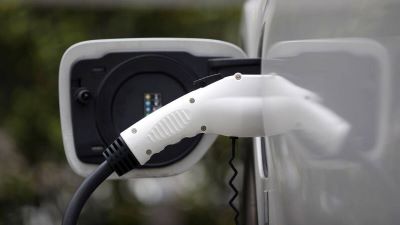
As automakers scramble to make electric vehicles with longer ranges and speedier charging times, the chip industry has a message for them: Youre doing it wrong.
Semiconductor companies are urging EV makers to ditch traditional silicon chips and embrace materials that will make cars more efficient, helping ease consumers’ “range anxiety” and someday making recharges as quick as a gas-station fill-up. But there isn’t an agreement yet on which approach to use. Silicon carbide is the front-runner, with gallium nitride emerging as a key contender.
What are these new materials? Well, silicon carbide – as the name suggests – is a combination of two elements, silicon and carbon. And it does a better job as a power converter, meaning chips using the material can move energy around with less of it getting lost along the way. The same is true of gallium nitride, which is made of gallium and nitrogen and – like silicon carbide – has a distinct edge over traditional silicon. Proponents say it could cut charging time in half.
ADVERTISEMENT
Choosing the right technology has especially high stakes as the auto industry undergoes its biggest transformation in more than a century. Manufacturers around the world are racing to ditch internal combustion engines, and even icons of the gasoline age like Ford’s Mustang and the GMC Hummer are getting versions with batteries.
Along the way, chips have become ever more critical to how a vehicle works, spanning everything from the powertrain to the airbags. That’s become painfully apparent this year as carmakers have had to limit production and leave dealer lots empty because they can’t find enough silicon. But getting automakers on board with the newer technologies is critical to raising EVs to the next level.
“It’s a big learning curve for the carmakers,” said Jean-Christophe Eloy, head of Yole Développement, a semiconductor analysis firm in France. “A good battery, a good inverter and a good electric motor doesn’t give you a good electric car.”
The good news, Eloy says, is that Tesla – a company that prodded the industry to embrace EVs in the first place – could help spur this transition as well.
Tesla is one of the first major adopters of silicon-carbide chips, supplied by STMicroelectronics NV, Eloy said. And Chief Executive Officer Elon Musk has touted the technology as a key advantage of his cars.
With silicon carbide, watts of power can be crammed into the battery much more quickly, cutting charge times. And it provides for longer ranges because there’s less leakage – wasted power – as a car taps the energy needed to drive motors. Infineon Technologies, the biggest maker of automotive chips, expects silicon carbide to exceed more than 30% of the market in electric-vehicle power chips by 2025.
“Silicon carbide can bring a significant advantage, literally a 5% to 10% improvement in range,” according to Stephan Zizala, the head of Infineon’s automotive high-power solutions group.
Some manufacturers are already sold on the concept. General Motors is using silicon-carbide devices in its Ultium EV battery platform, the basis of all of its future electric vehicles. Toyota Motor Corp., which pioneered hybrid vehicles with the Prius, uses silicon carbide in the hydrogen-powered Toyota Mirai, and its supplier Denso Corp. has built the chips into other vehicle lines.
Stellantis, formed from the merger of Fiat Chrysler Automobiles and French rival PSA Group earlier this year, said recently that it may use silicon carbide in power inverters that will be key to mass manufacturing a new generation of electric vehicles globally.
But some companies, such as GM, are hedging their bets. They’re also looking at gallium nitride, or GaN, for future use.
Gallium nitride is a newer entrant – and it’s not yet clear what role it will play. Infineon expects it to complement other technologies. Others are positioning it as more of a rival to silicon carbide. BMW earlier this month signed a deal to secure $250 million of such chips from GaN Systems Inc.
Gallium-nitride chips can cut the time it typically takes to charge a car to 4.7 hours from 11.3 hours, saving 70% on energy in the process. It also could boost the vehicle’s range by 5% and use fewer batteries. That’s according to startup Navitas Semiconductor Inc., which is telling investors that gallium-nitride chips will account for 16% of the power semiconductor market by 2026, up from less than 1% last year.
Carmakers have taken years to warm up to the new technologies. When silicon carbide was first offered to auto manufacturers more than a decade ago, they shunned it as “horribly expensive,” said Michael Duhaime, vice president of JJE North America, a Chinese-owned maker of electric drivetrains in Troy, Michigan.
The typical reaction at the time: “Why would I do that? It’s crazy,” he said. Now it’s making its way into premium vehicles, where cost is outweighed by the performance benefits.
There are still some painful trade-offs, though. Traditional silicon-based chips are made in the billions each year, and the technology’s 50 years of dominance has created a massive global infrastructure to produce it. That’s brought costs down. Silicon-carbide wafers, the basic material on which the new chips are built, are produced by only a few companies, such as Cree Inc., in a process that’s still difficult and expensive.
One obstacle is the material itself, which has to be grown from seed crystals in a chemical process. There are relatively few crystals available that will produce the purity required. Any impurities can result in wafers and chips that are less efficient. In a sign of how scarce the materials are, Cree rival On Semiconductor Corp. agreed to pay $415 million last month for GT Advanced Technologies, acquiring its supplier of silicon carbide. That deal lets it secure access to the raw material.
Silicon-carbide components could add an extra $200 to the cost of a vehicle, according to an estimate by Cree. But boosters of the new technology say the cost will quickly be recouped because cars won’t need as many batteries.
And that speaks to the need for carmakers to put more thought into the chips they use, Eloy said.
“If you want to save costs, if you want to increase range, if you want to do all of this optimization, you need to have your hands in the semiconductors,” he said.
Gold climbed from the lowest in almost seven weeks as Treasury yields eased following dovish commentary from Federal Reserve Chair Jerome Powell.
The benchmark 10-year U.S. yield declined after touching the highest since June on Tuesday, boosting the appeal of non-interest bearing bullion. The dollar rose again to the highest since November.
During a Senate Banking Committee hearing, Powell maintained that the current high level of inflation in the U.S. should be expected to dissipate when supply-chain issues are resolved, adding that the economy was still far from full employment. The comments reassured investors that rate hikes were still a long way off.
ADVERTISEMENT
Still, Fed Bank of St. Louis President James Bullard said he sees “upside risks” to inflation and the central bank should be prepared in case price pressures persist for longer than expected. Earlier this week, Fed Governor Lael Brainard and New York Fed President John Williams both said it may soon be time to scale back asset purchases.
Gold is heading for its biggest monthly loss since June as more central banks start signaling a pullback in stimulus measures used to cushion the economic impact of the pandemic. Last week, Powell said the Fed could begin scaling back asset purchases in November and complete the process by mid-2022. The Bank of England has left the prospect of a 2021 rate hike open, while Norway’s central bank began tightening policy last week.
“Set against rising real rates and a strengthening U.S. dollar, we don’t see inflation as strong enough to outweigh policy developments,” analysts at Morgan Stanley wrote in a note. “We see lower prices ahead,” averaging $1,621 an ounce next year, they added.
Spot gold rose 0.6% to $1,743.60 an ounce at 1 p.m. in London, after dropping as low as $1,728.18 on Tuesday, the lowest since Aug. 11. Silver slipped, while platinum steadied and palladium advanced. The Bloomberg Dollar Spot Index strengthened 0.2% after climbing 0.5% Tuesday.
The rally in technology shares fizzled out, weighing on the broader stock market.
The S&P 500 pared most of its earlier gains as a drop in tech offset an advance in defensive industries like utilities and consumer staples. The dollar rose to the highest level since November 2020, while Treasuries fluctuated.
Federal Reserve Chair Jerome Powell and his counterparts at the European Central Bank, Bank of Japan and Bank of England voiced cautious optimism Wednesday that supply-chain disruptions lifting inflation rates around the world would ultimately prove temporary. Traders remained alert to the potential for market disruption should politicians in Washington fail to raise the debt-ceiling in time to avoid a default on U.S. obligations.
ADVERTISEMENT
“Jitters surrounding elevated levels of inflation and slowing growth are likely to remain for some time,” said Fiona Cincotta, senior financial-markets analyst at City Index. “U.S. debt-ceiling discussions could be in focus amid a quiet economic calendar.”
The U.S. Treasury is likely to exhaust its ability to borrow as soon as late October, according to the Congressional Budget Office, in the latest warning to lawmakers following their failed efforts to address the debt ceiling this week.
QuickTake: What’s the Debt Ceiling and Will the U.S. Raise It?
A majority of investors harbor fears of persistently high inflation, with a 20% pullback in stocks seen as more likely than a 20% rally, according to a Citigroup Inc. survey of clients. Though most expected modest gains next year in the S&P 500, price pressures and a policy reversal by the Fed are big risks, according to the survey of more than 90 pension, mutual and hedge funds this month.
A gauge of U.S. pending home sales rebounded in August to a seven-month high as prospective buyers welcomed more attractive pricing and additional inventory. The figures suggest housing activity is firming after retreating from the record-high levels seen last year.
Some corporate highlights:
– Walgreens Boots Alliance Inc. is weighing an acquisition of Evolent Health Inc., the health-care group that has been under activist investor pressure to consider a sale, according to people familiar with the matter.
– Merck & Co. has agreed to buy drugmaker Acceleron Pharma Inc. for $180 per share, according to people familiar with the matter.
– Boeing Co. rallied after the aerospace giant was upgraded to outperform at Bernstein on prospects of a travel rebound.
– Morgan Stanley slumped after Oppenheimer downgraded the shares, citing a lack of upside to its valuation.
Here are some events to watch this week:
– House Financial Services Committee hearing on the Fed, Treasury’s pandemic response, Thursday
– China Caixin manufacturing PMI, non-manufacturing PMI, Thursday
– Univ. of Michigan sentiment, ISM manufacturing, U.S. construction spending, spending/personal income, Friday
Some of the main moves in markets:
– – –
– The S&P 500 rose 0.2% as of 4 p.m. New York time
– The Nasdaq 100 fell 0.1%
– The Dow Jones industrial average rose 0.3%
– The MSCI World index fell 0.3%
– – –
– The Bloomberg Dollar Spot index rose 0.7%
– The euro fell 0.8% to $1.1592
– The British pound fell 0.9% to $1.3416
– The Japanese yen fell 0.4% to 111.98 per dollar
– – –
– The yield on 10-year Treasuries declined one basis point to 1.53%
– Germany’s 10-year yield declined one basis point to -0.21%
– Britain’s 10-year yield was little changed at 0.99%
– – –
– West Texas Intermediate crude fell 0.9% to $74.60 a barrel
Thailand has agreed to open a new border crossing with Cambodia to boost trade, Commerce Minister Jurin Laksanawisit said on Wednesday.
The crossing at the newly constructed Nong Ian-Stung Bot-Ban Friendship Bridge in Sa Kaeo province will be opened early as Thailand has yet to complete construction of its checkpoint. In the meantime, goods will be transported through the Ning Ian checkpoint by container only, said Jurin, reporting on his talks with Cambodia’s Tourism Ministry.
Cambodia also urged Thailand to cut red tape at border checkpoints so that trade could move faster.
Thailand agrees to open new border point with Cambodia
Meanwhile, Jurin asked the Cambodian government to help promote about 220 Thai products via Cambodia’s klangthai.com e-commerce platform.
Thailand also pledged to support Cambodia when it succeeds Brunei as chair of Asean in 2022, he added.
Cambodia is Thailand’s 6th largest trading partner in Asean and 26th in the world. Thai exports to Cambodia rose 10.8 per cent in the first eight months of 2021, to 141 billion baht. The rise was driven by exports of refined oil (+67.5%), sugar (+63.6%), automobiles (+36.2%) and chemicals (+34.1%). Cambodia’s main exports to Thailand include vegetables, fruits, cassava, cashew nuts, bananas, chilli, ores and precious stones.
The Nation Thailand has a chat with Mr. Chris Wailes, Managing director of Volvo Car (Thailand) Limited, on the automaker’s strategy for 2022.
The Nation Thailand has a chat with Mr.Chris Wailes, Managing director of Volvo Car (Thailand) Limited, on the automaker’s strategy for 2022.
Q: Volvo cars have, for decades, been seen as the safest cars in the world. Is this still part of Volvo’s core strategy today?
A: Yes, I mean safety has been part of Volvo’s heart and DNA since 1927, when the company was first founded. It has remained a cornerstone of what we do. But as times change, technology changes… people tend to look at safety in a slightly different way. And what we’re looking at in particular is how we continue to make electric cars.
Pure electric cars are the safest in the world as they utilize new technologies that are available, from sensors to laser radar, in different forms. We still believe both today and as well as tomorrow that we will continue to be one of the safest cars in the world. So, it will always be. We will use technology and showcase our technology to make our customers’ lives much easier when they’re driving the car because it will be very simple to use and will only intervene when is necessary.
Mr.Chris Wailes, Managing director of Volvo Car (Thailand) Limited
ADVERTISEMENT
Q: With the changing car market in Thailand, and as you say the electric car is now the world trend, what is Volvo’s stance on this technology?
A: We were one of the first traditional car manufacturers to come out in 2019 to state that all our new cars will be electric moving forwards. And we have a very clear goal, especially here in Thailand. From my perspective, it’s much easier generally to convert to electric cars in Europe because electricity infrastructure is a little bit more widely available.
But in Thailand, we took the decision in 2018 that we would move away from traditional internal combustion engines to electrification starting with plug-in hybrid cars last year. And we found that investing in charging stations will just not be able to cover everyone.
We included for every customer a wall box fitted to their home or their office as part of the car. So in that sense, we’ve already setup many charging stations in people’s homes, so it makes the transition to move from plug-in hybrid cars to pure electric cars much easier. And what we do know is that customers, who drive an electric car, whether it’s a plug-in hybrid or full electric car, tend not to go back to a traditional internal combustion engine car.
So, our strategy is, by 2025 over half of the cars that we sell in Thailand will be pure electric cars only. And we will continue to launch, as we have done this year, a new pure electric car model into the Thailand market every year for the next four or five years. So, we are very much sure that electric cars are the future and of course we will take all the technology that we have to make sure it incorporates into a car that is very much appreciated by the Thai consumer.
Volvo XC40 Recharge Pure Electric
Q: What is Volvo’s goal for 2022 and how will it reach this goal?
A: We’ve already launched our first pure electric car in Thailand and we received the response from consumers that they are very satisfied and delighted with their car. So, we will continue with the Volvo XC40 Recharge Pure Electric and then next year we will launch another model another pure electric model in Thailand, which will come in the first half of next year.
Q: Could you tell us about the car that you just launched this year? How is it different from other electric cars in the market?
A: It very much depends on what the consumer is looking for, which will decide what they want to buy. Our first pure electric car is the Volvo XC40 Recharge Pure Electric. From the outside, it looks very similar to the traditional XC40 with an internal combustion engine or a plug-in hybrid engine car.
Apart from the front grille obviously it’s converted because there’s no engine. So you’ll see that there’s a slight difference at the front of the car and of course when you lift the hood of the car at the front there is now additional storage area for bags or clothes or whatever you want to put in. For the range of the car, you can travel up to just over 400 kilometers on a single charge. The car will be charged with a DC charger up to 80 per cent of the battery capacity in under 40 minutes. It’s a very useful for city travel. You’ve got more than enough range to meet normal daily use.
If you want to drive further distance we’ve tried to cover that as well, so we include in the price of the car access to our friends at each site anywhere and we include 25,000 baht of electricity in the application so if the customers decide to move away from their home and travel for the distance, for example, from Bangkok to Chiang Mai they can use the “EA Anywhere” application which offers access to the biggest number of charging stations in Thailand.
In addition, we will include what we call a Volvo care package. What we’re trying to do is make the ownership of a car a lot easier and much more seamless for customers. So when a customer looks at an electric car from Volvo, included in the price of the car will be five years warranty and five years of maintenance.
It will also have four years digital services because of course the car is a fully connected car and includes things like Google Maps, Google Play store, Google voice control as well so it’s exactly the same as an Android mobile phone. In addition, we will include your insurance for three years, and of course it comes with an idea factory warranty on that and everything else.
It’s a full package. Basically, for the customer, when they drive away in the car all they have to do is charge and that’s what we believe is the future of mobility.
Volvo XC40 Recharge Pure Electric
Q: How has Volvo coped with the Covid-19 pandemic and ongoing situation?
A: Volvo has been no different to anybody else, I mean everybody has been affected by Covid-19. We saw a reduction last year, but it was a much smaller reductions than the general market. This year, obviously since April it’s been a lot harder to manage than last year. Mainly because we closed the office for nearly six months. We’ve closely followed the advice from the CCSA (Centre for Covid-19 Situation Administration) and we’ve had all the staff work from home.
But our focus has very much been on everybody’s health and welfare. We’re very aware of the economic impact it has on people, so actually what we did was increase people’s salary shifts and their benefits this year. So, actually we tried to offset some of the negative sides of Covid-19 with something positive and have given them security and safety, so they have nothing to worry about. And because we’ve been working from home for so long, we are very much concerned about people’s mental welfare.
When you’re working from home for long periods of time, you miss being in an office environment, talking to your friends and colleagues on a daily basis and interacting with people, when that stops and you’re working from home and are isolated for long periods of time, it can affect people’s mental wellbeing. So, we’ve organized online booster sessions where we send care packages through the mail to let everybody know that we care.
Volvo XC40 Recharge Pure Electric
Q: The young generation’s perspective right now in Thailand is different from their parents, who were Baby Boomers. What do you think about this market and what is the most challenging factor?
A: Thailand is no different to the rest of the world. The whole world is changing now and things are moving very fast. We see digitalization is certainly expanding here in Thailand. More people buying things online and even ordering food.
So, what we need to do for the car manufacturer is to look at what people need and what people desire and make that technology included in the car that is easy for people to use as possible. Because there is no point, in my opinion, in importing technology in a car if people don’t understand how to use the technology or benefit from technology. So we very much focus on design and of course safety technology, but more importantly we focus on sustainability that we made a core part of our business and we will not back away from it. And we will reduce our carbon footprint here in Thailand as well as across the rest of the world by 40 per cent by 2025.
That includes everything from manufacturing through to logistics, for example here in the headquarters; we replace single-use plastic with recyclable materials. For me it is a very important part moving forward because I have children myself. Our children are going to blame us if we don’t try and fix things now for their benefit. Today people have to go and visit a retailer to have the car serviced or maintained.
Volvo XC40 Recharge Pure Electric
Tomorrow, there will be no need for the customer to go because the retailers can service the car at their home or their office. Because with electric cars, there’s very little to actually maintain on the car so instead of people having to travel to come to us actually we will go to the consumer – very different from how it’s been over the last 40 years. We welcome suggestions from people on what they believe we should be looking at moving forward because like everybody else we don’t know everything, but we try our best.
The Stock Exchange of Thailand (SET) Index closed at 1,616.98 on Wednesday, up 0.48 points or 0.03 per cent. Transactions totalled 93.11 billion baht with an index high of 1,622.62 and a low of 1,604.46.
The index rebounded slightly after dropping 0.22 per cent on Tuesday and 0.68 per cent on Monday.
In the morning session, Krungsri Securities forecast Wednesday’s index would fall to between 1,600 and 1,610 points due to uncertainty over rising US inflation and the Federal Reserve signalling it would taper its quantitative easing and raise the interest rate sooner than expected.
ADVERTISEMENT
The SET Index would also be pressured by conflict in US Congress over the draft budget and debt ceiling hike, as well as changes to trading on the TFEX futures exchange, Krungsri Securities said.
The 10 stocks with the highest trade value today were KBANK, SCB, TRUE, PTT, BBL, SCC, TIDLOR, DELTA, KTC and PTTEP.
Other Asian indices were down with one exception:
Japan’s Nikkei Index closed at 29,544.29, down 639.67 points or 2.12 per cent.
China’s Shanghai SE Composite Index closed at 3,536.29, down 65.92 points or 1.83 per cent, while the Shenzhen SE Component Index closed at 14,079.02, down 234.80 points or 1.64 per cent.
Hong Kong’s Hang Seng Index closed at 24,663.50, up 163.11 points or 0.67 per cent.
South Korea’s KOSPI closed at 3,060.27, down 37.65 points or 1.22 per cent.
Taiwan’s TAIEX closed at 16,855.46, down 325.98 points or 1.90 per cent.
The price of gold rose by THB50 in morning trade on Wednesday.
AGold Traders Association report at 9.26am said the buying price of a gold bar was THB27,800 per baht weight and selling price THB27,900, while gold ornaments cost THB27,303.16 and THB28,400, respectively.
At close on Tuesday, the buying price of a gold bar was THB27,750 per baht weight and selling price THB27,850, while gold ornaments cost THB27,257.68 and THB28,350, respectively.
ADVERTISEMENT
The spot gold price on Wednesday morning was moving around US$1,738 (THB58,883) per ounce after Comex gold at close on Tuesday dropped by $14.50 to $1,737.50 per ounce, hitting a seven-week low as it was pressured by the appreciation of the dollar and a rise in US government bond yields.
The Hong Kong gold price meanwhile dropped by HK$50 to $16,110 (THB70,105) per tael, the Chinese Gold and Silver Exchange Society reported.
The Stock Exchange of Thailand (SET) Index fell by 5.21 points or 0.32 per cent to 1,611.29 on Wednesday morning, witnessing a high of 1,612.88 and a low of 1,604.46 in opening trade.
Krungsri Securities predicted the day’s index would fall to between 1,600 and 1,610 points due to uncertainty over higher US inflation and the Federal Reserve signalling it would taper its quantitative easing and raise the interest rate sooner than expected.
Meanwhile, the conflict in approval of the US draft budget act and a debt ceiling hike, as well as TFEX’s move to change the series in the futures exchange market would pressure the index, Krungsri Securities said.
It recommended purchasing of the following companies’ shares as an investment strategy:
ADVERTISEMENT
▪︎ Hana, KCE, TU, CPF, GFPT, Asian and NER, which benefit from a weakening baht.
▪︎ Banpu, Lanna, DCC, Cotto and Tasco, which have gained specific positive sentiment.
The SET Index closed at 1,616.50 on Tuesday, down 3.52 points or 0.22 per cent. Transactions totalled THB98.94 billion with an index high of 1,626.55 and a low of 1,614.31.






 Thailand agrees to open new border point with Cambodia
 Mr.Chris Wailes, Managing director of Volvo Car (Thailand) Limited
 Volvo XC40 Recharge Pure Electric
 Volvo XC40 Recharge Pure Electric
 Volvo XC40 Recharge Pure Electric
 Volvo XC40 Recharge Pure Electric


