Deputy Transport Minister Thaworn Senneam has ordered the Department of Airports to accelerate the 2021 investment of Bt5 billion, most of which will be spent on increasing runway length.
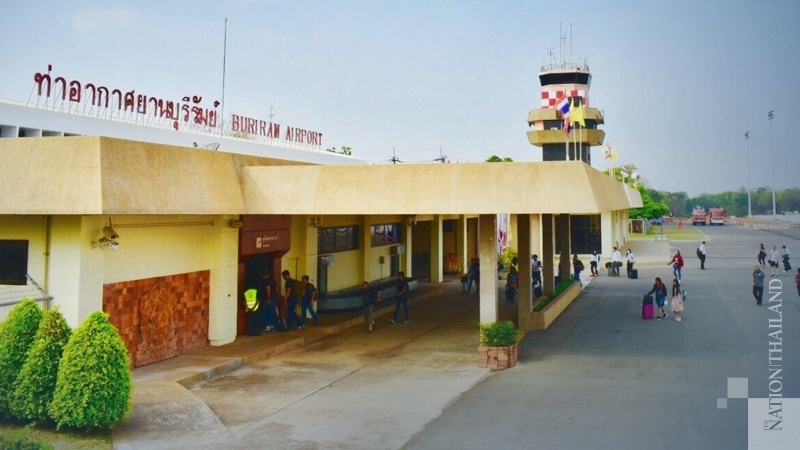
Trang airport’s runway will be extended from 2,200 metres to 2,990 metres at a cost of Bt1.8 billion while Buriram airport runway will be extended from 2,100 to 2,900 metres for Bt950 million.
The budget will also be spent to expand an apron at Buriram airport, and reinforce a runway and expand an apron at Surat Thani airport (Bt800 million).
Meanwhile, a runway will be improved and an apron extended at Khon Khaen airport to increase capacity from five to 12 aircraft. The department is drawing up a reference price and bidding detail.
The department has requested a budget of Bt12 billion for 2022.
Thawon also ordered the department to open Betong airport in Yala in the next couple of months.
The Trade Competition Commission said it will set up a unit to handle complaints of unfair practice in the food delivery service business.
Complaints were already being sent to the commission and would be considered according to recently issued guidelines, said chairman Sakon Varunyuwatana.
The new unit will have seven days to consider whether the complaints have merit. If so, they will be submitted to the commission’s fact-finding committee.
If a case is simple, it will proceed immediately as per the legal process. If a case is complicated, the commission will set up a subpanel to investigate the evidence for 90 days, extendable by another 15 days.
By The Washington Post · William Booth, Michael Birnbaum · WORLD, EUROPE
LONDON – According to sources, Brexit talks are “on a knife’s edge.” It’s “the make or break moment.” It’s “down to the wire.” It’s “crunchtime.”
Sound familiar? It is. Even Brexit obsessives have lost track of how many “crunch times” have come and gone over these many months and years of negotiating Britain’s exit from the European Union.
All that to say that Brexit talks have still not concluded. Negotiators met in the London over the weekend and worked until late at night trying to strike a deal. Now the two sides are back in Brussels, at it again.
British and European teams are struggling to craft a free-trade agreement that will allow the two sides to continue the orderly movement of goods and services across the English Channel.
If they fail to strike a deal, then Britain and Europe will enforce new customs duties, tariffs, border checks, and quotas on goods, increasing prices and fully ending the era of the free, frictionless trade.
They have 24 days to make a deal.
Specifically, the two sides are arguing over European access to fish in British waters, an emotional issue that taps into issues of sovereignty, even though the fisheries sector accounts for a tiny fraction of Britain’s gross domestic product.
There have been suggestions that European access to fish in British seas could be slowly reduced. Should the transition period be three years (a British proposal) or 10 years (a French proposal)? Stay tuned.
The Europeans, too, are pressing to maintain a “level playing field,” to stop Britain from undercutting worker protections or granting large state subsidies to British businesses, potentially giving the U.K. firms unfair advantages.
The political press is reporting a “final push” this week, but in reality the sides have been pushing for a very long time.
Britain officially left the European Union in January, though it didn’t quite leave. What it did was begin an 11-month transition period, which ends midnight on Dec. 31. The transition period that was granted to give the sides time to craft a trade deal, to avoid last-minute chaos and uncertainty. Numerous deadlines have come and gone.
How are things going? Not good.
“The news is very downbeat,” Ireland’s foreign secretary Simon Coveney told Ireland’s state broadcaster RTE, who described the mood as “very gloomy.”
The Irish minister said, “I’d like to be giving more positive news but at the moment these negotiations seem stalled, and the barriers to progress are still very much in place.”
The British Foreign Office was a little less gloomy. Minister James Cleverly told the BBC the U.K. would keep negotiating “for as long as we have available time or until we get an agreement.” He said negotiations “often go to the last minute of the last day.”
“We are a global player, we are one of the biggest economies in the world, we are a real prize for many countries,” Cleverly said. “I think if E.U. recognise this they will see that actually making a few small but significant concessions can get this deal done and that will be in their interest and in our interest.”
Diplomats in Brussels, confronted with a spiraling series of crises, say that Brexit was long ago supplanted as the most burning issue they are facing.
Nor is it even the trickiest negotiation they are facing in Brussels this week, amid acrimonious talks with two of the European Union’s own members, Hungary and Poland. The two countries, whose commitment to democracy is increasingly shaky, have vetoed the entire $2 trillion E.U. budget because the other E.U. members want to make receiving funds conditional on adhering to the rule of law.
Now E.U. ambassadors are receiving briefings almost every day from the bloc’s top negotiator, Michel Barnier, a lanky former French politician who has sounded increasingly glum about the prospects for the talks.
They are fast running out of time, since any deal would need to be approved by E.U. leaders and a handful of parliaments before Dec. 31.
“It was always going to go beyond any reasonable deadline,” said one finger-drumming senior E.U. diplomat, who spoke on the condition of anonymity to detail frustrations with the British approach.
E.U. officials familiar with the negotiations said that there was an agreement among themselves to halt talks Wednesday, regardless of their outcome, although such deadlines could easily be bargaining tactics.
Another senior diplomat said Monday that differences remain on fisheries, rules about state aid to industries, and which body will enforce the deal – a summary that could easily have described most of the entire last year of negotiations.
“If that sounds familiar to you, it is because there has been no decisive progress made so far,” the diplomat said of the last few days of discussions, briefing reporters on the talks under ground rules of anonymity.
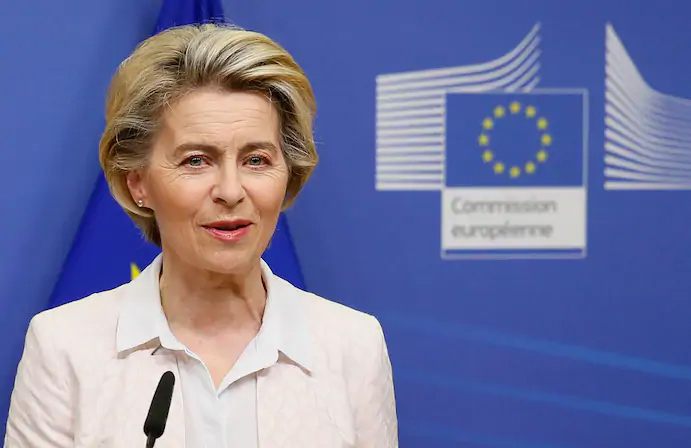
Prime Minister Boris Johnson and European Commission President Ursula von der Leyen plan to speak Monday evening. A Saturday night conversation lasted an hour but proved fruitless in the end: they told their negotiators to keep negotiating.
A downcast von der Leyen came out after the conversation to tell reporters that many differences remained.
“Whoever has a crystal ball and is able to predict how first-of-their kind negotiations will unfold and conclude deserves a job as scriptwriter in the movie industry or to write novels,” von der Leyen’s spokesman, Eric Mamer, told reporters on Monday.
Will Jennings, a professor of political science at the University of Southampton, said it was “very difficult” to know what was going on in negotiations as “both sides are giving briefings that tell different stories.”
He said it was a “strange political moment” because “it’s incredibly salient for key decision-makers” but “the public seemed almost to have moved on.”
He said that there was a tendency, with E.U. and British politicians, “to take things to the brink and the last minute . . . like students handing in term papers” but it was also difficult to know whether the government really wants a deal. “The notions around Brexit are so wrapped up around sovereignty and taking back control” that there are “huge tensions around the integrity of Brexit and the grubby compromises of international negotiations.”
Jennings said Johnson wasn’t merely talking tough to appease some of the hardcore Brexiteers in his own party, although they are applying pressure. “The government is led by key advocates of the Leave vote, not the softer side of the Brexit coin,” he said.
Brexiteers outside the party have been applying pressure, too. Nigel Farage, a media personality and former head of U.K. Independence Party, tweeted that there was “no reasonable negotiation on offer,” as he disparaged French President Emmanuel Macron.
“Either we cave to Barnier and Macron or walk away,” Farage said.
Northeast Rubber has set its 2021 revenue target at Bt22 billion in line with the substantially growing demand for rubber, the company’s chief executive officer Chuwit Jungtanasomboon said recently.
The firm produces and distributes ribbed smoked sheets as well as standard and mixed rubber to manufacturers in various industries plus middlemen in both local and foreign markets.
He added that demand from rubber-glove producers has continued to rise.
The company expects half of its total sales next year to come from the local market.
Govt confident economy will cross 4% growth mark, central bank not so sure
EconDec 07. 2020Deputy Prime Minister Supattanapong Punmeechaow
By The Nation
The government is confident the economy will expand no less than 4 per cent next year, said Deputy Prime Minister Supattanapong Punmeechaow.
Supattanapong, who also doubles as energy minister, said the government will continue to seek more measures to lift the economy, which is struggling in the fallout of the Covid-19 pandemic.
Earlier, the Bank of Thailand’s governor Sethaput Suthiwartnarueput said he expected economic growth next year to be below 4 per cent as the tourism and export sectors may not recover fully.
Speaking at a separate event, Sethaphut said the bank was ready to control the rising baht to mitigate the impact on the export sector as well as execute a monetary policy to support economic growth.
Economic growth this year is expected to be better than the earlier estimate of minus 8 per cent, he said, adding that the bank will revise its growth forecast for 2020.
He said growth next year will be less than 4 per cent as the number of foreign tourists is unlikely to reach the previously estimated 9 million.
However, he expects the figures for consumption to enter the positive territory next year.
Earlier, the Joint Standing Committee on Commerce, Industry and Banking predicted that the Thai economy will grow 2 to 4 per cent next year, while exports will grow 3 to 5 per cent.
Tax collection by the Excise Department will be boosted by blockchain technology from next year, said director general Lavaron Sangsnit.
Blockchain will be introduced early next year for taxation of imports, then for exported oil products in the first quarter.
The department is seeking ways to boost revenue without raising taxes by adopting new technology to enhance collection systems, Lavaron said.
The use of blockchain will enable the departments of Excise, Customs, and Revenue to share information on a real-time basis on taxable products, making it harder to evade tax, he added.
Exported oil products account for two-thirds (Bt200 billion) of annual excise tax revenue, said the director general.
Excise tax collected in the first two months of fiscal year 2021 were slightly up on the annual target of Bt600 billion, he added.
Former Rangsit University dean of the economic faculty, Anusorn Tamajai, has warned the Thai government to prepare for a new US trade policy under President Joe Biden who will take office next month.
His comments came after a group of nine US senators introduced a resolution to support the pro-democracy movement in Thailand and called on the Thai government to listen to the people’s demands and end crackdown on protesters who assemble peacefully.
Thai-American senator Tammy Duckworth was among the nine members of Congress who introduced the resolution. Another was Senator Bob Menendez, who has played a key role in proposing US trade sanctions against Latin American countries accused of violating human rights and freedom of the press.
Thai police have so far filed lese-majeste charges against 17 protest leaders, but the draconian law has been viewed by rights groups as a major source of human rights abuse in Thailand as it imposes a jail term of up to 15 years for those convicted of insulting the Thai monarch.
The government had not used the lese majeste law in the past two years, but PM Prayut Chan-o-cha recently gave police the green light to resume enforcement of this tough law.
Anusorn said the Biden administration was expected to focus more on human rights and labour rights in dealing with trading partners, such as Thailand.
Biden is expected to introduce a rule-based system to replace Trump’s deal-based system, he said.
The new US administration is also expected to reintroduce non-discrimination and national treatment for international trade policy.
The US Trade Representative Office also is expected to use non-tariff barriers against China and other Asian countries, he said.
President Trump has imposed high tariff rates against China and other countries and he has been dubbed “Tariff Man”.
Although the trade war may ease under a Biden administration, it would not completely go away as US wants to curb China’s global influence, Anusorn predicted.
He also forecast the introduction next year of Diem, formerly known as Libra, which is a permissioned blockchain-based payment system proposed by the American social media company, Facebook. The payment system will include cryptocurrency whose value will be tied to the US dollar. This so-called stable coin will have a significant impact on the global financial markets where central banks play a key role, although it will have limited use. The coin is said to be used as a substitute for the US dollar and euro currency with limited scope for financial transactions. The digital currencies will have an adverse impact on the role of central banks globally, Anusorn added.
RH International (Singapore) Corporation Pte Ltd, a wholly-owned indirect subsidiary of Ratch Group Pcl, has signed a joint development agreement with Nexif Energy Pte Ltd in Vietnam on Friday for developing the Nexif Ben Tre wind power project.
Ratch chief executive officer Kijja Sripatthangkura informed the Stock Exchange of Thailand that the project participation would be at 50:50 per cent after further development and any required approvals.
He explained that the Nexif Ben Tre wind power project would generate 80 megawatts of wind power at Ben Tre province in southern Vietnam. The electricity will be sold to Vietnam Electricity under a long-term power purchase agreement.
“Currently, the project is under green-field development and under negotiation, expected to be ready for commercial use in 2022,” he said.
Government Savings Bank (GSB) has launched urgent financial measures to bring relief to people in the flood-hit South with a highlight of three-month debt suspension offer.
Dec 04. 2020
By The Nation
It has also offered loan for those experiencing the disaster at Bt50,000 per person with no interest rate charge in the first year.
BioNTech founder vaults into world’s richest on 250% surge
CorporateDec 05. 2020The BioNTech covid-19 production facility in Marburg, Germany, on Dec. 2, 2020. MUST CREDIT: Bloomberg photo by Alex Kraus.
By Syndication Washington Post, Bloomberg · Ben Stupples
Ugur Sahin just reached another milestone.
The co-founder of BioNTech on Thursday joined the world’s 500 richest people after the U.K. this week approved use of a covid-19 vaccine that the German firm created with Pfizer Inc.
BioNTech’s shares have jumped almost 8% this week and are up more than 250% for the year. Sahin is now the 493rd-richest person on the planet with a net worth of $5.1 billion, according to the Bloomberg Billionaires Index.
Sahin didn’t respond to a request for comment made through BioNTech’s press office.
The U.K. was the first western country to approve a covid-19 vaccine, clearing the way for the deployment of a shot that Pfizer and BioNTech have said is 95% effective in preventing illness. BioNTech is still waiting on a decision from the U.S. Food and Drug Administration and European Union regulators.
The German firm previously focused on fighting cancer, but Sahin and his wife Ozlem Tureci — BioNTech’s chief medical officer — sharpened their focus on covid-19 in January after reading a troubling study about the spread of the virus in a family that had visited Wuhan, China. Their results are a validation of the new type of drug that they’ve spent their careers chasing.
“It could open the pharmaceutical field for a new class of molecules,” Sahin said last month.
Turkish-born scientist Sahin is the sole shareholder of a German firm that controls an 18% stake in BioNTech, which raised $150 million from its U.S. initial public offering last year, filings show.
Sahin joins Germany’s Struengmann brothers among the world’s 500 richest. They own about half of BioNTech and backed the previous biotech venture that Sahin set up with his wife, Ganymed Pharmaceuticals. The siblings’ fortune is estimated at more than $24 billion combined.
The race to produce a covid-19 vaccine has also lifted a group of investors at BioNTech’s closest rival, Moderna.
Shares of the Cambridge, Massachusetts-based company have surged more than 700% this year, making billionaires of some early investors, including Massachusetts Institute of Technology professor Bob Langer and Harvard University professor Tim Springer, as well as Chief Executive Officer Stephane Bancel, who is now worth $4.9 billion.


 Chief executive officer Chuwit Jungtanasomboon
  Deputy Prime Minister Supattanapong Punmeechaow
  Lavaron Sangsnit
  US President-elect Joe Biden

 The BioNTech covid-19 production facility in Marburg, Germany, on Dec. 2, 2020. MUST CREDIT: Bloomberg photo by Alex Kraus.
