The region’s businesses can now access a powerful new online trading system connecting countries under a single cross-border transit regime, Asean Secretary-General Lim Jock Hoi announced on Monday.
The Asean Customs Transit System (ACTS) will reduce intra-Asean trading challenges and enable companies to benefit fully from the Asean Economic Community (AEC) and the free movement of goods across the region, he added.
The new system aims to meet twin goals set by Asean economic ministers in 2017 – to reduce trade transaction costs by 10 per cent by 2020 and double intra-Asean trade between 2017 and 2025.
The ACTS has been developed to allow businesses to lodge e-transit declarations directly with Asean customs authorities and to track the movement of their goods from departure to delivery at the final destination.
“The implementation of the Asean Customs Transit System plays a vital role in facilitating seamless movement of goods in the region. I believe the system would be an excellent tool in enhancing Asean’s trade and production networks as well as establishing a more unified market for its firms and consumers,” said Lim.
“The ACTS could also support post-Covid recovery to accelerate the transit movement of medical supplies, vaccines and Personal Protective Equipment within the member states,” he added.
Under the ACTS, businesses can make a single customs transit declaration that covers the transport of goods across multiple Asean countries, without the need to make repeated customs declarations or change vehicles at each border.
Faster customs clearance at borders helps accelerate transit movements, and reduce the time and expense of carrying out regional trade in goods, to the benefit of producers and consumers across the continental Asean region.
The system is managed by a permanent ACTS Central Management Team based in the Asean Secretariat in Jakarta, with support from the EU-funded ARISE Plus programme.
“The ACTS is a remarkable achievement that is testament to the strong, dynamic and long-standing partnership between Asean and the European Union,” said Koen Doens, director general for International Cooperation and Development at the European Commission.
The first successful ACTS transit movement occurred on October 23-24 with a truck travelling from Singapore via Malaysia to Thailand. The system will soon be available in Myanmar, and depending on business needs may later be expanded to Brunei, Indonesia and Philippines.
Weakening dollar will make Thai investments attractive next year, predicts expert
EconDec 01. 2020Tak Bunnag, head of Krungsri Bank’s Global Markets Group
By Wichit Chaitrong The Nation
Next year, the Thai baht, stocks and bonds will be attractive for foreign investors because the US dollar is on a weakening trend, Tak Bunnag, chief of Krungsri Bank’s Global Markets Group, said on Tuesday.
The baht is expected to remain strong next year, moving up toward Bt29 against the dollar from the current rate of Bt30, he said.
Krungsri predicts that the baht will appreciate to Bt29.75 to the dollar in the second quarter of next year, and then up to Bt29.25 in the fourth quarter.
The key reason for the weakening of the US dollar is that the Federal Reserve is expected to maintain its low-interest rate policy.
The US has also been facing deficits in its budget and current account, contributing to a weaker dollar. The International Monetary Fund has projected that the US government will run a large budget deficit equivalent to 18.7 per cent of the GDP and a current account deficit at 2.1 per cent of the GDP this year.
The baht was the strongest currency in the region last year, soaring 8.6 per cent before falling 8.63 per cent in the first quarter this year, the second weakest compared to the Indonesian rupiah, which fell 14.98 per cent.
However, in the fourth quarter of this year, as of November 24, the baht rose 4.12 per cent, second only to the Indonesian rupiah, which jumped 4.91 per cent.
Apart from the currency, Thailand’s stock market has also been highly volatile this year. Thai stocks plunged in March when foreign investors made a net sell of about Bt80 billion due to panic over Covid-19.
Foreign investors returned to the Thai stock market in November following news of a breakthrough in Covid-19 vaccines and Joe Biden’s win of the US presidency. Though foreign investors dumped Thai government bonds in March, they returned later in the year and purchased more in November.
“In the first half of the year, investors were risk-off, but now they are risk-on,” said Tak, referring to investors’ appetite for exposure to risks.
In the first 11 months of 2020, foreign investors made a net sell of Thai stocks and bonds worth Bt260 billion and Bt48 billion, respectively.
Krungsri Research forecast that Thailand would have a current account surplus worth US$18.8 billion (Bt569 billion) next year, which is considered large even though it is lower than the surplus of $20.3 billion projected for this year.
“The years of current account surplus [close to $40 billion in 2019] is making the baht stronger as capital inflow is larger than outflow,” Tak said.
Thai bonds are also promising for investors as low inflation supports investment returns, given the low policy interest rate of 0.5 per cent, he said.
Yields of 10-year bonds issued by the government is expected to be 1.1 per cent by the end of next year, up from 0.829 per cent at present. However, he said, US government bond yields are expected to be 1.55 per cent by the end of next year, up from 1.412 per cent currently.
Tak forecast that the Bank of Thailand’s Monetary Policy Committee will leave the policy rate unchanged at 0.5 per cent next year.
He also believes that the Biden administration will ease the degree of trade protectionism to some extent, which will lessen the pressure on regional currencies, especially the Chinese yuan.
In the first 11 months, the yuan rose 6 per cent against the dollar, which is unusual, Tak said.
China’s economic growth has almost returned to pre-Covid level despite the appreciation of the yuan, so Thailand should learn from China and restructure industries to boost its competitiveness in the export market, Tak said.
Krungsri Research has forecast 3.3 per cent growth for Thailand next year, up from the projection of 6.4 per cent contraction this year. Exports, a major growth engine, are expected to expand 4.5 per cent up from the projected 7.5 per cent contraction this year.
Tourist arrivals, however, will only be about 4 million next year, down from 6.7 million this year and 39.7 million last year. “We are worried about slow recovery in the tourism sector,” Tak said.
The Stock Exchange of Thailand (SET) Index closed at 1,420.87 on Tuesday, up 12.56 points or 0.89 per cent. Total transactions amounted to Bt78 billion with an index high of 1,430.03 and a low of 1,416.39.
In the morning session, an analyst at Krungsri Securities predicted the day’s index would fluctuate between 1,400 and 1,420 despite the rise in other Asian indices.
“We expect the SET to face high volatility as investors delay trading to follow the Opec+ meeting and the Constitutional Court ruling in a case against Prime Minister General Prayut Chan-o-cha, as well as uncertainty over the Covid-19 pandemic,” he said.
The 10 stocks with the highest trade value today were KBANK, PTT, ADVANC, GPSC, SCB, PTTEP, AOT, JR, SCGP and CPALL.
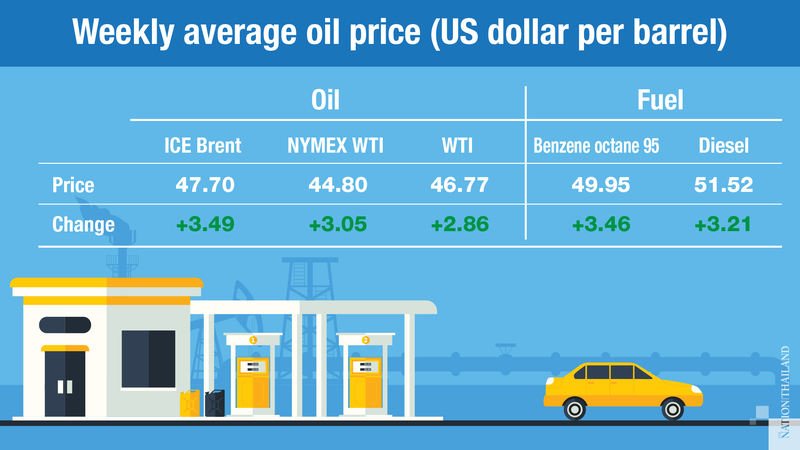
As of 4.30pm, the price of oil rose by US$0.25 or 0.55 per cent to $45.59 per barrel, while gold rose by $13.30 or 0.75 per cent, to $1,794.20 per ounce.
Other Asian indices were on the rise:
Japan’s Nikkei Index closed at 26,787.54, up 353.92 points or 1.34 per cent.
China’s Shang Hai SE Composite Index closed at 3,451.94, up 60.18 points or 1.77 per cent, while the Shenzhen SE Component Index closed at 13,930.38, up 260.26 points or 1.90 per cent.
Hong Kong’s Hang Seng Index closed at 26,567.68, up 226.19 points or 0.86 per cent.
South Korea’s KOSPI Index closed at 2,634.25, up 42.91 points or 1.66 per cent.
Taiwan’s TAIEX Index closed at 13,885.67, up 162.78 points or 1.19 per cent.
Hotel bookings in Thailand are riding a high for the upcoming long weekend, especially in Phuket, the World Hotel Index reported.
The index run by SiteMinder found that the rate of bookings in Thailand this week surpassed 59 per cent of the 2019 booking rate for the third time this year since March.
Since October, the booking rate of 14 hotels has increased by more than 77 per cent, especially those in Phuket which enjoyed the highest booking rate in 250 days.
The same phenomenon was seen during a four-day-long weekend in November.
A long weekend beginning with Constitution Day on December 10 has spurred a sudden increase in bookings among Thai tourists.
Over 17 per cent of the number of tourists in the coming months travel over the holidays. The number of hotel reservations tends to soar near the end of the weekend, the index reported.
“After the accommodation business in Thailand faced a difficult situation this year, we are glad to see Thai people support the tourism business during this four-day holiday,” said Brad Hines, regional vice president of Asia Pacific at SiteMinder.
“With the measure to restrict foreigners’ entry into Thailand still on, this is a great opportunity for Thais to travel within the country and experience the beauty of Thailand before foreign tourists gradually travel to Thailand again,” he said.
The increase in hotel reservation rates in Thailand is also in line with hotel reservation rates in other Asian countries.
In Taiwan, the rate of bookings increased by more than 20 per cent from the previous month. The Philippines was up 33 per cent from the previous month, and Vietnam was up 63 per cent from the previous month, according to World Hotel Index.
The price of oil is expected to move upwards this week (November 30 to December 4) thanks to positive news about AstraZeneca’s Covid-19 vaccine, PTT’s International Trading Business Unit forecast on Tuesday.
The unit said the price of oil had been affected by the smooth US presidential transition and Shell’s oil-delivery accident in Nigeria’s Brass River on November 24. The unit also said that the number of oil rigs in the US rose by 10 rigs to 241 as of November 25.
“We advise following the Opec+ meeting as the organisation’s plan to cut oil production to 7.7 million barrels daily will be extended until the first quarter next year,” the unit added.
The Stock Exchange of Thailand (SET) Index fell almost 30 points on Monday due to global investment firm MSCI’s decision to reduce investments in Thai stocks, worries over rising Covid-19 cases in Thailand and the pending Constitutional Court ruling in a case against Prime Minister Prayut Chan-o-cha, experts said.
The SET Index closed at 1,408.31 on Monday, down 29.47 points or 2.05 per cent. Total transactions amounted to Bt120 billion with an index high of 1,435.04 and a low of 1,408.02.
Foreign and institutional investors made net sales of Bt4.37 billion and Bt2.98 billion respectively, while securities accounts and general investors made net buys of Bt725.71 million and Bt6.62 billion, respectively.
Therdsak Thaveeteeratham, Asia Plus Securities executive vice president for research, said SET faced short-term correction on Monday as domestic and foreign investors sold off stocks to reduce their risks from the new Covid-19 cases in Chiang Mai and Chiang Rai, as well as the pending court ruling in Prayut’s case on Wednesday.
“The Constitutional Court’s ruling on Prayut could affect Thailand’s economy in terms of policy continuation, because he may be removed from office at a time when the economy is recovering gradually,” he said.
He said he expects SET to move upwards as foreign funds are still flowing into Asian markets.
“If there is no negative sentiment, we expect Thailand’s deposits of Bt15.5 trillion to flow into the stock market due to low interest offered on deposits,” he said, adding that SET is expected to hit 1,550 points next year.
He advised investors to buy stocks that are likely to rise next year, such as commercial banks that will benefit from the economic recovery and construction stocks that would benefit from the government’s investment in various projects.
Kitichan Sirisukarcha, CGS CIMB Securities senior vice president for research, said SET fell on Monday due to MSCI’s move to reduce investment in Thai stocks from 1.9 per cent to 1.87 per cent, worries over rising Covid-19 cases and Washington’s move to ban another four Chinese firms as well as Thai and foreign investors’ move to speculate after the index skyrocketed by 243 points or 20 per cent in the previous month.
“However, we expect foreign funds to flow into the stock market as positive news of Covid-19 vaccine will help boost Thailand’s economy and SET-listed companies’ profits next year,” he said.
He advised investors to buy petrochemical, oil refinery, energy and commercial bank shares.
DTAC, Yara launch first digital community network for farmers in Thailand
Dec 01. 2020
By THE NATION
Telecom operator DTAC and agricultural operations company Yara Thailand on Tuesday officially launched Kaset Go, a mobile application that connects farmers to reliable and real-time insights verified by agricultural experts.
Designed to empower Thai farmers, the app leverages Yara Thailand’s agricultural knowledge and DTAC’s communication technologies, the companies said.
Kaset Go presently allows farmers to ask questions to agriculture experts and gain knowledge from other farmers within the community with similar experiences. It also provides farmers access to key information such as daily crop prices, agricultural news, tips on eight major staples in Thailand: rice, maize, vegetables, durian, mangosteen, longan, citrus and mango. Content is geo-localised to meet the specific needs of farmers in Thailand’s major regions and there are sections within to support farmers groups with specific interests such as farm certification, logistics and marketing, the companies said.
The content is supported by experts from the Department of Agriculture Extension (DOAE) under the Ministry of Agriculture and Cooperatives, the Rak Ban Kerd Foundation (RBK), and Yara Thailand.
Sharad Mehrotra, chief executive officer of Total Access Communication Plc, said: “DTAC has a long history of commitment to empowering Thai farmers with mobile connectivity, be it through information platforms or internet of things solutions. “Over the past 12-plus years, we have collaborated with the industry-leading partners like DOAE, RBK to support and learn more about the farmers. Kaset Go represents our most advanced platform built in partnership with Yara,” he said. “Because farming represents such a large part of Thailand’s workforce, and smartphone penetration is among the highest in the region, Kaset Go could be a game changer for Thailand’s digital transformation,” he added.
Since its soft launch in August, Kaset Go has had more than 150,000 downloads and attracted more than 100,000 registered users. As the number of downloads and users is rising exponentially, DTAC and Yara Thailand are already planning Kaset Go’s next phase of development, which will include information on 44 more crops and key features such as weather warnings, disease alerts, market price benchmarking, the companies said. There are also plans to extend further to other value-added services such as farm equipment, insurance and finance.
Mehdi Saint-Andre, managing director, Yara (Thailand) Co Ltd and vice president Thailand and Myanmar, said, “Since our foundation in 1905, we strongly believe that knowledge is key to support farmers’ productivity and with our extensive network of local agronomists, Yara has been providing sustainable solutions to Thai farmers for 47 years. Since 2017, Yara has been accelerating its digital farming strategy, providing precision farming tools to farmers across the globe, and the partnership to develop Kaset Go marks a milestone in Thailand’s agricultural industry as this platform connects farmers to reliable information vetted by experts and validated by the community.
“Kaset Go is expected to become Thailand’s biggest online platform for farmers and kickstart digital transformation in Thailand’s agricultural industry,” he said.
Kaset Go is available on iOS and Android from the App store and Google Play. Find out more at https://kasetgo.com/
MEA launches mobile app, offers free aircon cleaning services to first 100 customers
Dec 01. 2020
By THE NATION
The Metropolitan Electricity Authority (MEA) has launched its newest service “MEA e-Fix” mobile application that provides installation and maintenance of electrical appliances by professionals.
“All technicians under the campaign have undergone extensive MEA training to ensure efficient and safe installation and fixing of electrical appliances to customers in MEA’s responsible areas, which include Bangkok, Nonthaburi and Samut Prakarn,” MEA deputy director-general and spokesman Jaturong Suriyassin said.
“The MEA e-Fix covers five types of electrical services: lighting system, wall socket installation, water heater installation, door buzzer installation and electrical switch box.
“To use the services, users can download and install the application, choose the type of work, provide details on points of installation with photos, then input the address and your convenient date,” he added.
“We accept payment via credit card and offer three months warranty on our jobs. Furthermore, the first 100 customers of MEA e-Fix will be offered free air-conditioner cleaning service [one unit per customer].”
To download the application, follow this link http://onelink.to/rzrf65. For more information, contact MEA Call Centre at 1130, Line: MEA Connect and Twitter: @mea_news
BCPG Pcl, a leader in the renewable energy business in Thailand and the Asia-Pacific region, is targeting 30-40 per cent expansion in earnings before interest, taxes, depreciation and amortisation (Ebitda) in 2021 after estimated growth of 20 per cent this year.
“This year’s expansion is due to income from the hydro-power plant in Laos and adjustment of electricity fee in the Philippines,” said Phatpuree Chinkulkitnivat, BCPG’s senior executive vice president of finance, accounting and corporate strategy.
“Next year, many of the company’s power plants will start supplying approximately 390 megawatts of power commercially, such as the solar power plant in Komagane, Japan 25MW, the Yabiki power plant 20MW and the Shiba 1 power plant 20MW.”
BCPG’s total portfolio is currently at 8,361MW, she added.
“Next year, the company has earmarked Bt18 billion for additional investment, merging and acquisition of power plants in both Thailand and Asia-Pacific region,” she said. “This comes from the Bt40-billion budget of our five-year plan [2021-2025] that focuses on expanding our power plants network in neighbouring countries.
“The company’s current balance sheet is stronger than ever. We have recently raised Bt10 billion of funds and can still borrow 2-3 times more to support our future investment projects,” she added.
“In the past nine months, our Ebitda has grown more than 30 per cent year on year, and is estimated to grow at 20 per cent by the year-end.”
By The Washington Post · Carolyn Y. Johnson · BUSINESS, HEALTH
The federal government could begin distributing two coronavirus vaccines in the next few weeks – a record-shattering accomplishment that now hinges on the decisions of U.S. regulators.
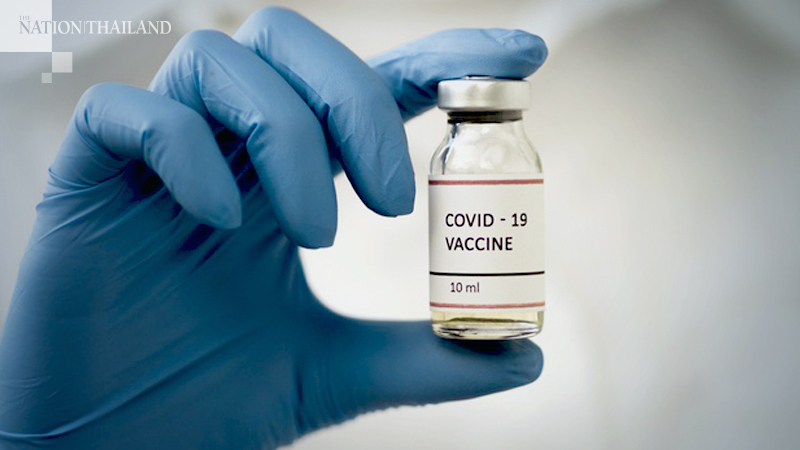
Biotechnology company Moderna filed Monday for emergency authorization of its coronavirus vaccine, capping a scientific sprint that began in January. Moderna’s two-dose regimen is about a week behind a similar vaccine developed by Pfizer and German biotechnology company BioNTech.
No vaccine can arrive soon enough to blunt an anticipated blitz of coronavirus cases seeded by Thanksgiving travels and gatherings – a surge expected to materialize in the coming days and weeks. But less than a year after a novel virus began hopscotching around the world, U.S. government officials project an unprecedented scientific feat: About 40 million doses of two remarkably effective vaccines could be available by year’s end, enough for 20 million people to receive full protection. Manufacturing will continue to ramp up through early next year, and other vaccines are expected to follow to steadily increase the supply available each month.
“You don’t want to get ahead of yourself and claim any victories, but this has the makings of a very, very important positive impact on ending this outbreak,” said Anthony Fauci, director of the National Institute of Allergy and Infectious Diseases. “A vaccine that is highly efficacious, if taken by a very, very high percentage of people, could potentially crush this outbreak – similar to what was done with outbreaks of measles and polio and smallpox and other diseases.”
The news comes as health systems approach a potential crisis with surging daily infections and hospitalizations leading into the Christmas and the new year. The Association of American Medical Colleges on Monday called on the nation’s medical schools, teaching hospitals and health systems to prepare to implement crisis standards over the next few months in case triaging and rationing is necessary as a result of shortages of health-care workers, hospital beds or supplies. Those have been used in response to natural disasters and mass-casualty events such as the Sept. 11 terrorist attacks.
“The next few months of the pandemic, while we are awaiting the distribution of vaccines, are going to stretch the nation’s health-care capacity to its limits,” said the group’s president and CEO, David Skorton.
California Gov. Gavin Newsom, a Democrat, said Monday that he’s considering imposing stay-home orders on California counties to curb an explosion in coronavirus cases that threaten to overwhelm hospitals by Christmas.
Before Thanksgiving weekend, the United States had reached a daily coronavirus death toll not seen since May, as more than 2,000 people died Tuesday through Wednesday. Case counts over weekends and holidays tend to reflect lags in testing and reporting, but hospitalizations continued to climb, surpassing 95,000 covid-19 patients for the first time Monday.
Reflecting the urgency of the situation in the United States, an advisory committee to the Centers for Disease Control and Prevention that typically meets after vaccines are approved is holding an unusual emergency virtual meeting Tuesday to vote on which groups of people should get the first, limited shots. Health-care workers and residents of long-term care facilities are expected to be included in the first case, a strategy intended to ensure that the first doses have the greatest societal impact. But even if manufacturing timelines are on track, there will not be quite enough vaccine for everyone in those groups to be fully vaccinated by year’s end.
“Prioritizing health-care workers first is . . . to keep our health care system functioning and to protect them,” said Natalie Dean, a biostatistician at the University of Florida.
The regulatory approval process will move into high gear Thursday, when independent advisers to the Food and Drug Administration meet to make recommendations about the Pfizer and BioNTech vaccine. A week later, they will do the same for Moderna.
The FDA is undertaking an exhaustive review to vet the safety, effectiveness and manufacturing of the vaccines, and is expected to make a decision shortly after its advisers meet. The review period, from company filing to a decision, probably will take weeks – not the year that is more typical after a company submits a vaccine for approval.
Moderna’s vaccine was 94% effective at preventing illness in a 30,000-person clinical trial, the company said in a news release – a performance that exceeds expectations and is on par with the best pediatric vaccines. There were 196 cases of covid-19, the illness that can be caused by the novel coronavirus, in Moderna’s study, 11 of which occurred in the vaccine group – a decisive signal that the vaccine protected people from illness. The 30 severe cases of covid-19 in the trial, including one death, all occurred in the group that received a placebo.
“The data are very, very promising, but I would like to see more data than is currently in the press release,” said Walter Orenstein, associate director of the Emory Vaccine Center, who is also a member of Moderna’s scientific advisory board and a trial participant. The results are similar to those from Pfizer and BioNTech, which announced a 95% effective vaccine earlier this month.
Even with a vaccine that is very effective, Orenstein cautioned that the world would not snap back to normal. Those first in line to receive two doses of the vaccine probably will be encouraged to continue taking precautions, such as wearing masks, if there is virus circulating at high levels in their communities. Tens of millions more people who are not considered at high risk of severe illness probably will not have access to doses until late spring or summer, experts caution.
The vaccines from Moderna and Pfizer and BioNTech are a major proof of concept for a flexible and fast medical technology, years in the making, that utilizes a snippet of genetic material called messenger RNA that teaches cells to build the spiky protein found on the surface of the coronavirus. The immune system learns to recognize and block the real virus.
The vaccines are on track to make history because of years of basic science research and an all-out coordinated effort from pharmaceutical companies and government that removed the financial risks of failure to move fast.
The U.S. government, through Operation Warp Speed, has preordered 100 million doses from Moderna and Pfizer, and helped underwrite the research and development of Moderna’s vaccine to the tune of $955 million. Moderna also signed a contract to provide 100 million doses to the U.S. for $1.5 billion. Pfizer will provide 100 million doses at a cost of $1.95 billion. In addition, the government has an option to buy hundreds of millions more doses.
“Pfizer and Moderna’s incredibly promising and impressive efficacy data further demonstrate that President Trump’s Operation Warp Speed is rapidly advancing on a trajectory of success to save millions of American lives – five times faster than any other vaccine in history,” White House spokesman Michael Bars said in an email.
Both companies have said they would be ready to distribute a vaccine almost immediately after receiving a green light from the FDA. Results reported last week from a third coronavirus vaccine candidate, from AstraZeneca and the University of Oxford, were positive but confusing, and it is unclear whether that vaccine can move forward in the United States without more data.
The AstraZeneca trial is continuing in the United States, and a single-shot vaccine from Johnson & Johnson is being tested. Novavax, another leading vaccine candidate in the United States, announced Monday that its large U.S. trial, which had been expected to begin this month, would start in the coming weeks.
The full data from Moderna and Pfizer will likely leave some questions unanswered. No one knows yet how long immune protection will last, and it is unclear whether the vaccine will decrease transmission in addition to preventing illness. One worst-case scenario debated by scientists is a vaccine that prevents symptoms and disease but does not decrease the spread of the virus by asymptomatic people.
In its news release Monday, Moderna reported that the vaccine performance was consistent across all ages, races, ethnicities and genders. There were 33 cases of covid-19 in people over 65; 29 cases in people who identified as Hispanic; six cases in Black people; four cases among Asian Americans; and three in multiracial people.
Most reactions to the vaccine were mild or moderate, according to a previous news release from the company. The adverse events rated as “severe” in the trial were soreness at the injection site, tiredness, muscle aches, headache and pain.
“We believe that our vaccine will provide a new and powerful tool that may change the course of this pandemic and help prevent severe disease, hospitalizations and death,” Stéphane Bancel, Moderna’s chief executive, said in a statement.
Moderna will also file for approval from the European Medicines Agency and has an open application with regulators in the United Kingdom, Switzerland, Canada, Israel and Singapore.
Moderna’s vaccine can be stored frozen at minus-20 degrees Celsius and lasts at refrigerator temperatures for up to a month, which probably would make it easier to deploy than the candidate from Pfizer and BioNTech, which requires ultracold storage conditions not typically found at pharmacies and doctors’ offices.


 Tak Bunnag, head of Krungsri Bank’s Global Markets Group

.jpg)