Inside the chaotic unraveling of Jack Ma’s $35 billion IPO #SootinClaimon.Com

#SootinClaimon.Com : ขอบคุณแหล่งข้อมูล : หนังสือพิมพ์ The Nation.

Inside the chaotic unraveling of Jack Ma’s $35 billion IPO

Biz insightsNov 06. 2020Jack Ma in 2017. MUST CREDIT: Bloomberg photo by Cole BurstonJack Ma in 2017. MUST CREDIT: Bloomberg photo by Cole Burston 

By Syndication Washington Post, Bloomberg · BUSINESS, WORLD, US-GLOBAL-MARKETS, ASIA-PACIFIC 
The midlevel bureaucrats left China’s richest man waiting as they prepared for a meeting that would send shock waves across the financial world.

It was Monday morning in Beijing, and Jack Ma had been summoned to a conference room at the China Securities Regulatory Commission (CSRC) just days before he was set to take Ant Group public in the biggest stock-market debut of all time.
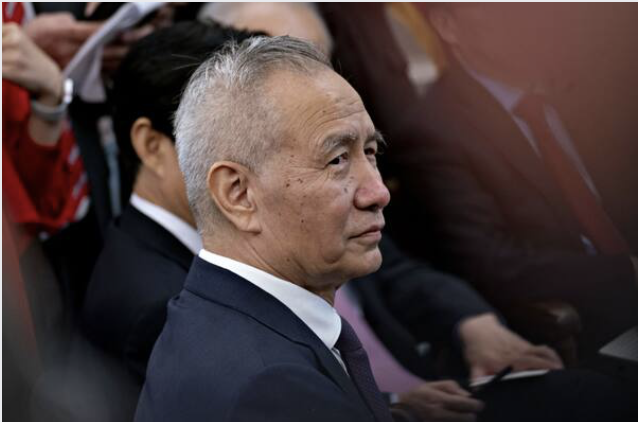
Liu He in 2019. MUST CREDIT: Bloomberg photo by Andrew Harrer

Liu He in 2019. MUST CREDIT: Bloomberg photo by Andrew Harrer

When the bureaucrats finally turned up, they skipped over pleasantries and delivered an ominous message: Ant’s days of relaxed government oversight and minimal capital requirements were over. The meeting ended without a discussion of Ant’s IPO, but it was a sign that things might not go as planned.

The subsequent unraveling of the $35 billion share sale has thrust Ma’s fintech giant into turmoil, offering a stark reminder that even China’s most celebrated businessman is not immune to the whims of a Communist Party that has steadily tightened its grip on the world’s second-largest economy under Xi Jinping’s leadership.

Among the questions that linger as international investors try to make sense of a chaotic 72 hours: Why would China scuttle Ant’s IPO at the last minute after months of meticulous preparation? And what does the future hold for one of the country’s most important companies?

Interviews with regulators, bankers and Ant executives offer some answers, though even insiders say only China’s top leaders can be confident of what happens next. Most of the people who spoke for this report did so on the condition of anonymity to discuss sensitive matters.

Ma’s meeting in Beijing on Monday triggered a behind-the-scenes scramble by Ant and its bankers for more clarity from Chinese regulators. While CSRC officials signaled at the time that they were not aware of any changes to the IPO plans, the regulator’s cryptic social media post later that day about a “supervisory interview” with Ma set tongues wagging from Hong Kong to New York.

By Tuesday afternoon, the mood had worsened as whispers of a delay began circulating in Shanghai. At about 8 p.m., the city’s stock exchange called Ant to say the IPO would be suspended.

When the official statement landed less than an hour later, it cited a “significant change” in the regulatory environment but offered few additional details on why authorities would scupper the listing two days before shares were expected to start trading.

At a hastily arranged meeting between Ant’s bankers and the CSRC later that evening, officials noted the company’s need for more capital and new licenses to comply with a spate of regulations for financial conglomerates that had begun taking effect at the start of November. There was no discussion of how quickly the IPO could be restarted.

An Ant spokesman said the need for more capital and new licenses was not discussed in the meeting, but he declined to provide more details.

One concern among regulators was that the stricter rules may not have been fully disclosed in Ant’s prospectus. On top of the new financial conglomerate regulations, the government had on Monday released stringent draft rules for consumer loans that would require Ant to provide at least 30% of the funding for loans it underwrites for banks and other financial institutions. Ant funds 2% of its loans, with the rest taken up by third parties or packaged as securities.

Several officials said it was better to stop the listing at the 11th hour than to let it proceed and expose investors to potential losses.

That sentiment was shared by at least one institutional money manager, who said he had practically begged an Ant executive for an IPO allocation during a meeting at the Mandarin Oriental hotel in Hong Kong. Now that he has a clearer idea of the regulatory risks, he’s relieved the share sale was shelved.

The CSRC said in a statement on Wednesday that preventing a “hasty” listing of Ant in a changing regulatory environment was a responsible move for the market and investors.

Still, some China watchers have an alternative theory for why Xi’s government acted the way it did: It wanted to send a message.

Ma, a former teacher who’s widely revered in China, faced an unusual amount of criticism in state media after he criticized the country’s financial rules for stifling innovation at a conference in Shanghai on Oct. 24. His remarks came after Vice President Wang Qishan – a Xi confidante – called for a balance between innovation and strong regulations to prevent financial risks.

“It appeared that, intentionally or not, Ma was openly defying and criticizing the Chinese government’s approach to financial regulation,” Andrew Batson, China research director at Gavekal Research, wrote in a report.

The weekend before Ma was summoned to Beijing, the Financial Stability and Development Committee led by Vice Premier Liu He stressed the need for fintech firms to be regulated.

In one sign authorities may keep up the pressure on Ant, people familiar with the matter said on Wednesday that regulators plan to discourage banks from using the fintech firm’s online lending platforms. The directive strikes at the heart of Ant’s commission-based lending model, which generated about 29 billion yuan ($4.4 billion) of revenue in the six months ended June.

Any suggestion that banks will stop using its platforms is unsubstantiated, Ant said in a response to questions from Bloomberg.

Some investors are bracing for tougher times at Ant and the rest of Ma’s business empire. Shares of Alibaba Group Holding, which owns about a third of Ant, tumbled more than 8% on Tuesday in New York for the steepest drop in five years. The slump cut Ma’s wealth by almost $3 billion, to $58 billion, dragging him down to No. 2 on China’s rich list behind Tencent Holdings’s Pony Ma.

The IPO debacle has also raised broader concerns about China’s commitment to transparency as it tries to lure international investors.

On Tuesday, confusion over the suspension triggered a flood of calls to Ant’s bankers from baffled money managers. The sense of whiplash in some cases was stark: An hour or two before the suspension was announced, Ant’s investor relations team was still trying to confirm attendance at a post-IPO gala in Hong Kong. One of the company’s biggest foreign investors predicted the episode could do lasting damage to confidence in China’s capital markets.

It may also have spillover effects on Hong Kong, whose status as a premier financial hub has already come under question amid increased influence from Beijing. Nearly a fifth of the city’s population by one estimate had signed up to buy Ant shares; many who had planned on a windfall were instead stuck paying interest expenses on useless margin loans.

“The lack of transparency reminds us that the ‘Chinese way’ remains fraught with issues,” said Fraser Howie, author of “Red Capitalism: The Fragile Financial Foundation of China’s Extraordinary Rise.”

As for Ant itself, it’s unlikely that the IPO suspension will deal a fatal blow. The company had 71 billion yuan of cash and equivalents as of June and is one of China’s most systemically important institutions. The last thing authorities want is a destabilizing loss of confidence in a business that plays a key role in the nation’s financial plumbing.

The more pertinent risk for Ant is a decline in its breakneck pace of growth and lofty valuation. China’s new regulations will force the company to act more like a traditional lender and less like an asset-light provider of technology services to the financial industry. That will almost certainly mean a lower price-earnings ratio for the stock if it eventually lists.

Also looming is the introduction of China’s central bank digital currency, which threatens to erode Ant’s dominance in payments. That could have implications for the company’s other businesses as well. Ant’s credit platform, for instance, utilizes its huge trove of payments data to assess the financial strength of borrowers who often lack collateral or formal credit histories.

All of that will be bad news for shareholders who propelled Ant’s valuation to $315 billion – higher than that of JPMorgan Chase & Co. But it may suit regulators and party leaders who worry that Ma’s creation has grown too big, too fast.

Fed has the economy’s weight on its shoulders again #SootinClaimon.Com

#SootinClaimon.Com : ขอบคุณแหล่งข้อมูล : หนังสือพิมพ์ The Nation.

Fed has the economy’s weight on its shoulders again

Biz insightsNov 05. 2020Jerome Powell, chairman of the Federal Reserve, during a news conference in Washington on March 3, 2020. CREDIT: Bloomberg photo by Andrew Harrer.
Jerome Powell, chairman of the Federal Reserve, during a news conference in Washington on March 3, 2020. CREDIT: Bloomberg photo by Andrew Harrer. 

By Syndication Washington Post, Bloomberg Opinion · Brian Chappatta · OPINION, BUSINESS, US-GLOBAL-MARKETS 
For the past few weeks, investors dared to dream of a U.S. government that worked hand-in-hand with the Federal Reserve to provide ample fiscal aid and get the world’s largest economy through the coronavirus pandemic.

This “blue wave” scenario has come crashing down in the wake of Tuesday’s election results. Yes, Democrat Joe Biden looks as if he has the advantage in reaching 270 Electoral College votes, but his party fell far short of expectations in the Senate, where Republicans are all but guaranteed to retain control, and it lost some seats in the House. Democrats alone won’t be able to pass legislation to send money out to unemployed Americans, closed small businesses and strapped state and local governments.

At least for a day after his re-election, Republican Senator Mitch McConnell sounded amicable to compromise, even on the thorny issue of large-scale aid to states and cities. “Hopefully the partisan passions that prevented us from doing a rescue package have subsided,” McConnell, who pushed for a much smaller package than the $2 trillion one that had been discussed by the Trump administration and Democratic leaders, said on Wednesday. “That’s job one when we get back.”

Yet even taking McConnell’s comments at face value, it’s hard to imagine Senate Republicans willing to do “whatever it takes” on the fiscal spending side to get the U.S. economy back to its pre-covid levels, especially if Biden is in the White House and can take credit for the rebound. More likely, the burden of stimulus will once again fall to the Fed and Chair Jerome Powell.

A prolonged presidential election and political gridlock are the backdrop to the Federal Open Market Committee’s decision on Thursday, when Powell and his colleagues aren’t expected to offer much in the way of new information. Recall that at the last meeting in September, they unveiled enhanced forward guidance that pledged to keep the fed funds rate unchanged in a range of 0% to 0.25% “until labor market conditions have reached levels consistent with the Committee’s assessments of maximum employment and inflation has risen to 2 percent and is on track to moderately exceed 2 percent for some time.” That followed Powell’s August reveal of the central bank’s new monetary policy framework, which would seek inflation that “averages” 2% over time, therefore allowing overshoots after periods in which it falls short of the target.

Heading into this week, it looked as if the biggest question for the Fed was whether it would step in to combat an aggressive steepening of the Treasury yield curve, with traders positioned for a large round of fiscal stimulus. The election aftermath took care of that question: 10-year yields fell 14 basis points on Wednesday, the most since March, to 0.76%, while 30-year yields tumbled by roughly the same amount to 1.54%. That’s well within the central bank’s comfort zone.

But judging by the reaction across other financial markets, it’s clear traders are thinking beyond the votes and betting on the Fed having to shoulder almost the entire burden of resuscitating the U.S. economy. These investors most likely remember 2011 through 2015, when a tea party Congress brought the U.S. to the brink of default under President Barack Obama and forced the budget deficit to narrow each year in the name of “fiscal responsibility.” 

What happened during that period? From the time of the debt-ceiling showdown in 2011 through the Fed’s first interest-rate increase of the cycle in December 2015, the S&P 500 Index returned 90%, or 15.8% on an annual equivalent basis. The 30-year Treasury yield fell from about 4% to 3%, dipping to as low as 2.22% along the way. Corporate bonds delivered strong returns. In other words, it was a great period for financial assets. Meanwhile, the average annual increase in U.S. hourly earnings was barely above 2% – hardly enough to keep pace with inflation.

This is the conundrum the Fed finds itself in now, less than 48 hours after the U.S. elections. Is it possible, given the current set of tools, for monetary policy to deliver broad-based economic prosperity? Or is it confined to primarily propping up asset holders and debtors, then counting on the wealth effect to make its way through the economy?

I’ve tackled this question from a number of angles in the past month with a fiscal aid package stalled in Washington. For one, the Fed could make a more explicit link between its bond purchases and fiscal policy initiatives to push lawmakers into more aid, but it’s unclear whether Powell wants to open that potential Pandora’s box. The central bank could also throw the doors wide open to its Municipal Liquidity Facility, lowering interest rates and encouraging more states and cities to take out a loan. But it seems keen for the facility to remain a last-resort backstop rather than a substitute for federal grants.

Put it all together, and it’s hard to see how the Fed would make up for a smaller dose of fiscal aid on its own. Yes, it moved last week to sharply reduce the minimum loan size in its Main Street Lending Program to $100,000 from $250,000, potentially making it open to a broader swath of U.S. businesses. But with fewer than 400 loans made since the program became operational in July, and just 14% of Main Street lending done through the end of September for loans of less than $1 million, it’s questionable at best whether it’ll receive widespread interest. Powell himself has stressed that these businesses may need grants, not loans that they have to repay, to get through the pandemic. Also, as it stands, the program is set to expire on Dec. 31, as is the muni facility, though that could change at a moment’s notice.

So that leaves the Fed with its tried-and-true monetary policy toolkit: Simply keep interest rates near zero for even longer and perhaps increase the size of its bond-buying program or have it target the long end of the yield curve. That should keep bonds well-bid, corporate debt deals flowing and equity markets elevated. As for fiscal aid, though, that’s looking as if it still has to run through Capitol Hill. 

SET falls despite odds favouring Biden to win US presidential election #SootinClaimon.Com

#SootinClaimon.Com : ขอบคุณแหล่งข้อมูล : หนังสือพิมพ์ The Nation.

SET falls despite odds favouring Biden to win US presidential election

EconNov 06. 2020

By The Nation

The Stock Exchange of Thailand (SET) Index dropped by 1.33 points, or 0.11 per cent, to 1,262.99 in the morning session on Friday.

An analyst at Krungsri Securities expected the day’s index to fluctuate between 1,255 and 1,270 despite strong prospects of former vice president Joe Biden being elected president.

“Uncertainty over pro-democracy protesters’ move to hold anti-government rallies this weekend and rising US Covid-19 cases would cause volatility in the index,” he said.

He recommended that investors buy STGT, STA, CBG, IVL, EPG, AP, COM7, SYNEX, ASIAN, HANA, SVI and TVO, whose third-quarter performances are expected to improve.

The SET Index closed at 1,264 on Thursday, up 41.88 points or 3.43 per cent with total transactions amounting to Bt81 billion amid hopes of Biden winning the US presidential election, as it will be a positive sentiment for trade relations and the rollout of economic stimulus measures.

Gold rises on back of Bank of England move to boost quantitative easing, weakening dollar. #SootinClaimon.Com

#SootinClaimon.Com : ขอบคุณแหล่งข้อมูล : หนังสือพิมพ์ The Nation.

Gold rises on back of Bank of England move to boost quantitative easing, weakening dollar.

EconNov 06. 2020

By The Nation

The price of gold rose by Bt150 per baht weight in morning trade on Friday, the Gold Traders Association reported.

As of 9.24am, the buying price of a gold bar was Bt28,150 per baht weight and selling price Bt28,250, while gold ornaments were priced at Bt27,636.68 and Bt28,750, respectively.

At close on Thursday, the buying price of a gold bar was Bt28,000 per baht weight and selling price Bt28,100, while gold ornaments were Bt27,500.24 and Bt28,600, respectively.

Spot gold price moved to US$1,942 (Bt59,645) per ounce in the morning after the price rose sharply by US$50.6 to $1,946.8 per ounce at close on Thursday. Gold’s gains came from the Bank of England’s move to increase the credit limit of its quantitative easing programme in a bid to stimulate the economy, as well as the weakening dollar.

Hong Kong gold price rose by HK$270 to $17,970 (Bt71,187) per tael this morning, the Chinese Gold and Silver Exchange Society reported.

Oil holds near $39 with market awaiting U.S. election outcome #SootinClaimon.Com

#SootinClaimon.Com : ขอบคุณแหล่งข้อมูล : หนังสือพิมพ์ The Nation.

Oil holds near $39 with market awaiting U.S. election outcome

EconNov 06. 2020

By Syndication Washington Post, Bloomberg · Andres Guerra Luz · NATIONAL, BUSINESS, POLITICS, US-GLOBAL-MARKETS 
Oil held near $39 a barrel while investors awaited the outcome of the tightly contested U.S. presidential election with Joe Biden on the brink of claiming a victory.

Futures in New York were little changed, after falling as much as 2.3% earlier in the session. While predictions for a split Congress is fueling optimism that there will be no major changes to taxes or regulations that have underpinned an equity bull market, it also raises the likelihood that any post-election virus aid package will be smaller than initially expected and will face another prolonged negotiation process.

A demand recovery is much needed in the oil market, which is contending with a string of renewed lockdown measures across Europe that further threaten the demand outlook. Greece became the latest European country to declare a national lockdown, while England enters a four-week shutdown to curb the spread of coronavirus.

“Expectations for a Blue Wave where you would have gotten a $3 trillion stimulus, that’s not going to happen,” said Bob Yawger, head of the futures division at Mizuho Securities. “That would have been a huge positive demand event for crude oil.”

OPEC+ faces a tough test at its upcoming meeting at the end of the month, as the producer group weighs whether to move forward with a planned output increase. On Thursday, Saudi Arabia cut most of its oil pricing for Asia, with the demand outlook cloudy. Meanwhile, road traffic in some European countries has fallen to the lowest since June, while air traffic in the continent is seen unlikely to return to 2019 levels within the next for years.

“OPEC+ holds the key to support markets,” Bart Melek, head of global commodity strategy at TD Securities, said in a note. “The stark reversal in prices – despite the ongoing lockdowns – following reports that Energy Minister Novak discussed a delay in the planned tapering with Russian energy companies lends strength to our view.”

If the current trends hold and there is a divided U.S. government, Biden may have to scale back proposals to remove subsidies for oil producers, said Helima Croft, chief commodities strategist at RBC Capital Markets. However, he should be able to advance plans to reenter the 2015 Iran nuclear deal, which could bring back 1 million barrels a day by the second half of 2021, she said.

Although Biden is closing in on the 270 electoral votes he needs to win the presidency, incumbent Donald Trump has sought a recount in Wisconsin, filed lawsuits in Michigan, Pennsylvania and Georgia and complained about various states’ counting procedures. Recounts and legal challenges could lead to a prolonged period of uncertainty.

More Americans than forecast file for state jobless benefits #SootinClaimon.Com

#SootinClaimon.Com : ขอบคุณแหล่งข้อมูล : หนังสือพิมพ์ The Nation.

More Americans than forecast file for state jobless benefits

EconNov 06. 2020

By Syndication Washington Post, Bloomberg · Reade Pickert · BUSINESS 
More Americans than expected filed for state unemployment benefits last week, underscoring churn in a labor market that continues to recover only gradually.

Initial jobless claims in regular state programs totaled 751,000 in the week ended Oct. 31, down from an upwardly revised 758,000 in the prior week, Labor Department data showed Thursday. On an unadjusted basis, the number of applications was little changed.

Continuing claims — or the total number of Americans claiming ongoing state unemployment assistance — fell by 538,000 to 7.29 million in the week ended Oct. 24, the sixth straight decline. Still, the number of people claiming support in a federal program that offers extended assistance increased as more Americans exhausted their regular state benefits.

The median estimate in a Bloomberg survey of economists called for 735,000 initial claims and 7.2 million continuing claims. The higher-than-forecast new state claims reading reflected an outsize 23,200 increase in Illinois from the week before. Applications also accelerated in Kentucky, Kansas and Ohio.

The report comes amid a marathon week for the U.S., complete with a still-undecided presidential election, a Federal Reserve policy meeting, and the monthly jobs report. Applications for jobless benefits have declined in recent months, though they remain extremely high, as businesses continue to experience fallout from the pandemic.

The S&P 500 jumped at the open, the yield on the 10-year Treasury note was little changed and the dollar fell.

The October jobs report, out Friday, is forecast to show 600,000 jobs were added last month and the unemployment rate declined further. The projected gain in payrolls, while solid, would mark a fourth consecutive month of moderating job growth. Data out Wednesday from ADP Research Institute showed companies in the U.S. added fewer jobs in October than forecast, though the two reports have often differed greatly in the last six months.

Nearly 4 million people claimed Pandemic Emergency Unemployment Compensation, the federal program that provides up to 13 additional weeks of jobless benefits, in the week ended Oct. 17. While the improvement in continuing claims has been partly due to Americans heading back to work, many unemployed have simply exhausted regular state benefits and shifted into the pandemic program.

Some states saw bigger declines in initial claims from the prior week, including Massachusetts, Georgia, New York, Michigan and Florida.

Separate from the headline number, initial applications for Pandemic Unemployment Assistance, or the federal program that provides jobless benefits to those not typically eligible like the self-employed, totaled 362,883 last week.

Fed chief says pace of economic recovery is moderating while pandemic threat looms large #SootinClaimon.Com

#SootinClaimon.Com : ขอบคุณแหล่งข้อมูล : หนังสือพิมพ์ The Nation.

Fed chief says pace of economic recovery is moderating while pandemic threat looms large

EconNov 06. 2020Federal Reserve Chair Jerome PowellFederal Reserve Chair Jerome Powell 

By The Washington Post · Rachel Siegel · BUSINESS 

Federal Reserve Chair Jerome Powell on Thursday said the pace of the economic recovery has moderated over the past few months and cautioned that the recent rise in coronavirus cases in the United States and around the world is “particularly concerning.”

Powell said Fed officials expect the pace of the recovery to ease compared to strong gains from May and June in economic benchmarks from the labor market to consumer spending, especially given how deeply the economy was gutted in the spring.

Powell’s remarks at a virtual news conference following the Fed’s two-day policy meeting came just one day after the number of new U.S. coronavirus infections topped 100,000 for the first time in a single day.

“We have been concerned that the downside risks though are prevalent now, which are really the risk of the further spread of the disease and also the risk that households will run through the savings they’ve managed to accumulate on their balance sheet, and that could weigh on activity,” Powell said. “What we see is continued growth, continued expansion but at a gradually moderated pace.”

Case counts have been escalating, with a surge spreading across the Midwest and Plains states. Health officials fear the coronavirus crisis will intensify even further going into the flu season. And as colder weather forces people indoors, restaurants, bars and other venues may be limited in how much business they can safely conduct outside.

“We’ve gotten through the first five to six months of the expansion better than expected,” Powell said. “But we do see in Europe – and look what’s happening here – a spike in cases as the cold weather arrives. I think we have to be humble relative to where we are with this disease.”

The Fed signaled on Thursday that policymakers would stick to their current economic response, keeping interest rates near zero. Meanwhile, the nation waits for final election results, is gripped by a pandemic and stares down an uncertain recovery.

“The path of the economy will depend significantly on the course of the virus. The ongoing public health crisis will continue to weigh on economic activity, employment, and inflation in the near term, and poses considerable risks to the economic outlook over the medium term,” according to a statement released after the Fed’s meeting.

The Fed’s regular meeting fell as votes from Tuesday’s presidential election continued to be counted. When asked about the election, Powell said he was “very reluctant to comment on the election, directly or indirectly.”

Uncertainty around who will be in the White House in January is also obscuring any guesses at the timing and scope of another stimulus package, as millions of struggling households, businesses and local governments stare down a difficult winter. 

Powell has long cautioned that the recovery rests on getting the public health crisis under control, which would give people more confidence to resume their old routines and spending habits. On Thursday, Powell again asserted that the country would have a stronger recovery with more fiscal aid.

“You see a lot of discussion on both sides of the aisle, on both sides of the Hill, that suggest generally that there will be something,” Powell said.

Senate Majority Leader Mitch McConnell, R-Ky., on Wednesday said a stimulus bill would be the priority when the Senate goes back into session next Monday and should be completed before the end of the year. McConnell said a deal could include state and local aid, which Democrats have long advocated for.

Powell has repeatedly called for more aid from Congress, particularly when it comes to getting direct relief to those in industries most affected by the pandemic, such as restaurants, retail and hospitality. The Fed has also come under increased pressure to widen the reach of its own emergency lending programs and to consider new ways it can fill the economy’s lingering gaps.

Powell said the Fed was not out of ammunition. For now, the Fed is continuing to increase its holdings of Treasury securities and agency mortgage-backed securities at least at the current pace to keep the markets healthy.

“If things deteriorate, that’d be a case where you would want to continue the facilities and maybe change them and have some new ones,” Powell said.

Powell said the Fed was “just now turning” to questions about whether to extend the emergency lending programs beyond the end of this year. Those decision would have to be made jointly with the Treasury Department. Powell declined to specify whether he had spoken with Treasury Secretary Steven Mnuchin specifically about the extension.

Powell on Thursday said that the existing facilities have “generally served their purposes” and have supported the flow of credit to the markets. Yet the Fed’s The $600 billion Main Street lending facility has been widely criticized for stringent requirements and meager uptake, and has so far only issued $3.7 billion in loans. Last week, the Fed widened the program’s terms by lowering the minimum loan threshold from $250,000 to $100,000.

Powell has said that many companies can’t take on more debt at the moment might be better served by a grant from the Paycheck Protection Program, which Congress could redeploy in another stimulus package.

Economists warn that the country is headed for a devastating winter, one that could be exacerbated by political gridlock in the wake of this week’s election. Millions of Americans risk having their power and water shut off as unpaid utility bills come due. And without more federal action, protections for renters, out-of-work Americans and students borrowers will expire by the end of the year.

All of those factors have cast doubt on how quickly the economy will recover in the final stretch of 2020. By the end of the third quarter, the economy had recovered two-thirds of the ground it lost during the first half of the year. But much uncertainty remains.

The October jobs report, set to be released Friday morning, will offer a new snapshot of how many Americans have been brought back into the workforce, and whether the pace of jobs is waning. On Thursday, the Labor Department reported that 751,000 workers filed for unemployment benefits last week, slightly below claims from the week prior but still well above pre-pandemic levels.

“We are a long way from our goal,” Powell said. “We’re sort of halfway there on the labor market recovery at best and there are parts of the economy where it is going to be hard until there is a vaccine.”

Stocks extend biggest rally since April #SootinClaimon.Com

#SootinClaimon.Com : ขอบคุณแหล่งข้อมูล : หนังสือพิมพ์ The Nation.

Stocks extend biggest rally since April

EconNov 06. 2020

By Syndication Washington Post, Bloomberg · Vildana Hajric, Claire Ballentine · BUSINESS 


Stocks rallied globally as investors rushed back into technology and health-care firms on bets that the U.S. election results will mean no major tax hikes or regulatory changes that would derail the sectors. The dollar weakened to the lowest level in more than two years.

The S&P 500 jumped more than 1% for a fourth consecutive day and is headed for the best week since April. The tech-heavy Nasdaq 100 surged 2.6%, pushing its advance this week more than 9%. Federal Reserve officials kept interest rates near zero and made no change to asset purchases as the results of U.S. presidential and congressional elections remain uncertain.

“We’re seeing a resumption in leadership from technology,” said Tracie McMillion, head of global asset allocation strategy for Wells Fargo Investment Institute. “It appears markets really like the combination they think is most likely in terms of leadership going forward and that would be a Biden presidency with a Republican Senate.”

Vote counting continues in a handful of key states, with Democrat Joe Biden potentially needing to win just one to unseat President Donald Trump. That outcome could be accompanied by a divided legislature that is less likely to pass a multi-trillion-dollar stimulus package.

“In the short-run, the focus will remain on the prospects for a new fiscal package out of Congress, which may be possible before year-end once the election results are settled,” said Jason Pride, chief investment officer of private wealth at Glenmede. “But for now, the size, scope, and timing of that next package still remains unclear.”

The dollar retreated the most versus the euro since March. Oil declined for the first time in four sessions.

Increases in tech shares and some strong corporate results buoyed the Stoxx Europe 600 index. Uber Technologies Inc. and Peloton Interactive Inc. will release results after the close of U.S. trading.

Elsewhere, U.K. government bonds reversed an early advance as investors shifted their focus to the slower pace of debt-buying implied by the Bank of England’s new asset-purchase targets. Bitcoin climbed by more than $1,000 to over $15,000, more than doubling its value in 2020.

These are some of the main moves in markets:

Stocks

The S&P 500 Index climbed 1.9% to 3,510.41 as of 4:02 p.m. EST, the highest in more than three weeks.

The Dow Jones industrial average increased 1.9% to 28,390.51, the highest in almost three weeks.

The Nasdaq Composite Index increased 2.6% to 11,890.93, the highest in two months.

The Nasdaq 100 Index jumped 2.6% to 12,078.07, the highest in more than three weeks.

The Stoxx Europe 600 Index advanced 1% to 367.12, hitting the highest in almost three weeks with its fifth straight advance.

The MSCI All-Country World Index increased 2.2% to 591.61, the highest in more than three weeks on the biggest climb in more than 20 weeks.

Currencies

The Bloomberg Dollar Spot Index sank 1% to 1,153.07, the lowest in more than two years on the largest decrease in more than seven months.

The euro increased 0.9% to $1.1827, the strongest in almost two weeks on the biggest increase in five months.

The Japanese yen appreciated 1% to 103.53 per dollar, the strongest in eight months on the largest rise in almost 10 weeks.

Bonds

The yield on two-year Treasurys increased less than one basis point to 0.15%.

The yield on 10-year Treasurys gained one basis point to 0.77%.

The yield on 30-year Treasurys dipped one basis point to 1.54%, the lowest in almost three weeks.

Germany’s 10-year yield advanced less than one basis point to -0.64%.

Britain’s 10-year yield jumped three basis points to 0.234%.

Commodities

West Texas Intermediate crude fell 1.6% to $38.52 a barrel, the largest fall in a week.

Gold surged 2.5% to $1,950.65 an ounce, the highest in almost seven weeks on the biggest jump in more than seven months.

Agriculture Ministry drawing up plan after US trade privileges suspended #SootinClaimon.Com

#SootinClaimon.Com : ขอบคุณแหล่งข้อมูล : หนังสือพิมพ์ The Nation.

Agriculture Ministry drawing up plan after US trade privileges suspended

EconNov 06. 2020

Minister of Agriculture and Cooperatives Chalermchai Sri-on

Minister of Agriculture and Cooperatives Chalermchai Sri-on

By The Nation

The Agriculture Ministry is studying the effect of the United States’ move to suspend trade privileges on Thai products under the Generalised System of Preferences (GSP).

Chantanont Wannakhajorn, secretary-general of the ministry’s Agricultural Economics (OAE) office, said the office is studying the impact on the agricultural sector after the US cut GSP privileges in retaliation for Thailand not opening its pork market.

The GSP suspension will affect 44 Thai agricultural products, including vegetables, fruits, nuts, spices, seeds and spores, and vegetable fats and oils.

US import tax on these goods has now been raised from zero to between 1.9 and 9.6 per cent, costing Thai importers an estimated extra Bt17.72 million and making their goods more expensive.

Prices will rise for five products: live crops, fats and vegetable oils, processed vegetables, glucose syrup, and spices. In addition, nine other agricultural products are now subject to specific-rate taxation.

The ministry will focus on expanding trade in other markets to reduce dependence on the US, for example by accelerating trade talks with the European Union and the Regional Comprehensive Economic Partnership (RCEP).

Minister of Agriculture and Cooperatives Chalermchai Sri-on has ordered Thailand’s agricultural ambassador to gather information so the ministry can adapt policies for foreign demand next year after the Covid-19 crisis. The information includes rule adjustments by trading partners on illegal, unreported and unregulated fishing and on the EU’s Green Deal policy.

Commerce minister mulls opening service sector to foreign investment #SootinClaimon.Com

#SootinClaimon.Com : ขอบคุณแหล่งข้อมูล : หนังสือพิมพ์ The Nation.

Commerce minister mulls opening service sector to foreign investment

EconNov 06. 2020Commerce Minister Jurin Laksanavisit, meets with foreign investors on Thursday to discuss liberalisation of the service sector.Commerce Minister Jurin Laksanavisit, meets with foreign investors on Thursday to discuss liberalisation of the service sector. 

By The Nation

The Commerce Ministry is mulling whether to open more service-sector businesses to foreign investors, lured by promises of more investment and high-paid jobs. 

Stanley Kang, chairman of the Joint Foreign Chambers of Commerce in Thailand, says relaxing rules for service businesses will lead to more foreign investment and high-paid jobs for youth.

Stanley Kang, chairman of the Joint Foreign Chambers of Commerce in Thailand, says relaxing rules for service businesses will lead to more foreign investment and high-paid jobs for youth.

Foreign investors led by Stanley Kang, chairman of the Joint Foreign Chambers of Commerce in Thailand (JFCCT), met with Commerce Minister Jurin Laksanavisit for talks on lifting restrictions in the Foreign Act Business on Thursday.

Foreign investors want rules changed so they can take 100-per-cent ownership of service-sector businesses in List 3 (protected for Thais) under the Foreign Business Act, Jurin said after the meeting.

Foreign investors said liberalising ownership rules would lead to more investment amid the Covid-19 pandemic, said Jurin. “We accepted their proposals for consideration,” he added.

The Commerce Ministry plans to lift restrictions on some List 3 service businesses, according to a senior government official.

List 3 covers businesses in which Thai nationals are not ready to compete with foreigners.

Thosapone Dansuputra, director general of the Business Development Department, said the Commerce Ministry will submit the proposal for liberalisation to Cabinet soon. Among the sectors listed in the proposal is telecoms. If Cabinet gives the green light, foreign investors such as Chinese companies could run telecom services in Thailand by renting networks owned by Thai companies, he said.

Financial services covering foreign exchange rate management within corporate groups operating in Thailand are also on the list. Others are software development related to Big Data, data analytics and predictive analytic software, cybersecurity software, software for the internet of things (IoT) and software to support the manufacturing sector, added Thosapone.

Meanwhile, Kang told the Nation that Thailand not only needs to amend its foreign business law but also related regulations such as the telecom business law, which are still an obstacle to foreign investment.

Opening Thailand’s software development market to foreigners would create high-paid jobs for the young generation and boost the country’s competitiveness, he said.

Liberalisation was also essential for the success of smart city projects the government and private sectors are trying to develop, Kang added.

So far, foreign investors have pumped money into the IT sectors of Vietnam and Malaysia, whose investment laws are looser than Thailand’s.

Jurin and the group of foreign business leaders also discussed the prospects for several free trade deals Thailand is negotiating. The major ones are the Regional Comprehensive Economic Partnership (RCEP) and free trade deals with the European Union and with United Kingdom. Investors also wanted to know whether Thailand will join the Comprehensive and Progressive Agreement for Trans-Pacific Partnership (CPTPP).

They also told Jurin that the high cost of logistics in Thailand was hindering business potential.

Meanwhile, foreign business leaders want the government to open the country to foreign tourists by shortening the 14-day quarantine, added Jurin.