The price of gold rose by Bt100 per baht weight in morning trade on Wednesday, the Gold Traders Association reported.
As of 9.28am, the buying price of a gold bar was Bt28,200 per baht weight and selling price Bt28,300, while gold ornaments cost Bt27,697.32 and Bt28,800, respectively.
At close on Tuesday, the buying price of a gold bar was Bt28,100 per baht weight and selling price Bt28,200, while gold ornaments cost Bt27,591.20 and Bt28,700, respectively.
The spot gold price moved to US$1,916 (Bt59,822) per ounce in the morning after the price rose by $3.70 to $1,915.40 per ounce at close on Tuesday, thanks to the weakening dollar and progress in discussions on a fresh dose of US economic stimulus measures.
The Hong Kong gold price rose by HK$130 to $17,700 (Bt71,307) per tael this morning, the Chinese Gold and Silver Exchange Society reported.
AIS to host Thailand’s first global Esports summit next week
Oct 20. 2020
By The Nation
No longer just entertainment, computer games and Esports are increasingly seen as a key driver of Thailand’s digital economy, accelerating development and bringing new jobs and professions.
To harness this power, leading 5G operator AIS has joined forces with Techsauce Media to host the first fully accredited international Esports and games industry seminar in Thailand.
The online AIS x Techsauce Esports Summit is packed with content, plus international games developers, publishers, policymakers, educators, leading international brands, professional players, and entrepreneurs at the forefront of the industry. All will share their knowledge, from the global Esports industry with investors, Thai game developers seeking global expansion, gamers and others.
Participants can live stream every session through the Techsauce Thailand and AIS Esports Facebook pages or via the AIS Play application. For free registration for each session, visit aisesportssummit.techsauce.co.th.
The day-long summit begins at 10am on October 28 (next Wednesday).
Krungsri takes 50% stake in Filipino finance company
Oct 20. 2020
By The Nation
Krungsri (Bank of Ayudhya) has acquired a 50 per cent stake in SB Finance (SBF), a subsidiary of leading Filipino bank Security Bank Corporation (SBC).
Krungsri said on Tuesday the acquisition had been completed after getting the green light from regulators in Thailand and the Philippines. The deal stems from a share purchase agreement announced on August 8, 2019.
Krungsri president and CEO Seiichiro Akita said the partnership with SBC extends the Thai bank’s reach beyond peninsular Southeast Asia. Krungsri said it will support SBF through its expertise in consumer finance encompassing product development, marketing and sales channel enhancement as well as risk management.”
“Having [Japan’s] MUFG Bank as a common shareholder, this transaction clearly demonstrates that both Krungsri and MUFG have strong confidence and commitment to the Philippine economy, and meanwhile reaffirms Krungsri’s aspiration to become an Asean financial powerhouse,” Akita added.
The partnership is set to offer various loan products that cater to the personal and small business needs of the Filipino market.
Dusit sets up Vice Room for virtual conferences at all its hotels, resorts
Oct 20. 2020From left: Chatupol Sitichai, CEO of The Pixel One Production, Suphajee Suthumpun, Dusit International Group CEO and Puripan Bunnag, director, executive and legal affairs, TCEB
By The Nation
Dusit International, one of Thailand’s top hotel and property development firms, is teaming up with Bangkok-based event management company, Pixel One Production, to offer virtual and hybrid meeting services at all Dusit hotels and resorts nationwide.
Dubbed Vice Room (Virtual Interactive Conference Experience), the service will see meeting rooms in Dusit hotels and resorts transformed into high-end recording, live-streaming and presentation studios for worldwide linkups.
A multi-screen video wall allows for real-time interaction with remote participants, while a green screen backdrop can be incorporated for high-definition virtual backgrounds. Dedicated professional event specialists are also on hand to ensure swift, seamless connectivity.
Officially introduced recently at an event held in Dusit Thani Hua Hin for travel industry specialists and representatives from the Tourism Authority of Thailand (TAT) and the Thailand Convention and Exhibition Bureau (TCEB), the Vice Room showed how virtual meetings can be held safely, sustainably and economically in the new normal.
Dusit Group’s CEO Suphajee Suthumpun said these meeting models will be essential for stimulating Thailand’s meetings, incentives, conferences and exhibitions (MICE) industry in a post-Covid world.
Grab has partnered with SWAG EV to launch “Grab Green Wheels X SWAG”, boosting the use of electric motorcycles in its food delivery service.
The scheme aims to reduce annual carbon emissions by over 100 tonnes by providing 50 electric motorbikes to GrabFood delivery-partners in Bangkok and its vicinity for one year.
Each delivery-partner will receive one SWAG EV Type X motorcycle with two batteries, with a driving range of 70 kilometres per charge (140 kilometres in total), a charging time of 2 hours 35 minutes, and maximum speed of 63 kilometres per hour.
ADB, BGRIM reaffirm long-term partnership with green loan for Vietnam’s largest solar venture
Oct 20. 2020
By THE NATION
B Grimm Power Plc (BGRIM), Thailand’s leading industrial power producer, has signed a US$186-million syndicated loan with a group of lenders, including Asian Development Bank (ADB), to support the largest solar farm project in Vietnam.
The syndicated financing for the 257-megawatt (MW) solar power scheme in Vietnam’s Phu Yen province represents the first green loan in Asia and the Pacific to be certified by the Climate Bonds Initiative, part of an independent global environmental movement.
The financing has in particular further cemented the long-term partnership between BGRIM and ADB which is one of the major financiers of the Phu Yen scheme.
ADB has extended $27.9 million to Phu Yen TTP Joint Stock Co, the sponsor of the solar power project in which BGRIM has an 80 per cent stake and Truong Thanh Viet Nam Group Joint Stock Company (TTVN), which holds a 20 per cent interest.
The group of commercial banks, which agreed to provide a total of $148.8 million to the project includes Bangkok Bank, Kasikornbank, Kiatnakin Bank, Industrial and Commercial Bank of China from China and Standard Chartered Bank.
The other lender is the Leading Asia’s Private Infrastructure Fund, which contributed $9.3 million.
BGRIM chairman Harald Link said the loan accord marks another successful milestone of the company.
The Phu Yet solar farm has already started supplying electricity to the Electricity of Vietnam under a 20-year contract at a feed-in-tariff of 9.35 US cents per kilowatt-hour.
That means the project has begun to generate revenue to BGRIM and its Vietnamese partner.
The Phu Yen project serves as a catalyst to promote the use of renewable energy in the socialist republic as well as drive the country’s economic growth, said Link.
Preeyanart Soontornwata, chief executive officer of BGRIM, said the green loan showed the company has once again pioneered a new form of financial innovation that focuses on the development of clean energy.
BGRIM had earlier launched Thailand’s first green bond issue in association with ADB.
Jackie B Surtani, infrastructure finance division director for East Asia, Southeast Asia, and the Pacific at ADB’s private sector operations department, said: “ADB is committed to supporting BGRIM, one of our most valued clients, with its long-term expansion into Vietnam and its important work in renewable energy. We’re also excited to work for the first time with TTVN.
This project will support the rapid development of solar power capacity in Vietnam, advance the country’s low-carbon growth goals, and, we hope, catalyse further commercial bank financing for renewable energy.”
The Phu Yen solar energy project is the largest in Vietnam and one of the largest power plants in Southeast Asia.
The facility will save 123,000 tonnes of carbon dioxide per year and the power plant will support the electricity needs of Quang Ngai and Nha Trang as well as the surrounding areas in the region, one of Vietnam’s major tourism hubs.
By The Washington Post · Steven Zeitchik · NATIONAL, BUSINESS, ENTERTAINMENT For months it’s been clear that Disney, the country’s most prominent entertainment company, was facing a financial disaster unlike any in its history.
On Tuesday, it became evident just how deep the carnage has gone.
The company revealed that as a result of the coronavirus pandemic it took in just $11.8 billion in revenue and $1 billion in operating income in the three-month period that ended in June, the height of lockdowns in the country. The numbers are a significant drop from the same period a year ago, when it generated $20.25 billion in revenue and $4 billion in operating income, among the worst slides of the modern era.
The earnings report for the fiscal third-quarter gave numeric form to what had been the sense of many in the entertainment and financial communities: Disney, once the high-flying giant of Hollywood, has been brought low by the virus, its creations often unable to be produced or consumed.
To try to get some of that revenue back, the company said it would finally release “Mulan,” the action-adventure reboot that has been delayed several times since its March opening.
But the company said it would employ a patchwork approach to do so. The live-action film will be made available on Disney Plus in the United States beginning Sept. 4 – at a cost of $29.99. The same pattern will follow in Canada, Australia and some of Western Europe. Customers will be given indefinite access to the film in exchange for the fee, but only as long as they subscribe to Disney Plus.
In countries where Disney Plus is not offered or theaters are widely open, meanwhile, the movie will go to theaters. This will almost certainly include China, where the film is expected to generate a large percentage of its box office.
In moving the film to a digital platform in the United States, Disney is acknowledging that covid-19 surges make unlikely the quick resumption of normal business – a belief embraced by other studios, which have either substantially postponed their movies to 2021 or pursued a more circumscribed American release plan.
The “Mulan” announcement also finally resolves what had been one of the great ambiguities of corona-era Hollywood.
Where many movies – including those from Disney – had either been postponed to the end of 2020 or moved quickly to digital, “Mulan” had remained in a kind of purgatory, postponed several times as the studio sought to bring it to theaters around the world. With the move, Disney has decided on a solution, if a hybrid one. It will bring out the film in theaters in some countries but not others, and it is taking it to a subscription streaming platform but still charging a supersized theater price.
Disney’s $11.78 billion in revenue in the quarter was lower than the $12.37 billion many analysts expected, though earnings-per-share of 8 cents was above the 64-cent loss many forecast.
The company saw major revenue drops in several business units compared to 2019.
Theme parks saw a plummet from $6.58 billion to $983 million, a plunge of 85%. No American or European park was open in the quarter, while parks in Shanghai and Hong Kong reopened only midway during the period.
Equally concerning for Disney have been the few rays of theme-park light since the quarter ended. The company reopened Disney World in Florida last month to begin rebuilding its revenue pipeline. But chief financial officer Christine McCarthy acknowledged the move has not panned out as hoped.
“The upside we’re seeing is less than we originally expected given the surge of covid-19 in Florida,” she told analysts.
Disney chief executive Bob Chapek said that the park has experienced a “higher-than-expected level of cancellations” as people decide not to travel to Orlando, Fla., because of the virus.
The company’s studio unit, which did not release any major new movies to theaters, saw revenue drop from $3.8 billion during the quarter last year to $1.74 billion this year, a slide of 55% .
Its TV unit, however, was able to hold the line, as revenue stayed mostly flat at $6.6 billion compared to $6.7 billion last year, with many advertisers already paid up through the quarter. Harsher effects could be felt in the months ahead with the lack of new shows and a slowdown in the ad-sales market.
One of the rare bright spots in the quarter was Disney Plus, the streaming service the company launched in November. Disney executives said on a conference call it now has 60.5 million subscribers worldwide after moving a number of previously theatrical movies to the service, most notably “Hamilton” on July 4 weekend. The service is growing faster than many analysts expected, reaching 54.5 million in May and adding six million subscribers since.
The direct-to-consumer division, of which Plus is a part, saw revenue tick up slightly, by 2 percent, from $3.88 billion in the same quarter in 2019 to $3.97 billion in 2020.
Still, with investment costs high, the company does not expect profitability from Disney Plus for several more years, and the direct-to-consumer division saw a loss of $706 million in the quarter, 26% more than last year.
“Mulan” is one way that challenge might be remedied: a product financed by another division that could bring revenue to the startup service.
Disney executives acknowledged how uncommon the tack was but called it a necessary exception at this moment.
The pandemic has “forced us to consider different approaches and look for new opportunities,” Chapek said in an analyst call.
The move, though, is unusual even in the streaming world, which has typically offered an all-you-can-eat plan to subscribers in which all new content is available under the monthly fee. According to the “Mulan” plan, however, a customer must subscribe to the service just for the right to pay for the movie.
By placing the movie exclusively on the service instead of making it available through cable or satellite providers, the company is gambling that the benefit of the new Disney Plus subscribers it attracts will outweigh the lost revenue from people who are not subscribers.
It also is making a financial calculation: by putting the movie exclusively on its own platform, Disney is avoiding handing over as much as 20% of sales revenue to cable operators, as studios typically do with distributors.
Later in the call, Chapek seemed poised to rule out the possibility this could be a trial balloon but then stopped short of that position.
“We’re looking at Mulan as a one-off as opposed to trying to say there’s some new business-windowing model,” he said. But then he added, “That said, we find it very interesting to take a new offering to consumers at a $29.99 price point and learn from it.”
The company’s stock price has not dropped during the pandemic, as bargain-hunters and long-term investors have sent the price up more than 20% since lockdowns began in mid-March. On Tuesday, investors, apparently reacting to the digital “Mulan” announcement, sent the share price up 4% in after-hours trading.
Both Chapek and executive chairman Bob Iger face significant headwinds in the months ahead. Any hope of a Disney comeback in the last six months of 2020 will turn on several factors related to the pandemic: Whether sports, particularly the NBA and Major League Baseball, can continue uninterrupted and bring much-needed revenue to ESPN; whether prime-time shows can begin shooting to ensure a reasonable start to the broadcast-network fall season; and whether enough theaters can reopen in the United States and around the world to begin collecting box office revenue.
While Mulan will not be in U.S. theaters, Disney has high hopes for November, when it has Pixar’s “Soul” and Marvel’s “Black Widow” scheduled to open.
Disneyland will also need to reopen if the company wishes to restore its theme parks to its past glory; the park remains closed under California orders. The parks are key to Disney’s financial fortunes: with $6.76 billion in operating income last fiscal year, the division was the most profitable of any unit besides television.
By The Washington Post · Heather Kelly · NATIONAL, BUSINESS, TECHNOLOGY Whether you want to look up facts about the moon or find the lowest prices on sweatpants, Google’s search engine is unavoidable. That’s a problem for consumers, said the U.S. government in a new, long awaited antitrust lawsuit filed against the company Tuesday.
In the 64-page complaint, the Department of Justice lays out its case against Google’s alleged search monopoly by focusing on one part of its business. It looks at all the deals Google has struck to be the path of least resistance for most consumers. Years of partnering with other companies, expanding its own line of products, and user complacency have made it the default search engine everywhere from our laptops to smartwatches.
Here are five interesting takeaways from the lawsuit.
– – –
Google’s search competitors aren’t very competitive
Google has a search monopoly, says the lawsuit, because it has 88% of the search market in the U.S. According to the complaint, there are only three other search providers worth mentioning: Bing, Yahoo! and the privacy-focused DuckDuckGo.
Microsoft’s Bing search engine, launched in 2009, makes up 7% of the market. Microsoft can make Bing the default search engine on its own products, but since discontinuing its own competitor to the Android and iOS mobile operating systems, Microsoft Phone, it doesn’t have an advantage in the mobile market.
With less than 4% of the market, Yahoo! isn’t even really a full search engine, says the filing. Instead of crawling the web for search results, it purchases them from Bing.
– – –
It sees Apple as a key enabler
Two of the largest tech companies, Apple and Google, are often viewed as direct competitors. But the relationship between the two companies is far more complicated, according to the lawsuit.
Their smartphone operating systems, Android and iOS, are the two most dominant options in the world, with third options barely registering as a blip in the U.S. Globally, Android is the dominant mobile operating system, but in the U.S. they are much closer in market share. They have competing smart assistants, Siri and Google Assistant, as well as rival smart speakers, smartwatches, streaming platforms, cloud services and more.
Apple, however, doesn’t do search.
That’s how Google came to pay Apple to be the default search option on its Safari browser on Mac computers, iPhones and iPads. It started in 2005 when Google gave Apple a percentage of ad revenue from searches from Apple devices, and Apple made Google the default search engine. It expanded from Macs to mobile devices and eventually Siri and Spotlight searches. Between its own Chrome browser and Safari, Google is the default search engine on more than 90% of mobile browser searches, says the lawsuit.
“Today, Google’s distribution agreement with Apple gives Google the coveted, preset default position on all significant search access points for Apple computers and mobile devices,” says the complaint.
Offering Google is a very lucrative business for Apple. The lawsuit says Apple’s share of Google’s ad revenue is between $8 and $12 billion a year, and that it makes up as much as 20% of Apple’s net income.
– – –
The ghost of Google in Amazon’s smartphone flop?
In 2014, Amazon launched a smartphone called the Fire phone. The device didn’t last long and was the e-commerce giant’s final attempt at a traditional smartphone. The DOJ’s lawsuit floats a possible factor in its failure after one year: it used Bing as its default search engine. (Amazon chief executive Jeff Bezos owns The Washington Post.)
The Fire phone ran a “forked” version of Google’s Android mobile operating system, meaning it started with Android and customized it for its own products. Amazon installed its own apps and app store instead of the usual Google offerings, and went with Microsoft’s search engine.
“Google’s anti-forking provisions and policies limited the growth of Amazon’s mobile phone, and of Fire OS, because major manufacturers declined to support Amazon’s phone out of fear doing so would risk their lucrative deals with Google,” says the lawsuit.
Fire OS, Amazon’s customized operating system, is still used on products like Amazon’s Fire tablets.
– – –
Easy access to Google causes consumer harm, lawsuit says
The lawsuit goes into why consumers, who are presumably getting answers to their Googled questions without much thought, should care about its business practices. The government points out what it says are some potential ways they are being harmed. For example, if you always accept Google as your default browser, you are also accepting its controversial privacy approaches, such as the way it collects and uses user data.
“American consumers are forced to accept Google’s policies, privacy practices, and use of personal data; and new companies with innovative business models cannot emerge from Google’s long shadow,” says the filing.
Having the dominant search engine also means Google can reduce the quality of search services. An example the lawsuit gives of innovation happening, but not reaching many consumers, is DuckDuckGo. It has a subscription based search option, which doesn’t rely on advertising. Google is already everywhere, argues the lawsuit, and a court order is needed to make room for other options.
– – –
The government is worried about how we’ll search in the future
The lawsuit primarily focuses on the dominant way Google is used now: for typing search terms into a smartphone or computer. But the DOJ is worried about a possible future monopoly on how people will search in the years to come and what Google’s advantages will be.
It names smartwatches, TVs and connected cars, but voice searches are one of the fastest growing search areas right now. Most people are familiar with Amazon’s Alexa’s voice-assistant, which lets you ask questions instead of typing them in. Amazon is still the market leader in the smart speaker market, followed by Google with Apple trailing in third place. But those voice assistants are gaining users outside of speakers. Google’s Assistant, for example, is already built into other products like Android and smartwatches as the default voice interface.
“Google is positioning itself to control these emerging channels for search distribution, excluding new and established rivals,” says the filing.
By The Washington Post · Jeff Stein, Erica Werner · NATIONAL, BUSINESS, POLITICS, COURTSLAW, CONGRESS, WHITEHOUSE
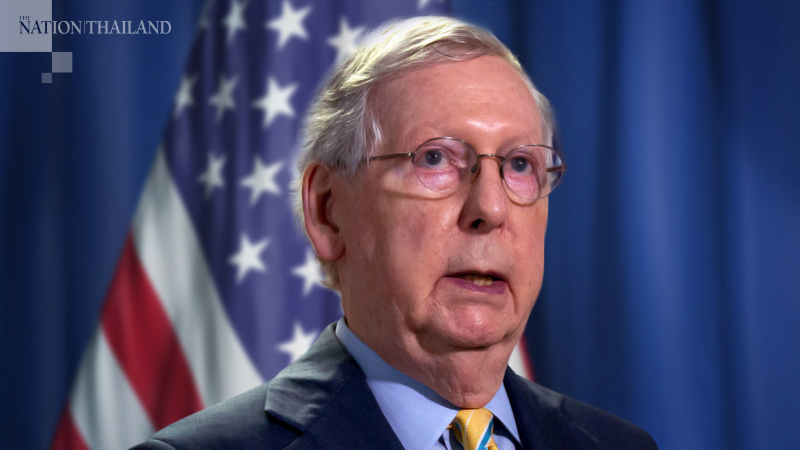
WASHINGTON – Prospects for an economic relief package in the next two weeks dimmed markedly on Tuesday after Senate Majority Leader Mitch McConnell revealed that he has warned the White House not to strike an agreement with House Speaker Nancy Pelosi before the the Nov. 3 election.
In remarks at a closed-door Senate GOP lunch, McConnell, R-Ky., told his colleagues that Pelosi, D-Calif., is not negotiating in good faith with Treasury Secretary Steven Mnuchin, and that any deal they reach could disrupt the Senate’s plans to confirm Judge Amy Coney Barrett to the Supreme Court next week. Republicans have voiced concerns that a stimulus deal could splinter the party and exacerbate divisions at a time when they are trying to rally behind the nominee. The comments were confirmed by three people who spoke on the condition of anonymity to discuss them.
McConnell’s attempted intervention came as Pelosi and Mnuchin continued negotiating over the roughly $2 trillion economic relief package. Pelosi spokesman Drew Hammill said the “conversation provided more clarity and common ground as they move closer to an agreement.” But no deal can become law without McConnell’s blessing, and his direct warning to the White House imperils the chances of any bill becoming law in the next two weeks.
McConnell told reporters Tuesday that if a deal were reached and passed by the House with President Donald Trump’s support he would put it on the Senate floor “at some point” – but did not commit to doing so before the election.
McConnell has not been part of the Pelosi-Mnuchin talks, which have jumped around in chaotic fashion, and had already made his opposition to an enormous new bill clear. Republicans could lose control of the Senate in November’s elections, and senators have made clear to the White House that voting on a huge stimulus deal could mean the end of their majority if it scares away fiscally conservative voters. Mnuchin and Pelosi have continued dancing around a deal for weeks, particularly amid signs that the economic recovery is weakening.
The deal under discussion would provide another round of $1,200 stimulus payments, more unemployment benefits, aid for small businesses, money for coronavirus testing, and support for airlines and hospitals, among other things.
In a Bloomberg interview on Tuesday, Pelosi adamantly denied that she was stringing the White House along and said she wouldn’t be negotiating if she didn’t want a deal. But McConnell’s remarks show the raw political calculations that both parties are dealing with two weeks before the Nov. 3 elections.
The comments emerged amid escalating tensions between some Republican members of Congress and Trump over stimulus negotiations. Trump has in recent days downplayed or dismissed conservative opposition to spending trillions more on a stimulus, saying he wants to spend even more money than Pelosi’s latest $2.2 trillion proposal. Many Republicans already balked at spending more than $1 trillion on this round of relief. Asked about McConnell’s reluctance to the stimulus, Trump said on Tuesday morning: “He’ll be on board if something comes. . . . Not every Republican agrees with me, but they will.”
Pelosi and Mnuchin continued their negotiations Tuesday, talking for 45 minutes as they wrangled over sticking points including liability protections for businesses and state and local aid. Pelosi had said that if they are going to vote on a deal by the end of next week, they need to agree on specific language by the end of this week.
Asked after her conversation with Mnuchin whether that could happen, Pelosi replied: “I hope so. That’s the plan. That’s what I would hope. That’s the hope, let me say that.”
Hammill, her spokesman, laid out the next steps.
“On several open questions, the speaker and the secretary called for the committee chairs to work to resolve differences about funding levels and language,” he said. “With this guidance, the two principals will continue their discussions [Wednesday] afternoon upon the Secretary’s return.” Mnuchin has been traveling in the Middle East as part of a trip to formalize parts of the Trump administration’s policies there.
White House Chief of Staff Mark Meadows told CNBC on Tuesday afternoon that Mnuchin and Pelosi have made “good progress” and that negotiations would continue Wednesday. Still, he said, major hurdles remain, with the negotiators “several hundred billion” dollars apart and at odds over the extent of state and local money.
Meadows also said that he had several conversations with Trump about stimulus negotiations on Tuesday and that the president is “very bullish” about not letting a difference in dollar amounts stand in the way of a deal.
“I want to stress: We’re not just down to a difference of language and a few dollars. We still have a ways to go,” Meadows said. “But I would say the conversations today were productive enough to have conversations tomorrow.”
McConnell declined to tell reporters whether he’d spoken with Trump about the issue or whether Republicans would support what Trump wanted.
“We’d have to see what it was first,” McConnell told reporters after the Senate GOP lunch.
Many Senate Republicans oppose a massive new spending bill, and McConnell is not eager to hold a vote that would divide his conference just before the election, when most Senate Republicans want attention focused on the Barrett nomination.
The scrambling comes amid numerous concerns about the economy. The unemployment rate remains high, the travel industry is in rough shape, and there are growing concerns about problems in the commercial real estate sector. Many restaurants are still struggling, and some continue to go out of business seven months after the pandemic floored the American economy.
On the Senate floor Tuesday, Republicans and Democrats battled over competing views of what should happen with stimulus legislation, trying to score political points with a series of procedural maneuvers. McConnell called a symbolic vote on a bill to inject $260 billion into the small business Paycheck Protection Program. A vote to effectively kill the legislation failed, 40-57, with five Democrats crossing over to vote with Republicans.
Senate Minority Leader Chuck Schumer, D-N.Y., bristled at the move, accusing McConnell of holding “show votes on coronavirus relief,” and countered with several procedural moves of his own that Republicans defeated.
On Wednesday, in a rejection of Trump’s desire for a big new bill, McConnell will try to advance an approximately $500 billion bill that will include jobless benefits for the unemployed, funding for schools and the health-care system, and new small-business assistance. But that bill will exclude many provisions sought by Democrats and Trump, including a new round of $1,200 stimulus payments.
Senate Democrats have lambasted McConnell for trying to advance what they describe as “emaciated” bills that would provide political cover to Republicans without really solving any problems. The approximately $500 billion bill is nearly identical to a piece of legislation McConnell tried to advance last month, which Democrats opposed.
McConnell’s Tuesday remarks indicate that even if Pelosi and Mnuchin do manage to reach a deal, any vote in the Senate would wait until after the election. If Democrats win a number of seats in the November elections, they could seize control of the Senate beginning in January.
Congress earlier this year approved roughly $3 trillion in aid to try and contain the economic fallout. Some of the funds appeared to help numerous sectors of the economy, but problems remain, particularly as certain programs expired.
A poll released Tuesday by The New York Times and Siena College found support for a $2 trillion stimulus package, and many economists have urged policymakers to approve additional fiscal relief.
“The recovery has slowed and without more help it is at risk of backsliding. Neither the virus nor the economic damages it has wrought are gone, and policymakers would be making a serious mistake to act as if they were,” said Adam Ozimek, chief economist at Upwork.
Congress has not passed relief legislation since April. House Democrats passed two far-reaching bills, but Senate Republicans rejected them. A significant minority of Senate Republicans believe that enough money already has been spent and that nothing more needs to be done.
By Syndication Washington Post, Bloomberg · Todd White · BUSINESS
U.S. stocks rose as lawmakers negotiated the size of a potential spending bill to bolster the economic recovery. The dollar weakened.
The S&P 500 bounced back from Monday’s sell-off even as any deal brokered by House Speaker Nancy Pelosi, D-Calif., and the White House likely to face stiff opposition in the Republican-controlled Senate. The index had gotten a boost when Pelosi signaled a compromise remained possible and after Federal Reserve Bank of Chicago President Charles Evans said he’s “somewhat optimistic” about a 2021 economic recovery.
Tech shares mostly shook off the U.S. Justice Department’s decision to sue Google for allegedly abusing its power. Netflix Inc. reports after the market closes. Treasurys slumped, along with government bonds in Europe. Oil climbed toward $41 a barrel.
A rally built on stimulus hopes has investors weighing Pelosi’s deadline of striking a deal today against speculation that the looming election will prove too much of a hurdle to overcome. Yet with Federal Reserve policymakers urging for more fiscal support to complement unprecedented monetary aid, many in the market may be willing to let the deadline come and go.
“The behavior of markets is reflecting optimism that there’s going to be big stimulus by January,” said John Normand, head of cross-asset fundamental strategy at JPMorgan Chase & Co. “I don’t think it’s necessarily a faith that Pelosi and Mnuchin and McConnell will agree to anything substantive by Pelosi’s deadline of today. It’s more of a look-through dynamic.”
In Europe, stocks edged lower. UBS gained after the Swiss firm’s traders performed better than most of their Wall Street rivals in the third quarter.
Leaders in Europe intensified efforts to slow coronavirus contagion, reviving lockdowns in some areas after piecemeal curbs made little impact on a disease that has infected 4.9 million people regionally.
Meanwhile, global cases exceeded 40 million, with the pandemic showing no signs of slowing. In the U.S., surges in Wisconsin and other battleground states pose a challenge for President Donald Trump two weeks before he stands for reelection.
Here are some of the main market moves:
Stocks
– The S&P 500 Index gained 0.8% as of 3:47 p.m. EDT.
– The Nasdaq 100 Index gained 0.4%.
– The Stoxx Europe 600 Index decreased 0.4%.
– The MSCI Asia Pacific Index was little changed.
Currencies
– The Bloomberg Dollar Spot Index fell 0.4%.
– The British pound was little changed at $1.2945.
– The Japanese yen was little changed at 105.48 per dollar.
Bonds
– The yield on 10-year Treasurys increased two basis points to 0.79%.
– Germany’s 10-year yield increased two basis points to -0.61%.
– Britain’s 10-year yield increased two basis points to 0.185%.
– Italy’s 10-year yield rose one basis point to 0.73%.
Commodities
– West Texas Intermediate crude rose 0.9% to $41.19 a barrel.




 From left: Chatupol Sitichai, CEO of The Pixel One Production, Suphajee Suthumpun, Dusit International Group CEO and Puripan Bunnag, director, executive and legal affairs, TCEB