Tourism, people’s purchasing power to be ‘key areas of focus’ for new finance minister
EconOct 12. 2020New Finance Minister Arkhom Termpittayapaisith
By The Nation
New Finance Minister Arkhom Termpittayapaisith said that his economic policy would focus on boosting people’s purchasing power, assisting the tourism sector and accelerating state budget disbursement.
On his first day in office, Arkhom added that his urgent task was to assist businesses suffering from the impact of the Covid-19 outbreak.
He said he had also discussed with Deputy Prime Minister Supattanapong Punmeechaow on plans to boosting liquidity of tourism operators.
When asked if the existing Bt1-trillion borrowing was sufficient to rev up the economy, he said that would depend on the speed of the economic recovery.
The government has continued to launch stimulus packages to revive the economy from the fallout of the pandemic.
The Stock Exchange of Thailand (SET) Index rose by 3.38 points, or 0.27 per cent, to 1,270.52 in the morning session on Monday.
An analyst at Krungsri Securities expected the index to fluctuate between 1,260 and 1,275 despite the ongoing progress in talks on US economic stimulus measures.
“Uncertainty over mass sell-offs in shares to mitigate risks from the political rally on October 14 and the weak third-quarter performance of commercial banks would pressure the index,” he said.
As an investment strategy, he recommended that investors buy:
▪︎ CRC, HMPRO, JMART, COM7, and KTC that benefit from the government’s “Shop Dee Mee Kuen” (Shop and Payback) scheme.
▪︎ TU, PLANB, STGT, COM7, ASIAN and CBG whose third-quarter performance is expected to grow.
The SET Index closed at 1,267.14 on Friday, down 7.69 points or 0.60 per cent. Total transactions amounted to Bt51 billion with an index high of 1,280.81 and a low of 1,264.24.
Government offers personal income tax relief in last quarter to boost spending
EconOct 12. 2020Prime Minister Prayut Chan-o-cha, second right, seen during the announcement of Monday’s Cabinet decisions.
By The Nation
The Cabinet on Monday gave the green light to a new stimulus package granting personal income tax deduction of up to Bt30,000 per person to help boost people’s spending on goods and services, Prime Minister Prayut Chan-o-cha said.
The measure will run from October 23 until December 31 and apply for the 2020 tax year. Around 4 million people are expected to be eligible for this scheme.
The govenment has continued to launch stimulus packages to revive the economy suffering from the Covid-19 outbreak.
Deputy Prime Minister Supattanapong Punmeechaow said that the measures launched in the fourth quarter were estimated to spark a cash flow of Bt200 billion into the economic system.
The price of gold was unchanged in morning trade on Monday, the Gold Traders Association reported.
As of 9.22am, the buying price of a gold bar was Bt28,200 per baht weight and selling price Bt28,300, while gold ornaments were priced at Bt27,697.32 and Bt28,800, respectively.
At close on Saturday, the association announced a change in the precious metal’s price for one time, causing the price to rise by Bt150 per baht weight.
Spot gold price moved to US$1,926 (Bt59,823) per ounce on Monday morning after the price rose by $31.6 to $1,926.2 per ounce at close on Friday from mass buy-ups of the precious metal as safe-haven assets due to the weakening dollar and uncertainty over the rollout of US economic stimulus measures.
The Hong Kong gold price rose by HK$110, opening at $17,800 (Bt71,339) per tael on Monday morning, the Chinese Gold and Silver Exchange Society reported.
Taiwan looks to closer cooperation with Thailand as it celebrates 109th National Day
Oct 12. 2020
By The Nation
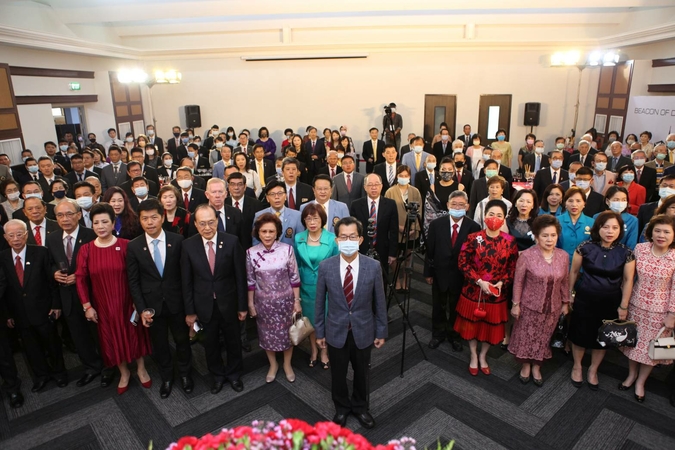
Taiwan celebrated its 109th National Day on Saturday at the Taipei Economic and Cultural Office in Thailand (Office).
Lee Ying-yuan
Lee Ying-yuan, director-general of the Office, presided over the opening ceremony.
More than 150 politicians, executives from various media, overseas Chinese, and Taiwanese businessmen in Thailand attended.
Lee said that in accordance with the Thai government’s preventive measures, the office had to downsize this year’s National Day event.
Lee praised both Taiwan and Thailand for their successful epidemic prevention policies, which can minimise the impact on people’s lives and property.
He said that Taiwan President Tsai Ing-wen had assigned him to serve as a representative of the Taiwanese government in Thailand.
He said more than 5,000 Taiwanese companies operated in Thailand and there are 150,000 overseas Chinese in Thailand. “The investment of Taiwanese businessmen in Thailand is very high. All of them have contributed to the continued growth of Thailand’s economy,” Lee said, adding he intended to continue to join forces with overseas Chinese in building cooperation between Taiwan and Thailand in the post-epidemic era.
Talking about their success in fighting the epidemic, he said Taiwan realised that preventing Covid-19 was a team battle and both the public and private sectors are working together in unity. As a result, Taiwan’s daily mask production is the second highest in the world. He said the government’s effective planning and implementation, along with the cooperation of all people and entrepreneurs, made Taiwan safer today. He said 51 million masks labelled “MIT” had been sent to more than 80 countries, and Taiwan had donated 1.2 million masks to Thailand.
Lee thanked Taiwanese and overseas Chinese businessmen in Thailand for generously donating items for disease prevention, worth up to Bt8 million to various agencies in Thailand under the motto “Taiwan Can Help”, encouraging strong friendship between Taiwan and Thailand.
This year’s Taiwan National Day celebration had three main themes: highlighting the achievements of the Taiwanese government in 2020 in combating the epidemic and international cooperation; democratic governance and Taiwanese unity in passing all obstacles. He said that Taiwan had shown great courage and potential to help other countries and move forward alongside the world.
The Department of Foreign Trade is drafting rules under the anti-dumping and countervailling duties law to protect the local private sector from dumping of imports.
The new rules are expected to be finished soon, said director-general Keerati Rushchano.
Thailand’s second version of the law on the anti-dumping and countervailling duties took effect last November. The added measures will deal with imported products that are processed in order to evade anti-dumping and countervailing taxes.
Sumed Prasongpongchai, deputy director of the Gem and Jewellery Institute of Thailand
By The Nation
Thailand’s export of gems and jewellery in the first eight months of this year rose 32.77 per cent year on year to US$15.206 billion, said Sumed Prasongpongchai, deputy director of the Gem and Jewellery Institute of Thailand.
However, if gold is excluded, then export during the period dropped 43.99 per cent to US$2.94 billion as consumers have been cautious in spending due to the Covid-19 outbreak.
Gold export in the period skyrocketed 97.52 per cent to $12.27 billion, accounting for 80 per cent of the total gems and jewellery export.
Global demand for gold has surged during this period as people are opting for safe-haven assets during the economic crisis.
It cannot be denied that several investors seek investment opportunities abroad than in Thailand, especially un foreign technology companies that are popular among investors worldwide.
One mutual fund which is a good choice for diversifying investment in world-class companies is MFC Global Alpha Fund (MGA), which invests in five mutual funds: BlackRock Global Funds – World Technology (73.48 per cent), Polar Capital Funds – Global Technology (7.98 per cent), Allianz China A Shares (5.42 per cent), Wellington Global Quality Growth Fund (4.82 per cent), and Edgewood L Select US Select Growth I USD (3.34 per cent). Its remaining capital is invested in derivatives to prevent currency exchange loss.
MGA has the policy to invest in foreign funds supervised by securities regulators that are members of the International Organisation of Securities Commission or the World Federation of Exchanges.
Considering MGA’s investment portfolio, BlackRock, Wellington and Polar Capital funds focus on technology shares, such as Apple, Microsoft, Facebook, Amazon, Alibaba, Alphabet and Tencent. Meanwhile, Edgewood L Select US focuses on finance shares that relate to technologies, such as VISA, PayPal and American Tower Corp. Lastly, Allianz China A Shares is a Chinese fund that MGA decided to invest in instead of Western Asset US Money Market to diversify investment as Chinese shares have growth potential.
Considering MGA’s performance over 10 years from 2010 to 2019, the fund generated seven years of positive returns and three years of negative returns, while its average return was 7.78 per cent yearly. The fund has the policy to pay dividends.
MGA’s return over the past year was 39.77 per cent, higher than the average return of other funds of 20.56 per cent, while its return since inception, excluding dividends, was 12.85 per cent. However, the fund’s yearly return was low compared to MSCI All Country World Net Total Return USD Index, which is partly due to the high fees that MGA has to pay to each fund they invest in.
MGA’s highest loss in the past five years was minus 24.42 per cent, while its standard deviation was 13.01 per cent yearly. The fund’s risk was categorised at high level.
The total expenses charged by MGA was 1.23 per cent, lower than the ceiling the fund can charge of 4.16 per cent, while the fund’s back-end fee was 0.25 per cent.
MGA’s strong point is investment diversification in five large mutual funds, but investing in each fund costs high fees, so the fund has to generate returns better than the market.
Sixteen of 36 SET-listed companies have failed to buy back their shares to manage excess liquidity amid the Covid-19 fallout, experts have noted.
After the Covid-19 crisis hit the Stock Exchange of Thailand, several listed companies decided to repurchase shares in order to manage excess liquidity when the companies’ share price dropped.
Since the beginning of this year, 36 listed companies have approved share buybacks, with 12 currently underway.
Of the other 24 companies, five (WP, SPALI, KBANK, SPALI and ZIGA) were successful in buying back all shares; 10 companies (BLAND, BPP, CK, CPF, CPN, EKH, SCP, SPC, STPI and THG) failed to buy back all shares; six companies (CPALL, GUNKUL, PJW, SGP, XO and TKN) did not buy back shares; and three companies (SPCG, TFD and SCB) cancelled the plan.
Apichat Poobunjirdkul, senior strategist at Tisco Securities, said there were many reasons why listed companies were unable to buy back shares or cancelled the plan. Among them was the Bank of Thailand’s instruction to commercial banks to maintain liquidity to deal with the Covid-19 fallout.
Listed companies are unlikely to launch more buybacks over the next few months since the market will not face high volatility or big corrections next year, he added.
He expected companies’ performance in the third and fourth quarters to improve but not recover to 2019 levels.
“We expect listed companies’ profit in the first quarter of 2021 to be higher than in the same period this year, but some companies may face tight liquidity,” he added.
Therdsak Thaveeteeratham, Asia Plus Securities’ executive vice president of Research, said some listed companies announced buybacks to send a signal that their share price was very low and they have high liquidity.
The reason some companies were unable to repurchase all their shares was partly due to Covid-19, which forced several companies to hold cash to run business operations amid uncertainty over the economic recovery.
“Meanwhile, some listed companies decided to increase their capital instead of repurchasing shares. This was because they would be unable to increase their capital if they failed to sell all repurchased shares within three years,” he said.
He added that listed companies’ liquidity is not worrisome because their debt to equity ratio (D/E) was not high and they had healthy financial deposits.
“The decision to buy back shares depends on current market conditions and listed companies’ liquidity,” he added.
By The Washington Post · Erica Werner, Jeff Stein · NATIONAL, BUSINESS, POLITICS, CONGRESS, WHITEHOUSE
WASHINGTON – Senate Republicans and House Speaker Nancy Pelosi, D-Calif., raised intense objections Saturday to a new $1.8 trillion economic relief proposal from the Trump administration, greatly dimming prospects for a coronavirus relief deal before the election.
On a conference call Saturday morning with Treasury Secretary Steven Mnuchin and White House chief of staff Mark Meadows, multiple GOP senators denounced the proposal, attacking the price tag as too big, questioning the overall direction and criticizing individual proposals, according to several people who participated in the call or were briefed on its contents. They spoke on the condition of anonymity to detail the private discussion.
Sen. John Barrasso, R-Wyo., called a proposed expansion of Affordable Care Act tax credits to the unemployed “an enormous betrayal” of the GOP’s long-standing opposition to Obamacare.
“I don’t get it,” said Sen. Rick Scott, R-Fla., of the giant spending proposal that incorporates a number of Democratic priorities that are anathema to the GOP.
Sen. Marsha Blackburn, R-Tenn., predicted that advancing such legislation would prove the “death knell” of the GOP majority.
Sen. Mike Lee, R-Utah, said that the deal could complicate floor timing as the Senate tries to fill the Supreme Court vacancy this month, and hurt Republicans at the ballot box because the Supreme Court fight would no longer be front and center.
The opposition was so fierce that Meadows told the group at one point, “You all will have to come to my funeral” because he would have to take their message back to President Donald Trump. The president has begun pushing aggressively for a big new spending deal he hopes could boost his reelection chances, reversing course after he pulled the plug on talks earlier in the week. Mnuchin sent the White House’s latest offer on Friday.
Almost at the same moment Senate Republicans were on the conference call, Pelosi released a letter to House Democrats that signaled the White House proposal would need significant changes and that it took “one step forward, two steps back.”
Pelosi said the president’s offer did not contain enough spending for unemployment insurance, state and local aid, child care, or other Democratic priorities. She said it also includes “reckless” language on liability protections for businesses and others. House Democrats have been pushing legislation with a $2.2 trillion price tag.
“When the president talks about wanting a bigger relief package, his proposal appears to mean that he wants more money at his discretion to grant or withhold, rather than agreeing on language prescribing how we honor our workers, crush the virus and put money in the pockets of workers,” Pelosi wrote.
Nonetheless, Pelosi wrote that she remained “hopeful” that two sides would find “an agreement on a relief package that addresses the health and economic crisis facing America’s families.” Given Senate GOP opposition, however, it was unclear there was much basis for optimism.
Senate Majority Leader Mitch McConnell, R-Ky., already has voiced skepticism about the prospects for passing a new coronavirus bill ahead of the election.
White House and Treasury officials did not respond to requests for comment on Pelosi’s letter or on the concerns being raised by Senate Republicans.
Saturday’s developments left uncertain whether there was any path forward for a new relief bill, despite millions out of work and multiple signs the economic recovery has slowed. Federal Reserve Chairman Jerome Powell warned just days ago that without additional stimulus there could be a “a weak recovery, creating unnecessary hardship for households and businesses.”
Congress passed four bipartisan bills totaling an unprecedented $3 trillion in new spending in March and April, but since then lawmakers have failed to reach any new agreement and many of the programs approved in the spring have expired. Talks have been revived only to fall apart again several times.
After announcing Tuesday that he was ordering Mnuchin to stop negotiating with Pelosi, Trump changed course after the stock market sunk and some Republicans facing tough reelection races questioned his move. Sen. Susan Collins, R-Maine, one of the most endangered Republican senators in November, was among a small handful of senators who spoke up on Saturday’s call in favor of a new relief bill – though not necessarily the specific deal Mnuchin has offered Pelosi, people familiar with the call said.
That proposal includes provisions many people in both parties support, including a new round of $1,200 stimulus checks, small business support and aid to airlines that have begun mass furloughs after federal aid expired Sept. 30. But in other areas – including unemployment insurance – the two sides are far apart on the price tag, with Democrats supporting $600 weekly unemployment benefits while the administration proposal provides for only $400.
The new administration offer includes $300 billion in state and local aid, an increase from $250 billion in an earlier proposal. But it still falls short of what Democrats want – while at the same time it’s too much for many Republicans to swallow. Excessive state and local aid spending was another concern voiced by GOP senators on Saturday’s call.
Overall, Sen. Lamar Alexander, R-Tenn., told Meadows and Mnuchin Saturday, there’s not much appetite to spend at the levels proposed by the administration.
Additionally, the administration proposal includes some items that Republicans view as poison pills. Republicans say the expansion of Affordable Care Act raises concerns about taxpayer funding of abortions, although Democrats dispute that interpretation of the provision. It also would allow certain undocumented immigrants to receive stimulus checks, another non-starter for many Republicans.
Despite the strong opposition expressed to the most recent proposal offered by Mnuchin, many senators on the call generally indicated they wanted Mnuchin and Pelosi to keep talking, according to the people familiar with the discussion.

 New Finance Minister Arkhom Termpittayapaisith

 Prime Minister Prayut Chan-o-cha, second right, seen during the announcement of Monday’s Cabinet decisions.





 House Speaker Nancy Pelosi/ File photo

