The price of gold rose by Bt50 per baht weight in morning trade on Monday (September 28), the Gold Traders Association reported.
As of 9.27am, the buying price of a gold bar was Bt27,800 per baht weight and selling price Bt27,900, while gold ornaments were priced at Bt27,303.16 and Bt28,400, respectively.
At close on Saturday, the buying price of a gold bar was Bt27,750 per baht weight and selling price Bt27,850 while gold ornaments were Bt27,257.68 and Bt28,350, respectively.
Spot gold price moved to US$1,861 (Bt58,973.66) per ounce on Monday morning after the price dropped by $10.6 to $1,866.3 per ounce at Friday’s close due to the strengthening dollar.
Hong Kong gold price dropped by HK$100, opening at $17,190 (Bt70,288.72) per tael on Monday morning, the Chinese Gold and Silver Exchange Society reported.
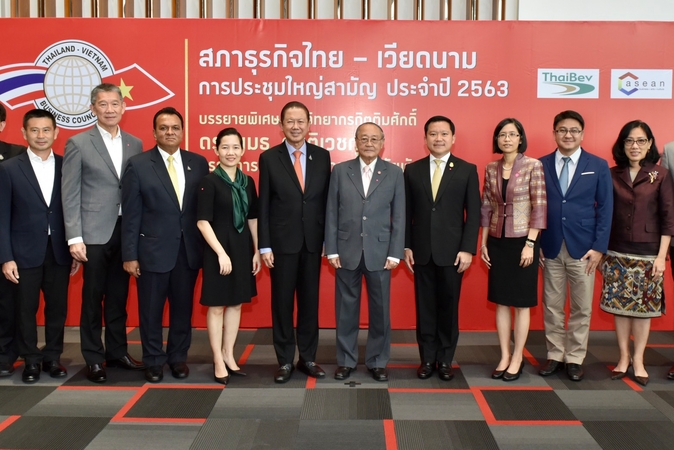
Thailand-Vietnam Business Council held their annual General Assembly for 2020 recently. Pictured are Dr. Sumet Tantivejkul who was guest speaker, Sanan Angubolkul, Thapana Sirivadhanapakdi, Arjaree Sriratanaban, and Natapanu Nopakun.
Dow and Thong Guan mark new milestone in stretch cling film production
Sep 27. 2020
By The Nation
Chemicals giant Dow and Thong Guan have introduced sustainable stretch cling films made with renewable feedstock in the Asia Pacific.
The stretch cling films are produced using bio-based resins, achieving high performance while reducing carbon footprint, the company said.
The world’s leading stretch cling film producers said that the bio-based polyethylene (bio-PE) marked a milestone in the region’s commercialisation of a plastics offering made from renewable feedstock, enabling industry providers to produce high-performance plastics while reducing carbon footprint.
In a joint effort, Thong Guan will be using Dow’s bio-based resin derived from renewable feedstock. The feedstock comes from tall oil, a residue of paper production, from sustainably managed forests. Unlike other alternative renewable feedstocks, it does not compete with the human food chain, and no extra land is required for its production, the companies said.
Nano Bio, the new range of stretch cling films by Thong Guan, will be made using Dow’s linear low-density polyethylene.
“To achieve our new sustainability target of protecting the climate, Dow is committed to implementing and advancing technologies to manufacture products using fewer resources, thereby helping our customers to reduce their carbon footprint. Introducing Dow’s first bio-based polyethylene in Asia Pacific based on renewable feedstock is an important step in this direction,” said Bambang Candra, Asia Pacific commercial vice president of Dow Packaging and Specialty Plastics.
“In addition, as a part of the new sustainability targets, Dow is also committed to stopping the leakage of plastic waste into the environment by enabling 1 million metric tonnes of plastic to be collected, reused or recycled by 2030 and closing the circular economy loop by having 100 per cent of its products sold into packaging applications be reusable or recyclable by 2035.”
“This is a landmark moment for Dow. Introducing bio-based resins for the first time in Asia Pacific, our fastest-growing market, is key in advancing a circular economy. We are proud to embark on this journey with our long-term partner, Thong Guan, and further both our sustainability offerings in order to meet our environmental goals,” said Eunice Ch’ng, senior marketing manager, Dow Packaging and Specialty Plastics, Asia Pacific.
“We are committed to preserving the environment and resources for the future world. The continuous collaboration with Dow illustrates our dedication to offering renewable products and promoting sustainability,” said Ang Poon Chuan, managing director, Thong Guan Industries. “With Dow’s bio-based resins, our Nano Bio reduces the use of plastics while maintaining the same high-performance, thus meeting our customers’ business and sustainability needs.”
MEA conducts e-bus test run, in push for new era of electric vehicles
Sep 26. 2020
By THE NATION
The Metropolitan Electricity Authority (MEA) on Friday undertook a test run of an electric bus or e-bus, that it has been developing in cooperation with Bangkok Mass Transit Authority (BMTA) and National Science and Technology Development Agency.
Manas Arunwattanaporn, MEA director of research and development, said the project aims to turn old BMTA buses into electric buses to promote the use of renewable energy and reduce air pollution in metropolitan areas, including PM 2.5 dust particles.
“The project is supported by Chokenamchai Group and Sakun C Innovation Ltd, who are leaders in electric-vehicle manufacturing located in Suphanburi province.”
The demonstration session was also joined by Namchai Sakunchokenamchai, president of Chokenamchai Group and Weeraphol Techaphasuksanti, chief executive officer of Sakun C Innovation.
“We hope that the introduction of an e-bus will usher in a new era of electric vehicles in Thailand, especially in public transport, which will help reduce the country’s reliance on fossil fuel, in keeping with the government’s energy policy,” added Manas.
“The project should help push Thailand to be a hub for future research and development in modern technology for electric vehicles,” he added.
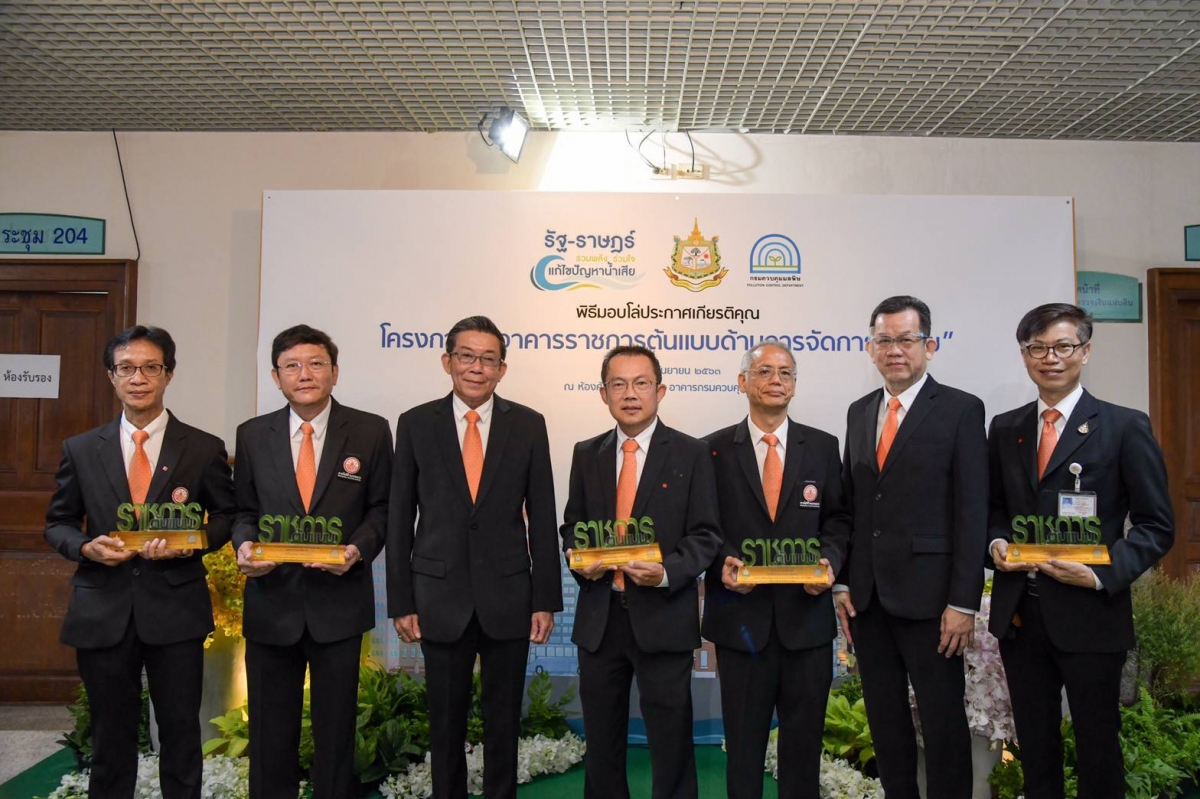
Five branches of the Metropolitan Electricity Autjority (MEA) have won gold awards from the Ministry of Natural Resources and Environment for government buildings with efficient waste water management.
The MEA offices in Thonburi, Bangkhuntian, Samsen, Yannawa, and Bangkhen won the honour.
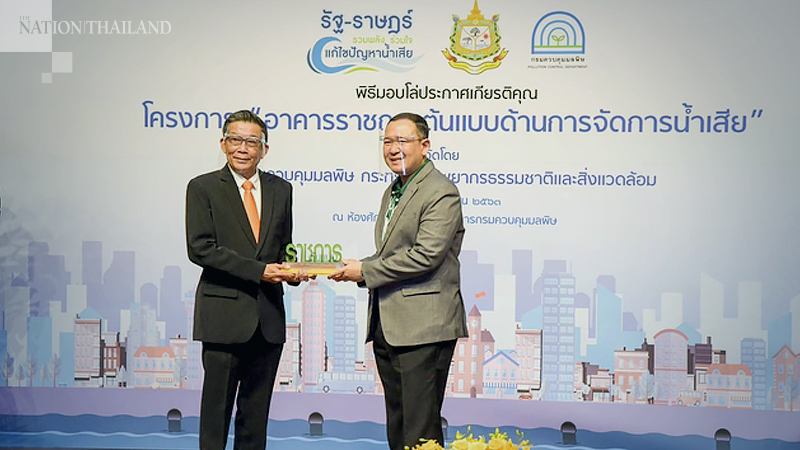
Somboon Somdulkanok, MEA deputy director-general, received the honorary plaques from the representative of the Pollution Control Department at the Ministry of Natural Resources.
The MEA said it remained committed to providing quality service to customers in metropolitan areas while promoting environment conservation and sustainable management of water resources.
Dtac Business offers new solutions for corporate clients
Sep 25. 2020
By The Nation
Dtac Business, a Total Access Communications (Dtac) unit created to provide solutions to corporate customers, is highlighting three new offerings to help Thai businesses leapfrog into a digital future.
• Mobility solution: A simple package with zero hidden fees that offers unlimited free calls to all networks and “worry free” SIMs that automatically upgrade data packages. This means existing clients are guaranteed plans that are equally attractive as those offered to new customers. The service also covers device care and virtual PBX for a more efficient management of calls and data usage to keep costs low.
• IoT solution: This package is integrated with Dtac’s own technology, including a managed IoT cloud platform and 4G IoT SIM connectivity. The solution offered includes machine to machine (M2M) links with SIMs supporting communications between devices such as ATMs, vehicles and telematics. Users will also be provided with consultancy services on IoT investment that is tailored to each industry.
• SmartConnect: A turnkey cloud solution that enables remote work, boosts collaboration and heightens security. Dtac Business is adopting multiple cloud services, building on the provider’s strength in connectivity and mobility, as well as synergising with strategic partners in leading cloud services.
Dtac is also offering customisation of multi-cloud services to offer innovative solutions. Its cloud solutions are suitable for both large corporations and SMEs, making operations more agile and efficient.
Dtac Business has also launched an e-care and e-store to cater to changing customer behaviour, where consumers prefer to manage their call and data plans themselves. Dtac has also launched a new business call centre to cater to corporate clients.
Rajiv Bawa, Dtac’s chief executive officer, said: “Business is always tough, but 2020 is particularly disruptive. Making the need for simple, worry-free solutions all the more pressing in Thai companies, particularly SMEs. They need data and call packages that are affordable and without extra charges. They need simple IT tools that can be implemented without an IT team, and that can help make their data both more secure and more easily accessible remotely. And finally, all customers expect improved digital channels. That pressure is both on our customers and on us, which is why we’ve launched a new e-care platform.
“Much of the pressure to digitalise is coming one or two years earlier than anticipated. We want to make the digital future an opportunity rather than a threat for our clients. We can help them embrace digital solutions internally but also in their communication with their customers, allowing them to grow their business with touch-free experiences adapted to the new normal,” he said.
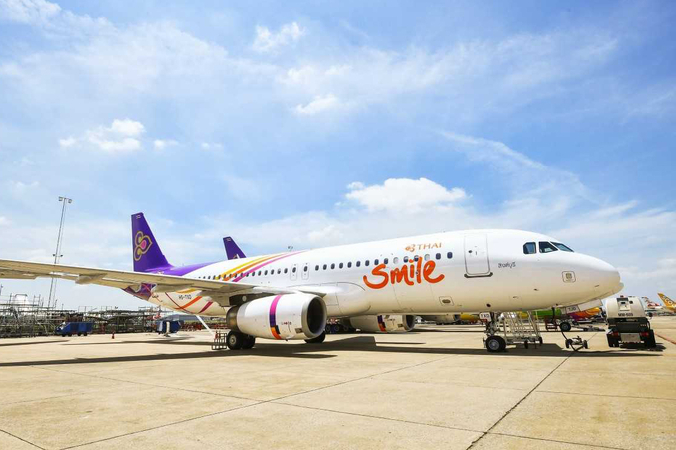
Thai Smile Airways is planning flights to Nan in the North and Nakhon Phanom in the Northeast, seeing the potential for tourism growth in these two provinces.
Chief executive officer Charita Leelayudth said that the carrier had resumed domestic flights on June 1 and had got a good response from passengers. Its cabin factor is between 60 to 70 per cent.
The carrier launched a new route from Bangkok to Nakhon Si Thammarat on September 10.
Bankers are optimistic that rising bad debts driven by Covid-19 are manageable, though the second phase of the moratorium offered by many banks will end next month.
They estimate non-performing loans (NPLs) to rise to 5 per cent by the end of this year, up from 3 per cent at the end of last year.
Siridej Aungudomsin, senior executive vice president at Bangkok Bank (BBL), said on Friday that though bad debt was on a rising trend, there would be no repeat of the situation during the 1997 Asian financial crisis when it skyrocketed to 40 per cent. NPLs were expected to stay at around 3 to 5 per cent currently, he said.
About 70 per cent of small and medium-sized enterprises (SMEs) clients of BBL have not requested an extension of the debt moratorium after the first phase of assistance implemented in March came to an end, he said.
The impact of the Covid-19 outbreak has been severe, but Thai banks are resilient due to their strong capital base and ample liquidity, he said.
BBL is still offering customers debt restructuring in order to help them survive the pandemic crisis, he added.
Surat Leelataviwat, executive vice present at Kasikornbank, revealed that as of June 30, all commercial banks assisted a large number of customers whose combined loans amounted to Bt4.5 trillion, representing 31 per cent of total loans of Bt14 trillion.
SMEs were the most affected group and 23 per cent of their total Bt4 trillion debt was restructured and 26 per cent were allowed a moratorium.
Of the SMEs, 100,000 are customers of Kasikornbank. The bank conducted a survey and found that 80 per cent of them do not need extra financial support. Only 400 firms closed their businesses. “It is quite surprising that the situation is not as serious as previously estimated,” he said.
Rak Vorrakitpokatorn, president of Thai Credit Guarantee Corporation, said that NPLs among SMEs were 6 to 6.5 per cent in the second quarter, up from 5.6 per cent of the total Bt6 trillion loans at the end of last year.
Some have forecast significant NPLs concealed in the debt moratorium and if there were no debt aid, the NPLs could spike to 20 to 30 per cent of total loans, he said. He was also optimistic that bad debts would be manageable.
Niyot Masavisut, president of Sukhumvit Asset Management Co, said that about 100 clients had requested debt moratorium and 40 per cent of them could continue their businesses, while the remaining 60 per cent have requested extra assistance, he said.
He predicted NPLs to rise in the next two years, while banks and over 60 asset management companies would work together to tackle the bad debt. NPLs would rise to 5 per cent this year, up from 3 per cent last year, he added.
The cleaning and disinfection sector has boomed during the Covid-19 pandemic, according to the Department of Business Development (DBD).
From January to August, 218 companies in the segment were set up with total registered capital of Bt278.52 million, said DBD deputy director-general Sorada Lertarpachit.
Highlighting the future potential for cleaning services, she said average yearly applications for construction of buildings now totalled about 60 million square metres. The service fee for cleaning and disinfection is currently about Bt15-20 per square metre.
There are currently 3,143 registered cleaning and disinfection companies in Thailand.
The Stock Exchange of Thailand (SET) is expected to face volatility during the fourth quarter of this year due to the US presidential election and the SET’s zero plus tick rule, experts said.
Tisco Securities explained that the outlook for the Thai stock market this year was gloomy, especially during the first quarter when the SET fell from the highest at 1,850 in the previous year to the lowest at 969. The index then rebounded to 1,400 in the second quarter before falling to 1,250 last week. The index this year still contracted by approximately 20 per cent compared to the previous year.
Considering transactions so far, foreign investors made net sales of Bt270 billion, but individual and institutional investors made net buys of Bt200 billion and Bt67.5 billion, respectively.
Apichat Poobunjirdkul, Tisco Securities’ senior director, expected the SET to fall at the beginning of the fourth quarter due to domestic and international negative factors.
“Domestic factors include risk of political unrest when student-led protesters hold a big political rally in October this year and extension of the state of emergency, while international factors include the US presidential election, Covid-19 outbreak, and delay in the rollout of US economic stimulus measures,” he said.
“These factors will cause a decline in economic data and lead to mass sell-offs of stocks in the next two months.”
Meanwhile, he expected the index to rebound later in the fourth quarter, as the US presidential election would be over and cash flow direction would be more visible, while a Covid-19 vaccine would be ready and the improvement in listed companies’ profit are expected to be seen in the first quarter of next year, resulting in confidence among investors.
For investment strategy, he said investors should buy stocks with growth potential when the index falls to 1,250, such as food, healthcare and small-cap shares.
“The securities company aims to cut the index forecast for the end of this year to between 1,250 and 1,300 points from the current 1,400, while the index low and high are expected to be at 1,200 and 1,300, respectively,” he added.
Koraphat Vorachet, director of research and investment at Capital Nomura Securities, expected the SET to face volatility at the beginning of the fourth quarter, setting the index’s support line at between 1,150 and 1,200 and the resistance line at 1,330.
He said the market is preparing to deal with risks from the SET’s move to use the zero plus tick rule that allows investors to short-sell stocks at a price equal to the trading price from October 1 onwards.
“Currently, the SET uses an uptick rule that forces investors to short-sell stocks at a price higher than the trading price to mitigate volatility in the index, which helped reduce the value of short sales to Bt500 million per day from Bt3 billion per day before the Covid-19 outbreak,” he explained.
“After the zero plus tick rule comes into effect, the value of short sales is expected to be equal to the value before the Covid-19 outbreak, but it depends on Thai stock market fundamentals and the country’s economic recovery.”
He said after the result of the US presidential election is known, the Covid-19 outbreak and Covid-19 vaccine development would influence the SET from November to December, adding that there was no sign indicating foreign investors would invest in the Thai stock market.
“It depends on the economic recovery and listed companies’ performance whether Thai and other Asian indices would gain positive sentiment from foreign investors’ asset allocation after the US presidential election,” he said.
For investment in the last quarter of this year, he advised investors to pick stocks whose performance is expected to improve, such as export, food, beverages and electronic parts group.
“Also, investors should invest only 25 per cent in stocks during the market correction at the beginning of the fourth quarter,” he said.
He added that a few institutional investors would engage in window dressing at the end of the third quarter because they often do that in the middle of the year and the year-end.
Kitichan Sirisukarcha, from CGS-CIMB Securities (Thailand), expected the Thai stock market to face low volatility between 1,200 and 1,330 in the fourth quarter and move to 1,280 at the year-end because the market has always responded to positive and negative sentiments quicker than other markets, adding that listed companies’ third-quarter performance would be better than the previous quarter.
Also, he expected foreign investors’ net sales to hit a new high from the current high of Bt287 billion in 2018 due to lack of positive sentiment.
As investment strategy, he advised short-term investors to speculate on profits, and long-term investors to buy shares after the US presidential election.
“If the Covid-19 situation improves, we recommend buying retail, oil refinery and hospital shares,” he said.