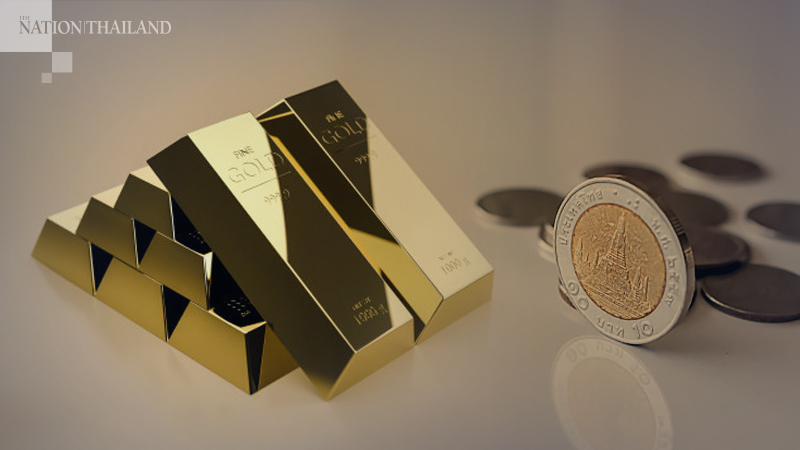
The price of gold was unchanged in morning trade on Friday, the Gold Traders Association reported.
As of 9.26am, the buying price of a gold bar was Bt28,750 per baht weight and selling price Bt28,850, while gold ornaments were priced at Bt28,227.92 and Bt29,350, respectively.
The price of gold rose by Bt200 per baht weight at close on Thursday. The association announced changes in the precious metal’s price seven times.
Hong Kong gold price rose by HK$40, opening at $18,010 (Bt72,716.94) per tael on Friday morning, the Chinese Gold and Silver Exchange Society reported.
Spot gold price moved to US$1,946 (Bt60,888.41) per ounce on Friday morning after the price rose by $9.4 to $1,964.3 per ounce at close on Thursday.
Gold gained positive sentiment from the weakening dollar and the European Central Bank’s resolution to maintain the interest rate and bond purchase limit during the meeting yesterday.
Mortgage rates slide to record-low 2.86% for 30-year loans
EconSep 11. 2020A potential home buyer is reflected in a mirror during an open house in Columbus, Ohio, on Dec. 3, 2017. MUST CREDIT: Bloomberg photo by Ty Wright.
By Syndication Washington Post, Bloomberg · John Gittelsohn · BUSINESS, US-GLOBAL-MARKETS
Mortgage rates in the U.S. dropped to another record low, adding fuel to a housing market that’s been a key source of strength for the pandemic economy.
The average for a 30-year, fixed loan was 2.86%, down from 2.93% last week and the lowest in almost 50 years of data-keeping by Freddie Mac. It was the ninth time since the coronavirus started roiling financial markets that rates fell to a new low. The previous record, 2.88%, was reached in early August.
Cheap mortgages have ignited a housing rebound, driving sales of both new and existing homes and putting money back into the pockets of borrowers who have been able to refinance.
Still, the rally faces challenges from persistent job losses and an inventory shortage that’s pushing up prices, reducing the pool of people who can afford to buy a house.
“Heading into the fall, it will be difficult to sustain the growth momentum in purchases because the lack of supply is already exhibiting a constraint on sales activity,” Sam Khater, Freddie Mac’s chief economist, said in a statement Thursday.
Mortgage rates dipped below 3% for the first time in July and have continued sliding as the Federal Reserve keeps its benchmark rate near zero.
Based on the yield for 10-year Treasuries, which typically guides mortgage rates, borrowing costs could continue sliding, according to Tendayi Kapfidze, chief economist at LendingTree.
“If the spread narrows to where it was before Covid, it can go as low as 2.3%,” he said.
The lower borrowing costs have led to a flood of applications for refinancing and new purchase loans, particularly as Americans look for more space for home offices and remote learning.
Nearly 18 million homeowners with good credit and at least 20% equity stand to cut at least 0.75% off their current rate by refinancing, according to a report this week by Black Knight Inc.
There was pent-up demand for housing when the pandemic hit, with millennials aging into homeownership. But with some sellers reluctant to homes on the market, inventory has been tight.
That’s helped prop up homebuilders, which saw their shares hammered when the coronavirus shut down the U.S. economy. An index that tracks the industry has gained nearly 150% since the stock market hit a bottom on March 23 and is trading close to a record high.
The question is if the housing boom can continue amid the economic fallout from the pandemic. Some potential buyers, eager to take advantage of low rates, might not get approved for loans, while higher prices are exacerbating the shortage of affordable housing.
Higher home prices are starting to erode the benefits of cheaper mortgages, according to George Ratiu, senior economist at Realtor.com.
“For many young, first-time buyers, the shift is reducing affordability, just as they are ready to embrace homeownership,” he said.
By Syndication Washington Post, Bloomberg · Claire Ballentine, Katherine Greifeld · BUSINESS A fresh sell-off in megacap technology shares sent stocks to the fourth loss in five days as investors remain worried that valuations stretched too far in a five-month rally. Treasurys rose with the dollar.
The S&P 500 dropped as much as 2%. Volatility has been even more prevalent in the Nasdaq 100, where close-to-close runs have been at least 1% for seven sessions. Energy companies, a small cohort in major averages, plunged as crude dropped back toward $37 a barrel in New York.
Treasurys reversed losses as the equity decline picked up speed. Gold advanced, while copper tumbled. The dollar strengthened versus major peers.
Volatility continued to grip American financial markets after a rally that added $7 trillion to U.S. equity values over five months. Reasons for caution were plenty, though no single factor alone set the tone. Signs mounted that the pandemic continues to upend the global economy. In the U.S., data showed cracks in recent labor-market strength, while Europe re-emerged as a virus hot spot. Congress remained far apart on a fresh relief bill.
“We likely have not seen the full correction play out yet,” said Matt Forester, chief investment officer at BNY Mellon Lockwood Advisors. “It’s difficult to point to a specific catalyst, but currency volatility rose today on concerns about a hard Brexit and we’ve seen some worse news about the virus in Europe.”
In Europe, the pound fell amid renewed Brexit tensions. The euro jumped 0.7% the region’s central bank was said to agree that there’s no reason to overreact to the currency’s strength. BP Plc slipped after making its first venture into offshore wind power with a $1.1 billion purchase of U.S. assets from Norway’s Equinor ASA.
After a volatile few days, technology stocks are still front and center with a fragile rally under threat. Monday,, the S&P 500 rose the most since June overnight and the Nasdaq rebounded following an 11% rout that took the gauge down to its 50-day moving average, a closely-watched technical level.
“It is too early to declare that the growth rally has ended, but this week should be a reminder for investors that while the exuberance remains, the storm is never far away,” Geir Lode, head of international global equities at Federated Hermes, wrote in a note to clients.
These are the main moves in markets:
Stocks
– The S&P 500 Index fell 1.6% as of 2:45 p.m. EDT.
– The Nasdaq 100 lost 2.1%.
– The Stoxx Europe 600 Index declined 0.6%.
– The MSCI Asia Pacific Index advanced 0.7%.
– The MSCI Emerging Market Index increased 0.4%.
Currencies
– The Bloomberg Dollar Spot Index rose 0.2%.
– The euro gained 0.2% to $1.183.
– The British pound fell 1.6% to $1.277.
– The Japanese yen was flat at 106.15 per dollar.
– The offshore yuan was little changed at 6.8315 per dollar.
Bonds
– The yield on 10-year Treasurys fell two basis points to 0.68%.
– The yield on two-year Treasurys fell two basis points to 0.1389%.
– Germany’s 10-year yield jumped two basis points to -0.44%.
– Britain’s 10-year yield gained one basis point to 0.247%.
– Japan’s 10-year yield dipped less than one basis point to 0.028%.
Commodities
– West Texas Intermediate crude declined 0.6% to $37.53 a barrel.
Urgent 2-year Covid recovery plan set for Cabinet approval
EconSep 11. 2020Danucha Pichayanan, deputy secretary-general of the National Economic and Social Development Council (NESDC)
By The Nation
The National Strategy Plan has been redrafted with urgent changes to drive economic recovery after the Covid-19 crisis, the planning agency said on Thursday.
The revised plan for 2021-2022 will be proposed to Cabinet next week, said Danucha Pichayanan, deputy secretary-general of the National Economic and Social Development Council (NESDC).
The so-called Special Strategy Master Plan focuses on foundations to support economic recovery and transformation by ensuring people have jobs to survive, vulnerable groups are cared for, and local communities have employment and opportunities.
The new draft master plan features three frameworks – coping, adapting, and transformation for sustainable growth – in four areas of development: Local economy, future growth, human capital, and enabling factors.
Danucha said the national strategy would be revised again in 2022.
Meanwhile new members have been appointed to posts in the National Strategy Management Committee, which is responsible for writing the strategy.
The security post has been taken by National Security Council secretary-general Gen Somsak Rungsita.
Tasked with building competitiveness is former Industry Minister Atchaka Sibunruang.
Human resources goes to Kritsanapong Keeratikorn, chairman of the Research Fund Policy Committee.
Opportunity creation and social equality is the responsibility of Enu Susuwan, from the board of Learning Institute For Everyone (LIFE).
The panel’s Environment chair goes to Thanawat Jarupongsakul, a geology academic, while government management systems goes to Pongpayom Wasa-puti, a former Interior Ministry permanent secretary.
Sakchai Peechapat, a Thai Bankers Association executive, said Thursday’s National Strategy Committee meeting focused on ways to boost recovery of the grass-roots economy.
The government will spend Bt1.9 billion from the 2021 budget to boost organic farming in Thailand. The money will fund development of 209 agricultural projects, government deputy spokesperson Ratchada Thanadirek announced on Thursday.
The committee tasked with promoting organic agriculture also endorsed an organic action plan for 2017-2022, she added.
The plan calls for collaboration between seven ministries to achieve three goals for the organic sector: R&D for agriculture, creation of new products and services, and developing markets for the products.
Ratchada said the global market for organic produce is worth more than US$100 billion (Bt3.1 trillion) and is growing at a rate of 20 per cent per year.
The key organic markets are Europe, North America, China, Australia and Southeast Asia. The organic market in Thailand is worth about Bt3 billion annually.
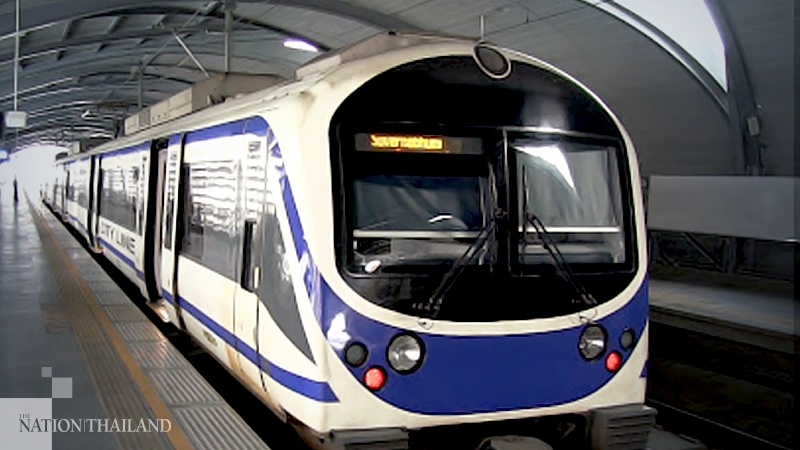
SRT Electrified Train Co Ltd (SRTET), operator of the Airport Rail Link, is seeking approval from the State Railway of Thailand (SRT) to reduce fares from Phya Thai to Suvarnabhumi Airport for three months from October onwards.
The first low-fare promotion expired in June this year.
SRTET president Suthep Pangpeng said the aim was to ease the cost of living for people in line with Transport Minister Saksayam Chidchob’s policy.
SRT board is expected to consider the proposal this month.
The proposal is to cut fares from between Bt15-Bt45 to Bt15-Bt25 for Smart Pass holders (adults) during the off-peak hours of 5.30am to 7am, 10am to 5pm and 8pm to midnight on weekdays.
Passengers travelling to one station will be charged Bt15, two stations Bt20, while a flat rate of Bt25 will be applied to travel beyond three stations.
Transport Ministry accelerates study on South land bridge project
EconSep 11. 2020Transport Minister Saksayam Chidchob
By The Nation
Transport Minister Saksayam Chidchob is calling on the Office of Transport and Traffic Policy and Planning to complete the feasibility study on the “southern land bridge” project linking the Gulf of Thailand and Andaman Sea within a year.
The project also includes the development of a deep-sea ports in Chumphon and Songkhla provinces, a double-track railway between Chumpon and Ranong as well as a motorway.
Saksayam said his ministry will study investment options for the project, which should be on a public-private partnership basis.
He said bids will be called for the project in its entirety, not separately, adding that the combined value of the project is estimated at Bt100 billion.
Prime Minister Prayut Chan-o-cha had said that he wants this land-bridge project to be another new economic engine like the much-touted Eastern Economic Corridor.
Meanwhile, National Economic and Social Development Council secretary-general Thosaporn Sirisamphand said this project is part of the government’s master plan for the economic development of the South.
Danucha Pichayanan, NESDC deputy secretary-general, said the project development will be based on existing facilities, including the deep-sea port in Ranong. A similar port will be developed in Chumphon and linked to the one in Ranong with a double-track railway.
The railway, which is expected to cost Bt45.84 billion, will be 108 kilometres long and feature nine stations.
Danucha said the council will visit the areas between Chumphon and Ranong to hear people’s opinions about the project.
Experts have advised investors to lean towards Thai stocks in small- and mid-cap companies, which are forecast to perform better than large-cap stocks.
Over the past eight months, smaller stocks on the Stock Exchange of Thailand (SET) and Market for Alternative Investment (MAI) have outperformed their large-cap counterparts, despite sharp drops driven by the Covid-19 crisis in the first quarter this year.
In the second quarter, the smaller-cap MAI and sSET indices rose 4.8 per cent and 1.9 per cent respectively, while the SET and SET100 fell 3.4 and 7.3 per cent.
When market growth rate is low, investors will pay premiums for stocks that show grow potential, said Trinity Securities assistant managing director Nuttachart Mekmasin.
In terms of three aspects – fundamentals, share value and liquidity – small and mid-cap stocks had earned stronger market sentiment than large-caps,” he said.
Brokerages had also cut their profit forecasts for large-cap stocks more than for small- and mid-cap stocks, he added.
“In 2021, we expect returns on sSET stocks to rise by three times compared to a 20 per cent rise for SET50 stocks,” Nuttachart said.
In terms of share value, he said the price to earnings ratio (P/E) of SET50 stocks is still higher than sSET stocks.
In terms of liquidity, he said the money supply (or M2) had increased significantly since March this year, while individual investors continued to make net buys in stocks every day.
“Increased M2 money supply is often in line with trading by individual investors and growth in small- and mid-cap stocks, so we believe that small- and mid-cap stocks will perform well in the fourth quarter of this year,” he said. Meanwhile after large-cap stocks’ recovery, investors would be disappointed by their third-quarter performance.
Sunthorn Thongthip, Kasikorn Securities chief of analysis, said the price of smaller stocks would rise faster after they were hit by mass sell-offs during the Covid-19 crisis.
“Also, the price of small-cap stocks often increases when the market rises, as investors are ready to take more risks with remaining liquidity,” he said.
As such, the price of small-cap stocks would increase until the US Federal Reserve decided to tighten monetary policy, he added.
However, “the Fed will maintain interest rates at near zero until 2022 and loosen monetary policy to stimulate the US economy, so we expect the price of small-cap stocks to increase more than large-caps,” he said.
“Therefore, mass sell-offs of small-cap stocks followed by positive Covid-19 vaccine news will enable investors to buy back these shares,” he added.
On small- and mid-cap stocks, Trinity Securities advised buying shares whose profit will increase until 2021 or perform better than 2019, while Kasikorn Securities advised investing in companies unaffected by the Covid-19 fallout and benefitting from a Covid-19 vaccine.
The Stock Exchange of Thailand (SET) Index closed at 1,290.89 today (September 10), down 2.51 points or 0.19 per cent. The volume of total transactions stood at Bt42.183 billion with an index high of 1,298.33 and a low of 1,286.15.
During the morning session, an analyst at Krungsri Securities said he expected the index to rebound to between 1,300 and 1,305 points before falling in response to a rise in the US Dow Jones Index.
“The Dow Jones Index skyrocketed to over 1.6 per cent after investors went in for mass buy-ups of stocks that had dropped sharply, especially in the technology sector,” he said.
“Also, the index gained positive sentiment from the rise oil prices and news that pharmaceutical multinational AstraZeneca will resume its third phase of clinical trials for the Covid-19 vaccine next week.”
The analyst advised investors to buy stocks for speculation as uncertainty related to intensifying US-China trade war and lack of domestic factors will continue pressuring the index.
Top 10 stocks with the highest trade value today were SCC, STGT, BAM, CPALL, AOT, PTT, MINT, SUPER, TASCO and CRC.
As of 4.30pm, the price of oil dropped by US$0.49 or 1.29 per cent to $37.56 per barrel, while gold dropped by $0.10 or 0.01 per cent, to $1,954.80 per ounce.
Other Asian indices were mixed:
Japan’s Nikkei Index closed at 23,235.47, up 202.93 points or 0.88 per cent.
China’s Shanghai SE Composite Index closed at 3,234.82, down 19.80 points or 0.61 per cent, while Shenzhen SE Component Index closed at 12,742.85, down 118.90 points or 0.92 per cent.
Hong Kong’s Hang Seng Index closed at 24,313.54, down 155.39 points or 0.64 per cent.
South Korea’s KOSPI Index closed at 2,396.48, up 20.67 points or 0.87 per cent.
Taiwan’s TAIEX Index closed at 12,691.75, up 83.17 points or 0.66 per cent.
The Stock Exchange of Thailand was highly volatile in the morning session of Wednesday (September 9) after the price of oil dropped to below US$40 per barrel for the first time in three months and AstraZeneca announced it was postponing the third phase of Covid-19 vaccine clinical trials due to severe side effects.
However, experts said SET technically rebounded in the afternoon session after falling almost 40 points for the first time in three working days. The index closed at 1,293.40, down 0.40 points.
Total transactions amounted to Bt47.5 billion with an index high of 1,295.55 and a low of 1,276.38. Foreign and institutional investors made net sales of Bt812 million and 73.30 million, respectively.
Wikij Tirawannarat, Bualuang Securities’ director of individual customer research, said the Thai stock market will fluctuate sideways and downwards due to domestic and international economic and political situations, especially the upcoming US presidential election.
“Also, trade volume may not rise much because foreign fund managers take a long summer break between September and October every year,” he said.
He advised long-term investors to purchase stocks gradually when the index falls because the economic downturn should be resolved soon.
“For short-term investors, we advise speculating in line with market trends, especially with stocks in SET 50 index. We recommend selling stocks when the index rises by 3-5 per cent and buying stocks when the index falls,” he added.
Meanwhile, Koraphat Vorachet, Capital Nomura Securities’ director of research and investment, said the Thai stock market was currently fluctuating sideways to sideways down due to the lack of positive sentiments to boost investment and international factors.
“We expect the index to fluctuate between 1,270 and 1,301 during this time,” he said.

 A potential home buyer is reflected in a mirror during an open house in Columbus, Ohio, on Dec. 3, 2017. MUST CREDIT: Bloomberg photo by Ty Wright.
 Danucha Pichayanan, deputy secretary-general of the National Economic and Social Development Council (NESDC)
 Government deputy spokesperson Ratchada Thanadirek
 Transport Minister Saksayam Chidchob