CorporateSep 09. 2020CP Foods CEO Prasit Boondoungprasert
By The Nation
Charoen Pokphand Foods (CP Foods) insists its feed operation is unlikely to be affected by the 7-per-cent rise in US soybean prices.
CP Foods CEO Prasit Boondoungprasert said soybean is not the main raw material in CP’s animal feed, and the the company has stocks of soybean to last through early 2021.
Meanwhile US soybean prices are expected to drop in the first quarter of 2021 as new cultivation begins and demand from China’s big buyers drops.
“Due to the Covid-19 outbreak, CP Foods is well prepared in terms of imported supplies, especially feed materials which must be pre-ordered and sourced sustainably. In addition, shipping costs have dropped significantly thanks to falling fuel prices, resulting in better cost management,” said Prasit.
CP Foods added that Thailand’s pork production is unlikely to be damaged by the outbreak of PRRS (porcine reproductive and respiratory syndrome) in the border provinces of Tak and Mae Hong Son. It is confident that the Department of Livestock Development plus strong biosecurity at large pig farms and will control the outbreak effectively. Consequently, the company predicts that domestic pork prices will remain high.
Pork prices in export markets Vietnam and China are also on the rise, which would help CP foods achieve its targets, it added.
Kingsford Securities, To Exit (2Ext) and Kudun and Partners (KAP) are getting together to take on the role of advisers to help start-ups on their journey to success.
With start-ups playing an integral role in Thailand’s economic growth thanks to their innovation and competitiveness, each of the parties in the collaboration can use their distinct expertise to help them.
Kingsford Securities, for instance, can use its experience in the securities market to provide financial advice, while consulting firm 2Ext can take on the role of a start-up adviser, and law firm KAP can provide advice on law and the rules and regulations governing business.
Woranun Thaworanun, managing director and chief of investment banking at Kingsford Securities, said: “One of the most challenging aspects for Thai start-ups is funding. Funding is always the most important recipe for the business. Kingsford Securities is part of this collaboration as a financial adviser to strengthen and grow start-ups. Our collaboration understands entrepreneurs and their start-ups well. We will make sure their talent meets commercial success.”
Nicky Nattanuch, managing director of 2Ext, said: “2Ext is poised to help start-ups tackle obstacles from different dimensions. We have prioritised our services for early and growth-stage start-ups because of the belief in our motto that the ‘first step matters’. We provide full services to start-ups from inception, pitching, investors matching, financial advisory, fundraising to investment advice such as deals sourcing and due diligence. With our expertise and knowledge in Southeast Asian start-ups ecosystem, the 2Ext team is confident of playing a crucial part in our collaboration with Kingsford Securities and KAP.”
Troy Schooneman, partner and chief of KAP’s start-ups advisory group, added: “This collaboration grew from our mutual passion to act as a one-stop service provider, acting as a coaching partner and mentor to entrepreneurs in the beginning stages of their start-up journey so they can identify and avoid common mistakes, implement business strategies and structures to get their start-up through difficult times and maximise their chances of success.”
The advisers are holding their first start-up seminar, “Ready, Get Set and Go!”, on September 17 at the Gaysorn Urban Resort in Gaysorn Tower.
Featured in the meeting will be the co-founder of Omise, a successful unicorn, Ezra Don Harinsut, Woranun from Kingsford Securities, Nicky from 2Ext and Kongkoch Yongsavasdikul, a key partner of KAP.
Visit the Kudun and Partners Facebook page or email Worakanya Chaisorn, assistant marketing manager of KAP (worakanya.c@kap.co.th) for more information.
By Syndication Washington Post, Bloomberg · Yakob Peterseil · BUSINESS The precipitous rise of U.S. technology stocks in 2020 left even seasoned veterans on Wall Street struggling for explanations.
Sure, many of the companies were among the select few that had prospered during the pandemic, as online shopping and working from home proliferated. But the stock gains were so stratospheric — Apple Inc. shares doubled in five months — that some market watchers began to speculate that a traditional hedging trade might be fanning the flames. Options trading — so the theory goes — had evolved from a way for investors to protect against losses to a key driver of market frenzy.
1. Why are options under the spotlight?
The options market in the U.S. has exploded this year. Trading volumes of single-stock options exceeded those of regular shares for the first time during July, according to Goldman Sachs Group Inc. strategists. Options became hugely popular with retail investors seeking to ride the technology share rally. That’s had some peculiar effects on markets, such as reversing the usual relationship between options and stock prices, which typically move in opposite directions but have been rising together. An unusually volatile Nasdaq 100 Index — it fell 4.9% or more in three straight trading sessions in early September — also hinted at the outsize influence of options.
2. How do options work?
An option is a financial contract that gives the holder the right to buy (a call option) or sell (a put option) an underlying security at a predetermined price. A contract typically references 100 shares, meaning that for a relatively small sum an investor gets exposure to a lot of stock. For example, to buy an option on Apple stock rising over the next week might cost a few hundred dollars compared to more than $10,000 to purchase 100 shares. Given how Apple shares rose for 19 of the 23 weeks from the final week of March, it’s easy to see why options became a favored trade.
3. How exactly are options moving markets?
One theory is that the explosion in demand for options fed into gains in the stocks. That’s because the people offering the contracts (options dealers) typically offset losses or gains on their positions by trading in the underlying stock. When the price of the share moves, they’re forced to adjust their hedges. For example, if a dealer sold call options to clients, they’d usually buy the underlying stock when it rises and sell when it falls. Taken together, these hedging trades can influence equity prices but by exactly how much is a matter of speculation. Some analysts say hedging by options dealers had more impact this year because of the fierce demand for short-term options in single stocks. When there’s not much time before expiration and a contract is likely to be profitable, dealers have to be more active in adjusting their positions, which can fuel volatility. Some analysts disagree and contend that the influence of such hedging trades has been overstated.
4. Who has been buying options?
Retail investors using trading apps such as Robinhood piled into bullish bets on tech shares, lured by the appeal of supersized gains from leveraged trading of popular stocks. Larger investors eventually joined the fray, too. The Financial Times reported that SoftBank Group Inc. poured billions into bets on Amazon.com Inc. and Microsoft Inc. using a trade known as a call spread, earning itself the moniker the “Nasdaq whale.” The trade involved simultaneously buying and selling a call option — a technique that caps possible winnings but also lowers costs. According to the FT, the Japanese investment group spent $4 billion on options focused on tech stocks. That compares with the $40 billion in call premiums paid by retail investors in a single month, according to data compiled by Sundial Capital. Whether the enthusiasm for options continues after the big tech shares tumbled in early September remains to be seen.
# Tech rallies most since April in stock rebound (Bloomberg · Katherine Greifeld, Claire Ballentine)
U.S. stocks rebounded from a three-day rout, as dip buyers poured into beaten-down tech shares to send the Nasdaq 100 to its best day since April. The dollar fell vs. major peers.
The S&P 500 Index rose the most since June, though finished well off its session highs. The Nasdaq gains followed an 11% rout took it down to the average price over the past 50 days. Tesla also bounced off that closely watched level after suffering its biggest sell-off. Computer chip and hardware makers rose, led by Advanced Micro Devices Inc. and Apple Inc. Shares climbed broadly in Europe.
“Dip buyers have been handsomely reward for the last 12 years,” said Randy Frederick, vice president of trading and derivatives at Charles Schwab & Co. “There’s substantial amounts of capital on the sidelines still available to come into the market.”
Treasurys retreated and Bloomberg’s dollar index turned lower. The pound headed for its longest declining streak since March on worries that talks could collapse over changes to the Brexit withdrawal deal.
Volatility remains a feature on U.S. equity markets, where a three-day rout plunged the Nasdsaq 100 into correction before the Wednesday bounce. Investors will be on guard for any signs the selling may resume. Thursday brings the European Central Bank’s latest policy decision and weekly jobless claims data in the U.S..
“The market was sprinting so fast and it just seemed very reasonable for it to pause and catch its breath and decide what it wants to do next — and that’s where we are today,” said Lawrence Creatura, a portfolio manager at PRSPCTV Capital LLC.
Elsewhere, crude oil climbed just above $40 a barrel in London. Yields on New Zealand’s three-year bonds dropped into negative territory for the first time.
These are the main moves in markets:
Stocks
– The S&P 500 increased 2% as of 4 p.m. EDT.
– The Nasdaq 100 jumped 3%.
– The Stoxx Europe 600 Index climbed 1.6%.
– Germany’s DAX Index rose 2.1%.
– The MSCI Asia Pacific Index declined 0.8%.
Currencies
– The Bloomberg Dollar Spot Index fell 0.4%.
– The euro was gained 0.3% to $1.1809.
– The Japanese yen weakened 0.1% to 106.18 per dollar.
– The British pound rose 0.2% to $1.3008.
Bonds
– The yield on 10-year Treasurys climbed two basis points to 0.695%.
– The two-year rate was little changed at 0.14%
– Germany’s 10-year yield gained three basis points to -0.46%.
– Britain’s 10-year yield gained five basis points to 0.237%.
Commodities
– West Texas Intermediate crude climbed 3.5% to $38.06 a barrel.
Artificial intelligence (AI) is now transforming key areas of healthcare, helping to save lives and reducing costs across the medical ecosystem.
One of AI’s most promising applications is medical imaging. This should come as no surprise, since radiologists have always pioneered digital technology in medicine.
As a result, the use of AI in medical imaging over the last 10 years has grown faster than in other specialties, according to the US National Institute of Health.
AI is now used frequently in magnetic resonance imaging and computed tomography. Other uses include interventional radiology, triage, aided reporting, follow-up planning, and infrastructure planning and prediction.
Pressure from ageing populations
Medical imaging is under pressure. Patient populations are ageing, which means the volume, complexity, and resolution of images are increasing, but the size of the radiology workforce is flat or shrinking.
In the developing world, the lack of radiology expertise is widespread.
Therefore, radiology departments need to carry out more examinations with fewer personnel. AI is a precious medical tool, enabling departments to make better use of limited resources.
By providing pre-screening or pre-analysis, AI operates as a co-pilot, helping radiologists be more efficient by pinpointing critical results – or exceptions – and enabling radiology teams to focus attention on patients who need urgent care first.
Earlier disease detection
Machine learning is being applied in all areas of medical imaging – from image acquisition to analysis to reporting.
For example, a medical start-up company is developing a suite of medical imaging applications that can enable contrast reduction, up to 4x faster scans, or both. This improves patient comfort and safety while increasing the productivity of a radiology department.
Deep learning models are being developed for a wide range of conditions, promising to increase the speed and accuracy of analysis and enable earlier disease detection.
High-profile areas under study include detection of lung nodules, brain cancer, multiple sclerosis (MS), breast cancer, and prostate cancer.
Some AI-powered diagnostic techniques are even moving beyond the clinic.
The University of Michigan Kellogg Eye Center is combining a smartphone-mounted device for retinal imaging with an AI software platform called EyeArt. This solution can determine in real time whether a diabetes patient should see an ophthalmologist for follow-up care.
Regardless of the AI application, usually the first step is collecting a data set with examples of both diseased/damaged and healthy tissue for the target condition. The data set must be prepared and, in most cases, clearly annotated. Today, annotation is still usually a time-consuming manual process.
Much of the significant AI work to date has been accelerated through the use of publicly available, annotated data sets. For example, for lung nodule studies, the Lung Image Database Consortium image collection (LIDC-IDRI) provides a set of computed tomography (CT) scans with annotated lesions. This data set was used for the Lung Nodule Analysis 2016 (LUNA16) challenge contest which concluded in early 2018 with significant results.
The big benefits
Accenture estimates that AI applications in US healthcare alone could save up to $150 billion (Bt4.7 trillion) annually by 2026. In cash-strapped community hospitals, those kinds of savings can help keep the doors open. In addition, AI has the potential to replace many of the menial tasks currently performed by radiologists, as well as integrating data mining into the electronic medical records process.
The positive, immediate impacts of AI in medical imaging can be numerous:
• Faster reporting with AI prepopulated reports that radiologists can edit for accuracy.
• Easier cohorting of studies for image or patient similarity.
• Better identification of studies with no significant findings. Many people assume AI is only good at finding abnormalities but what is proving more useful is the faster classification of normal or negative studies. This leaves the radiologist more time to review the abnormal ones.
• Better processing of electronic medical records, presenting the radiologists with timely, relevant clinical information about their patients.
• Built-in mechanisms for quality control and communication between radiologists and technologists.
AI is already impacting radiology, and more quickly than other medical fields. Any uneasiness among radiologists to embrace AI is analogous to how airline pilots were reluctant to embrace early autopilot technology. Obviously, AI is not going to replace radiologists. Instead, AI is going to help radiologists and the healthcare system in general.
Radiologists should be aware of the basic principles of how AI observations are obtained and how they should be interpreted. Datasets used to train AI models do have limitations and can potentially include bias. In this new paradigm, radiologists will need to know how to interact with AI solutions, how to flag studies that provided incorrect results or failed AI processing, and how to interact with the data scientists and IT supporting these solutions.
To this end, NetApp and NVIDIA are partnering to deliver the right AI solutions for the healthcare industry. Both companies are laser-focused on eliminating AI bottlenecks and advancing the realm of the possible at a rapid pace. NetApp’s attention to the data pipeline amplifies NVIDIA’s efforts to accelerate compute.
By combining technologies from both companies, NetApp’s ONTAP AI accelerates all facets of AI training and inference, to deliver better outcomes more quickly. The solution brings together NVIDIA DGX supercomputers, NetApp cloud-connected all-flash storage, and Cisco Nexus switches. This proven architecture simplifies, integrates, and accelerates both machine learning and deep learning algorithms, and allows you to start small and grow as needed without disruption.
The ONTAP AI Toolkit offers an array of tools and functions to simplify setup and operation, delivering immediate productivity.
Weera Areeratanasak is regional director of NetApp in Malaysia, Indonesia and Thailand.
The Stock Exchange of Thailand (SET) Index rose by 0.78 points, or 0.06 per cent, to 1,294.18 in the morning session today (September 10).
An analyst at Krungsri Securities expected the index to rebound between 1,300 and 1,305 points before falling in response to a rise in the US Dow Jones Index.
“The Dow Jones Index skyrocketed over 1.6 per cent after investors went in for mass buy-ups of stocks with prices that dropped sharply, especially technology ones,” he explained.
“Also, the index gained positive sentiment from a rising oil price and news that AstraZeneca would resume its third phase of Covid-19 vaccine clinical trials next week.”
The analyst advised investors to buy stocks for speculation as uncertainty amid an intensifying US-China trade war and a lack of domestic factors would pressure the index.
He recommended investors buy:
> Stocks whose third-quarter performance would improve, such as TU, Asian, Com7, CHG, PTG and PlanB.
> Electronic shares that benefit from the recovery in technology stocks and the launch of a new iPhone on September 15, such as Hana, Delta, KCE Com7, JMart, Synex, SPVI and CPW.
The SET Index closed at 1,293.40 yesterday, down 0.40 points, or 0.03 per cent. Total transactions amounted to Bt47.5 billion, with an index high of 1,295.55 points and a low of 1,276.38.
The price of gold rose by Bt100 per baht weight in morning trade today (September 10), the Gold Traders Association reported.
As of 9.25am, the buying price of a gold bar was Bt28,650 per baht weight and selling price Bt28,750, while gold ornaments cost Bt28,136.96 and Bt29,250, respectively.
At close yesterday, the buying price of a gold bar was Bt28,550 per baht weight and selling price Bt28,650, while gold ornaments cost Bt28,030.84 and Bt29,150, respectively.
The Hong Kong gold price rose by HK$170, opening at $17,990 (Bt72,559.40) per tael this morning, the Chinese Gold and Silver Exchange Society reported.
The Comex (Commodity Exchange) gold price to be delivered in December rose by US$11.70, or 0.6 per cent, closing at $1,954.90 (Bt61,106.62) per ounce yesterday.
The gold price has risen for two consecutive days from a weakening dollar, making the precious metal an attractive buy. However, the gold price increased in a limited range because of the rise in the US stock index from mass buy-ups in technology shares.
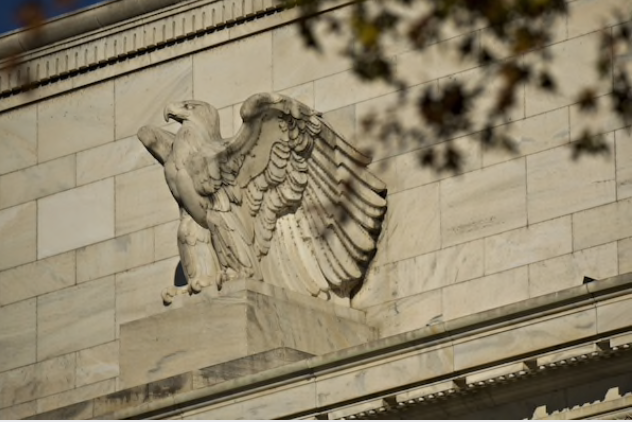
By The Washington Post · Rachel Siegel · NATIONAL, BUSINESS, CONGRESS WASHINGTON – Lawmakers on a top banking panel largely agree that the Federal Reserve’s Main Street lending program has fallen short. But they’re debating whether or how to change the rules and allow the Fed to make more, albeit riskier, loans to struggling businesses.
At a Senate Banking Committee hearing on Wednesday, policymakers differed over whether the Main Street program can be strengthened with a new structure and relaxed loan terms, or if more direct aid from Congress is needed to help companies fighting for survival during the pandemic.
As of last Thursday, the Main Street lending program had completed $1.2 billion in loans, a fraction of the $600 billion pot.
“I am still concerned that incorporating widespread restrictions in these facilities could render the facilities ineffective and leave businesses and their employees without critical resources they desperately need,” said Sen. Mike Crapo, R-Idaho, chairman of the Banking Committee.
The program could have wider reach if the Fed bought 100% of Main Street loans from banks, instead of 95%, according to Jeffrey DeBoer, president of the Real Estate Roundtable, and Hal Scott, president of the Committee on Capital Markets Regulation, who testified at the hearing. Since the current structure leaves banks with some skin in the game, many lenders have shied away from making riskier deals. DeBoer and Scott also recommended that companies should be given more time before having to pay back the loans.
“The current approach has been tried and found wanting,” Scott said.
Lawmakers also highlighted trouble in the commercial real estate industry, which has taken a beating from lockdown measures and rent deferrals. The Main Street program’s restrictive terms have made it hard for commercial real estate companies to get help, DeBoer said, which has rippling consequences for the broader economy, from jobs to housing to state and local taxes.
A core issue is how much risk the Fed and Treasury Department can take under the Cares Act, since any losses are ultimately covered by taxpayers. In an interview last week, Eric Rosengren, president of the Federal Reserve Bank of Boston, said that is “completely appropriate” to want to limit the amount of risk to protect taxpayer dollars. But any number of rules on the terms sheet could be relaxed to expand the program’s reach, Rosengren said.
“It’s important for Congress to make clear how much risk they want,” Rosengren told The Washington Post last week. “Right now, it’s easy to say, ‘We want lots of loans.’ But a year and a half from now, people are going to want to know why those loans went bad.”
The number of loans covered by the Fed continues to rise each week; as of Aug. 31, 118 had been bought by the Fed, with businesses in construction, real estate, arts and entertainment, and manufacturing making up some of the largest shares.
At Wednesday’s hearing, Sen. Pat Toomey, R-Pa., said that it is “still too soon to call this program a failure” and that it was “entirely possible” that needy businesses are accessing credit elsewhere. Toomey said making the Fed buy 100% of a Main Street loan, instead of 95%, posed “an obvious challenge.”
The current structure is “meant to create an incentive for the banks to do proper underwriting so that there is some limit to the amount of risk that is being taken here,” Toomey said. “The idea was never to lend money to fundamentally insolvent businesses.”
No matter the future of the Main Street program, there’s little expectation that the Fed can heal the economy alone. The Fed can only provide loans, and many businesses cannot afford to go into more debt through the Main Street program.
Yet Congress is divided over another round of stimulus. During the hearing, Democrats pushed for another bill that would include enhanced unemployment benefits and aid to state and local governments. Republican committee members focused largely on the Main Street program, and Sen. John Neely Kennedy, R-La., raised questions about how to reduce the government’s debt.
“We are going about this backwards,” said Sen. Sherrod Brown, D-Ohio, the top Democrat on the banking panel. “Every dollar we give to working families goes directly to supporting the real economy.”
By The Washington Post · Hamza Shaban · NATIONAL, BUSINESS, US-GLOBAL-MARKETS U.S. stocks bounced back Wednesday from a three-day sell-off that sliced 10 percent off the Nasdaq composite and pummeled companies that had largely been resilient during the coronavirus pandemic.
The Dow Jones industrial average had advanced 439.91 points, or 1.6%, to close at 27,940.80. The Standard & Poor’s 500 index gained 67.19 points, or 2.0%, to end at 3,398.96, while the Nasdaq composite jumped 293.87 points, or 2.7%, to settle at 11,141,56.
Technology shares led the rebound, just as they led the three-day sell-off that slashed 10% off the Nasdaq, dragging the tech-centric index into correction territory. Tesla and Apple, two companies that had been battered in recent days after months of tremendous gains, shot up 6.3% and 4.4%, respectively. Amazon and Microsoft both jumped at least 4%, while Facebook climbed more than 1%. (Amazon founder and chief executive Jeff Bezos owns The Washington Post.)
Kristina Hooper, chief global market strategist at Invesco, said the sentiment driving Wednesday’s rally is the same as the one that has driven investors into stocks for the past six months – there are no real alternatives for finding favorable returns, Plus, the Federal Reserve has accommodated Wall Street through its expansive monetary policy.
“Jay Powell has become Santa Claus, the Tooth Fairy and a leprechaun with a pot of gold, all wrapped into one,” she said, referring to the Fed’s chair. “Now that doesn’t mean stocks won’t be volatile and they won’t have their down days. But we have to recognize that the Fed is a powerful force that is likely to drive investors back into equities, especially tech.”
Analysts say that the multiday sell-off was a healthy sign of the stock market returning to Earth, after an extraordinary run during the initial spread of the virus. The massive gains on Wall Street highlighted the disconnect between soaring valuations and enriched shareholders vs. the broader U.S. economy suffering from historic levels of unemployment and extreme disruptions to operations and daily life.
The S&P and the Nasdaq had set record highs several times over last month. But those gains were largely wiped in three volatile trading days in what has been a historically poor performing month. Though Wednesday’s session delivers at least a temporary reprieve to the frenzied selling, broader economic and political issues will continue to weigh on investors, including trade tensions with China, stalled coronavirus stimulus negotiations and uncertainty over the upcoming election.
Meanwhile, the virus itself continues to kill thousands of Americans every week. At least 187,000 people have died of covid-19-related illnesses, and more than 6.3 million have become infected.
AstraZeneca shares fell 1.7% after the pharmaceutical giant paused the global trial of its coronavirus vaccine candidate after a participant in the United Kingdom suffered what is suspected to be a severe adverse reaction. In a statement, the company said it voluntarily suspended its late-stage trial to determine the cause of the unexplained illness. AstraZeneca is developing the vaccine alongside the University of Oxford, and is one of several drug companies racing to create and vet a way to prevent novel coronavirus infections. The stock fell by 1.4% in the afternoon session.
On Thursday the federal government will report the first glimpse of new unemployment claims for the month of September. Last week, more than 800,000 new claims for unemployment insurance were filed during the week prior, another sign that the pandemic last week is battering the labor market more than five months in to the public health crisis.
Economy to get 1-1.5% boost from latest cash handouts: UTCC
EconSep 10. 2020Thanavat Phonvichai, president of the University of the Thai Chamber of Commerce (UTCC)
By The Nation
The government’s plan to hand out payments of Bt3,000 to 15 million people will boost economic growth in the fourth quarter by an estimated 1-1.5 per cent, according to Thanavat Phonvichai, president of the University of the Thai Chamber of Commerce (UTCC).
The government has yet to finalise details of the scheme, which is among its new measures to lift the coronavirus-battered economy.
Thanavat said the UTCC expected the Thai economy to contract between 6.5 per cent and 8.5 per cent, less than the previous UTCC forecast of 8-10 per cent contraction.
He predicted the economy will post little or zero growth in the first quarter next year before climbing into positive territory in the second quarter if there is no second wave of Covid-19 or severe political tension.
The Joint Standing Committee on Commerce, Industry and Banking said it wants the Thai Credit Guarantee Corporation to increase its maximum loan guarantee for small and medium-sized enterprises (SME) from 30 per cent to 50 per cent so banks are encouraged to give out loans.
The boost in loan guarantee will also give SMEs easier access to soft loans, for which the Bank of Thailand has set aside Bt500 billion.
This issue was discussed on Wednesday (September 9) during a committee meeting, Federation of Thai Industries chairman Supant Mongkolsuthree said.
He added that if SMEs are granted loans now, they will be able to survive and make repayments two years after the end of the Covid-19 outbreak.
He also called on state agencies to speed up the disbursement of payments to SMEs that have completed their state contracts. He said these contractors should be paid within 30 days of completing their jobs, instead of having to wait for two to four months.

 CP Foods CEO Prasit Boondoungprasert






 Thanavat Phonvichai, president of the University of the Thai Chamber of Commerce (UTCC)
 FTI chairman Supant Mongkolsuthree

