The Stock Exchange of Thailand (SET) and the Securities and Exchange Commission (SEC) plan to look into the option of cutting stock and futures exchange trading fees.
Pakorn Peetathawatchai, SET president, said operators in the securities business have been calling on the authorities to review the current trading fees.
“We have been discussing this issue with brokers for a long while now, but have not been able to reach a conclusion yet because we have to study its suitability first,” he said.
Meanwhile, SEC officials said they will discuss the issue with SET to alleviate the burden for securities companies as proposed in the quarterly meeting on August 25.
“In line with the current Thai stock market situation, SEC will not increase trading fees,” an official said.
The official added that the SEC currently collects 0.001 per cent of stock trading value, but no more than Bt10 million, while the fees on futures exchange is between 0.01 per cent and 0.10 per cent per contract depending on asset price.
“These regulations have been used since 2017 and are low compared to trading fees in other countries,” the official said.
The SEC staff further explained that SET collects trading fees at 0.005 per cent of trading value, clearing fees at 0.001 per cent of trading value, and securities maintaining fee at Bt1.50 per month for every remaining securities value of Bt1 million, adding that SEC did not set up regulations on fees collected by the SET from brokers.
“SEC is reviewing trading fees in the Thailand Futures Exchange market and taking into account comments from securities businesses,” the official added.
Meanwhile, Pichet Sithi-Amnuai, chair of the Association of Thai Securities Companies, said his association wants SET to cut stock trading fees because brokerage firms’ revenue has dropped even though trading volume has risen.
“Brokers’ commission has continued to drop after liberalisation of the commission-collecting business, resulting in high competition,” he said. “Also, brokerage firms have to bear high costs because they have to pay trading fees to SET.”
However, he said, the association has not set an appropriate level for trading fees, adding that this issue will be discussed with SET and SEC in the future.
The Stock Exchange of Thailand (SET) Index closed at 1,293.40 today (September 9), down 0.40 points or 0.03 per cent. Total transactions amounted to Bt47.5 billion with an index high of 1,295.55 and a low of 1,276.38.
In the morning session, an analyst at Krungsri Securities expected the index to fall to between 1,275 and 1,280 points due to uncertainty over the US-China trade war after US President Donald Trump proposed decoupling the US economy from China’s.
Meanwhile, the low oil price and a halt to Oxford University’s phase three trial of a Covid-19 vaccine will pressure the index, the analyst said.
The 10 stocks with the highest trade value today were PTT, PTTEP, CPALL, BAM, CPF, AOT, SAWAD, MINT, KBANK and SCC.
As of 4.30pm, the price of oil rose by US$0.61 or 1.66 per cent to $37.37 per barrel, while gold dropped by $5.10 or 0.26 per cent, to $1,938.10 per ounce.
Other Asian indices fell:
Japan’s Nikkei Index closed at 23,032.54, down 241.59 points or 1.04 per cent.
China’s Shang Hai SE Composite Index closed at 3,254.63, down 61.79 points or 1.86 per cent, while Shenzhen SE Component Index closed at 12,861.75, down 431.58 points or 3.25 per cent.
Hong Kong’s Hang Seng Index closed at 24,468.93, down 155.41 points or 0.63 per cent.
South Korea’s KOSPI Index closed at 2,375.81, down 26.10 points or 1.09 per cent.
Taiwan’s TAIEX Index closed at 12,608.58, down 54.98 points or 0.43 per cent.
New Birdy 3in1, more intense coffee and less sweet
Sep 09. 2020
By THE NATION
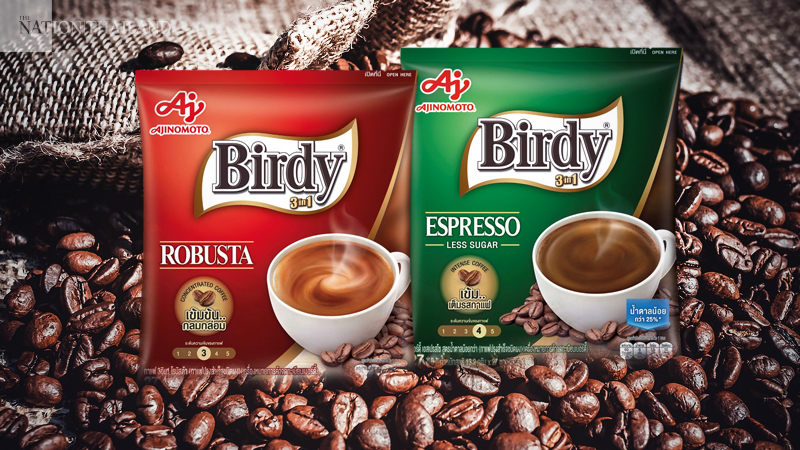
Ajinomoto Co., (Thailand) Ltd. introduces new formula of “Birdy 3in1” with its intense coffee taste from well-selected Robusta coffee bean to make you feel ready in every morning.
Two new formulas are “Birdy 3in1 Robusta” with well blend coffee taste, and “Birdy 3in1 Espresso” with less 25% sugar from original taste tomeet young generation’s lifestyle who is now focusing on their health and nutrition and want to lessen sugar consumption. The company aims to develop products with low sugar formula to promote creating “healthy living society” and be the healthy choice for consumer as well as to improve the quality of life in accordance with our Ajinomoto Group Creating Shared Value policy (ASV).
New formula of “Birdy 3in1” with the new packaging are now available for Bt15 at 7-ELEVEN, convenient stores and department stores nationwide.
You can follow Birdy movement via Facebook Fan Page “Birdy World”.
UN Global Compact members brainstorm ways to improve world economy
Sep 09. 2020Prime Minister Prayut Cha-o-cha
By THE NATION
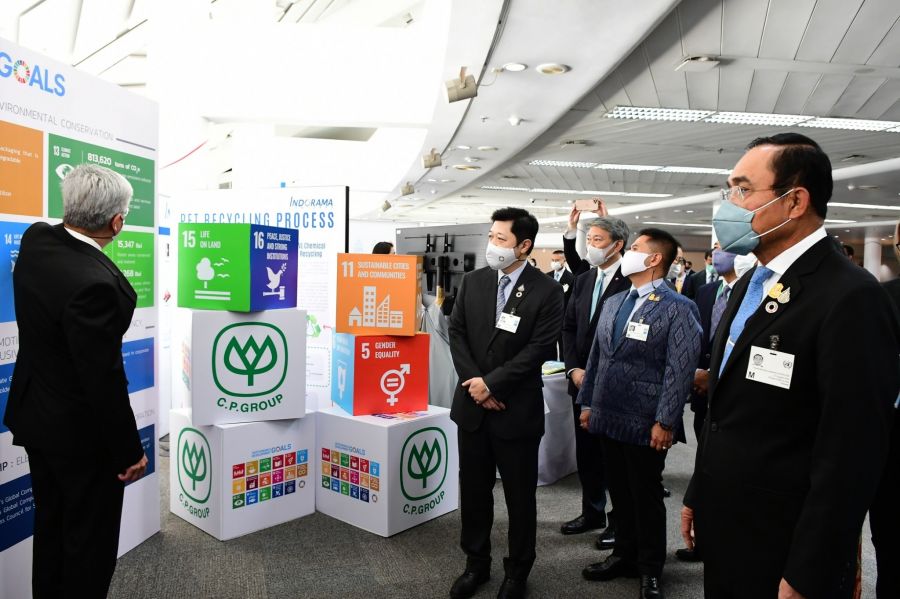
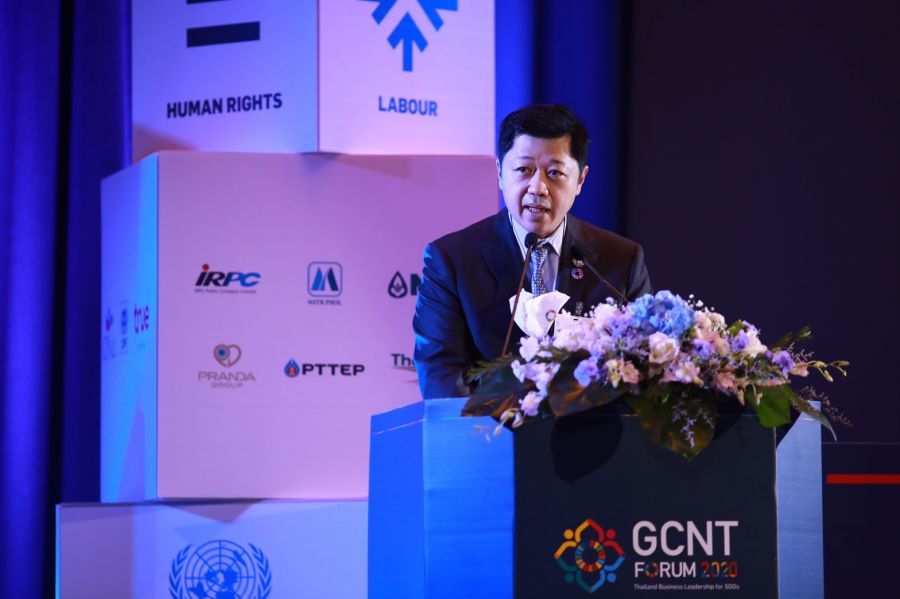
More than 200 UN Global Compact members came together recently for a seminar in Bangkok to find ways to improve the global economy amid the massive impact of Covid-19 while maintaining SGDs, or sustainable development goals.
The August 31 seminar, “GCNT Forum 2020: Thailand Business Leadership for SDGs”, was organised by Global Compact Network Thailand, a group of companies committed to encouraging businesses nationwide to adopt sustainable and socially responsible policies with a focus on human rights, labour, the environment and anti-corruption.
This year also marks the 20th anniversary of United Nations Global Compact.
Prime Minister Prayut Cha-o-cha presided over the forum, giving a speech.
As president of Global Compact Network Thailand, Charoen Pokphand Group chief executive Suphachai Chearavanont announced his group’s intention to become a leader in sustainable business operations under 17 SGDs together with other business organisations, which are Global Compact members.
Dusit Thani College offers international standard courses with focus on hands-on experience
Sep 08. 2020
By The Nation
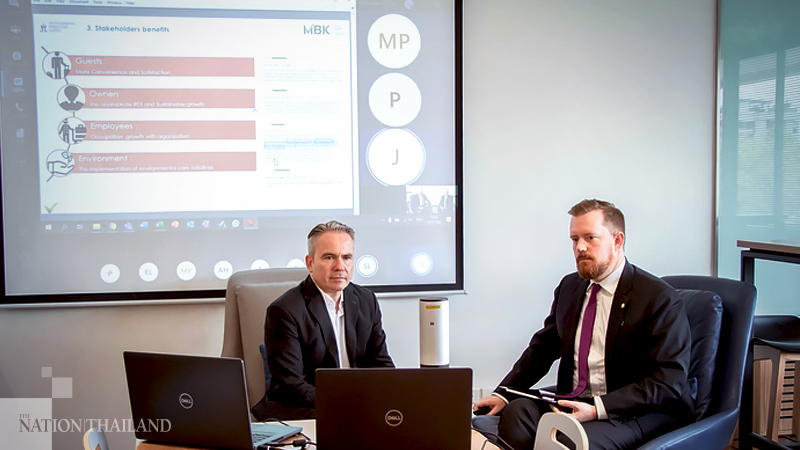
Dusit Thani College (DTC), one of Thailand’s premier hospitality education institutions, recently held an online learning session for Hotel and Resort Management students to enhance their learning experience in hotel and resort professionalism.
The college said that the programme operates in accordance with international standards secured by the academic certification of Ecole hôtelière de Lausanne (EHL), the world-leading hospitality management school in Switzerland that has been a pioneer in hospitality education for over 125 years.
This programme focuses on expanding new horizons in hotel and resort management; fostering critical thinking, analysis, strategic planning, and innovative management. Hands-on experience is also included in the programme to offer a variety of real-life business challenges, to best utilise and further develop knowledge and skills in problem-solving and hospitality management, the college said.
In this session, Dusit Thani College invited Stefan Heintze, general manager of Pathumwan Princess Hotel and an alumni of EHL as well as a part of the EHL Bangkok Stamm Committee, to discuss with students the topic of “Hotel renovations and refurbishments – The Case of the Pathumwan Princess”.
His talk explored how the Pathumwan Princess has renovated its rooms in the past year to maintain its strategic positioning in the Bangkok market; decision factors that led to the renovation (customer feedback, increasing competition, potentially decreasing average daily rate; how the renovation was affected by the Covid-19 pandemic and how the hotel took advantage of the forced hotel closures to speed up the renovation process and decrease the impact of Covid-19.
Dusit Thani College was established to meet the demand for well-trained professionals and is a private educational institution specialising in tourism and hospitality management. The college offers three bachelor’s degree programmes in the Thai language: Hotel Management, Culinary Arts and Kitchen Management, and Service Innovation in Tourism Industry, along with a Master of Business Administration. English language bachelor’s degree programmes are offered in Hotel and Resort Management, and Professional Culinary Arts.
In addition, many specialised short courses are also available. All programmes are recognised nationally and internationally.
The college is accredited to the Office for National Education Standards and Quality Assessment (Public Organisation) and international standards of excellence by The International Centre of Excellence in Tourism and Hospitality Education.
For more information, contact public relations office on +66 (0) 2361 7811-3, or e-mail pr.pr@dtc.ac.th, or visit www.dtc.ac.th
The share price of Charoen Pokphand Foods (CPF) fell by as much as 11 per cent in five working days after rising to a new high in more than seven years due to uncertainty over the falling pork price in Vietnam, experts said.
CPF’s stock price at close yesterday (September 8) was Bt29.75 per share, down 11 per cent from Bt33.75 on August 28. The price previously rose by a whopping 88.5 per cent from the lowest point at Bt18.70 per share in March to the highest in seven years at Bt35.25 per share.
Trinity Securities’ director of securities analyses Tanapat Chatsatien said CPF’s stock price fell due to uncertainty among investors over the falling pork price in Vietnam, which dropped from its highest of around 90,000 dong per kilogramme to around 80,000 dong [Bt108] per kg.
“However, the pork price is still at a high level. The production cost per kg in Vietnam was 50,000 dong and around Bt80 per kg in Thailand,” he said.
“CPF’s third-quarter performance will actually improve from a high pork price both domestically and overseas. The company was affected by the Covid-19 fallout in the second quarter.”
He expected the pork price to remain at a high level until the middle of 2021 because raising pigs takes about a year.
“Therefore, this is an opportunity to buy CPF shares as its price is lower than the target of Bt41 per share, while the current price of around Bt30 per share accounts for a price-to-earnings [P/E] ratio of 11 times, because the company’s profit in the first six months this year rose by 44.8 per cent,” he explained.
“So far, CPF shares have been traded at a P/E ratio of 14-15 times,” he added.
Meanwhile, a Bualuang Securities analyst said Vietnam’s pork price the previous month fell by approximately 12 per cent due to African swine fever, causing small entrepreneurs to sell increased pork, while large entrepreneurs imported more pork to increase supply in the market.
“We believe that lack of pork in the region will remain until the first half of next year,” the analyst said.
“The price of pork in Laos and Cambodia has already reached the highest level, while the price in China and Thailand will reach the maximum point soon,” he predicted.
The price of gold rose by Bt50 per baht weight in morning trade today (September 9), the Gold Traders Association reported.
As of 9.24am, the buying price of a gold bar was Bt28,550 per baht weight and selling price Bt28,650, while gold ornaments cost Bt28,030.84 and Bt29,150, respectively.
At close yesterday, the buying price of a gold bar was Bt28,500 per baht weight and selling price Bt28,600, while gold ornaments cost Bt27,985.36 and Bt29,100, respectively.
The Hong Kong gold price rose by HK$10, opening at $17,840 (Bt72,263.96) per tael this morning, the Chinese Gold and Silver Exchange Society reported.
The spot gold price moved to US$1,928 (Bt60,540.64) per ounce this morning after the price rose by $8.90 to $1,943.2 per ounce at yesterday’s close.
Gold gained positive sentiment from mass buy-ups of the safe-haven asset in response to a fall in the US stock index.
The Stock Exchange of Thailand (SET) Index fell by 15.89 points, or 1.23 per cent, to 1,277.91 in the morning session today (September 9).
An analyst at Krungsri Securities expected the index to fall between 1,275 and 1,280 points due to uncertainty amid the US-China trade war after US President Donald Trump proposed to decouple the US economy from China’s.
Meanwhile, a falling oil price and AstraZeneca’s delay in its third phase clinical trial of a Covid-19 vaccine will pressure the index, the analyst said.
He recommended that investors buy stocks whose third-quarter performance would improve, such as TU, Asian, Com7, CHG, PTG, PlanB, Tasco, EPG, PTG and SCC.
The Stock Exchange of Thailand (SET) Index closed at 1,293.80 yesterday (September 8), down 18.15 points, or 1.38 per cent. Total transactions amounted to Bt45.36 billion, with an index high of 1,305.85 points and a low of 1,293.33.
By The Washington Post · Hamza Shaban, Hannah Denham · BUSINESS, US-GLOBAL-MARKETS The three major U.S. indexes posted steep, across-the-board losses on Tuesday as technology shares continued to fuel a sell-off that snapped a five-week winning streak on Wall Street and slashed 10% off the Nasdaq composite in three days.
The Dow Jones industrial average shed 632.42 points, or 2.3%, to close at 27,500.89. The Standard & Poor’s 500 index dropped 95.12 points, or 2.8%, to settle at 3,331.84, while the tech-heavy Nasdaq tumbled 465.44 points, or 4.1%, to end at 10,847.69.
After an uptick that analysts say is atypical of September, U.S. markets plummeted Thursday and Friday, dragged down by the tech giants ahead of the long holiday weekend. The markets were closed on Labor Day.
Big Tech lost big on Tuesday: Amazon gave up 4.4%, Facebook shed 4.1% and Google parent Alphabet fell 3.6%. Biotechnological firm Moderna, which is working on a coronavirus vaccine candidate, lost nearly 13.2%.
(Amazon chief executive Jeff Bezos owns The Washington Post.)
Investors also are grappling with questions about U.S.-China trade, stymied coronavirus relief talks and growing worries about the November election, said Michael Farr, president of Farr, Miller & Washington. “Each of these factors could imperil the narrative that has been baked into stock prices, which is a relatively quick economic rebound.”
Tesla shares plunged 21.1% Tuesday after the S&P 500, in a surprise move, passed on the carmaker. Investors in the high-flying electric car company had been banking on Tesla joining the benchmark index – its share price has been rising all summer. And the company’s stock has rocketed more than 350% from the beginning of the year.
In Tesla, which has garnered a passionate fan base, akin to a consumer electronics company or a comic book media property, many longtime investors see an industry-defining pioneer, whose vision for an all-electric future has forced larger, more established automakers to play catch up. The company boosted its prospects on Wall Street further by posting earnings of more than $100 million in July, its fourth consecutive quarter of profitability, a first for Tesla.
Optimistic investors continued to pour money into the company, sending its market capitalization above corporate giants such as Home Depot and Intel. And in another summer milestone, Tesla surpassed the market value of Toyota, seizing the crown of the most valuable carmaker in the world, despite selling fewer than 400,000 vehicles last year, compared with Toyota’s 10.74 million.
But investors’ hopes were dashed when S&P Dow Jones Indices, the company that oversees the S&P 500, announced late Friday that it would not add Tesla to its widely tracked index. Instead, the e-commerce site Etsy, tech maker Teradyne and pharmaceutical company Catalent, will join the S&P 500 effective Sept. 21. The index will delete tax preparation company H&R Block, department store chain Kohl’s and beauty brand Coty. The planned reorganization comes eight days after a major shake-up with the Dow, which dumped Exxon, Pfizer and Raytheon for Amgen, Honeywell and Salesforce.
Adding Tesla had been “viewed as almost a consensus move based on all the metrics that Tesla was likely to get into the S&P 500 club this time around,” Dan Ives, an analyst at Wedbush Securities said in a note to clients after the S&P’s decision. Its omission “thus will have a negative knee jerk investor reaction.”
Ives said Tesla’s profitability and earnings forecast were likely the deciding factors for excluding the company. But the snub for Tesla boosters was confounding. “In a nutshell Tesla not getting into the S&P 500 will be a head scratcher to the bulls that viewed this as virtually a lock given all the parameters met,” he said.
“The market was undoubtedly surprised by the S&P 500 Index Committee’s decision not to include Tesla this quarter, despite announcing its fourth quarter of profitability and solidifying its eligibility for inclusion,” said Nicole Tanenbaum of Chequers Financial Management. But the committee that makes the selections may have been focused on more than simply meeting the bottom line criteria, she said. Tesla’s reliance on selling regulatory pollution credits to boost its profits and the uncertainty around its earnings stream may have weighed on the decision to leave the company out of the index, she added.
In 2019, more than $11.2 trillion in assets were benchmarked to the S&P 500, according to an estimate from S&P Dow Jones Indices. A special S&P committee determines which companies populate the index based on a variety of factors, but meeting the necessary criteria does not guarantee inclusion. S&P said in a news release Friday that it was also changing the lineup to its mid- and small-cap indexes.
As for the three companies that did make the list, Tanenbaum said there’s an arguable logic behind their additions. “Despite the companies smaller sizes, each has delivered a consistent track record of profitability,” she said. The three companies that were deleted from the S&P 500 will drop down into the lower capitalization index, the S&P MidCap 400.
Thai nationals who want to invest in government savings bonds this year should do so when the last batch of Bt3 billion is made available on September 11, says Patricia Mongkonvanit , chief of the Public Debt Management Office.
The Finance Ministry will offer the bonds at four and seven years maturity. Four-year bonds worth a total Bt500 million will be offered with an annual coupon rate of 1.7 per cent. Purchase is limited to Bt5 million per investor.
Seven-year bonds worth Bt2.5 billion will be offered with an annual coupon rate of 2.22 per cent and no upper limit on purchase
The bonds are being issued through Krungthai Bank, Bangkok Bank, Kasikornbank and SCB.
The Finance Ministry is issuing a total Bt50 billion in savings bonds this year.

 Prime Minister Prayut Cha-o-cha