The Stock Exchange of Thailand (SET) Index fell by 1.41 points, or 0.11 per cent, to 1,321.14 in the morning session today (August 27).
A stock analyst at Krungsri Securities expected the index to fluctuate between 1,315 and 1,330 points despite Germany and France moving to issue economic stimulus measures.
“However, we expect investors to delay trading as they follow the US Federal Reserve meeting today and tomorrow to seek signs of economic direction and monetary policy, resulting in the index volatility,” he said.
He recommended investors buy:
> Energy stocks that benefit from the rising oil price, such as PTTEP, Top, PTTGC, IVL and SPRC.
> Stocks whose third-quarter performance will improve, such as CPF, GFPT, TU, Asian, KCE, Hana, Delta, HMPro, Global, DoHome, Com7, JMT, CHG, BCH, PTG, PlanB, CBG and Tasco.
The SET Index closed at 1,322.55 yesterday, up 6.56 points, or 0.50 per cent. Total transactions amounted to Bt48.65 billion, with an index high of 1,323.97 and a low of 1,311.14 points.
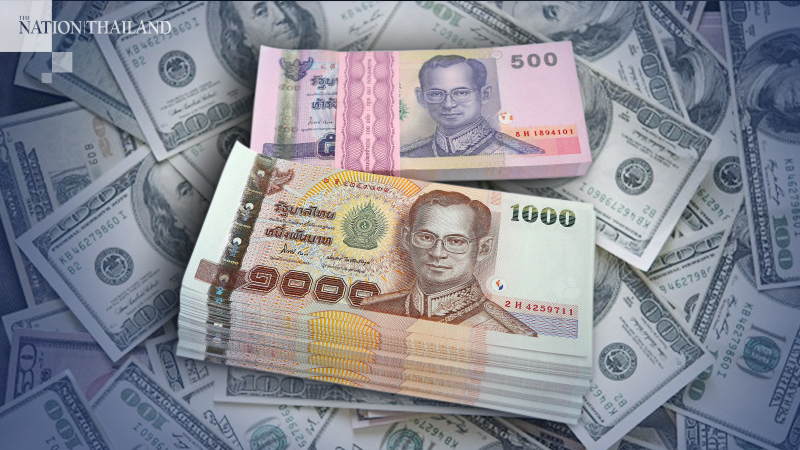
The baht opened at Bt31.25 to the US dollar this morning (August 27), strengthening from yesterday’s close of Bt31.36.
The Thai currency is expected to move between Bt31.10 and Bt31.30, said Jitipol Puksamatanan, head of Markets Strategy at SCB Securities.
The US capital market hit another new high on Wednesday night (Thailand time). The S&P 500 Index rose by 1.0 per cent, while Europe’s Stoxx Euro 600 was up 0.9 per cent over positive news of a Covid-19 vaccine and US monetary policy, which is likely to be eased for the long term, Jitipol said.
Meanwhile, the bond market did not gain much positive sentiment from a relaxed US monetary policy. The US Ten-Year bond was unchanged at 0.68 per cent, causing the dollar to weaken slightly, by 0.1 per cent, as the Australian and New Zealand dollars strengthened by 0.6 and 1.0 per cent on belief that inflation could be higher than what central banks expected.
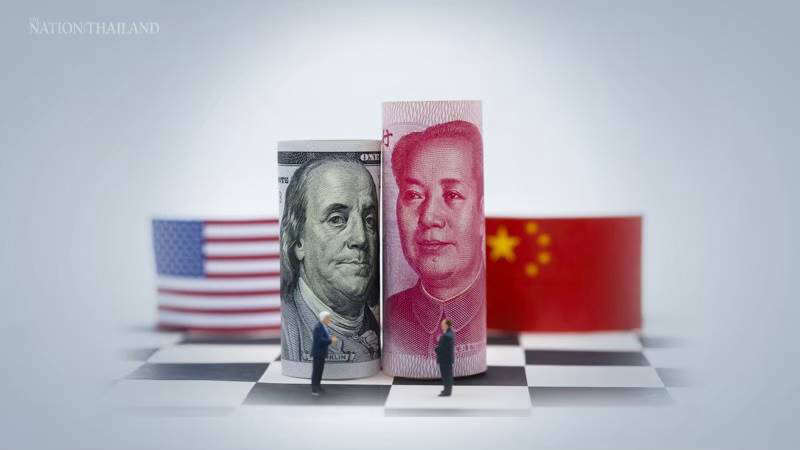
The baht continued to gain more liquidity in response to a global trade recovery and foreign investors’ mass buy-ups in the bond market. If the US and China reach an agreement on the first phase of trading, the baht and other Asian currencies will strengthen further, Jitipol added.
By The Washington Post · Jeanne Whalen · NATIONAL, BUSINESS, WORLD, ASIA-PACIFIC WASHINGTON – The Trump administration added another 24 Chinese companies to a trade blacklist for helping China build artificial islands in the South China Sea, a construction program the U.S. has labeled an illegal attempt to control an important shipping route.
The blacklist, known as the Entity List, has become a favorite Trump administration tool to crack down on China, and now includes more than 300 Chinese entities.
The Commerce Department, which maintains the list, has used it against Chinese telecom company Huawei and against Chinese entities allegedly engaged in human-rights violations in China’s Xinjiang region.
The trade sanction bars U.S. companies from exporting products to the targets without a government license. The entities joining the list include Chinese state-owned defense contractors that engage in little trade with the United States – total U.S. exports to the companies amounted to $5 million over the last five years, senior administration officials said Wednesday, speaking anonymously to discuss sensitive trade matters.
But the officials said they hoped the sanctions would have a wider impact by discouraging other countries from engaging with the companies through China’s Belt and Road program, which builds infrastructure in developing countries.
The newly listed companies, including China Communications Construction Company (CCCC) and China Electronics Technology Group, are big contractors in the Belt and Road initiative, which in building bridges, dams and digital infrastructure around the world has come under international criticism for saddling recipient countries with debt.
By listing the latest companies, the U.S. has “various aims, including, of course, to impose costs on bad actors and to encourage all sorts of parties and institutions and governments around the world to assess the risk and reconsider business deals with the sort of predatory Chinese state-owned enterprises we have identified here,” a senior State Department official said.
In the South China Sea, the companies have helped Beijing dredge and construct more than 3,000 acres of artificial islands featuring anti-ship missiles and other military equipment, the Commerce Department and State Department said in separate statements Wednesday.
China has used these islands to assert new maritime claims in the region, and to “bully” the Philippines and other countries out of their rights to fishing waters and offshore energy deposits, the State Department said last month, calling China’s actions “completely unlawful.”
In addition to listing the companies, the U.S. on Wednesday also imposed visa restrictions on executives at those companies, and on other individuals responsible for the island building.
China “must not be allowed to use CCCC and other state-owned enterprises as weapons to impose an expansionist agenda,” Secretary of State Mike Pompeo said in a statement Wednesday. “The United States will act until we see Beijing discontinue its coercive behavior in the South China Sea, and we will continue to stand with allies and partners in resisting this destabilizing activity.”
The Chinese companies could not immediately be reached for comment. China’s embassy in the U.S. did not respond to a request for comment.
Several years ago, the Philippines filed a case with the Permanent Court of Arbitration, an international tribunal in the Netherlands, claiming that China’s activities in the South China Sea violated the United Nations Convention on the Law of the Sea.
In 2016, the court sided with the Philippines, determining among other things that China “had violated the Philippines’ sovereign rights” by “interfering with Philippine fishing and petroleum exploration,” by “constructing artificial islands” and by “failing to prevent Chinese fishermen from fishing in the zone.”
The court also found that Chinese law enforcement vessels had created a “serious risk of collision when they physically obstructed Philippine vessels.” And it ruled that China, through its island construction, “had caused severe harm to the coral reef environment and violated its obligation to preserve and protect fragile ecosystems.”
By Syndication Washington Post, Bloomberg · Vildana Hajric, Sarah Ponczek · BUSINESS, US-GLOBAL-MARKETS Stocks extended a streak of record gains amid rising expectations for loose monetary policy while the economy shows signs of recovering from the coronavirus pandemic. The dollar weakened and Treasurys pared losses.
Surging technology shares pushed the S&P 500 and Nasdaq Composite indexes to fresh highs for a fourth straight day, while the MSCI All-Country World Index climbed to a record. The S&P has jumped about 55% from its March lows. Salesforce.com Inc. leaped as much as 29% after the software developer’s revenue easily beat estimates, signaling clients responded to the pandemic by upgrading technology systems. U.S. orders for durable goods rose in July by more than double estimates, indicating factories will help support the economic rebound in coming months.
“The continued market juggernaut is certainly impressive,” said David Donabedian, chief investment officer of CIBC Private Wealth Management. “The idea that we’re going to have a rip-roaring rebound in the third quarter has been supported by the data.”
Gains in Germany’s stocks pulled European equities higher as the country extended a program that has kept millions of people from losing their jobs in the region’s biggest economy. Shares fell in Shanghai and Sydney. Crude oil traded near its most costly in five months as Hurricane Laura bore down on key refining facilities on the U.S. Gulf Coast.
As global economies reopen, investors are focusing on the progress of a coronavirus vaccine while showing cautious optimism about controlling fresh outbreaks. Traders are also awaiting Federal Reserve Chairman Jerome Powell’s speech on Thursday about the central bank’s monetary policy framework review, which is expected to entail a new inflation strategy.
“We’re in a slow melt-up sort of driven by Fed liquidity and backstops in the fixed income markets,” said Marc Chaikin, founder of Chaikin Analytics. “It’s giving people with money on the sidelines almost no opportunity to get in comfortably.”
Elsewhere, soybean futures climbed to a seven-month high in Chicago after people familiar with the matter said China is set to buy a record amount from America this year.
These are the main moves in markets:
Stocks
The S&P 500 Index climbed 1% to 3,478.81 as of 4:01 p.m. EDT, hitting the highest on record with its fifth consecutive advance and the largest increase in two weeks.
The Dow Jones industrial average climbed 0.3% to 28,332.53, the highest in six months.
The Nasdaq Composite Index increased 1.7% to 11,665.06, hitting the highest on record with its fifth consecutive advance and the largest increase in two weeks.
The Stoxx Europe 600 Index increased 0.9% to 373.12, the highest in two weeks.
Currencies
The Bloomberg Dollar Spot Index declined 0.2% to 1,169.69, the lowest in more than a week.
The euro decreased 0.1% to $1.1827.
The Japanese yen strengthened 0.4% to 106 per dollar, the largest rise in more than a week.
Bonds
The yield on 10-year Treasurys climbed one basis point to 0.69%, the highest in more than a week.
Germany’s 10-year yield increased two basis points to -0.42%, the highest in almost two weeks.
Britain’s 10-year yield gained four basis points to 0.302%, the highest in 11 weeks.
Commodities
West Texas Intermediate crude climbed 0.1% to $43.38 a barrel, the highest in almost six months.
Gold strengthened 1.2% to $1,952.28 an ounce, the highest in more than a week on the biggest climb in more than a week.
Copper rose 1.2% to $2.99 a pound, the largest advance in a week.
The number of newly registered companies in July stood at 5,667, down 1 per cent month on month and 12 per cent year on year due to potential investors’ concerns over the Covid-19 fallout, said the Department of Business Development.
However, the situation is better than at the onset of the outbreak, added its deputy director-general Sorada Lertharpachit.
Registered capital of newly founded companies in July was Bt16.714 billion, up 13 per cent month on month but down 27 per cent year on year.
Most of the new companies are in construction, followed by real estate and logistics.
Normally, restaurants and eateries rank third, but that changed in May when they were replaced by logistics and e-commerce businesses as consumers switched to online retail channels during lockdown.
The number of dissolved companies in July was 1,261, down 6 per cent from June and 21 per cent year on year. Their registered capital was Bt7.668 billion, down 49 per cent month on month and 7 per cent year on year.
Prime Minister Prayut Chan-o-cha said on Wednesday he was in talks with state agencies on how to open the country to foreign tourists after the Covid-19 situation improves.
Being discussed are the timing for reopening and which provinces will be the first to open for foreign tourists.
The first phase may only see a small number of tourists allowed into the country and their areas of possible travel limited, he added.
The Thai Hotel Association (THA) recently urged the government to reopen the country to foreigners, as hotels struggle with near-zero occupancy rates and some small operators are forced to close.
THA chairwoman Marisa Sukosol Nunbhakdi said the government should focus on specific countries or cities and come up with promotions to bring back tourists.
Meanwhile, Commerce Minister Jurin Laksanawisit said Thailand is focusing on online trade and boosting border trade.
The ministry’s public-private committee will meet next week to seeks ways to boost exports and border trade volume.
Video conferencing tech goes viral in Asia’s New Normal
CorporateAug 26. 2020Samir Sayed, Poly’s managing director for Asean and South Korea
By Sirivish Toomgum
The Nation
Global communications company Poly has seen growing demand for its video conferencing tech in Southeast Asia during the “new normal” of the Covid-19 pandemic.
Samir Sayed, Poly’s managing director for Asean and South Korea, said today the company’s products were in demand as more employees work from home in response to lockdowns after the outbreak.
Poly products range from headsets, software, and desk phones, to audio and video conferencing services.
The firm says Covid-19 has disrupted workplace norms, forcing many organisations to quickly accommodate a large remote workforce, but also rethink strategies and investments for continued communication and collaboration during this challenging time.
As economies around the world look to reopen and restore normalcy, changes in companies’ working practices are here for good.
Workers around the world are shifting their focus from “place” to “purpose” in a model where their time is split between the office, and the home office. So-called hybrid working is here to stay.
Businesses are looking to find better ways to adapt to this new model, and at the same time to realign business priorities, as well as reset their values, culture and purpose to reflect the realities of the “Next Normal”.
Poly recently launched two new reports discussing the future of the workforce, titled “The Future of Work in the New Normal: Re-thinking your Digital Priorities”, and “Hybrid Working: Creating the ‘next normal’ in work practices, spaces and culture”.
They highlight the evolving trends of today’s modern workplace (and work spaces), where hybrid working will become the norm, and continued investments in the right technologies and collaboration solutions will go a long way in helping organisations plan for the future.
Work in the New Normal: Re-thinking your Digital Priorities
A new study from Ecosystm 360 commissioned by Poly discusses key priorities of business and IT leaders in Asia Pacific as the Next Normal emerges, and provides guidance to enterprises on how to negotiate the changes in their business and employee engagement models.
The study revealed that hybrid working will become the norm for many organisations, with continued investments in cybersecurity, education and technology as key digital priorities to focus on. Some highlights from the study include:
Hybrid Work Model is Here to Stay
• Working from home will become the norm for many organisations. Forty per cent of organisations surveyed expected to continue using virtual meetings, even after Covid-19, irrespective of location. In the Philippines, for example, business process outsourcing (BPO) providers are piloting different models by having some employees work from home and some in the office.
• The nature of the workplace will change; workplaces will be fitted out based on the need to meet and collaborate on projects; 55 per cent of respondents expect increased use of digital technologies for Employee Experience; 47 per cent of respondents expect increased use of collaborative tools and platforms even after the Covid-19 crisis is over.
While just 15 per cent of business leaders in Asia Pacific state they will reduce investments, business leaders in Malaysia bucked the trend, with 33 per cent indicating they expect to reduce the use of commercial office space post-Covid-19.
Organisations Will Focus on Making Remote Working Possible
• Implementing Virtual Private Network (VPN) access – 44 per cent of organisations surveyed implemented or boosted their VPN infrastructure in order to let more employees securely access internal tools and confidential data, in order to make remote working possible for a larger portion of their workforce.
• Investments in laptops and collaborative software – Many organisations had to invest in laptops for employees using desktops (36 per cent) and collaborative software (41 per cent) during this crisis. Across several countries in Asia Pacific – and mainly in the emerging economies – employees were just not equipped to work effectively from home. Laptops, monitors, and headsets had to be purchased for the home environment.
• Proactive changes to data protection and HR policies – Organisations took the opportunity to revamp data protection and compliance policies (43 per cent), re-evaluate HR policies (34 per cent), and implement measures to monitor the emotional well-being of their employees (31 per cent).
Videoconferencing will Drive Workplace Engagement and Collaboration
• Videoconferencing is the new voice – 63 per cent of organisations in Asia Pacific significantly increased their investments in conferencing devices and headsets to address the collaboration challenges during the Covid-19 crisis, with 41 per cent increasing investments in videoconferencing devices significantly.
• Cloud video adoption to continue growing – 33 per cent of organisations increased their investments in cloud video and collaboration solutions due to the pandemic, with demand expected to continue over the next 12 months, as they scale their technology capabilities to meet the needs of an increasingly remote workforce.
________________________________________
Hybrid Working: Creating the “next normal” in work practices, spaces and culture
Drawing on experts and futurists in the future of work, workspace design and psychology, this Poly report sets out the path to the “next normal”, where employees enjoy flexibility and choice, and businesses thrive through motivated collaborative and productive teams.
Highlights from the study include:
Post-lockdown work practices will incorporate ‘hybrid working’
• New working patterns – new working policies that bring employees flexibility on when and where they work.
• Outcome-based working – taking the onus off the hours and location, to being productive and delivering results.
• Optimised investment – looking beyond the company office to create collaborative, technology-enabled personal workspaces anywhere.
Creating the best environments for employees to be productive and collaborative will be vital to the new hybrid working era:
• Home offices will be given as much attention as the kitchen – ergonomically organised and crafted into places that inspire.
• A prevalence of co-working – organizations will invest in co-working spaces outside of cities to attract talent. Group collaboration and social connections with colleagues and others will lead to cross-fertilisation of ideas and innovation.
• Cityscapes will change – will we continue to see high-rise office buildings? The city as a structure will stay as apartment living means the city is integrated into people’s lives; restaurants are an extension of their kitchen and gyms their workout space.
As organisations respond, redesign and reinvent their business models, technology will play a fundamental role in enabling the shift to hybrid working.
A joint venture between Siam Commercial Bank (SCB) and Swiss firm Julius Baer Securities is targeting a large slice of the wealth management business for high net worth individuals.
Wealth management for individuals worth over Bt100 million is a market worth Bt10 trillion and growing at 9.9 per cent per year.
The joint company – SCB-Julius Baer Securities – is targeting a market share of Bt1 trillion or 10 per cent in the next five years.
At 1 trillion, SCB-Julius Baer would become one of Asia’s top 20 private banks by assets under management, based on Asian Private Banker’s 2019 league table.
Lalitphat Toranavikrai, CEO of SCB-Julius Baer Securities (SCBJB), said the number of high net worth individuals is likely to increase, adding that they also topped up investment continuously.
“The reason high net worth individuals invest in our securities company is because we can manage their investment portfolios professionally and are able to generate returns of at least 10 per cent per year,” she said.
“We were able to maintain growth in this market because we are a world-class investment expert who understands how to manage risks.”
She said SCBJB invested 100 per cent in overseas – 51 per cent in foreign equities, 40 per cent in foreign debt instruments, 5 per cent in foreign currency exchange markets, and 4 per cent in other foreign assets.
“Though we face the Covid-19 crisis, we believe that high net worth individuals will not stop their investment, so we expect [our] assets under management to hit Bt20 billion this year,” she said.
She said investors still face various challenges this year, especially from the Covid-19 fallout causing volatility in markets during the past two quarters.
“However, we witnessed signs of economic recovery in the third quarter of this year, while global gross domestic product next year is expected to grow by 6.5 per cent from this year, which is expected to contract by 3 per cent,” she said.
“Therefore, we expect the equity market to be more interesting than the safe-haven asset market, while we will focus on investment in the US and China.”
SCB-Julius Baer is also appointing more staff.
“To support the securities company’s growth and generate the best returns in the future, we will increase the number of relationship managers to 30 positions by the end of this year.
She added that SCBJB recently opened its first Thailand office, located on Sukhumvit Road.
PTT’s board of deputy directors will meet today (August 26) to discuss a cash handout initiative to its staff for boosting domestic tourism, a source said.
They will consider granting Bt5,000 to the company’s employees to use for travel within the country.
“Currently PTT Plc has around 3,000 staff with over 18,000 employed by companies under PTT Group,” added the source. “The number does not include subcontracted employees.”
The source expected more details to be unveiled shortly after the measure was approved, and that it would be implemented immediately without having to be proposed to the board of directors.
Minister of Tourism and Sport Phiphat Ratchakitprakarn had said earlier that the Cabinet meeting on Tuesday (August 25) in Rayong province had agreed to upgrade the “Rao Tiew Duay Kan” (We Travel Together) tourism stimulus scheme after it received a disappointing response from travellers.
Only 660,000 of the 5 million nights of subsidised accommodation offered under the scheme has been booked by travellers since it started operating in July. In response, the Cabinet agreed to extend the period of subsidised stays for each traveller from five nights to 10 nights and doubled the air-fare subsidy from Bt1,000 to Bt2,000. Large companies will also be invited to take advantage of the scheme by organising training seminars and events in popular destinations around Thailand.
“The scheme would be financed by the Bt400-billion budget for economic rehabilitation due to the Covid-19 outbreak, from which Bt20 billion was allocated to boost tourism,” added Phiphat.
Meanwhile, Prime Minister Gen Prayut Chan-o-cha said during the Cabinet meeting that the Centre for Covid-19 Situation Administration is considering the possibility of letting foreign tourists enter Thailand in October. “We need to prepare suitable measures to prevent the risk of outbreak in order to regain 20 million foreign tourists that we used to have and to prevent tourism businesses from closing down any further,” he said.
“Currently Thailand has effective measures to screen and track down patients who may have slipped into the country thanks to adequate medical professionals and facilities. We need to always balance between the fulfilling of economic needs and maintaining public health.”
Office of PM spokesman Anucha Burapachaisr added that the Cabinet on Tuesday also approved the decisions of the Centre for Economic Situation Administration’s meeting on two aspects, namely the plan to invite foreign tourists under the Phuket Model, and the preparation of new graduates for labour markets in the new normal era.
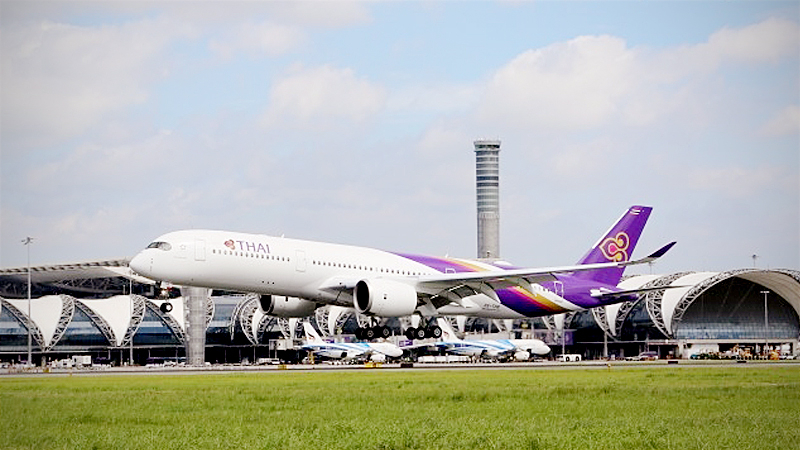
The Central Bankruptcy Court will rule on Thai Airways International’s petition for business rehabilitation on September 14.
Three days of hearings on the debt-laden carrier’s petition concluded today.
If the court orders the rehab can go ahead and appoints the rehab planners nominated by THAI, creditors have one month to file for repayment of debts, either online or at THAI’s Bangkok headquarters.


 Prime Minister Prayut Chan-o-cha
 Samir Sayed, Poly’s managing director for Asean and South Korea

 Photo credit: scbjuliusbaer