Red Hat chief: We’re committed to helping customers adapt to new normal #ศาสตร์เกษตรดินปุ๋ย

#ศาสตร์เกษตรดินปุ๋ย : ขอบคุณแหล่งข้อมูล : หนังสือพิมพ์ The Nation.

Red Hat chief: We’re committed to helping customers adapt to new normal

CorporateAug 25. 2020Andrew Habgood, senior director, Partner & Alliances, Red Hat Asia PacificAndrew Habgood, senior director, Partner & Alliances, Red Hat Asia Pacific 

By The Nation

Red Hat, a global leader in open-source solutions, is committed to supporting its customers, partners and communities in adapting to the new normal, said Andrew Habgood, senior director, Partner & Alliances, Red Hat Asia Pacific.

He made the remark at the one-day virtual Red Hat Asia Pacific Partner Conference 2020 on August 20 under the theme “The Future is Open”.

“This year has been challenging to say the least. We know that across countries, regions and industries, it’s been a pretty tumultuous year so far. And this is not going to change anytime soon. Red Hat is absolutely committed to support our customers, partners and open-source communities in adapting to the new normal and being ready to find new opportunities as we go forward,” Habgood said.

“While everyone has been impacted in different ways, most customers today are still reacting to the Covid-19 crisis. They’re simply focused on business continuity and reacting to the urgent needs of their customers,” he stated.

Habgood sees three customer profiles, each with very different needs.

He said some customers are “retracting” their businesses. These customers may be pausing, or renegotiating current terms. They need to reduce costs and increase efficiency, but do it in a way that doesn’t affect their bottom line.

“Certainly, patient discussions are needed to find solutions that didn’t work before. Solutions that can help them reduce costs, optimise infrastructure and also focus on user experience, digital channels and innovation in development. That will help them prepare to pivot into new areas and change their business models according to the market,” Habgood said.

“Then, of course, there are [a second type of] customers who want to protect their current business models while preparing for the future, staying the course. When we look at cost efficiencies, energy, technology and electronics are just some of the vertical industries that are impacted,” he said.

Habgood said Red Hat is helping customers make sure they are optimising the value of their existing subscriptions and using technologies such as Red Hat OpenShift, Red Hat Insights and Ansible Automation to maximise the benefits of investments they’ve made, and also prepare them for hybrid cloud or cloud native migration.

These customers, he said, are looking to carry out new projects, or they need to balance this against not creating new risks to their existing models.

The third type are those who are scaling, accelerating or needing to scale to keep up with new demand, Habgood said. These are vertical industries such as telecommunications, education, public sector, healthcare and financial services.

These customers have had to invest rapidly to support the new growing capacity of their IT environments, he said. They need to innovate quickly and accelerate development of new initiatives. Transforming and developing capabilities is absolutely key to this, he added.


WHA cuts profit forecast #ศาสตร์เกษตรดินปุ๋ย

#ศาสตร์เกษตรดินปุ๋ย : ขอบคุณแหล่งข้อมูล : หนังสือพิมพ์ The Nation.

WHA cuts profit forecast

CorporateAug 25. 2020

By The Nation

WHA Corporation has cut its profit forecast this year to the same level as the previous year of Bt13.3 billion due to the Covid-19 fallout.

The company cut its land sales this year to 900 rai – 600 rai in Thailand and 300 in Vietnam – from 1,400 rai (1,200 rai in Thailand and 200 rai in Vietnam).

Chairman and chief executive officer Jareeporn Jarukornsakul said the industrial estate business in the third quarter is still suffering the impacts of the Covid-19 pandemic, with foreign customers unable to sign land contracts due to lockdowns in their countries.

“However, we expect land sales to recover in the fourth quarter if the government allows foreign investors to enter the country,” she said.

Jareeporn also said the company’s logistics business continues to perform well as domestic customers were interested in renting warehouses.

“Customers are waiting to sign contracts to rent more than 40,000 square metres of built-to-suit warehouses, which are expected to be completed by the third quarter this year,” she said.

“Therefore, we are confident that our warehouse rentals will hit the target of 250,000 square metres, as rentals in the first quarter were 100,000 square metres.”

Jareeporn said WHA’s public utility business is doing well, as the drought problems have largely been resolved, while demand for water has increased after the government eased its lockdown measures, enabling industrial operators to resume business.

“Also, the sale of electricity is likely to increase,” Jareeporn said.

She said the company plans to sell 50,000 square metres of land for rent worth around Bt1billion to Hemraj Leasehold Real Estate Investment Trust and 130,000 square metres of warehouses for rent worth around Bt3 billion to WHA Premium Growth Freehold and Leasehold Real Estate Investment Trust in the fourth quarter, expecting to receive approximately Bt4 billion.

Meanwhile, an analyst at Bualuang Securities advised investors to buy WHA shares, because the market already recognises the company’s move to cut land sales.

“WHA gained positive sentiment, especially among Japanese customers, from strong demand for moving its production bases to Thailand,” the analyst added.

SET rises 0.5% but investors wait on US Fed report #ศาสตร์เกษตรดินปุ๋ย

#ศาสตร์เกษตรดินปุ๋ย : ขอบคุณแหล่งข้อมูล : หนังสือพิมพ์ The Nation.

SET rises 0.5% but investors wait on US Fed report

EconAug 26. 2020

By The Nation

The Stock Exchange of Thailand (SET) Index closed at 1,322.55 today (August 26), up 6.56 points or 0.5 per cent. Total transactions amounted to Bt48.652 billion with an index high of 1,323.97 and a low of 1,311.14.

In the morning session, a stock analyst at Krungsri Securities expected the index to fluctuate between 1,310 and 1,325 on the rising oil price and ongoing US-China trade talks.

“The price of oil rose after the US cut oil production in the Gulf of Mexico due to a hurricane,” he explained.

“However, investors would delay trading to follow the US Federal Reserve’s announcement on Thursday for signs of US economic direction and monetary policy.”

The 10 stocks with the highest trade value today were STGT, SAWAD, AOT, PTT, KBANK, SCC, MTC, CPALL, MINT and PTTEP.

As of 4.30pm, the price of oil had fallen by US$0.01 or 0.02 per cent to $43.34 per barrel, while gold rose by $4.70 or 0.24 per cent, to $1,927.80 per ounce.

Other Asian indices were mixed:

Japan’s Nikkei Index closed at 23,290.86, down 5.91 points or 0.025 per cent.

China’s Shang Hai SE Composite Index closed at 3,329.74, down 43.84 points or 1.30 per cent, while the Shenzhen SE Component Index closed at 13,428.40, down 241.01 points or 1.76 per cent.

Hong Kong’s Hang Seng Index closed at 25,491.79, up 5.57 points or 0.022 per cent.

South Korea’s KOSPI Index closed at 2,369.32, up 2.59 points or 0.11 per cent.

Taiwan’s TAIEX Index closed at 12,833.29, up 75.04 points or 0.59 per cent.

Fund allocates Bt2 billion for energy conservation projects #ศาสตร์เกษตรดินปุ๋ย

#ศาสตร์เกษตรดินปุ๋ย : ขอบคุณแหล่งข้อมูล : หนังสือพิมพ์ The Nation.

Fund allocates Bt2 billion for energy conservation projects

EconAug 26. 2020

By The Nation

The Energy Conservation Promotion Fund Committee agreed to earmark Bt2.06 billion for 1,035 energy-conservation projects in a meeting with Energy Minister Supattanapong Punmeechaow at the Energy Ministry on Wednesday.

The 1,035 are divided into two groups:

The first group includes 16 energy efficiency projects valued at Bt535.79 million, and 1,019 projects related to renewable energy valued at Bt1.53 billion.

As for off-grid power-generation projects, operators are required to apply for permission to use allocated areas in line with relevant laws and licences are expected to be granted by September 15.

Oil-refinery shares soar as hurricanes hit US Gulf coast #ศาสตร์เกษตรดินปุ๋ย

#ศาสตร์เกษตรดินปุ๋ย : ขอบคุณแหล่งข้อมูล : หนังสือพิมพ์ The Nation.

Oil-refinery shares soar as hurricanes hit US Gulf coast

EconAug 26. 2020

By The Nation

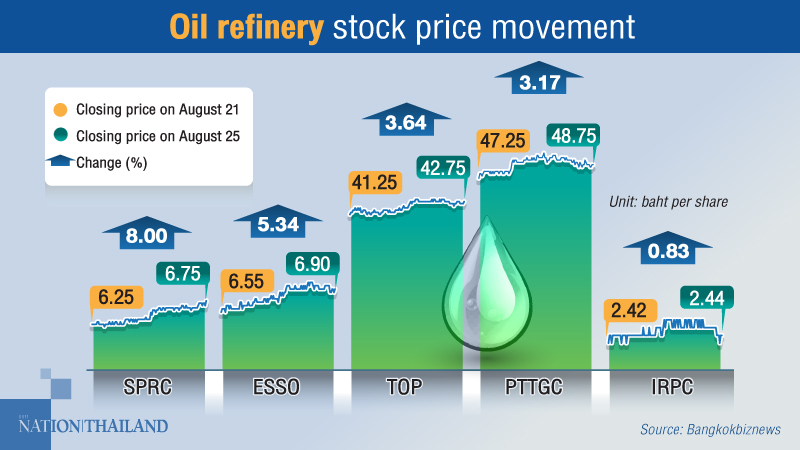
Oil-refinery shares rose in response to news of hurricanes Marco and Laura recently hitting the US coast on the Gulf of Mexico, experts said.

An analyst at CGS-CIMB Securities (Thailand) said this may be the best time to buy shares in oil-refineries, such as Thai Oil (TOP), Star Petroleum Refining (SPRC), Esso (Thailand) (ESSO), PTT Global Chemical (PTTGC) and IRPC, for short-term speculation.

“The hurricanes forced oil firms to evacuate employees from 114 out of 643 oil rigs and also cut down on the production of oil and natural gas by 57.6 per cent and 44.6 per cent, respectively,” the analyst said.

“The cost of refining oil will be high for a while in the wake of the hurricanes, which can be seen in the increase of fuel prices yesterday.”

Meanwhile, Jakapong Chawengsri, senior director at Kasikorn Securities said, if the hurricanes had hit the Texan capital of Houston directly, the cost of refining oil would have risen sharply.

“Oil refinery stocks that would gain the most benefit SPRC and ESSO because these companies have a lot of petrol, and the demand for petrol in the US is very high, so we recommend buying their shares for short-term speculation,” he said.

“However, oil refinery shares will be pressured from an excess in supply next year.”

Working from home may soon become new normal in Thailand #ศาสตร์เกษตรดินปุ๋ย

#ศาสตร์เกษตรดินปุ๋ย : ขอบคุณแหล่งข้อมูล : หนังสือพิมพ์ The Nation.

Working from home may soon become new normal in Thailand

EconAug 26. 2020Dr Pirata PhakdeesattayaphongDr Pirata Phakdeesattayaphong 

By The Nation

Some 20 per cent of Thai corporations have permanently shifted to working from home to curb the spread of Covid-19 and save costs, PwC Thailand said.

Dr Pirata Phakdeesattayaphong, consulting partner for PwC Thailand, said the pandemic has forced companies to embrace social distancing, prompting work-from-home policies to become the new normal.

“We estimate that 20 per cent of Thai companies currently have a policy that allows their employees to work from home permanently to not just protect them from Covid-19, but to also save themselves some operating costs such as rent, utility bills and other maintenance costs,” she said.

More Thai firms are also expected to outsource or hire highly skilled contingent workers, including freelancers for non-permanent roles, if the pandemic persists. This will give them better flexibility in managing their workforce and cost-cutting strategies.

“They’re also using a hybrid work model where staff have the option of working from home or coming to the office for meetings or workshops. Working from home for extended periods of time can be stressful, causing employees to struggle to find their work-life balance. Our data shows that most people prefer working from home at least two days a week,” she said.

According to PwC’s CEO Panel Survey, which canvassed some 699 CEOs in 67 countries between June and July on emerging business models and key trends resulting from the pandemic, a majority of the respondents (78 per cent) expect remote working and collaboration to have a lasting impact after Covid-19. That was followed by shifts towards automation (76 per cent) and low-density workplaces (61 per cent).

Challenges of working remotely

Remote work is not without its challenges. The quality of work and overall productivity are among key issues many business leaders are facing when assessing work-from-home policies.

Dr Pirata suggested it’s essential that organisations provide best practices for remote working and use the right tools to measure staff performance. This includes adopting digital solutions to help managers track work progress, helping team members solve problems quickly and prioritising automation for certain types of work.

Motivating and encouraging employees who work remotely is also a top priority for leaders. Human resources functions need to adjust the employee experience, including providing opportunities for employees to meet, connect and build communities so they are more engaged. Companies also need to have a clear policy on time-out/vacation for employees and protocols for break times during the day.

Even as the pandemic changes the daily work life of employees in one way or another, it’s critical for them to develop new skills while adapting to new situations. Flexibility and adaptability will be important skills to increase efficiency and allow them to stay agile in a world full of rapid and unprecedented changes, she added.

Thailand prepared to deal with foreign arrivals, study shows #ศาสตร์เกษตรดินปุ๋ย

#ศาสตร์เกษตรดินปุ๋ย : ขอบคุณแหล่งข้อมูล : หนังสือพิมพ์ The Nation.

Thailand prepared to deal with foreign arrivals, study shows

EconAug 26. 2020

By The Nation

As Thailand gradually reopens its borders, new findings from a global study suggests that four out of five Thais are confident that the country is well prepared to deal with an influx of tourists.

The study also found that tourists from Hong Kong, Singapore, Philippines, Indonesia and India are all targeting Thailand as their first destination once their countries’ borders reopen.

Jointly conducted by Blackbox Research, data provider Dynat and language partner Language Connect, the report “Unravel Travel: Fear and Possibilities in a Post Covid-19 World”, examines the sentiments, preferences and expectations of 10,195 people across 17 countries regarding travel after the pandemic.

Thailand is heavily dependent on tourism, with tourist dollars contributing around 11 per cent to the national economy. The vast majority or 93 per cent of Thais recognise the importance of the tourism sector. In fact, 22 per cent of the respondents agreed that there is an urgent need to promote tourism for economic reasons.

Saurabh Sardana, chief operating officer of Blackbox Research, said both regional interest and citizen sentiment towards restarting local tourism have been encouraging, especially given the country’s phased approach in reopening to business and medical tourists. Sardana noted that establishing traveller’s trust in health and safety protocols is key, and that Thailand needs to capitalise on its success in containing the Covid-19 outbreak.

“It is evident from our findings the immense value tourism contributes to Thailand’s economy. As Thailand progressively opens its borders to international visitors, its immediate priority will be to regain traveller confidence.”

In Southeast Asia, Thailand has the strongest domestic appeal. Most or 91 per cent of Thais are keen to support local destinations in the next 12 months – a positive sign given Thailand’s recent investment of Bt22.4 billion to stimulate its domestic tourism.

Sardana noted that while the financial aid will definitely play a part in encouraging locals to travel domestically, the government needs to also take into consideration how travel priorities have shifted in response to the pandemic.

“Our study has found that price is not necessarily the highest priority for their next trip – instead, visitor safety measures overwhelmingly ranked top of the list for most Thai travellers.”

Commenting on the significance of the study’s findings, Sardana said, “The study has shown us that the pandemic has unequivocally shifted how we see travel. In order for travel industry players to stay relevant, they need to change the way they approach every aspect and touchpoint in the traveller experience, emphasising safety and rebuilding trust.”

Other key findings from the survey were:

• Overall, international leisure travel in the short term is off the schedule for most people, with 44 per cent of respondents still keen to avoid international vacations.

• Notably, Japanese (32 per cent), Filipinos (42 per cent), New Zealanders (43 per cent) and Australians (52 per cent) are least eager to take long-haul trips.

• Australia and Japan emerged as the two most popular destinations for Asian travellers, while Spain is on the top of the list of European travellers given the downward trend in Covid-19 cases since June.

• The countries whose tourism appeal took the biggest hit during the pandemic are China, Italy and the US.

• Globally, 80 per cent are willing to pay more for safer accommodation, and 74 per cent are open to paying a higher premium for travel insurance in exchange for protection against pandemics.

• 76 per cent of respondents indicated that their preferred travel destinations will be countries that offer more contactless experiences.

• An overwhelming 66 per cent prefer to travel in their own vehicles for road trips between cities or countries, compared to travelling on a plane (18 per cent), rented or private-hire car or taxi (9 per cent), and buses and trains (7 per cent).

• In terms of what the future of travel looks like, the study found that e-boarding passes (44 per cent), touchless lavatories (43 per cent), contactless journeys from airports to hotels (40 per cent), no more middle seats in transportation (36 per cent), and digital health passports (35 per cent) are some of the new ideas which global travellers hope to see implemented in the near future.

Sell-offs pull gold price down #ศาสตร์เกษตรดินปุ๋ย

#ศาสตร์เกษตรดินปุ๋ย : ขอบคุณแหล่งข้อมูล : หนังสือพิมพ์ The Nation.

Sell-offs pull gold price down

EconAug 26. 2020

By The Nation

The price of gold dropped by Bt50 per baht weight in morning trade on Wednesday, the Gold Traders Association reported.

As of 9.28am, the buying price of a gold bar was Bt28,550 per baht weight and selling price Bt 28,650, while gold ornaments cost Bt28,030.84 and Bt29,150, respectively.

At close on Tuesday (August 25), the buying price of a gold bar was Bt28,600 per baht weight and selling price Bt28,700 while gold ornaments cost Bt28,091.48 and Bt29,200, respectively.

Spot gold price moved to US$1,928 (Bt60,449.38) per ounce on Wednesday morning after the price had dropped by $16.1 to $1,923.1 (Bt60,295.75) per ounce at close on Tuesday.

Gold price dropped for two consecutive days from mass sell-offs of the metal after there were signs of progress in US-China trade talks, while US new home sales hit their highest level in almost 13 years.

Meanwhile, Hong Kong gold price rose by HK$10, opening at $17,820 (Bt72,070.14) per tael this morning.

Investors await Fed signals on economic direction, fiscal policy #ศาสตร์เกษตรดินปุ๋ย

#ศาสตร์เกษตรดินปุ๋ย : ขอบคุณแหล่งข้อมูล : หนังสือพิมพ์ The Nation.

Investors await Fed signals on economic direction, fiscal policy

EconAug 26. 2020

By The Nation

The Stock Exchange of Thailand (SET) Index fell by 2.46 points, or 0.19 per cent, to 1,313.53 in morning session on Wednesday (August 26).

A stock analyst at Krungsri Securities expected the index to fluctuate between 1,310 and 1,325 despite the rising oil price and ongoing progress of US-China trade talks.

“The price of oil rose after the US cut oil production in the Gulf of Mexico due to a hurricane,” he explained.

“However, investors would delay trading to follow US Federal Reserve’s speech on Thursday to seek signs of economic direction and monetary policy.”

He recommended that investors buy:

▪︎ Energy stocks that benefit from the rising oil price, such as PTTEP, TOP, PTTGC, IVL and SPRC.

▪︎ Stocks whose third-quarter performance will improve, such as CPF, GFPT, TU, Asian, KCE, Hana, Delta, HMPro, Global, DoHome, Com7, JMT, CHG, BCH, PTG, PlanB and CBG.

The SET Index closed at 1,315.99 on Tuesday (August 25), down 1.12 points or 0.08 per cent. Total transactions amounted to Bt56.355 billion with an index high of 1,327.42 and a low of 1,315.13.

Longan farmers handed Bt3.44bn aid package #ศาสตร์เกษตรดินปุ๋ย

#ศาสตร์เกษตรดินปุ๋ย : ขอบคุณแหล่งข้อมูล : หนังสือพิมพ์ The Nation.

Longan farmers handed Bt3.44bn aid package

EconAug 26. 2020

By The Nation

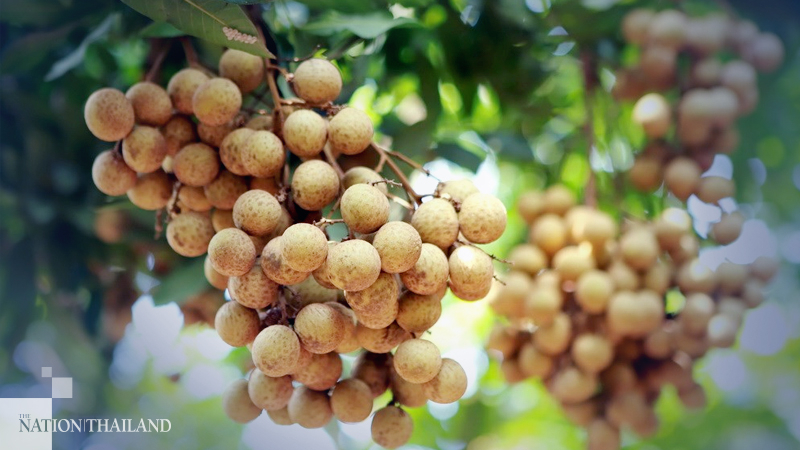
The Cabinet on August 25 approved the Fruit Board’s proposal to provide Bt3.44 billion in aid to longan farmers this year, said Minister of Agriculture and Cooperatives Chalermchai Sri-on.

The farmers will be paid Bt2,000 per rai per household for up to 25 rai.

Thailand produced 1 million tonnes of longan last year of which 583,000 tonnes were exported. The key export markets are China, Vietnam and Indonesia but demand has dropped during the Covid-19 pandemic.