Krungsri, MUFG pledge Bt116m to support Thai, SE Asian students in Japan #ศาสตร์เกษตรดินปุ๋ย

#ศาสตร์เกษตรดินปุ๋ย : ขอบคุณแหล่งข้อมูล : หนังสือพิมพ์ The Nation.

Krungsri, MUFG pledge Bt116m to support Thai, SE Asian students in Japan

Aug 14. 2020Noriaki Goto, MUFG Bank’s Regional Executive for Asia Pacific and Krungsri’s Vice ChairmanNoriaki Goto, MUFG Bank’s Regional Executive for Asia Pacific and Krungsri’s Vice Chairman

By The Nation

Thai students in Japan are being handed Bt29 million to help them get through hardships caused by the Covid-19 pandemic. The money is part of a Bt116-million relief fund organised by Mitsubishi UFJ Financial Group (MUFG), the major shareholder in Bank of Ayudhya (Krungsri), to aid Southeast Asian students in Japan during the virus crisis.

MUFG will distribute the donation evenly across four beneficiaries: the Thai Students’ Association in Japan, the Indonesian Embassy in Japan, the Association of Filipino Students in Japan, and the Vietnamese Embassy in Japan.

The donation will serve as financial aid for students experiencing economic hardship or disruption of their studies due to the pandemic.

The nationalities of the student beneficiaries correspond to four markets in which MUFG has made strategic investments over the past few years. MUFG said the donation underscores the group’s commitment to not just economic growth but social well-being in the markets in which it operates. Since 2012, MUFG has invested more than US$14 billion (Bt435 billion) in leading banks in these four countries – VietinBank in Vietnam, Krungsri in Thailand, Security Bank in the Philippines and Bank Danamon in Indonesia.

“As a global bank with deep roots in Asia, MUFG is fully committed to supporting the sustainable development of the communities that it operates in,” said Noriaki Goto, Krungsri’s vice chairman and MUFG Bank’s regional executive for Asia Pacific.

“Just as we are working closely with clients to build resilience in their businesses during these trying times, we hope that this support package will not only provide some measure of relief to students in need but demonstrate our long-term commitment to the deepening of bilateral ties between Japan and key Southeast Asian markets in the MUFG network. This donation is also a show of solidarity with our strategic partner banks, which have been doing admirable work in supporting the relief efforts in their own communities.”

Suvarnabhumi to get new aviation fuel tank next year #ศาสตร์เกษตรดินปุ๋ย

#ศาสตร์เกษตรดินปุ๋ย : ขอบคุณแหล่งข้อมูล : หนังสือพิมพ์ The Nation.

Suvarnabhumi to get new aviation fuel tank next year

Aug 14. 2020

By The Nation

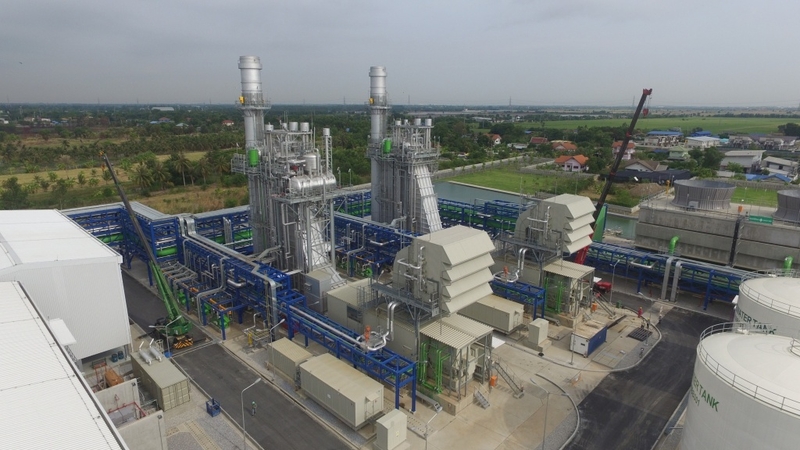
The Bangkok Aviation Fuel Services (BAFS) Group, Thailand’s leader in integrated fuel servicing, has signed a contract to construct an aviation fuel tank in Suvarnabhumi Airport to handle an expected rise in fuel demand once the midfield satellite building and the airport’s third runway are opened in 2022 and 2024 respectively.

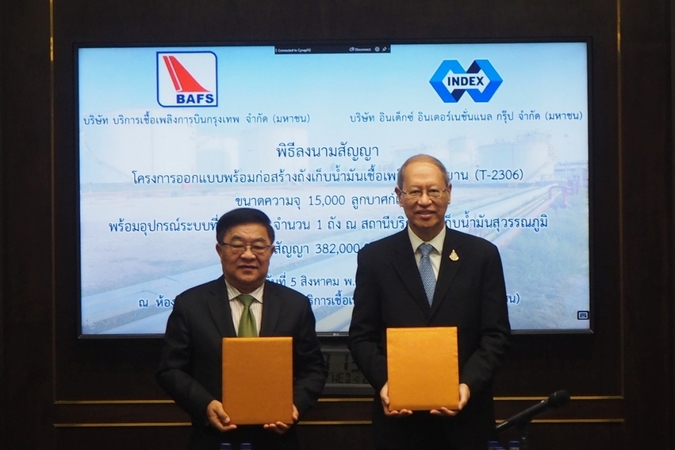
MR Supadis Diskul, BAFS chief executive officer, said the group and engineering consulting firm Index International Group had jointly signed a contract to design and build an aviation fuel tank (T-2306) which will be located in Suvarnabhumi’s aviation fuel storage station.

BAFS has also signed a construction supervision contract for the T-2306 aviation fuel tank and connected equipment with the companies Alana Engineering and Triple – H E & C.

The construction of the fuel tank with a 15,000 cubic-metre capacity is scheduled to be completed within the fourth quarter of 2021.

The new tank will be built with an internal floating roof below the external fixed roof, which will allow the circulation of air and a reduction on the accumulation of chemical vapours. This will also protect the fuel tank from being hit by lightning.

“This project will boost the company’s revenue and underscore our leadership in providing integrated fuel servicing in Thailand, while also supporting BAFS Group’s growth strategy,” Supadis said.

Investors advised to buy stocks expected to perform better in second half #ศาสตร์เกษตรดินปุ๋ย

#ศาสตร์เกษตรดินปุ๋ย : ขอบคุณแหล่งข้อมูล : หนังสือพิมพ์ The Nation.

Investors advised to buy stocks expected to perform better in second half

EconAug 15. 2020

By The Nation

Experts believe the Stock Exchange of Thailand (SET) Index’s resistance line is between 1,300 and 1,350, and are advising investors to buy stocks whose second-half performance will improve.

The index fell by 19.64 points or 1.46 per cent on Friday (August 14), closing at 1,327.05 after rising approximately 30 points to its highest in three weeks at 1,353.53 on Thursday.

Nuttachart Mekmasin, a research analyst at Trinity Securities, said the correction in SET was in response to the drop in foreign markets during the afternoon session yesterday as European stocks and US futures exchange markets were in negative territory after open trading, while the Thai stock market faced mass sell-offs after rising significantly in the past two days.

“The SET rose recently in response to the sector rotation as investors believed that low-priced shares would recover, but this was short term due to hopes over the Covid-19 vaccine,” he said. “This year, shares sometimes rebounded for a while, so we expect the market correction to benefit small and medium stocks that perform well.”

He added that the market correction is an opportunity for investors to buy cheap stocks whose second-half performance will improve as most listed companies have announced their performance for the second quarter.

Sunthorn Thongthip, a senior director at Kasikorn Securities, said the SET correction was due to external factors and mass sell-offs to cut down on risks before the China-US trade talks are held this weekend, adding that investors should follow the state of politics in Thailand as well.

“Next week, investors will forecast listed companies’ fundamentals as most listed firms have announced their second-quarter performance, so this is a chance to buy cheap stocks whose second-half performance is expected to improve,” he said. “However, we expect the SET Index to fluctuate in a narrow range between 1,300 and 1,350, and advise investors to make selective purchases.”

An analyst at CGS CIMB Securities said the market was in a downturn due to mass sell-offs in tourism, bank, and energy stocks.

“However, the market will rebound nearly 1,350 points from mass buy-ups of stocks that were sold off, such as agriculture, retail, finance, and beverage,” the analyst said.

“This shows that the market cannot rise further due to the lack of positive sentiment.”

He added that negative sentiment that had pulled SET down in the afternoon session was due to a correction in the regional stock markets, fall in Dow Jones Futures and mass sell-offs in mutual funds.

Ratch Group unveils Bt11.3bn plan for 2nd half #ศาสตร์เกษตรดินปุ๋ย

#ศาสตร์เกษตรดินปุ๋ย : ขอบคุณแหล่งข้อมูล : หนังสือพิมพ์ The Nation.

Ratch Group unveils Bt11.3bn plan for 2nd half

CorporateAug 14. 2020

By The Nation

Power producer Ratch Group plans to invest Bt11.3 billion on new ventures in the second half of 2020. In the first six months the company has spent Bt3.7 billion of its Bt15-billion investment plan for 2020, explained Kijja Sripatthangkura, chief executive officer.

“The remaining Bt11.3 billion will be used to acquire new projects in the second half,” he said.

“The company’s financial status is still strong, enabling us to pursue future investment in order to meet Ratch Group’s targeted enterprise value of Bt200 billion by 2023,” he added.

Ratch said in the first half it expanded its capacity investment in four new power plant projects and the expansion of its existing power plant, increasing equity generation capacity by 242.62 megawatts to 8,177.68MW in total.

It also invested in infrastructure, injecting Bt280 million into Smart Infranet, a fibre optic network service provider in which it has a 51-per-cent stake, to be used for assets acquisition from ALT Telecom, which will become a foundation for revenue generation.

Kijja said that in the second half of the year, Ratch will begin to recognise revenues from three projects, including the expansion of NNEG Power Plant with 60MW generation capacity and 10 tonnes per hour of steam to industrial customers in Nakhon Ratchasima’s Nava Nakorn Industrial Promotion Zone, with nine industrial users entering the power purchase agreement.

The other two projects are the Australia 214-MW Yandin Wind Farm feeding Alinta Sales under a power purchase agreement, and Vietnam’s Thang Long Thermal Power Plant with investment through the An Binh Energy and Infrastructure Fund (ABEIF).

Ratch Group said it is also negotiating to jointly invest in on-hand overseas fossil fuel and renewable power projects, especially in Indonesia and Vietnam, with capacity prospects of 400MW to meet the company’s target this year of 537MW.

On the infrastructure side, the company is planning to build and expand its customer base in order to create income from telecoms joint ventures involving Smart Infranet Company Limited and Things on Net Co Ltd, thanks to growing prospects of the telecoms and digital technology business under “new normal” conditions following the Covid-19 crisis.

Asia Aviation suffers big loss in Q2 from Covid-19 travel restrictions #ศาสตร์เกษตรดินปุ๋ย

#ศาสตร์เกษตรดินปุ๋ย : ขอบคุณแหล่งข้อมูล : หนังสือพิมพ์ The Nation.

Asia Aviation suffers big loss in Q2 from Covid-19 travel restrictions

CorporateAug 14. 2020

By The Nation

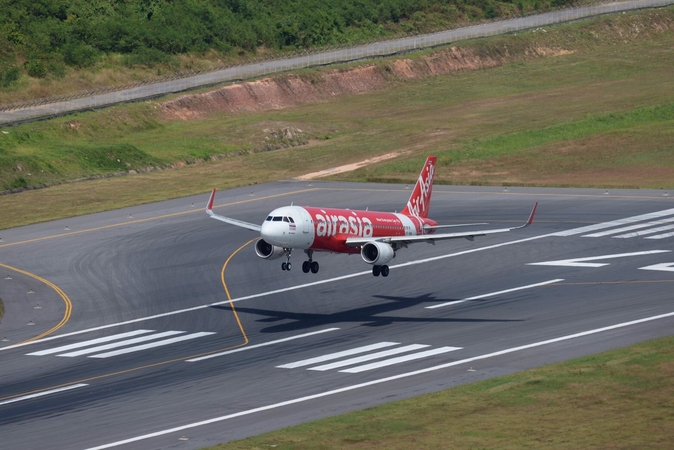
Asia Aviation Plc (AAV), a major shareholder of Thai AirAsia Co Ltd (TAA), on Friday reported a net loss of Bt1.210.6 billion for the second quarter, from a total revenue of Bt2.221 billion.

The loss was predominantly due to travel restrictions, causing significantly reduced demand and the temporary hibernation of its fleet in light of the Covid-19 situation.

The chief executive officer of AAV and TAA, Santisuk Klongchaiya, said: “With the tourism industry in Thailand and globally significantly impacted by the Covid-19 pandemic, resulting in subdued demand and travel restrictions, TAA managed to maintain minimal operations during the quarter, especially on international routes. Total revenue for the quarter decreased by 78 per cent, mainly due to the reduction in the number of passengers carried which fell by 95 per cent year on year, to a total of 283,601 passengers, the company said.

During the quarter, the number of international visitors carried by the company plunged by almost 100 per cent compared to the same period last year, while the overall load factor in the said quarter decreased to 52 per cent.

“Total expenses decreased by 63 per cent versus the same period last year, attributable to lower fuel costs and non-fuel expenses. Fuel costs fell as a result of capacity cuts and lower fuel prices, while non-fuel expenses decreased as a result of cost saving initiatives and eliminating all non-essential spending.

“We flew at only 8 per cent capacity compared to Q219 due to necessary flight cancellations and restrictions on air travel. With the situation alleviating and domestic flights gradually resuming in May, we were able to offer a number of sale promotions such as Unlimited Pass, to stimulate air travel in the latter half of the year,” Santisuk said.

The company said it was focused on seizing opportunities where there is demand during the second half of the year, including an increase in its domestic routes along with the government economic stimulus package and the introduction of new routes such as Chiang Mai-Hua Hin and Udon Thani-Hua Hin. It would also leverage on Bangkok’s additional hub at Suvarnabhumi Airport to work in conjunction with Don Mueang International Airport.

TAA expects to resume its international flight operations through travel bubble schemes with certain target markets, primarily Indo-China, China and other countries who have effectively contained the outbreak, the company said.

TAA said it welcomed the latest move by the Office of the Civil Aviation Authority of Thailand to ease restrictions on inflight services beginning with the sale of merchandise from early August which it expects to be followed with food and beverage services soon. These would further stimulate TAA’s performance in the second half of 2020, the company said.

B Grimm bucks the trend with Q2 profit surging 62.5 per cent over 2019 #ศาสตร์เกษตรดินปุ๋ย

#ศาสตร์เกษตรดินปุ๋ย : ขอบคุณแหล่งข้อมูล : หนังสือพิมพ์ The Nation.

B Grimm bucks the trend with Q2 profit surging 62.5 per cent over 2019

CorporateAug 14. 2020Preeyanart SoontornwataPreeyanart Soontornwata 

By THE NATION

B Grimm Power Plc (BGRIM) reported a robust 62.5 per cent increase in second-quarter net profit year on year despite the economic downturn caused by the Covid-19 pandemic.

The SET-listed private power producer posted Bt1.017 billion in net profit for April-June, fuelled by the continuous expansion of its production capacity and an increase in industrial customers, said Preeyanart Soontornwata, chief executive officer of BGRIM.

The net profit attributable to the parent company is Bt1.017 billion, increasing 62.5 per cent over the same period last year, while the normalised net profit amounted to Bt1.102 billion with Bt674 million being attributable to the parent firm, a 17.2 per cent growth from the same period last year.

BGRIM’s board of directors has approved an interim dividend of 0.15 baht per share for the first half of the year.

Preeyanart said BGRIM’s financial position has remained strong as the company has since last year commenced four new power plants and two SPP co-generation acquired through acquisitions to its total installed generation portfolio which grew to 3,019MW in the mid-2020.

The two co-generation projects acquired are the B Grimm Power (AIE-MTP), formerly known as SPP 1, and Ang Thong Power Project.

BGRIM has also seen an increase in power purchase from its new industrial clients, who committed to 25MW supplies last year and another 15MW in the first half of this year.

Meanwhile, the continued improvement of power plant efficiency has contributed to BGRIM’s bottom line.

The second half of 2020 will see new industrial customers gradually connecting their systems with BGRIM’s grids, she said.

The power purchase from existing industrial clients is expected to ramp up in the period as reflected by the 17 per cent rise in their electricity consumption in July this year as compared to the monthly average level recorded in the second quarter of this year, she added.

Construction of BGRIM power projects has forged ahead with a 39MW Ray Power solar project in Cambodia and the Bo Thong Wind Farm 1 & 2 with an installed capacity of 16MW, are due for commercial operation between the fourth quarter of this year and first quarter of 2021, Priyanart said.

CPF net profit soars amid surge in demand for pork #ศาสตร์เกษตรดินปุ๋ย

#ศาสตร์เกษตรดินปุ๋ย : ขอบคุณแหล่งข้อมูล : หนังสือพิมพ์ The Nation.

CPF net profit soars amid surge in demand for pork

CorporateAug 14. 2020

By THE NATION

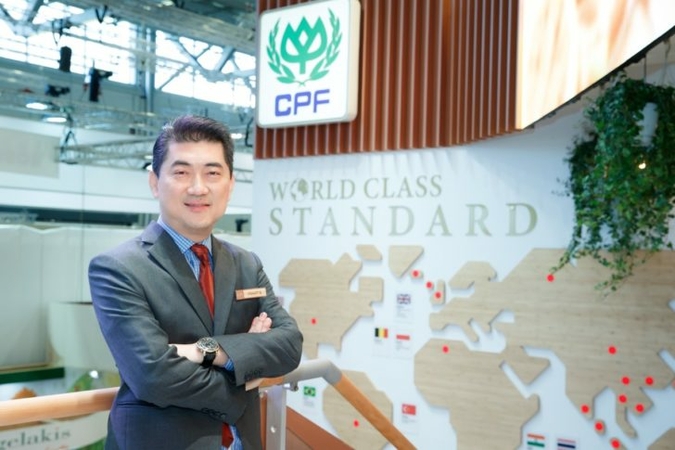
Charoen Pokphand Foods (CPF) reported a sharp 45 per cent jump in net profit in the first half of 2020 compared to 2019 due to the rising demand for pork amid African Swine Fever (ASF) and the company’s growing aquatic business.

The company’s net profit totalled Bt12.13 billion.

“In the first six months of 2020, CPF has generated Bt281.9 billion revenue from sales, which is 9 per cent higher from the same period last year,” CPF chief executive officer Prasit Boondoungprasert said. “Sales revenue from exports to 16 countries expanded 12 per cent year on year, while domestic sales grew 2 per cent. International sales are responsible for 69 per cent of the company’s total revenue while 31 per cent are from domestic market.”

Prasit explained that the improved revenue is the result of growing foreign businesses that the company has invested in over the past 10 years, as well as other factors.

“The ASF outbreak which has resulted in shortage of pork in Asian markets is also a factor that spurred consumers’ demand for safe food, boosting the company’s sales,” he added. “The economic contraction due to the Covid-19 outbreak has slightly affected the company’s business, as CPF’s products are items necessary for daily life, while the company’s aquatic business in Thailand is also growing rapidly.

“Furthermore, the company has adapted new technology in manufacturing as well as sales strategy to suit the changing markets. We expect to make a record profit this year,” he added.

The company’s board meeting on August 13 agreed to pay interim dividend for the first six months of 2020 at Bt0.40 per share. The list of eligible shareholders will be announced on August 31 while the payment will be made on September 11.

Cabinet gives greenlight to BMTA loan again #ศาสตร์เกษตรดินปุ๋ย

#ศาสตร์เกษตรดินปุ๋ย : ขอบคุณแหล่งข้อมูล : หนังสือพิมพ์ The Nation.

Cabinet gives greenlight to BMTA loan again

CorporateAug 14. 2020

By The Nation

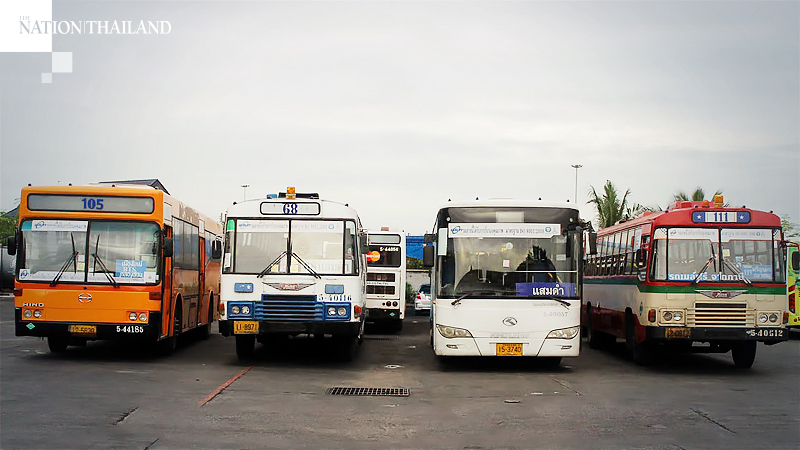
The Cabinet has accepted the Bangkok Mass Transit Authority (BMTA)’s proposal to borrow Bt7.89 billion in a bid to boost its liquidity as it expects to lose Bt33 billion in operations next year.

Deputy government spokesperson Traisulee Traisoranakul said on Thursday (August 13) that the BMTA loan will be guaranteed by the Finance Ministry.

According to the BMTA, its revenue and expenditure for 2021 are expected to stand at Bt9.58 billion and Bt42.67 billion respectively, creating a Bt33.09 billion contraction in revenue.

“Hence, the BMTA needs to borrow Bt7.89 billion to use as circulating capital and boost liquidity on operating public transport service,” she said.

“Of the loan, Bt3.22 billion will cover fuel costs, Bt1.64 billion will cover repairs and Bt3.03 billion will be used to boost liquidity.”

She went on to say that since 2017, the Cabinet has approved loans worth nearly Bt70 billion for the BMTA as follows:

August 8, 2017: Bt2.83 billion to pay for fuel and to repair air-conditioned public transport vehicles during the 2018 fiscal year.

September 19, 2017: Bt26.78 billion for the restructuring of debt that matured in 2018 fiscal year.

February 6, 2018: Bt2.96 billion loan to repay debt that matured on March 1, 2018, and Bt2.01 billion to boost liquidity in 2018 fiscal year.

August 7, 2018: Bt15.37 billion for debt restructuring in 2019 fiscal year.

October 16, 2018: Bt9.22 billion to boost liquidity in 2019 fiscal year.

June 4, 2019: Bt11.32 billion to boost liquidity in 2020 fiscal year.

According to the Transport Ministry’s report released on November 30 last year, the BMTA had liabilities totalling Bt122.1 billion, mainly because the agency collects fare that is far lower than the actual cost, and cannot adjust it in line with the current situation.

Of its total liabilities, Bt57.67 billion is debt from government bonds with interest, Bt56.32 billion from long-term loans, Bt113 million from fuel cost, Bt252 million from repair cost, Bt1.56 billion from employee benefit obligation, Bt4.36 billion from employee pension fund and Bt1.82 billion from other liabilities.

Meanwhile, the Finance Ministry and Budget Bureau have advised the Transport Ministry and BMTA to come up with a rehabilitation plan, especially guidelines to boost revenue, reduce expenses and solutions to ease the debt problem as soon as possible and relieve the government’s burden.

TCAP happy with first half performance, agrees to pay dividends #ศาสตร์เกษตรดินปุ๋ย

#ศาสตร์เกษตรดินปุ๋ย : ขอบคุณแหล่งข้อมูล : หนังสือพิมพ์ The Nation.

TCAP happy with first half performance, agrees to pay dividends

CorporateAug 13. 2020

By The Nation

Thanachart Capital Public Company Limited (TCAP) has announced that its performance in the second quarter and the first half of the year was quite good.

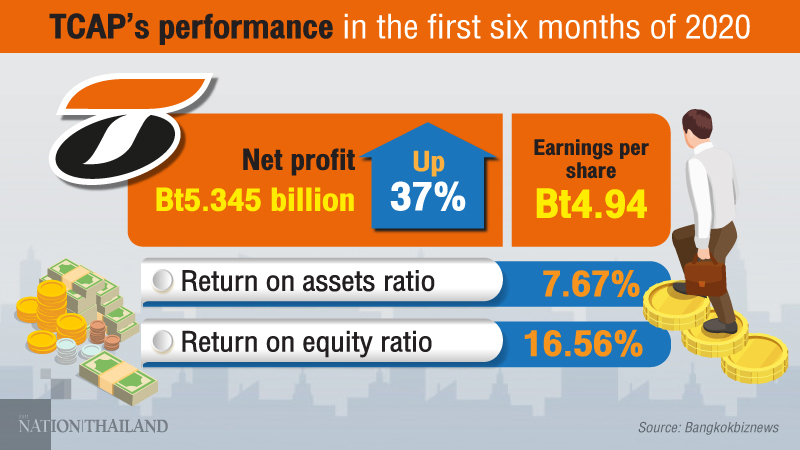
Somjate Moosirilert, TCAP’s chief executive officer, said in the second quarter, the company and its subsidiaries’ net profit stood at Bt1.35 billion, of which Bt1.03 billion accounted for TCAP’s own net profit.

“For the first six months, the company and its subsidiaries’ net profit stood at Bt5.95 billion, of Bt5.35 billion was earned by TCAP itself, marking a 37 per cent year on year increase,” he said.

However, he admitted that in the second quarter, the Covid-19 outbreak had had an adverse impact on many companies, including TCAP.

“The company’s return on investment in associates dropped because associates’ profits dropped due to the Covid-19 outbreak and lockdown measures,” he said.

“However, performance of the company’s key subsidiaries, such as Thanachart Securities, Thanachart Insurance and Ratchthani Leasing is still good.”

He added that TCAP will not use its remaining Bt15 billion for investment, because it is still risky.

“The company’s board of directors and management execs have come up with a policy to prioritise taking care of subsidiaries instead,” he said. “We will consider other investments after the Covid-19 fallout is resolved.”

He added that considering the company’s cash in hand, its first half performance and second half performance forecast, the board of directors is still confident in the business despite the recession caused by the Covid-19 outbreak.

“Hence, the board has agreed to pay interim dividends to shareholders at Bt1.20 per share, which is equal to the dividends paid last year,” he said. “The dividend will be paid on August 27.”

CKPower performance hit by low water inflow, hopes for higher 2nd-half revenue from increased power generation #ศาสตร์เกษตรดินปุ๋ย

#ศาสตร์เกษตรดินปุ๋ย : ขอบคุณแหล่งข้อมูล : หนังสือพิมพ์ The Nation.

CKPower performance hit by low water inflow, hopes for higher 2nd-half revenue from increased power generation

CorporateAug 13. 2020Thanawat TrivisvavetThanawat Trivisvavet 

By THE NATION

CK Power Public Company Limited and its subsidiaries witnessed lower performance in the second quarter compared to the same period last year due to low water inflow at the Nam Ngum 2 Hydroelectric Power Plant (NN2) in summer, managing director Thanawat Trivisvavet said in a press statement today (August 13).

The volume of water inflow at NN2 in the first half of this year was approximately 867 million cubic metres, a decrease of 65 million compared to the same period last year.

As a result, the power plant’s capacity to generate and sell electricity was reduced to 409 million units, about 618 million units lower than last year’s 1,027 million.

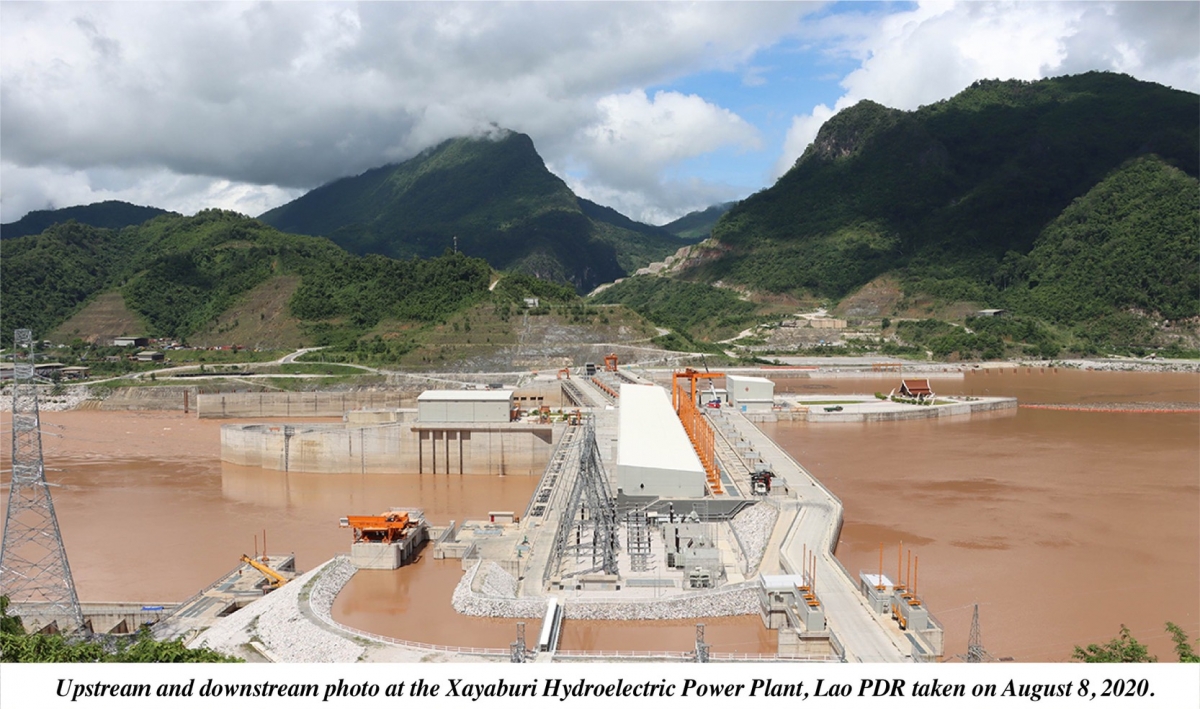
Nonetheless, CKPower was able to sell an impressive 2.34 billion units of electricity from the Xayaburi Hydroelectric Power Plant in the first half of this year, the statement said.

Meanwhile, the Bangpa-in Cogeneration Limited plant and Bangkhenchai’s nine solar-powered plants have also been generating more electricity in the second quarter.

Overall, CKPower earned revenue of Bt3.59 billion in the first half of the year – Bt1.13 billion lower than the same period last year when the company saw earnings of Bt4.73 billion.

Mid-year electricity sales of 1.18 billion units was 618 million units lower than in 2019 – a 34 per cent decrease.

During the second quarter of 2020, CKPower and its subsidiaries earned Bt1.83 billion in revenue, which is 21 per cent lower than the same period last year, when the company earned Bt2.31 billion.

Electricity sales of 609 million units in the second quarter of 2020 were lower than the same period last year, a 29 per cent decrease.

However, the volume of recent water inflow at the NN2 reservoir was 628 million cubic metres, a 37 per cent increase from the same period last year when the inflow totalled 460 million cubic metres.