Taiwan online platform to distribute 100,000 medical masks free to Thais
Aug 04. 2020
By The Nation
PChome Thai, a Taiwan online platform and the largest source of Taiwanese products in Thailand, said on Tuesay that it will give away 100,000 Taiwan-made medical-grade masks.
PChome said the programme aimed to show its support and concern for Thai people.
All Thais are welcome to register at PChome Thai website: (https://www.pchome.co.th/) to get free masks.
Wen-Hsiung Tsai, PChome Thailand’s managing director, said: “PChome Thai is deeply engaged in the local market. Taiwan’s success in epidemic prevention is witnessed by the world. As soon as the epidemic in Taiwan slowed down and the ban on the export of masks was lifted, we did our best to find high-quality Taiwan-made masks for Thai people, hoping to help them get through the epidemic and return to normal life as soon as possible. We are providing 100,000 medical-grade masks for Thai people free of charge.”
To get free masks, visit PChome Thai’s “Free Taiwan Masks – Taiwan Can Help” event page. All you need to do is register on PChome Thai website and request free masks (10 pieces per person) and pay less than Bt25 for shipping. For a chance to win a pair of AirPods Pro, share PChome Thai’s free masks offer page, Click on: https://www.pchome.co.th/epage/freemasktaiwancanhelp.html
For months it’s been clear that Disney, the country’s most prominent entertainment company, was facing a financial disaster unlike any in its history.
On Tuesday, it became evident just how deep the carnage has gone.
The company revealed that as a result of the coronavirus pandemic it took in just $11.8 billion in revenue and $1 billion in operating income in the three-month period that ended in June, the height of lockdowns in the country. The numbers are a significant drop from the same period a year ago, when it generated $20.25 billion in revenue and $4 billion in operating income, among the worst slides of the modern era.
The earnings report for the fiscal third-quarter gave numeric form to what had been the sense of many in the entertainment and financial communities: Disney, once the high-flying giant of Hollywood, has been brought low by the virus, its creations often unable to be produced or consumed.
To try to get some of that revenue back, the company said it would finally release “Mulan,” the action-adventure reboot that has been delayed several times since its March opening.
But the company said it would employ a patchwork approach to do so. The live-action film will be made available on Disney Plus in the U.S. beginning Sept. 4 – at a cost of $29.99. The same pattern will follow in Canada, Australia and some of Western Europe. Customers will be given indefinite access to the film in exchange for the fee, but only as long as they subscribe to Disney Plus.
In countries where Disney Plus is not offered or theaters are widely open, meanwhile, the movie will go to theaters. This will almost certainly include China, where the film is expected to generate a large percentage of its box office.
In moving the film to a digital platform in the U.S., Disney is acknowledging that covid-19 surges make unlikely the quick resumption of normal business – a belief embraced by other studios, which have either substantially postponed their movies to 2021 or pursued a more circumscribed American release plan.
The “Mulan” announcement also finally resolves what had been one of the great ambiguities of corona-era Hollywood.
Where many movies – including those from Disney – had either been postponed to the end of 2020 or moved quickly to digital, “Mulan” had remained in a kind of purgatory, postponed several times as the studio sought to bring it to theaters around the world. With the move, Disney has decided on a solution, if a hybrid one. It will bring out the film in theaters in some countries but not others, and it is taking it to a subscription streaming platform but still charging a supersized theater price.
Disney’s $11.78 billion in revenue in the quarter was lower than the $12.37 billion many analysts expected, though earnings-per-share of 8 cents was above the 64-cent loss many forecast.
The company saw major revenue drops in several business units compared to 2019.
Theme parks saw a plummet from $6.58 billion to $983 million, a plunge of 85 percent. No American or European park was open in the quarter, while parks in Shanghai and Hong Kong reopened only midway during the period.
Equally concerning for Disney have been the few rays of theme-park light since the quarter ended. The company reopened Disney World in Florida last month to begin rebuilding its revenue pipeline. But chief financial officer Christine McCarthy acknowledged the move has not panned out as hoped.
“The upside we’re seeing is less than we originally expected given the surge of covid-19 in Florida,” she told analysts.
Disney chief executive Bob Chapek said that the park has experienced a “higher-than-expected level of cancellations” as people decide not to travel to Orlando because of the virus.
The company’s studio unit, which did not release any major new movies to theaters, saw revenue drop from $3.8 billion during the quarter last year to $1.74 billion this year, a slide of 55 percent.
Its TV unit, however, was able to hold the line, as revenue stayed mostly flat at $6.6 billion compared to $6.7 billion last year, with many advertisers already paid up through the quarter. Harsher effects could be felt in the months ahead with the lack of new shows and a slowdown in the ad-sales market.
One of the rare bright spots in the quarter was Disney Plus, the streaming service the company launched in November. Disney executives said on a conference call it now has 60.5 million subscribers worldwide after moving a number of previously theatrical movies to the service, most notably “Hamilton” on July 4 weekend. The service is growing faster than many analysts expected, reaching 54.5 million in May and adding six million subscribers since.
The direct-to-consumer division, of which Plus is a part, saw revenue tick up slightly, by 2 percent, from $3.88 billion in the same quarter in 2019 to $3.97 billion in 2020.
Still, with investment costs high, the company does not expect profitability from Disney Plus for several more years, and the direct-to-consumer division saw a loss of $706 million in the quarter, 26 percent more than last year.
“Mulan” is one way that challenge might be remedied: a product financed by another division that could bring revenue to the start-up service.
Disney executives acknowledged how uncommon the tack was but called it a necessary exception at this moment.
The pandemic has “forced us to consider different approaches and look for new opportunities,” Chapek said in an analyst call.
The move, though, is unusual even in the streaming world, which has typically offered an all-you-can-eat plan to subscribers in which all new content is available under the monthly fee. According to the “Mulan” plan, however, a customer must subscribe to the service just for the right to pay for the movie.
By placing the movie exclusively on the service instead of making it available through cable or satellite providers, the company is gambling that the benefit of the new Disney Plus subscribers it attracts will outweigh the lost revenue from people who are not subscribers.
It also is making a financial calculation: by putting the movie exclusively on its own platform, Disney is avoiding handing over as much as 20 percent of sales revenue to cable operators, as studios typically do with distributors.
Later in the call, Chapek seemed poised to rule out the possibility this could be a trial balloon but then stopped short of that position.
“We’re looking at Mulan as a one-off as opposed to trying to say there’s some new business-windowing model,” he said. But then he added, “That said, we find it very interesting to take a new offering to consumers at a $29.99 price point and learn from it.”
The company’s stock price has not dropped during the pandemic, as bargain-hunters and long-term investors have sent the price up more than 20 percent since lockdowns began in mid-March. On Tuesday, investors, apparently reacting to the digital “Mulan” announcement, sent the share price up 4 percent in after-hours trading.
Both Chapek and executive chairman Bob Iger face significant headwinds in the months ahead. Any hope of a Disney comeback in the last six months of 2020 will turn on several factors related to the pandemic: Whether sports, particularly the NBA and Major League Baseball, can continue uninterrupted and bring much-needed revenue to ESPN; whether prime-time shows can begin shooting to ensure a reasonable start to the broadcast-network fall season; and whether enough theaters can reopen in the U.S. and around the world to begin collecting box office revenue.
While Mulan will not be in U.S. theaters, Disney has high hopes for November, when it has Pixar’s “Soul” and Marvel’s “Black Widow” scheduled to open.
Disneyland will also need to reopen if the company wishes to restore its theme parks to its past glory; the park remains closed under California orders. The parks are key to Disney’s financial fortunes: with $6.76 billion in operating income last fiscal year, the division was the most profitable of any unit besides television.
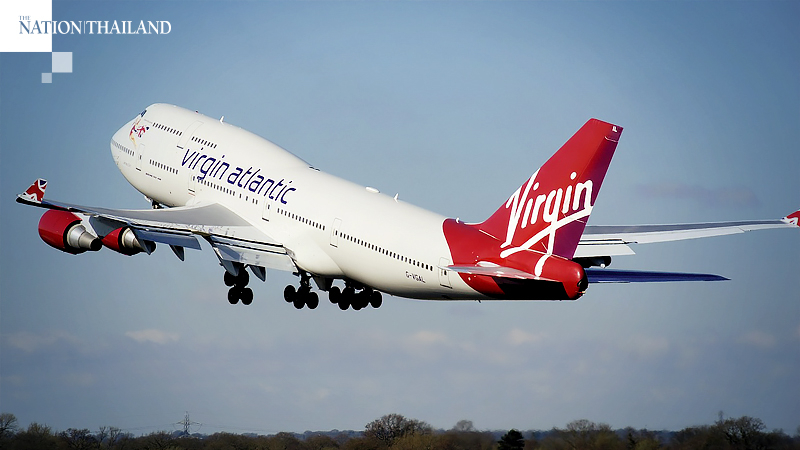
By Syndication Washington Post, Bloomberg · Claire Boston, Josh Saul · BUSINESS · Aug 05, 2020 – 3:18 AM Richard Branson’s Virgin Atlantic Airways filed for Chapter 15 bankruptcy protection in the U.S. on Tuesday after telling a London court it was set to run out of cash next month without getting approval for a rescue financing.
The airline filed its petition in the Southern District of New York. Chapter 15 bankruptcy allows foreign companies with U.S. assets to protect themselves against claims while they work on a turnaround plan.
Since Jan. 1, Virgin’s reservations are down 89% year-over-year and current demand for the second half of 2020 is at approximately 25% of 2019 levels, according to court papers.
“The group and its business have been adversely affected by the ongoing Covid-19 pandemic, which has caused an unprecedented near-shutdown of the global passenger aviation industry,” according to the court papers. “Global aviation was one of the first industries to be impacted by the Covid-19 pandemic and is likely to be one of the last to fully recover.”
By The Washington Post · Steven Zeitchik · BUSINESS, ENTERTAINMENT, FILM, TV For months it’s been clear that Disney, the country’s most prominent entertainment company, was facing a financial disaster unlike any in its history.
On Tuesday, it became evident just how deep the carnage has gone.
The company revealed that as a result of the coronavirus pandemic it took in just $11.8 billion in revenue and $1 billion in operating income in the three-month period that ended in June, the height of lockdowns in the country. The numbers are a significant drop from the same period a year ago, when it generated $20.25 billion in revenue and $4 billion in operating income, among the worst slides of the modern era.
The earnings report for the fiscal third-quarter gave numeric form to what had been the sense of many in the entertainment and financial communities: Disney, once the high-flying giant of Hollywood, has been brought low by the virus, its creations often unable to be produced or consumed.
To try to get some of that revenue back, the company said it would finally release “Mulan,” the action-adventure reboot that has been delayed several times since its March opening.
But the company said it would employ a patchwork approach to do so. The live-action film will be made available on Disney Plus in the U.S. beginning Sept. 4 – at a cost of $29.99. The same pattern will follow in Canada, Australia and some of Western Europe. Customers will be given indefinite access to the film in exchange for the fee, but only as long as they subscribe to Disney Plus.
In countries where Disney Plus is not offered or theaters are widely open, meanwhile, the movie will go to theaters. This will almost certainly include China, where the film is expected to generate a large percentage of its box office.
In moving the film to a digital platform in the U.S., Disney is acknowledging that covid-19 surges make unlikely the quick resumption of normal business – a belief embraced by other studios, which have either substantially postponed their movies to 2021 or pursued a more circumscribed American release plan.
The “Mulan” announcement also finally resolves what had been one of the great ambiguities of corona-era Hollywood.
Where many movies – including those from Disney – had either been postponed to the end of 2020 or moved quickly to digital, “Mulan” had remained in a kind of purgatory, postponed several times as the studio sought to bring it to theaters around the world. With the move, Disney has decided on a solution, if a hybrid one. It will bring out the film in theaters in some countries but not others, and it is taking it to a subscription streaming platform but still charging a supersized theater price.
Disney’s $11.78 billion in revenue in the quarter was lower than the $12.37 billion many analysts expected, though earnings-per-share of 8 cents was above the 64-cent loss many forecast.
The company saw major revenue drops in several business units compared to 2019.
Theme parks saw a plummet from $6.58 billion to $983 million, a plunge of 85 percent. No American or European park was open in the quarter, while parks in Shanghai and Hong Kong reopened only midway during the period.
Equally concerning for Disney have been the few rays of theme-park light since the quarter ended. The company reopened Disney World in Florida last month to begin rebuilding its revenue pipeline. But chief financial officer Christine McCarthy acknowledged the move has not panned out as hoped.
“The upside we’re seeing is less than we originally expected given the surge of covid-19 in Florida,” she told analysts.
Disney chief executive Bob Chapek said that the park has experienced a “higher-than-expected level of cancellations” as people decide not to travel to Orlando because of the virus.
The company’s studio unit, which did not release any major new movies to theaters, saw revenue drop from $3.8 billion during the quarter last year to $1.74 billion this year, a slide of 55 percent.
Its TV unit, however, was able to hold the line, as revenue stayed mostly flat at $6.6 billion compared to $6.7 billion last year, with many advertisers already paid up through the quarter. Harsher effects could be felt in the months ahead with the lack of new shows and a slowdown in the ad-sales market.
One of the rare bright spots in the quarter was Disney Plus, the streaming service the company launched in November. Disney executives said on a conference call it now has 60.5 million subscribers worldwide after moving a number of previously theatrical movies to the service, most notably “Hamilton” on July 4 weekend. The service is growing faster than many analysts expected, reaching 54.5 million in May and adding six million subscribers since.
The direct-to-consumer division, of which Plus is a part, saw revenue tick up slightly, by 2 percent, from $3.88 billion in the same quarter in 2019 to $3.97 billion in 2020.
Still, with investment costs high, the company does not expect profitability from Disney Plus for several more years, and the direct-to-consumer division saw a loss of $706 million in the quarter, 26 percent more than last year.
“Mulan” is one way that challenge might be remedied: a product financed by another division that could bring revenue to the start-up service.
Disney executives acknowledged how uncommon the tack was but called it a necessary exception at this moment.
The pandemic has “forced us to consider different approaches and look for new opportunities,” Chapek said in an analyst call.
The move, though, is unusual even in the streaming world, which has typically offered an all-you-can-eat plan to subscribers in which all new content is available under the monthly fee. According to the “Mulan” plan, however, a customer must subscribe to the service just for the right to pay for the movie.
By placing the movie exclusively on the service instead of making it available through cable or satellite providers, the company is gambling that the benefit of the new Disney Plus subscribers it attracts will outweigh the lost revenue from people who are not subscribers.
It also is making a financial calculation: by putting the movie exclusively on its own platform, Disney is avoiding handing over as much as 20 percent of sales revenue to cable operators, as studios typically do with distributors.
Later in the call, Chapek seemed poised to rule out the possibility this could be a trial balloon but then stopped short of that position.
“We’re looking at Mulan as a one-off as opposed to trying to say there’s some new business-windowing model,” he said. But then he added, “That said, we find it very interesting to take a new offering to consumers at a $29.99 price point and learn from it.”
The company’s stock price has not dropped during the pandemic, as bargain-hunters and long-term investors have sent the price up more than 20 percent since lockdowns began in mid-March. On Tuesday, investors, apparently reacting to the digital “Mulan” announcement, sent the share price up 4 percent in after-hours trading.
Both Chapek and executive chairman Bob Iger face significant headwinds in the months ahead. Any hope of a Disney comeback in the last six months of 2020 will turn on several factors related to the pandemic: Whether sports, particularly the NBA and Major League Baseball, can continue uninterrupted and bring much-needed revenue to ESPN; whether prime-time shows can begin shooting to ensure a reasonable start to the broadcast-network fall season; and whether enough theaters can reopen in the U.S. and around the world to begin collecting box office revenue.
While Mulan will not be in U.S. theaters, Disney has high hopes for November, when it has Pixar’s “Soul” and Marvel’s “Black Widow” scheduled to open.
Disneyland will also need to reopen if the company wishes to restore its theme parks to its past glory; the park remains closed under California orders. The parks are key to Disney’s financial fortunes: with $6.76 billion in operating income last fiscal year, the division was the most profitable of any unit besides television.
IVL enters into deal for acquisition of PET recycling facilities in Poland
CorporateAug 04. 2020Yashovardhan Lohia, Executive Director and Head of Sustainability
By The Nation
Indorama Ventures Pcl (IVL), a global chemical producer, has entered into a definitive agreement to acquire Industrie Maurizio Peruzzo Polowat (IMP Polowat), a PET recycling facility in Poland.
The acquisition consists of two assets, strategically located in Bielsko-Biala and Leczyca, close to the major population centres of Kraków and Warsaw.
The production sites have a combined capacity of 23,000 tonnes of recycled polyethylene terephthalate (rPET) flakes and 4,000 tonnes of rPET pellets. The company is supported by 118 employees.
The acquisition is expected to close in the third quarter of 2020, subject to regulatory approvals.
IMP Polowat has a solid presence as one of the leading PET recyclers in Poland. This acquisition is consistent with IVL’s ambitious target in scaling its recycling capacity to reach 750,000 tonnes by 2025, the company said.
It also adds an attractive recycling platform for IVL in Eastern Europe, and will open up new opportunities to meet the increasing rPET demand for more sustainable packaging solutions. The combination of access to local bottle supply and trusted product quality will secure opportunity for IVL for growth and expansion over time, the company said.
Poland is a strategic market for IVL, and has made significant progress on waste management and recycling.
Yashovardhan Lohia, executive director and head of sustainability of Indorama Ventures, said: “We are pleased to continue to execute on our growth strategy of pursuing strategic acquisitions even during this unprecedented time. IMP Polowat represents a strategic fit for us.
“IVL is fully committed to its strategy and its role in addressing the issue of plastic waste and enhancing the circularity of PET. We continue to make good progress and remain confident in achieving our ambitious 2025 target to recycle at least 50 billion bottles per year, and investing US$1.5 billion to achieve this by 2025,” Lohia said.
Biz insightsAug 04. 2020Jean-Michel Dixte, Dusit International Bangkok’s global vice president of Food & Beverage
By The Nation
Jean-Michel Dixte, Dusit International Bangkok’s global vice president of Food & Beverage, shares views on the future of his industry in the post-Covid-19 era.
With the world now facing one of the worst economic crises on record, and millions of people in the hotel F&B industry losing their jobs, all indications are that the true consequences of the Covid-19 crisis are yet to be felt, with more seismic shifts to come – socially and economically.
Changing tastes in focus
Following the pandemic, wellness trends in the dining market will rise. Eating and living with a conscience is going to become a strong food industry ethos, with more businesses taking a greener and sustainable approach.
“Growing local” and “buying local” are two key concepts which have come to the fore in these difficult times, and they will continue to grow as people have fallen in love with this new-found connection in their lives.
People have also woken up to the fact that any green effort to save the planet ultimately equates to an effort to save themselves. They have realised that, for us to live better quality lives for longer, we must treat ourselves and our environments better. Wellness and care must come first.
This will bring a rise in circular economy business models and a resurgence of people “going back to basics”, with many using food as medicines (particularly herbs and vegetables), and learning to live without modern technology. In this environment, wellness will become more mainstream and popular across all levels of society. It will no longer be viewed as the reserve of the elite.
Following the crisis, the vast majority of people will also choose to fuel their happiness by leading healthier lifestyles – replacing any unhealthy eating and drinking habits they may have had with a better balanced diet. Home cooking and street food will be major facilitators of this change.
The impact of tech on service
Technology has changed the dining scene dramatically.
Today, customers can do almost anything with their smartphones – searching restaurants, writing reviews, booking tables, viewing menus, placing orders, and making payments via banks or with cryptocurrency.
Cloud tech and algorithms can enhance the efficiency of any restaurant operation and ensure services are best tailored to meet guests’ needs.
Artificial Intelligence will only become more prevalent in hotel F&B industry over the next few year.
It will also vastly change the home dining experience. With people’s lives becoming increasingly hectic and more difficult to manage, convenience will take over cooking from scratch. Food delivery, convenience foods on the go, frozen meals, and dining kits will all be in high demand. With Deliveroo teaming up with Amazon, the Blue Ocean Strategy they adopt will dominate the food delivery sector.
Social and economic factors
As business leaders pursue more cost-effective models, hotel companies will subsequently invest less in F&B operations and related manpower, and F&B programming may be massively reduced overall.
Quick Service Restaurants and Fast Casuals will take over the standalone market, each featuring minimum layers of staff – and requiring minimal skills – but still providing decent dining experiences in their related segments.
To compete, hotels will increasingly use high-speed ovens, sous vide techniques, and other versatile cooking machines and methods that offer consistent levels of performance while simplifying cooking processes, allowing for smaller kitchens, and requiring less staff.
Expediting such models will be the fact that sourcing quality staff will only become more difficult – especially for the mid- to high-end segments. Younger generations do not want to do physical labour, at unsocial hours, for little money. They’d much prefer to make a YouTube channel or dance on TikTok for a legion of adoring fans.
As such, the luxury dining sector will become super niche – with table service led by staff who are skilled, knowledgeable, and passionate about their craft. Michelin Star chefs will become affordable by the 1 per cent controlling the planet. High-end restaurants as we know them will become a thing of the past, remembered only by a few, Snowpiercer-style.
How can hotel restaurants respond?
Having developed hundreds of concepts – and operated quite a few – throughout his career, Dixte sees the need for a bar-dining concept that’s focused on local street food and crafted drinks. He believes that F&B in hotels will become more connected to local communities, especially street food culture, giving guests the opportunity to enjoy a genuine taste of each respective destination.
This will certainly be the case at ASAI Hotels, Dusit’s new lifestyle brand for millennial-minded travellers, which is designed to connect guests with immersive local experiences in vibrant destinations. The first ASAI hotel is slated to open this September in Bangkok’s Chinatown.
Following the virus crisis, the entire market will be more price-driven than ever before, and with consumers having less disposable income, affordable meals will be in high demand. People will also look for added value experiences – something that can bring loyalty to a brand – and hotels must respond accordingly.
As for branding, this will become more important than ever – especially when it comes to cementing competitive advantage.
Branding will not only reassure people about the cleanliness and safety of a property, but it will also help customers to express their social and political viewpoints.
Hotels and restaurants have always been strictly neutral when it comes to politics. This is going to change, and branded restaurant and hotel companies will have to take a firm stand for what they believe in.
Think increased transparency across the board – from supply chain and food origin, to social and political views. The world of tomorrow, headed for a better balance of rights, is facing a battle of powers – the haves and have nots. Consumers will be looking closely at their moral compasses, and they will only buy from brands they can trust and really relate to.
Final thoughts
It’s important to remember we are now living in an experience-driven market in which people buy products or services to feel a certain way.
Providing them with high quality guest rooms, food, and drinks is no longer enough. Customers want to live emotions; they crave experiences – especially personalised ones that will transport their senses to those different dimensions of happiness where indelible memories are made.
While technology is a great enabler of this personalisation, it can never replace the human touch which delivers the authenticity, warmth and genuine care that truly resonates with guests. Post-Covid-19, this kind of service will become a real luxury, and people will be looking for more of it to truly feel alive.
The true nature of success in the hospitality industry will be defined by those who always have their community’s best interests at heart. And in a world where extremes are prevalent, the victors will be those who always put genuine empathy, thoughtfulness, and emotional intelligence first.
Jean-Michel Dixte is the global vice president of Food & Beverage for Dusit International Bangkok.
The price of gold rose by Bt400 per baht weight in morning trade today (August 5), the Gold Traders Association reported.
As of 9.25am, the buying price of a gold bar was Bt29,350 per baht weight and selling price Bt29,450, while gold ornaments cost Bt28,819.16 and Bt29,950, respectively.
At close on Monday, the buying price of a gold bar was Bt28,950 per baht weight and selling price Bt29,050, while gold ornaments cost Bt28,425 and Bt29,550, respectively.
The Comex (Commodity Exchange) gold price to be delivered in December rose by US$34.7, or 1.75 per cent, to $2,021 (Bt62,684.07) per ounce, a new high at yesterday’s close.
The gold price rose more than $2,000 per ounce on hopes of a $1-trillion US economic stimulus package. Meanwhile, the decline in the US bond yield and a weakening dollar also boosted the gold price.
The Stock Exchange of Thailand (SET) Index rose by 0.83 points, or 0.06 per cent, to 1,331.64 this morning (August 5).
A stock analyst at Krungsri Securities expected the index to rise between 1,335 and 1,340 points before falling as the market gained positive sentiment from progress in negotiations between the US Congress and White House on $1-trillion (Bt31.05 trillion) economic stimulus measures.
“Besides, investments gained positive sentiment from US factory orders in June, which increased by 6.2 per cent, and the rising crude oil price,” the analyst said.
However, he said volatility caused by weak listed companies’ second-quarter performance and mass sell-offs in response to technical indicators would see a drop in the index.
“We advise investors to follow a key Monetary Policy Committee meeting today. The interest rate is expected to be maintained at 0.5 per cent,” the analyst added.
He recommended that investors buy:
> Energy stocks that benefit from the rising crude oil price, such as PTT, PTTEP, Top, PTTGC, IRPC, SPRC, and IVL.
> Stocks whose second-quarter performance is expected to improve, such as Top, PTTGC, SPRC, BGrim, CPF, TU, Asian, Tasco, STA, STGT, AP, PRM, PTL, AJ, CBG, TQM, JMT, Chayo, PTG, and BCH.
The SET Index rose 9.58 points, or 0.72 per cent, to close at 1,330.81 yesterday. The volume of total transactions was Bt55.13 billion, with an index high of 1,338.08 and a low of 1,328.13.
By Syndication Washington Post, Bloomberg · Brendan Walsh · BUSINESS U.S. equities eked out a gain as investors tried to gauge the outlook for a stimulus bill to blunt the economic impact of the coronavirus pandemic.
The S&P 500 Index ended 0.4% higher after wavering between small losses and gains throughout the day. Energy companies led the advance as crude climbed. Financial shares suffered as American International Group Inc. fell after posting a $7.9 billion loss. Treasurys rose. Argentina’s overseas notes rallied after the government reached a $65 billion restructuring deal with creditors.
With the S&P 500 less than 3% off its pre-pandemic high, U.S. equity investors are closely monitoring efforts in Washington to negotiate a new virus relief package that many see as key to keeping the economy afloat. The pressure is building as negotiators seek to shrink the wide gap that remains between Republicans and Democrats.
“We see U.S. stocks at risk of fading fiscal stimulus,” BlackRock Investment Institute strategists led by Mike Pyle wrote in a note. “U.S. employment figures are in focus this week as this fiscal cliff nears and the pandemic’s spread in Sunbelt states is starting to affect economic activity.”
Elsewhere, shares dipped in Europe, with Diageo Plc tumbling after bar closures sapped sales. Major indexes rose more than 1% in Japan and Hong Kong.
West Texas-grade crude oil rose past $41 a barrel after the biggest gain in almost two weeks Monday. Spot gold reached an intraday record.
These are some of the main moves in markets:
Stocks
– The S&P 500 Index rose 0.4% as of 4 p.m. EDT.
– The Stoxx Europe 600 Index fell 0.1%.
– The MSCI Asia Pacific Index increased 2%.
Currencies
– The Bloomberg Dollar Spot Index slipped 0.2%.
– The euro rose 0.3% to $1.1801.
– The Japanese yen rose 0.3% to 105.67 per dollar.
Bonds
– The yield on 10-year Treasurys decreased five basis points to 0.51%.
– Britain’s 10-year yield fell two basis points to 0.074%.
– Germany’s 10-year yield dipped three basis points to -0.55%.
Commodities
– West Texas Intermediate crude rose 1.5% to $41.61 a barrel.
Commercial bank have said that the Covid-19 outbreak will make more customers opt for online services.
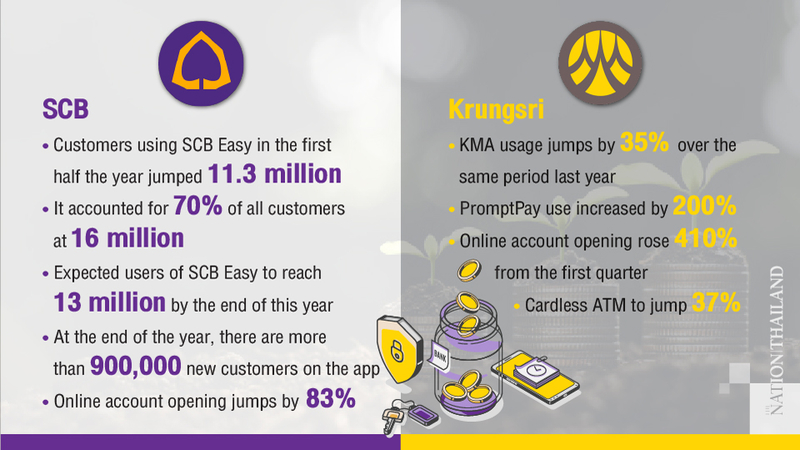
Siam Commercial Bank (SCB) saw 900,000 customers opt for online banking, while the number of online accounts jumped by 83 per cent, with the number of online customers expected to reach 13 million by the year-end.
Krungsri revealed that its app usage had jumped 41 per cent, while account opening had surged 410 per cent, showing all banks encountering additional challenges and faced with the need to accelerate the promotion of mobile-production to attract customers online.
SCB president Arak Sutivong said that in the past 2-3 years, the bank had seen a shift in customers who have increasingly migrated to digital channels, especially with financial transactions via mobile banking while the advent of a new species of coronavirus, or Covid-19, has become a catalyst for faster change in consumer behaviour.
He expected more focus on mobile banking when the Covid-19 pandemic is fully contained. The SCB Easy App downloads is expected to increase to 13 million from 11.3 million users in the first half of the year, accounting for about 70 per cent of the total 16 million SCB customers.
This year, the bank has 898,000 new customers with a 71 per cent active user ratio. In addition, online account opening has grown by over 83 per cent. Digital loan applications via digital lending SCB Easy also increased with an increase of approximately 41 per cent.
Meanwhile, Rottapron Ekabutr, senior executive of Krungsri Bank, said that the number of transactions via the bank’s mobile banking channel KMA saw a big leap after the Covid-19 crisis. The number of KMA users has increased by 35 per cent and the number of active accounts or continuous transactions increased by 50 per cent compared to the same period last year.
PromptPay transactions via KMA showed a 200 per cent growth over the previous year. Likewise, the amount of online savings accounts opened throughNational Digital ID authentication and Krungsri i-Confirm service has seen high growth. The number of accounts opened has seen a 410 per cent growth compared to the first quarter of the year, while the total amount of financial transactions in the second quarter was 740 million items with a total value of over Bt302 billion.
“When looking at past financial transactions, both money transfers, PromptPay, and non-ATM money withdrawals the Covid-19 crisis is the accelerator that makes every transaction grow online. For example, money transfers grew by 80 per cent, payments for administrative goods grew by 21 per cent, additional top-ups 24 per cent and cardless ATM up to 2.7 million times, or an increase of approximately 37 per cent from the same period last year,” said Rottapron.
However, he believes that these changes in consumer behaviour will accelerate Thailand’s progress to a cashless society. Therefore, it is a challenge for all banks to accelerate and develop mobile apps to suit the new lifestyle along with system security. The banks must accelerate the development of the business model to be able to present new products and services that meet the needs of customers, he said.




 Yashovardhan Lohia, Executive Director and Head of Sustainability
 Jean-Michel Dixte, Dusit International Bangkok’s global vice president of Food & Beverage