Egat awaits new energy minister before finalising crude palm oil purchase #ศาสตร์เกษตรดินปุ๋ย

#ศาสตร์เกษตรดินปุ๋ย : ขอบคุณแหล่งข้อมูล : หนังสือพิมพ์ The Nation.

Egat awaits new energy minister before finalising crude palm oil purchase

EconAug 03. 2020

By The Nation

The Electricity Generating Authority of Thailand (Egat) has slowed down procurement of another 100,000 tons of crude palm oil (CPO) as required by a Cabinet resolution, as it is waiting for the new energy minister’s policy.

Tawatchai Jakpaisal, Egat’s deputy governor for fuel, cited the Cabinet’s resolution on July 14, which asked Egat to consider buying 100,000 tonnes of CPO for reserve in electricity generaion and to absorb excess stock.

Egat recently told the Ministry of Energy that they should wait for the policy from the new Minister of Energy.

The bidding for the purchase of the remaining 37,550 tons of CPO has been done as specified by the Department of Internal Trade at Bt23.25 per kilogram. When calculated together with the transportation cost of Bt0.90 per kilogram, the purchase of this CPO would require a total budget of Bt900 million.

Last year, Egat had procured CPO in accordance with the government’s policy to help farmers, totalling 360 billion tons, using a budget of over Bt5 billion. Egat has already received more than Bt2 billion from the government. The remaining approximately Bt2.2 million has been requested by Egat before proceeding with purchases in the future.

Egat recently received financial support from the government — Bt525 million from the fiscal year budget, Bt1.2 billion credit for the public service account but recently approved only Bt829 million.

Egat’s three-year LNG import plan targeted 0.4 million tons at the end of the 2021, 1.9 million tons in 2022 and 1.5 million tons in 2023. The import quantity will have to be reviewed according to the situation or change in policy from the new energy minister.

Cabinet nod awaited for 160 state projects to lift economy #ศาสตร์เกษตรดินปุ๋ย

#ศาสตร์เกษตรดินปุ๋ย : ขอบคุณแหล่งข้อมูล : หนังสือพิมพ์ The Nation.

Cabinet nod awaited for 160 state projects to lift economy

EconAug 01. 2020Danucha PichayananDanucha Pichayanan

By The Nation

The subpanel tasked with screening state projects will propose another 160 projects to the Cabinet for consideration this week, subpanel chairman Danucha Pichayanan said.

These projects, estimated to cost Bt800 million, cover 58 provinces, added Danucha, who also serves as deputy secretary-general of the National Economic and Social Development Council.

The project development has been implemented under a Bt400-billion budget out of the economic stimulus package of Bt1.9 trillion to lift the battered economy.

The Cabinet in April approved a Bt1.9-trillion package to relieve the impact of the Covid-19 outbreak.

The first decree will transfer Bt80 billion to Bt100 billion to the central budget to use as stimulus funds. The second permits the Bank of Thailand to use up to Bt900 billion for measures to boost the economy.

The third decree allows the Finance Ministry to borrow up to Bt1 trillion, of which Bt600 billion will be used for cash handouts and public health and Bt400 billion will be spent on economic recovery measures.Of the Bt400 billion, one part is for state agencies to develop projects to boost the grass roots economy, and the balance for infrastructure development and to boost domestic consumption.

Minor Food adjusts strategy to boost revenue in second half #ศาสตร์เกษตรดินปุ๋ย

#ศาสตร์เกษตรดินปุ๋ย : ขอบคุณแหล่งข้อมูล : หนังสือพิมพ์ The Nation.

Minor Food adjusts strategy to boost revenue in second half

Jul 31. 2020

By The Nation

The Minor Food Group on Friday (July 31) unveiled its strategy to boost revenue in the second half of this year, which includes improving delivery services, launching new products, building kiosks for grab-and-go services, as well as developing a “cloud kitchen” or central kitchen to control cost and ensure freshness.

Meanwhile, 95 per cent of Minor Food restaurants in Thailand have reopened with all hygiene and safety measures in place.

Dillip Rajakarier, group CEO of Minor International (MINT) and acting CEO of Minor Food, said Minor Food is one of the largest restaurant companies in Asia with well-known brands like The Pizza Company, Swensen’s, Sizzler, The Coffee Club, Dairy Queen, Burger King and Bonchon under its belt. In total, Minor Food has more than 2,200 eateries in 26 countries, with 1,490 in Thailand alone.

In response to the “new normal” brought on by the Covid-19 outbreak, Minor Food has adjusted its organisational set up to focus on food delivery and takeaway services.

Though many restaurant brands are doing better after reopening than they did before the outbreak, the company continues focusing on driving sales across all its channels.

Prapat Siangchan, deputy chief operating officer for Minor Food, said the firm has improved its readiness for operations in the second half with the following:

• Upgraded delivery service: Minor Food will maintain its position as a top online food-ordering platform by upgrading the system to meet demands under the new normal, like allowing consumers to include a larger variety in a single order. In the second quarter of this year, the company has seen its delivery sales rise three times compared to all of last year.

• Developing new menus, innovative products: The company will use effective marketing channels and create new marketing campaigns to attract customers.

• Kiosk shops: These grab-and-go outlets will be located close to customers, such as office buildings and Skytrain stations. An example of such a shop is Sizzler To Go. The company is also encouraging stores to start providing grab-and-go services.

• “Cloud kitchen” or a new central kitchen: This concept will allow customers to have their food delivered faster and fresher within a 3-kilometre range. This will also allow diners to include food from different brands under the Minor Food banner.

Minor Food has also set up the “Business Beyond Covid” project, under which staff are being trained to always prioritise safety and hygiene when serving consumers.

It has also launched other food security campaigns such as “Zero Touch Delivery”, “Safety Seal” and “Easy Pick Up” and has ensured that all cleaning equipment and sanitising gel comes from ECOLAB and Diversey. These products are specifically designed for the food service industry, food processing, hospitality and health care, Prapat said.

CPF rides pandemic boom, expects 10 per cent revenue surge #ศาสตร์เกษตรดินปุ๋ย

#ศาสตร์เกษตรดินปุ๋ย : ขอบคุณแหล่งข้อมูล : หนังสือพิมพ์ The Nation.

CPF rides pandemic boom, expects 10 per cent revenue surge

CorporateAug 01. 2020Prasit Boondoungprasert, CPF chief executive officer Prasit Boondoungprasert, CPF chief executive officer

By The Nation

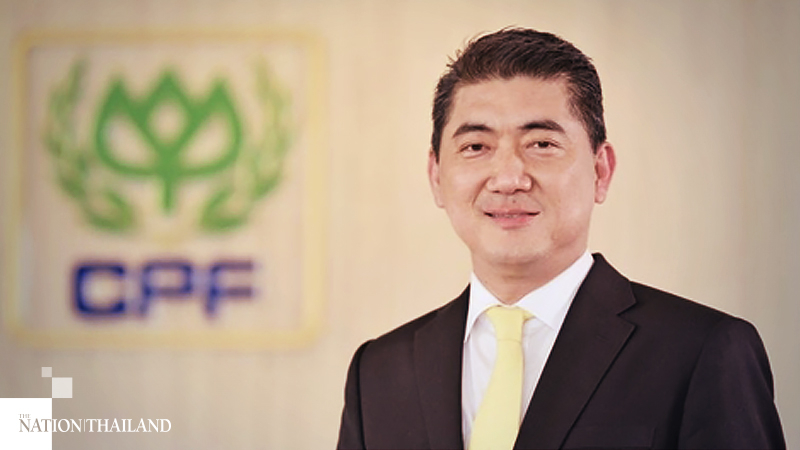
Charoen Pokphand Foods (CPF) expects revenue this year to grow by up to 10 per cent as the company has benefited from the Covid-19 pandemic and African Swine Fever (ASF).

CPF chief executive officer Prasit Boondoungprasert said the company’s first-half revenue and net profit was very good as the Covid-19 pandemic worldwide had boosted consumers’ demand for safe food, boosting the company’s sales.

“The company has won the confidence of consumers worldwide because Thailand was able to contain the spread of Covid-19,” he said.

“In addition, CP Pokphand, a CPF subsidiary, revealed that the company’s first-half net profit was expected to be at US$330 million (Bt10.230 billion), compared to US$82 million during the same period in the previous year, as the price of pork in Vietnam was high during the previous six months due to ASF, but the company was able to effectively contain the spread of the disease,” he said.

He believes that the ministries of Commerce and Agriculture and Cooperatives would achieve success in promoting Thailand to be the world’s centre for food products and the world’s top 10 food-exporting countries.

“However, it depends on cooperation between parties,” he added.

Triumph ‘not involved’ in layoffs, says has no production unit in Thailand #ศาสตร์เกษตรดินปุ๋ย

#ศาสตร์เกษตรดินปุ๋ย : ขอบคุณแหล่งข้อมูล : หนังสือพิมพ์ The Nation.

Triumph ‘not involved’ in layoffs, says has no production unit in Thailand

CorporateAug 01. 2020

By The Nation

Triumph Holding AG has denied reports about the company laying off workers, saying it has no production site in Thailand and had no involvement with the case covered by Thai media.

In a statement on Friday, Switzerland-headquartered Triumph said it had handed over its Thai production network, Body Fashion Thailand, in January 2016 to Malaysian textile and apparel entrepreneur, Robert Ng.

Ng is the owner of an internationally represented textile group consisting of around 30 companies and brands. At that time, the Malaysian’s network had been a strategic and reliable supplier of Triumph for many years. The network comprised two plants located in Bang Plee (Bangkok) and in Nakhon Sawan, Triumph said.

Triumph’s decision to divest its production centres in Thailand in 2016 was part of its long-term strategy to restructure the company’s overall global supply chain, allowing the company to focus more on its customers and market challenges, the company said.

As part of this measure, Triumph had also disengaged from all its European productions sites. In Thailand, all 2,757 employees and management were taken over, and there were no lay-offs of personnel or management, the statement said.

Triumph has a successful local sales business in Thailand. The company conducts sales and marketing activities via a local office in Bangkok, coordinating all respective activities for the Thai market.

Demand for lower-end rental condos sees big jump #ศาสตร์เกษตรดินปุ๋ย

#ศาสตร์เกษตรดินปุ๋ย : ขอบคุณแหล่งข้อมูล : หนังสือพิมพ์ The Nation.

Demand for lower-end rental condos sees big jump

CorporateAug 01. 2020

By THE NATION

Rental condos priced at under Bt15,000 a month are seeing over 20 per cent growth while there is a big drop in demand for rental units priced at above Bt25,000, an industry executive said.

Wathayut Thongphorm, managing director at Primo Service Solution, a subsidiary of Origin Property, said that the rental condominium market is growing in the price range of Bt10,000-Bt15,000 per month while condos in the range of Bt25,000 to Bt150,000 per month are seeing significant drop in customers.

“Rental condos priced lower than Bt15,000 per month are growing at over 20 per cent, especially in the BTS-MRT zones,” he said. “The reason behind this is financial institutions’ loan-to-value regulations, which limit the loans granted to each buyer. When people cannot get loan to buy property, they go for rental options instead.”

“In contrast, luxury rental condos in the range of Bt25,000 to Bt150,000 per month are suffering from a drop in customers, as their main target groups are foreign travellers and executives of multinational companies, who are not able to enter Thailand at the moment due to the Covid-19 lockdown measures,” Wathayut added. “Sales of units in this sector have plummeted by more than 50 per cent, prompting some property owners to drop their prices by 20 to 30 per cent to attract other groups of customers.”

Wathayut said that an estimate of 40 condominium projects under its management showed that the return on investment (ROI) on condos in the range of Bt10,000-Bt15,000 per month could rise to 4-5 per cent in the second half of 2020, while the ROI of luxury condos could fall from 5 per cent to 3 per cent in the same period.

“It could be the second quarter of 2021 before foreigners are allowed into the country and this segment jumps back up again,” he said.

Strong sales in China boost Apple blockbuster quarter #ศาสตร์เกษตรดินปุ๋ย

#ศาสตร์เกษตรดินปุ๋ย : ขอบคุณแหล่งข้อมูล : หนังสือพิมพ์ The Nation.

Strong sales in China boost Apple blockbuster quarter

CorporateJul 31. 2020

By Syndication The Washington Post, Bloomberg · Bloomberg News

Apple Inc. pulled off a strong quarter in China by switching up retail tactics and pushing a cheaper iPhone, becoming one of the few U.S. tech giants to ride the country’s post-pandemic recovery despite Washington-Beijing tensions.

IPhone shipments there surged a surprising 35% in the April to June period, research firm Canalys estimates, driving a 2% rise in Greater China revenue to $9.3 billion. Chief Executive Officer Tim Cook said sales actually grew 6% on a constant-currency basis, propelled by demand for Macs and iPads from millions now accustomed to working from home. Its outperformance in Greater China — Apple’s single biggest international market — drove quarterly revenue well above Wall Street’s forecasts.

Apple’s strength in the world’s No. 2 economy surprised analysts who’ve seen local consumers turn increasingly to homegrown brands, at a time Washington accuses the likes of Huawei Technologies Co. and ByteDance Ltd. of spying or jeopardizing national security. Huawei — the company most squarely in Trump’s crosshairs — eclipsed Samsung Electronics Co. in global smartphone sales for the first time last quarter, thanks in large part to an upswell of home-crowd support.

Apple, whose Chinese-based suppliers employ upwards of a million people, was swift to adapt its tactics after Covid-19 emerged in February, turning to third-party distributors after shutting most of its stores. It also focused on marketing and selling online, tapping the surge of internet activity that followed a rolling nationwide lockdown.

The iPhone maker jumped aboard a plethora of online sales promotions hosted by Alibaba Group Holding Ltd. and JD.com Inc. in June, traditionally one of several peak spending months. Apple moved more than $72 million (500 million yuan) of devices in a single day during JD’s “6.18” shopping marathon, the Chinese company said. It probably also benefited from the introduction of a lower-cost smartphone, the iPhone SE.

“Apple defied expectations in Q2. Its new iPhone SE was critical in the quarter,” Canalys analyst Vincent Thielke said. “Apple is also demonstrating skills in new user acquisition.”

THAI says 80% of creditors support rehab plan #ศาสตร์เกษตรดินปุ๋ย

#ศาสตร์เกษตรดินปุ๋ย : ขอบคุณแหล่งข้อมูล : หนังสือพิมพ์ The Nation.

THAI says 80% of creditors support rehab plan

CorporateJul 31. 2020Cap: The THAI annual general shareholders' meeting on Friday.Cap: The THAI annual general shareholders’ meeting on Friday.

By The Nation

Thai Airways International’s acting president Chansin Treenuchagron said on Friday that 80 per cent of local and foreign creditors he had talked to supported the carrier’s move to enter debt restructuring under the bankruptcy court.

He said he was confident creditors would approve THAI’s rehabilitation plan following their positive response to it during negotiations.

“We have business models that I believe will help revive THAI business operations,” he said.

The Central Bankruptcy Court will begin hearing THAI’s restructuring case on August 17.

THAI, which has total debts of around Bt244 billion, has grounded most of its fleet but is still operating cargo and repatriation flights.

THAI’s annual general shareholders’ meeting on Friday acknowledged results for 2019, with total operating revenue for THAI and subsidiaries of Bt184.046 billion representing a 7.7-per-cent drop from the previous year.

However, the company made ground in cutting costs to Bt196.470 billion – Bt12.088 billion or 5.8 per cent down on the previous year.

THAI and its subsidiaries incurred a net loss of Bt12.017 billion, 3,9 per cent higher than the previous year.

At year-end 2019, THAI and subsidiaries’ total assets were Bt256.665 billion, a fall of Bt12.056 billion (4.5 per cent) on year-end 2018. Total liabilities were Bt244.899 billion, a drop of Bt3.366 billion (1.4 per cent) on December 31, 2018.

Shareholders at the meeting approved suspension of dividend payments in line with the company’s financial performance in 2019.

SET vulnerable to swings from external factors, MPC decision #ศาสตร์เกษตรดินปุ๋ย

#ศาสตร์เกษตรดินปุ๋ย : ขอบคุณแหล่งข้อมูล : หนังสือพิมพ์ The Nation.

SET vulnerable to swings from external factors, MPC decision

EconAug 01. 2020

By The Nation

Experts are advising investors to keep an eye on the Covid-19 pandemic, the US president’s moves before the presidential election, and the Thai Monetary Policy Committee (MPC)’s meeting, as they could affect the Stock Exchange of Thailand (SET) Index and the price of gold next week.

The SET Index on Friday (July 31) closed at 1,328.53, up 12.79 points or 0.97 per cent, while total transactions stood at Bt61.280 billion.

A stock analyst at Phillip Securities (Thailand) expected the index next week to fluctuate between 1,280 and 1,340.

“We expect the market to gain positive sentiment, but negative sentiments, such as the Covid-19 pandemic and the US president’s moves before the presidential election would pressure the index,” the analyst said.

“Besides, we expect the MPC to maintain the interest rate at a low level during the meeting next week.”

The price of gold yesterday stood at US$1,976.67 per ounce, while the price in Thailand was Bt29,100 per baht weight.

A gold analyst at YLG Bullion International said investors could buy gold for short-term speculation or sell some gold to take profits to cope with market volatility.

“If gold price does not drop below the support level between $1,954 and $1,959 per ounce, the price would rise to the resistance level between $1,984 and $2,000 per ounce,” the analyst said.

“However, investors should beware of mass sell-offs in gold if the price rises to the resistance level.”

Bank stocks slide at concern over bad debt, weak performance #ศาสตร์เกษตรดินปุ๋ย

#ศาสตร์เกษตรดินปุ๋ย : ขอบคุณแหล่งข้อมูล : หนังสือพิมพ์ The Nation.

Bank stocks slide at concern over bad debt, weak performance

EconAug 01. 2020

By The Nation

Bank stocks have dropped an average 6.2 per cent over the past week as the virus crisis grips Thailand’s financial sector, experts reported today.

Meanwhile the Stock Exchange of Thailand (SET) fell by 4.1 per cent from 1359.65 to a low of 1,303.25 before rebounding to 1,328.53 at the close on Friday (July 31).

Pasakorn Wangvivatchareon, a research assistant at Asia Plus Securities, said the fall in banking shares was due to banks’ weak second-quarter performance, allowance for doubtful debts, and lack of positive sentiment.

“Banks’ asset quality is likely to deteriorate further after the Bank of Thailand [BOT]’s debt payment holiday expires, while market volatility and the BOT’s move to hold off payment of banks’ interim dividends would also pressure the share price,” he said.

However, he said banking stocks would not drop sharply because banks’ price-to-book value was already at a low of 0.4.

“Signs of economic recovery will lift the price of bank shares,” he said. “However, we still weigh investment in banks lower than the market due to various uncertainties.”

Meanwhile, a Tisco Securities stock analyst advised investors to monitor banks’ move to set up allowances for doubtful debts as this would affect their performance in the second half of this year.

“Banks that have set up allowances in advance are Bangkok Bank (BBL) and Kasikorn Bank [KBank], while those gradually setting up allowances are Siam Commercial Bank [SCB] and TMB Bank,” the analyst explained.

Most banks expected up to 40 per cent non-performing loans (NPL), the analyst said.

Small and medium enterprises under BOT relief measures accounted for about 40 per cent of total loans.

“We expect NPLs to reach the maximum by the second half of 2021,” the analyst added.

KBank’s board of directors recently approved the sale of 23.932 million stocks it bought back earlier this year at Bt134 apiece, paying Bt3.207 billion. The bank looks set to lose about 38 per cent on that deal, given its July 30 share price of Bt82.50, when it offers the shares from August 31 to September 16.

“If we cannot sell stocks, the bank’s capital funds are still sufficient to continue business,” Chongrak Rattanapian, KBank senior executive vice president, said. “At present, the bank’s capital funds at the end of June this year were 18.09 per cent of which 15.38 per cent was tier 1 capital. The bank’s loans to deposit ratio [LDR] was 92.15 per cent.”