By Syndication Washington Post, Bloomberg · Joanna Ossinger · BUSINESS
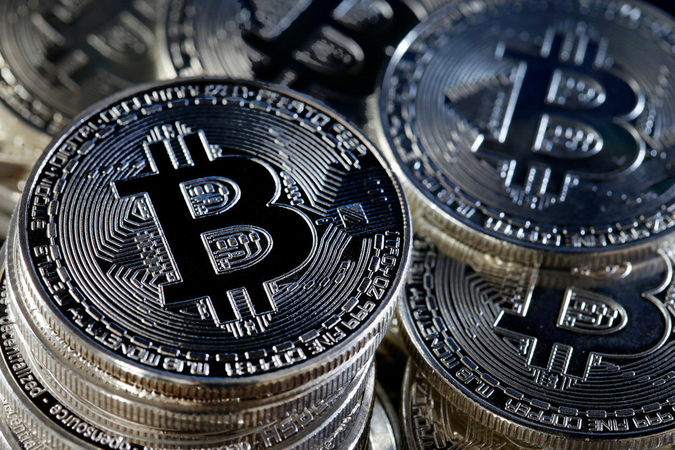
Bitcoin rose above $10,000 for the first time in more than six weeks as the largest cryptocurrency breaks its recent trading range with risk assets rallying.
The digital token spiked around 6 a.m. EDT Sunday, rising as high as $10,169, according to pricing compiled by Bloomberg. The gains quickly fizzled, initially, then the coin rallied again later, climbing as high as $10,335.
Bitcoin, which crypto fans have often touted as “digital gold,” is in favor as the yellow metal nears record levels, concerns rise about the health of the world economy and the dollar falls. Also, last week, the U.S. Office of the Comptroller of the Currency said American banks can provide custody services for customers’ crypto assets, which could help boost the asset class’s appeal with some investors.
The cryptocurrency had been hovering near its 50-day moving average for weeks before pulling above it in the past couple of days.
“We remain positive on the overall precise structure for Bitcoin and do expect it push through $10,000-$10,500 as part of its longer term bullish technical profile,” said Rob Sluymer, technical strategist at Fundstrat Global Advisors LLC. Even so, that range “remains a resistance band that Bitcoin will need to break above to signal its next move to resistance at $13,800.”
If the largest cryptocurrency can take out the $10,500 level, it could catapult much higher and test this year’s high, technical indicators suggest. At the same time, another technical gauge is indicating Bitcoin might see a pullback as its 14 Day RSI is nearing 80, far above the 70 level that indicates overbought and is near the level that killed Bitcoin’s last run in early May.
Bitcoin has enjoyed above-average flows this year, and those flows are relatively high versus their five-year average when compared with those of exchange traded funds in other asset classes, according to a report from JPMorgan Chase & Co. strategist John Normand on Friday.
By Syndication Washington Post, Bloomberg · Ranjeetha Pakiam, Justina Vasquez, Elena Mazneva · BUSINESS, US-GLOBAL-MARKETS
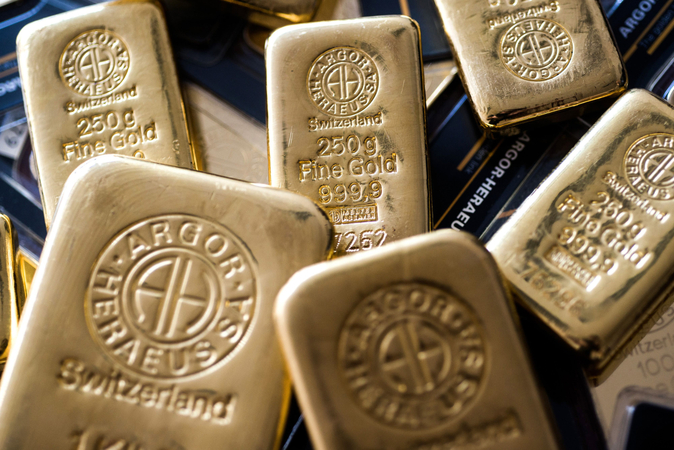
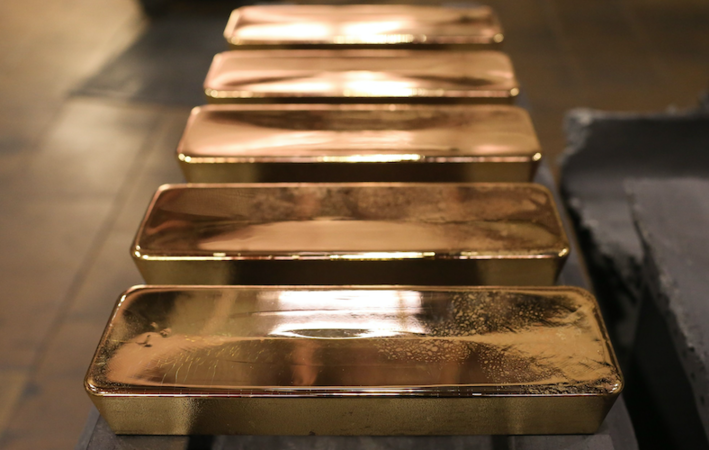
Gold’s unrelenting march higher shows no signs of slowing after a plunge in the dollar swept prices past the previous high set in 2011 and put the metal on track for even bigger gains.
Bullion’s surge came as a gauge of the U.S. currency sank to the lowest in more than a year, the latest in a long line of bullish factors — including negative real rates in the U.S. and bets the Federal Reserve will keep policy accommodative when it meets this week — that are pushing prices ever higher.
With the world facing an extended period of unprecedented economic and political turmoil, gold’s now got $2,000 in its sights. Some in the market suggest the haven could rise even beyond that.
Nascent signs of gold’s record-breaking ascent began to show in mid-2019, when the Fed signaled a readiness to cut interest rates as uncertainty — primarily about the impact of the U.S.’s trade battles — clouded its outlook. The rally gathered pace in early 2020 as geopolitical tensions rose and the coronavirus outbreak hurt growth worldwide, pushing governments and central banks to unleash vast amounts of stimulus, and sending real interest rates slumping further into negative territory.
“Strong gains are inevitable as we enter a period much like the post-GFC environment, where gold prices soared to record levels as a result of copious amounts of Fed money being pumped into the financial system,” said Gavin Wendt, senior resource analyst at MineLife. A weak dollar and negative real rates are providing further impetus. Gold may consolidate before setting its sights on $2,000 and above in coming weeks, he said.
Investment demand has been unrelenting. Holdings in gold-backed exchange-traded funds have beaten all-time highs nearly every month since late last year and inflows this year have topped the record annual total set in 2009. The additions make up roughly one-fifth of expected mine supply for the year, according to research group Metals Focus.
Gold’s been drawing investors even as equities climbed — with the exception of a sharp selloff in March as traders liquidated bullion holdings to cover losses in other markets — and it’s U.S. bonds that have been the key metric to watch. The metal is serving as an attractive hedge as yields on Treasuries that strip out the effects of inflation fall below zero.
The environment has even raised the specter of stagflation, a rare combination of sluggish growth and rising inflation that erodes the value of fixed-income investments. In the U.S., investor expectations for annual inflation over the next decade, as measured by a bond-market metric known as breakevens, have moved higher the past four months after plunging in March.
Inflation also plays an important role in looking at prices in an historical context. Spot gold traded as high as $1,945.26 on Monday, topping its previous record by more than $20. Spot silver jumped as much as 8.1% to $24.6031 an ounce, the highest since 2013.
When adjusted for inflation, bullion remains lower than its 2011 high and far below the historic peak in 1980, in the wake of the second oil price shock.
It’s not just price moves that are proving historic. The virus shined a spotlight on a traditionally overlooked corner of the market: logistics. A chaotic period in March saw extreme distortions between London and New York gold prices due to an unprecedented snarl in the movement of physical metal, with the grounding of flights and refinery shutdowns sparking concerns about a shortage of bullion available in New York in time to deliver against Comex futures.
That crisis eased — there was enough gold — but the dislocation prompted CME Group Inc., which owns Comex, to announce that it would offer a new futures contract with expanded delivery options that included 400-ounce bars, which is the size accepted in London. It later said traders will be able to deliver gold in London vaults against the new contract.
Next up for investors and a possible fillip for gold, is this week’s Fed meeting July 28-29, where officials are expected to keep interest rates near zero and debate a possible shift in its strategy.
The meeting may be a platform for a strong message that change is coming, opening up the possibility for more unconventional policies further down the line, according to Chris Weston, head of research at Pepperstone Group. “If we think about real yields and what the Fed is doing, it just suggests to me that it’s a matter of time before real yields continue to trend lower and gold goes higher,” he said.
The Fed’s path forward will be closely watched. From December 2008 to June 2011, the Fed bought $2.3 trillion of debt and held borrowing costs near zero percent in a bid to shore up growth, helping send bullion to a record in September 2011.
Forecasts for further gains have been building even before gold’s most recent breakthrough. Bank of America . has stuck with its April forecast for $3,000 gold over the next 18 months. UBS Group sees prices reaching $2,000 by end-September, global chief investment officer Mark Haefele wrote in a note Monday. The group has added the metal to its “most preferred asset list.”
“You simply couldn’t pick a more perfect storm of events which would allow for gold to perform,” said Steve Dunn, head of ETFs at Aberdeen Standard Investments. “With low interest rate policies, negative real rates, super accommodative monetary policy, huge amounts of global fiscal spending, a weaker dollar, escalating U.S.-China tensions and no clear end in sight for the coronavirus pandemic, all of the parts of the equation are coming together.”
Rayong’s administration is working on putting in place an effective waste and waste-water disposal system before the Eastern Economic Corridor (EEC) is fully developed and brings in an influx of people.
Piya Pitutecha, chief of Rayong’s Provincial Administrative Organisation, said his team was working in collaboration with PTT’s Global Power Synergy Co (GPSC) to build a comprehensive waste-disposal centre, which will cover approximately 429 rai and overlap Nam Khok, Thapma, Map Kha and Nong Taphan subdistricts. He said a proper waste-disposal set up was necessary as the EEC will soon start attracting both industrial and business investments, which will result in a boost in population and huge amounts of waste.
The planned integrated waste-disposal centre will comprise waste-separation plants, which will then be shifted to power-generating incinerators that can eliminate 500 tonnes of waste daily and produce 10 megawatts of electricity. Construction of this plant began last year and is scheduled to be completed in 2021.
Once this is complete, a second and third waste incinerator will be built in the same area, with the second started in 2021 and completed in 2022 and third started in 2022 and finished in 2023.
Once all three incinerators are operating, they will be able to eliminate up to 1,500 tonnes of waste daily and generate a total of 30MW of power.
GPSC will be investing in the incinerators, and revenue from the electricity generated will cut down the cost of waste-disposal by Bt400 per tonne – the biggest saving compared to other waste-disposal systems.
This system will be able to handle waste generated from the growth of EEC for at least 20 years, including the more than a million tonnes of waste in Rayong’s landfills.
“Since this is a public-private joint venture, it will encourage the government to push the project forward quickly. It also makes it possible for refuse in Rayong province to be dealt with in a complete and sustainable manner that is in line with international standards, which means there will be no foul odour or pollution and this system can be a model for other provinces to follow,” Piya said.
HSBC denies ‘framing’ Huawei, says it did not prompt U.S. legal probe
CorporateJul 27. 2020Huawei CFO Meng Wanzhou leaves her home to attend an extradition hearing in Vancouver, B.C., in May 2020..
By Syndication Washington Post, Bloomberg · No Author · NATIONAL, BUSINESS, WORLD, COURTSLAW, ASIA-PACIFIC
HSBC, responding to media reports over its dealings with Huawei, denied that it “framed” the Chinese telecom giant, and said it did not spark a U.S. probe of the company.
In its first public comments about Huawei’s legal battle in North America, the U.K. bank said it has no “hostility” toward Huawei and did not “ensnare” the company. The bank said it only provided information to the U.S. Department of Justice when it was compelled to do so.
“In response to the U.S. DOJ’s requests for information, HSBC simply presented the objective facts,” the bank said in a statement Saturday. “HSBC did not ‘fabricate’ evidence or ‘hide’ facts. And HSBC would never distort the facts or seek to harm any of our clients for our own gain.”
HSBC has become embroiled in Huawei’s legal fight to block a U.S. request to extradite Chief Financial Officer Meng Wanzhou from Canada to face trial over allegedly violating U.S. sanctions on Iran. Meng has been under house arrest in Vancouver since she was detained at the request of U.S. authorities in 2018.
HSBC’s statement came after the China’s People’s Daily newspaper published an opinion piece on Friday saying the bank is an accomplice of the U.S. and fabricated evidence on Huawei, resulting in the arrest of Meng.
On the same day, China’s banking regulator approved HSBC’s application to close a sub-branch in Shenzhen, where Huawei is located. The U.K. bank said the move is part of its routine work of reviewing and optimizing its service channels. After the closure, HSBC still operates 11 outlets in the city.
Shares of HSBC fell 1.9% in early morning Hong Kong trading Monday, extending this year’s decline to 42%.
HSBC was thrust further into the spotlight with new evidence presented last week. In a filing to a Canadian court Thursday, Meng’s lawyers argued that the U.S. misled Canadian authorities by omitting key elements of a PowerPoint presentation that Meng showed to HSBC bankers at a 2013 meeting in Hong Kong, The Globe and Mail reported.
The omissions leave the impression that Meng didn’t fully explain Huawei’s dealings in Iran, according to the report. The U.S. argues that Meng deceived banks including HSBC, and that this prompted lenders to clear millions of dollars in transactions in violation of the sanctions.
In fact, Meng’s lawyers argued, she was transparent about the Iran dealings, citing two slides in the presentation made to HSBC that had been omitted from the U.S. filing, the Globe reported.
HSBC is walking a tightrope amid growing U.S.-China tensions. The London-based bank has come out in support of a controversial new security law imposed by China on Hong Kong, one of its biggest markets. The U.K. government meanwhile, has joined the U.S. and other countries in banning Huawei from developing their 5G networks.
“We will continue investing in our business, services, talents and technology in China and contributing to the sustainable development of the country,” the bank said.
Thai food exports are picking up as many countries are accelerating imports amid quarantine conditions, the Department of International Trade Promotion said.
Somdet Susomboon, director-general of the department, however added that overall Thai exports have not expanded much due to the Covid-19 impact which caused a global economic slowdown and affected trading partners.
Thai food exports have grown more than 20 per cent. Fresh, chilled, frozen chicken, canned and processed seafood, including ready-to-eat food, and foods that contain herbs are in high demand.
Canadian consumers are showing interest in immunity-boosting foods, and foods that give digestion a boost, offering opportunities for foods made from Thai herbs, fermented foods using local wisdom, such as fish sauce and fermented fish to expand the market more, he said.
This is consistent with a report from the Office of Foreign Trade Promotion in Toronto, Canada, which states that Canadian consumers are currently more attentive to healthcare, are turning to eat healthy foods, exercise, and give importance to nutritional benefits, such as eating foods that help prevent and strengthen the immune system. The office advised food manufacturers to pay more attention to products that help enhance immunity, label the products as immunity supplement or as helping strengthen immunity.
Meanwhile, a Canadian study found that supplements and functional food products will grow by 30 per cent per year from now. Canadian consumers now believe fermented foods help the digestive system, especially yoghurt, kimchi, miso, etc., including foods that contain herbs that have attributes to strengthen immunity are seeing increased sales.
“It is an opportunity for Thai herbs, tropical fruits and vegetables such as andrographis paniculata, triphala, Indian gooseberry, belleric myrobalan, and Thai samos, which are herb groups that help boost immunity and antioxidants, and can be used to produce functional foods including rice berry which is rich in minerals and various nutrients,” said the director.
The popularity of fermented products offers an opportunity for Thai fish sauce and fermented fish makers, but manufacturers and exporters should research in-depth about the nutritional benefits that are more than basic nutrients.
Jul 24. 2020AIS CEO Somchai Lertsutiwong, left, and AMATA Corporation’s Acting CEO Vikrom Kromadit at the signing ceremony.
By The Nation
Advanced Info Service (AIS) today signed a deal with industrial-estate developer Amata Corporation to roll out its 5G wireless broadband technology and facilities for hundreds of factories at Amata City Chonburi.
The move comes after the two companies formed the Amata Network joint venture in December 2016 for digital infrastructure at Amata City Chonburi.
AIS chief executive officer Somchai Lertsutiwong said: “Since 2016, AIS and Amata have been working closely together to bring the essential digital infrastructure and Internet of Things (IoT) innovation to support management, production, and utilities in Amata City Chonburi.”
AIS said it has now expanded collaboration with Amata to create “the perfect smart city” by using 5G intelligent technologies to boost more than 750 factories at the Chon Buri industrial estate. The move would lift production capability of Thai industry to a world-class level as well as developing solutions helpful for the production of modern smart cities, including management of resources, transportation, and security systems, it added.
Dtac unveils 3-pronged strategy for ‘new normal’ era
Jul 24. 2020Dtac CEO Sharad Mehrotra
By The Nation
Total Access Communication (dtac) said it is combating the Covid-19 fallout with a three-pronged strategy – seamless digital ecosystems, network capacity improvements nationwide and new ways of work.
With the World Bank predicting 8.3 million Thais could lose their income to the virus crisis, dtac said it has announced affordable offers to meet customers’ everyday needs, such as insurance and online shopping. It is also supporting customers’ rapidly increasing data usage by accelerating its rollout of high-capacity massive MIMO (Multiple Input Multiple Output) and TDD (Time Division Duplex) sites, which are compatible with 76 per cent of mobile devices used by dtac customers.
Dtac CEO Sharad Mehrotra said the pandemic had transformed Thai consumers’ behaviour:
Average monthly data consumption per user grew 44 per cent from January to June, following the explosion of work-from-home apps such as Zoom and MS Teams.
Redemption of dtac online shopping rewards grew fivefold during the same period, as shop closures pushed customers towards digital channels.
Data usage grew five times faster in the provinces than in Bangkok, and is remaining high despite lockdown measures being eased – a sign many are choosing to stay in their hometown rather than face joblessness in Bangkok.
Dtac said it is responding by blending offline and online services and joining with partners across industries to offer a wide range of services and products on its mobile application.
On the network front, dtac announced sustained investments in the second half of 2020 to respond to the massive human migration triggered by Covid-19 and the rise of remote work.
This includes meeting a nationwide target of over 20,000 high-speed TDD sites on 2300MHZ (in partnership with TOT) within 2020; tripling capacity at high-traffic spots nationwide, with additional Massive MIMO sites for an enhanced mobile broadband experience; continued rollout of 5G on 26GHz in select sites and 700MHz (pending National Broadcasting and Telecommunication Commission approval) with industry use cases in the Eastern Economic Corridor in Q3 such as smart video surveillance and fixed wireless access; and increased coverage on 700MHz in key regions (pending NBTC approval).
Meanwhile, due to the acceleration of change, dtac is also implementing an internal transformation programme based on flexible work, automation and a new company culture. All of dtac’s offices now allow flexible work for 95 per cent of employees, allowing them to come to the office every other week or only when needed.
Leading Thai restaurant operator, Mango Tree Worldwide, has just opened the Mango Tree Café Tokyo Dome City LaQua, located in one of the Japanese capital’s top entertainment complexes.
This opening underscores Mango Tree’s confidence in Asia’s hospitality industry after the Covid-19 pandemic. As life in many countries is slowly returning to normal, most of Mango Tree’s 69 outlets worldwide have now reopened in line with the “new normal” with advanced safety standards and social distancing.
The company has also reinforced its focus on healthy cuisine, using organic ingredients and local produce to create fresh and sustainable dishes.
Trevor MacKenzie, global managing director of Mango Tree Worldwide, said Japan has successfully handled the outbreak and Mango Tree’s faith in the country is demonstrated by this new opening. It plans to expand further in Japan by opening new outlets in popular, high-profile locations.
Mango Tree Worldwide currently has 29 outlets in Japan under five brands: Mango Tree, Mango Tree Bistro, Mango Tree Café, Mango Tree Deli and Mango Tree Kitchen. This latest addition to the group’s portfolio follows the launch of five new locations in 2019 in Tokyo, Osaka and Fukuoka.
MINT raises almost Bt10bn in oversubscribed rights offering
Jul 24. 2020
By The Nation
Minor International (MINT) said it has raised Bt9.858 billion through its rights offering issuance, which was oversubscribed by about 30 per cent despite business and capital market volatility due to the Covid-19 outbreak.
MINT received strong support from the full range of investors and shareholders, including domestic, regional and international institutional investors, as well as retail investors, said the company.
The funds raised will be used for working capital and to refinance existing debt obligations, as well as acting as a cushion for unexpected uncertainty amid the currently improving Covid-19 situation.
The hospitality, restaurant and leisure group said the transaction marks the culmination of its comprehensive funding strategy,
Earlier, MINT successfully issued US$300 million in perpetual bonds. The company also received support from creditors and bondholders by obtaining a waiver of financial covenant testing until the end of fiscal year 2020.
In addition, MINT is seeking to raise about Bt5 billion in additional equity from 3-year warrants, which will be issued to all shareholders on August 7.
The company reports gradual recovery across its businesses since mid-May, with 72 per cent of its hotels and 95 per cent of its restaurant now open.
“The overwhelming success of the rights offering illustrates our shareholders’ strong confidence in the company’s future. Additionally, both the rights issuance and warrants are rewards for our shareholders as the true value of the company should strengthen when the global pandemic subsides,” William E Heinecke, MINT’s founder and board chairman, said.
By Syndication Washington Post, Bloomberg · Steven Frank, Vivien Lou Chen, Elena Mazneva · BUSINESS, US-GLOBAL-MARKETS
It’s easy to forget now but there was a time early on in the pandemic when the price of gold was in freefall.
It was a curious thing, what with the virus sparking a collapse in the global economy, and it would prove in time to be one of the great head-fakes in the recent history of financial markets. For the pandemic of 2020 would soon show itself to be the driving force behind one of the most ferocious rallies the gold market has ever seen. At the close of trading in New York on Friday, bullion had spiraled to $1,902.02 an ounce, some 30% higher than the low it hit in March and just 1% off a record high set back in 2011.
The virus has unleashed a torrent of forces that are conspiring to fuel relentless demand for the perceived safety from turmoil that gold provides. There’s the fear of further government-ordered lockdowns; and politicians’ decision to push through unprecedented stimulus packages; and central bankers’ decision to print money faster than they ever have before to finance that spending; and the plunge in inflation-adjusted bond yields into negative territory in the U.S.; and the dollar’s sudden decline against the euro and yen.
All these things, when taken together, have even triggered concern in some financial circles that stagflation — a rare combination of sluggish growth and rising inflation that erodes the value of fixed-income investments — could take hold across parts of the developed world.
In the U.S., where the virus is still raging and the economic recovery is stalling, this debate is growing louder. Investor expectations for annual inflation over the next decade, as measured by a bond-market metric known as breakevens, have moved higher the past four months after plunging in March. On Friday, they hit 1.5%. And while that remains below pre-pandemic levels and below the Federal Reserve’s own 2% target, it is almost a full percentage point higher than the 0.59% yield that benchmark 10-year Treasury bonds pay.
The main driver behind gold’s latest rally “has been real rates that continue to plummet and don’t show signs of easing anytime soon,” Edward Moya, a senior market analyst at Oanda Corp., said by phone. Gold is also drawing investors “concerned that stagflation will win out and will likely warrant even further accommodation from the Fed.”
U.S. bond markets have been a driving force behind the rush to gold, which is serving as an attractive hedge as yields on Treasuries that strip out the effects of inflation fall below zero. Investors are looking for safe havens that won’t lose value.
The mania for gold right now has trickled down to Main Street. Retail investors have helped put ETF holdings backed by gold on track for an 18th straight weekly gain, the longest streak since 2006. Meanwhile, gold posted its seventh weekly gain on Friday, and analysts don’t expect the increases to end anytime soon.
“When interest rates are zero or near zero, then gold is an attractive medium to have because you don’t have to worry about not getting interest on your gold,” Mark Mobius, co-founder at Mobius Capital Partners, said in a Bloomberg TV interview. “I would be buying now and continue to buy.”
Analysts have been predicting huge upside for gold for several months. In April, Bank of America Corp. raised its 18-month gold-price target to $3,000 an ounce.
“The global pandemic is providing a sustained boost to gold,” Francisco Blanch, BofA’s head of commodities and derivatives research, said Friday, citing impacts including falling real rates, growing inequality and declining productivity. “Moreover, as China’s GDP quickly converges to U.S. levels helped by the widening gap in Covid-19 cases, a tectonic geopolitical shift could unfold, further supporting the case for our $3,000 target over the next 18 months.”
Gold Rally May Extend Into 2021 on Strong Fundamentals: BI Focus
Bank of America’s bold prediction was made after gold prices initially dropped in March as investors sought cash to cover losses on riskier assets. Prices quickly recovered after a surprise cut to the Fed’s benchmark rate and signs that the economic toll of the coronavirus would lead to massive stimulus efforts from global governments and central banks.
This isn’t the first time gold has gotten help from central bank stimulus programs. From December 2008 to June 2011, the Fed bought $2.3 trillion of debt and held borrowing costs near zero percent in a bid to shore up growth, helping send bullion to a record $1,921.17 in September 2011.
The crisis a decade ago was all about banks, said Afshin Nabavi, head of trading at Swiss refiner and dealer MKS PAMP Group, who nows sees gold “pointing towards $2,000.”
“This time, to be honest, I do not see the end of the tunnel,” he said, at least until U.S. elections in November.


 Huawei CFO Meng Wanzhou leaves her home to attend an extradition hearing in Vancouver, B.C., in May 2020..
 AIS CEO Somchai Lertsutiwong, left, and AMATA Corporation’s Acting CEO Vikrom Kromadit at the signing ceremony.
 Dtac CEO Sharad Mehrotra