Bangchak subsidiary taps new green energy business #ศาสตร์เกษตรดินปุ๋ย

#ศาสตร์เกษตรดินปุ๋ย : ขอบคุณแหล่งข้อมูล : หนังสือพิมพ์ The Nation.

Bangchak subsidiary taps new green energy business

CorporateJul 24. 2020

By THE NATION

BCPG Public Company, a leading renewable energy enterprise under Bangchak Corporation, has said that the company is preparing to enter the new business of District Cooling System (DCS) for buildings in newly emerged cities.

Bundit Sapianchai, president and CEO of BCPG, said: “DCS is a new business under the green energy initiative that has potential markets in office buildings, shopping malls, convention centres, community malls, airports, universities, industrial estates and mixed-use buildings,” he said.

“Thailand has many potential customers in emerging urban areas, and we are aiming to penetrate markets in neighbouring countries too, including Cambodia, Laos, Myanmar and Vietnam.”

Recently BCPG partnered Keppel DHCS from Singapore and Team Group as a joint bid winner of DCS development in Chula Smart City project.

“The project will cover the commercial areas in Bangkok’s Suan Luang and Sam Yan areas, which is under the management of Chulalongkorn University,” he said.

“The DCS to be installed in the areas will have cooling load of 18,000 refrigeration tons. The feasibility study will begin in 2022 and the project is expected to start within 2027.”

Bundit further added that the Chula Smart City will be a pilot project in energy conservation that features renewable energy and the use of innovations in energy management. “It is expected that these innovations will help reduce energy cost within the project by 35-50 per cent,” he said. “The project has a concession contract of 20 years and is expected to generate income of Bt7.5 billion with an investment return ratio at over 10 per cent.”

“BCPG is also planning to extend the success of smart energy projects in newly emerged cities in Thailand and neighbouring countries,” added Bundit. “Examples of these projects are the Peer to Peer Trading that uses blockchain technology, the energy trading town at Sukhumvit 77 (T77 project) and the Smart University project in Chiang Mai.”

Nine companies interested in Orange Line bidding #ศาสตร์เกษตรดินปุ๋ย

#ศาสตร์เกษตรดินปุ๋ย : ขอบคุณแหล่งข้อมูล : หนังสือพิมพ์ The Nation.

Nine companies interested in Orange Line bidding

CorporateJul 23. 2020

By The Nation

Nine companies have picked up bid documents for construction of the Orange Line from Bang Khun Non-Min Buri, said Mass Rapid Transit Authority of Thailand governor Pakapong Sirikantaramas. The documents are available from July 10 to 24.

The public-private MRTA project will cost around Bt200 billion and is aimed at driving economic growth, he added.

The nine companies are Bangkok Expressway and Metro, Bangkok Mass Transit System, BTS Group Holding, Sino-Thai Engineering and Construction, Italian-Thai Development, Ratch Group, Chor Karnchang (CK), Gulf Energy Development and Sinohydro Corp.

They must submit their tenders on September 23. Trains are due to start operating on the Thailand Cultural Centre-Min Buri section in 2023 and on the Thailand Cultural Centre-Bang Khun Non section in 2025.

GSB extends debt repayment holiday for another 3 months #ศาสตร์เกษตรดินปุ๋ย

#ศาสตร์เกษตรดินปุ๋ย : ขอบคุณแหล่งข้อมูล : หนังสือพิมพ์ The Nation.

GSB extends debt repayment holiday for another 3 months

CorporateJul 23. 2020Vitai RatanakornVitai Ratanakorn

By The Nation

The Government Savings Bank (GSB) has extended suspension of debt repayments for customers affected by the Covid-19 pandemic by another three months, starting from October.

GSB president Vitai Ratanakorn said the original suspension period will end in September. 

The bank allows customers to choose their own options for suspension, for example by suspending the principal payment but continuing to pay interest.

GSB ready to transform into grassroots bank in bid to end social disparity #ศาสตร์เกษตรดินปุ๋ย

#ศาสตร์เกษตรดินปุ๋ย : ขอบคุณแหล่งข้อมูล : หนังสือพิมพ์ The Nation.

GSB ready to transform into grassroots bank in bid to end social disparity

CorporateJul 23. 2020Vitai RatanakornVitai Ratanakorn

By The Nation

The Government Savings Bank (GSB) is planning to transform into a “fully social bank” so it can have a positive impact on society, GSB president Vitai Ratanakorn said.

This move, part of Vitai’s vision, will see the bank focusing on its three key client groups – low-income earners, small business operators and community organisations – with the aim of bridging social disparity, boosting their income and bolstering the grassroots economy. 

Vitai said the bank has been taking care of these three groups for the past decade, and they are part of its mission. Up to 61.6 per cent of the bank’s customers or 12.8 million hail from these three groups. 

The president said his bank is adjusting its mission and streamlining its operations, so they are in line with its goal of becoming a fully social bank that can have a concrete positive impact on society. 

As part of its goal, the bank will enter the non-banking sector by refinancing loans that have been taken by low-income earners from non-banking entities at high-interest rates. The bank aims to help ease this group’s interest burden by between 8 and 10 per cent, he said, adding that GSB should offer this new service in the next six months. 

GSB will also set up a centre to help people launch businesses as well as help existing small businesses develop further. The centre will provide small business operators knowledge on product design and marketing strategy, and will also create sales channels for them as well as give them loans. 

The bank has also deployed digital technology to foster its operations in the new normal, such as introducing new features in its existing MyMo mobile application, which will enable users to access a wider range of services from their devices without having to visit the bank personally. 

The new features, such as debt-restructuring services, digital leading and opening of accounts, are scheduled to be launched in the next six months. 

Vitai added that since social and economic changes brought on by the Covid-19 outbreak have disrupted businesses, GSB hopes it will be able to help mitigate the impact on people and its customers.

After sudden fall in glove-maker STGT’s shares, expert says Q2 results hold the key #ศาสตร์เกษตรดินปุ๋ย

#ศาสตร์เกษตรดินปุ๋ย : ขอบคุณแหล่งข้อมูล : หนังสือพิมพ์ The Nation.

After sudden fall in glove-maker STGT’s shares, expert says Q2 results hold the key

CorporateJul 23. 2020

By THE NATION

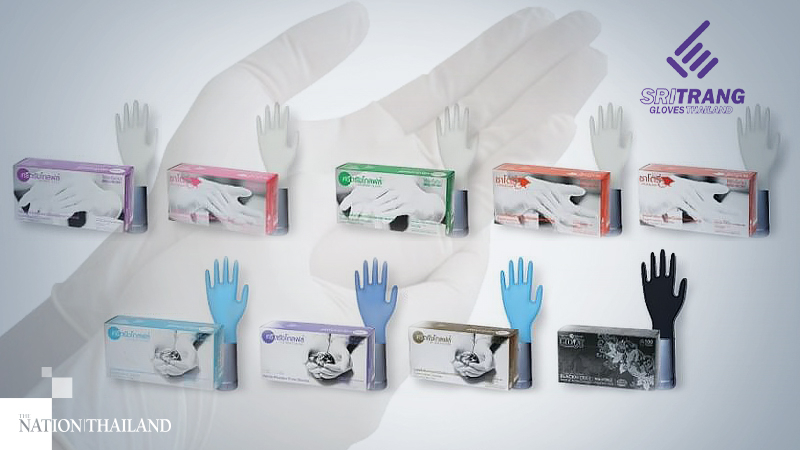
The fall in the share prices of Sri Trang Agro Industry Plc (STA) and Sri Trang Gloves Thailand Plc (STGT) on Wednesday (July 22) is a normal phenomenon in the current market situation, Wichai Wachiraphong, a well-known stock investor, said.

“Analysts believe that when STGT announces its estimated Bt800 million to Bt900 million profit in the second quarter of 2020, the share prices of STGT and its parent STA will return to normal,” he said.

On Wednesday, STA’s share price dropped by 11.5 per cent to Bt25 per share with trading value of Bt3.22 billion, while STGT’s share price dropped by 6.02 per cent to Bt78 per share, with trading value of Bt2.13 billion. The sudden change drew the attention of investors.

“Personally, I believe that STGT still has strong value in the market as the demand for rubber gloves is still climbing across several industries,” he said. “I suggest holding on to the shares despite the news of a Covid-19 vaccine being nearly successful for human trials, as it would take some time before the vaccine will be available for everyone.”

Meanwhile, Anakephong Phutthapibal, deputy director of research at Asia Plus Securities, has said that the share prices of STA and STGT had gone down due to investors dumping the shares to take short-term profit, after both shares had climbed for a while. “Some investors may also view the possible arrival of Covid-19 vaccine as a negative factor for the glove industry and decided to sell the shares to secure the profit,” he said. “More investors may decide to sell their shares in the coming weeks, if STGT’s announced profit does not meet their expectation.”

Stocks halt four-day run as economic worry returns #ศาสตร์เกษตรดินปุ๋ย

#ศาสตร์เกษตรดินปุ๋ย : ขอบคุณแหล่งข้อมูล : หนังสือพิมพ์ The Nation.

Stocks halt four-day run as economic worry returns

EconJul 24. 2020

By Syndication Washington Post,  Bloomberg · Vildana Hajric, Claire Ballentine · BUSINESS, US-GLOBAL-MARKETS

U.S. stocks reached their lowest level in a week after an unexpected rise in jobless claims rekindled concern that the economic recovery has stalled. The dollar weakened, and Treasuries rose.

 The S&P 500 Index slipped from a four-month high, led by losses in technology firms and companies that make non-essential consumer goods. The Nasdaq 100 index dropped to a two-week low and turned lower for the week, erasing Monday’s rally that was the biggest since April. Twitter jumped after daily-user growth surged, but Alphabet, Amazon and Apple each lost more than 3%. Microsoft slumped after cloud growth slowed. Tesla slid even after results beat estimates.

The first uptick in jobless claims since March comes as Congress negotiates a new relief package for millions of Americans who are set to lose enhanced benefits at the end of the month. Other worrying signs of economic slowing added to concern that the growth in some areas will stall.

“The recovery is in place, but the labor market is really, really fragile,” said Gene Goldman, chief investment officer at Cetera Financial Group. “That’s going to weight on the markets and it’s going to weigh on consumers for a long time.”

The 10-year Treasury yield fell to 0.58%, while Bloomberg’s dollar index weakened for a fifth straight day. Crude slumped, while precious metals continued their torrid run of gains that have taken gold and silver prices to multiyear highs.

In Europe, the Stoxx 600 index increased on gains in carmakers and consumer products, led by Unilever’s jump after sales fell less than expected. The yield on Italy’s benchmark bonds fell below 1% for the first time since March amid euphoria over the Europe Union’s pandemic recovery package.

Positive signals emerging from an earnings season that is expected to be historically weak had been driving investors into risk assets. An increase in U.S.-China tensions and a resurgence in the virus across large swaths of America deadened some of that optimism.

“Whenever the markets get to a point where there’s something just around the corner that they’re very focused on, that is when they sort of stop – whether they were trending higher or trending lower – they sort of start to trend sideways, but get choppy intra-day and start reacting more or less to headlines,” said Shawn Cruz, senior manager of trader strategy at TD Ameritrade.

– – –

These are the main moves in markets:

Stocks

– The S&P 500 index fell 1.2%, to 3,235, as of 4 p.m. New York time, the first retreat of the week.

– The Dow Jones industrial average fell 1.3%.

– The Nasdaq Composite Index declined 2.3%.

– The Stoxx Europe 600 Index closed up 0.1%.

Currencies

– The Bloomberg Dollar Spot index lost 0.1%.

– The euro rose 0.2%, to $1.1593, reaching the strongest in more than 21 months on its fifth consecutive advance.

– The Japanese yen added 0.3% to 106.84 per dollar.

Bonds

– The yield on 10-year Treasuries fell one basis point, to 0.58%, the lowest in three months.

– Germany’s 10-year yield increased two basis points, to -0.48%.

– Britain’s 10-year yield was at 0.12%, the lowest on record.

Commodities

– West Texas Intermediate crude dipped 1.6%, to $41.24 a barrel.

– Gold futures strengthened 1%, to $1,882 an ounce, reaching the highest in about nine years on its fifth consecutive advance.

– Copper climbed 0.3%, to $2.94 a pound.

Thai investors urged to look overseas for higher returns #ศาสตร์เกษตรดินปุ๋ย

#ศาสตร์เกษตรดินปุ๋ย : ขอบคุณแหล่งข้อมูล : หนังสือพิมพ์ The Nation.

Thai investors urged to look overseas for higher returns

EconJul 24. 2020

By The Nation

Bualuang Securities, a subsidiary of Bangkok Bank, is advising investors to look abroad in order to manage risk and achieve higher returns than are available in the Thai stock market.

Chaiyaporn Nompitakcharoen, deputy managing director of Bualuang Securities’ Non-Institutional Broking Group, said the Stock Exchange of Thailand (SET) now has a limited upside, adding that investors should consider alternative stocks not available on the SET, such as shares in e-commerce, software, and healthcare businesses.

“The company is cooperating with overseas partners to enable investors to invest in places such as the US, Vietnam, and Hong Kong stock markets,” he said. “Aside from selective investments, investors can also make themed investments or invest in the Exchange Traded Fund [ETF].”

He expects the Thai stock market in the second half of this year to move between 1,280 and 1,450 points amid the economic slowdown, slow tourism recovery, and decline in listed companies’ profits.

“By the end of this year, we expect the SET Index to be at 1,360, but we believe it will be more than three years before the index recovers to its pre-Covid-19 level of 1,520.”

He recommended investors spread risks by incorporating 40 per cent in bonds or currency markets, 12 per cent in gold, 7 per cent in the Real Estate Investment Trust (REIT) and property funds, 10 per cent in the Thai stock market, and 31 per cent in foreign stock markets.

Meanwhile, Santi Thananiran, chief investment officer at BBL Asset Management (BBLAM), said he was confident the Thai stock market had a limited upside and downside, adding that the market would recover in 2021 but not above 2018 levels.

“Returns of up to 7 per cent can be expected from the SET if the Thai economy expands by up to 4 per cent,” he said.

“However, the Thai stock market is still under pressure from listed companies facing economic-cycle risks, such as banks’ policies, fuel prices, and changes in technology.”

He recommended investing in technology, healthcare, and Chinese stocks, while spreading investment in line with personal objectives and risk levels.

“For those who can tolerate risks and aim to invest for more than 10 years, we advise investing 75 per cent in Thai and foreign stocks and the other 25 per cent in bonds, REIT, property funds, basic infrastructure, and gold,” he said. “They should focus on investment in the long term and buy assets when prices are cheap, but they should not take profit in the short term.”

He added that aside from spreading investment, investors must plan their moves well since liquidity was important to escape impacts of the Covid-19 outbreak and economic slowdown.

Current state of politics leaves businesses worried despite resumption of operations #ศาสตร์เกษตรดินปุ๋ย

#ศาสตร์เกษตรดินปุ๋ย : ขอบคุณแหล่งข้อมูล : หนังสือพิมพ์ The Nation.

Current state of politics leaves businesses worried despite resumption of operations

EconJul 24. 2020

By The Nation

Though the Thai Industries Sentiment Index (TISI) has risen for the second consecutive month following the easing of more Covid-19 lockdown measures, businesses have started worrying about the state of local politics, chairman of the Federation of Thai Industries (FTI) said on Thursday (July 23).

In June, TISI stood at 80, up from 78.4 in May, and businesses were able to resume operations after the third and fourth phase of easing restrictions. Many border checkpoints have also reopened to facilitate trade with neighbouring countries, while the low number of new infections in June has boosted confidence among manufacturers.

However, FTI chairman Supant Mongkolsuthree said many industries are more concerned about the state of local politics, appreciation of the baht, oil prices and lending interest rates, instead of the global economic recovery. 

Prime Minister Prayut Chan-o-cha is currently reshuffling his Cabinet now that several ministers have stepped down. At the same time, student activists have intensified their campaign, demanding that Prayut dissolve Parliament, have the Constitution rewritten and for his government to stop intimidating people. 

For the next three months, TISI is expected to hover at 90.1, down from the previous estimate of 91.5, because businesses are worried about local buyers’ low purchasing power, fragile economy and the threat of a second wave of Covid-19 infections. 

Hence, they are proposing that the government launch extra stimulus measures and encourage state agencies to purchase goods produced by local factories, the Thai Credit Guarantee Corp to guarantee more loans and the government to offer incentives to foreign investors, especially those wanting to invest in the Eastern Economic Corridor. 

BOT to relax conditions on Bt500bn SME loan scheme #ศาสตร์เกษตรดินปุ๋ย

#ศาสตร์เกษตรดินปุ๋ย : ขอบคุณแหล่งข้อมูล : หนังสือพิมพ์ The Nation.

BOT to relax conditions on Bt500bn SME loan scheme

EconJul 24. 2020

By The Nation

The Bank of Thailand is considering relaxing conditions for its Bt500-billion programme of soft loans for small and medium-sized enterprises (SMEs), said a source familiar with the matter.

The move by the central bank is in response to complaints that tight conditions were preventing SMEs from taking the soft loans, which are being allocated via commercial banks. 

Under the new plan, the central bank will offer Bt100 billion in loans at 0.01 per cent interest to banks, to relend to SMEs at an interest rate of 2 per cent over three years.

The loans should help firms keep their workers for at least six months. Banks will send the money directly to the bank accounts of SME workers, each of whom will get about Bt10,000 a month. The SMEs will also get a 12-month grace period on the principal payment. The central bank is expected to distribute Bt60 billion in three-year loans aimed at retaining workers. The remaining Bt40 billion will go on three-year loans to support companies’ working capital. To boost liquidity, each SME will receive about 70 per cent of its average 3-month revenue.

Firms taking employment loans will be required to keep at least 80 per cent of their workers. The loans are expected to help 40,000 SMEs to keep about 1 million workers, said the source.

Banks may also allow some firms to repay the interest with retail vouchers which can be redistributed to bank customers. The employment loan is similar to Kasikornbank’s loan scheme to help companies retain their employees during the pandemic.

Moreover, the central bank will also invite the Thai Credit Guarantee Corp to provide insurance for soft loans of more than two years’ term, the informed source added.

The central bank earlier revealed it was revising soft loan conditions, but did not elaborate. The Bt500-billion soft loan package launched in April but so far a smaller-than-expected Bt100 billion of the loans have been approved.

SET flat as investors mull fresh US-China tensions, Covid surge #ศาสตร์เกษตรดินปุ๋ย

#ศาสตร์เกษตรดินปุ๋ย : ขอบคุณแหล่งข้อมูล : หนังสือพิมพ์ The Nation.

SET flat as investors mull fresh US-China tensions, Covid surge

EconJul 23. 2020

By The Nation

The Stock Exchange of Thailand (SET) Index closed at 1,359.65 today (July 23), up 2.61 points or 0.19 per cent. Total transactions amounted to Bt70.233 billion with an index high of 1,363.90 and a low of 1,348.92.

In the morning session, a stock analyst at Krungsri Securities expected the index to fluctuate between 1,350 and 1,365 due to lack of new positive sentiments to stimulate investment.

“The index will be under pressure from US-China tensions after the US ordered China to close its consulate in Houston within 72 hours to protect American intellectual property, while China will close the US consulate in Wuhan in retaliation,” the analyst said.

“Also pressuring the index is the increasing number of new Covid-19 cases, especially in the US where there are about 70,000 new infections per day.”

The analyst added that the index would rebound due to mass buy-ups of stocks in companies whose second-quarter performance will improve.

The 10 stocks with the highest trade value today were GULF, STA, CPALL, CPF, BGRIM, PTT, PTTEP, KBANK, AOT and SAWAD.

As of 4.30pm, the price of crude oil rose by US$0.39 or 0.93 per cent to $42.29 per barrel, while gold rose by $16.70 or 0.90 per cent, to $1,881.80 per ounce.

Other Asian indices were mixed:

China’s Shang Hai SE Composite Index closed at 3,325.11, down 6.75 points, or 0.20 per cent, while the Shenzhen SE Component Index closed at 13,661.50, up 4.47 points, or 0.033 per cent.

Hong Kong’s Hang Seng Index closed at 25,263, up 205.06 points, or 0.82 per cent.

South Korea’s KOSPI Index closed at 2,216.19, down 12.47 points, or 0.56 per cent.

Taiwan’s TAIEX Index closed at 12,413.04, down 60.23 points, or 0.48 per cent.

Japan’s Nikkei Index was closed for the four-day holiday weekend.