The price of gold is expected to rise beyond Bt28,000 per baht weight this week and this may be the perfect time to make profits in the short term, Gold Traders Association chairman Jitti Tangsitpakdee said.
He expects the price of gold in global markets this week to move between US$1,775 and $1,845 per ounce, while domestically it is expected to hover between Bt27,500 and Bt28,000 per baht weight.
“The price of gold will hit a historic high if it rises over Bt27,200 per baht weight, so investors can sell gold to take profits in the short term,” he pointed out.
Meanwhile, YLG Bullion International, a large exporter and importer of gold bars in Thailand, said the precious metal had yielded the highest returns this year.
“Globally, gold has yielded more than 16 per cent in the first half of the year, higher than all of 2019, which only yielded returns of 10 per cent,” an analyst at YLG Bullion International said. “Domestically, gold yielded returns that were 20 per cent higher than the same period last year.”
The analyst added that there is a chance of gold prices hitting $1,920 per ounce this year, and advised investors to hold 5 to 10 per cent of gold in their portfolios.
“We also advise investors to watch out for factors that affect the price, such as a second wave of Covid-19, the US Federal Reserves move to ease the monetary policy and the US-China trade war,” the analyst said.
EXIM Thailand and China, Japan banks to loan Bt10.5bn for BCPG energy projects
Jul 20. 2020
By THE NATION
The state-owned Export-Import Bank of Thailand (EXIM Thailand) today signed a joint agreement to finance hydroelectric power plants in Laos with Bt5.41 billion in loans. The agreement was signed with Thailand’s BCPG Plc (the plants’ developer) and the Industrial and the Commercial Bank of China (Thai) (ICBC Thai).
EXIM Thailand said the deal falls under the Thai government’s policy to promote trade and investment connectivity between Thailand and its neighbouring countries, and also the Laotian government policy to promote the country as the “Battery of Asia”.
Meanwhile, EXIM Thailand and Mitsui Trust Bank (Thai) (SMTBT) also signed an agreement to loan Bt1.9 billion (6,465.07 million yen) to support the Chiba 1 solar power plant project in Japan.
Under the first of these two agreements, EXIM Thailand is collaborating with BCPG to fund development of the Nam San 3A and Nam San 3B hydroelectric power dams with a combined generating capacity of 114MW in Laos. The projects and a 500MW transmission line are being built under a power-purchase agreement with Vietnam, which will buy electricity from the dams.
The second agreement is part of EXIM Thailand’s solar power plant financing scheme worth about Bt6.15 billion (21,188.22 million yen) in addition to another two solar farm projects – the Komagane and Yabuki, with a total capacity of 87MW – under an MOU with SMTBT and Japan’s Sumitomo Mitsui Trust Bank, Japan. The solar financing pacts aid Thai business investment in Japan.
The owner of Akara Hotel on Phya Thai Road in Bangkok, Zenaida Vannaying, arranged a cultural show of traditional Filipino dancers for the grand opening of Viva Filipinas Restaurant at the hotel.
Pictured are (from second left): Natapanu Nopakun, deputy director-general of the Information Department and deputy spokesperson at the Foreign Ministry, Zenaida and Mai Vannaying.
International digital asset exchange trading platforn Zipmex launches in Thailand
CorporateJul 20. 2020Proud Limpongpan, chief strategy officer at Zipmex
By The Nation
Leading licensed digital assets exchange, Zipmex, on Monday (July 20) launched its operations in Thailand via desktop and mobile.
The expansion comes after successful launches in Singapore, Indonesia, and Australia.
A screenshot of Zipmex’s mobile app.
The company said it continues to accelerate operations across Southeast Asia to fuel a rising demand for digital currency due to the recent regulation changes in the market.
Zipmex said it offers traders a variety of investment opportunities in the digital assets space. Having received both licences for cryptocurrencies and digital tokens from the Ministry of Finance and being regulated by the Securities Exchange Commission, Zipmex is entering the Thai market with hopes to bring innovative financial products to all investors, the company said.
The company is audited every quarter and works closely with the Anti-Money Laundering Office of Thailand to detect, prevent, and report any fraud or suspicious financial activities – just like a traditional financial institution.
The Southeast Asian market is experiencing a “crypto-boom” with the current global pandemic with Covid 19 which is fuelling a further shift for digital currencies and assets due to fiat currencies crashing. Pre-pandemic, this would typically result in a surge towards US currency, however the market is experiencing a shift due to the growing interest in government-backed national digital currencies, with China emerging as a leader, the company said. The global perception and acceptance of digital assets is changing swiftly with the current economic climate and indicates growing interest in crypto and digital assets across the region, and the emergence of a competitive market for new players, the company said.
Zipmex’s timely expansion into Thailand coincides with Project Inthanon by the Bank of Thailand, which is now entering maturing stages of development. Project Inthanon is a collaborative project between the central bank and financial institutions with the key objective of developing and testing a proof of concept for domestic wholesale funds transfer using a wholesale central bank digital currency. This initiative supports the notion that change is on the horizon pertaining to digital currency regulations and its acceptance in Thailand, the company said.
In Thailand, Zipmex has a registered capital of Bt52 million, and always keeps an internal Net Capital Rule of Bt27 million. Although Thailand will be the fourth market the company is operating in, the main base of operation has been and will continue to be in Bangkok. The company is the only one in the market that uses a custody solution with up to US$100 million insured per wallet, by one of the UK’s top financial institutions.
The company said pre-launch it has pre-signed up 1,000-plus customers, including Thaivivat Insurance Plc, The Sala Hospitality Group, Traveloka, and The Water Library Group.
Exclusive prizes worth a total value of over Bt2 million has been given to the top 5 who successfully referred the most friends to register with Zipmex on its official website.
“Zipmex strives to become a wealth-generating platform through helping people save and invest wisely, increasing their wealth,” Proud Limpongpan, chief strategy officer, said. “It is a platform for anyone to use to manage investments and wealth. People hear of digital assets and they think it’s something unreachable when in fact it’s fractionalised — you can buy 0.0001 of a bitcoin — which means anyone can start; the minimum is Bt30. Moreover, at Zipmex, we offer zero commission which means new investors can try trading digital assets with no additional charges,” Proud said.
“Unlike existing players in the market, we are approved by regulators regionally, and we plan on curating the investment selection by only listing reputable digital assets instead of focusing on investing on so many alt-coins,” Proud added.
By Syndication Washington Post, Bloomberg · Patrick Winters · BUSINESS
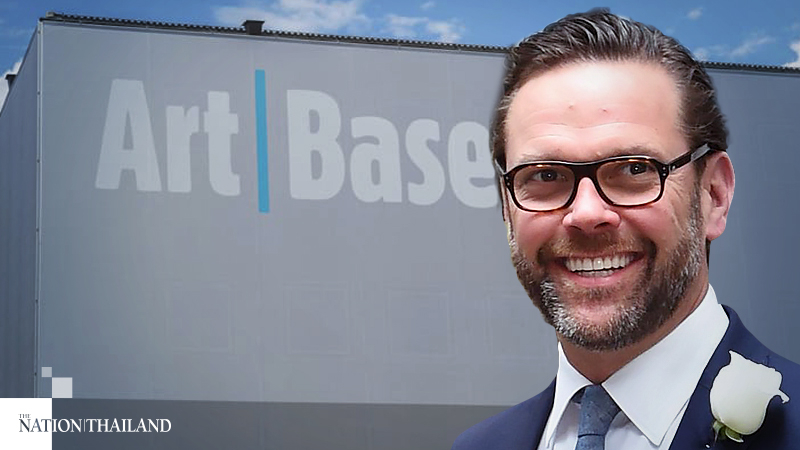
The board of Art Basel organizer MCH Group AG warned investors to accept a rescue package that includes an injection of capital from the younger son of billionaire Rupert Murdoch, or risk running out of time.
“If this overall package were to fail, extremely little time would be left for developing and implementing alternative restructuring solutions before it was too late,” according to a statement from the board of directors on the company’s website Saturday.
MCH Group has been battered by the coronavirus outbreak, which led to some of its biggest events being called off. The Art Basel show, slated for September, was canceled, and big-name brands like Rolex and Patek Philippe deserted its watch exhibition, Baselworld, leading to the scrapping of the show. Sales will slump by as much as 170 million francs ($181 million) this year.
James Murdoch plans to invest in MCH Group via his investment company, Lupa Systems, which will acquire a stake of 30%-44%, Basel-based MCH Group said in a statement on July 10. The company also plans to add Murdoch to the board of directors.
MCH Group will propose a 104.5 million-franc capital increase and a restructuring of its debt capital at an extraordinary general meeting on Aug. 3, which is when shareholders will vote on Lupa Systems’ entry as a new shareholder with a lock-up period of five years.
The Stock Exchange of Thailand (SET) Index fell by 1.45 points, or 0.11 per cent, to 1,358.13 in the morning session on Monday (July 20).
A stock analyst at Krungsri Securities expected the index to fluctuate between 1,350 and 1,370 as investors could delay investment to follow banks and financial institutions’ second-quarter performance announcement this week. Results are expected to see a drop both quarter on quarter and year on year.
“Meanwhile, uncertainty following the rising number of Covid-19 cases, especially in the US, would cause an impact on economic recovery,” the analyst said.
“However, the index would gain support from mass buy-up of shares in companies whose second-quarter performance would improve.”
He recommended that investors buy:
▪︎ Food and electronic stocks that benefit from the weakening baht, such as TU, CPF, GFPT, TFG, ASIAN, KCE, DELTA, HANA and SVI.
▪︎ Stocks whose second-quarter performance will improve, such as TOP, PTTGC, SPRC, SCC, BGRIM, CKP, CPF, TU, TASCO, STA, STGT, SPALI, PRM, PTL, AJ, STARK, CBG and TQM.
The Stock Exchange of Thailand (SET) Index on Friday (July 17) closed at 1,359.58, up 11.72 points or 0.87 per cent. Total transactions amounted to Bt41.354 billion with an index high of 1,361.39 and a low of 1,350.10.
The price of gold rose by Bt50 per baht weight in morning trade on Monday (July 20), the highest since the gold price has been announced in the country, the Gold Traders Association reported.
As of 9.30am, the buying price of a gold bar was Bt27,050 per baht weight and selling price Bt27,150, while gold ornaments cost Bt26,560.32 and Bt27,650, respectively.
At close on Saturday (July 18), the buying price of a gold bar was Bt27,000 per baht weight and selling price Bt27,100, while gold ornaments cost Bt26,514.84 and Bt27,600, respectively.
Spot gold price moved to US$1,807 (Bt57,412) on Monday morning after the price rose by $9.7 to $1,810 (Bt57,508) per ounce at Friday’s close.
Gold has gained from expectations that the US and Europe will issue additional economic stimulus measures and there will be mass buy-up of gold as a safe-haven asset amid uncertainty about the Covid-19 impact on the global economy after the number of new cases has continued to rise.
Hong Kong gold price opened at $16,710 (Bt68,502) per tael this morning.
Most credit card holders have resumed paying off what they owe after a three-month debt moratorium expired at the end of June, credit card companies report.
Krungthai Card Plc (KTC)’s president Rathian Srimongkol said that 100 of its cardholders had applied to enter the debt suspension scheme but 80 per cent had now returned to paying their debts as usual.
He forecast that customers’ debt default situation would continue to improve over the next six months.
Meanwhile, Ayudhya Capital Services Co’s managing director Nayanee Peaugkham said that 90 per cent of customers who had opted for debt suspension were back paying their debts as normal.
By Special To The Washington Post · Jon Marcus · NATIONAL, EDUCATION
Stately and historical Power Street in Providence, R.I., feels sedate at the busiest of times, but on a Friday in the midst of the pandemic, it was as silent as a stopped clock.
Then, over College Hill, came a scruffy caravan of vehicles hung with protest signs, blaring horns and blasting the Woody Guthrie lyrics of the labor movement ballad “Union Maid.” (“I’m sticking to the union ’til the day I die.”)
Behind the wheels were graduate students from Brown University, trying to get the attention of the school’s president, Christina Paxson, with this noisy drive-by of her official red-brick, white-trimmed 1922 mansion set behind walls of stone and wrought iron.
The disruption of this genteel neighborhood exemplified the growing anger of students like these, who, at Brown and elsewhere, have been demanding higher stipends and better benefits in exchange for the work they do as teaching and research assistants.
Before the coronavirus pandemic, there seemed little chance they would get anywhere. Contract and collective bargaining negotiations had been dragging on for years at the few universities that would entertain them; other schools refused to recognize graduate worker unions at all. The Trump administration’s National Labor Relations Board, or NLRB, had approved a policy change effectively denying graduate workers at private universities the automatic right to unionize. Graduate teaching assistants in California who staged a wildcat strike were summarily fired at the beginning of March.
But quietly, and overshadowed by everything else that has been happening, graduate students in the last few months have won surprising victories that are the culmination of decades of effort. They and others chalk this up, at least in part, to universities’ need for their labor in what promises to be a tumultuous fall.
Four private universities – American, Brown, Georgetown and Harvard – have reached contract deals with their graduate workers since the end of January. That doubles the number of private institutions at which graduate unions now have contracts. (The others are Brandeis, Tufts, the New School and New York University.)
Columbia wrapped up its first-ever contract with postdoctoral students and is in talks with its other graduate workers. Hard-fought collective bargaining agreements have been approved during the pandemic at public universities, too, including Oregon State University.
Meanwhile, graduate students at more than 75 universities in the United States and Canada have for the first time organized themselves into a loose alliance demanding better pay and protections, driven by anger over incidents such as the firings in California and new momentum from the recent unexpected successes.
“There’s this huge synergy because people are realizing what we can actually accomplish,” said Kaitlyn Hajdarovic, the graduate students’ bargaining committee co-chair at Brown, where she is a research assistant and doctoral student in neuroscience.
Though none of the universities would answer the question of why they have agreed now, of all times, to long-resisted contracts with their graduate students, independent experts say the motivations include politics and public relations.
The schools “don’t want to look bad, and they especially don’t want to look bad with regard to their graduate students in the midst of a pandemic and a recession,” said Gary Rhoades, the director of the Center for the Study of Higher Education at the University of Arizona.
Graduate students have taken advantage of that fear with such spectacles as the noisy drive-by at Brown. There was also a car and bicycle protest outside the lead negotiator’s house at Oregon State, complete with a trumpeter playing improv jazz and military marches, and a campaign called Chop from the Top demanding pay cuts for top administrators to avert layoffs for the lowest-paid workers.
“If I’m in those administrations, my sense would be, ‘Let’s take care of this issue. We’ve got so much other stuff going on right now, this is an easy one,’ ” Rhoades said.
Public support for graduate workers was evident when, in March, the University of California at Santa Cruz dismissed more than 40 graduate teaching assistants for striking and withholding grades to demand a cost-of-living raise. Even though the students were in violation of a no-strike clause in their contract, the firings triggered protests across the University of California system. (UC-Santa Cruz in July announced that it will let the fired students reapply for jobs.)
And when Trump appointees on the NLRB ruled that graduate research and teaching assistants should be considered primarily students, not workers – reversing their Obama-era right to unionize – “that mobilized even more people, because the battle lines were clear,” Rhoades said.
“The larger political environment is catalyzing the movement and makes management more willing to come to the table and acknowledge that they don’t want to be seen as being in bed with the Trump administration.”
Graduate students who reached contract deals in the last few months speculated that their universities also wanted to avoid disruptions like the 29-day strike on the eve of final exams staged in December by graduate teaching assistants and tutors at Harvard.
They said negotiators seemed anxious to make sure they had enough graduate workers for a fall semester already expected to be challenging.
“On the Georgetown side, there was this pressure to wrap up these negotiations and just have it settled,” said Jewel Tomasula, a doctoral student and research fellow there and incoming president of the Georgetown Alliance of Graduate Employees. “The sense I had was that they just wanted to get this done because they have other things to deal with.”
At Brown, Hajdarovic said, the university had stopped meeting with the union in January and February, and canceled further sessions at the start of the pandemic shutdowns. Then the talks were suddenly put back on a weekly schedule, and they began to make progress on stipends and other financial issues that had previously stalled.
“Their tune on that really shifted,” she said. “My view was that they wanted to get the financials locked down.”
In this crisis, university administrators “understood just how important and essential the graduate workers are,” said Randi Weingarten, the president of the American Federation of Teachers, which helped organize the graduate unions at Brown, Georgetown and Oregon State. (Harvard’s graduate workers are affiliated with the United Auto Workers; American’s is with the Service Employees International Union.)
“Teaching assistants, who are mostly graduate workers, are basically the muscle of what makes things work in a university,” Weingarten said. “They know where the keys are.”
The pandemic created heightened urgency for the graduate students, too. Most have had to teach online, or their labs were closed, jeopardizing deadlines and financial aid. Some were called back to help with coronavirus-related research, and they were concerned about their health. International graduate students fear they will lose their visas or be deported.
Usually buried in their lab work, graduate research assistants have traditionally been less involved in union efforts than graduate teaching assistants, or TAs, Hajdarovic said. “Most of the organizing comes from TAs. They can see how they’re being pushed around by the university, and how the university benefits from their work.”
But when the pandemic descended, she said, “more people started to realize that maybe the university didn’t have their best interests in heart, that it wasn’t going to take care of them. I had people in my department who had never been interested in the union before, who reached out to me to say, ‘Hey, what are we going to do about that?’ “
Existing or anticipated budget cuts on some campuses added yet another layer of anger and determination to this mix.
“Crisis does radicalize people,” said Alexandra Adams, a doctoral candidate in biological sciences at Rutgers University at Newark, which has declared a financial emergency and announced layoffs and a salary freeze.
Graduate students at Rutgers, which is a public institution, already have a union and a contract that took 14 months to hammer out, shielding them from losing their jobs and health-care coverage, though a scheduled cost-of-living raise may be postponed. Seeing how a contract can protect them at a time like this, Adams said, is motivating graduate union organizers elsewhere to redouble their efforts.
“People are fighting because in this pandemic and this austerity period in higher education, it’s fight or flight,” said Andrea Haverkamp, the president of the Coalition of Graduate Employees at Oregon State, where she is a doctoral candidate and graduate research assistant in environmental engineering. “When push comes to shove, workers stick up for themselves.”
All of these things come on top of years-long complaints about escalating fees, stipends too low to cover the cost of living in many university communities and other problems, even as the academic job market dries up and prospects for employment narrow.
“It used to be that you worked long hours for a low stipend, and you were rewarded with a tenure-track job,” Hajdarovic said. “Now we’re realizing: Hey, we’re working for peanuts, and there is no light at the end of the tunnel. Our reward is going to be adjunct jobs and no health care.”
At Georgetown, after five years of organizing and 13 months of collective bargaining, graduate workers got between 12 and 15 percent increases in their stipends, plus paid parental leave and dental insurance for doctoral candidates and cost-of-living raises in the contract’s second and third years.
Harvard graduate workers, who started organizing nearly five years ago and spent 19 months negotiating, won a 2.8 percent raise, funds to help with health and child care, and protection from harassment, including from supervisors.
Brown’s deal includes a 3.7 percent stipend increase, an appointment extension for some graduate workers – to make up for the time they lost to the pandemic shutdowns – and full reimbursement for coronavirus testing and treatment.
Graduate workers elsewhere also have been making gains. A bill was introduced in the Georgia General Assembly proposing that student fees be waived for research and teaching assistants. Graduate students at the University of Colorado at Boulder helped launch a new all-worker union, the United Campus Workers Colorado, across all of the public university system’s campuses.
“We’re moving in a great direction,” said Alex Wolf-Root, who just completed a doctorate in philosophy and is now an adjunct lecturer and a founding member of the Colorado group. “We have some good momentum.”
That in itself is a significant change. The first collective bargaining agreement for teaching assistants was reached at the University of Wisconsin at Madison in the spring of 1970; in the 50 years since, there have been only about 40 more, covering just one in five graduate student workers, according to the National Center for the Study of Collective Bargaining in Higher Education and the Professions at Hunter College.
“Some of these organizing efforts have been going on for decades,” said William A. Herbert, the center’s executive director.
Several private universities still refuse to negotiate with graduate workers’ unions, including the University of Chicago. Because of the NLRB decision, those that have agreed to contracts are under no requirement to renew them. And the Harvard deal is for one year, not several years, as the graduate workers’ union there had wanted.
Still, said Aparna Gopalan, a doctoral student in anthropology at Harvard and an active member of the union on that campus, graduate workers during the pandemic have gained a big foothold.
“This year is going to be the most volatile year any of us have ever had,” Gopalan said. “At least we’ll have the contract to fall back on. And who knows where we’ll be in a year?”
By Syndication Washington Post, The Japan News-Yomiuri · No Author · WORLD, ASIA-PACIFIC
The government has decided to provide up to $4.6 billion (¥500 billion) loans over the next two years to help developing countries in the Asia-Pacific region fight against the novel coronavirus, sources said.
The yen loan system for emergency financial assistance will be utilized for the first time since the collapse of Lehman Brothers in 2008. In principle, the funds provided under the scheme can be used for any purposes.
Under the emergency loan system, the government will provide loans with lower than usual interest rates to developing countries impacted by tax revenue declines and other difficulties. As part of the scheme, the repayment period will be reduced by half to about 15 years.
For one of the first steps, the government processed a document July 1 for a loan of up to ¥50 billion to the Philippines, which has been hit hard by the spread of infections.
The interest rate on yen loans had been typically set at 0.5% to 1% for countries other than the extremely poor, however, for the Philippines, a low-middle-income country, the rate was set at 0.01%, and the same conditions are to be applied to Myanmar and Bangladesh.
After the fall of U.S. investment bank Lehman Brothers in 2008, the government had secured up to ¥300 billion for its emergency loan system and provided loans worth a total of ¥70 billion to Vietnam, Indonesia and the Philippines. As the spread of the novel coronavirus is expected to have a greater impact on the global economy than Lehman’s downfall, the government is now preparing to extend a greater number of yen loans than what was offered in the wake of the 2008 economic crisis.
The yen loans now being issued are in part aimed at bolstering Japan’s regional presence, as Beijing has been increasing its influence amid the coronavirus pandemic through the active provisioning of medical and other assistance to the international community. The targets of the yen loan system are to be expanded to include Pacific island countries, which were not included after the collapse of Lehman Brothers. The Asian Development Bank, based in Manila, will also provide loans in cooperation with Japan.




 Proud Limpongpan, chief strategy officer at Zipmex