Line Thailand launches campaign to ‘Debut’ new influencers
Jun 24. 2020
By THE NATION
Line Thailand is launching the “Debut” campaign to find new influencers in the local social media industry and offering up to Bt5 million in awards.
Contestants, aged between 15 and 28, are required to submit photographs and videos.
Photographs must comprise a portrait, a mugshot and a full-body shot, while videos must include an introduction clip and one displaying the contestant’s talent. Clips can be no longer than three minutes.
Winners will not only get awards but will also get a chance to attend the “Line Debut Camp”, where they will be trained in the art of influencing by five professional influencers.
Winners will also get to appear in Line TV dramas as well as participate in content produced by content provider, Good Day Official.
Those interested have until July 8 to register via @lineidolth. Additional details can also be found in the official account.
Electricity authority warns of bill collection, services scam
Jun 24. 2020
By THE NATION
The Metropolitan Electricity Authority (MEA) has warned customers to beware of individuals claiming to be MEA staff and offering to collect money due on their power bill, change their meter or clean their air conditioner.
Phasuk Sampunnachote, MEA public relations director, on Tuesday (June 23) said there had been reports of individuals pretending to be MEA staff and providing services for a fee.
“MEA has no policy of dispatching staff to provide services at houses of customers who haven’t booked a service with us in advance,” she said.
“Our annual aircon cleaning campaign started in March, but users must register via the MEA Smart Life application to receive the professional service, which costs only Bt300.” However, she added that this year’s campaign had ended after the service limit was reached, while registration for next year’s campaign hasn’t started yet.
“MEA is not offering meter-changing or maintenance services at the moment,” she said. “Furthermore, customers can conveniently pay their power bills via credit card, internet banking, ATMs, mobile banking, the MEA Smart Life app or at MEA branch offices.”
For the latest updates on MEA’s campaign activities, contact the call centre at 1130, or see twitter: @MEA_news, Line: @meathailand, Facebook: @Metropolitan.Electricity.Authority or download the “MEA Smart Life” mobile app, available for both Android and iOS users.
“If you witness or have information about individuals pretending to be MEA agents, please alert local police or contact MEA via the above-mentioned channels,” said Phasuk.
Jun 25. 2020Billionaire Heinz Hermann Thiele, during a television interview at the Frankfurt Stock Exchange in Frankfurt, Germany, on Oct. 12, 2018. MUST CREDIT: Bloomberg photo by Alex Kraus.
By Syndication Washington Post, Bloomberg · William Wilkes · BUSINESS, WORLD, US-GLOBAL-MARKETS, EUROPE Billionaire Heinz Hermann Thiele told Frankfurter Allgemeine Zeitung that he’d support the package at Thursday’s special shareholder meeting. He had earlier criticized a steep discount being granted to the German government on a 20% stake, and he had the votes to stop it single-handedly.
“I will vote in favor of the proposed resolution,” Thiele told the newspaper in an interview published on its website Wednesday.
With Thiele’s support, the measure appears likely to surpass the two-thirds backing required for its approval. Because only 38% of Lufthansa shareholders registered for the special meeting, Thiele’s 15.5% stake in the company translates into about 41% of the votes. Lufthansa needs to secure about half the remaining votes registered for the share sale to pass.
Analysts at Societe Generale and Berenberg both said they’d expect the measure to prevail with the support of the 79-year-old Thiele. Mark Manduca, an analyst with Citibank, projects the stock to jump as much as 10% if the deal goes through.
Securing a state holding would be a victory for Finance Minister Olaf Scholz, pleasing his Social Democratic allies and bolstering his ambitions to run for chancellor next year. Economy Minister Peter Altmaier would secure a landmark deal that’s meant to serve as a model for the government’s plan to take a more activist approach to managing Germany’s economy.
Unions, many investors and proxy advisory firms recommend shareholders back the deal. It’s not clear what the rationale for blocking the package would be without a major investor proposing an alternative.
“A government-orchestrated bailout is better than insolvency,” said Patrick Schuchter of Union Investment, holder of a 0.12% stake. He plans to vote for the rescue, despite the drawbacks for shareholders. “Investors need to choose the lesser evil or sell their shares.”
Lufthansa shares have fallen about 45% this year after the coronavirus forced airlines across the globe to ground fleets. The biggest carreir in Europe now has a market cap of about $4.8 billion — less than one-third of Thiele’s fortune. It had warned previously that it was facing a cash crunch and would have trouble paying wages in July.
Labor too has gotten behind the package, despite Chief Executive Officer Carsten Spohr’s plan to reduce staffing by more than 20,000 positions. A potential insolvency filing, which the airline warned was possible in the event the bailout was shot down, could cause job losses on an even larger scale.
“We extraordinarily welcome the decision to support the state aid package for Lufthansa at tomorrow’s annual general meeting,” Christine Behle, a supervisory board member and deputy chairman of labor union Ver.di, said in an emailed statement. “With this the survival of the company would be secured and an insolvency avoided.”
The meeting starts at 12 p.m. in Frankfurt. Spohr will address shareholders before opening the floor to questions. The process could take several hours before the vote proceeds and the results are released later in the afternoon.
Jun 25. 2020A Bayer Roundup brand weedkiller sprayer. MUST CREDIT: Bloomberg photo by Daniel Acker
By Syndication Washington Post, Bloomberg · Jef Feeley, Tim Loh · BUSINESS
Bayer agreed to spend billions to settle thousands of U.S. lawsuits, taking its biggest step so far in resolving headaches the German chemical giant inherited with its 2018 acquisition of Monsanto.
Agreements were reached on about 95,000 claims filed over Roundup, part of a Bayer plan to spend as much as $10.9 billion to settle all litigation linked to the popular herbicide, the Leverkusen-based company said Wednesday. The company also said it will pay as much as $820 million to settle toxic chemical pollution claims and a $400 million payment for those affected by its dicamba herbicide.
Taken together, the accords resolve major legal issues since Bayer bought Monsanto for $63 billion. A surge in Roundup claims — and big U.S. court losses — wiped tens of billions of dollars off Bayer’s market value. Getting past the legal drama is a top priority for Chief Executive Officer Werner Baumann.
The settlement is more comprehensive than expected, since it includes the dicamba and PCB cases, and the price will be reasonable for most investors, Sebastian Bray, an analyst at Berenberg, said by email.
It’s a “big relief,” Bray said, and “should allow investors to draw a line under the saga of the last two years.”
The Roundup agreements will resolve 75% of about 125,000 filed claims and those that were unfiled, the company said Wednesday in a statement. Bayer said it will pay $10.1 billion to $10.9 billion to resolve all lawsuits over the popular herbicide, including $1.25 billion for future claims handled as a class action.
Separately, Bayer said it agreed to pay about $820 million to settle most claims over water contaminated with Polychlorinated biphenyls, or PCBs, and as much as $400 million to resolve claims related to damage when dicamba sprayed on crops drifted to nearby farms.
In their lawsuits, users blame Roundup and its active ingredient — the chemical glyphosate — for their non-Hodgkin’s lymphoma and other cancers. The company denies glyphosate is a carcinogen, a position backed by the U.S. Environmental Protection Agency.
To be sure, thousands of Roundup claims remain unresolved.
“The remaining cases are in the hands of lawyers who know how to litigate, so we’re going to see some more Roundup trials in the future,” said Fletch Trammell, a Texas-based lawyer who held his about 5,000 cases out of the settlement. “This litigation is far from over.”
Bayer faced a surge in new lawsuits last year after it lost three big jury trials, and investors issued a rare rebuke to Baumann last spring. Some, including Elliott Management Corp., urged the company to seek a comprehensive settlement. Bayer is appealing the verdicts it lost.
Since last summer, Baumann has kept Bayer out of more trials while engaging in high-stakes mediation talks. In April, he won the annual confidence vote from 93% of shareholders amid signs that Bayer might soon reach a resolution.
Prasert Prasarttong-Osoth, the major shareholder of Bangkok Dusit Medical Services (BDMS), has cancelled the plan to make a tender offer for the shares of Bumrungrad Hospital (BH) due to unfavourable stock market conditions.
On Tuesday (June 23), BH closed at Bt116.50 per share, lower than BDMS’ tender offer of Bt125 per share.
“If the stock market sinks further, we will not be able to buy all BH shares because foreign investors, such as from Singapore and China, also will be able to buy this share,” he said.
“Meanwhile, after we made a tender offer for BH, the owner of this share had a problem with us, and so we decided to cancel the plan.”
Parin Kitchatornpitak, an analyst at KGI Securities (Thailand), said that the BH share price dropped due to uncertainty that BDMS may cancel the tender offer plan.
“BDMS may not able to buy all BH shares because the Sophonpanich family, the major shareholder, has allowed Bangkok Bank to hold an additional 10 per cent of BH shares,” he said.
“Meanwhile, the growth of BH in the short term may be limited because the number of patients who used medical services in the first half of this year would drop due to the Covid-19 outbreak,” he said.
He added that if the pandemic situation continues, BH’s net profit in 2020 and 2021 are expected to drop by 26.9 per cent and 24.5 per cent to Bt3.17 billion and Bt3.35 billion, respectively due to the decline in gross profit and the number of foreign patients.
“Seeing the economic situation, BH would not launch any investment plan for two to three years, while the company’s net debt-to-equity ratio was very low,” he said. “Therefore, we expect the company to increase dividends in 2020 and 2021 to 65 per cent from 62 per cent in 2019 and 51 per cent in 2018.”
He added that the suitable price for a BH share in the long term would be Bt140 per share if one evaluated using the Discounted Cash Flow method.
By Dennis Khoo Special to The Nation When the Covid-19 pandemic forced you to move your office to your home and to shift online, did it feel like a disruption or merely an inconvenience?
I would argue that for many of us, using digital services is not unfamiliar. Covid-19 has simply increased our dependence on and accelerated the frequency with which we use digital services.
This continual behavioural shift towards digital is not new, especially in the banking industry. Doomsayers for incumbent banks have always been around. These voices are even louder now with the proliferation of financial technology firms (Fintechs) and especially after the global financial crisis in 2009.
Fintechs are often touted as the disrupter of incumbent banks, which are said to be too big and too weighed down by legacy to be innovative. “Lite” financial outlets, such as neo-banks or digital banks, are said to be displacing their incumbent counterparts. If you are a traditional bank, your days are numbered.
United Overseas Bank, where I work and head our digital bank business, is seen to be such an incumbent bank – big, traditional and with legacy systems.
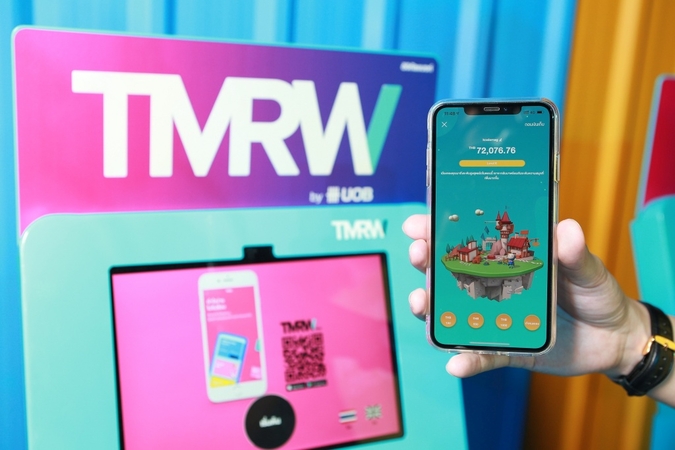
And yet in the past year alone we have been recognised by the global banking industry for our digital transformation initiatives including the launch of TMRW (pronounced “tomorrow”), the Asean region’s first digital bank for the digital generation.
Designed and built in a little over a year, TMRW was launched in Thailand in March 2019 and expanded into Indonesia earlier this year.
TMRW runs on a new business model that focuses on customer engagement as our primary performance indicator instead of revenue or profit. Those are important – we run a business after all – but our model hypothesises that if we deepen engagement, the bottom-line benefits will follow.
But what’s new here? Many traditional banks have launched digital banks. Many of these banks have also shuttered their digital bank operations or have admitted that their digital banks have not performed to expectations.
On the contrary, TMRW has shown in just one year of operations that our new business model works and is bearing fruit. In Thailand, a market with one of the highest digital banking standards in the Asean region, TMRW has the third highest net promoter score (NPS) among all banks.
NPS (which tracks how likely customers will recommend a brand to their friends and family on a scale of one to 10) is one of the key indicators of customer satisfaction, loyalty, and more importantly engagement and advocacy.
It is a very stringent measure as NPS only recognises customer advocacy if customers indicate nine or 10 on the scale. Customers who indicate a six or below are considered detractors, which affects the net promoter score. Three in four of our customers have become our advocates, referring TMRW to their circle of influence.
There is a need to challenge the status quo even if you’re a successful and growing traditional bank today. Our customers are increasingly going online and the next generation of customers who are digital natives will likely choose digital-first or digital only channels.
Every bank is different and has its own sets of challenges and business objectives. I have listed three principles which we took that have helped UOB to meet its strategic digital objectives.
1. Make the case for change:
Be a catalyst for mindset change within the company.
Any new initiatives require investment, time and more importantly the buy-in of all your stakeholders, from the board to your senior management team, for long-term success. My team and I were able to count on the support of the senior management team who saw TMRW as a long-term strategic investment and trusted us with the time needed to develop a business model and to build a full-fledged digital bank from the ground up.
2. Don’t be afraid of a blank slate:
We built TMRW for regional scale within just 14 months. We were able to do so because we took the time we needed to develop a robust business model in which we were confident and which offered us a clear blueprint on which we could build our digital bank quickly. This is easier said than done as there is always a pressure and a temptation to go to market as soon as possible.
We studied leading global and local banks and talked to experts around the world even as we workshopped and developed our unique digital bank model that could be scaled easily across diverse markets.
After much research, design thinking and testing, we concluded that data-driven insights, rapid learning and feedback loops are the new currency for success in tomorrow’s retail banking landscape. The bank of tomorrow needs to be customer- and engagement-focused. Simplicity is key, which means a digital bank must be targeted in what it offers and for whom it serves.
This also means it cannot stand alone to serve a universal set of customers across different life stages, but should coexist with existing traditional banks offering digital banking as part of their omni-channel strategy. Digital banks and digital banking should serve different customer segments and are likely to have different growth trajectories.
3. Integrate your customers into your business model:
Progressive companies today are already focusing on ensuring a customer-centric experience. We believe that the customer experience is not just an element of the future of service. Instead, a service-driven business such as banking should rethink its business model where customer-centricity is the goal rather than a by-product.
That is what UOB did for TMRW. We invented a new business model we call ATGIE to power our new digital bank. Designed to start small, to lower the cost to serve and to scale quickly in the medium term, ATGIE stands for Acquire, Transact, Generate data, harness Insights, and to use these insights to Engage the customer. Through a flywheel effect in which customer engagement is deepened with every interaction, TMRW is able to grow the number of quality customers organically through advocates and to keep the cost of acquisition down.
The current pandemic has accelerated a consumer shift towards digital bank and digital banking services at an unprecedented pace, and customer expectations for a superior digital experience will continue to grow in tandem. It’s never too early to start thinking about how you can serve tomorrow’s customers, but it can be too late.
Dennis Khoo is head of TMRW Digital Group, United Overseas Bank.
The Stock Exchange of Thailand Index opened at 1,319.38, down 14.05 points, or 1.05 per cent, on Thursday morning (June 25).
A stock analyst at Krungsri Securities expected the index to fall between 1,310 and 1,320 due to various negative sentiments.
“Investors were concerned about the second Covid-19 wave as the number of new cases in the US is still rising, which may force the country to issue lockdown measures again,” the analyst said
“Meanwhile, the US may impose tariffs on goods worth US$3.1 billion imported from
Britain, France, Spain and Germany.”
The analyst said that the International Monetary Fund (IMF) had cut global gross domestic product forecast from contracting 3 per cent to contracting 4.9 per cent.
“Separately, the price of crude oil dropped sharply by over 5 per cent due to increasing US crude oil storage and uncertainty following the decline in demand if the second Covid-19 wave emerges,” the analyst said.
He recommended the following stocks:
▪ Defensive stocks, such as INTUCH,TTW, and DIF.
▪ Stocks that were added to the SET50 and SET100 calculations — BPP, TTW, ACE, BFIT, DOHOME, RBF, SIRI, SISB, SPCG, TVO, and WHAUP.
The SET Index fell sharply by 23 points on Wednesday (June 24), or 1.70 per cent, closing at 1,333 due to uncertainty following the Bank of Thailand and the IMF cutting previous GDP forecasts and worries of a second Covid-19 wave.
Total transactions amounted to Bt60 billion. Foreign investors made net sales of Bt3.589 billion in stocks and Bt432 million in bonds. There were 9,004 net long TFEX SET50 contracts.
By The Washington Post · David J. Lynch · BUSINESS, WORLD, US-GLOBAL-MARKETS The International Monetary Fund on Wednesday painted a bleak portrait of the global economy, saying the coronavirus pandemic has caused more widespread damage than expected and will be followed by a sluggish recovery.
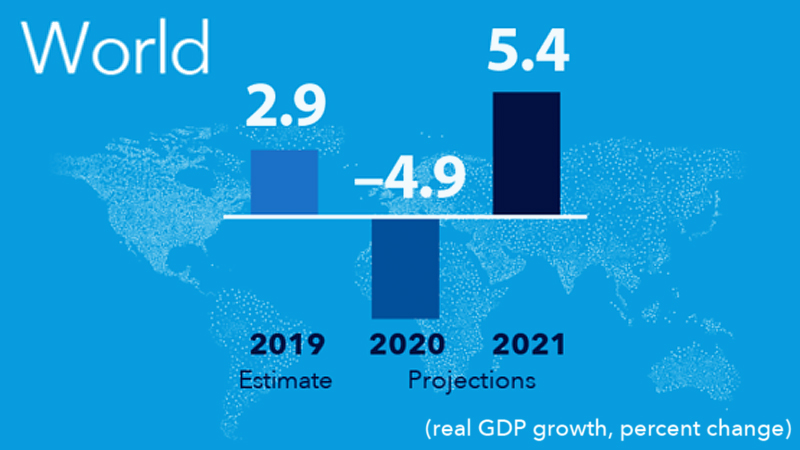
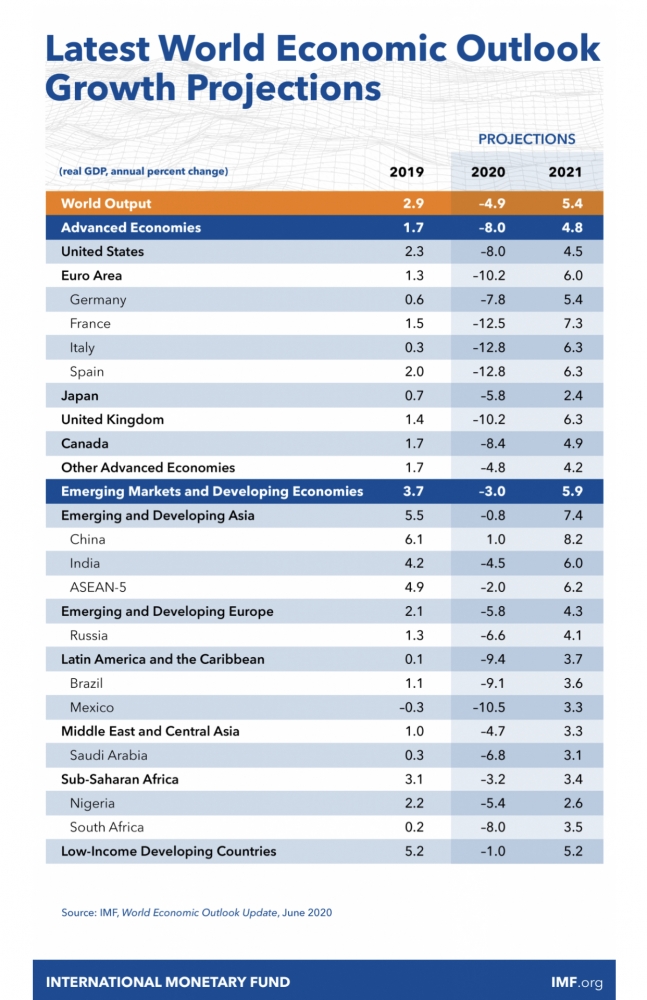
The global economy will shrink this year by 4.9%, worse than the 3% decline predicted in April, the IMF said.
Graphic Credit:IMF
No major economy is escaping the pandemic. The U.S. economy, the world’s largest, is expected to shrink this year by 8%. Countries that use the single European currency are headed for a decline of more than 10% while Japanese output will fall by 5.8%, theIMF said.
The Chinese economy, suffering the twin ravages of the pandemic and the trade war with the U.S, is projected to eke out just a 1% gain – its worst performance in several decades.
“Maybe we can say the world has bottomed out, for now, and we’re in a recovery phase,” said Gita Gopinath, the IMF’s chief economist. “But still, the strength of the recovery is highly uncertain because there is no solution yet to the health crisis.”
By the end of next year, the pandemic will have cost the global economy $12.5 trillion in lost output, she added.
Current conditions are considerably more dire than the “unprecedented decline in global activity” that the fund projected two months ago. Since mid-April, economic data suggest “even deeper downturns than previously projected,” the fund said.
Fund officials blamed the darker forecast on the effects of social distancing; scarring to global production capacity from the lockdown of activity; and the productivity cost of new safety and hygiene rules. Some economies also are still struggling to control the coronavirus, the fund added without naming specific governments.
The forecast assumes countries will not reimpose comprehensive lockdowns even if the pandemic flares up again.
Government crisis-fighting efforts – including $11 trillion in spending and tax cuts – have kept the economic collapse from worsening, the fund said.
“Today’s IMF report is a warning to the world about what will happen if policymakers take their foot off the gas,” said John Lipsky, a former IMF senior adviser who is now with the Atlantic Council. “. . . The uncertain spread of the virus, risk of rising trade tensions, and debt vulnerabilities in emerging economies all lead to the same conclusion – we have not done enough.”
Along with backing continued central bank support for low interest rates, the IMF is calling for wealthy nations to grant substantial debt relief to the world’s poorest countries. Earlier this month, the fund approved its 70th request for emergency financial aid, a $148 million loan for Guinea.
The funds are intended to help Guinean officials pay for urgently needed medical programs to deal with a worsening local coronavirus outbreak.
The fund’s economic forecast is more downbeat than some major investment firms. Goldman Sachs, for example, earlier this month raised its U.S. forecast to -4.2% from -5.2%.
The fund’s forecast also carried a stark warning for investors, who have been buoyed by a stock market recovery from the lows of late March.
“The extent of the recent rebound in financial market sentiment appears disconnected from shifts in underlying economic prospects,” the fund said.
If investors subsequently decide they have been overly optimistic, financial conditions could tighten and further hobble the recovery, the fund warned.
That’s not the only question clouding the forecast. Uncertainty over the pandemic’s future course, including prospects for a vaccine, weigh on assessments of economic growth. A medical breakthrough could render obsolete forecasts of a decline.
“Downside risks, however, remain significant,” the fund cautioned.
Low-income countries also are likely to be especially hard hit, with inequality set to worsen, the fund said. Progress in recent years on reducing the share of the world’s population living in extreme poverty – less than $1.90 per day – could reverse amid the global economic hurricane.
Earlier this month, Kristalina Georgieva, the fund’s managing director, called the pandemic recession “a crisis like no other” and said that by the end of this year, an unprecedented 170 countries would see average individual incomes fall.
By The Washington Post · Thomas Heath, Hamza Shaban · BUSINESS, US-GLOBAL-MARKETS Coronavirus infections sweeping across the southern United States on Wednesday reawakened investor alarm that the stubborn disease might derail an economic recovery and slammed the breaks on stock market momentum.
The Dow Jones industrial average fell 709 points, or 2.7 percent, settling at 25,447 on the day after falling as low as 859. The blue-chip index is still poised to post one of its best quarters in history, but remains down around 10 percent for 2020.
“Wishful thinking has given way to practical reality when it comes to Covid-19,” said Daniel Wiener, chairman of Adviser Investments. “Warm weather and a reduction in the rate of deaths does not give people the right to go out and party. They partied, the market partied and the hangover begins.”
The Standard & Poor’s 500 index fell 81 points, or 2.6 percent, to close at 3,050. The broad index, like the Dow and Nasdaq composite, is on track for one of its best quarters in decades. The S&P is down 5 percent in 2020.
The Nasdaq, whose technology stocks have powered markets out of their spring depths, snapped an eight-day winning streak on Wednesday, falling from its all-time high. The Nasdaq slid 222 points, or 2.2 percent., to close at 9,909.
The sell-off was wide and deep, marking the steepest drop since June 11. Crude oil fell 6 percent. European indexes closed down 3 percent. Even highflying mega-tech stocks like Microsoft, Apple and Alphabet finished negative.
Energy, industrials, real estate and financials – industries tied to a reviving economy – led all 11 stock market sectors into the red as Florida, Texas and Arizona reported spikes in virus outbreaks. Airline stocks dove after officials in New York, Connecticut and New Jersey announced 14-day quarantines on incoming travelers from virus hot spots.
“Markets have been looking past the negative headlines on the economy for many weeks,” said Wayne Wicker, chief investment officer at Vantagepont Investment Advisers. “However, the health crisis risk that appears to be accelerating in many states with the reopening process has started to give investor’s pause.”
Shareholders may also have to reevaluate their expectations for next year’s corporate profits, he said, which are projected to recover sharply but may change if shutdown measures are reinstated by government leaders, he said.
“Just when it looks like the markets are shaking themselves free of coronavirus another bout of worry returns to put them on their back,” Russ Mould, investment director at AJ Bell, wrote in a note to investors.
Wall Street also digested news of new travel restrictions in the northeast. New York Gov. Andrew Cuomo, a Democrat, announced Wednesday that New York, along with New Jersey and Connecticut, will require some nonresidents entering any of the three states to self-isolate for two weeks after they arrive. The quarantine mandate would apply to visitors from states that are suffering elevated levels of coronavirus infections.
While such regional measures may not hinder the economy as much as a nationwide shutdown, the mixed signals and stutter-step nature of the recovery could drag down the stock market, Mould said.
As central bankers and grim economic data point to a slow, years-long recovery, investors have nonetheless been buoyed in recent weeks by government relief measures and a commitment from the Federal Reserve to keep interest rates near zero for at least several more years.
But optimism that businesses will climb out of the recession has also been checked by a resurgence in confirmed cases. More than 30 states and U.S. territories have reported a higher rolling average of infections compared to last week. In recent days and weeks, some states and businesses that had scheduled to reopen have since reversed course and delayed their plans, fearing that the coronavirus will spread further.



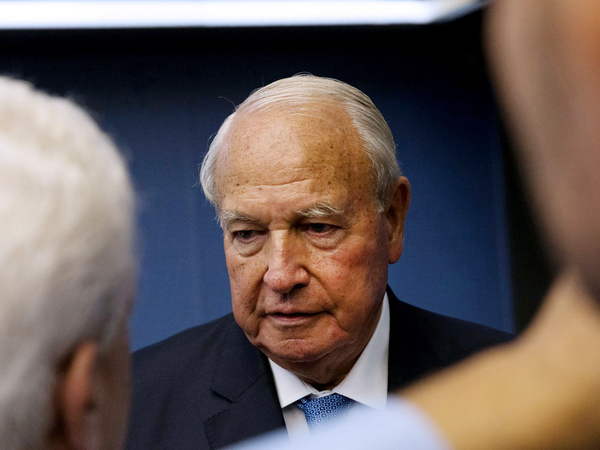 Billionaire Heinz Hermann Thiele, during a television interview at the Frankfurt Stock Exchange in Frankfurt, Germany, on Oct. 12, 2018. MUST CREDIT: Bloomberg photo by Alex Kraus.
 A Bayer Roundup brand weedkiller sprayer. MUST CREDIT: Bloomberg photo by Daniel Acker