In reversal, Starbucks will allow employees to wear ‘Black Lives Matter’ T-shirts #ศาสตร์เกษตรดินปุ๋ย

#ศาสตร์เกษตรดินปุ๋ย : ขอบคุณแหล่งข้อมูล : หนังสือพิมพ์ The Nation.

In reversal, Starbucks will allow employees to wear ‘Black Lives Matter’ T-shirts

Corporate

Jun 13. 2020

By The Washington Post · Hannah Denham · BUSINESS 

Reversing course just two days after news reports sparked a social media backlash, Starbucks says it will now allow employees to wear T-shirts and accessories in support of Black Lives Matter.

“We see you. We hear you. Black Lives Matter. That is a fact and will never change,” the company said in a letter posted Friday. “This movement is a catalyst for change, and right now, it’s telling us a lot of things need to be addressed so we can make space to heal.” 

Earlier this week, and first reported by BuzzFeed, the company turned down a request from baristas and other employees who wanted to show their support for the BLM movement. In a memo to its 250,000-member workforce, Diversity Officer Zing Shaw said “there are agitators who misconstrue the fundamental principles of the Black Lives Matter movement – and in certain circumstances, intentionally repurpose them to amplifying divisiveness.” 

The decision sparked backlash on social media, including calls to boycott the company, and came just days after Starbucks had issued a “Black Lives Matter” statement of solidarity and committed $1 million to racial justice groups as protests broke out across the country following the death of George Floyd, a black man, in police custody.

On Friday, in a posting signed by Shaw, Chief Operating Officer Roz Brewer and Executive Vice President Rossann Williams, the company said it is producing T-shirts with “Black Lives Matter” and other slogans for staff in the United States and Canada to “demonstrate our allyship and show we stand together in unity.” Employees, which the company refers to as “partners,” will have the option to wear them while working.

A company spokeswoman declined to say what exactly prompted the reversal – whether it was two days of social media calls for boycotts against the coffee chain or the current unrest in Seattle, the company’s home base and where protests have led to an activist takeover of a four-block, police-free autonomous zone.

Hailey Glick, who has worked as a Starbucks barista in Raleigh, N.C., since September, said she learned of the initial denial of BLM attire through an unofficial employee Facebook group. She said she initially thought the company was simply applying its official dress code policy, which prohibits personal accessories that advocate for a political, religious or personal issue – until her co-workers pointed out that the company sends employees shirts, cups and other merchandise to wear while on the clock during Pride Month.

“If we can stand up for LGBTQ rights, why can’t we stand up for black lives and people of color?” she said.

Glick’s manager knew she attended protests in Raleigh and was supportive, she said, but that might not be the case at stores in other cities.

“I was very pleased with the reversal of the decision, and I think it’s the right move. The only thing that I think makes me hesitate and probably makes the company hesitate too is how and where we draw the line,” Glick said. “What’s to stop someone wearing a MAGA hat or a MAGA shirt or a MAGA pin? I think what it ultimately comes down to is our values as a company.” 

Bryant Simon, a historian at Temple University who wrote a book about Starbucks and American culture in 2009, said the company’s initial position was a “particular Starbucks dance.” The reversal, he said, came as a surprise.

“Lots of mass companies with a really big audience don’t want to have a public political statement and alienate their audience,” he said. “They can’t be Ben & Jerry’s. They’re just too big of a company for that. Their audience is too big, their investments are too big, their stores are in too many places for them to make a statement as strong as Ben & Jerry’s did.” 

What’s tricky about Starbucks, Simon said, is that it markets its “third place” for customers (after home and work) without embracing the political discussion that comes with public spheres. It’s not just about the coffee.

“A kind of political presence has always been part of Starbucks proposition, the idea that they could make a difference in the world,” he said. “You’re buying some kind of identity, and that identity has a politics to it, but that’s something that is kind of a slippery slope when you’re a mass company.” 

It’s not the first time the company has been in the spotlight for racial issues. When a female employee at a Philadelphia Starbucks store called the police on two black men sitting inside in April 2018, protests and a legal battle with the city’s police department thrust the company into reckoning with racial bias on a larger corporate scale. The company closed more than 8,000 of its U.S. stores the following month for an afternoon of anti-bias training.

Christina Chang, a diversity and equity consultant in Seattle, said she often uses that case in her anti-bias workshops with predominantly white groups as an example of how institutionalized racism shows up in day-to-day life.

“In the midst of everything of that’s happened, they are still so flat-footed,” she said. “How is that possible? The reason it’s possible is that at the end of the day, you still don’t have diversity at the top. You still don’t have people of color with different experiences who will sit down with them and say, ‘Hey that’s not cool.'” 

Simon said he thinks that the company’s quick reversal is a case study for how the broader American public has mostly changed its attitude toward the Black Lives Matter movement.

Responses to the company’s quick reversal has been nuanced, ranging from applause and returning customers, to those who have now pledged to buy their coffee elsewhere rather than be served by a barista in a Black Lives Matter shirt, to racial justice activists who feel the company’s response was disingenuous and too little, too late.

“In this moment, when everybody is waking up, and for Starbucks to do this . . . it’s unforgivable,” Chang said. “No, we do not stop boycotting Starbucks. . . . They have struck out.” 

Starbucks suffered a $3 billion hit to revenue since the pandemic began sweeping across the United States in March, forcing the company to temporarily shutter half of its 8,000 company-owned U.S. stores for nearly two months.

Glick said that during that time, Starbucks sent employees surveys to fill out about how their communities were affect ed by the pandemic and what local organizations were working to address those needs, which resulted in company donations. She said she’s expecting to receive a similar survey in response to racial injustice protests and the Black Lives Matter movement.

But Chang isn’t hopeful that the company culture will change until its board, leadership and store management reflects the racial and gender diversity of the country.

“The only way it’s every going to change is if we actually have representation at the top,” she said. “Not tokenism, not, ‘Oh we hired a chief diversity officer’ so we’re done.” 
Pandemic deepens economic pain at Trump’s company, already suffering from a tarnished brand #ศาสตร์เกษตรดินปุ๋ย

#ศาสตร์เกษตรดินปุ๋ย : ขอบคุณแหล่งข้อมูล : หนังสือพิมพ์ The Nation.

Pandemic deepens economic pain at Trump’s company, already suffering from a tarnished brand

Corporate

Jun 13. 2020

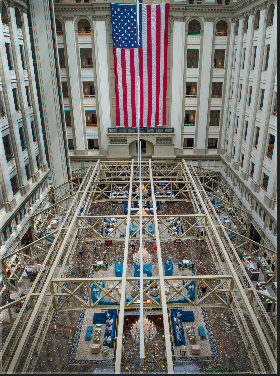
Trump's hotel / File photo

Trump’s hotel / File photo

By The Washington Post · Joshua Partlow, David A. Fahrenthold, Jonathan O’Connell · BUSINESS, POLITICS, US-GLOBAL-MARKETS

WASHINGTON — The head of President Donald Trump’s flagship hotel stood on Pennsylvania Avenue with face mask on and two thumbs up.

After three brutal months of empty hotel rooms and a skeleton staff, Mickael Damelincourt finally had something to celebrate: new sidewalk seating to safely welcome back Trump’s MAGA-loving customers. “Let’s get back to work,” Damelincourt tweeted on May 28. 

By the next day, Trump was in his underground bunker, protesters swarmed downtown Washington cursing Trump’s name, and the hotel’s outdoor seating experiment was tabled.

The whiplash at Trump’s D.C. hotel is emblematic of the problems faced by his company, which was already suffering from a tarnished brand before the novel coronavirus hit. The fresh wave of political anger directed toward Trump complicates an already difficult recovery for the company. 

Interviews with current and former Trump Organization employees and tenants, and emails obtained by The Washington Post, show the pandemic in particular has rattled operations at the company. As thousands of Trump’s hotel rooms empty, the company laid off or furloughed more than 2,800 employees and scoured for even the smallest savings. It eliminated flowers, chocolates and newspapers at its New York hotel and turned off lights in common areas in its Chicago hotel to save on electricity, according to letters that hotel management sent to investors.

“This was not just a step down,” Eric Danziger, the chief executive of Trump Hotels, told board members of Trump’s Chicago hotel on April 22, according to an account of his phone call obtained by The Post. “This was a steep dive.”

Trump’s business struggles present a potential conflict as he tries as president to manage a pandemic that has already claimed more than 110,000 American lives. The outbreak has devastated industries at the core of Trump’s business – travel, luxury tourism and hospitality – and the company’s fortunes largely depend on people’s willingness to travel and ability to gather in large groups.

Trump has handed day-to-day operations of the company to his eldest sons. Eric Trump did not respond to multiple requests for comment before this story’s publication. After this story published Friday, he tweeted that the company “had one of the BEST years in the HISTORY of the Organization in 2019” and that the details would be available in the president’s personal financial disclosure, likely to be made public later this month. He accused The Post of trying to harass the president and the company. “We have very little debt, tremendous cash flow & some of the greatest properties on earth, which have never been better, & are winning every accolade & award.”

The damage of the past months appears extensive. Out of Trump’s five top-earning hotels and resorts, four of them – in Miami, Las Vegas, Scotland and Ireland – shut down in March and remained closed through May. An analysis by The Post of Trump Organization revenue, based on Trump’s latest public financial disclosure, which covers 2018, indicate Trump probably lost out on tens of millions of dollars in revenue over the past three months.

– – – 

Even before the pandemic, Trump’s polarizing presidency had sapped revenue from his business. At least two of Trump’s U.S. hotels – in Chicago and Miami – had reported sharp declines in business after Trump entered politics. The company’s hotel in Washington is now up for sale. 

More recently, protesters have denounced Trump outside his New York, Washington and California properties, hurling invectives at these physical symbols of his presidency. At Trump’s golf course in Jupiter, Fla., the 18-year-old son of a former Republican congressman was arrested for spray-painting “B.L.M.” – an abbreviation for Black Lives Matter – on the entrance sign. 

But along with the rest of the country, the Trump Organization has begun opening back up. Members can visit Mar-a-Lago, but only the beach club. Golfers can step out onto Trump’s course along the Potomac River and some, like him, even do so without a mask. 

Eric Trump tweeted Wednesday that Trump’s Doral resort in Florida – the company’s highest-earning hotel – will be reopening next week. President Trump quickly chimed in on Twitter about this financial burden: “And the Trump family didn’t ask the Federal government for money to carry this and many other very expensive to carry properties!” 

Because it is owned by the president, the Trump Organization was excluded from portions of federal relief funding. 

One former Trump Organization executive said the company should get out of the hotel business, which accounts for about a third of company revenue.

“They have too many rooms to fill in a market where demand has suffered,” the former executive said on the condition of anonymity to discuss the company’s private financial situation. “He is too divisive a character in Chicago and NYC. In any market one wants to be neutral – he leaves many potential guests bitter and hostile.”

The picture is not all dire. The Trump Organization receives licensing and management fees for some Trump-branded properties that are owned by others; and there is no indication those fees have been disrupted. The company so far appears to have met its financial obligations even while seeking relief from creditors. 

In late March, Trump’s golf club in Pine Hill, N.J. – which pays a monthly fee of $20,833 to use town-owned land – told the town it “may not be in a position to make [the payment] for a minimum of 120 days,” according to an email obtained via public-records request. But the next day, the club reversed itself and paid the fee, other emails said.

Some former employees expect the company to weather the current difficulties because Trump owns an array of major real estate assets and has fans to patronize his properties. 

“I think he’s going to be fine,” said one former Trump employee who spoke on the condition of anonymity to discuss a former boss. “If you own all these things outright, it’s going to be a lot easier to get through it.” 

And yet, the current crisis is now affecting even the strongest parts of the Trump business portfolio. The office buildings in New York and California that Trump owns wholly or in part are considered more insulated from politics than his hotels and clubs because they are leased to corporate tenants, and some buildings don’t use Trump’s name. 

One of the tenants in Trump-owned buildings that is almost certainly asking to pay less is Starbucks, which wrote to its thousands of landlords May 5 asking for a year’s worth of reduced rent beginning June 1. The coffee chain rents space at Trump Tower in New York and at Trump’s D.C. hotel. In Washington, Starbucks pays Trump $14,118 per month, increasing to $15,787 a month in 2023, according to Trump Organization documents obtained by The Post.

“We are having ongoing conversations with our landlords in various markets regarding what may be commercially reasonable lease concessions in the current environment,” Starbucks Chief Financial Officer Pat Grismer told investors in April. Starbucks spokespeople didn’t respond to multiple requests for comment about rent negotiations at the Trump properties.

Other Trump tenants are now facing their own difficulties.

A massive Italian restaurant had been scheduled to open later this summer on the ground floor of a Wall Street skyscraper owned by Trump. But instead, as the coronavirus spreads, Nero.lab’s Italian Food Zone will probably have to adjust its initial concept – an 18,000-square-foot food hall where diners were to share communal tables and wait in lines for gelato and espresso. The Rome-based company’s chief executive, Alfredo Polizzi, remains optimistic about future prospects at 40 Wall Street. But he knows the restaurant won’t open until next year.

“We surely would’ve liked to do it sooner,” Polizzi said in an interview. “But given the situation, I don’t feel that would be wise.”

Another tenant at 40 Wall Street is Neapolitan Express, which operates pizza restaurants and food trucks in New York. The company has rented space in the building since 2015, said owner Max Crespo.

Crespo’s business has cratered – revenue dropped 27 percent in March, 55 percent in April, and 90 percent in May – but he has so far retained all 45 of his employees while also donating thousands of free pizzas to medical personnel and first responders. Just as things were opening up last month, protests and looting again drove away customers. The 40 Wall Street building got boarded up and spray-painted with anti-Trump graffiti, Crespo said. 

“Our city’s on its knees right now,” said Crespo, 47, a lifelong New Yorker. “This is the worst I’ve ever seen it.” 

Crespo said the Trump Organization collected full rent the past three months but also that Trump Organization employees have been “good partners” who “said if we have any problems going forward they can work with us.” 

He pays the Trump Organization more than $20,000 per month but hopes to renegotiate and expects many restaurants across New York will not be able to continue operating at current rents.

“Obviously, I’m going to go and ask for a reduction in rent,” he said. “I’m sure they would work with us.”

Trump’s business is uniquely positioned to suffer from this pandemic. The luxury tourism and leisure sector that the Trump Organization inhabits has been devastated over the past two months as travel plummeted, international borders closed, and events and conferences evaporated.

Even when stay-at-home orders end and more people return to work, hotel operators and office building owners face tremendous uncertainty about how their businesses will recover. Hotels in the United States lost 82 percent of their business for the month of April compared with last year, according to hotel data analysis firm STR. Luxury hotels saw their businesses wiped out almost completely, losing 96.6 percent of their business in April after taking in just $60 million in revenue nationwide.

Analysts also expect the hotel industry to be one of the last sectors to recover given people’s aversion to travel during the pandemic.

Hotel experts predict the corporate meetings-and-events sector will be particularly slow to recover.

“I have no idea what corporate group [travel] looks like in a six-foot world,” said Jan Freitag, a senior vice president at STR.

Buffets? Open bars? Networking events? he said.

“There is corporate group demand that likely will not come back for four or five years,” he said.

This has meant layoffs on a large scale for Trump’s employees, with the steepest cuts at the hotels. Twelve Trump Organization properties in the United States and Canada laid off or furloughed employees, including cooks, waiters, housekeepers and valets, according to local filings.

Some of the job losses will not be temporary: At Doral, the company initially furloughed 560 employees, then later said in a filing that 250 of those jobs would be permanent layoffs.

Danziger, the chief executive of Trump Hotels, said in his call that the company could begin shifting toward using more part-time employees, who are not entitled to health benefits.

Even before the pandemic, there were signs that Trump’s politics drove away some potential customers. 

“The vibe I got was that half of the guests wouldn’t feel comfortable ever coming to a meeting there,” said a former employee at Trump’s D.C. hotel who was involved in booking conferences. Some hurdles can be overcome with good salesmanship, the former staffer said, but “this wasn’t overcome-able.” 

The staffer, who spoke on the condition of anonymity to preserve relationships in the hotel industry, was laid off last year because of lack of business.

The pandemic eliminated months of events across Trump’s company. At Doral, at least 10 events this year have been canceled or postponed, according to the groups planning the events. 

Trump’s Mar-a-Lago Club was forced to shut down in late March, missing the last month of Palm Beach’s traditional winter social season. The club reopened its poolside Beach Club in mid-May, but with restrictions: The number of diners was limited, congregating was prohibited, and the club warned that “social distancing will be enforced” even in the Jacuzzi.

The club said it would now stay open a month longer than usual, to the end of June. One member, who spoke on the condition of anonymity to discuss the private club, told The Post that he planned to stay away anyway.

At the D.C. hotel, the patio seating plan was scheduled to restart again Friday. A previous attempt for outdoor tables earlier in Trump’s presidency ended after pedestrians regularly insulted hotel guests and staff, former employees said.

PTT well-armed to face risks, boost liquidity, says new CEO #ศาสตร์เกษตรดินปุ๋ย

#ศาสตร์เกษตรดินปุ๋ย : ขอบคุณแหล่งข้อมูล : หนังสือพิมพ์ The Nation.

PTT well-armed to face risks, boost liquidity, says new CEO

CorporateJun 13. 2020PTT CEO Auttapol RerkpiboonPTT CEO Auttapol Rerkpiboon

By THE NATION

The oil and gas conglomerate PTT Plc has plenty of ammunition to help it deal with business risks and boost its liquidity, the group’s new president and chief executive officer Auttapol Rerkpiboon said on Friday (June 12).

He said PTT is ready to issue debentures worth Bt64 billion, of which Bt44 billion will be direct debentures while the remainder will be bills of exchange (B/E). This move is to boost the company’s liquidity and refinance existing debt which is nearing its due date. He added that the debentures will be issued as and when the company sees fit.

Auttapol also said that PTT has to be well prepared despite its strong financial status and liquidity. The Covid-19 outbreak and the global oil price war were two factors that affected its financial performance in the first quarter.

However, the CEO believes the situation will get better in the second half of the year thanks to the gradual easing of lockdown measures in many countries. He also doesn’t expect the global oil-price war to intensify, like it did in March and April, which resulted in a steep decline in the global price of crude oil.

Auttapol estimates the crude oil price will range at US$40 per barrel this year.

He also said that the lifting of curfew in Thailand from June 15 will renew the demand for oil and will also benefit PTT’s retail of non-oil products. However, he expects the sale of jet fuel to suffer a sharp decline this year.

He went on to say that PTT’s main mission is to maintain its strength in core businesses as well as to initiate new businesses for growth.

As for the impact the pandemic has had on the global economy, PTT has adjusted its operations to cope with the crisis by executing a cost-control policy of “decrease-discard-defer” to cut down on unnecessary activities, collaborate within the group for value-chain optimisation in order to manage price risks, demand, supply and inventory, as well as maintaining financial strength and stability.

Auttapol is serving a four-year term as the 10th president and CEO of PTT since May 13 this year.

MBK offers rent-free retail space until August #ศาสตร์เกษตรดินปุ๋ย

#ศาสตร์เกษตรดินปุ๋ย : ขอบคุณแหล่งข้อมูล : หนังสือพิมพ์ The Nation.

MBK offers rent-free retail space until August

CorporateJun 12. 2020

By The Nation\

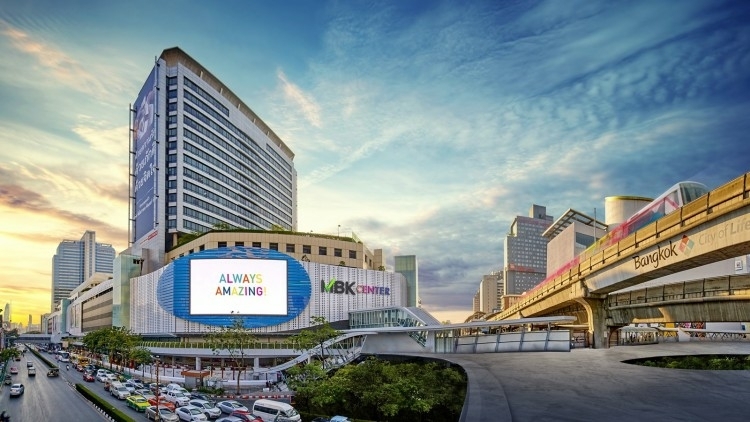
The operator of MBK Centre shopping mall is waiving rent on retail space in three of its halls until August this year.

Although the relaxation of disease control measures have allowed shopping centres to reopen, mall operators and traders are facing difficulties as the number of customers has fallen significantly.

MBK’s managing director Somphol Tripopnart said that the mall was allowing shop operators to use the ground floor’s Centre Hall, Phayathai Hall, and Patumwan Hall rent-free until August.

“The move is aimed at increasing outlets and reducing consumers’ expenses,” he said.

“Shops including Santa Barbara, John Langford, US Polo ASSN, and Luigi Batani are offering their products at discounted prices from June 15 to 28 this year,” he added.

U.K. economy’s 20% record plunge adds pressure for more aid #ศาสตร์เกษตรดินปุ๋ย

#ศาสตร์เกษตรดินปุ๋ย : ขอบคุณแหล่งข้อมูล : หนังสือพิมพ์ The Nation.

U.K. economy’s 20% record plunge adds pressure for more aid

Econ

Jun 13. 2020

By Bloomberg · David Goodman, Andrew Atkinson · WORLD, EUROPE 

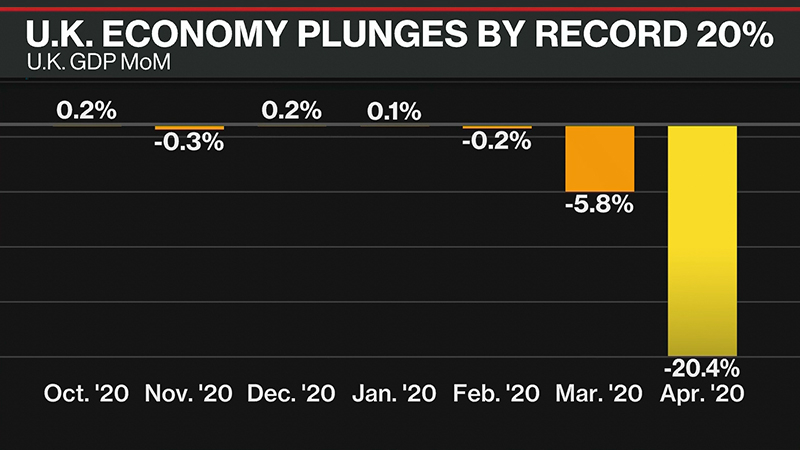
The U.K. economy shrank a record 20.4% in April as businesses and workers reeled under the lockdown designed to control the coronavirus pandemic.

The contraction means the nation has effectively seen almost 18 years of growth wiped out in two months. While a rebound is likely as businesses start to reopen, the grim figures will increase the pressure on the government and Bank of England to do more to support the recovery.

The hit to the economy rounds off a difficult week for Prime Minister Boris Johnson, who is facing mounting criticism from politicians and scientific advisers after they blamed his Conservative administration for making a series of grave mistakes since the beginning of the outbreak.

In addition to registering the highest death toll in Europe, the U.K. has also paid an heavy economic price. The OECD says the country could see one of the developed world’s deepest recessions in 2020, with output slumping more than 11% — the most for more than 300 years.

“April was the first month to be fully encompassed by the lockdown. But these figures are nevertheless shocking, and it goes without saying that this kind of fall in activity is virtually unprecedented, either in scale or speed,” James Smith, an economist at ING, wrote in a report.

Social-distancing rules and the prospect of a no-deal Brexit “all pose challenges to the U.K. economic recovery,” and will keep the pressure on the BOE to increase its bond-buying program when it meets next week, he said.

That view is shared by most economists, who expect purchases to be stepped up by at least 100 billion pounds. Bank of America Merrill Lynch economists said Friday they expect a package of measures in August, including cutting interest rates to 0%, making the terms of a lending program more generous and possibly implementing a weak form of yield curve control, which would keep bond-market rates around a certain, low, level.

More support is seen as vital as the U.K.’s outlook darkens. Unemployment is widely expected to reach rates not seen since the mid-1990s, with more than 7,500 job cuts being announced on Thursday alone as the lockdown hammers businesses from chemical manufacturers to airports. That’s despite massive government support that has left the taxpayer paying the wages of over 11 million people at a cost of 27 billion pounds ($34 billion) so far.

“We’ve always been in no doubt this was going to be a very serious public health crisis but also have big, big economic knock-on effects,” Prime Minister Boris Johnson said in a TV interview Friday. “We have been very badly hit by this.”

The damage in April was done by a 19% drop in the dominant services industry, where sectors such as air transport, travel agents and restaurants lost around 90% of their output. Manufacturing fell 24.3%, while construction plunged 40.1%. It means the economy was around 25% smaller in April than it was in February.

What Bloomberg Economists’ Say

“The U.K.’s death toll is one of the highest in the world and that could mean spending remains subdued, even as the lockdown is eased further. Thought of another way, it could be that demand acts as the ceiling on activity as the economy starts to recover, not supply,” Bloomberg senior U.K. economist Dan Hanson wrote.

“Unemployment, rising debt and business insolvencies will weigh on the recovery,” Ian Stewart, chief economist at Deloitte, said. “The economy is unlikely to return to pre-Covid levels of activity until 2022.”

Still, the pound was largely unperturbed by the plunge in output, which was expected by investors. It was up 0.1% at $1.2619 as of 12:00 p.m. London time on Friday.

Separate figures showed the trade deficit excluding volatile non-monetary gold and precious metals narrowed in April, with both exports and imports falling sharply as the pandemic disrupted shipment of cars, fuels, works of art and clothing.

Dow rebounds but chalks up worst week since March #ศาสตร์เกษตรดินปุ๋ย

#ศาสตร์เกษตรดินปุ๋ย : ขอบคุณแหล่งข้อมูล : หนังสือพิมพ์ The Nation.

Dow rebounds but chalks up worst week since March

EconJun 13. 2020

By The Washington Post · Thomas Heath, Taylor Telford · BUSINESS, US-GLOBAL-MARKETS Stocks staged a bold finish on Friday, but it wasn’t enough to rescue markets from their worst weekly loss since March.

The three major U.S. indexes rose at least 1% to end a tumultuous week marked by new public health worries and dashed hopes for a swift economic recovery.

The Dow Jones industrial average bounced all over Friday, rising as much as 837 points before briefly sliding into negative territory. A late-session rally pushed it 477 points, or 1.9%, higher and settle at 25,605.54. The blue chips finished the week down 6.4% and off 11% for the year.

“It was a roller coaster of a week for the stock market,” said Kristina Hooper, chief global market strategist at Invesco. “The week began with stocks continuing their strong rally on excitement over reopening in the U.S.”

The Standard & Poor’s 500 index had an equally wild week, barely edging into positive territory for 2020 at Monday’s close. But the next three days were ugly, with steep losses in the broad market. The S&P 500 finished Friday at 3,041.31, a 39-point, or 1.3%, advance. The S&P lost 5% on the week and is down 6% for 2020.

The tech-heavy Nasdaq Composite jumped 1%, 96 points, on Friday to close at 9,588.81. The technology giants – Amazon, Facebook, Microsoft, Google-parent Alphabet and Apple – have kept Nasdaq above water for the year, elevating it 6.6%. It set three consecutive record highs this week and closed above 10,000 for the first time. The index is down 2.5% for the week. (Amazon founder and chief executive Jeff Bezos owns The Washington Post.)

Boeing, Dow Chemical and Raytheon Technologies paced the Dow upward on Friday. Nine of 11 stock market sectors were positive, with financial and real estate the big winners.

The week got off to a good start on momentum from a better-than-expected jobs report days earlier. The Dow, which had peaked at 29,551 in mid-February before going on to lose nearly a third of its value within weeks, had been on a steady climb. But by Thursday there was a sense the stock market had come back too far, too fast.

A spike in covid-19 cases and a sobering economic outlook from the Federal Reserve – which predicts unemployment will still be at 9.3% by year’s end – sparked a massive sell-off that sent the Standard & Poor’s 500 index skidding 5.9% and the tech-heavy Nasdaq Composite tumbling 5.3%. The Dow’s 1,861-point drubbing capped a three-day losing streak that erased 9% of its value.

“Stocks fell when Fed Chair Jay Powell threw cold water on optimism about a fast recovery for the American economy,” Hooper said. “The sell-off then picked up speed on concerns about a resurgence in infections. By the end of the week stocks rose modestly, sensing buying opportunities and recognizing that the Fed remains extremely accommodative.” 

Even as much of the nation has reopened, the pandemic’s grip remains strong: the country surpassed 2 million coronavirus cases on Thursday, a staggering tally that far exceeds the number of infections reported in any other country. Eleven states reached their highest seven-day rolling averages of new cases on Thursday, according to data tracked by The Washington Post, suggesting a second wave could already be in motion.

The seven-day moving average of deaths has fallen steadily from its peak in April, but it has not halted as some White House officials had predicted.

President Donald Trump and his top economic aides fanned out Thursday to try to beat back the growing concern. They assailed the Fed’s projection that unemployment will remain elevated well into next year. The Trump administration also pushed back on the idea that it would allow the economy to shut down again in the face of rising cases, but Treasury Secretary Steven Mnuchin told reporters the administration is seriously considering a second round of stimulus payments.

Grim economic data poured in from around the globe this week, illustrating the depths of economic damage and indicating that the road to recovery will likely be rockier than many hoped. The United Kingdom reported its gross domestic product declined 20.4% in April – the largest drop on record; the Organization for Economic Development and Cooperation has warned the U.K. its economy will likely to be among the hardest hit, along with Spain and Italy.

Germany’s industrial production took its biggest hit ever in April, prompting some economists to call it the country’s worst month ever for the economy. The World Bank said the pandemic has created the biggest global recession since World War II and predicted GDP will contract 5.2% this year.

The past three months have been “a dizzying Space Mountain-like roller coaster for investors,” Wedbush Securities tech analyst Dan Ives said in comments emailed to The Post. “Yet, the stock market has come roaring back in a V shaped recovery.” 

Consumer confidence also improved in May as many Americans got back to work, according to the survey results released Friday by the University of Michigan.

“The economy won’t come back on its own with just consumers emerging from the country’s three-month coronavirus pandemic lockdown,” Chris Rupkey, chief financial economist, wrote Friday in comments email to The Post. “The hope is that business confidence will return as well and investment spending will rebound to help power the economy forward once companies see that the consumer is back and is buying the goods and services they offer.” 

The yield on the 10-year U.S. Treasury note ticked upward after a major drop Thursday as investors moved toward riskier ground. Bond yields rise as prices fall.

Oil prices saw their worst week in two months, with prices dropping on a report from the U.S. Energy Information Administration that demand may be slowing. Brent crude, the international benchmark, closed at $38.98 per barrel on Friday. West Texas Intermediate futures sold at $36.48.

BOT insists its Bt6 trillion liability will not turn into public debt, but history says otherwise #ศาสตร์เกษตรดินปุ๋ย

#ศาสตร์เกษตรดินปุ๋ย : ขอบคุณแหล่งข้อมูล : หนังสือพิมพ์ The Nation.

BOT insists its Bt6 trillion liability will not turn into public debt, but history says otherwise

EconJun 13. 2020Chantawan Sutcharitkul, BOT’s assistant governor.Chantawan Sutcharitkul, BOT’s assistant governor.

By The Nation

The Bank of Thailand (BOT)’s obligation worth Bt6 trillion will not translate into public debt as feared by many, the central bank insists, though the explanation it has offered is far from clear.

Chantawan Sutcharitkul, BOT’s assistant governor, said on Friday (June 12) that many people misunderstood the central bank’s balance sheet, which shows it has liabilities worth Bt6 trillion. 

The central bank’s debts come from its normal market operations – when there is liquidity flooding into the market, the central bank issues bonds to manage the financial market and when the market faces tight liquidity, the central bank reduces the issuing of bonds in order to inject liquidity back into the market, she said. 

“The central bank also buys foreign currency when there is a large capital inflow into the Kingdom, so while the bank has obligations, it also has large assets in the form of foreign currencies,” she added. 

“Debts that appear in the central bank’s financial statement cannot be counted as public debts. It is standard practice by central banks across the world,” she said reassuringly. 

However, she did not explain how things are different this time compared to the past, when the central bank wrongly defended the baht, resulting in a financial crisis and a currency debacle in 1997-1998. 

At that time, the central bank depleted international reserves as part of a currency war, when speculators began selling out the baht heavily, forcing the central bank to abandon its fixed exchange rate and the country to borrow emergency funds from the International Monetary Fund. The consequence of the huge damages stemming from the central bank’s foreign exchange fiasco and subsequent efforts to rescue financial institutions later turned into public debts. 

U.S. consumer sentiment jumps most since 2016 on gain in jobs #ศาสตร์เกษตรดินปุ๋ย

#ศาสตร์เกษตรดินปุ๋ย : ขอบคุณแหล่งข้อมูล : หนังสือพิมพ์ The Nation.

U.S. consumer sentiment jumps most since 2016 on gain in jobs

EconJun 12. 2020Shoppers wearing protective masks browse clothing at a store in Long Beach, N.Y., on June 11 2020. MUST CREDIT: Bloomberg photo by Johnny Milano.Shoppers wearing protective masks browse clothing at a store in Long Beach, N.Y., on June 11 2020. MUST CREDIT: Bloomberg photo by Johnny Milano.
By Syndication Washington Post, Bloomberg · Olivia Rockeman · BUSINESS, US-GLOBAL-MARKETS, RETAIL U.S. consumer sentiment climbed in early June by the most since 2016 as more states began to reopen their economies and employers restored jobs.

The University of Michigan’s preliminary sentiment index increased 6.6 points to 78.9, according to data Friday. The median projection in a Bloomberg survey of economists called for a gain to 75. Even with the improvement, the gauge remains well below pre-pandemic levels.

The gauge of current conditions advanced 5.5 points to 87.8 this month, while a measure of expectations jumped 7.2 points to 73.1.

The increase in sentiment highlights optimism that the reopening of the U.S. economy will restore jobs and help spur the spending needed to dig out of a deep recession. Still, two-thirds of respondents anticipated unfavorable economic conditions in the year ahead because of concerns about a resurgence in the coronavirus as well as lingering weakness in the job market.

“Despite the expected economic gains, few consumers anticipate the reestablishment of favorable economic conditions anytime soon,” Richard Curtin, director of the survey, said in a statement.

The university’s sentiment data are consistent with a weekly Bloomberg measure. The index of consumer comfort advanced in the first week of June to a six-week high as higher stock prices and the return to work for Americans continued to lift attitudes about personal finances, a report showed Thursday.

The Michigan survey’s inflation expectations data continued to show a disconnect with government price figures indicating scant inflation in the economy. Consumers expect 3% inflation in the coming year, the sentiment report showed.

“It is likely that the recent rise in inflation expectations reflects a shift in consumer purchases from the full range included in the CPI to be more heavily focused on food purchases, which posted an annual gain of 4.8% in May,” Curtin said.

The data also showed a growing political divide, with the increase in consumer sentiment concentrated among Republicans and independent voters. At the same time, overall confidence in government economic policies declined, with the share judging policies as poor at the highest level since President Donald Trump was elected.

The Michigan survey was conducted May 27 to June 10. The Labor Department reported last week that 2.5 million jobs were added in May as reopenings generated more economic activity. Even so, Federal Reserve Chair Jerome Powell cautioned on Wednesday that longer-term unemployment challenges may linger as a result of the pandemic.

The share of respondents who reported they expect their finances to improve in the next year rose to 42% from 32%, the university said. The gain was due to rising income, with an expected annual improvement of 1.3%, up from 0.5%.

Dow pops nearly 700 points following worst sell-off since March #ศาสตร์เกษตรดินปุ๋ย

#ศาสตร์เกษตรดินปุ๋ย : ขอบคุณแหล่งข้อมูล : หนังสือพิมพ์ The Nation.

Dow pops nearly 700 points following worst sell-off since March

EconJun 12. 2020

By  The Washington Post · Taylor Telford · BUSINESS, US-GLOBAL-MARKETS 
Wall Street is back in buying mode, with the Dow Jones industrial average jumping nearly 700 points at the open, after a reality-check sell-off lopped 6.9% from the blue-chip index.

A steady rise in covid-19 cases and a sobering economic outlook from the Federal Reserve – which predicts unemployment will still be at 9.3% by year’s end – sparked a massive sell-off Thursday that sent the Standard & Poor’s 500 skidding 5.9% and the tech-heavy Nasdaq tumbling 5.3%. The drubbing capped a three-day losing streak that erased 9% from the Dow.

The Dow jumped 680 points, or 2.7%, on Friday before retreating slightly. The Standard & Poor’s 500 and Nasdaq Composite indexes each climbed more than 2.3%.

“Forecasts haven’t worried investors for now and we’ll need to see dramatically bigger spikes in new cases for states to even consider tightening lockdown measures again,” Craig Erlam, an analyst with OANDA, wrote in comments emailed Friday to The Washington Post. “This feels like more of an excuse to take some profit in a market that has bounced back remarkably to the point that there’s a huge disconnect between stock markets and economic reality.” 

The United States surpassed 2 million coronavirus cases on Thursday, a sobering tally that far exceeds the number of infections reported in any other country. Eleven states reached their highest seven-day rolling averages of new cases on Thursday, according to data tracked by The Post, suggesting a second wave could already be in motion.

President Donald Trump and his top economic aides fanned out Thursday to try to beat back the growing concern. They assailed the Fed’s projection that unemployment will remain elevated well into next year. The Trump administration also pushed back on the idea that it would allow the economy to shut down again in the face of rising cases, but Treasury Secretary Steven Mnuchin told reporters the administration is seriously considering a second round of stimulus payments.

Grim economic data poured in from around the globe this week, illustrating the depths of economic damage and indicating that the road to recovery will likely be rockier than many hoped. The United Kingdom reported its gross domestic product declined 20.4% in April – the largest drop on record; the Organization for Economic Development and Cooperation has warned the U.K. its economy will likely to be among the hardest hit, along with Spain and Italy. Germany’s industrial production took its biggest hit ever in April, prompting some economists to call it the country’s worst month ever for the economy. The World Bank said the pandemic has created the biggest global recession since World War II and predicted GDP will contract 5.2% this year.

Yet in early trading Friday, companies that have been walloped by the pandemic saw their stocks rise: both Carnival Corp. and United Airlines climbed more than 11%. American Airlines rose more than 12% after it reported seeing positive net bookings since mid-May. Aerospace giant Boeing rebounded more than 7% after shedding more than 10% Thursday.

The past three months have been “a dizzying Space Mountain-like rollercoaster for investors,” Wedbush Securities tech analyst Dan Ives said in comments emailed to The Post. “Yet, the stock market has come roaring back in a V shaped recovery.” 

The yield on the 10-year U.S. Treasury note ticked upward after a major drop Thursday as investors moved toward riskier ground. Bond yields rise as prices fall.

Oil markets also erased some of their losses after plummeting 8% Thursday as economic fears collided with a report from the U.S. Energy Information Administration indicating demand recovery may have stalled. Brent crude, the international oil benchmark, inched up .86% to trade at $38.88 a barrel. West Texas Intermediate crude, the U.S. oil benchmark, climbed .6% to $36.56.

SET plunges after second-wave of Covid-19 infections hits several countries #ศาสตร์เกษตรดินปุ๋ย

#ศาสตร์เกษตรดินปุ๋ย : ขอบคุณแหล่งข้อมูล : หนังสือพิมพ์ The Nation.

SET plunges after second-wave of Covid-19 infections hits several countries

EconJun 12. 2020

By The Nation

The Stock Exchange of Thailand (SET) Index fell 14.21 points or 1.02 per cent, closing at 1,382.56 today (June 12). Total transactions amounted to Bt85.786 billion with an index high of 1,386.22 and a low of 1,353.51.

During the morning session, a stock analyst from Krungsri Securities said he expected the index to fall to between 1,350 and 1,365 due to uncertainty caused by a second wave of Covid-19 infections after several countries eased lockdown measures.

“Investors are also worried about the US economy after the US Federal Reserve forecast that the country’s gross domestic product this year would contract by 6.5 per cent and the unemployment rate would be 9.3 per cent,” the analyst said.

“In addition, energy stocks came under pressure after the price of crude oil dropped sharply due to uncertainty following a drop in demand for petrol with expectations of a second wave of Covid-19 emerging.”

The top 10 stocks with the highest trade value today were SUPER, BAM, PTT, MINT, CPF, PTTEP, AOT, STA, PTTGC and KBANK.

As of 4.30pm, the price of crude oil rose by US$0.07 or 0.19 per cent to $36.41 per barrel, while gold rose by $2.70 or 0.16 per cent, to $1,742.50 per ounce.

Asian indices mostly fell:

Japan’s Nikkei Index closed at 22,305.48, down 167.43 points, or 0.75 per cent.

China’s Shanghai SE Composite Index closed at 2,919.74, down 1.16 points, or 0.040 per cent, while Shenzhen SE Component Index closed at 11,251.71, up 8.09 points, or 0.072 per cent.

Hong Kong’s Hang Seng Index closed at 24,301.38, down 178.77 points, or 0.73 per cent.

South Korea’s KOSPI Index closed at 2,132.30, down 44.48 points, or 2.04 per cent.

Taiwan’s TAIEX Index closed at 11,429.94, down 105.83 points, or 0.92 per cent.