CAT laying submarine telecoms cable to link China with SE Asia
Jun 12. 2020
By THE NATION
State telecom agency CAT Telecom has joined forces with members of the Asia Direct Cable Consortium (ADC) to build a 9,400-kilometre submarine cable to serve international content providers at Digital Park Thailand and also provide enhanced technologies and 5G in Southeast Asia.
The ADC cable is expected to be completed in 2022.
CAT president Colonel Sanpachai Huvanandana said that the ADC, of which CAT is a member, is building a high-performance submarine cable connecting China (Hong Kong and Guangdong province), Japan, the Philippines, Singapore, Thailand and Vietnam.
The consortium has selected NEC Corporation to construct the 9,400-km cable system, which is expected to be completed by the fourth quarter of 2022.
The ADC cable system will be the main project to enhance CAT’s international telecommunication networks, supporting growing internet usage demand in Thailand.
The cable will also increase the diversity and stability of international telecoms networks, to serve the growing trends of international communication and connectivity in Thailand and the rest of the Asean region.
“The ADC cable system will contribute to the international content providers’ businesses in the Digital Park Thailand area and also enhance advanced technologies such as 5G, AI [Artificial Intelligence], cloud services, Internet of Things ( IoT), Smart City and Big Data,” said Sanpachai.
The cable will feature multiple pairs of high capacity optical fibers and is designed to carry more than 140 terabits per second (Tbps) of traffic, enabling high capacity transmission of data across East and Southeast Asia.
Energy giant Bangchak Corporation (BCP) says the growing demand for electric vehicles in Europe will boost demand for its lithium batteries.
Chaiwat Kovavisarach, BCP’s president and chief executive officer, said it will launch a joint venture to produce lithium in Argentina at the end of 2021, delayed from the original mid-2021 start date due to the Covid-19 impact.
“The company has lifted the target for lithium production in the project’s first phase to 40,000 tonnes per year from the original 25,000 tonnes,” he said.
“The company aims to achieve revenue by 2021, but this has been delayed due to the Covid-19 impact.”
He said the company will buy about 6,000 tonnes of lithium per year.
“Meanwhile, the company is now considering whether to produce lithium batteries or merely distribute them, because several businesses are interested in buying lithium from us,” he said.
The market price of lithium has fallen from US$15,000 to $9,000-$10,000 per tonne, in response to the drop in the crude oil price.
“However, we expect the price of lithium to increase in response to Europe’s economic recovery after the Covid-19 outbreak is resolved,” he said.
“In addition, European countries such as Germany are helping businesses to set up charging stations, in order to encourage people to use electric cars.”
He added that BCP had invested in lithium mining with its 15.8-per-cent shareholding in Lithium Americas Corporation (LAC).
“LAC and Ganfeng Lithium each hold 50 per cent of shares in Minera Exar, a lithium miner in Argentina,” he added. “In addition, LAC holds a 100-per-cent of the shares to develop lithium mines in the US state of Nevada.”
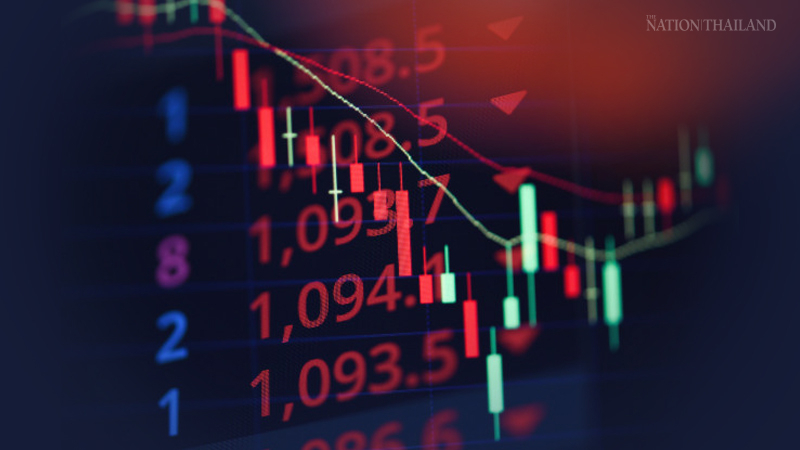
The Stock Exchange of Thailand (SET) Index dropped 40.57 points or 2.93 per cent to close at 1,341.99 today (June 15). Total transaction volume was Bt83.379 billion with an index high of 1,379.78 and a low of 1,338.25.
During the morning session, a stock analyst at Krungsri Securities said he expected the index to between 1,370 and 1,375 points due to uncertainty following a second wave of Covid-19 infections in China and Japan, where there have been 49 and 47 new cases respectively.
“The number of new Covid-19 cases in some US states such as Arizona, South Carolina and Texas have risen due to the easing of some lockdown measures,” he said.
“The index is also under pressure from the drop in crude oil prices as uncertainty over the second wave of Covid-19 infections will lead to lower demands for oil.”
However, he said, he expects the index to rebound in response to the lifting of curfew and final easing of restrictions.
“Investors also expect SET to announce stocks to be added to the SET50 and SET100 this week,” he added.
The top 10 stocks with the highest trade value today were BAM, KBANK, SUPER, MINT, PTT, INUTCH, ADVANC, BBL, SCB, and AOT.
As of 4.30pm, the price of crude oil dropped by US$0.78 or 2.15 per cent to $35.48 per barrel, while gold dropped by $14.70 or 0.85 per cent, to $1,722.60 per ounce.
The global indices were on the slide:
Japan’s Nikkei Index closed at 21,530.95, down 774.53 points, or 3.47 per cent.
China’s Shanghai SE Composite Index closed at 2,890.03, down 29.71 points, or 1.02 per cent, while Shenzhen SE Component Index closed at 11,192.27, down 59.43 points, or 0.53 per cent.
Hong Kong’s Hang Seng Index closed at 23,776.95, down 524.43 points, or 2.16 per cent.
South Korea’s KOSPI Index closed at 2,030.82, down 101.48 points, or 4.76 per cent.
Taiwan’s TAIEX Index closed at 11,306.26, down 123.68 points, or 1.08 per cent.
The Revenue Department has signed an agreement with 160 countries to close loopholes in the upcoming E-Services tax law.
Director-General Ekniti Nitithanprapas said his department signed a mutual assistance pact on tax administration with 160 countries including Japan, France, Germany and Australia so that the revenue departments of each country can share information of registered companies to assess whether tax has to be collected if these firms provide a platform in Thailand.
“This move will overcome the vulnerability in E-Services tax or value added tax collections from foreign digital platforms that do not have a subsidiary company in Thailand and have service income of Bt1.8 million and above so they pay 7 per cent income tax,” Ekniti said.
The act has been submitted to the House of Representatives for approval.
In addition, the Revenue Department is preparing to issue an announcement on reduction of e-tax withholding rates, from the original 3 per cent to 2 per cent, between October 31 and December 31.
With Commercial banks handling payments, firms or individuals will no longer have to keep withholding certificates in paper form as the bank will send this information directly to the Revenue Department and the information will be recorded electronically. This will speed up the process of calculating taxes and tax returns.
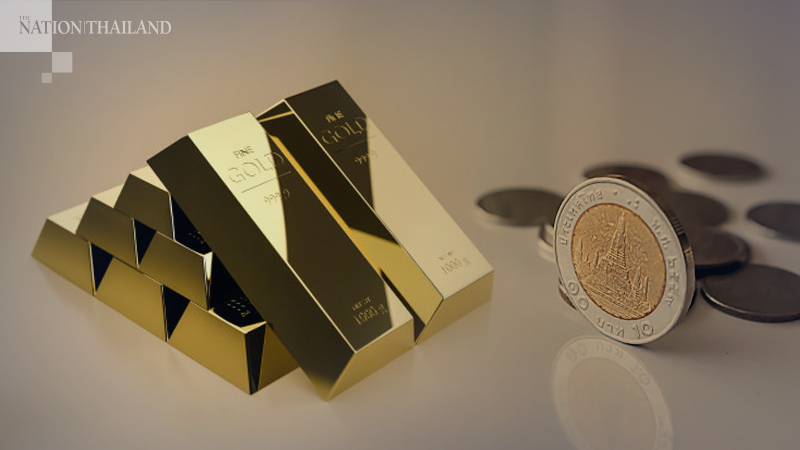
The price of gold remained flat in morning trade today (June 15), the Gold Traders Association reported.
As of 9.24am, the buying price of a gold bar was Bt25,300 per baht weight and selling price Bt25,400, while gold ornaments were priced at Bt24,847.24 and Bt25,900, respectively.
The Gold Spot Index price this morning moved to around US$1,733 (Bt53,636) per ounce after the price dropped by $2.5 to $1,737.3 at close on Friday.
Investors sold safe haven assets after the US Dow Jones Index rose more than 400 points. Meanwhile, gold came under pressure from a strengthening dollar and rising US bond yields.
The Hong Kong gold price dropped by HK$20 to $16,010 (Bt63,948) per tael this morning.
The Stock Exchange of Thailand Index fell by 9.05 points, or 0.65 per cent, to 1,373.51 this morning (June 15).
A stock analyst at Krungsri Securities expected the index to fall between 1,370 and 1,375 points due to uncertainty following a second wave of Covid-19 in China and Japan, with 49 and 47 new cases, respectively.
“Also, the number of new Covid-19 cases in the US has increased in some states after lockdowns were eased, such as Arizona, South Carolina and Texas,” the analyst said.
“In addition, the index will be under pressure from a decline in the crude oil price because of the uncertainty due the second wave of Covid-19 and would expectedly lead to lower oil demand.”
He, however, said the index would rebound in response to the government’s suspension of night curfew and the fourth phase of lockdown easing.
“Investors expect the SET to announce stocks added to the SET50 and SET100 this week,” he added.
He recommended investors buy:
▪ Stocks that would be added to the SET50 and SET100, such as BPP, TTW, Ace, DoHome, RBF, SIRI, SISB, TVO and WHAUP.
▪ Stocks whose second-quarter performance will improve, such as CKP, Tasco, STA and RS.
▪ Mint, Centel, ERW and AOT.
The SET Index on Friday fell by 14 points, or 1.02 per cent, closing at 1,382. Total transactions were worth Bt8.6 billion.
Foreign investors made a net sell of Bt2 billion in stocks and Bt290 million in bonds. There were 3,243 net short TFEX SET50 contracts.
The State Railway of Thailand (SRT) is reportedly expected to submit its investment plan for the second phase of double rail-track development for the Cabinet’s consideration in September.
The agency is working on additional details of the project before it’s presented to the National Economic and Social Development Council (NESDC) later this month.
The council had earlier queried the project on several issues, including its commercial viability and how it will benefit SRT, even though the state-agency has insisted the double-track railway will benefit the country’s transport system.
The second phase covers seven routes, namely the 285-kilometre Paknampo-Denchai route, estimated to cost Bt59.3 billion; the 308km Jira-Ubon Ratchathani route costing Bt36 billion; the 167km Khon Kaen-Nong Khai line costing Bt25.8 billion; the 168km Chumphon-Surat Thani line costing Bt23 billion; 321km Surat Thani-Hat Yai-Songkhla line costing Bt56.1 billion; 189km Denchai-Chiang Mai line costing Bt57.9 billion; and the 45km Hat Yai-Padang Besar route costing Bt7.86 billion.
Jun 15. 2020NESDC secretary-general Thosaporn Sirisumphand
By The Nation
The Covid-19 crisis has had a massive impact on household debt and it is expected to rise to more than 80 per cent of GDP, the National Economic and Social Development Council (NESDC), a state think-tank, has warned.
Thai household debt stood at 79.8 per cent of gross domestic product (GDP) in the first quarter of this year.
The pandemic resulted in businesses shutting down in addition to the drought already having hit households hard, leading to increased borrowing of money as incomes declined, NESDC secretary-general Thosaporn Sirisumphand said.
The economic impact will be severe in the second quarter, he predicted, as many businesses have laid off workers, or cut their employees’ salaries.
“The income shock led to continued expansion of consumers loans, growing 7.1 per cent, while the NESDC had predicted it should be lesser,” he said. Consumer loans expanded 7.5 per cent in the fourth quarter of last year.
While overall GDP value decreased to Bt15 trillion this year from Bt16 trillion last year, combined with the income shock household debt is expected to surpass 80 per cent of GDP this year, he warned.
Consumers also used personal loans for doing businesses, estimated to be 17.9 per cent of total personal loans, which include hire purchase, auto loans and mortgage, he said. Taking this behaviour into account, household debts could be lower, he estimated.
Non-performing loans arising from consumption loans is about 3.23 per cent of total consumption loans, up from 2.9 per cent in the fourth quarter of last year. Bad debts amounted to Bt156 billion, he added.
Thai household debt totalled Bt13.47 trillion in the fourth quarter of last year, up 5 per cent but down from 5.5 per cent in the pervious quarter. The debt-to-GDP ratio was 79.8 per cent, the highest in 14 quarters. It is expected to surpass 80 per cent of GDP this year.
Jun 14. 2020A man tends to vegetables in a field as emissions rise from nearby cooling towers of a coal-fired power station in Tongling, China, on Jan. 16, 2019. MUST CREDIT: Bloomberg photo by Qilai Shen. Location: Tongling, China
By Syndication The Washington Post, Bloomberg · Will Wade, Jeremy Hodges, Stephen Stapczynski
While the coronavirus pandemic is accelerating the death of coal in developed nations, the dirtiest fossil fuel is alive and kicking in Asia.
Demand for electricity plunged — and with it the need for coal — as factories around the world sat dormant and people spent months at home. In the U.S. and Europe, that’s expected to accelerate the shift away from the fuel. But in Asia, which makes up three-fourths of global consumption, the appetite for coal is roaring back and expected to continue growing after briefly being tripped up by the virus.
Coal is caught between conflicting geographies — one where its demise is celebrated in favor of cleaner options, and another where the cheap fuel powers rapidly developing economies. At stake is a $200 billion industry at the crux of the global fight to rein in carbon emissions that are driving climate change.
“The future of coal depends on Asian demand, which is still growing, and is offsetting the decline from the rest of the world over the next decade,” said Shirley Zhang, an analyst at Wood Mackenzie Ltd.
The U.S. coal industry has been hit hardest. As power demand slumped, American utilities shut coal plants first, crimping domestic consumption of the fuel. While exports have propped up miners’ earnings in past years, falling global prices have made international shipments less profitable, for both thermal coal for power plants and the metallurgical variety used to make steel.
The U.S. is expected to burn about 454 million tons of coal this year, the U.S. Energy Information Administration said in May, lowering the forecast 15% from its January outlook. The agency has revised down its target for exports by 24% to 63 million tons.
“Coal has really taken it on the chin,” said Benjamin Nelson, an analyst with Moody’s Investors Service. He’s not expecting a rebound next year, and instead expects to see a slow recovery that prompts utilities to shift further away from the fuel. “The longer the economic malaise, the more likely it is that coal plants will get shut down.”
The story is similar in Europe, where the green transition is more advanced and coal prices in May slumped to the lowest level since 2016, when the industry was beset by a wave of bankruptcies. The U.K. hasn’t burned coal for power since April 9, the longest coal-free period since the country opened the world’s first coal-fired public power station in 1882.
The economics elsewhere in Europe don’t stack up either. Planned coal expansions have been scrapped in Poland and the Czech Republic, while Austria and Sweden have closed their last plants during the pandemic. Even in Germany, where the fuel remains entrenched, coal supplied about 20% of the power mix in the first five months of the year, compared to 31% in 2019.
Utilities in the U.S. and Europe may accelerate some plant retirements because of lower demand from Covid-19, according to Carlos Fernandez Alvarez, senior energy analyst at the Paris-based International Energy Agency. “But overall, in the medium term, I don’t see a big impact. When demand recovers, a great part of this will come back,” he said by phone.
Asia, however, is another story. The continent remains coal’s stronghold and is slated to buoy global demand for the next decade as consumption drops elsewhere. Asia’s share in total global coal demand will expand from about 77% now to around 81% by 2030, according to IHS Markit.
While global consumption by 2030 is forecast to rise slightly to 3.68 billion tons of oil equivalent, according to IHS Market, Asia’s share of that total will expand from about 77% now to around 81% over new decade.
For China, which burns and mines about half the world’s coal, the fuel is key to economic health. Coal mining and washing employs about 3.5 million people and provides abundant fuel for the world’s top energy consumer and second-biggest economy.
China may add as much as 130 gigawatts of coal-fired generating capacity over the next five years to reach a peak of about 1,200 gigawatts and will dominate the nation’s generation mix, Woodmac analyst Frank Yu said in a May 22 report.
Economic growth and stimulus is the government’s current priority, and with coal accounting for about 65% of the generation mix, it’s critical to keeping China’s electricity prices low, Yu said. The pandemic may even slow the country’s efforts to move away from the fuel, according to Kevin Tu, a non-resident fellow at Columbia University’s Center on Global Energy Policy.
“Against the backdrop of rising anxieties over economic growth and energy security among Chinese decision makers, upgrading China’s climate ambitions will be politically challenging,” Tu wrote in a June 4 report. “Diminishing coal’s role in China’s energy mix will be more difficult, with potential long-term detrimental impacts on global carbon emissions and prospects for China’s renewable development.”
In India, the government of Prime Minister Narendra Modi last month reinforced its commitment to coal as part of broader Covid-19 stimulus measures, including more than $6 billion on coal transport infrastructure and offering 50 mining blocks for auction. Meanwhile, the annual output target for state-owned Coal India Ltd., the world’s biggest miner of the fuel, was boosted 18% to 710 million tons, an ambitious target fueled by government expectations that power demand will rebound. And its 1 billion-ton target by 2024 remains intact.
Southeast Asian nations including Indonesia, Vietnam and the Philippines are also poised to boost global coal demand over the medium term, according to IEA’s Fernandez Alvarez.
While Covid-19 means that Asian demand for coal is likely to fall year-over-year in 2020, that won’t become a new trend, according to IHS Markit analyst James Stevenson.
“We had been expecting Asian growth in the long term, and we still expect that,” Stevenson said by phone. “It will just be building off a lower base for 2020 because of Covid-19. We will return to growth”
The Asian growth isn’t necessarily going to be replicated in Africa where abundant renewable resources have gone largely gone untapped. In Sub-Saharan Africa total power generation will almost double by the start of the next decade to feed the rapid economic and population growth, particularly in major cities.
Coal generation made up over 57% of the region’s power needs in 2019, that number will shrink to 30% by 2030 as countries in the region add more renewable technologies at a faster rate than they ever have, according to BloombergNEF forecasts.
The Tourism and Sports Ministry will table before the Cabinet on June 16 plans requiring a budget of Bt20 billion to boost the domestic tourism sector.
Minister Phiphat Ratchakitprakarn said that the proposals involve three tourism packages, which will be offered during July-October.
The packages aim to help three groups of businesses: tour guides, hoteliers and the airlines.
The first package is for medical personnel numbering some 1.2 million, as they are on the frontline in dealing with Covid-19 outbreak, such as village public health volunteers. They will be given the budget for study tours or seminars to be arranged by local tour guide operators. It entails a cost of Bt2.4 billion.
The second package is to help hotels totalling 5 million rooms.
Initially the government might subsidise 40 per cent of room tariff for travellers. Applicants must be aged 20 and above to be eligible for the subsidy. They will have to register via a mobile application to download the e-voucher to enjoy the room rate discount.
The third package aims at helping low-cost airlines.
The government will subsidise 40 per cent of airfare for travellers who will pay the balance 60 per cent.


 Chaiwat Kovavisarach



 NESDC secretary-general Thosaporn Sirisumphand
 A man tends to vegetables in a field as emissions rise from nearby cooling towers of a coal-fired power station in Tongling, China, on Jan. 16, 2019. MUST CREDIT: Bloomberg photo by Qilai Shen. Location: Tongling, China