Charoen Pokphand Group (CP Group) has announced its subsidiary Ascend Commerce is paying Bt558 million to acquire Chilindo, a foreign e-commerce business headquartered in Hong Kong.
E-commerce has become a mainstream channel in the Covid-19 “new normal” era and represented another way to stimulate and revitalise the Thai economy, said CP Group CEO Suphachai Chearavanont, explaining the move.
Most importantly, e-commerce was the business of the future in the 4.0 era, he added.
Ascend Commerce is buying 100 per cent of shares in Chilindo in order to upgrade its Thai online shopping platform WeMall.
Investment in Chilindo will act as a pilot for the establishment of a Thai e-commerce platform that will help raise Thai e-commerce to an international level, Suphachai said. At present, the e-commerce market in Thailand is mostly operated by transnational businesses.
“To strengthen Thailand’s e-commerce, priority must be given to Thai SMEs, especially during this Covid-19 pandemic that has changed the behaviour of consumers. Through the acquisition of Chilindo, Thailand will have its own e-commerce platform, which can be regarded as turning a crisis into an opportunity, accelerating the development of Thailand’s digital economy as well as stimulating the country’s economy in time for the arrival of 5G technology,” said Suphachai.
He said the platform would provide a marketing channel for SMEs and Thai farmers to sell their products overseas.
Thailand’s Bt3 trillion e-commerce market is expected to grow by up to 19 per cent this year, with domestic online trading accounting for 1.5 per cent of private consumption or 0.8 per cent of full-year GDP, according to CP.
The Chilindo platform uses an auction model, with the minimum bid price set at Bt1 and all purchases traceable to guarantee sellers are genuine.
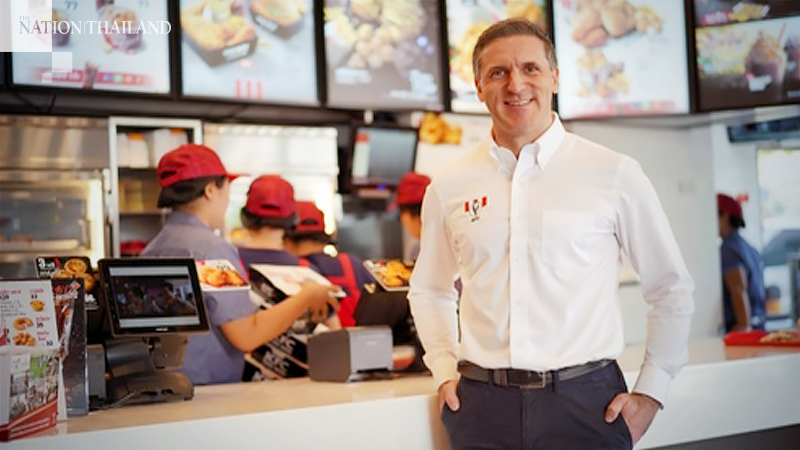
Restaurants Development Ltd (RD), a franchisee of KFC in Thailand, is optimistic of growth despite the Covid-19 situation and plans to open 15 more branches by early 2021.
“This year we have plans to invest Bt2 billion in increasing branches under RD’s management as well as improving the existing branches to deliver a better dining experience to customers,” Andrew Norton, RD’s chief executive officer, said.
“In the past three years, RD has opened 85 new branches and will open 15 more by early 2021. Currently we have 207 KFC restaurants in Thailand under RD’s management.
“RD will be celebrating its 4th anniversary as KFC franchisee soon, and is considered the fastest-growing KFC franchisee in Thailand. Our average sales in the past three years have expanded 24 per cent compared to when we newly entered the market,” he added.
“Our latest branch is at The Mall Ngamwongwan, which employs omnichannel ordering system where customers can either order online or at the restaurant’s automatic kiosk and receive the food immediately without having to queue up. The decoration is also in modern style with clear glass panel showing how the meal is freshly cooked.
“RD employs more than 1,700 people in Thailand,” added Norton. “We are committed to providing our employees with career growth opportunities.”
As of July 31, Thailand had 826 KFC restaurants, 104 of which are drive-thru — 283 branches are managed by Central Restaurants Group, 336 by QSR of Asia, and 207 by RD.
Quicken Loans parent jumps 19.5% after pricing IPO well below targets
CorporateAug 07. 2020Rocket chief executive Jay Farner
By The Washington Post · Jacob Bogage · BUSINESS, US-GLOBAL-MARKETS
Rocket Cos., the parent of Quicken Loans, jumped nearly 20 percent Thursday after the lender scaled back its public offering in the face of economic crosscurrents and despite the relative strength of the housing market.
The stock closed at $21.51, up 19.5 percent, after soaring as much as 26.1 percent in its New York Stock Exchange debut. The company had priced its shares at $18, well below the $20-to-$22 range expected, and put up 100 million shares instead of 150 million. Goldman Sachs and Morgan Stanley led the offering, which raised $1.8 billion.
Quicken is the nation’s largest mortgage lender, with more than $5.1 billion in revenue last year.
“The housing numbers have been strong for both existing and new housing as well as housing starts,” Dan Gilbert, Rocket’s founder and chairman, said Thursday on CNBC’s “Squawk Box.” “I always think that housing is a leading market metric when you look at how it’s such a big purchase and it drives so many other things, it drives other big-ticket purchases for people who just bought homes. It definitely drives our business, being in mortgage, but it drives so much of the economy.”
The mortgage market has been especially resilient during the coronavirus pandemic, bolstered by historically low interest rates and tight inventories. And the Federal Reserve has signaled that it will keep rates low until the U.S. economy recovers, which favors existing homeowners looking to refinance. Consumer shifts have also played a role: Wealthier buyers in the city are searching for rural and vacation homes, and more young families are moving into the suburbs.
But with millions of Americans out of work and federal lawmakers deadlocked over extending emergency unemployment benefits – the extra $600 a week on top of state unemployment aid – housing analysts are bracing for a slew of defaults in the fall and a possible new phase of the coronavirus, which has infected more than 4.8 million Americans and claimed 156,000 lives to date.
Rocket chief executive Jay Farner said the company’s pricing decision was “an art more than a science.”
IPO activity is beginning to rebound after it screeched to a near-halt in the second quarter. IPO volume and proceeds fell 19 percent and 8 percent, respectively, in the first sixth months of 2020, compared with the year-ago period, according to MarketWatch.
Founded in 1985 as Rock Financial, the company went public in 1998, then was bought out a year later by Intuit, which makes business and financial technology products such as TurboTax and QuickBooks. Gilbert, one of Rock’s founders and the owner of the NBA’s Cleveland Cavaliers, bought the company in 2002 and held it privately until filing for the IPO in July. He will retain 79 percent of the voting power within the public company.
Rocket was the nation’s largest mortgage lender by volume in 2019, and claims close to 9 percent of market share. Farner told CNBC that the company’s goal was to grow that to 25 percent over the next decade.
The Detroit-based holding company employs 19,000 people and provides real estate, mortgage and financial services under the Rocket Mortgage and Quicken Loans labels, although it leases the name of the latter from Intuit.
According to its IPO prospectus, Rocket reported net income of $892.4 million last year, up 46 percent from 2018, on revenue of $5.1 billion. Quicken Loans had nearly $145 billion in mortgage volume last year.
“You talk to homeowners and people looking to buy a home, there’s still a lot of enthusiasm out there,” Farner said. “People are recognizing that their lives are changing and that they’re probably going to spend more time in their homes in the future, simply because working from home has been demonstrated. It works. It can be very, very efficient. But the passion and excitement – and we talk to millions of people a month – is alive and well.”
Construction firm CH Karnchang targets Bt20bn revenue this year
CorporateAug 06. 2020CH Karnchang president Supamas Trivisvavet
By The Nation
Construction giant CH Karnchang has targeted total revenue of around Bt20 billion for 2020, said its president Supamas Trivisvavet.
Plew Trivisvavet, the company’s chairman of the executive board, , said the company in 2020 has maintained development of large-scale public infrastructure projects via the public-private partnership (PPP) model which facilitates quick, flexible operations and generates maximum benefits to the country.
The company said this was achieved by leveraging the strength of CK Group, which is a synergy of Bangkok Expressway and Metro (BEM), TTW, and CK Power (CKP).
The firm said it had not been significantly affected by the Covid-19 crisis thanks to its investment strategy which focuses on infrastructure projects, resulting in a consistent income stream throughout the first half of 2020.
CK said it was confident of participating in bidding for new public infrastructure projects both in Thailand and overseas in the second half of the year.
Supamas added that at the end of 2019, the company had a backlog of work worth Bt38.515 billion. She said CK took pride in two milestone achievements: the Xayaburi Hydro Power Plant Project, which was completed, delivered and launched commercial operations in October 2019; and the MRT Blue Line Extension Phase 2 (Hua Lamphong-Lak Song), which began operating in September 2019 and launched its full-loop service in March 2020.
She said that the company is keen to lend its support to various government projects to drive the Thai economy in its transition to the “new normal”.
Regarding overseas projects, CK is currently negotiating a new hydropower plant in Laos, with total value close to Xayaburi, and expect to finalise the deal by this year, she said.
Thailand’s largest food company says it is using lessons from the Covid-19 epicentre in Wuhan, China to ensure 100-per-cent product safety as Thailand enters its 10th week without local transmission of the virus.
Charoen Pokphand Foods (CPF) has outlined its safety practices in all business units across the world – feed, livestock, processed food, logistics, warehouse and office – in a bid to guarantee its products’ quality and traceability. So far, none of CPF’s operations in 17 countries has been closed or disrupted due to the pandemic.
To ensure highest safety, CPF said it has imposed social distancing, increased the number of shuttle buses for employees, installed plastic screens for every table, health checkpoints and alcohol sprays, and body temperature scanners at site entrances.
On site, employees are required to wear gloves and masks all the time, while sanitisation has been made more frequent and automation introduced to reduce human contact during logistics processes.
Identifying workers’ confidence as key to undisrupted operations, CPF has launched a Covid-19 hotline to provide up-to-date information and advice in line with official disease controls for every employee, including migrant workers.
CPF said its contract farmers have also adopted “new normal” practices. Damnoen Chaturavittawong, senior vice president of CPF’s Swine Veterinary Service Department, said international-standard animal and human disease control measures are being practised for both livestock and aquaculture businesses. Following the epidemic of African swine flu across Asia and the Covid-19 pandemic, additional stringent measures and guidelines have been exercised.
To protect livestock raisers from Covid-19, CPF said it has imposed the following measures at buildings and farms countrywide.
1. Temperature monitoring for all employees. Even those not suffering fever must take leave if they have symptoms like coughing, running nose, chest pain or sore throat.
2. Social distancing of 2 metres between persons, zero farm visits, alternate work hours, no travel to risk areas, and work-from-home policy.
3. Personal hygiene concerning face masks and protective equipment and regular hand washing.
4. Safe transportation with temperature checks, face masks and hand washing for all drivers, along with contactless transportation.
Meanwhile the firm says its CP Freshmart chain is following government safety guidelines for food delivery, including temperature checks of employees on arrival at work.Delivery staffs are required to wear a mask, sanitise their hands and ensure social distancing before handing over products to customers. The retail chain also encourages consumers to pay via digital payment, which is contactless, to minimise the risk of infection.
Airports of Thailand (AOT) stands to lose more than Bt133 billion from its decision to change the minimum guaranteed payment method to help duty-free giant King Power amid the Covid-19 crisis, a stock analyst at Kasikorn Securities said on Tuesday (August 4).
AOT had informed the Stock Exchange of Thailand (SET) that it was taking the following steps to help King Power Duty Free and King Power Suvarnabhumi:
• Holding off the renovation of duty free areas until March 31, 2022;
• Changing the minimum guaranteed payment method to base it on the number of passengers at Suvarnabhumi Airport, which is far lower than the number estimated by the duty-free giant when it bid for the project.
An analyst at Kasikorn Securities said AOT was wrong in changing the minimum guaranteed payment without discussing it with shareholders first, because now it stands to lose Bt133.8 billion, which will bring its 2022 net profits down by 5.3 per cent.
“AOT should come up with better ways to ease King Power’s pressure from the Covid-19 pandemic,” he said.
For months it’s been clear that Disney, the country’s most prominent entertainment company, was facing a financial disaster unlike any in its history.
On Tuesday, it became evident just how deep the carnage has gone.
The company revealed that as a result of the coronavirus pandemic it took in just $11.8 billion in revenue and $1 billion in operating income in the three-month period that ended in June, the height of lockdowns in the country. The numbers are a significant drop from the same period a year ago, when it generated $20.25 billion in revenue and $4 billion in operating income, among the worst slides of the modern era.
The earnings report for the fiscal third-quarter gave numeric form to what had been the sense of many in the entertainment and financial communities: Disney, once the high-flying giant of Hollywood, has been brought low by the virus, its creations often unable to be produced or consumed.
To try to get some of that revenue back, the company said it would finally release “Mulan,” the action-adventure reboot that has been delayed several times since its March opening.
But the company said it would employ a patchwork approach to do so. The live-action film will be made available on Disney Plus in the U.S. beginning Sept. 4 – at a cost of $29.99. The same pattern will follow in Canada, Australia and some of Western Europe. Customers will be given indefinite access to the film in exchange for the fee, but only as long as they subscribe to Disney Plus.
In countries where Disney Plus is not offered or theaters are widely open, meanwhile, the movie will go to theaters. This will almost certainly include China, where the film is expected to generate a large percentage of its box office.
In moving the film to a digital platform in the U.S., Disney is acknowledging that covid-19 surges make unlikely the quick resumption of normal business – a belief embraced by other studios, which have either substantially postponed their movies to 2021 or pursued a more circumscribed American release plan.
The “Mulan” announcement also finally resolves what had been one of the great ambiguities of corona-era Hollywood.
Where many movies – including those from Disney – had either been postponed to the end of 2020 or moved quickly to digital, “Mulan” had remained in a kind of purgatory, postponed several times as the studio sought to bring it to theaters around the world. With the move, Disney has decided on a solution, if a hybrid one. It will bring out the film in theaters in some countries but not others, and it is taking it to a subscription streaming platform but still charging a supersized theater price.
Disney’s $11.78 billion in revenue in the quarter was lower than the $12.37 billion many analysts expected, though earnings-per-share of 8 cents was above the 64-cent loss many forecast.
The company saw major revenue drops in several business units compared to 2019.
Theme parks saw a plummet from $6.58 billion to $983 million, a plunge of 85 percent. No American or European park was open in the quarter, while parks in Shanghai and Hong Kong reopened only midway during the period.
Equally concerning for Disney have been the few rays of theme-park light since the quarter ended. The company reopened Disney World in Florida last month to begin rebuilding its revenue pipeline. But chief financial officer Christine McCarthy acknowledged the move has not panned out as hoped.
“The upside we’re seeing is less than we originally expected given the surge of covid-19 in Florida,” she told analysts.
Disney chief executive Bob Chapek said that the park has experienced a “higher-than-expected level of cancellations” as people decide not to travel to Orlando because of the virus.
The company’s studio unit, which did not release any major new movies to theaters, saw revenue drop from $3.8 billion during the quarter last year to $1.74 billion this year, a slide of 55 percent.
Its TV unit, however, was able to hold the line, as revenue stayed mostly flat at $6.6 billion compared to $6.7 billion last year, with many advertisers already paid up through the quarter. Harsher effects could be felt in the months ahead with the lack of new shows and a slowdown in the ad-sales market.
One of the rare bright spots in the quarter was Disney Plus, the streaming service the company launched in November. Disney executives said on a conference call it now has 60.5 million subscribers worldwide after moving a number of previously theatrical movies to the service, most notably “Hamilton” on July 4 weekend. The service is growing faster than many analysts expected, reaching 54.5 million in May and adding six million subscribers since.
The direct-to-consumer division, of which Plus is a part, saw revenue tick up slightly, by 2 percent, from $3.88 billion in the same quarter in 2019 to $3.97 billion in 2020.
Still, with investment costs high, the company does not expect profitability from Disney Plus for several more years, and the direct-to-consumer division saw a loss of $706 million in the quarter, 26 percent more than last year.
“Mulan” is one way that challenge might be remedied: a product financed by another division that could bring revenue to the start-up service.
Disney executives acknowledged how uncommon the tack was but called it a necessary exception at this moment.
The pandemic has “forced us to consider different approaches and look for new opportunities,” Chapek said in an analyst call.
The move, though, is unusual even in the streaming world, which has typically offered an all-you-can-eat plan to subscribers in which all new content is available under the monthly fee. According to the “Mulan” plan, however, a customer must subscribe to the service just for the right to pay for the movie.
By placing the movie exclusively on the service instead of making it available through cable or satellite providers, the company is gambling that the benefit of the new Disney Plus subscribers it attracts will outweigh the lost revenue from people who are not subscribers.
It also is making a financial calculation: by putting the movie exclusively on its own platform, Disney is avoiding handing over as much as 20 percent of sales revenue to cable operators, as studios typically do with distributors.
Later in the call, Chapek seemed poised to rule out the possibility this could be a trial balloon but then stopped short of that position.
“We’re looking at Mulan as a one-off as opposed to trying to say there’s some new business-windowing model,” he said. But then he added, “That said, we find it very interesting to take a new offering to consumers at a $29.99 price point and learn from it.”
The company’s stock price has not dropped during the pandemic, as bargain-hunters and long-term investors have sent the price up more than 20 percent since lockdowns began in mid-March. On Tuesday, investors, apparently reacting to the digital “Mulan” announcement, sent the share price up 4 percent in after-hours trading.
Both Chapek and executive chairman Bob Iger face significant headwinds in the months ahead. Any hope of a Disney comeback in the last six months of 2020 will turn on several factors related to the pandemic: Whether sports, particularly the NBA and Major League Baseball, can continue uninterrupted and bring much-needed revenue to ESPN; whether prime-time shows can begin shooting to ensure a reasonable start to the broadcast-network fall season; and whether enough theaters can reopen in the U.S. and around the world to begin collecting box office revenue.
While Mulan will not be in U.S. theaters, Disney has high hopes for November, when it has Pixar’s “Soul” and Marvel’s “Black Widow” scheduled to open.
Disneyland will also need to reopen if the company wishes to restore its theme parks to its past glory; the park remains closed under California orders. The parks are key to Disney’s financial fortunes: with $6.76 billion in operating income last fiscal year, the division was the most profitable of any unit besides television.
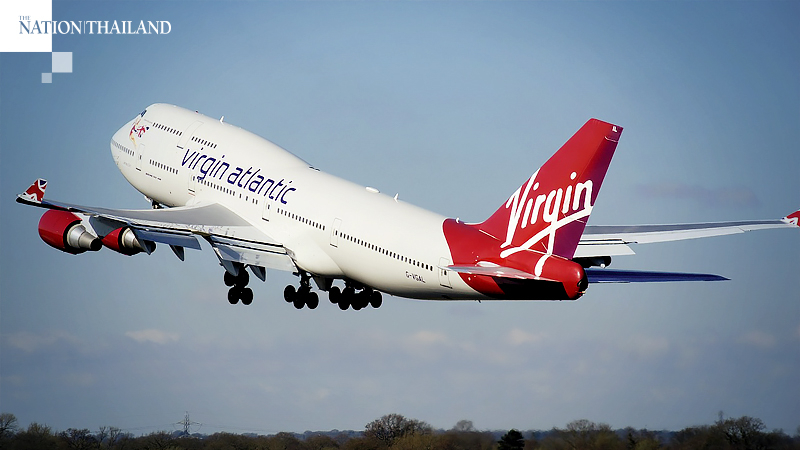
By Syndication Washington Post, Bloomberg · Claire Boston, Josh Saul · BUSINESS · Aug 05, 2020 – 3:18 AM Richard Branson’s Virgin Atlantic Airways filed for Chapter 15 bankruptcy protection in the U.S. on Tuesday after telling a London court it was set to run out of cash next month without getting approval for a rescue financing.
The airline filed its petition in the Southern District of New York. Chapter 15 bankruptcy allows foreign companies with U.S. assets to protect themselves against claims while they work on a turnaround plan.
Since Jan. 1, Virgin’s reservations are down 89% year-over-year and current demand for the second half of 2020 is at approximately 25% of 2019 levels, according to court papers.
“The group and its business have been adversely affected by the ongoing Covid-19 pandemic, which has caused an unprecedented near-shutdown of the global passenger aviation industry,” according to the court papers. “Global aviation was one of the first industries to be impacted by the Covid-19 pandemic and is likely to be one of the last to fully recover.”
By The Washington Post · Steven Zeitchik · BUSINESS, ENTERTAINMENT, FILM, TV For months it’s been clear that Disney, the country’s most prominent entertainment company, was facing a financial disaster unlike any in its history.
On Tuesday, it became evident just how deep the carnage has gone.
The company revealed that as a result of the coronavirus pandemic it took in just $11.8 billion in revenue and $1 billion in operating income in the three-month period that ended in June, the height of lockdowns in the country. The numbers are a significant drop from the same period a year ago, when it generated $20.25 billion in revenue and $4 billion in operating income, among the worst slides of the modern era.
The earnings report for the fiscal third-quarter gave numeric form to what had been the sense of many in the entertainment and financial communities: Disney, once the high-flying giant of Hollywood, has been brought low by the virus, its creations often unable to be produced or consumed.
To try to get some of that revenue back, the company said it would finally release “Mulan,” the action-adventure reboot that has been delayed several times since its March opening.
But the company said it would employ a patchwork approach to do so. The live-action film will be made available on Disney Plus in the U.S. beginning Sept. 4 – at a cost of $29.99. The same pattern will follow in Canada, Australia and some of Western Europe. Customers will be given indefinite access to the film in exchange for the fee, but only as long as they subscribe to Disney Plus.
In countries where Disney Plus is not offered or theaters are widely open, meanwhile, the movie will go to theaters. This will almost certainly include China, where the film is expected to generate a large percentage of its box office.
In moving the film to a digital platform in the U.S., Disney is acknowledging that covid-19 surges make unlikely the quick resumption of normal business – a belief embraced by other studios, which have either substantially postponed their movies to 2021 or pursued a more circumscribed American release plan.
The “Mulan” announcement also finally resolves what had been one of the great ambiguities of corona-era Hollywood.
Where many movies – including those from Disney – had either been postponed to the end of 2020 or moved quickly to digital, “Mulan” had remained in a kind of purgatory, postponed several times as the studio sought to bring it to theaters around the world. With the move, Disney has decided on a solution, if a hybrid one. It will bring out the film in theaters in some countries but not others, and it is taking it to a subscription streaming platform but still charging a supersized theater price.
Disney’s $11.78 billion in revenue in the quarter was lower than the $12.37 billion many analysts expected, though earnings-per-share of 8 cents was above the 64-cent loss many forecast.
The company saw major revenue drops in several business units compared to 2019.
Theme parks saw a plummet from $6.58 billion to $983 million, a plunge of 85 percent. No American or European park was open in the quarter, while parks in Shanghai and Hong Kong reopened only midway during the period.
Equally concerning for Disney have been the few rays of theme-park light since the quarter ended. The company reopened Disney World in Florida last month to begin rebuilding its revenue pipeline. But chief financial officer Christine McCarthy acknowledged the move has not panned out as hoped.
“The upside we’re seeing is less than we originally expected given the surge of covid-19 in Florida,” she told analysts.
Disney chief executive Bob Chapek said that the park has experienced a “higher-than-expected level of cancellations” as people decide not to travel to Orlando because of the virus.
The company’s studio unit, which did not release any major new movies to theaters, saw revenue drop from $3.8 billion during the quarter last year to $1.74 billion this year, a slide of 55 percent.
Its TV unit, however, was able to hold the line, as revenue stayed mostly flat at $6.6 billion compared to $6.7 billion last year, with many advertisers already paid up through the quarter. Harsher effects could be felt in the months ahead with the lack of new shows and a slowdown in the ad-sales market.
One of the rare bright spots in the quarter was Disney Plus, the streaming service the company launched in November. Disney executives said on a conference call it now has 60.5 million subscribers worldwide after moving a number of previously theatrical movies to the service, most notably “Hamilton” on July 4 weekend. The service is growing faster than many analysts expected, reaching 54.5 million in May and adding six million subscribers since.
The direct-to-consumer division, of which Plus is a part, saw revenue tick up slightly, by 2 percent, from $3.88 billion in the same quarter in 2019 to $3.97 billion in 2020.
Still, with investment costs high, the company does not expect profitability from Disney Plus for several more years, and the direct-to-consumer division saw a loss of $706 million in the quarter, 26 percent more than last year.
“Mulan” is one way that challenge might be remedied: a product financed by another division that could bring revenue to the start-up service.
Disney executives acknowledged how uncommon the tack was but called it a necessary exception at this moment.
The pandemic has “forced us to consider different approaches and look for new opportunities,” Chapek said in an analyst call.
The move, though, is unusual even in the streaming world, which has typically offered an all-you-can-eat plan to subscribers in which all new content is available under the monthly fee. According to the “Mulan” plan, however, a customer must subscribe to the service just for the right to pay for the movie.
By placing the movie exclusively on the service instead of making it available through cable or satellite providers, the company is gambling that the benefit of the new Disney Plus subscribers it attracts will outweigh the lost revenue from people who are not subscribers.
It also is making a financial calculation: by putting the movie exclusively on its own platform, Disney is avoiding handing over as much as 20 percent of sales revenue to cable operators, as studios typically do with distributors.
Later in the call, Chapek seemed poised to rule out the possibility this could be a trial balloon but then stopped short of that position.
“We’re looking at Mulan as a one-off as opposed to trying to say there’s some new business-windowing model,” he said. But then he added, “That said, we find it very interesting to take a new offering to consumers at a $29.99 price point and learn from it.”
The company’s stock price has not dropped during the pandemic, as bargain-hunters and long-term investors have sent the price up more than 20 percent since lockdowns began in mid-March. On Tuesday, investors, apparently reacting to the digital “Mulan” announcement, sent the share price up 4 percent in after-hours trading.
Both Chapek and executive chairman Bob Iger face significant headwinds in the months ahead. Any hope of a Disney comeback in the last six months of 2020 will turn on several factors related to the pandemic: Whether sports, particularly the NBA and Major League Baseball, can continue uninterrupted and bring much-needed revenue to ESPN; whether prime-time shows can begin shooting to ensure a reasonable start to the broadcast-network fall season; and whether enough theaters can reopen in the U.S. and around the world to begin collecting box office revenue.
While Mulan will not be in U.S. theaters, Disney has high hopes for November, when it has Pixar’s “Soul” and Marvel’s “Black Widow” scheduled to open.
Disneyland will also need to reopen if the company wishes to restore its theme parks to its past glory; the park remains closed under California orders. The parks are key to Disney’s financial fortunes: with $6.76 billion in operating income last fiscal year, the division was the most profitable of any unit besides television.
IVL enters into deal for acquisition of PET recycling facilities in Poland
CorporateAug 04. 2020Yashovardhan Lohia, Executive Director and Head of Sustainability
By The Nation
Indorama Ventures Pcl (IVL), a global chemical producer, has entered into a definitive agreement to acquire Industrie Maurizio Peruzzo Polowat (IMP Polowat), a PET recycling facility in Poland.
The acquisition consists of two assets, strategically located in Bielsko-Biala and Leczyca, close to the major population centres of Kraków and Warsaw.
The production sites have a combined capacity of 23,000 tonnes of recycled polyethylene terephthalate (rPET) flakes and 4,000 tonnes of rPET pellets. The company is supported by 118 employees.
The acquisition is expected to close in the third quarter of 2020, subject to regulatory approvals.
IMP Polowat has a solid presence as one of the leading PET recyclers in Poland. This acquisition is consistent with IVL’s ambitious target in scaling its recycling capacity to reach 750,000 tonnes by 2025, the company said.
It also adds an attractive recycling platform for IVL in Eastern Europe, and will open up new opportunities to meet the increasing rPET demand for more sustainable packaging solutions. The combination of access to local bottle supply and trusted product quality will secure opportunity for IVL for growth and expansion over time, the company said.
Poland is a strategic market for IVL, and has made significant progress on waste management and recycling.
Yashovardhan Lohia, executive director and head of sustainability of Indorama Ventures, said: “We are pleased to continue to execute on our growth strategy of pursuing strategic acquisitions even during this unprecedented time. IMP Polowat represents a strategic fit for us.
“IVL is fully committed to its strategy and its role in addressing the issue of plastic waste and enhancing the circularity of PET. We continue to make good progress and remain confident in achieving our ambitious 2025 target to recycle at least 50 billion bottles per year, and investing US$1.5 billion to achieve this by 2025,” Lohia said.


 Rocket chief executive Jay Farner
 CH Karnchang president Supamas Trivisvavet


 Yashovardhan Lohia, Executive Director and Head of Sustainability
