Banks have provided financial aid worth a total of Bt6.7 trillion to more than 10 million debtors suffering from the impact of Covid-19, while some believe 70 per cent of the borrowers will repay their debts once the aid package comes to an end.
As per the Bank of Thailand, 12.62 million bank accounts with debts worth a total of Bt6.74 trillion have been given financial support in the form of debt restructuring or moratorium on principal or interest repayment. Banks have also given out new soft loans worth Bt103 billion.
Arthid Nanthawithaya, chief executive officer and chair of Siam Commercial Bank’s executive committee, said his bank has provided aid to 1.1 million individual borrowers and to 13,000 corporate clients. As of the end of June, the bank assisted borrowers whose combined loans worth Bt840 billion, or 39 per cent of its total lending. SCB also gave out new loans worth Bt36 billion under the central bank’s soft loan scheme.
The rate of bank clients seeking help slowed down in late May and has stabilised recently, especially since some aid packages started expiring in June, he said.
“As per our preliminary assessment, some 60 to 70 per cent of debtors should be able to repay their debts once their aid packages expire, though the rest may need additional support,” he said.
Owing to the debt holiday, SCB’s non-performing loans will not rise significantly in the next two years, he said, adding that financial support provided by the government and central bank have eased the impact on debtors.
Patchara Samalapa, president of Kasikornbank, said his bank had provided financial support to 650,000 debtors, both retail and corporate clients, with outstanding loans worth Bt828 billion. Kasikornbank has granted 293,000 borrowers owing a total of Bt746 billion a repayment moratorium. The bank has also given Bt143 billion in loans to 60,000 borrowers.
“We are assessing debtors’ potential to see which groups can return to normal once the support comes to an end, and which will need more support. Accordingly, we are making preparations to handle any issue,” he said.
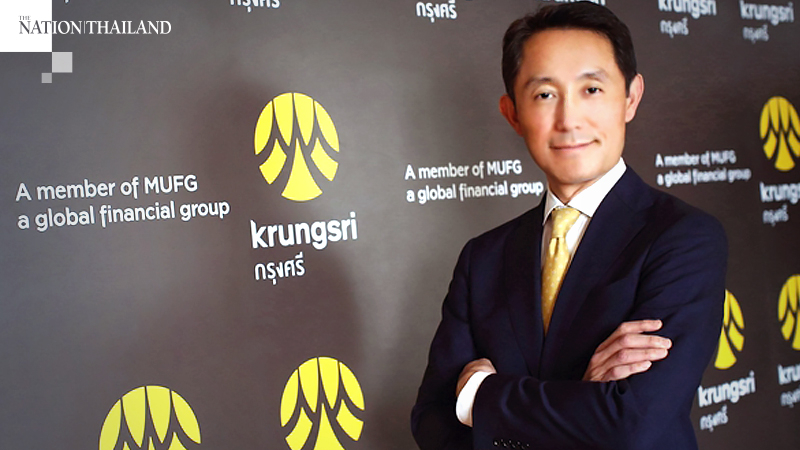
Seiichiro Akita, president and chief executive officer for Krungsri, said his bank has helped 1,792,820 retail clients and 36,490 corporate clients, who hold about 29 per cent of its outstanding loans. The bank has also granted new soft loans worth Bt18.3 billion to 5,709 borrowers.
Akita said that though the government has been successful in containing the spread of Covid-19, the Thai economy remains fragile. Hence, he said, the bank is bracing for any emerging risks and will provide support to debtors if necessary.
Meanwhile, Tisco Bank has said it will help its clients restructure their debts worth about 10 per cent of total loans. So far, debtors accounting for 3 per cent of the bank’s total outstanding loans have been given a moratorium on principal and interest repayment.
Tisco recommends mutual funds that ride the mega-trend wave
CorporateJul 23. 2020Vorasinee Sethabutr, head of wealth product development at Tisco bank
By Wichit Chaitrong The Nation
Tech, healthcare stocks and digital learning platforms are the winners in this present situation, the head of wealth product development at Tisco bank, Vorasinee Sethabutr, said, recommending the firm’s mutual funds that invest in such companies.
She revealed that Tisco has an investment strategy on mega trends, which show that as many countries have an ageing society, people want to live longer, leading to advances in healthcare technology. Meanwhile, in this information and communications technology era, the cloud computing business is reaching new heights.
Tisco launched 12 mutual funds this year for investors, with tech and healthcare funds being the top performers, she said.
For instance, the Tisco Cloud Computing Equity Fund invests in shares of potential high-growth companies such as Netflix, Twilio, Zoom Video Communications, Paycom Software and Shopify.
Tisco also advises investors to purchase the One Global E-Commerce Fund, which invests in e-commerce giants Amazon and Alibaba as well as in others such as Netflix, online TV shows and movies and Delivery Hero, a food delivery service.
It also recommends the United Education Technology Fund, which invests in online innovative education services and the CS (Lux) Edutainment Equity Fund. Potential high-growth firms in the investment portfolio include 2U. 2U has cooperated with 30 universities across the globe to create digital content for e-learning. It provides both degree programmes and short courses.
GSX Techedu, a leading online tutoring service in China, is another. The company applies artificial intelligence and data analytics to support students. This technology can analyse student behaviour on “15,000 dimensions”.
There is also the Chegg online education service, which not only provides students rented textbooks as new ones are very expensive, but also has other educational services. The company has 36 million university and high school student subscribers in the US and 18 million secondary school and tertiary student subscribers in Canada, Australia and the United Kingdom.
Instructure is yet another worthy online e-learning firm that provides learning management system services via website and application to kids and university students. Its Canvas online learning has been used by as many as 3,000 schools and universities. It currently has 9 million users.
Meanwhile, advancements in biotechnology have led to improving therapy including for cancer. The Tisco Biotech Healthcare Fund, for example, has invested in advanced medical technology, with the Biotech fund having invested in CS (Lux) Global Digital Health Equity, Vorasinee added.
Charoen Pokphand Foods (CPF) reported that its subsidiary in Hong Kong, CP Pokphand (CPP), expects to achieve a first-half net profit of US$310 million to $330 million (Bt10.4 billion), a significant increase of $82 million compared to the same period last year.
CPF had earlier reported to the Stock Exchange of Thailand that it holds direct and indirect shares of 52.24 per cent in CPP, a listed company in Hong Kong.
CPP has benefited from a surging pork price in Vietnam in the first six months of the year. Moreover, the negative impact on the fair value of its biological assets in the livestock business in Vietnam has also dropped, a company press statement said.
Krungsri (Bank of Ayudhya and its business units) reported a first-half net profit of Bt13.5 billion – a 31.4 per cent decrease compared to the same period last year, the bank said in a press statement yesterday (July 21).
The acute contraction was attributed to extraordinary one-time gains on investment from the sale of 50 per cent of shares in Ngern Tid Lor Company Limited, recorded in the first half of 2019.
Excluding the one-off items in the first half last year, net profit for 1H/2020 decreased by 2.9 per cent, or Bt400 million, from 1H/19, mainly caused by an increase in expected credit losses of Bt4.3 billion, based on the adoption of TFRS 9 and corresponding to a prudential safeguard in light of the severe economic downturn.
Here are some highlights of Krungsri’s consolidated 1H/2020 results, according to the bank:
• Net profit: Bt13.5 billion in 1H/20.
• Loan growth: increased by 2.0%, or Bt36.9 billion, from December 2019, mainly driven by the bank’s support in meeting the commercial segment’s working capital needs, particularly liquidity backing under the soft loan programme for SME customers. In 1H/20, corporate loans and SME loans increased by 4.3% and 3.3% respectively, meanwhile retail loans contracted by 0.1%.
• Deposit growth: increased by 8.4%, or Bt131.8 billion, from December 2019, and in line with the industry’s development.
• Net interest margin: 3.74% in 1H/20, compared to 3.69% in 1H/19, driven by lower cost of funds.
• Non-interest income: decreased by 40.3%, or Bt10.7 billion, from 1H/19, mainly caused by the absence of one-time gains on investments in 1H/19 and a decrease in net fees and service income, resulting from deteriorating retail business activities against the backdrop of a faltering economy. Excluding the one-off items booked in 1H/19, non-interest income decreased by 11.7%, or Bt2.1 billion, from the same period last year.
• Cost-to-income ratio: 41.4%, compared to the normalised cost-to-income ratio at 45.4% in 1H/19, reflecting the bank’s proactive expense management in light of the current unfavourable operating environment.
• Non-performing-loan ratio: 2.20%, compared to 1.98% in December 2019.
• Coverage ratio: 156.2%, compared to 163.8% in December 2019.
• Capital adequacy ratio: recorded at 16.61%.
“The severe global economic slowdown as well as national lockdowns caused by the coronavirus crisis have led to a sharp contraction in economic activity, particularly in Thailand’s tourism and service industries,” Krungsri president and chief executive officer Seiichiro Akita said. “The Thai economy in 2020 is expected to experience the deepest recession ever recorded,” he warned.
“Krungsri has introduced a series of pre-emptive measures to alleviate the financial burden for both commercial and retail customers. As of June 30, total outstanding loans under Krungsri’s customer relief programmes accounted for approximately 29 per cent of total outstanding loans, comprising 1,792,820 retail customer accounts and 36,490 commercial customers. With SMEs being most impacted under the commercial customer segment, other than the aforementioned debt relief measures, additional credit lines of Bt18.3 billion were offered to over 5,700 SME customers to boost their liquidity under the Bank of Thailand’s and the Government Savings Bank’s soft loan programmes,” he said.
“Notwithstanding the Thai government’s ability to effectively contain the pandemic, together with a gradual and cautious reopening of the economy, vulnerabilities and uncertainties still exist. The economic growth projection for 2020 has been revised to a 10.3 per cent contraction, eroding from a 5.1 per cent regression forecast, as the coronavirus pandemic takes a toll on domestic consumption and investment and pummels outbound merchandise and services,” Akita said.
“To brace for heightening uncertainties for the remainder of the year, asset quality will be vigilantly monitored and managed to ensure both safety and soundness. Meanwhile, Krungsri will continue to provide support for customers and overall economic activities,” he vowed.
As of June 30, Krungsri reported Bt1.85 trillion in loans, Bt1.7 trillion in deposits, and Bt2.51 trillion in total assets. The bank’s capital is strong at Bt271.91 billion, equivalent to 16.6 per cent of risk-weighted assets, with 11.77 per cent in common equity tier 1 capital, the company said.
The global economy is expected to shrink minus 3.5 per cent in the second half of 2020 before a rapid recovery of 5.5 per cent in 2021, Citibank Thailand forecast today (July 21), adding that the overall investment market is still experiencing stiff challenges and warning that a global economic recession could be “greater than the 2008 financial crisis”.
Citibank put the inflation rate at 1.8 per cent, which has been affected by many factors, such as uncertainty in the global situation as Covid-19 spreads, geopolitical uncertainty and fluctuating economic factors.
However, Citi analysts still have a positive view of cyclical stocks, which are expected to grow. They suggest investors weigh emerging Asian markets, especially in the technology industry, health and digitalisation technology sectors, including US bonds, Japan’s yen currency and investment in gold, “as these are secure and low-risk assets which will strengthen investment portfolios”.
Citi Thailand investment adviser Boonnisaed Thanyaworaanan said Citi analysts have forecast the global economy in the second half of 2020 to be minus 3.5 per cent, before the global market recovers rapidly at 5.5 per cent in 2021.
“Also, the inflation level is at 1.8 per cent but will rise to 2.4 per cent in 2021 due to uncertainty in the global situation, such as the spreading Covid-19 virus, geopolitical uncertainty that remains tense, the US-China trade war, as well as economic fluctuations throughout the past year,” he said.
“As for the regional economy, emerging markets are expected to slow down slightly – by 1.5 per cent – but will reach 6.4 per cent in 2021. On the other hand, developed markets will tend to slow down by minus 5 per cent due to severe economic disruptions as a result of the spread of Covid-19 and trade conflicts. Consequently, the investment market is still highly challenging, although the global capital market has recovered to 40.6 per cent from its lowest point in March. However, the global capital market is still minus 4 per cent, compared to that of last year,” Boonnisaed said.
He said Citi analysts have estimated that the Covid-19 pandemic may result in a global economic recession being greater than the 2008 financial crisis, but the global economy will begin to rebound after lockdowns in many countries are lifted and the outbreak is controlled, and especially if a vaccine is successfully developed.
The Asian economy this year is expected to grow by 0.5 per cent, especially China’s, which may reach 2.4 per cent due to huge domestic demand. Although China was the first country where the outbreak occurred, it has gradually begun to see increased domestic activities and the first quarter may be the lowest point of its economic slowdown. For other economies, the second quarter will still see a recession before gradual recovery. However, even when the world economy begins to recover, the Asian region will see uneven recovery, he said.
The GDP of the United States this year is expected to contract by 3.3 per cent, but it has begun to see positive signs, such as a reduced unemployment rate and increased retail sales in May. The Federal Reserve has issued monetary easing measures and kept the policy interest rate at 0-0.25 per cent. In addition, the US government is planning to spend more than $2 trillion (Bt63.5 trillion) to stimulate the country’s economy.
Meanwhile, European GDP is expected to decrease by 6.7 per cent. The recovery trend in the second half of the year may take around two years for the GDP to return to the same level as the 4th quarter of 2019. Therefore, the European Central Bank has issued monetary easing measures and a resolution to keep the policy rate at 0 per cent and has recently launched an emergency bond project worth up to €7.5 billion (Bt272.4 billion).
Oil is also worth mentioning.
Crude oil is in demand, which contrasts with supply, and it is expected to cause Brent and West Texas crude oil average prices to be $42 and $38 per barrel, respectively. Gold is still in demand, and the average price is $1,600-$1,800 per ounce. It is likely that the average value will be approximately $2,000 per ounce in 2021, Boonnisaed said.
He also said the dollar is likely to depreciate this year in the medium to long term due to the Fed’s balance sheet expansion in response to the liquidity in the present situation.
As for the Thai baht, it is expected to be around 31-31.30 per US dollar, Boonnisaed added.
Don Charnsupharindr, director of Retail Banking at Citi Thailand, said the firm has been developing its wealth management business to better respond to the needs of high-end customers.
The strategy is to expand its top-level customer base and develop integrated wealth management services. It has recently partnered with UBS and JP Morgan to launch new mutual funds to provide more options for diversifying investments with potential both in the country and abroad, such as the USB China A Opportunity fund, the USB China Opportunity fund, the JP Morgan China Pioneer fund and the JP Morgan US Technology fund, he said.
In addition, the bank continues to develop its digital banking products and services “for the best investment experience for customers”, such as an Authorisation Corner or transaction documents on the Citi mobile application or Citibank online, Don said, adding that these functions, and those released last year, allow customers to confirm transactions for funds and bonds subscriptions and redemption in an easy, convenient and timely manner after customers discuss investment requests and choose products that they want to confirm investment in – a feature which has received good feedback.
He also said FX and overseas transfers are easy with Citibank. Transfers to Citibank accounts worldwide can be made online instantly, free of charge.
“Our telegraphic transfers have recently expanded to cover 38 currencies, where customers can enjoy transparent exchange rates and confirm the transaction amount in local currency upfront. In addition, Citibank Global Wallet lets customers spend directly from foreign currency accounts online or overseas, using the Citibank Debit Mastercard without incurring extra charges from conversion,” Don said. “Foreign exchange between Thai baht and eight other currencies can also be done instantly online free of charge.”
He added that privileges for Citigold’s customers have been altered in accordance with the current situation.
“Customers can still avail of the privileges, for example, credit of up to Bt30,000/year for Michelin-starred-restaurant delivery services, which is exclusive for Citigold Elite customers who have bank deposits and/or investments of Bt50 million, Credit Card Rebates when paying via the Grab application of up to Bt1,500/month and rebates of up to Bt500/month for using Citi credit cards at Starbucks,” Don added.
Meanwhile, Citibank Thailand has organised an online seminar titled “2020 Mid-Year Annual Outlook” on the latest economic and investment direction in the second half of 2020. For more information, contact Citibank Thailand or visit www.citibank.co.th.
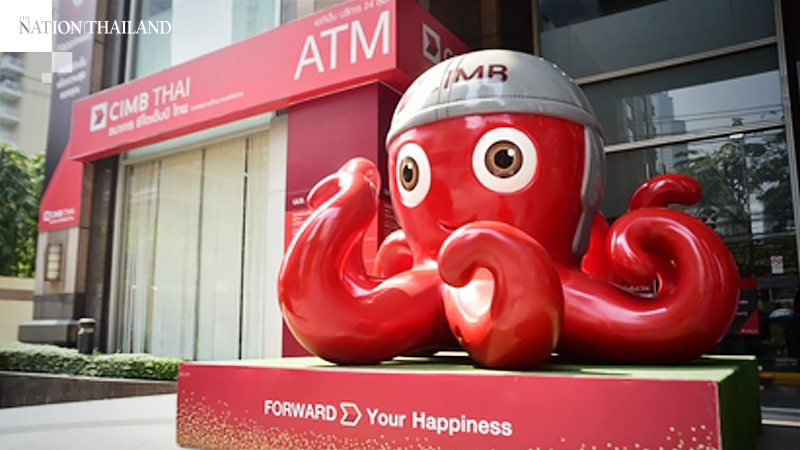
CIMB Thai Group posted a consolidated net profit of Bt1.38 billion for the six months ending on June 30, an increase of 115.6 per cent year-on-year, according to a company press release today (July 21).
The improvement was mainly attributed to a 10.5 per cent growth in operating income and a 6.6 per cent drop in expected credit losses, partially offset by a 5.8 per cent increase in operating expenses.
CIMB’s net interest margin over earning assets stood at 3.3 per cent in the first six months, compared to 3.5 per cent in the same period last year, resulting from lower interest income on investments.
Gross non-performing loans (NPLs) were Bt13.9 billion, translating into an impaired loan ratio of 5.8 per cent compared to 4.7 per cent as of December 31, 2019, due to a change in NPL classification criteria (Stage 3).
Lockheed in talks to compensate Pentagon over F-35 parts
CorporateJul 21. 2020A Lockheed Martin F-35A jet flies during a training mission at Hill Air Force Base in Utah in 2016. MUST CREDIT: Bloomberg photo by George Frey
By Syndication Washington Post, Bloomberg · Tony Capaccio · NATIONAL, BUSINESS, NATIONAL-SECURITY
Lockheed Martin is in talks with the Pentagon over whether it will reimburse the Defense Department for parts it provided for the F-35 jet that were not ready to install.
The nation’s No. 1 defense contractor and Pentagon contracting officers “are now negotiating appropriate consideration for parts delivered incomplete,” the department’s F-35 program office said in a statement on Monday.
Air Force Lieutenant General Eric Fick, the F-35 program manager, said in a statement that the scope of the parts issue “has been agreed upon and “this is an important first step” but “there is more work to be done” to assess the “corresponding financial consideration.”
The parts were considered inadequate for installation not because of safety or manufacturing flaws but because they were delivered without the required inclusion of electronic data, such as a part’s history and its remaining useful life, needed by maintenance crews. Parts are not supposed to be installed without the data.
Lockheed spokesman Brett Ashworth, in a statement Monday night, said that although “there is no agreement at this time regarding consideration and what form it would take, Lockheed Martin is committed to discussions in good faith with the U.S. government.”
Air crews who maintain the next-generation stealth fighter had complained that they’ve been working extra hours to keep the Pentagon’s costliest aircraft flying because so many parts were not ready to be installed.
In a June 2019 report, the Pentagon’s inspector general disclosed the problem and recommended that the Pentagon consider seeking refunds or services free of charge for the parts. This year’s defense policy law directed the Pentagon to “seek relief” for delivery of “non-compliant ready-for-issue spare parts pursuant to a contract under the F-35 aircraft program.”
The Pentagon watchdog’s original report disclosed that of 74 spare parts delivered in September 2018 to Hill Air Force Base in Utah, 59 of them, or 80%, were not ready to install. Of 263 parts delivered to Luke Air Force Base in Arizona in June 2018, 81% did not meet requirements.
Each F-35 has about 1,000 parts out of roughly 50,000 that require the electronic logs, according to the program office. The parts problems on the $398 billion program, the Pentagon’s largest, are occurring even after 500 of the stealthy aircraft have been delivered through March, 147 of them to other countries.
The parts issue and status of refund efforts will be a focus of a House Oversight and Reform Committee hearing Wednesday. The program office said Lockheed’s 2021-2023 support contract requires that it deliver the required information for 99% of the special parts in order to receive its contract fees.
“As of June 2020, we’re at 83% and climbing” and “we expect 90% (or higher)” by Dec. 31, according to the statement.
Theresa Hull, the assistant inspector general who managed the parts report, said Monday in an email that her office hasn’t been provided any further specifics regarding the negotiations with the company but that her office believes the Pentagon “pursuing compensation on behalf of the America taxpayer is a positive first step toward safe-guarding taxpayer dollars.”
Bezos adds record $13 billion in single day to his fortune
CorporateJul 21. 2020Jeff Bezos in 2018. MUST CREDIT: Bloomberg photo by Andrew Harrer
By Syndication Washington Post, Bloomberg · Jack Pitcher · BUSINESS
Jeff Bezos added $13 billion to his net worth on Monday, the largest single-day jump for an individual since the Bloomberg Billionaires Index was created in 2012.
Amazon shares surged 7.9%, the most since December 2018, on rising optimism about web shopping trends, and are up 73% this year.
Bezos, Amazon’s 56-year-old founder and the world’s richest person, has seen his fortune swell to $189.3 billion, despite the U.S. entering its worst economic downturn since the Great Depression. He’s now personally worth more than the market valuation of giants such as Exxon Mobil, Nike and McDonald’s.
Mackenzie Bezos, the ex-wife of the Washington Post owner, gained $4.6 billion Monday and is now the 13th-richest person in the world.
Other tech titans are also enjoying a surge driven partly by people forced to stay home and helped by the boost given to markets by unprecedented stimulus efforts by governments and central bankers.
Facebook chief executive Mark Zuckerberg has added almost $15 billion to his net worth this year, even as the company deals with brands boycotting ads on the social network.
Krungthai Bank announced operational revenue of Bt20.1 billion for the second quarter this year, up 14.9 per cent from the previous quarter.
For the first half of this year, the bank earned Bt37.6 billion in operational revenue, up 11 per cent from the same period last year, with the gain driven by the growth in credit granted by the bank and decreased operational costs due to the Covid-19 situation.
President Payong Srivanich said the bank’s net interest margin decreased to 3.15 per cent, down from the 3.54 per cent posted in the same quarter last year. The decrease is the result of the Bank of Thailand lowering the policy rate five times in the first half of the year, which also resulted in the expansion of Krungthai Bank’s lending at 9.4 per cent.
Payong Srivanich
“Operational costs have gone down by 13.2 per cent, with the cost-to-income ratio being 40.72 per cent, decreasing from 46.76 per cent in the same period last year,” he said. “When excluding income from the auction of mortgaged properties, the ratio in the first half of 2020 is 43.1 per cent, increasing from 41.77 per cent in the same period last year.”
Payong said that due to an economic contraction this year, the bank has set up a Bt23.2 billion reserve for credit loss and non-performing loans (NPLs), an increase from last year’s reserve of Bt12.89 billion.
“The bank’s NPLs-to-gross-loan ratio is 4.35 per cent, increasing from 4.33 per cent posted on December 31, 2019,” he said.
Krungthai Bank’s net profit in the second quarter is Bt3.82 billion, decreasing by 40.8 per cent from the previous quarter, while net profit in the first half of the year is Bt10.2 billion, decreasing by 33.5 per cent compared to the same period last year, he added.
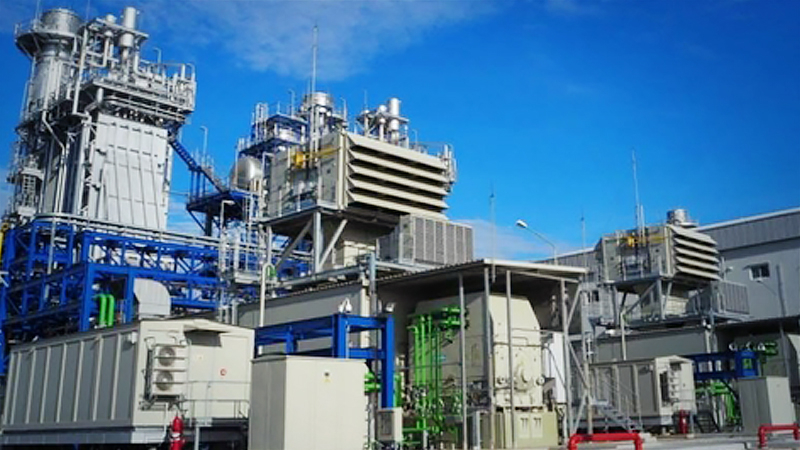
Electricity Generating Plc (EGCO) is on track to develop four major construction projects in Thailand and neighbouring countries, president Thepparat Theppitak said during the company’s shareholders meeting.
“These projects are the Nam Tern Power Plant 1 in Laos, with the deadline of the second quarter of 2022, the Kan Dong project in South Korea, to be completed by the fourth quarter, the Yun Lin Wind Energy project in Taiwan and the expansion of an oil pipeline to the Northeast, with a fourth quarter deadline, which we are carrying out together with our subsidiary, Thai Pipeline Network, in which EGCO holds a 44.6 per cent stake,” he said.
“The Covid-19 situation has slightly affected the construction schedule as work could not go ahead in some areas due to the lockdown. However, with the lockdown being lifted in many areas, we are confident these projects will progress as planned and will be completed by the deadlines,” Thepparat said.
“Although electricity consumption in many countries has decreased due to the Covid-19 crisis, the EGCO was protected under a power purchase agreement, therefore the company’s electricity sales are only marginally impacted,” he said. “We believe that Covid-19 will pose only a short-term impact on the group, but have already drawn up measures in case a second or even third wave occurs.”
The shareholders meeting also approved “adjustment” of the company’s objectives that allow it to invest in new businesses to ensure continued progress and sustainable profit.
“EGCO is planning to invest in new energy projects in the Smart Industrial Estate in Rayong as part of the Eastern Economic Corridor development project,” Thepparat added. “One of the projects we are aiming for is the installation of solar panels for industrial factories, which is receiving promotional privileges from the government. We expect the project’s environmental impact assessment to start in 2020, after which construction could begin within two years.”


 Vorasinee Sethabutr, head of wealth product development at Tisco bank
 A Lockheed Martin F-35A jet flies during a training mission at Hill Air Force Base in Utah in 2016. MUST CREDIT: Bloomberg photo by George Frey
 Jeff Bezos in 2018. MUST CREDIT: Bloomberg photo by Andrew Harrer