#ศาสตร์เกษตรดินปุ๋ย : ขอบคุณแหล่งข้อมูล : หนังสือพิมพ์ The Nation.
Glove maker stock mania in Malaysia outpaces even Tesla
CorporateJul 20. 2020 An employee monitors latex gloves on hand-shaped molds moving along an automated production line at a Top Glove Corp. factory in Setia Alam, Malaysia, on Feb. 18, 2020. MUST CREDIT: Bloomberg photo by Samsul Said.
By Syndication Washington Post, Bloomberg · Abhishek Vishnoi · BUSINESS, WORLD, US-GLOBAL-MARKETS, ASIA-PACIFIC
A relatively low-tech stock trade is making Tesla’s dizzying rally look like an under-performance.
In Southeast Asia, makers of rubber gloves are attracting more investor fervor than even the electric cars and flame throwers of Elon Musk. Top Glove Corp. is up 428% this year in Kuala Lumpur, the most on the MSCI Asia Pacific Index, while Supermax Corp. has leaped more than 1,200%, compared with Tesla’s 259%. That’s due to the boom in glove demand thanks to the coronavirus pandemic, aided by a short-selling ban in Malaysia till year-end.
The meteoric rise has been unprecedented by Malaysian standards, with the top three glove makers adding about 109 billion ringgit ($26 billion) in combined market value this year. More than $1 of every $10 invested in the nation’s stock market right now is a bet on gloves — a feat that makes the Southeast Asian nation a play on global hygiene, much like South Korea and Taiwan are for semiconductors. Top Glove resumed its rally Friday even after the U.S. moved to block imports from two of its units.
“The rally in glove makers reminds many of Tesla but the sector’s earnings outlook is more certain than that of Tesla,” said Ross Cameron, a fund manager at Northcape Capital Ltd., which overseas about $7 billion in assets globally. The short-selling ban has had a minor contribution to the rally while “we expect the sector to report significantly more than 100% earnings growth next year,” he said.
Fund managers at Northcape and Samsung Asset Management have increased their bets on the sector this year, saying the shift in glove demand is structural and many market participants are still behind the curve.
Some of the glove makers are planning bonus share issues after this year’s eye-popping rally. The odds of some stocks getting more institutional allocation are set to increase as the companies have become big enough to be included in key indexes followed by international investors.
Supermax and Kossan Rubber Industries Bhd. are set to join the MSCI Malaysia Index after a review next month due to the meteoric rise in their stock price, Brian Freitas, an analyst on Smartkarma wrote in a note last week. “The stocks now rank very highly on free float market cap,” the note added. Kossan shares have climbed 224% year-to-date.
Still, a faster-than-expected development of a vaccine to treat Covid-19 risks putting the brakes on the spectacular rally in glove makers’ shares. The U.S. Customs and Border Patrol has placed a detention order on disposable gloves made by Top Glove. Top Glove said in a statement on Thursday that the issue may be linked to foreign labor and it is reaching out to U.S. Customs to seek to resolve the matter within two weeks.
Fund managers and analysts said the company could still ship its gloves to the U.S. using other units. Also any cancellation of orders would be offset by demand from other countries due to the acute shortage.
The Malaysian Rubber Glove Manufacturers Association expects global glove demand to rise 20% to 330 billion gloves this year, according to Hong Leong Investment Bank Bhd. analyst Farah Diyana Kamaludin, who attended its briefing last week.
For now, the order books have swelled, glove prices have skyrocketed and companies are aggressively expanding their capacity to meet orders.
 A Chevron sign at the company’s El Segundo Refinery in El Segundo, Calif., on April 27, 2020. MUST CREDIT: Bloomberg photo by Kyle Grillot. Photo by: Kyle Grillot — Bloomberg Location: El Segundo, United States
 Suphachai Chearavanont, CEO of Charoen Pokphand and GCNT chairperson
 Proud Limpongpan, chief strategy officer at Zipmex
 Zhang Zhenghui, president of Haier Electrical Appliances (Thailand)
 Visit Malaisirirat, MQDC CEO
 Said Karndee Leopairote, chief adviser to MQDC’s FutureTales Lab: “This is in line with FutureTales Lab research which found that being home-quarantined … has affected home-buying decisions as society is transitioning into a home-based economy/lifestyle, which we might call an ‘Everything at Home’ way of life. Consumers are now prioritising space over convenience. Consumers previously valued properties in the heart of the city, particularly along mass transit lines. But the pandemic has had profound effects on the future of work. Many businesses have made some operations remote, removing the need for daily commutes. This means people no longer need to live in the city or in a small condo unit in the city centre. Many will look for suburban homes that are more spacious and come with a garden as their primary place of residence.”
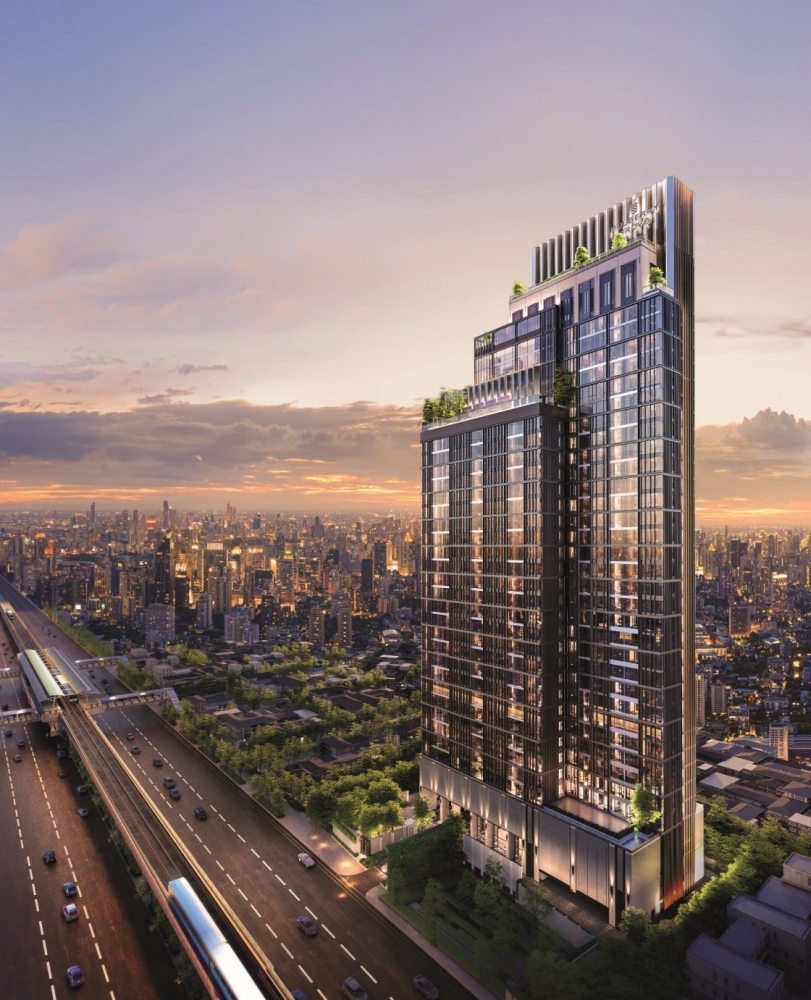 A total of 24 MQDC property projects are now at the planning stage, available for sale, in construction, or awaiting ownership transfer, worth a combined Bt300 billion, said the company. These include luxury projects such as Magnolias Waterfront Residences ICONSIAM (379 units) and The Residences at Mandarin Oriental, Bangkok (146 units), whose ownership transfer rates stand at nearly 100 per cent and 60 per cent, respectively, it said, adding the two projects combined value is more than Bt20 billion and the total transferred amount stands at Bt15 billion.
 Thiti Tantikulanan, executive chairman of Kasikorn Securities
 A storage tank containing liquid gas stands at the Natural Gas Liquids (NGL) facility in Saudi Aramco’s Shaybah oil field in the Rub’ Al-Khali (Empty Quarter) desert in Shaybah, Saudi Arabia. Photographer: Simon Dawson/Bloomberg
