Gulf donates 6,000 KN95 masks to Naval Medical Department #ศาสตร์เกษตรดินปุ๋ย

#ศาสตร์เกษตรดินปุ๋ย : ขอบคุณแหล่งข้อมูล : หนังสือพิมพ์ The Nation.

https://www.nationthailand.com/business/30388620?utm_source=category&utm_medium=internal_referral

Gulf donates 6,000 KN95 masks to Naval Medical Department

May 27. 2020
By The Nation

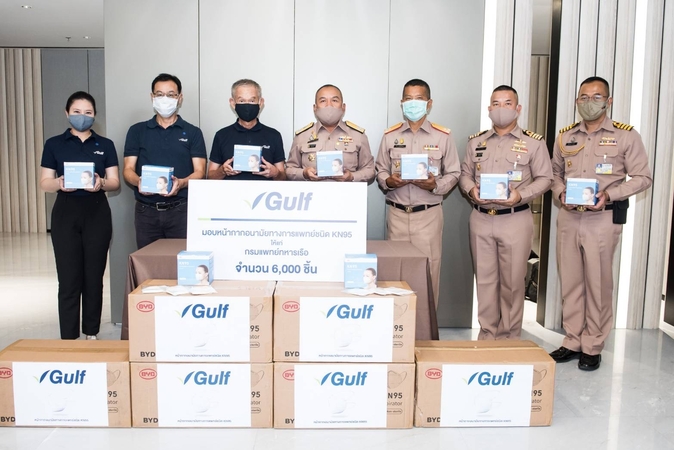
Gulf Energy Development Plc has donated 6,000 KN95 medical masks to the Naval Medical Department, to support medics in their long-term battle against the Covid-19 outbreak.

The move follows Gulf’s recent donations of KN95 masks to King Chulalongkorn Memorial Hospital and Phramongkutklao Hospital.

The latest donation was made by Gulf representatives Boonchai Thirati (third left), executive director; Boonchai Jeamjitjaroong (second left), head of communications; and Yanisa Wattanakumnuan (far left), vice president for Community Relations. Receiving the KN95 masks on behalf of the Naval Medical Department were Admiral Chatchai Srivorakan (fourth left), assistant Commander-in-Chief, Royal Thai Navy; and Vice Admiral Wichai Manassiriwittaya (fifth left), director of the Naval Medical Department.

Zyxel’s multi-gigabit switch promises flexible network speeds, full use of Wi-Fi 6 potential #ศาสตร์เกษตรดินปุ๋ย

#ศาสตร์เกษตรดินปุ๋ย : ขอบคุณแหล่งข้อมูล : หนังสือพิมพ์ The Nation.

https://www.nationthailand.com/business/30388612?utm_source=category&utm_medium=internal_referral

Zyxel’s multi-gigabit switch promises flexible network speeds, full use of Wi-Fi 6 potential

May 27. 2020
By The Nation

Zyxel Networks, a leader in delivering secure, AI and cloud-powered home and business solutions, on Wednesday (May 27) launched the new XS1930 series 10/12-port multi-gigabit smart managed switch, designed to help small and medium businesses (SMBs) achieve greater network flexibility and take full advantage of the latest Wi-Fi 6 technology.

Although the roll-out of the new Wi-Fi 6 standard boasts a lot of benefits for businesses, including faster speeds and better connectivity, it also puts a greater strain on existing bandwidth capabilities. “Multi-gigabit network switches are key to delivering a reliable network backbone to help companies unlock the full potential of Wi-Fi 6 when they’re ready for the upgrade,” the company said.

“Most gigabit switches typically only provide either 1G or 10G link speeds, limiting flexibility when looking to add 2.5G or 5G devices for new applications,” the company said.

Zyxel said its latest multi-gigabit switch, the XS1930 Series, supports variable speeds — from 100M, 1G, 2.5G, 5G to 10G — to best suit the applications and devices that require various network speeds in SMB offices.

“When upgrading to the XS1930, businesses can use their existing cables to best utilise the previous network investment and also be well prepared for future network expansion,” Zyxel said.

“The XS1930 series features the industry’s first five-colour LED design, which flashes one colour per speed to help network administrators easily identify the actual network performance. This makes it easier to recognise port speed by colours, with the maintenance indicators much more intuitive and user-friendly,” Zyxel said.

The growing adoption of mobile, Internet of Things and Wi-Fi 6 devices and their diversified applications have also raised the bars of power requirements on the network backbone.

“The XS1930-12HP supports the latest IEEE 802.3bt (PoE++) standard, with a large power budget of up to 375W to accommodate the high-power requirement needed by most Wi-Fi 6 devices, Zyxel said.

“SMBs now face an increasing demand of wireless bandwidth for daily operations, and the migration to Wi-Fi 6 further accelerates this trend. Upgrading to a better performing Wi-Fi network without compromising the solid backbone services can be challenging, and our new multi-gigabit switches are designed to bring the network performance you need with investment protected,” said Crowley Wu, vice president of Zyxel Networks’ Networking SBU.

With the high bandwidth and large power budget that the XS1930 switch offers, it can operate at 28-50 dBA – which is almost silent, making it ideal for small offices, boutique hotels, hostels or public-facing businesses, Xyxel said.

The XS1930 series includes two models — the XS1930-10 with eight multi-gig ports and two fiber uplinks, and the XS1930-12HP with eight multi-gig PoE ports, two multi-gig ports and two fiber uplinks.

THAI case accepted by bankruptcy court #ศาสตร์เกษตรดินปุ๋ย

#ศาสตร์เกษตรดินปุ๋ย : ขอบคุณแหล่งข้อมูล : หนังสือพิมพ์ The Nation.

https://www.nationthailand.com/business/30388608?utm_source=category&utm_medium=internal_referral

THAI case accepted by bankruptcy court

May 27. 2020
By The Nation

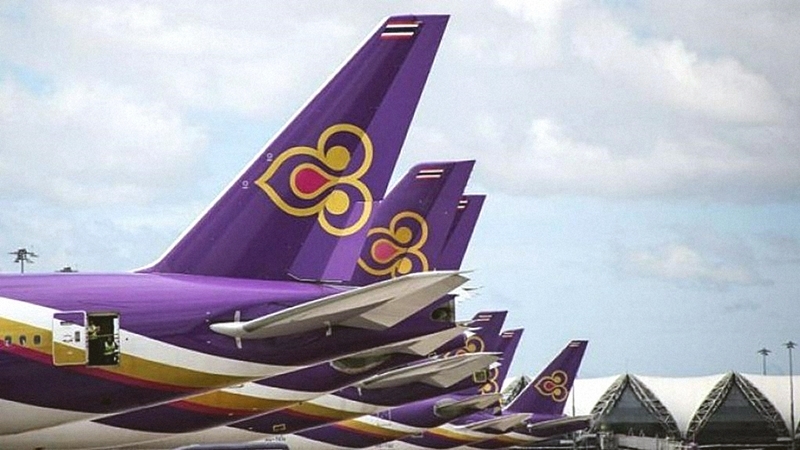
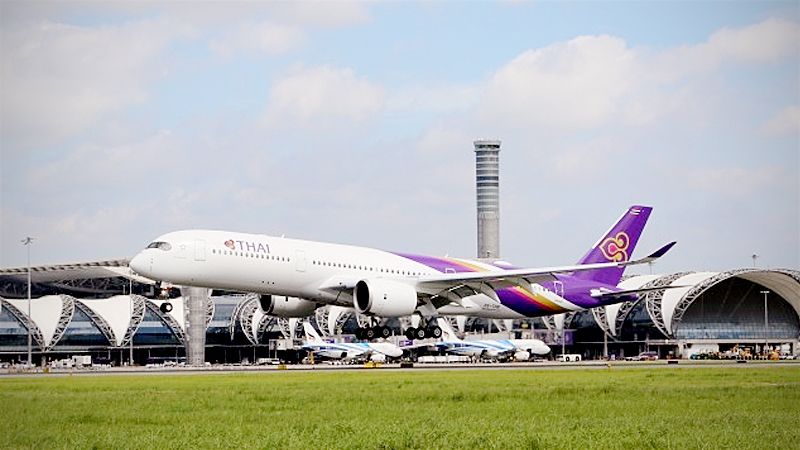
Thai Airways International’s request for restructuring under the bankruptcy law was accepted by the Central Bankruptcy Court on Wednesday (May 27).

The court ordered the ailing carrier to announce the filing twice in at least one national newspaper, no more than seven days apart.

Copies of the documents submitted by THAI to the court must also be sent to creditors, registrars of shareholders, the Legal Execution Department, the Securities and Exchange Commission and the Stock Exchange of Thailand, according to Section 90/9 of the Bankruptcy Act BE2483 (1940).

The first hearing will be held on August 17 at 9am, said the court.

It added that creditors of the airline who disagreed with the restructuring process should file a letter of opposition at least three days before the first hearing begins.

THAI has outstanding debts of about Bt245 billion.

CP to help sell SME products through 7-Eleven stores and online #ศาสตร์เกษตรดินปุ๋ย

#ศาสตร์เกษตรดินปุ๋ย : ขอบคุณแหล่งข้อมูล : หนังสือพิมพ์ The Nation.

https://www.nationthailand.com/business/30388580?utm_source=category&utm_medium=internal_referral

CP to help sell SME products through 7-Eleven stores and online

May 27. 2020
By THE NATION

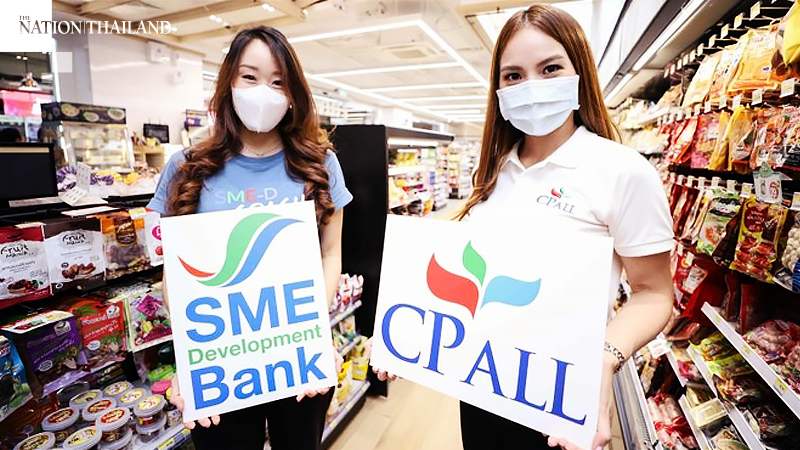
SMEs will be able to sell their products in 7-Eleven stores nationwide under an agreement between Small and Medium Enterprises Development Bank (SME D Bank) and CP All Plc, operator of the convenience store chain.

The SMEs can also tap the online channel at [www.ShopAt24.com], the bank’s managing director, Natnaree Ratthapat, said.

“The retail channels will include selected 7-Eleven stores nationwide, website [www.ShopAt24.com] — which has over 5 million visitors per month — and home shopping via the 24 Catalog magazine,” she added.

“The products will range from cosmetics, healthcare, personal care and food items. We will focus on promoting products that have suitable certifications to ensure the customers’ confidence in quality and safety, such as the FDA approval, GMP and Halal certificates.”

Interested SME operators can contact SME D Bank or call centre 1357 from May 27 until June 12.

Meanwhile, Suwit Kingkaew, senior vice president of sustainable development at CP All, said that the company was looking forward to helping SME operators during the Covid-19 crisis by selling their products and providing advice on product development to increase sales.

“In the past, the company has placed more than 20,000 products manufactured by SMEs in 7-Eleven shops, which helped more than 50,000 operators and farmers,” he said. “We expect that this programme will further help create sustainable growth among Thai SMEs and help the economy recover from the Covid-19 crisis as quickly as possible.”

Taxpayers paid to develop remdesivir but will have no say when Gilead sets price #ศาสตร์เกษตรดินปุ๋ย

#ศาสตร์เกษตรดินปุ๋ย : ขอบคุณแหล่งข้อมูล : หนังสือพิมพ์ The Nation.

https://www.nationthailand.com/business/30388571?utm_source=category&utm_medium=internal_referral

Taxpayers paid to develop remdesivir but will have no say when Gilead sets price

May 27. 2020
File photo/Syndication Washington Post, Bloomberg

File photo/Syndication Washington Post, Bloomberg
By The Washington Post · Christopher Rowland · NATIONAL, BUSINESS, HEALTH, POLITICS 

The drug that buoyed expectations for a coronavirus treatment and drew international attention for Gilead Sciences, remdesivir, started as a reject, an also-ran in the search for antiviral drugs. Its path to relevance did not begin until Robert Jordan cleared it.

A Gilead scientist at the time, Jordan convinced the company seven years ago to let him assemble a library of 1,000 castoff molecules in a search for medicines to treat emerging viruses. Many viral illnesses threaten human health but do not attract commercial interest, because they lack potential for huge drug sales.

“I kept asking them, ‘Is this OK?’ ” said Jordan, who is now a vice president at a pharmaceutical start-up. “These don’t represent a commercial opportunity but a public health opportunity. Gilead gave me their blessing to do this on the side.”

To make progress, Gilead needed help from U.S. taxpayers. Lots of help. Three federal health agencies were deeply involved in remdesivir’s development every step of the way, providing tens of millions of dollars of government research support. Now that big government role has set up a political showdown over pricing and access.

Despite the heavy subsidies, federal agencies have not asserted patent rights to Gilead’s drug, potentially a blockbuster therapy worth billions of dollars. That means Gilead will have few constraints other than political pressure when it sets a price in coming weeks. Critics are urging the Trump administration to take a more aggressive approach.

“Without direct public investment and tax subsidies, this drug would apparently have remained in the scrap heap of unsuccessful drugs,” Rep. Lloyd Doggett, D-Texas, chairman of the House Ways and Means health subcommittee, said this month. Doggett and Rep. Rosa DeLauro, D-Conn., have asked Health and Human Services Secretary Alex Azar for a detailed financial accounting of federal support for remdesivir’s discovery and development.

The HIV-prevention advocacy group PrEP4All Collaboration, working with the Technology Law & Policy Clinic at New York University, released an analysis Monday that said the government, because it helped cull the drug from hundreds of compounds, probably has a legal right to claim it co-invented remdesivir. It contends that government scientists should have been listed as co-inventors on remdesivir patents because of their contributions. It says the Trump administration should be leveraging the government’s involvement to ensure that the United States and other countries can get access at a low cost.

“Agencies can’t just punt it over the fence to a pharmaceutical company and walk away,” said James Krellenstein, a co-founder of PrEP4All. “For the federal government to just walk away from that responsibility is a dereliction of the public trust.”

Two other nonprofit watchdog groups, Knowledge Ecology International and Public Citizen, also have documented the large taxpayer-funded contributions toward the drug. Public Citizen estimates public investment at a minimum of $70 million.

“Gilead did not make this drug alone. The public helped make it, and the public has a stake,” said Peter Maybarduk, director of the access to medicines program at Public Citizen.

Gilead has acknowledged the large role of government agencies in remdesivir’s development but said that the original compound was discovered by Gilead researchers years earlier and that the government has no potential patent rights to the drug. It has said it will spend up to $1 billion on remdesivir manufacturing and development in 2020 as it rapidly increases production and distribution around the world.

“We are focused on getting this treatment into the hands of as many patients as possible and making sure it is both accessible and affordable to patients in the United States and around the globe,” company spokesman Ryan McKeel said in an email. “We take that responsibility to patients and families affected by covid-19 very seriously and we will work to make sure access is not an issue.

“Gilead researchers invented remdesivir more than a decade ago, identified its broad-spectrum antiviral activity, optimized the formulation of the product and scaled up the manufacturing process,” McKeel said. “Although government funding was used to further characterize remdesivir’s profile after its initial discovery, this did not result in the creation of the underlying intellectual property invented by Gilead.”

The story of the drug’s creation shows that Gilead would not be commercializing the drug if it were not for the extensive involvement of government scientists and agencies. The industry-government partnership crossed the finish line this month when the Food and Drug Administration issued an emergency use authorization clearing remdesivir to treat hospitalized patients with covid-19, the disease caused by the coronavirus.

Screening a huge number of chemicals for effective drugs is arduous work and often fails to produce a winner. In remdesivir’s case, government researchers narrowed the search from 1,000 compounds to the chemical that would become remdesivir, confirmed its potency in laboratory tests, tested it in monkeys, and finally sponsored a pivotal clinical trial in humans.

Jordan sent Gilead’s screening library to the Centers for Disease Control and Prevention in Atlanta, and to Fort Detrick in Frederick, Maryland, home to the U.S. Army Medical Research Institute of Infectious Diseases (USAMRIID). Scientists at both federal facilities study dangerous viruses in high-security biocontainment labs. The National Institutes of Health and academic labs in Tennessee and North Carolina that receive NIH grants also would play key roles studying the drug in mice.

Front-line government scientists who worked directly with Gilead on the drug described the heavy involvement of federal resources in the drug’s development, though they said their concern at the time was not patents but speeding treatments in the battle against dangerous diseases, especially Ebola.

The former chief scientific officer at USAMRIID who supervised the development of remdesivir, Sina Bavari, said the team was working rapidly on a treatment for Ebola in 2014 and did not consider filing a patent application when the agency’s scientists helped discover new uses of the drug and tested it in government monkeys. Bavari and other government scientists were co-authors of an article in the scientific journal Nature that described its discovery and successful tests in the government’s rhesus monkeys.

Gilead contributed the drug and spent millions from its own budgets to hone the drug’s formulation, said Bavari, who now runs his own consulting company. Deciding when to file a government patent in the case of industry partnerships presents a “tightrope” for public health agencies that want to maintain positive relationships with industry partners, Bavari said.

Many antiviral drugs are taken for a short time and given to relatively few people. They do not represent large markets, so government subsidies are used to keep corporations interested in pursuing treatments, he said.

“Without incentivizing some of these companies to stay attached to emerging disease, I think they will walk away, even after this one,” he said. “In this situation [filing for a government patent] would have caused more harm with Gilead and not been worth it.

“The government’s job is to make sure industry is successful, and if industry is successful, then we all benefit from it.”

An Army lawyer said the Gilead drug did not meet the threshold of a government co-invention.

“Although USAMRIID performed extensive and critical screening and testing for Gilead, testing a compound and finding that it is indeed an effective antiviral compound does not qualify USAMRIID as a joint inventor of the compound,” Leigh Callander, chief patent counsel for the U.S. Army Medical Research and Development Command, said in an email.

An independent organization that measures the cost-effectiveness of drugs said Gilead could be justified in charging up to $4,500 for a 10-day course of treatment for a single coronavirus patient. But advocates, citing a study by academic researchers on what it costs to make the drug, have said Gilead could break even by charging $1 per dose.

The Department of Health and Human Services, in response to emailed questions, said it was too early to discuss pricing of remdesivir but noted that the government has reimbursed hospitals and other providers for the costs of testing and treating people with no health insurance. For those with insurance, many insurance companies have waived patient co-payments for covid-19-related care and therapies, it said.

“The Trump Administration is committed to ensuring Americans have access to life-saving therapeutics and vaccines as we combat this pandemic,” it said.

Gilead is donating the first 1.5 million doses to governments worldwide, which it said was enough for at least 140,000 patients through the end of May. More than half of that was targeted for U.S. patients. The drug is given intravenously in the hospital for five to 10 days. Gilead is investigating ways of making the drug in pill form, which could dramatically increase use – and sales – especially if the coronavirus lasts for years in the human population.

Because Gilead tackles viral targets, it has a long history of working closely with the CDC and the NIH to develop drugs for infectious diseases that other companies have shunned, especially HIV and hepatitis C. But Gilead’s pricing and intellectual property practices have drawn public and congressional criticism.

The company received negative publicity for pricing its hepatitis C drug Sovaldi at $84,000 for a 12-week course of treatment in 2013. Last year, after a report in The Washington Post and congressional scrutiny, the Department of Justice filed a lawsuit to enforce a government patent on the HIV prevention Truvada for PrEP (pre-exposure prophylaxis) after Gilead refused to recognize its legitimacy. As that court fight is being waged, Gilead continues to charge more than $20,000 a year for Truvada for PrEP. It said last year that it would donate 2.4 million bottles per year of Truvada through 2030 to contribute to a government plan to combat HIV.

Still, like other pharmaceutical and biotechnology companies, behind the aggressive business and patent strategies are thousands of scientists who spend careers discovering and developing medicine to fight disease. Jordan said Gilead scientists volunteered to help him identify potential drugs in the company’s library that could interfere with viral replication.

Remdesivir’s parent compound GS-441524 was invented about 2009 when Gilead was looking for drugs to treat hepatitis C, according to Gilead.

In 2013, Jordan – who now works at Meissa Vaccines, a California start-up – included GS-441524 in the set of samples he sent to CDC scientist Michael Lo in Atlanta for testing against Nipah virus, a bat-borne disease found in parts of Asia. The compound showed promise not just against Nipah but also as a broad-spectrum antiviral. It interfered with virus RNA and stopped replication.

Lo “had a collection of human virus in the freezer and asked, ‘Do you mind if we try it against filovirus, Ebola?’ ” Jordan said. By that time, an Ebola outbreak had begun in West Africa, and labs around the world were scrambling to respond.

In 2014, Lo said he was examining a readout from the CDC’s laboratory tests of the compound showing that the drug had a strong effect against Ebola virus in lab containers.

“It was a very exciting moment,” Lo said. “We were the first to really identify that this compound had promise against Ebola.”

Lo said questions about government patents were not discussed at the time and said such decisions were “above my pay grade.” The CDC did not respond to a question about whether it considered filing a patent for the work of Lo and other CDC scientists.

Jordan also had sent the library to another agency with advanced capabilities to develop drugs for virus: USAMRIID, the lead unit for biological defense research in the U.S. military. Bavari said government scientists rapidly got to work conducting virus screening on trays of 384 chemical samples at a time. Bavari estimated that up to 15 government scientists at USAMRIID worked on the program.

GS-441524 stood out for its potent activity against Ebola virus, Bavari said.

“We started communicating back and forth with CDC and repeated the test. They had similar data,” he said. “It definitely was a breakthrough.”

Jordan said he went back to his superiors at Gilead with the laboratory data from CDC and USAMRIID screening tests as the Ebola outbreak in West Africa continued. The company’s interest in proceeding with a rapid development program was strong, he said.

“That launched a significant effort at Gilead to focus a lot of resources to developing this compound as quickly as possible and getting into patients as quickly as possible,” he said.

Gilead’s chemists in California took a crucial step toward making the compound work in animals and people: They turned the parent molecule into a prodrug, which means it is activated after it enters the body, and tweaked the compound further to make it more potent once it gets inside cells, Jordan and Bavari said. The result was GS-5734, later named remdesivir.

The next step by the government provided another vital milestone: Remdesivir was tested in government monkeys infected with Ebola at USAMRIID. When given within three days of infection to monkeys, the drug showed 100% efficacy against Ebola, the researchers found.

In humans, the drug was being tested by Gilead in healthy volunteers for safety by 2015, and the next year NIH tested it in Ebola survivors in West Africa. The NIH sponsored the next major step, a clinical trial in humans infected with Ebola in the Congo in 2018 and 2019. The drug performed worse than two other drugs and its use was stopped in the trial, but that did not stop federally sponsored research.

Researchers at Vanderbilt University and the University of North Carolina, with funding from an NIH-funded Antiviral Drug Discovery and Development Center (AD3C), studied how remdesivir performed against emerging diseases called severe acute respiratory syndrome (SARS) and Middle East respiratory syndrome (MERS).

In addition to distributing grants and funding clinical trials, the NIH also has taken a direct interest in remdesivir. In a key federal animal trial that gave federal investigators greater confidence in the drug, the National Institute of Allergy and Infectious Diseases tested the drug as a MERS prevention in government monkeys at the Rocky Mountain Laboratories in Hamilton, Montana. The results, published this year, showed that monkeys given the drug did not get sick and had low volumes of virus in their lungs.

Once the coronavirus pandemic struck, the World Health Organization identified remdesivir as among the most promising potential treatments for the disease – raising hope for rapid help for sick patients.

The finish line came within sight with uncommon speed. NIAID sponsored a fast-paced clinical trial of remdesivir in more than 1,000 SARS-CoV-2 patients that began in February. (SARS-CoV-2 is the technical name for the novel coronavirus.) NIAID director Anthony Fauci – a top adviser to President Donald Trump’s coronavirus task force – announced partial, top-line results from the White House on April 29: The drug shortened hospital stays by four days and reduced mortality from 11.6% to 8%, which was not considered a significant reduction in death, Fauci said.

Fauci said the results were modest. But, lacking any other treatments, he proclaimed the drug the “standard of care” for hospitalized coronavirus patients. Full results of the trial have not been released, and many questions about the drug’s effectiveness remain unanswered.

But Jordan, the former Gilead researcher who pulled the parent molecule out of the company’s library of compounds seven years ago, said he was happy with the results.

“I was very excited about that. This isn’t a home run. It’s clinical evidence that you can improve outcomes with an antiviral,” he said. “The fact that we can do something to this disease, that’s a great start.”

Warner Music group sets terms for up to $1.8 billion IPO #ศาสตร์เกษตรดินปุ๋ย

#ศาสตร์เกษตรดินปุ๋ย : ขอบคุณแหล่งข้อมูล : หนังสือพิมพ์ The Nation.

https://www.nationthailand.com/business/30388567?utm_source=category&utm_medium=internal_referral

Warner Music group sets terms for up to $1.8 billion IPO

May 27. 2020
By Syndication Washington Post, Bloomberg · Angelina Rascouet · BUSINESS, ENTERTAINMENT, MUSIC 

Warner Music Group Corp. reignited its plans for an initial public offering, becoming the latest music company to cash in on a streaming boom that’s only accelerated in the coronavirus era.

Backed by billionaire Len Blavatnik, shareholders of the New York-based record group behind artists such as Cardi B, Ed Sheeran and Bruno Mars plan to sell 70 million shares of its Class A common stock priced between $23 and $26 a share — raising as much as $1.8 billion — according to a regulatory filing on Tuesday.

The offering consists entirely of secondary shares to be sold by Blavatnik’s Access Industries and certain related selling stockholders, the filing said. Warner Music won’t retain any of the money raised.

Music sales have surged in recent years thanks to the growth of paid streaming services from Spotify Technology and Apple. That’s boosted the value of music companies and enticed investors back to the record industry.

Warner Music initially filed for the IPO in early February, then shelved the plan in March as markets plunged in the early stages of the coronavirus pandemic. But as painful as the crisis has been in lost lives and broad economic disruption, it has also brought winners — including streaming companies. Spotify shares, for example, have risen 36% since Reuters reported that Warner Music would delay the offering.

Blavatnik, a Ukrainian-American, has a net worth estimated at $22.9 billion, according to the Bloomberg Billionaires Index. He bought Warner Music for $1.3 billion in 2011, when the music industry was in the depths of a 15-year decline. Warner Music sales have climbed by 50% since 2015. The company reported net income of $258 million in fiscal 2019 on revenue of $4.48 billion.

Warner Music’s investors aren’t the only ones taking advantage of the industry’s resurgence. Vivendi SA agreed last year to sell a minority stake in Universal Music Group, the world’s largest music company, to a group led by China’s Tencent Holdings Ltd. That transaction valued the business at 30 billion euros ($32.9 billion).

Warner markets its music through labels such as Atlantic Records, Warner Records and Parlophone. It also owns Warner Chappell, a music publishing business. While the labels work with recording artists, publishers represent songwriters. Songwriters signed to Warner Chappell include Lizzo and Katy Perry. Recorded music made up 86% of Warner Music’s sales last year, but publishing is a stable, profitable business.

Morgan Stanley, Credit Suisse Group, and Goldman Sachs are acting as joint bookrunners and as representatives of the underwriters for the offering.

Amazon-backed voice AI startup DefinedCrowd sets sights on IPO #ศาสตร์เกษตรดินปุ๋ย

#ศาสตร์เกษตรดินปุ๋ย : ขอบคุณแหล่งข้อมูล : หนังสือพิมพ์ The Nation.

https://www.nationthailand.com/business/30388566?utm_source=category&utm_medium=internal_referral

Amazon-backed voice AI startup DefinedCrowd sets sights on IPO

May 27. 2020
By Syndication Washington Post, Bloomberg · Natalia Drozdiak · BUSINESS, TECHNOLOGY

DefinedCrowd, an Amazon.com Inc.-backed startup that provides data sets to train artificially intelligent speech programs, is setting its sights on a public listing in the next five years as voice interactions between humans and machines become more common.

The Seattle-based company raised $50.5 million in a recent funding round led by existing investors, paving the way for an initial public offering within the next five years, Chief Executive Officer Daniela Braga said in an interview. The company declined to comment on its valuation.

“It’s the road to an IPO,” Braga said, adding her company’s ambition is to support the development of AI so that people eventually will “communicate with machines the same way we do with humans.”

Founded by Braga in 2015, DefinedCrowd curates voice and text data for clients including BMW and Mastercard to train virtual assistants and customer-service chatbots. The company designs the sets to be diverse and balanced, representing certain dialects or age ranges for audiences most likely to use the systems. Revenue grew 656% last year and is expected to triple this year, Braga said.

Once the pandemic subsides, Braga said she expects businesses from a range of industries – including telehealth and education – to build AI personal assistants to better serve customers, something that might require more specific data that incorporates an industry’s vocabulary.

Amazon, Apple Inc. and Alphabet Inc.’s Google have come under fire over revelations they used recordings of customers’ interactions with virtual assistants to train their AI systems. A former contractor working on Apple’s Siri transcription project in Ireland last week complained to European privacy authorities over the “massive violation of the privacy of millions of citizens.” The companies said they’ve made changes to provide users with more control over their data.

By contrast, DefinedCrowd uses a crowdsourcing platform, Neevo, to generate data from a paid community of more than 290,000 members in 70 countries. Crowd members are asked to complete tasks like recording their voices or transcribing and annotating recordings rather than pulling data from customers who are using voice AI products.Braga said the newly raised funds will help the company expand its products and nearly double the number of employees in 2020. The company current employs around 268 people. Existing investors that participated in the funding round include Evolution Equity Partners, Kibo Ventures, Portugal Ventures, Bynd Venture Capital, EDP Ventures, and Ironfire Ventures as well as new investors Semapa Next and Hermes GPE.Amazon and Sony Corp., which is also an existing investor, didn’t increase their stakes in the latest round, Braga said, adding it was a strategic move not to increase the involvement of other companies as DefinedCrowd moves toward an IPO.

Novavax jumps after starting covid-19 vaccine study #ศาสตร์เกษตรดินปุ๋ย

#ศาสตร์เกษตรดินปุ๋ย : ขอบคุณแหล่งข้อมูล : หนังสือพิมพ์ The Nation.

https://www.nationthailand.com/business/30388565?utm_source=category&utm_medium=internal_referral

Novavax jumps after starting covid-19 vaccine study

May 27. 2020
By Syndication Washington Post, Bloomberg · Cristin Flanagan · BUSINESS, US-GLOBAL-MARKETS 

Novavax jumped at much as 18% on Tuesday after initiating testing of its coronavirus vaccine candidate in people. The biotech anticipates providing a first look in July at what sort of immune responses are generated.

In the first part of the study, 130 healthy adult volunteers at two sites in Australia will get two doses of NVX-CoV2373, the biotech’s experimental vaccine. If the initial results look promising, the company plans to quickly move into the second phase of the trial, which would expand testing to other countries and age groups outside of 18 to 59.

Novavax’s valuation has swelled by more than 1,000% to about $2.7 billion since the start of the year despite having no products on the market. With about $388 million in funding from the Oslo-based Coalition for Epidemic Preparedness Innovations in its pocket, Novavax has said it is targeting emergency-use authorization and production could be scaled up to 100 million doses by year end.

“Our investment in Novavax allows us to focus on manufacturing in parallel with the clinical development of the vaccine, so that if the vaccine is proven to be safe and effective, we can make doses available to those who need them without delay,” CEPI chief executive Richard Hatchett, said in a statement.

The Gaithersburg, Maryland-based company is one of an estimated 10 that have begun testing vaccines for the pandemic in people, according to the World Health Organization. WHO estimates there are more than 100 other vaccine candidates in earlier stages of development. Moderna Inc. reported the first covid-19 vaccine results in humans last week.

Smaller vaccine developers are racing alongside larger, profitable drugmakers like Pfizer and AstraZeneca as well as academic institutions. Even if a vaccine is eventually shown to be effective, there will be hurdles to manufacturing as well as distribution.

With Novavax shares at the highest in over a week, B Riley FBR’s Mayank Mamtani said the stock could return to its May 15 record high, the analyst recommended buying shares ahead of the July results.

EU sets its price for backing $9.8 billion Lufthansa rescue #ศาสตร์เกษตรดินปุ๋ย

#ศาสตร์เกษตรดินปุ๋ย : ขอบคุณแหล่งข้อมูล : หนังสือพิมพ์ The Nation.

https://www.nationthailand.com/business/30388555?utm_source=category&utm_medium=internal_referral

EU sets its price for backing $9.8 billion Lufthansa rescue

May 26. 2020
A weathered Deutsche Lufthansa logo sits on a passenger check-in desk at Frankfurt Airport in Frankfurt, Germany, on May 12, 2020. MUST CREDIT: Bloomberg photo by Alex Kraus.

A weathered Deutsche Lufthansa logo sits on a passenger check-in desk at Frankfurt Airport in Frankfurt, Germany, on May 12, 2020. MUST CREDIT: Bloomberg photo by Alex Kraus.
By Syndication The Washington Post, Bloomberg · Aoife White, William Wilkes, Birgit Jennen, Patrick Donahue

The German government’s 9 billion-euro ($9.8 billion) bailout of Deutsche Lufthansa may cost the stricken carrier some valuable assets: Key flight slots at airports in Frankfurt and Munich.

The European Commission wants Lufthansa to surrender the slots out of concern the aid will give the carrier unfair advantage over competitors, people familiar with the matter said.

After weeks of talks, Germany on Monday offered Lufthansa a package of loans and equity investment to keep the carrier aloft through the coronavirus storm. Officials in Brussels are concerned the deal will distort competition and fuel lawsuits from competitors like Ryanair Holdings, the people said. Approval of the deal could take several weeks, they said, asking not to be named discussing confidential deliberations.

To compensate for the state help, the European Union’s executive arm also would like the airline to decrease the number of aircraft based in Germany, the people said. German Chancellor Angela Merkel told a meeting of conservative lawmakers the government would fight for Lufthansa to keep key slots, people familiar with the matter said.

“The discussions with the European Commission are continuing at full speed,” German Economy Minister Peter Altmaier said Monday at a news conference in Berlin. “So far, we have managed to get approval from Brussels for all our aid requests during the corona crisis. How long it will take I cannot say, but the main point for us is that we want to achieve a good result.”

Lufthansa shares advanced on Tuesday, building on Monday’s 7.5% gain in the wake of the deal. As of 2:33 p.m. in Frankfurt, the stock was up 6%. Still, it remains down 44% for the year.

Analysts at Deutsche Bank said that while some of the terms of the German government deal were less punitive than expected, it would leave Lufthansa with high debt levels.

Still, the cost of protection against a default by Lufthansa touched its lowest level in a month, according to Bloomberg data. Bonds were mixed, with a hybrid note due in 2075 rising 3.4 cents to 79.3 cents, while the senior note maturing in 2024 fell 1.9 cents to 91.6 cents.

“Lufthansa still faces huge challenges, including the right-sizing of the company and difficult labor talks,” Societe Generale analysts Michael Kuhn and Sumit Mehrotra wrote in a note to clients. In addition to potential snags for the deal in Brussels, “the main profit driver, intercontinental traffic, will take a long time to recover.”

Airport slots are a crucial currency for airlines, providing them with the ability to operate flights at popular times and to coveted destinations. It’s a commodity that EU regulators have often asked carriers to cede to smaller rivals when seeking approval for mergers, including during Lufthansa’s 2017 takeover of a unit of Air Berlin.

While airport capacity is being under-used while Lufthansa and other airlines focus on survival, they will be back in demand once travel starts to recover.

Like airlines the world over, Lufthansa has been struggling to stay afloat after the coronavirus punctured a decades-long aviation boom. The company plans to operate fewer aircraft when flights resume and is closing discount arm Germanwings to resize for what it warns could be years of depressed demand.

The EU press office said it had no comment on the Lufthansa plan and was “in constant contact” with governments. It defended the need for “additional commitments to preserve effective competition” that are required for recapitalizations of more than 250 million euros to a company, according to an emailed statement.

“This is important to preserve the level playing field in the single market post-coronavirus crisis to the benefit of all European consumers and companies,” the EU said.

The Lufthansa package will be the first recapitalization to be weighed by the EU after it loosened rules this month that usually prevent governments from pumping money into favored firms. EU approvals for aid can be challenged and potentially overturned in the EU courts where Ryanair is also suing previous EU orders to allow airline aid.

Ryanair vowed to carry out Chief Executive Officer Michael O’Leary’s threat to challenge the German bailout, saying it could “further strengthen Lufthansa’s monopoly-like grip” on the German air travel market.

“Lufthansa can use this latest 9 billion euro subsidy from the German government to engage in below-cost selling on its short haul intra-EU routes and its long haul routes,” the company said in a statement. “How can airlines like Ryanair, EasyJet and Laudamotion be expected to compete with Lufthansa in the short-haul market to and from Germany?”

EU officials are aware of the need for speedy approvals, said Margrethe Vestager, the bloc’s antitrust chief. Officials have been “working seven days a week around the clock” and at night “in order to make sure that things can be processed as fast as possible,” she told EU lawmakers on Monday.

The German aid package unveiled on Monday involves taking an initial 20% stake in Lufthansa that could rise to a blocking minority of 25% plus one share in the event of a hostile takeover. The support also includes a 5.7 billion-euro investment via a so-called silent participation — a debt-equity hybrid instrument that wouldn’t dilute shareholder voting rights. The state will also back a three-year loan of 3 billion euros.

As well as approval from the European Commission, the plan needs sign-off from Lufthansa’s supervisory board, and shareholders will have to vote on the capital increase at a special meeting, likely to be held in late June.

Lufthansa is also poised to receive some 2 billion euros in aid from Austria, Belgium and Switzerland, where the airline owns units.

Swiss state credit guarantees worth 1.28 billion francs ($1.3 billion) have already been agreed. Spohr is set to speak with Austrian Chancellor Sebastian Kurz this week to finalize an aid deal totaling about 600 million euros, equally split between loans and equity, according to people familiar with the matter. The Belgian package will be about half the size of the Austrian, plan, according to local reports.

The German package represents the biggest corporate rescue in the country during the pandemic crisis. It’s also the only one that involves a direct investment by Merkel’s government, but more may be coming. The government set up the 100 billion-euro fund to buy stakes in stricken companies as part of its effort to stabilize Europe’s largest economy.

THAI applies for rehabilitation under bankruptcy law #ศาสตร์เกษตรดินปุ๋ย

#ศาสตร์เกษตรดินปุ๋ย : ขอบคุณแหล่งข้อมูล : หนังสือพิมพ์ The Nation.

https://www.nationthailand.com/business/30388534?utm_source=category&utm_medium=internal_referral

THAI applies for rehabilitation under bankruptcy law

May 26. 2020
By THE NATION

Thai Airways International Plc’s legal team on Tuesday (May 26) reportedly filed with the Bankruptcy Court for the carrier to enter rehabilitation process under the bankruptcy law.

The move was in line with a recent Cabinet resolution. The Central Bankruptcy Court will decide on Wednesday (May 27) whether it will take into consideration the option of THAI undergoing rehabilitation under the bankruptcy law.

Prime Minister Prayut Chan-o-cha on Monday also signed off the appointing of a committee tasked with following up on the airline’s rehabilitation.

The nine-member committee, chaired by Deputy PM Wissanu Krea-ngam, includes former finance minister Apisak Tantiworawong, Finance Ministry’s permanent secretary Prasong Poontaneat and Transport Ministry’s permanent secretary Chaiwat Thongkamkoon.

The committee represents the government in following up on the airline’s rehabilitation under the court’s supervision as well as give advice to related state agencies in solving THAI’s problems that are not related to the court process.