Deutsche Bank resumes job cuts as bosses forgo a month’s pay #ศาสตร์เกษตรดินปุ๋ย

#ศาสตร์เกษตรดินปุ๋ย : ขอบคุณแหล่งข้อมูล : หนังสือพิมพ์ The Nation.

https://www.nationthailand.com/business/30387815?utm_source=category&utm_medium=internal_referral

Deutsche Bank resumes job cuts as bosses forgo a month’s pay

May 14. 2020
The Deutsche Bank logo sits on the bank's campus office building in Frankfurt., Germany. MUSTS CREDIT: Bloomberg photo by Krisztian Bocsi.

The Deutsche Bank logo sits on the bank’s campus office building in Frankfurt., Germany. MUSTS CREDIT: Bloomberg photo by Krisztian Bocsi.
By Bloomberg · Steven Arons, Nicholas Comfort · BUSINESS, WORLD, US-GLOBAL-MARKETS, EUROPE

Deutsche Bank abruptly ended a hiatus on staff dismissals, becoming the first major bank to say it will resume job cuts after the coronavirus outbreak put the plans on hold.

“We decided to further accelerate our cost reduction program,” CEO Christian Sewing said in remarks prepared for the lender’s annual general meeting next week. “It’s precisely because the transformation is essential for the future of our bank and we bear responsibility for a sustainable business model that we will, unfortunately, have to resume these personal discussions.”

Global banks put staff firings on hold as the outbreak spread in March to avoid adding to employee hardship. Deutsche Bank’s cuts are a key plank of its restructuring efforts, which include as many as 18,000 jobs — or 20% of its workforce — and a narrowing of the bank’s international ambitions unveiled by the CEO last year.

Investment banks such as Morgan Stanley, Citigroup Inc. and HSBC Holdings Plc have pledged to hold off on dismissals during the pandemic this year, reassuring employees about their income and health insurance as the economy reels from the spread of the deadly virus.

The German lender — which has been battling lower profitability for years — said at the end of March that it was freezing cuts to “avoid additional emotional distress in the current environment,” and pledged to keep the suspension in place until “a return to greater stability in the world around us.” The bank’s top bosses renounced a month’s pay as part of the announcement late on Tuesday.

Germany is gradually seeing a resumption of more normal life. On Wednesday the country said that it will reopen borders by June 15. Germany recorded a decline in the number of new coronavirus cases and the country’s infection rate dropped below a key threshold, as the country continues a gradual easing of restrictions on daily life.

While Deutsche Bank suspended its plans, other European banks haven’t interrupted redundancies central to their turnaround efforts. UniCredit reached an agreement with workers last month to cut 5,200 existing jobs in Italy through 2023. Germany’s Commerzbank is also continuing talks on reductions, Chief Financial Officer Bettina Orlopp told Bloomberg TV on Wednesday in Frankfurt.

Deutsche Bank is sticking to its financial targets for 2022, Sewing said. The lender also said last month that credit provisions will continue to rise this quarter after a surge during the first three months of the year, while revenue will grow less strongly than previously thought.

Sewing also hinted at deal-making to come, saying the bank’s global scale and relative strength “is something that will help us when consolidation in the European banking sector happens — as it inevitably will and must.”

Deutsche Bank’s two top executive bodies — the management board and the group of managers just below it — are forgoing a month’s pay, Sewing said, making them the latest senior bankers around Europe to take a cut as regulators urge restraint as they deal with the pandemic. Bloomberg previously reported Deutsche Bank was considering changes to top pay.

Germany’s largest lender is in the throes of a massive restructuring effort that aims to return it to profitability after five consecutive annual losses. As part of that plan, Sewing has vowed to also exit equities trading.

“We have to make our bank even more weatherproof – or, to be more precise, storm-proof,” Sewing said in the remarks ahead of next week’s AGM. “No one knows exactly what the second and third-round effects of this pandemic will be.”

Commerzbank takes $520 million virus hit as provisions jump #ศาสตร์เกษตรดินปุ๋ย

#ศาสตร์เกษตรดินปุ๋ย : ขอบคุณแหล่งข้อมูล : หนังสือพิมพ์ The Nation.

https://www.nationthailand.com/business/30387810?utm_source=category&utm_medium=internal_referral

Commerzbank takes $520 million virus hit as provisions jump

May 13. 2020
By  Syndication Washington Post, Bloomberg · Steven Arons · BUSINESS, US-GLOBAL-MARKETS 

Commerzbank took a 479 million-euro ($520 million) hit to deal with the fallout from the coronavirus crisis, joining peers in marking down assets and boosting reserves to deal with bad loans.

The Frankfurt-based bank said on Wednesday that 185 million euros of its 326 million euros in credit provisions were directly related to the outbreak, while the crisis also caused a hit of 295 million euros in the value of customer derivatives. Commerzbank said credit provisions could reach 1.4 billion euros this year, making its goal of posting a profit “very ambitious.”

The outbreak has added urgency to a four-year turnaround effort by Chief Executive Officer Martin Zielke that has failed to restore robust profitability. While he cut soured loans, a pivot toward retail and corporate lending in Commerzbank’s home market is leaving it exposed to negative interest rates and business disruptions. Zielke is now working on his third round of cost cuts and hired McKinsey & Co. to review his business model, Bloomberg has reported.

“We’re looking into our costs again and we definitely want to increase our profitability target,” Chief Financial Officer Bettina Orlopp said in an interview on Bloomberg TV. “Indeed, corona has added some new lights on it and we will incorporate that and we will update you in the summer.”

Bloomberg reported Tuesday that Commerzbank is considering deeper cuts to its vast branch network as the crisis forces more clients online, allowing Zielke to reverse course on a pledge that he would keep most branches. The CEO has come under pressure from his largest shareholders after his previous targets were widely seen as unambitious.

“Customer behavior, especially the German one, is really changing,” Orlopp said. “We’re thoroughly analyzing the situation and also the impact on our business model and we will adapt to it.”

Risk provisions for the full year could rise to between 1 billion euros and 1.4 billion euros, the bank said. Orlopp said that prediction was based on the assumption of a u-shaped economic recovery, with no second lockdown.

All European banks have reported higher credit provisions this earnings season though the increases have generally been much lower than the ones by peers in the U.S. European regulators have given lenders the leeway to take a longer-term view when forecasting how much of their loans may go bad, allowing the firms to consider the eventual recovery from the pandemic-induced slump.

In the neighboring Netherlands, ABN Amro Bank also on Wednesday reported credit provisions of 1.1 billion euros and said the figure could rise to 2.5 billion euros for the full year. Like Commerzbank, ABN Amro is still part-owned by its government after a bailout in the wake of the 2008 financial crisis, underscoring just how slow European lenders have been to rebound.

Commerzbank fell 2.8% at 9:04 a.m. in Frankfurt, bringing losses this year to 43%. ABN Amro slumped 4.4% in Amsterdam and is down 61% so far in 2020.

Commerzbank on Monday scrapped its plan to sell its Polish subsidiary mBank SA after it was unable to get a good price for it. Zielke had planned to sell the unit to fund a restructuring of Commerzbank’s domestic operations. He later said a better-than-expected capital cushion had reduced the rationale for the deal.

Commerzbank lowered the full-year target for its common equity Tier 1 ratio — a key measure of capital strength — to at least 12.5%, citing lower regulatory requirements. The metric stood at 13.2% at the end of the first quarter.

More details from Commerzbank’s first-quarter earnings:

– 1Q revenue EU1.85 billion, estimate EU1.97 billion.

– 1Q loss EU295 million, estimate loss EU217.9 million.

– 1Q operating loss EU277 million, estimate loss EU169.5 million.

– 1Q pretax loss EU233 million, estimate loss EU157.7 million.

– 1Q common equity Tier 1 ratio 13.2% vs. 12.7% y/y.

Shell gives hope for dividend boost once oil-market rout is over #ศาสตร์เกษตรดินปุ๋ย

#ศาสตร์เกษตรดินปุ๋ย : ขอบคุณแหล่งข้อมูล : หนังสือพิมพ์ The Nation.

https://www.nationthailand.com/business/30387806?utm_source=category&utm_medium=internal_referral

Shell gives hope for dividend boost once oil-market rout is over

May 13. 2020
Oil drums containing lubricant oil sit on a conveyor belt as they are prepared for shipping at the Royal Dutch Shell lubricants blending plant in Torzhok, Russia, on Feb. 7, 2018. MUST CREDIT: Bloomberg photo by Andrey Rudakov.

Oil drums containing lubricant oil sit on a conveyor belt as they are prepared for shipping at the Royal Dutch Shell lubricants blending plant in Torzhok, Russia, on Feb. 7, 2018. MUST CREDIT: Bloomberg photo by Andrey Rudakov.
By Syndication Washington Post, Bloomberg · Laura Hurst · BUSINESS, US-GLOBAL-MARKETS 

Royal Dutch Shell said it will be well placed to boost shareholder payouts once the oil market recovers as it sought to appease investors after last month’s surprise dividend cut.

Shell tore up the industry’s financial playbook when oil’s collapse forced it to slash payouts. For decades, Big Oil had used its hefty balance sheet to borrow money when needed and keep investors sweet until the next upward cycle. But 2020’s unprecedented market rout has seen several large players — Exxon Mobil and Equinor as well as Shell — freeze or reduce dividends.

When “our outlook stabilizes and our balance sheet is in the right position, then we should be in a very strong position to increase shareholder distributions,” Chief Financial Officer Jessica Uhl said Wednesday on an investor call, citing the potential for both dividends and share buybacks.

The Anglo-Dutch company’s shareholder returns had looked unaffordable even before the coronavirus pandemic hit. The company said in January it had slowed the pace of its buyback program and was unlikely to hit its $25 billion target this year. In March, it announced the cancellation of the next tranche of purchases as the severity of the outbreak became clear.

Shell has had to pull on “financial levers” harder than it would have liked, Chief Executive Officer Ben van Beurden said Wednesday on the call. Cutting the dividend doesn’t give the company more money to spend, but means it no longer needs to borrow to finance the payout, he said.

Govt puts troubled THAI in a spot over recovery plan #ศาสตร์เกษตรดินปุ๋ย

#ศาสตร์เกษตรดินปุ๋ย : ขอบคุณแหล่งข้อมูล : หนังสือพิมพ์ The Nation.

https://www.nationthailand.com/business/30387778?utm_source=category&utm_medium=internal_referral

Govt puts troubled THAI in a spot over recovery plan

May 13. 2020
By The Nation

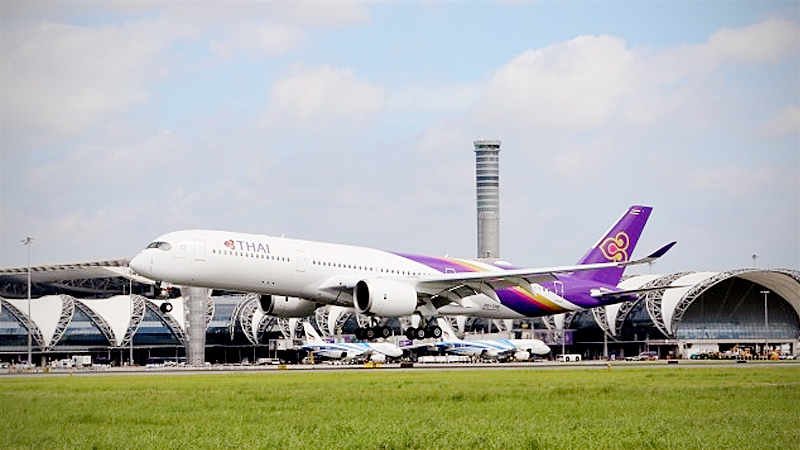
Thai Airways (THAI) needs to come up with a better plan to solve its financial problems, including dealing with its massive Bt240-billion debt which might lead to its bankruptcy, a senior official said.

Chayatan Phromsorn, the deputy director of the Office of Transport and Traffic Policy and Planning (OTP), said that Thai Airways’ plan for a turnaround had no clear direction and too many risks in it.

The government also called for an action plan with clarity, which was required for the survival of the airline.

The OTP is expected to reveal a recovery plan for Thai Airways this week, which will show the new direction for the national airline.

Transport Minister Saksayam Chidchob has tasked OTP with studying the effects of the Covid-19 crisis and thoroughly make a plan for the expense and public debt management.

He said the plan had to be clear and complete so that it would not become a burden for the government or the people because 23 risk factors found in the previous plan were not supposed to be there.

Thai Airways must study how other airlines are solving their problems and if it cannot solve the problem, the public will face difficulty as the airline is subsidised by taxpayers’ money.

BGrim core profit leaps 54 per cent in Q1 despite global economic crisis #ศาสตร์เกษตรดินปุ๋ย

#ศาสตร์เกษตรดินปุ๋ย : ขอบคุณแหล่งข้อมูล : หนังสือพิมพ์ The Nation.

https://www.nationthailand.com/business/30387762?utm_source=category&utm_medium=internal_referral

BGrim core profit leaps 54 per cent in Q1 despite global economic crisis

May 13. 2020
BGrim chief executive officer Preeyanart Soontornwata

BGrim chief executive officer Preeyanart Soontornwata
By The Nation

B.Grimm Power Plc (BGrim) recorded a 54 per cent growth in normalised net profit for the first quarter of this year on a 9.4 per cent increase in revenue.

The SET-listed private power producer booked core profit from operations, excluding extra items, in the January-March period at Bt1.158 billion, with Bt682 million attributable to major shareholders, up 54 per cent from the previous year as revenue grew to Bt11.223 billion.

BGrim chief executive officer Preeyanart Soontornwata said the result demonstrated the company’s robustness especially at the time of economic downturn aggravated by the Covid-19 pandemic.

Fuelling BGrim’s first-quarter performance was the 944 megawatt (MW) incremental production capacity rendered over the past one-year circle by four projects which were brought on stream, and the acquisition of two co-generation ventures — the SPP1 in 2019 and the 123-MW Ang Thong Power Plant in March this year.

BGrim said power sales in the first quarter remained strong, thanks to the diverse industry clientele with rising energy demand from the packaging group (up 15.1per cent), electronics sector (up 13.2 per cent), household electrical appliances (up 8 per cent), tyres (up 3.2 per cent).

There were also new industrial customers which signed up for 26MW in the past 12 months.

Meanwhile, the margin of EBITDA (earnings before interest, taxes, depreciation and amortisation) rose to the highest level of 29.2 per cent in the first quarter due to the improvement of the gas turbine power generator and the realisation of BGrim’s solar energy ventures in Vietnam which offered the highest EBITDA yield, the company said.

Net profit was at Bt159 million, Bt81 million of which was attributable to major shareholders – mainly from unrealised loss primarily from the foreign exchange which was a non-cash item amounting to Bt886 million, calculated from US dollar debt and the depreciation of the baht against US dollar.

In the wake of the Covic-19 pandemic, BGrim currently has over Bt21 billion in cash, which allows it to deal with the effects from the protracted Covid-19 crisis. At the same time, the company has also received additional working capital facilities of Bt4 billion to a total Bt9 billion from financial institutions to enhance liquidity.

BGrim has set up a team to closely monitor and respond to government policies related to the crisis.

BGrim said it has provided medical and social assistance, worth not less than Bt50 million, as well as putting in place various measures to take care of the safety of employees while maintaining the company’s service quality without any layoffs.

BGrim said most of its revenue comes from long-term power purchase agreements with government agencies which are not directly affected by the Covid-19 situation.

There are still new customers coming in for the rest of the year, totalling 30MW in power purchase, the company said.

In addition, the on-going proactive cost control is expected to save Bt34 million from the extension of the lifespan of some components. The improving efficiency of gas turbines of various projects in 2019 and 2020 is expected to cut natural gas cost by not less than Bt50 million per year.

The company has under construction the 39MW Ray Power’s solar project in Cambodia, the 13MW Lakchai floating solar farm and the Bowin Wind Farm 1 and two projects slated to start commercial operation between the fourth quarter of 2020 and first quarter of 2021.

Gulf Energy provides 100,000 KN95 medical masks for hospitals #ศาสตร์เกษตรดินปุ๋ย

#ศาสตร์เกษตรดินปุ๋ย : ขอบคุณแหล่งข้อมูล : หนังสือพิมพ์ The Nation.

https://www.nationthailand.com/business/30387750?utm_source=category&utm_medium=internal_referral

Gulf Energy provides 100,000 KN95 medical masks for hospitals

May 13. 2020
By The Nation

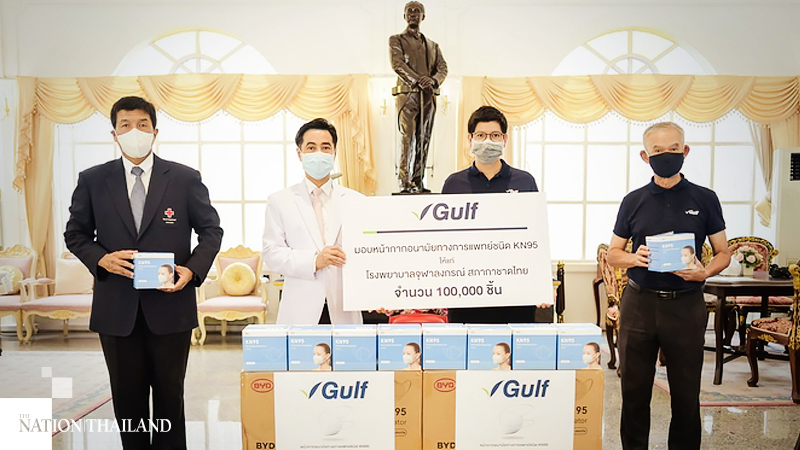
Gulf Energy Development Pcl has provided 100,000 KN95 medical masks, designed to prevent droplets and small particles, to King Chulalongkorn Memorial Hospital (KCMH).

Of these, 50,000 masks will be given to KCMH medical staff, while the remaining 50,000 will be distributed to other hospitals in need to reduce the risk of transmission and protect frontline workers against Covid-19, Sitamon Ratanavadi said on behalf of Gulf chief executive officer  Sarath Ratanavadi,

“Gulf Group remains committed to supporting medical workers. Thus far, Gulf Group has helped various sectors improve their readiness in coping with Covid-19 and has also helped ease the difficulties of people affected by the crisis,” Sitamon said.

“There are lessons to be learned from the many countries around the world that have lifted lockdown restrictions and experienced a rise in cases. Therefore, as the government has considered easing the lockdown, coupled with the upcoming rainy season and the beginning of the school term, citizens like us must still maintain discipline and avoid complacency to keep the situation under control in the long term so that healthcare workers will not have to work too hard. Gulf group would therefore like to ask for everyone’s cooperation in demonstrating social responsibility by taking care of their health and strictly following disease prevention and control measures,” said, Boonchai Thirati, executive director of Gulf Energy.

Professor Suttipong Wacharasindhu, dean of the Faculty of Medicine, Chulalongkorn University, highlighted, “The KN95 mask is like our medical personnel’s weapon, since it not only protects us against Covid-19 but also prevents the transmission of other contagious respiratory diseases. So, even though the overall number of infections is lower, we should not drop our guard. We still have to protect against these diseases. The hospital would like to thank Gulf Group for donating these masks which will be helpful for all healthcare workers.”

Associate professor Chanchai Sittipunt, associate dean for Planning and Development, Chulalongkorn University, added, “The Covid-19 crisis has taught us how to deal with the situation and protect ourselves in advance. In the future, there will be new situations like this. We need to be cautious and protect ourselves from the beginning in case there is a new disease, not Covid-19, in the future. We are entering a new era of the “new normal”, which is a good lesson for people to give more importance to health and hygiene.”

Boeing’s tally of lost orders soars to 255 for 2020 #ศาสตร์เกษตรดินปุ๋ย

#ศาสตร์เกษตรดินปุ๋ย : ขอบคุณแหล่งข้อมูล : หนังสือพิมพ์ The Nation.

https://www.nationthailand.com/business/30387744?utm_source=category&utm_medium=internal_referral

Boeing’s tally of lost orders soars to 255 for 2020

May 13. 2020
By Syndication Washington Post, Bloomberg · Julie Johnsson · BUSINESS 

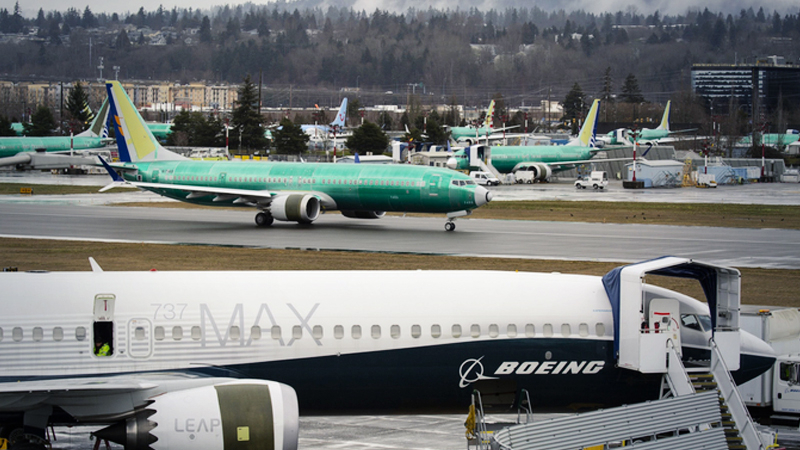
Boeing’s net sales this year shrank by 255 jets through April as airlines shelved expansion plans and canceled orders for the grounded 737 Max amid a historic collapse in air travel.

The plane maker didn’t gain any new orders last month and delivered only six planes — four of them 787 Dreamliners, according to data posted on its website Tuesday. The number of sales lost this year reached 516 when including an accounting adjustment that assesses the financial health of customers and contractual details of orders.

Already in crisis because of the beleaguered Max, Boeing is now attempting to counteract the wide-ranging effects from the covid-19 pandemic, such as parts shortages and plunging demand. Deliveries were disrupted when the company temporarily closed factories in Washington and South Carolina for several weeks as the illness spread among workers. Some overseas customers faced the additional hassle of quarantines for pilots who fly new jets home from the U.S.

“The outlook is increasingly negative” for Boeing as the impact from the outbreak flows through to results, analyst Sheila Kahyaoglu of Jefferies wrote in a report.

Few airlines are looking to add new aircraft when much of the global travel industry is fighting for survival. While Airbus SE also is being squeezed, the pressure is especially acute for Chicago-based Boeing, which is working with regulators to end a 14-month flying ban for the 737 Max after two fatal crashes. Buyers can typically opt out of a delivery that has been delayed for a year without facing penalties.

Customers in April canceled orders for 108 Max aircraft, Boeing’s workhorse jet and main source of revenue. Of those, 10 were scrapped by unidentified customers while 98 of the single-aisle planes were pared from orders by China Development Bank Financial Leasing and the aircraft leasing arm of General Electric Co. So far, airlines and lessors have ditched orders for 299 Max this year.

Airbus recorded 14 deliveries in April, 12 of them narrow-body jets, along with nine new sales. The Toulouse, France-based manufacturer has notched 299 orders net of cancellations this year.

Boeing has been renegotiating delivery schedules with lessors and airlines for the 737 Max as the company prepares to restart its assembly lines this month after a five-month hiatus. The plane maker has signaled that it would slowly step up production and sees delivering 450 of the aircraft built during the grounding as its top priority.

Small business used to define U.S. economy, but pandemic could change that forever #ศาสตร์เกษตรดินปุ๋ย

#ศาสตร์เกษตรดินปุ๋ย : ขอบคุณแหล่งข้อมูล : หนังสือพิมพ์ The Nation.

https://www.nationthailand.com/business/30387740?utm_source=category&utm_medium=internal_referral

Small business used to define U.S. economy, but pandemic could change that forever

May 13. 2020
Stacy Dockins instructs her husband, Dave Dockins, as they practice for an online yoga class at their home in Midlothian, Texas, on Thursday, May 7, 2020. MUST CREDIT: Photo for The Washington Post by Abbi O'Leary

Stacy Dockins instructs her husband, Dave Dockins, as they practice for an online yoga class at their home in Midlothian, Texas, on Thursday, May 7, 2020. MUST CREDIT: Photo for The Washington Post by Abbi O’Leary
By The Washington Post · Heather Long · BUSINESS

The coronavirus pandemic is emerging as an existential threat to the nation’s small businesses – despite Congress approving a historic $700 billion to support them – with the potential to further diminish the place of small companies in the American economy.


The White House and Congress have made saving small businesses a linchpin of the financial rescue, even passing a second stimulus for them late last month. But already, economists project that more than 100,000 small businesses have shut permanently since the pandemic escalated in March, according to a study by researchers at the University of Illinois, Harvard University and the University of Chicago. Their latest data suggests that at least 2% of small businesses are gone, according to a survey conducted Saturday to Monday.

The rate is higher in the restaurant industry, where 3% of restaurant operators have gone out of businesses, according to the National Restaurant Association.

Tearful, heartfelt announcements about small business closures are popping up on websites and Facebook pages. Analysts warn that this is only the beginning of the worst wave of small-business bankruptcies and closures since the Great Depression. It’s simply not possible for small businesses to survive with no income coming in for weeks followed by reopening at half capacity, many owners say.

The result probably will shift further the balance of power – and jobs – toward big businesses that have a better chance of surviving the uncertain year ahead by borrowing money or drawing on large cash reserves. Emergency actions by the Federal Reserve, backed by the Treasury, have made borrowing money almost free for large companies.

“We are going to see a level of bankruptcy activity that nobody in business has seen in their lifetime,” said James Hammond, chief executive of New Generation Research, which tracks bankruptcy trends. “This will hit everyone, but it will be harder for small businesses since they don’t have a lot of spare cash.”

While 4.2 million businesses have received emergency loans from the Small Business Administration, they constitute a fraction of the 30 million small firms in the nation. Many small-business owners say Congress’ financial rescue is not designed well to help very small businesses, known as micro firms, that have large overhead costs such as rent.

“It wouldn’t be surprising if well over 1 million of these micro firms ultimately fail,” wrote Mark Zandi, chief economist at Moody’s Analytics in a recent note to clients, referring to firms with under 10 employees.

In the 1980s and 1990s, small businesses employed more than half of American workers, but that dynamic has shifted. By 2017, 47% of private-sector employees were at small businesses, and the pandemic appears to be reducing that again.

In April, smaller firms had substantially more layoffs than larger ones, according to payroll processor ADP, an early warning sign.

Losing small businesses often creates a ripple effect in communities, especially smaller towns where little shops and restaurants remain the lifeblood of Main Street. These business owners often depend on each other, meaning as some shutter forever, it can trigger more to follow.

“This is culturally devastating for communities,” said Patrice Frey, president of the National Main Street Center, which advocates for restoring downtown hubs. “Small businesses really help provide communities with a sense of identity and place. It’s very difficult to imagine how these business are going to be replaced easily, especially in more rural and distressed areas.”

After decades in business, places including Ricardo’s Mexican Restaurant in Las Vegas; Biba Restaurant in Sacramento, California; the Great Scott music venue in Boston; and the Tony Ciccarelli barber shop in Troy, New York, are closing forever. Many made their announcements just before May 1 rent was due.

Bridget McGinty is among those who made the gut-wrenching call on May 1 to permanently close.

For 19 years, McGinty and her sister ran Tastebuds, a popular Cleveland lunch spot. The business was on “life support” last month, she said, and she did not think it could survive the summer paying rent and making virtually no money as downtown Cleveland remains largely deserted.

“There were just too many things against us,” said McGinty, still choking up at having to say it aloud.

Congress approved more than $700 billion in relief for small businesses, mostly in the form of Paycheck Protection Program (PPP) loans and grants. The money comes from the Small Business Administration, though business owners apply for it through their bank.

Businesses that are closing permanently say that the process was too slow and that the money only covers about two months of expenses, if that, even though it will probably be months before restaurants, gyms and stores are full again.

Neil Bradley, chief policy officer at the U.S. Chamber of Commerce, is urging Congress to come up with a special “bridge program” to help restaurants, movie theaters, hair salons and other places that won’t be able to open at full capacity for a long time. But negotiations between Congress and the White House on the next economic relief package have stalled.

Another big complaint is that small businesses have to use about 70% of the PPP money on payroll for it to become a grant that does not have to be repaid. Congress designed the PPP program this way to help save jobs, but it is causing problems when rent or other expenses represent a larger share of a company’s obligations, compared to payroll.

“What we hear over and over again is the federal stimulus isn’t really working for the restaurant industry,” said John Barker, president of the Ohio Restaurant Association. He’s urging Congress to build in “at least some flexibility” on how and when the grant money can be used.

McGinty is an example. Her decision to close means her five employees must look for new jobs. After exhausting the $15,000 in cash she had in the bank, she did apply for a PPP loan but quickly realized it wouldn’t work well for her since her overhead costs are equal, if not more, than wages for her workers. On top of rent, restaurants have the added cost of replacing all their food since most of they had in their refrigerators in March has gone bad.

“It’s going to take so long for restaurants to come out of debt or to just break even,” McGinty said. She urged landlords to “just forgive the rent” for April and May. Otherwise it becomes an “unbearable burden in the future” that small business owners will struggle to pay later this year.

The economists who have been tracking permanent small business closures also found that 34% of small businesses said they are either paying reduced rent or delaying the payment, according to a poll conducted April 25 to 27. The researchers have been doing informal surveys of over 50,000 small business owners who subscribe to the Alignable business network. Respondents come from a variety of industries and roughly mirror government data on small-business characteristics.

As business owners debate whether to take PPP money, some are opting to reinvent their business model instead, often by doing more online and reducing staff costs.

Dave and Stacy Dockins spent the last night in April holding hands and coming to terms with one of the hardest decisions of their marriage. The couple has run the popular Yoga Project studios in the Fort Worth, Texas, area for 15 years. But on May 1, they decided to close all three of their yoga studios.

From now on, Yoga Project will be online-only – with a fraction of the former staff.

“We were afraid it would come to this. The money is just running out,” Dave Dockins said after four banks did not process his PPP loan applications. “It’s still really raw for my wife and I. This is the hardest decision we’ve ever made.”

They said closing was their only option because they could no longer afford the rent and other overhead costs. The PPP was a poor option for them because their instructors are usually contractors – 1099 workers – who are not eligible for the payroll money.

Another issue with the PPP loan is that it covers eight weeks of expenses, and the money must be used as soon as the business owner starts receiving it. That’s tough for restaurants and other businesses that are still closed or operating with a skeleton crew for takeout. They do not need all of their workers.

Some business owners say the money would be more helpful later in the summer, when they can hopefully try to bring in more customers.

“If restaurants are only allowed to open at half capacity, that is a nail in the coffin right there,” said Justin Barrett, the chef and owner of Piecemeal Pies in White River Junction, Vermont. “Consecutive rounds of PPP should be considered for small businesses until there is a vaccine.”

Piecemeal Pies is a 25-seat restaurant that specializes in British meat pies and cider. Customers used to love sitting at the counter or communal table – attractions that have become liabilities in the era of social distancing. They created “Pie Day Friday” for customers to order takeout, but it is not bringing in much revenue and does not require all nine of his workers.

Barrett got a PPP loan, but the money will be gone by mid-June.

Dave and Stacy Dockins say they are working “the hardest we’ve ever worked in our lives” as they broadcast Yoga Project sessions from their home and try to build up online membership.

McGinty’s Cleveland restaurant is not reopening, but she’s still busy: She spent the past few days donating most of her equipment and furniture to a local Catholic parish’s food pantry and community center in between calls with her landlord, bank and insurance agent.

Each business owner is trying to be nimble, but none is sleeping well at night.

THAI urged to come up with a more detailed rehab plan #ศาสตร์เกษตรดินปุ๋ย

#ศาสตร์เกษตรดินปุ๋ย : ขอบคุณแหล่งข้อมูล : หนังสือพิมพ์ The Nation.

https://www.nationthailand.com/business/30387725?utm_source=category&utm_medium=internal_referral

THAI urged to come up with a more detailed rehab plan

May 13. 2020
By THE NATION

The Transport Ministry has called on Thai Airways International (THAI)’s management and the Office of Transport and Public Policy and Planning to come up with a detailed action plan on the national carrier’s rehabilitation, so the Cabinet has a more complete picture to look at when it considers the proposal.

Transport Minister Saksayam Chidchob said he decided not to submit the carrier’s recovery plan to the Cabinet on Tuesday (May 12) because the scheme lacked details.

He explained that the plan needs to explain the airline’s future plans and should also factor in the Covid-19 outbreak. He said THAI should have a final rehab plan ready as soon as possible for the Cabinet to consider.

Intouch to pay dividends despite Covid-19 impact on telecoms #ศาสตร์เกษตรดินปุ๋ย

#ศาสตร์เกษตรดินปุ๋ย : ขอบคุณแหล่งข้อมูล : หนังสือพิมพ์ The Nation.

https://www.nationthailand.com/business/30387729?utm_source=category&utm_medium=internal_referral

Intouch to pay dividends despite Covid-19 impact on telecoms

May 13. 2020
By THE NATION

Intouch Holdings (INTUCH) confirmed on Tuesday (May 12) it will pay dividends, despite a drop-off in performance this year.

The holding company for Advanced Info Services (AIS) and satellite operator Thaicom expects the performance of both companies to decline in the second quarter year-on-year due to the impact of the coronavirus pandemic.

“Although the Covid-19 situation is likely to improve, these companies’ second-quarter performance will drop due to the economic downturn,” said Tomyantee Kongpoolsilp, Intouch Holdings’ senior vice president of portfolio management and investor relations.

“However, the performance of AIS will strengthen thanks to the 5G network, while Thaicom will grow due to the decline in impairment cost.”

She confirmed that INTUCH shareholders will get returns on their investment in the form of dividends received from subsidiaries after expense deductions, adding that Temasek’s move to sell its shares in the company had not affected the company’s performance.

She added that Intouch is focusing on attracting overseas investment from areas such as Japan, Indonesia and Israel.

“In the first quarter, we invested in three companies worth Bt100 million after the company set up an investment budget of Bt200 million per year,” she added. “The company aims to increase its investment portfolio value to Bt2.5 billion in 2022-2024 from the current level of Bt1.208 billion.”

Meanwhile Nattiya Poapongsakorn, AIS head of investor relations, expects her company’s second-quarter performance to drop to a low point after users were handed 10GB of free mobile data and 100 minutes of free calls under a pandemic-relief measure launched by the National Broadcasting and Telecommunications Commission (NBTC).

“This measure has taken a toll on the company’s revenue as the NBTC will not pay any compensation,” she said. “However, the company will focus on expanding the 2600MHz spectrum band to increase efficiency of services.”