Consumption of solar energy makes Q1 bright for SPCG #ศาสตร์เกษตรดินปุ๋ย

#ศาสตร์เกษตรดินปุ๋ย : ขอบคุณแหล่งข้อมูล : หนังสือพิมพ์ The Nation.

https://www.nationthailand.com/business/30387723?utm_source=category&utm_medium=internal_referral

Consumption of solar energy makes Q1 bright for SPCG

May 12. 2020
Dr Wandee Khunchornyakong Juljarern

Dr Wandee Khunchornyakong Juljarern
By The Nation

The first quarter has been profitable for solar-farm operator SPCG, which made a net profit of Bt837.8 million, up 7 percent year-on-year, thanks to a rise in the sale of power generated from its 36 solar farms and the sale of solar roofs by its subsidiary Solar Power Roof (SPR).

The company’s revenue for the quarter was Bt1.454 billion, up 8 percent year-on-year.

Dr Wandee Khunchornyakong Juljarern, SPCG’s chairperson, said the focus this year is on revenue growth.

“SPCG has signed a memorandum of understanding on the development of solar roofs with Mitsubishi UFG Lease & Finance, PEA Encom International and Kyocera Corporation to boost the efficiency of factories in Thailand,” she said.

“Since factories use a lot of electricity, installing a solar roof will help them save costs as well as cut on the emission of carbon dioxide, which is a major cause of global warming.”

She added that SPCG was also cooperating with Kyocera Corporation, Kyudenko Corporation, Tokyo Century Corporation, Furukawa Electric and Tsuboi Corporation to develop the Ukujima Mega Solar Project, a solar farm that has a production capacity of 480 megawatts. The farm is located on Ukujima Island in Japan’s Nagasaki prefecture.

“SPCG has invested Bt2.7 billion, or 17.92 percent of the capital for the plant, which should be up and running by 2023,” she said. “The company made the first payment of Bt424 million on March 26, and will make a second payment of Bt574 million within this month.”

She added that at the annual general meeting of shareholders on May 11, SPCG had decided to offer Bt10 billion worth of corporate bonds to raise funds for further expansion.

Q1 very profitable for renewable energy giant BCPG #ศาสตร์เกษตรดินปุ๋ย

#ศาสตร์เกษตรดินปุ๋ย : ขอบคุณแหล่งข้อมูล : หนังสือพิมพ์ The Nation.

https://www.nationthailand.com/business/30387720?utm_source=category&utm_medium=internal_referral

Q1 very profitable for renewable energy giant BCPG

May 12. 2020
Bundit Sapianchai

Bundit Sapianchai
By The Nation

BCPG, a leading producer of renewable and alternative power, made a net profit of Bt574 million in the first quarter – up Bt82 million or 16.7 percent year-on-year thanks to Bt325 in foreign exchange earnings.

Bundit Sapianchai, BCPG president, said the operation of several renewable energy power plants and solar energy to name a few were contributing to the company’s growth.

“The company’s revenue stood at Bt886 million, up 9.7 percent year-on-year, while earnings before interest, tax, depreciation and amortisation was Bt825 million, up 12.8 percent year-on-year,” he said.

“As of March 31, the company’s assets were worth Bt42.491 billion, up Bt5.354 billion or 14.4 percent quarter-on-quarter mainly due to the purchase of Nam San 3B hydroelectric power plant in Laos in February.”

He added that in the second quarter, BCPG will develop digital products and services in collaboration with state and private partners in a move to use innovation to effectively manage clean energy.

“The company is also developing technology and expanding across Asia, which is helping boost stability and letting us explore different types of renewable energy power options,” he added.

Plans for new Suvarnabhumi, Don Mueang terminals to go ahead #ศาสตร์เกษตรดินปุ๋ย

#ศาสตร์เกษตรดินปุ๋ย : ขอบคุณแหล่งข้อมูล : หนังสือพิมพ์ The Nation.

https://www.nationthailand.com/business/30387659?utm_source=category&utm_medium=internal_referral

Plans for new Suvarnabhumi, Don Mueang terminals to go ahead

May 12. 2020
By THE NATION

Airports of Thailand (AOT) is pressing ahead with plans to boost passenger and flight-handling capacity at Suvarnabhumi and Don Mueang airports, despite the impact from the Covid-19 outbreak, said Anake Teeraviwatchai, AOT’s senior executive vice president.

The state enterprise is studying several projects, including construction of a new terminal for Suvarnabhumi Airport at a cost of Bt42 billion. The Bt42-billion expansion project is currently being considered by the National Economic and Social Development Council.

Also in the pipeline is Phase 3 development of Don Mueang Airport. However, the design of the passenger terminal might have to be adjusted to conform with the new social distancing protocol.

The Phase 3 upgrade will cost Bt34.3 billion, which covers the construction of a third passenger terminal. The project also covers upgrades for passenger terminal 1 and cargo terminals 1 and 2.

Energy Ministry mulls more relief measures for oil refineries, traders #ศาสตร์เกษตรดินปุ๋ย

#ศาสตร์เกษตรดินปุ๋ย : ขอบคุณแหล่งข้อมูล : หนังสือพิมพ์ The Nation.

https://www.nationthailand.com/business/30387664?utm_source=category&utm_medium=internal_referral

Energy Ministry mulls more relief measures for oil refineries, traders

May 12. 2020
Photo credit: Thaioil Group

Photo credit: Thaioil Group
The Energy Ministry will closely monitor the oil demand situation this month before deciding whether to launch additional relief measures to help Thai refineries and oil traders, said minister Sontirat Sontijirawong.

The Covid-19 outbreak has prompted a sharp drop in demand for fuel worldwide, resulting in losses for local oil traders and refiners.

The ministry recently launched a relief measure for traders and refineries, allowing them to reduce their reserves of oil from a 21-day supply to a 15.5-day supply, starting from May 1. However, in 12 months’ time they will have to boost their supply to 18 days.

Saudi Arabia triples VAT, cuts state allowances amid crisis #ศาสตร์เกษตรดินปุ๋ย

#ศาสตร์เกษตรดินปุ๋ย : ขอบคุณแหล่งข้อมูล : หนังสือพิมพ์ The Nation.

https://www.nationthailand.com/business/30387677?utm_source=category&utm_medium=internal_referral

Saudi Arabia triples VAT, cuts state allowances amid crisis

May 11. 2020
The Kingdom Tower, operated by Kingdom Holding Co., right, stands on the skyline above the King Fahd highway in Riyadh, Saudi Arabia, on Nov. 28, 2016. MUST CREDIT: Bloomberg photo by Simon Dawson.

The Kingdom Tower, operated by Kingdom Holding Co., right, stands on the skyline above the King Fahd highway in Riyadh, Saudi Arabia, on Nov. 28, 2016. MUST CREDIT: Bloomberg photo by Simon Dawson.
By Syndication The Washington Post, Bloomberg · Riad Hamade, Zaid Sabah, Vivian Nereim

Saudi Arabia announced a slew of austerity measures to cope with the impact of the coronavirus pandemic and an oil-price rout, tripling its value-added tax and cutting a cost-of-living allowance for government workers.

The steps taken to shore up revenue and rationalize spending are valued at about 100 billion riyals ($26.6 billion) in total, according to the official Saudi Press Agency. Overall spending for 2020 will remain close to what was planned as money saved gets re-allocated to health care and aid for businesses, Finance Minister Mohammed Al-Jadaan said in a telephone interview on Monday.

“These are the priorities: the health care of people and the livelihood of people,” Al-Jadaan said. “We want to make sure that we maintain our fiscal strength so that as the economy gets out of the lock-down, we are able to support the economy.”

Already under a strict curfew to contain the spread of coronavirus, the world’s largest oil exporter is facing a second crisis caused by the meltdown in global oil markets. The turmoil has slashed state revenue – most of which comes from crude – and is set to derail the kingdom’s fragile economic recovery since the last oil price rout in 2014. The price of Brent crude crashed by more than 50% in March, contributing to a record $27 billion monthly drop in the Saudi central bank’s net foreign assets.

The meltdown in global oil markets has had wide-ranging implications for Saudi Arabia. State oil giant Saudi Aramco is in early talks about further staggering payments for the acquisition of a controlling stake in Saudi Basic Industries Corp. as the collapse in oil prices puts pressure on its finances, according to people with knowledge of the matter. It is also weighing whether it’s possible to reduce the $69 billion price tag on the deal, one of the people said.

The government announced the new austerity measures overnight, shortly after the dawn call to prayer that marks the beginning of the daily fast for the Islamic holy month of Ramadan.

Among the biggest moves, the country’s VAT will be increased to 15% from 5% starting July 1. The measure is likely to be controversial among citizens who were just getting used to the new tax, rolled out in 2018. It also comes at a time when many people are grappling with reduced incomes from furloughs and pay cuts as businesses struggle to survive.

Al-Jadaan said the tax increase won’t have much impact on revenue this year because people are spending less under the curfew, but it “will help more next year and the year after as we get out of the covid-19 crisis.”

Beginning in June, the government will also end a cost-of-living allowance paid to state workers. The 1000-riyal monthly allowance was granted in 2018 after complaints from citizens about the financial impact of austerity measures taken during the last oil price rout. However, the allowance was supposed to be temporary, so the government decided to cancel it, Al-Jadaan said, calling the effect “very limited.”

“What we have seen from the announced measures are the ones that the team — both economists and other experts — thought would be the least damaging to the economy and the fiscal strength of the country,” he said.

Capital spending will also be impacted as the government delays or trims some projects. Part of that is due to the inevitable impact of coronavirus-related supply chain issues and safety measures, Al-Jadaan said. He gave the example of a project to expand the holy mosque in Mecca — the epicenter of coronavirus cases in the kingdom — which the government “had to slow down significantly” to protect the health of construction workers.

Some of the kingdom’s megaprojects, which include plans to build a tourism hub on the Red Sea and an “entertainment city” outside of Riyadh, will have their timelines extended.

“It may not be as fast as it used to be, but they are continuing,” Al-Jadaan said.

Spending will also be reduced on some programs under Crown Prince Mohammed bin Salman’s “Vision 2030” economic transformation plan.

Finally, a committee was formed to study the salaries and benefits paid by a slew of new government entities that have been created outside the civil service umbrella, where employees are often paid significantly more than typical state workers. Such entities include the Vision 2030 programs. The committee was told to give its recommendations within 30 days.

“This committee is going to look at the salary scales and the benefits of these new entities and bring about more rationalization — and ensure that we don’t have excess wages or unnecessary benefits that are distorting the labor market,” he said.

Government aid to the neediest Saudis will remain, Al-Jadaan said. Shortly before the measures were announced, King Salman ordered a payment of 1.85 billion riyals to be distributed to state welfare recipients to mark the occasion of Ramadan. The payments will include 1,000 riyals for each family and 500 riyals for each dependent.

Disneyland Shanghai reopens to a new world of masks, distance #ศาสตร์เกษตรดินปุ๋ย

#ศาสตร์เกษตรดินปุ๋ย : ขอบคุณแหล่งข้อมูล : หนังสือพิมพ์ The Nation.

https://www.nationthailand.com/business/30387674?utm_source=category&utm_medium=internal_referral

Disneyland Shanghai reopens to a new world of masks, distance

May 11. 2020
Visitors wearing protective masks stand in front of the Enchanted Storybook Castle during the reopening of the Walt Disney Co. Shanghai Disneyland theme park in Shanghai on May 11, 2020. MUST CREDIT: Bloomberg photo by Qilai Shen.

Visitors wearing protective masks stand in front of the Enchanted Storybook Castle during the reopening of the Walt Disney Co. Shanghai Disneyland theme park in Shanghai on May 11, 2020. MUST CREDIT: Bloomberg photo by Qilai Shen.
By Syndication The Washington Post, Bloomberg

As Shanghai Disneyland opened Monday for the first time since late January, Walt Disney Co.’s hit song “A Whole New World” played in the background.

And it was a very different world for guests required to stay six feet (two meters) apart in lines, wear masks and climb aboard rides half-empty to provide the space needed to prevent possible spread of the coronavirus.

“Staff are making an effort to keep people at a distance from each other,” said Zhu Hui, a 33-year-old housewife at the park. “You see hand sanitizers everywhere and not many people.”

The reopening is one of the largest test cases yet of whether mass gatherings can take place safely amid the virus pandemic. As a marching band welcomed visitors to the Shanghai park on Monday, authorities around the world were facing rising pressure to end lockdowns and revive economies slammed by the global outbreak.

Disney is struggling to recoup earnings at its theme park and film businesses pummeled by the virus crisis, while China’s government is grappling with the challenges of incrementally reopening the country. Parks, factories and restaurants in cities and countries around the world are reopening under rules to keep customers and workers apart amid the threat of second waves and flare-ups of the virus.

To reach the gates of Shanghai Disneyland, guests had to pass through body temperature checks and show that their health status has been confirmed using a smartphone app for tracking infected persons. Masks were mandatory, despite the muggy 23 degree Celsius (73 degrees Fahrenheit) weather.

Yao Yao, a 37-year-old kindergarten teacher wearing a Minnie Mouse costume, arrived at 8:30 a.m. and was among people waiting for entry.

“Simply walking in the park will make me forget anything unhappy,” said Yao, who has an annual pass.

Disney said it is limiting access to the Shanghai park on Monday to a fifth of normal capacity, below the government-mandated 30%, during the initial reopening phase. Tickets for May 11 sold out in minutes, a sign consumers are prepared to spend and mingle in public as China cautiously moves beyond the virus.

New cases in the country where the pathogen first emerged have dwindled, and China has reported no deaths since April 14, according to the National Health Commission.

Visitors to the $5.5 billion theme park had relatively short waits for rides. The Seven Dwarfs Mine Train attraction, for example, had a maximum of five minutes standing in line mid-morning, according to an app that tracks waits at the park. The longest line for a ride at the time was 20 minutes, according to the app.

In the afternoon, some lines started to stretch to 30 minutes, maximum.

On a typical spring day under normal conditions, visitors might wait more than one hour for the most popular attractions.

The Disney World shop, which sells toys and T-shirts, required use of hand sanitizer to enter, and had few shoppers. Popcorn and chicken wing stands were open, though fewer than on a normal day.

Live theater shows, areas where children would come into close contact, such as water play spots, and parades have been suspended during the initial reopening to avoid raising infection risks.

“The real test will come as those capacity limits are eased and the calendar moves into what is typically the critical peak summer season,” said Ron Merriman, managing director of theme park consultants MR ProFun China. “But I am very optimistic about the park’s prospects for passing that test.”

Shanghai Disneyland was the first of the entertainment giant’s parks to close on Jan. 25 as the coronavirus began to spread from the Chinese city of Wuhan, 520 miles (840 kilometers) west of the country’s business capital.

Disney blamed the pandemic for lopping $1.4 billion off profit last quarter, largely by forcing it to shut resorts around the world. While Disney is keeping its U.S., Hong Kong and Paris parks closed, the company said last week it would open a limited number of shops and restaurants in its Disney Springs mall outside its resorts in Orlando, Florida, on May 20.

Tickets to Shanghai Disneyland during the initial reopening phase are 399 yuan ($56) for regular days, and 499 yuan for weekends.

Disney’s theme parks division contributed about 46% of operating income in the 12 months ended September 2019, more than double the earnings from its studio entertainment business, data compiled by Bloomberg show.

RS share price shoots up as net profit soars 184% on-quarter #ศาสตร์เกษตรดินปุ๋ย

#ศาสตร์เกษตรดินปุ๋ย : ขอบคุณแหล่งข้อมูล : หนังสือพิมพ์ The Nation.

https://www.nationthailand.com/business/30387656?utm_source=category&utm_medium=internal_referral

RS share price shoots up as net profit soars 184% on-quarter

May 11. 2020
By THE NATION

RS Public Company Limited saw its share price rise sharply by Bt1.50, or 14.7 per cent, to Bt11.70 per share as of 11.19am today (May 11), with the company’s net profit in the first quarter being Bt186.48 million, up 69 per cent year-on-year and 184 per cent quarter-on-quarter.

A stock analyst at KGI Securities (Thailand) said RS first quarter net profit was 76 per cent better than the company expected and 41 per cent higher than market expectations.

“If the extra profit of Bt13 million is not included, the company’s first quarter net profit would be Bt173 million, up 58 per cent year-on-year and 164 per cent quarter-on-quarter – 63 per cent better than the company expected,” he said.

The analyst explained that RS’s revenue in the first quarter of this year was Bt984 million, up 6 per cent year-on-year and 10 per cent quarter-on-quarter as revenue from its television business hit Bt336 million, up 47 per cent year-on-year and 93 per cent quarter-on-quarter.

“Meanwhile, revenue from its commercial business was Bt500 million, down 11 per cent year-on-year but up 8 per cent quarter-on-quarter,” he said.

“The company’s profit margin increased to 55.6 per cent from 41.9 per cent in the fourth quarter of last year due to the increase in television revenue, especially sales of content.”

However, the analyst expected RS’s second quarter performance to drop both year-on-year and quarter-on-quarter due to an overall decline in company revenue and profit.

“The revenue from its music and concert businesses is expected to drop as the company had to refrain from organising entertainment shows during the Covid-19 crisis,” the stock analyst said.

“In addition, sales of content are not likely to increase because we expect the company’s partners to save on costs in producing content to cope with the Covid-19 situation in the second quarter of this year.”

He said RS’s profit forecast in 2020 and 2021 was put at Bt378 million and Bt451 million, increasing by 4 per cent and 19 per cent year-on-year, respectively.

“We recommend that investors buy this stock as the company’s compound annual growth rate in 2020 and 2021 is 11 per cent,” he added.

Seven ways the government can help bars survive #ศาสตร์เกษตรดินปุ๋ย

#ศาสตร์เกษตรดินปุ๋ย : ขอบคุณแหล่งข้อมูล : หนังสือพิมพ์ The Nation.

https://www.nationthailand.com/business/30387632?utm_source=category&utm_medium=internal_referral

Seven ways the government can help bars survive

May 10. 2020
A bar stands closed in the SoHo neighborhood of New York on March 17, 2020. MUST CREDIT: Bloomberg photo by Demetrius Freeman.

A bar stands closed in the SoHo neighborhood of New York on March 17, 2020. MUST CREDIT: Bloomberg photo by Demetrius Freeman.
By Syndication Washington Post, Bloomberg · Kate Krader · BUSINESS, RETAIL 

News that New York’s famed Pegu Club was closing for good upset bar lovers nationwide when the announcement came at the end of April. The 14-year old bar founded by Audrey Saunders had helped pioneer the craft cocktail scene; dozens of top mixologists trained there.

While restaurants have gotten a lot of well-deserved attention since coronavirus-related closings took effect in mid-March, bars have, for the most part, been left out of the conversation. The situation looks especially grim in New York, where many of the best places to drink are set in small, low-ceilinged spaces that are not conducive to social distancing.

Greg Boehm owns five bars across downtown Manhattan, including Katana Kitten, Existing Conditions, and Mace. He is also the owner of barware shop Cocktail Kingdom and founder of the Miracle Christmas pop-up empire, a kitschy seasonal franchise that last year had 107 locations around the U.S. and in countries as disparate as Mexico, Switzerland, and Romania. As such, Boehm has had plenty of dealings with government licensing boards, particularly the New York’s State Liquor Authority (SLA), which issues permits and controls the distribution of alcohol.

The SLA and Gov. Andrew Cuomo moved fast at the start of the pandemic. “The SLA has generally been great through the pandemic and relaxed rules that have kept people in business,” observes Joseph Levey, founding partner of Levey Braun, a hospitality-focused law firm, who works with Boehm. “But the whole system is nuanced and ridiculous and ancient and sometimes counterintuitive, and there’s room for updates.”

Particular to New York, for instance, most bars are overseen by local Community Boards that negotiate with owners regarding approvals of liquor licenses. “They might say, ‘If you want to stay open until 2 a.m, you will have to keep your windows closed,'” says Levey. Although the SLA has final say on most of the bars’ operating rules, it generally accepts Community Board recommendations.

Such quirks aren’t limited to New York. Since Prohibition ended, drinking in the U.S. has been in a patchwork of local and state laws that owners must dance to navigate through-and it’s only going to get harder in a post-pandemic world.

If we consider Manhattan as a case study, here are seven suggestions Boehm has for government agencies on how bars such as his might better survive, if not thrive, in the future.

1. Let bars sell pre-mixed drinks. Believe it or not, it is illegal to sell pre-mixed alcoholic drinks in New York. It’s an antiquated directive and challenging for cocktail bars that often use them to save time. That punch that was ladled out of a bowl at a speakeasy, the pitcher of sangria that wasn’t made just when you ordered it, or that bottled martini? Unless it came from a tap, it was against the law. Though there’s little enforcement of this rule, bar owners such as Boehm live in fear. In a future of even-slimmer margins, it’s a cost savings that can’t be ignored.

2. Keep the to-go drinks going. One bright spot for New York’s bars and lounges during the pandemic has been the ability to sell to-go drinks; it’s keeping such spots as Dante, the current World’s Best Bar, in business. The city has to allow places to continue to do this, says Boehm, to make up for reduced capacity in spaces, as well as for people who are not going to be comfortable sitting in bars. That’s not to say New York should turn into New Orleans. “I’m not advocating for open containers,” he says. Within proximity of the bar, people should be allowed to consume drinks, and also to buy to-go cocktails. But don’t stray too far off premise while you’re drinking; the New York Police Department still has the power to write a ticket for this.

3. Offer more flexibility on operating hours. Several bars have stipulations that force them to close at a certain time, by midnight or earlier. (The city may never sleep, but local residents often want to.) New York is a 4 a.m. state; the four hours when booze can’t be served run from 4 a.m. to 8 a.m. Boehm says more leniency would help spread the flow of customers and reduce crowding in the event that capacity restrictions get more severe.

4. Let bars deliver spirits. It’s legal for places with a liquor license to sell beer-in cans, growlers, and so forth-for delivery, but it’s been illegal to deliver spirits or pre-batched cocktails. As with the loosening of rules that have turned restaurants into liquor stores, says Boehm, don’t limit bars to takeaway drinks, but give them the opportunities that restaurants have to deliver bottles of booze, as well as kits and actual cocktails.

5. Allow more sidewalk cafes. Several city streets are zoned for sidewalk cafes. West 8th Street, for one, is home to Boehm’s modernist bar Existing Conditions. Still, he never applied to the the city’s Department of Consumer Affairs for a cafe permit. Why? It was made clear to him by the Block Association and Community Board that no sidewalk permits would ever be approved on the block. And even if Boehm did manage to get one, he’d have to go through the process of applying for a liquor license for outdoor seating, even though the interior of his bar has one. Easing up the process, particularly on uncrowded streets-of which there will soon be 40 miles more-would give New York’s bars some desperately needed room to fit more paying customers. (A bonus customer benefit: Drinking outdoors is likely safer than it is inside when it comes to virus transmission.)

6. Open the windows. Community Boards often force bars and restaurants to close their windows at a certain time, say 9 p.m., if they are allowed to open their windows at all. Without mandating that residential streets be subject to DJ sets at 3 a.m., Boehm urges that those policies be reconsidered to let some fresh air in, even if some of the gaieties of life get out.

7. Relax bill-paying rules. The SLA has a “posted” rule, also known as the “Bad Boy List,” which maintains that if you are late paying one liquor distributor, it can effect all your liquor accounts. Relax those rules, says Boehm. Allow more time for places that are currently doing only about 15% of their business, if any at all, to make payments. This is an unprecedented time for the businesses, he says, and they need a little understanding and flexibility.

Frontier just became the first U.S. airline to require passenger temperature screening #ศาสตร์เกษตรดินปุ๋ย

#ศาสตร์เกษตรดินปุ๋ย : ขอบคุณแหล่งข้อมูล : หนังสือพิมพ์ The Nation.

https://www.nationthailand.com/business/30387491?utm_source=category&utm_medium=internal_referral

Frontier just became the first U.S. airline to require passenger temperature screening

May 08. 2020
By The Washington Post · Hannah Sampson · NATIONAL, BUSINESS, HEALTH, TRANSPORTATION, TRAVEL 

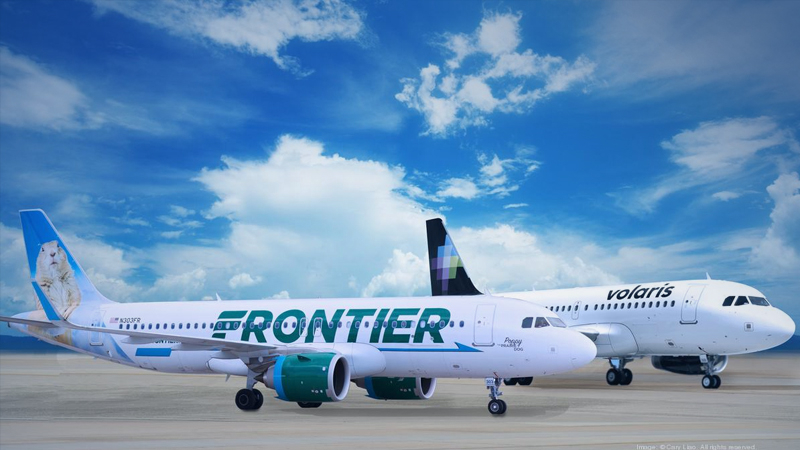
Frontier Airlines said Thursday it will require passengers to have their temperatures taken before boarding flights, starting June 1, in an effort to make traveling safer during the coronavirus pandemic.

Anyone with a temperature of 100.4 or higher will not be allowed to fly, the budget carrier said. While the move is a first for U.S. carriers, according to the airline, Air Canada announced a similar measure earlier this week. London’s Heathrow Airport is testing temperature screenings, an official there told the BBC this week.

“The health and safety of everyone flying Frontier is paramount and temperature screenings add an additional layer of protection for everyone onboard,” Frontier Airlines CEO Barry Biffle said in a statement. “This new step during the boarding process, coupled with face coverings and elevated disinfection procedures, will serve to provide Frontier customers an assurance that their well-being is our foremost priority and we are taking every measure to help them travel comfortably and safely.”

Earlier this week, Southwest Airlines CEO Gary Kelly told CBS News that temperature checks should be put into place, but he said that should be the job of the Transportation Security Administration.

“We are urging the TSA to begin temperature scans as part of the screening process at the checkpoints,” Kelly said.

Frontier said in the statement that the screening should take place as passengers enter airports, and suggested that the TSA and airports “may be working to lay that groundwork.”

In a statement, the agency said no decision about health screening measures at airports had been made.

“Ongoing discussions with our [Department of Homeland Security] and interagency colleagues, as well as our airport and airline partners, will enable the agency to make informed decisions with regard to the health and safety of the aviation environment,” the statement said. “The safety and security of the traveling public and our employees will always be our top priority.”

Under Frontier’s new policy, the airline will use contact-free thermometers before boarding. If someone’s temperature is 100.4 or higher, they will be allowed to rest before a second check, as long as there’s enough time before takeoff. If a secondary screening is still too high, the passenger won’t be allowed to fly. The announcement said Frontier would help the traveler rebook or “otherwise accommodate the traveler’s preferences with respect to their reservation.”

Frontier’s airport employees will not be allowed to work if their temperature is higher than the cutoff when their shift begins.

The announcement follows moves by airlines to require flight attendants and passengers to wear masks during flights.

Commerce Department aims to relax one part of Huawei export ban #ศาสตร์เกษตรดินปุ๋ย

#ศาสตร์เกษตรดินปุ๋ย : ขอบคุณแหล่งข้อมูล : หนังสือพิมพ์ The Nation.

https://www.nationthailand.com/business/30387483?utm_source=category&utm_medium=internal_referral

Commerce Department aims to relax one part of Huawei export ban

May 08. 2020
By The Washington Post · Jeanne Whalen · NATIONAL, BUSINESS, US-GLOBAL-MARKETS

WASHINGTON – The Commerce Department is preparing to ease one aspect of its Huawei export ban to allow U.S. companies to participate in international organizations that set technology standards, according to people familiar with the matter.

The proposed change comes after heavy lobbying by tech companies, which complained that the export ban was preventing them from shaping industry standards that help determine future sales.

The new rule, reported earlier by Reuters, would allow U.S. companies to share technology that is not sensitive in nature with Huawei as part of group discussions at the standards bodies. Companies from around the world typically participate in the talks, which establish technical rules underpinning global technology.

The Commerce Department’s proposed revision still must be endorsed by the State Department and Defense Department. It is unclear when the Commerce Department will ask other agencies to review the proposal, according to people familiar with the matter.

In an emailed statement, the Pentagon said: “We are aware of the proposed rule change, but we aren’t going to comment publicly while interagency discussions are ongoing.”

The Commerce and State departments didn’t respond to requests for comment.

There are hundreds of standards-setting organizations that discuss and endorse specifications for all types of technology. Their work ensures that a USB stick made by one company fits into a USB port built by another or that any laptop can connect to WiFi anywhere in the world. Some of the main groups are the International Organization for Standardization, the Institute of Electrical and Electronics Engineers and the 3rd Generation Partnership Project.

Huawei participates in many of these standards discussions, including those setting the rules for ultrafast 5G mobile networks.

The Commerce Department last year banned the sale of U.S. technology to Huawei, saying it had “reasonable cause to believe” the Chinese company was “involved in activities contrary to the national security or foreign policy interests of the United States.”

U.S. officials have said that Huawei has links to the Chinese government and that its telecom equipment could be used to disrupt or spy on American communications. Huawei denies these claims. The Chinese company is one of the world’s largest sellers of telecom equipment and smartphones, and before the export ban was a large consumer of U.S. semiconductor chips and software.

Most U.S. companies took the export prohibition to mean that they weren’t allowed to discuss technical specifications with Huawei at standards-setting meetings, which has curbed their participation at the discussions and put U.S. industry at a disadvantage, said Naomi Wilson, senior director of policy for Asia at the Information Technology Industry Council, a trade association.

“It’s an advantage to have your company’s specifications adopted in a voluntary standard,” Wilson said in an interview. “You’re at a competitive disadvantage if you don’t participate in the development process.”

Last month, a group of Republican senators urged Trump administration officials to allow U.S. companies to participate in standards discussions alongside Huawei. “When U.S. export controls restrict U.S. companies from participating in standards-setting bodies, China-based Huawei is well positioned to fill any gaps,” the senators wrote.

The U.S. export ban has made for awkward relations at standards meetings, said Kevin Wolf, a former senior Commerce official who is now a partner at Akin Gump Strauss Hauer & Feld.

“The American will say, ‘We can’t talk about that with Huawei sitting across the table.’ The Finn and Swede will say: ‘That’s your problem! Leave the room,’ ” Wolf said. “It was having a collateral effect on preventing American companies from participating.’ ”