ONYX Hospitality boosts hygiene, safety standards at 52 properties #ศาสตร์เกษตรดินปุ๋ย

#ศาสตร์เกษตรดินปุ๋ย : ขอบคุณแหล่งข้อมูล : หนังสือพิมพ์ The Nation.

https://www.nationthailand.com/business/30387321?utm_source=category&utm_medium=internal_referral

ONYX Hospitality boosts hygiene, safety standards at 52 properties

May 05. 2020
By THE NATION

ONYX Hospitality Group has announced enhanced hygiene and safety standards as part of a new initiative that will be implemented at its properties including Amari, OZO, Shama and Oriental Residence Bangkok as it prepares to welcome travellers back to its hotels, resorts and serviced apartments across the Asia-Pacific.

“‘ONYX Clean’ will impact every step of the guest journey from arrival to departure, with updated standards and operational procedures that complement the group’s existing health and safety initiatives,” the firm said in a press release.

The initiative will be introduced at all of the company’s 52 properties across seven countries in the coming weeks, and at all new openings.

“ONYX team members are continuously engaged while staying home as they participate in an online learning platform that offers a wide variety of training programmes, including in-house produced educational videos that help deliver awareness on pathogen risks and demonstrate enhanced cleaning and sanitising methods and updated guest service protocols,” the release said.

Each property has appointed an in-house ONYX Clean champion who will ensure the implementation and internal audit of all standards based on a property-wide checklist developed in partnership with Ecolab, a global leader in hygiene, safety and energy technology solutions and supplier of many cleaning products.

“As one of the leading medium-sized hospitality players in the Asia-Pacific region, we have always taken pride in our high levels of hygiene and our longstanding commitment towards the safety and well-being of our guests, team members and the community,” group president and CEO Douglas Martell said.

“With the impact of Covid-19 leading to new norms and heightened consumer interest in hygiene and safety, we would like to assure all travellers – both new and returning – that we have their safety and well-being as our number one priority,” he added.

Under the ONYX Clean initiative, arriving guests will need to have their temperature taken, hands sanitised and requested to complete a health and travel questionnaire. Physical distancing will be implemented in the event of queues or when waiting for check-in.

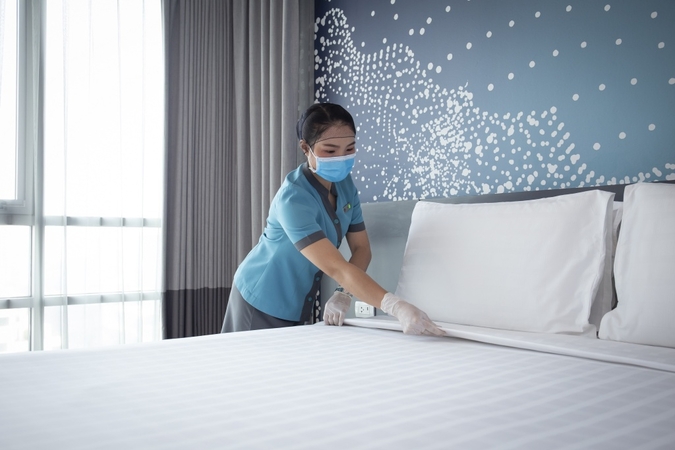
A room seal will be placed on every room door to indicate to arriving guests that their personal space has not been tampered with since being thoroughly cleaned and disinfected. Housekeeping teams will wear hotel-issued masks and gloves, and carry a list of high-touch surfaces such as table tops, chairs, door handles, lift buttons, TV remotes, room controls and faucets, which will all be wiped down with approved sanitisers and further sterilised with UV-C wands, the firm said.

Also, all food and beverage outlets will be rearranged to ensure a safe distance of at least one metre between tables and bar chairs, with queue management during busy meal periods such as breakfast. Kitchens and food preparation areas, spas, pools and fitness zones will also undergo enhanced sanitisation and crowding minimized, it added.

ONYX Hospitality Group said it has 20 hotels in the pipeline, scheduled to open in the coming years in locations such as Pattaya, Niseko, the Maldives, Penang, Colombo and Vientiane.

GE to slash 13,000 jobs in aviation amid air travel plunge #ศาสตร์เกษตรดินปุ๋ย

#ศาสตร์เกษตรดินปุ๋ย : ขอบคุณแหล่งข้อมูล : หนังสือพิมพ์ The Nation.

https://www.nationthailand.com/business/30387280?utm_source=category&utm_medium=internal_referral

GE to slash 13,000 jobs in aviation amid air travel plunge

May 04. 2020
By Syndication Washington Post, Bloomberg · Richard Clough · BUSINESS, US-GLOBAL-MARKETS

General Electric will cut about 13,000 jobs from its jet-engine operation, in the latest sign of the devastating impact of the coronavirus outbreak on global air travel.

The reductions, going well beyond cuts announced in March, will include “voluntary and involuntary actions” affecting about 25% of GE Aviation’s workers worldwide, the company said Monday in a statement. The total includes a previously announced move to cut about 2,600 positions in the U.S.

“The deep contraction of commercial aviation is unprecedented, affecting every customer worldwide,” GE Aviation Chief Executive Officer David Joyce said in the statement. “We have responded with difficult cost-cutting actions over the last two months. Unfortunately, more is required.”

The job cuts, coming after GE last week reported deep financial strains in its jet-engine manufacturing division, underscore the severe impact of the pandemic on aviation and the broader economy. Planemakers Boeing and Airbus, along with airlines worldwide, have launched desperate efforts to preserve and raise cash as demand has fallen sharply.

For GE, in particular, the stress on a key business threatens a broader turnaround effort as CEO Larry Culp attempts to shore up the balance sheet and pull the company from one of the deepest slumps in its history. GE Aviation had been a bulwark for the Boston-based company as it dealt with depleted cash and a slump in the power-equipment business.

The aviation job cuts, which will be permanent, will be rolled out “over the coming months,” Joyce said. GE previously announced employee furloughs in addition to layoffs.

The latest moves are part of a $3 billion plan announced last week to reduce costs and preserve cash in the engine unit. GE said when it reported quarterly earnings that installations have dropped 45% for new engines in the second quarter and slid 60% for spares.

The global airline industry is expected to reach only 60% of its typical traffic by year-end, Alexandre de Juniac, CEO of the International Air Transport Association, said Monday on a French business news TV program. The trade group in mid-April estimated that the industry would lose $314 billion in ticket sales this year. In the U.S. alone, air traffic is less than 10% what it was a year ago.

GE fell 4.2% to $6.23 at 10:27 a.m. in New York. The stock plunged 42% this year through May 1, while the S&P 500 fell 12%.

Buffett dumps airlines and his aerospace pain only worsens #ศาสตร์เกษตรดินปุ๋ย

#ศาสตร์เกษตรดินปุ๋ย : ขอบคุณแหล่งข้อมูล : หนังสือพิมพ์ The Nation.

https://www.nationthailand.com/business/30387271?utm_source=category&utm_medium=internal_referral

Buffett dumps airlines and his aerospace pain only worsens

May 04. 2020
Warren Buffett, chairman and chief executive officer of Berkshire Hathaway Inc., speaks during the virtual Berkshire Hathaway annual shareholders meeting seen on a laptop computer in Arlington, Va., on May 2, 2020. MUST CREDIT: Bloomberg photo by Andrew Harrer.

Warren Buffett, chairman and chief executive officer of Berkshire Hathaway Inc., speaks during the virtual Berkshire Hathaway annual shareholders meeting seen on a laptop computer in Arlington, Va., on May 2, 2020. MUST CREDIT: Bloomberg photo by Andrew Harrer.
By Syndication Washington Post, Bloomberg · Katherine Chiglinsky, Siddharth Philip, Hailey Waller · BUSINESS, TRANSPORTATION, US-GLOBAL-MARKETS

Warren Buffett’s Berkshire Hathaway Inc. dumped its stakes in the four largest U.S. airlines but the billionaire investor remains deeply exposed to the collapse in air travel.

Berkshire still owns all of Precision Castparts Corp., a supplier of aerospace parts that’s bracing for lean times as Boeing and Airbus cut jetliner production. Berkshire bought Precision Castparts in 2016 in a transaction valued at $37.2 billion, making it one of Buffett’s biggest deals.

Now the maker of jet-engine blades and aircraft structural components is facing a double whammy as the coronavirus pandemic all but erases demand for flights, prompting airlines to park jets and slash schedules. That means less need for replacement parts and a big drop in aircraft purchasing. With carriers predicting that flying won’t return to 2019 levels for as long as three years, aerospace suppliers are hunkering down for a protracted slump.

“The current downturn is quite different from regular economic cycles,” said Nick Cunningham, an analyst at Agency Partners in London. “Normally, there’s an exaggerated short-term impact with a fairly quick return. This time around, the impact seems to be significant as you’re looking at a collapse in air travel around the world.”

In the U.S. alone, passenger totals are down about 95% from a year ago. An index of major U.S. carriers has lost more than half its value this year, paced by a 70% drop for United Airlines. Buffett said he lost money on his investments in the industry, which also included stakes in American Airlines, Delta Air Lines and Southwest Airlines.

“The airline business — and I may be wrong and I hope I’m wrong — but I think it’s changed in a very major way,” Buffett said. “The future is much less clear to me.”

Airline shares sank sharply in pre-market U.S. trading Monday, with big players like American and United falling more than 10%. Boeing slid 4% while General Electric Co. was down 1.8%.

Greg Abel, Berkshire’s vice chairman for non-insurance operations, acknowledged at Berkshire’s annual meeting Saturday that Precision Castparts was getting hit, although its defense business remained strong. The parts maker is working to adjust the business to meet current demand, he said, and Buffett pointed out that the pain is rippling throughout the supply chain.

“We’re going to have aircraft in this country, we’re going to be flying. But the real question is whether you need a lot of new planes or not and when you’re likely to need them and it affects a lot of people,” Buffett said. “And it certainly affects Precision Castparts, it affects General Electric. It obviously affects Boeing.”

Boeing and Airbus have also tumbled by more than half, with steeper declines at suppliers such as Spirit AeroSystems Holdings and Triumph Group.”It’s good for Precision Castparts that they’re not a standalone public company right now, because if they were, they’d certainly have a very low stock price,” said James Armstrong, who oversees investments including Berkshire shares as president of Henry H. Armstrong Associates. “It’s not great news for them, but I don’t think that business goes away. I think it slows down.”

Precision Castparts has been hit by two massive and unpredictable blows that weren’t in any way its fault.

Even before the covid-19 outbreak pushed airlines into the worst crisis in industry history, Boeing’s 737 Max was grounded in March 2019 after two deadly crashes. The Chicago-based planemaker halted production of the Max, its best-selling jet, earlier this year as the flying ban dragged on.

The fortunes of Precision Castparts are largely tied to those of Boeing, said Scott Hamilton, a consultant at Leeham Co. who publishes a popular aviation news website. As goes the aerospace giant, so goes its suppliers, he said.”Nobody could have foreseen the airline industry collapse in which 95% of the traffic evaporated virtually overnight,” Hamilton said. “Nobody could foresee the grounding of the Max lasting what may be 18 months. And just as Precision is tied to Boeing, Boeing is tied to the airlines.”

Precision Castparts watched its sales slip in the first quarter across all of its major markets, Berkshire said Saturday in its earnings report. That was partly due to the effects of Boeing’s Max problems as well as reduced shipments to customers hurt by the pandemic. That contributed to a 7.3% decline in pretax earnings in the period.

The parts maker ended up temporarily halting work at a plant in Portland, Oregon, and later said it would “significantly” cut its workforce, according to a report in The Oregonian. Berkshire said that the business faced higher production costs because of “manufacturing inefficiencies primarily attributable to Covid-19.”

Boeing also briefly paused production of multiple aircraft programs. The company has said it will reduce employment by 10%, or about 16,000 jobs, and lower production of jetliners including the 787 Dreamliner.

Precision Castparts, with its advanced technologies for casting and forging metals, will remain a key cog in the aerospace supply chain. In addition to the robust defense business in aircraft parts, the company serves customers in the power and energy industries.But with commercial air travel facing a long and uncertain recovery, Buffett’s bet on Precision Castparts will remain a drag on Berkshire for the foreseeable future.”That’s a big-time dud,” said Bill Smead, chief investment officer of Smead Capital Management, which owns Berkshire shares. “He obviously in retrospect made a real bad whole-company purchase.”

Sketches from a crisis: How a handful of small businesses are managing to survive #ศาสตร์เกษตรดินปุ๋ย

#ศาสตร์เกษตรดินปุ๋ย : ขอบคุณแหล่งข้อมูล : หนังสือพิมพ์ The Nation.

https://www.nationthailand.com/business/30387224?utm_source=category&utm_medium=internal_referral

Sketches from a crisis: How a handful of small businesses are managing to survive

May 04. 2020
Photo credit: Pressfoto

Photo credit: Pressfoto
By The Washington Post · Rick Noack, Terrence McCoy, Christine Spolar, Isabelle Khurshudyan, Eva Dou

Small businesses make up the majority of the economy all over the world. And most of them are hurting badly right now as the spread of the coronavirus has forced lockdowns and closures that have made business as usual all but impossible. Whether these businesses will be around to see the end of the pandemic could depend on where they call home.

– – –

– In Germany, a friendly tax man and free money – fast

BERLIN – As Europe began shutting down in early March, 61-year old Mario Rizzello and his 30-year old daughter, Daria, watched nervously from their small family-owned Italian restaurant in Hamburg.

Once Germany imposed its own restrictions a couple of weeks later, the 16 tables in the Rizzellos’ “Trattoria Toscana” – usually crowded with businesspeople during lunch and with regulars in the evenings – were suddenly empty. Mario Rizzello feared for the survival of the restaurant he had spent much of the last 30 years in.

“We don’t know … how to get through this,” the family wrote on its website in a message to customers.

Partially because Germany had been quick to respond to the pandemic, restrictions on restaurants such as Trattoria Toscana were more relaxed than in other countries. Customers were not allowed to dine in,but Trattoria Toscana was permitted to sell takeout food, drawing many loyal customers who wanted their local restaurant to survive.

Still, revenue dropped by more than half. Within weeks, the business would have faced a financial squeeze.

Then, help arrived.

“I had applied for government aid but assumed it was going to take four or five months to be approved,” Mario Rizzello recalled. Instead, within one week after filing his application, he found himself with emergency aid of about $15,000. About two-thirds of the money came from the national government, which set up a $54 billion rapid-fire rescue package for small businesses and freelancers; the rest came from the Hamburg regional government. The restaurant also applied for tax deferral under newly-created government programs.

The restaurant’s $15,000 grant does not have to be paid back and covers more than half of the restaurant’s operating costs for three months. Earnings from takeout sales cover most of the remaining overhead.

“Everyone has been really friendly, from the tax authorities to the emergency fund officials – it’s been pretty easy,” Daria said of the process to secure the funding, even though she added the current solution remained “unsustainable in the long run.”

The family deems itself to be in a more comfortable position than friends and relatives in their virus-stricken home country, Italy, where many business owners are waiting for far smaller amounts of aid.

“I’m happy to be in Germany right now,” Mario Rizzello said.

– Rick Noack

– – –

– Working for peanuts, waiting for help in Brazil

RIO DE JANEIRO – For most of his working life, Paulo Roberto Nunes knew exactly who he was. He was a peanut salesman – the most renown in town, in his opinion.

“I’m famous,” he boasted from his house in Rocinha, the largest favela in Brazil. “But it has been difficult.”

It has never been more difficult than this. No one is buying peanuts. Most people are inside their homes, and those who aren’t on lockdown are too fearful to buy nuts from the heated tray he hauls through the favela. His monthly income has plummeted from around $400 to around $25.

He fears his two young children and wife will go hungry, so he applied three weeks ago for the monthly $110 the government has offered to informal workers who represent roughly 40 percent of the workforce. But he’s still waiting. The phone application the government rolled out says only his case is “under analysis.”

The federal government’s attempt to help its poorest has been a stew of bureaucratic snafus, technical glitches and political infighting. President Jair Bolsonaro has said stay-at-home orders aren’t working and informal workers – maids, street salespeople, Uber drivers – need to make money to survive. But local officials say the federal government isn’t providing enough support to offset lost incomes and to allow people to stay home. This week, lengthy lines curled outside of banks in Rio de Janeiro, as people lined up for their handout, undercutting official calls for social distancing.

Among the millions in need was Nunes. He had never wanted to take help from the government. It made him feel “powerless.” But he can’t see any other way. So he checks his phone daily for news on his case.

“I can’t do anything else,” he said. “I have children at home.”

– Terrence McCoy

– – –

– U.K. firm finds ‘reason to keep fighting’

LONDON – In early March, Simon Freeman kept track of news about the spread of the coronavirus in Asia and wondered how it could affect his business if it hit hard in Britain.

Freeman owns the digital platform Freestak, which works with the likes of Nike and Under Armour to connect them with outdoor and endurance influencers – a coterie of amateur and elite runners, hikers and cyclists who chat, post videos and generally enthuse about their exploits. As a test, he asked his 11-person team of staffers and contractors to work at home for a week to determine whether they could be as efficient there as in their small office in north London. They did and they were.

Freeman, 45, and his wife, Julie, seemed well-positioned when British authorities on March 23 ordered offices to close. Launched four years ago, Freestak was projected to generate about $1 million in revenue this year, but no one planned for a life-changing pandemic. Within weeks, Freestak dropped all contractors and furloughed three of its six U.K.-based staffers, and Freeman and his wife took deep pay cuts. And there was the matter of the $1,300 monthly office rent – cheap by London standards, but tough to pay without cash flow.

Then, the landlord rang. “‘You’ve been great tenants,'” Freeman recalled her saying before she offered to waive rent for April, May and June.

Freeman received another pleasant surprise. The government came up with hundreds of billions of dollars for loans and aid, including tax breaks, to ease the financial pain to companies and workers. One program promised to reimburse employers for roughly 80 percent of monthly wages – or as much as about $3,100 per worker – for those they furloughed. Freeman submitted his request to cover the three furloughed employees, and on April 27 he saw roughly $9,000 in government funds had been transferred into Freestak’s account. “I applied, but I never thought it would work out,” Freeman said. “The money gives us a reason to keep fighting.”

Someday, he plans to return at least one big favor. “My landlord! I will repay her as soon as I can afford it.”

– Christine Spolar

– – –

– Russian tattoo parlor drowns in red ink without government help

MOSCOW – Thanks to a sympathetic landlord, the rent for April still hasn’t been paid. May rent might have to wait, too. If the Faux Pas Tattoo studio can’t open by June, it’ll likely cease to exist.

“One month is over and the next one will be the last we can survive without opening,” said Pavel Zelentsov, who co-owns Faux Pas with Vitaly Kazantcev.

The coronavirus pandemic has hit Russia’s small-business sector especially hard as the country has held off from rolling out a broad stimulus package comparable to those in the United States and Europe. Meanwhile, with Russia eclipsing 100,000 confirmed cases of the disease, President Vladimir Putin has extended the “nonworking” period until May 11, keeping nonessential businesses shuttered whiledirecting them to continue paying employee salaries.

Russia’s government has encouraged lenders to be flexible amid coronavirus closures, but Zelenstsov said Faux Pas hasn’t received any state aid, in part because it’s unclear to him if there’s any available. The business has survived the past month thanks to the understanding of its landlord.

Chief among the Kremlin’s measures was a tax holiday and a plan for state-owned banks to offer companies interest-free salary loans to ensure they can keep paying workers. But on April 10, Central Bank Governor Elvira Nabiullina acknowledged the program got off to a “slow” start – just 1.2 percent of the loans applied for had been approved after two weeks.

Faux Pas, which Zelentsov said makes around $13,500 a month, covered salary for its four administrative staff, but since its resident artists are typically paid by the client, they haven’t received any money from the tattoo studio since Moscow imposed strict stay-at-home orders on March 28. Zelentsov, 37, said Faux Pas has also continued to pay the woman who regularly cleaned the parlor because “we have to support her, too, in these difficult times.”

To try to bring in income while still closed, Faux Pax has started online consultations for those who want a custom tattoo design; a completed design costs $40. It’s also offering gift cards, so those who plan to get a tattoo there in the future can financially support the business in the interim.

“I have thought about how in other countries, there is more government support,” Zelentsov said. “But we have what we have here.”

– Isabelle Khurshudyan

– – –

– Cheese (the dog) and huge tax savings ease pain for Chinese start-up

Early Wednesday morning, Claire Gong masked up and flew to meet a client in Hangzhou.

As co-founder of Beijing-based artificial intelligence start-up Mor.AI, Gong, 31, was used to crisscrossing China to tout the company’s software – and its newest offering, a robot receptionist.

What was different this time was that she had 30 surgical masks in tow. A gantlet of temperature checks lay ahead.

“It’s a little more complicated now,” she said as she pulled out of the airport in a taxi.

When the lockdown began in January, Cheese – Gong’s golden retriever – would pop into work video conferences, and colleagues’ babies wailed and parents wandered into view to see what was going on.

There were other inconveniences, of course. Cheese’s dogwalker no longer could come over. Gong had to make all her own lunches. With the pink streaks fading from her hair and salons still closed, Gong bought blue dye online and redid her highlights herself.

But Gong and Mor.AI, which has around 70 full-time employees, are fortunate, despite the travails of the last several months. The company is the kind of emerging technology business that Beijing is hoping to prop up as it rolls out its pandemic stimulus, which offers tax breaks for small businesses. Gong said Mor.AI qualified for several weeks of free office rent worth $6,800. The company was also allowed to forego $184,100 in social security contributions that enabled it to avoid layoffs and keep its employees on full salary.

Gong declined to discuss her company’s revenue, other than to say it plunged significantly in the first quarter as electronics manufacturing clients paused production; some even went broke, she said, and venture capital has also dried up.

“Because of the virus and the economic situation, it’s made them very conservative,” Gong said.

Gong said she and her colleagues are looking for opportunities in e-commerce to offset their manufacturing client losses this year. She also hopes there will be more visitors soon for their robot receptionist, which has suffered in silence for several weeks on a lonely Mercedes showroom floor in Shenzhen.

– Eva Dou

Small firms still in dark on loan forgiveness as clock ticks #ศาสตร์เกษตรดินปุ๋ย

#ศาสตร์เกษตรดินปุ๋ย : ขอบคุณแหล่งข้อมูล : หนังสือพิมพ์ The Nation.

https://www.nationthailand.com/business/30387216?utm_source=category&utm_medium=internal_referral

Small firms still in dark on loan forgiveness as clock ticks

May 04. 2020
Closed businesses stand in the Bishop Arts District of Dallas on April 15. MUST CREDIT: Rebecca Smeyne/Bloomberg

Closed businesses stand in the Bishop Arts District of Dallas on April 15. MUST CREDIT: Rebecca Smeyne/Bloomberg
By Bloomberg · Mark Niquette · NATIONAL, BUSINESS, CAREER-WORKPLACE, RETAIL

Small businesses that struggled to get loans from a government pandemic relief program still don’t know how much they may have to repay after the government missed a deadline to give specific guidance.

The U.S. Small Business Administration was supposed to clarify by April 26 how loans it approved as part of the Trump administration’s multitrillion-dollar coronavirus stimulus package can be spent and still qualify to become grants.

Companies and lenders say they need more guidance on how to calculate the amount that’s eligible for forgiveness and what documentation is required to support the claims. That could leave small firms on the hook to repay loan proceeds they thought would be a grant. As a result, some business owners are holding onto the loans and may even return them, according to interviews with small business groups, lenders and borrowers.

The Paycheck Protection Program was designed as a lifeline for small firms, many of which were shuttered due to stay-at-home orders, have no revenue coming in, and may be forced to close for good. Time is short, since the funds must be spent within eight weeks after they’re received to qualify for forgiveness. Every day of uncertainty means making decisions is more difficult, the groups and business owners said.

“As soon as they got the money, they’re calling and saying, ‘OK, how do I spend this to make sure I get this forgiven, because I don’t want to mess this up,'” said Kimberly Rayer, a partner at Starfield & Smith in Pennsylvania, who advises lenders on SBA loan programs. “Borrowers are concerned, they would like to make sure that they don’t have to pay this money back.”

The uncertainty about how loans will be forgiven is just the latest stumbling block in the SBA’s chaotic effort to funnel about $670 billion to small firms across the country to counter the devastating effects of covid-19 on their operations. The initiative was intended to keep them afloat and keep employees on payrolls to be ready to reopen.

The initial round of $349 billion in funding ran out on April 16 in just 13 days after 1.66 million firms were approved for loans. The program relaunched April 27 with an additional $320 billion, and the SBA and Treasury Department reported on Sunday that 2.2 million loans totaling $175.7 billion from more than 5,400 lenders have been processed, with an average loan size of $79,000 – much lower than the $206,000 average in the first round. The totals, through May 1, mean less than half the additional funding remains available.

The program provides loans of as much as $10 million to small businesses affected by the outbreak. The law says borrowers don’t have to repay the loans if the money is spent on payroll plus mortgage interest, rent and utilities. An initial rule issued by SBA and Treasury said 75% of the proceeds must be spent on payroll and 25% on the approved expenses. The amount forgiven is reduced if owners cut jobs or wages, and any amount that’s not forgiven must be repaid at 1% interest in two years, with the first payment deferred for six months.

Business owners don’t have enough guidance about how they’re spending the money to ensure they’ll avoid having to repay it, said Holly Wade, director of research and policy analysis for the National Federation of Independent Business. Questions include whether expenses incurred during the eight weeks but paid later would qualify. They’d also like more flexibility about how the proceeds can be used and still qualify for forgiveness. Small business and industry groups are lobbying Congress and the Trump administration for changes.

“There’s just many questions where we don’t have an answer, and small business owners are concerned,” Wade said.

Congress said in the legislation creating the program that the SBA was to issue guidance and regulations for loan forgiveness “not later than 30 days after the date of enactment of this act,” which would have been April 26. Almost a week on, the agency hasn’t said when it will issue the guidance and didn’t comment for this report.

For more: Trump’s Rural Base Fared Better Than Coastal Cities in SBA Loans

The program was designed to have banks disburse loans to small businesses that SBA would guarantee, to get money into the hands of those in need as quickly as possible. Lenders can apply to have the agency reimburse them for the portions of loans that are forgiven, starting seven weeks after money is disbursed.

Lenders also want more guidance because they make the initial assessment about loan forgiveness, said Paul Merski of the Independent Community Bankers of America. The SBA and Treasury should produce a calculator to help lenders and borrowers determine loan forgiveness and simplify the process, he said.

The rollout of the small business relief program last month had numerous problems. SBA’s lending platform was quickly overwhelmed, and guidance to borrowers and banks – which has changed dozens of times since it launched April 3 – sowed confusion and caused banks to hold back on processing applications initially.

Large firms and national chains swooped in, picking up millions of dollars in loans and leaving many mom-and-pop businesses shut out. Almost 320 public companies received loans totaling $1.12 billion, according to data compiled by FactSquared.

After the Trump administration warned large firms with access to other capital about taking loans and Treasury Secretary Steven Mnuchin said all loans of more than $2 million would be reviewed for criminal liability, 29 companies had returned loans worth $183 million as of May 1, data show.

Texas hotelier Monty Bennett, a major donor to President Donald Trump whose companies are among the biggest known recipients of loans that total about $70 billion, according to regulatory filings, said Saturday he will return the money.

James Cummings, who runs 22 Great Clips franchises across North Carolina, said he received a loan for his hair salons toward the end of April, but is holding on to it until he gets more details on how the forgiveness will work. He’s hoping that the government will allow more flexibility in how he spends it.

Cummings said he needs to “be able to use this money when we reopen, or we’re literally going to have to pay it all back, every dime.”

The salon operator is among small business owners that are finding themselves caught in an additional bind: Even with a loan, they can’t pay their employees as much as the workers could get from unemployment benefits, but they can’t use more of the money to cover other expenses while waiting to reopen.

Many restaurants and other small business owners also say eight weeks of federal coronavirus relief won’t be enough, especially if they’re not ready to reopen during that time. Industry groups including the National Restaurant Association are seeking a number of changes, including an extension of the period when owners can use the loan and have it forgiven.

Advocates also want more flexibility to the rule on how the proceeds can be spent, but Mnuchin has defended the terms because the intent of the law was to keep workers employed.

Clara Osterhage, who owns hair salons in Ohio and other states, got her loan funds on April 26, but doesn’t know when she’ll be able to reopen and whether she can rehire workers. She said she needs more clarity about the rules and may end up having to return the money rather than having to repay with interest a two-year loan she can’t afford.

“It’s incredibly concerning,” Osterhage said. “I don’t know the rules of the game, and I have no control.”

The big keep getting bigger in the pandemic-rearranged economy #ศาสตร์เกษตรดินปุ๋ย

#ศาสตร์เกษตรดินปุ๋ย : ขอบคุณแหล่งข้อมูล : หนังสือพิมพ์ The Nation.

https://www.nationthailand.com/business/30387212?utm_source=category&utm_medium=internal_referral

The big keep getting bigger in the pandemic-rearranged economy

May 04. 2020
An employee holds a package at the Amazon.com Inc. fulfilment center in Tilbury, U.K,. in July 2019. MUST CREDIT: Jason Alden

An employee holds a package at the Amazon.com Inc. fulfilment center in Tilbury, U.K,. in July 2019. MUST CREDIT: Jason Alden
By Bloomberg · David McLaughlin · BUSINESS, TECHNOLOGY, US-GLOBAL-MARKETS, RETAIL

COMPANIES-ANALYSIS : Welcome to the post-pandemic U.S. economy. The biggest companies are getting even bigger. Midsize players are running on fumes. Brick-and-mortar stores are struggling to get financing just to make it to next month. Startups – the building blocks of a competitive economy – are disappearing.

It all adds up to a sobering challenge for U.S. antitrust enforcers: The pandemic risks worsening the very problems of rising concentration and declining competition that they were already trying to address before the outbreak.

For almost a year, the Justice Department, Federal Trade Commission, and state attorneys general have been investigating Alphabet Inc.’s Google and Facebook Inc. for possible antitrust infractions. Antitrust officials claimed those inquiries were hardly slowed down by the outbreak as they shifted to working remotely. As the economy reopens, enforcers may find themselves under pressure not to undertake actions that could hurt jobs.

The pandemic is playing to the strengths of the biggest digital players, as seen in their earnings results for the quarter ending in March. Amazon.com Inc. has gone on a hiring spree to keep up with a surge in demand from millions of homebound consumers. In what is normally a slow quarter, sales jumped 26% to a record $75.5 billion, though earnings fell 29% compared with the same period in 2019.

Alphabet’s revenue exceeded analysts’ expectations. Facebook’s shares soared on Thursday after its results eased some investor concerns about advertising weakness, though the real test could come in the months ahead. Investors were braced for one of the biggest annual sales declines in Apple Inc.’s history, but the company reported a surprising 1% revenue increase to $58.3 billion.

At the same time, retailers, restaurants, airlines and hotels are struggling – and more than 30 million Americans have suddenly become jobless.

Dominant companies were already on the march across industries, from the internet to wireless carriers and from health care to food processing, long before the virus hit. For years, antitrust experts and economists have been warning that markets were becoming less competitive, harming consumers and workers in the process.

Now, antitrust experts fear that as the largest companies increase market shares, decimated firms might disappear or have little choice but to sell out at fire-sale prices to stronger rivals – and that regulators and lawmakers will be under pressure not to stand in the way as the economy struggles to get up off its knees.

“If you have some shock to the system – a financial crisis, a war – one effect is the weakest firms in the market tend to fail,” said Daniel Crane, a professor at the University of Michigan who studies antitrust law. “I do worry that the world that recovers from this will be one characterized by firms having failed and pressure to consolidate.”

The 2008 financial crisis, in which a wave of bank mergers increased concentration, could offer a template for what’s to come. The banks that were “too big to fail” in 2008 got even bigger, with the blessing of policy makers who encouraged the strong to gobble up the weak.

By 2012, five banks – JPMorgan Chase & Co., Bank of America Corp., Citigroup Inc., Wells Fargo & Co., and Goldman Sachs Group Inc. – were about twice as large as they had been a decade earlier, relative to the U.S. economy, with $8.5 trillion in assets.

This time, embattled retail, restaurant, entertainment and travel industries could follow suit. Clothing chain J. Crew Group Inc. is preparing a potential bankruptcy filing, Bloomberg has reported. J.C. Penney Co. and Neiman Marcus Group Inc. are in talks with creditors about restructuring debt and might file for bankruptcy. Car-rental giant Hertz Global Holdings Inc. is trying to preserve cash and get leniency from lenders to avoid a bankruptcy.

New York University economist Thomas Philippon, whose book, “The Great Reversal,” documented how U.S. markets have become less competitive, said big companies gained access to Federal Reserve lending facilities in the $2 trillion coronavirus stimulus package. Meanwhile, millions of small firms were left with a poorly designed Small Business Administration loan program that’s been swamped by demand, including from larger companies with the ability to tap stock and bond markets.

“It will be harder for younger firms to survive, and they are the potential new competitors,” Philippon said.

Some are already closing up shop. Service, a travel app, folded after an investment deal and a backup plan to sell to Enterprise Holdings Inc. fell through in quick succession, said Michael Schneider, the chief executive officer. He had to inform his nine employees in Los Angeles that they were out of a job. “It feels like the end of the world,” he said.

Supply-chain bottlenecks from one industry’s high concentration level already have led to President Donald Trump invoking the Defense Production Act to keep food supplies flowing. On April 29, he ordered meat-processing giant Tyson Foods Inc. and other slaughterhouses to keep their plants open – despite covid-19 outbreaks that have sickened thousands.

Tyson and its top two rivals – JBS SA and Cargill Inc. – control about two-thirds of America’s beef production, the bulk of which is done in a few dozen giant plants. Pork and chicken are similarly dominated. Their tight control prompted Senators Tammy Baldwin, a Wisconsin Democrat, and Josh Hawley, a Missouri Republican, on April 29 to seek an antitrust probe of the meatpacking industry.

“This is 100% a symptom of consolidation,” said Christopher Leonard, author of “The Meat Racket,” which examines the protein industry. “The virus is exposing the profound fragility that comes with this kind of consolidation.”

The pandemic could reshape the American economy in myriad ways, as companies begin to teeter and corporate defaults are projected to soar. And the fallout won’t be limited to the U.S.

Jean-Paul Agon, the chairman of French cosmetics giant L’Oreal SA, alluded to that possibility on an April 16 earnings call. “It’s unfortunate, but it’s the Darwinian side of this industry,” he said. “We are pretty sure to be able to get out this crisis even stronger. So will there be opportunities for interesting acquisitions? We will see.”

Wall Street investment banker Ken Moelis echoed that sentiment. “The people who are going to survive this are obviously the biggest folks in their industry,” he said during Moelis & Co.’s April 22 earnings call. “I could see a large M&A wave in industries where you just have to consolidate out the middle, and we end up with very large concentrated industries.”

Even as the pandemic grinds deal-making to a halt, famed investors in struggling companies like Howard Marks’ Oaktree Capital Group are getting ready to pounce. Mastercard Inc. Chief Executive Officer Ajay Banga told investors on an April 29 conference call that the company is “keeping the powder dry” for acquisitions.

Fear of a consolidation wave has led Rep. David Cicilline, D-R.I., who chairs the House antitrust panel, to call for a moratorium on acquisitions.

“As millions of businesses struggle to stay afloat, private equity firms and dominant corporations are positioned to swoop in for a buying spree,” Cicilline said at an April 23 conference.

Two other Democrats, Sen. Elizabeth Warren of Massachusetts and Rep. Alexandria Ocasio-Cortez of New York, are proposing legislation to ban corporate mergers while the pandemic persists. Cicilline said in an April 28 interview with Bloomberg TV that he would try to get the ban included in the next stimulus measure.

The increase in concentration has sparked calls for tougher antitrust enforcement and proposals to overhaul how regulators police mergers and anti-competitive conduct. The issue was debated on the 2020 presidential campaign trail and has become an area of common ground for Democrats and Republicans who have raised concerns about the power wielded by big companies, particularly Google and Facebook.

Yet antitrust officials at the Justice Department and the FTC could face political pressure to pull back on enforcement, said Crane, the University of Michigan professor, who has researched how competition enforcement was ceded to other priorities during wars and financial panics. During World War II, for example, the Franklin Roosevelt administration implemented formal policies that shielded companies from antitrust prosecution.

As the pandemic accelerates Amazon’s grip on U.S. online retail sales – its market share already was about 40% – it could also permanently shift consumer behavior toward online shopping, further dooming physical stores and alarming antitrust overseers. On Friday, Rep. Jerrold Nadler, D-N.Y., the House Judiciary Committee chairman, called Amazon Chief Executive Officer Jeff Bezos to testify about his company’s treatment of third-party merchants on Amazon’s website.

Hospitals could be another area of consolidation. To deal with the virus outbreak, they are delaying elective surgery, which is worsening already squeezed finances at many providers. An April 6 report by Boston Consulting Group said the strain on hospitals would accelerate consolidation and the integration of independent physicians into health systems. Bloomberg Intelligence health-care analyst Glen Losev expects hospital operators HCA Healthcare Inc. and Tenet Healthcare Corp. to be buyers once the crisis recedes.

“Our health-care supply chain because of all the consolidation is already bottled-necked,” said Diana Moss, the president of the American Antitrust Institute, which advocates for aggressive merger enforcement. “Allowing more consolidation would mean more bottle-necking and more dominance and lack of flexibility.”

Popeyes’ chicken sandwich drives sales growth despite lockdown #ศาสตร์เกษตรดินปุ๋ย

#ศาสตร์เกษตรดินปุ๋ย : ขอบคุณแหล่งข้อมูล : หนังสือพิมพ์ The Nation.

https://www.nationthailand.com/business/30387150?utm_source=category&utm_medium=internal_referral

Popeyes’ chicken sandwich drives sales growth despite lockdown

May 02. 2020
A take-out box and beverage cup are arranged a photograph outside a Popeyes Louisiana Kitchen fast food restaurant in Jeffersonville, Indiana, on Feb. 21, 2017. MUST CREDIT: Bloomberg photo by Luke Sharrett

A take-out box and beverage cup are arranged a photograph outside a Popeyes Louisiana Kitchen fast food restaurant in Jeffersonville, Indiana, on Feb. 21, 2017. MUST CREDIT: Bloomberg photo by Luke Sharrett
By Syndication Washington Post, Bloomberg · Anne Cronin · BUSINESS 

Popeyes chicken sandwich fans haven’t been stopped by coronavirus quarantines.

Restaurant Brands International Inc. reported that comparable sales at its Popeyes Louisiana Kitchen restaurants grew 26% in the first quarter. Tim Hortons’ comparable sales fell 10.3% in the same period; Burger King’s dropped 3.7%.

The company said that Popeyes’ buttermilk fried chicken sandwich, which sold out less than a month after it was first offered nationally last August, was the driver behind the chain’s sales. Almost all Restaurant Brands’ North American stores were open during the first three months of this year.

The chicken sandwich was a bright spot for Restaurant Brands. Tim Hortons, the company’s Canadian coffee chain, faced pressure as stuck-at-home consumers weren’t stopping for caffeine and pastries on the way to work. McDonald’s and Taco Bell also this week said that breakfast was suffering.

Malls are reopening, with masks, social distancing and hand sanitizer-spritzing doormen #ศาสตร์เกษตรดินปุ๋ย

#ศาสตร์เกษตรดินปุ๋ย : ขอบคุณแหล่งข้อมูล : หนังสือพิมพ์ The Nation.

https://www.nationthailand.com/business/30387145?utm_source=category&utm_medium=internal_referral

Malls are reopening, with masks, social distancing and hand sanitizer-spritzing doormen

May 02. 2020
By The Washington Post · Abha Bhattarai, Arelis R. Hernández, Peter Holley · NATIONAL, BUSINESS, HEALTH 

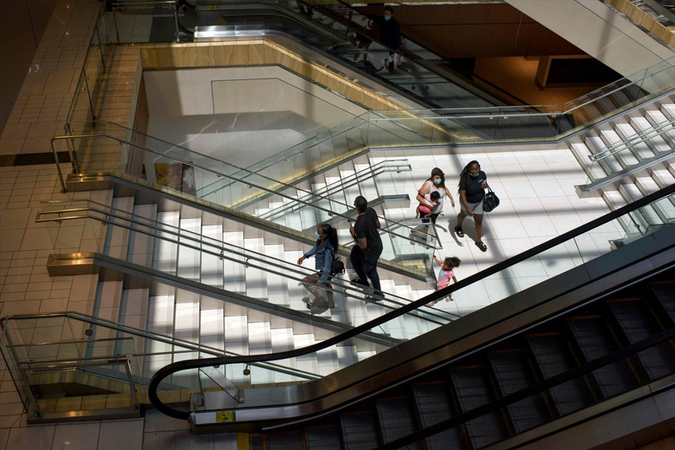
Americans began trickling back into shopping malls on Friday, wearing masks and facing new rules. Only two customers at a time at a Vitamin World in San Antonio. No shoe-sizing services at a Skechers in Gulfport, Mississippi. Mandatory hand sanitizer, spritzed on by a mask-wearing doorman, at a Louis Vuitton in Houston.

“It wasn’t that different from a typical shopping experience,” said Peyton Burrows, 24, who went to the upscale Texas mall in search of a Louis Vuitton handbag and, like countless others, some measure of normalcy.

Malls, restaurants and movie theaters in Texas and roughly a dozen other states began emerging from the coronavirus lockdowns that have fueled six weeks of economic paralysis, leaving business owners, workers and consumers to make their calculations about what normal should look like amid an ongoing public health crisis.

More than half of America’s governors have now relaxed restrictions put in place to stem the spread of the coronavirus. But the reopenings are largely piecemeal and vary in scope. In Georgia, Gov. Brian Kemp, a Republican, last week opened nearly all businesses, including tattoo parlors and hair salons. Colorado began allowing in-person shopping on Friday, with strict social distancing protocols in place. Ohio is edging into reopening, allowing elective surgeries to resume.

Most department stores and national chains remained closed Friday. The retailers that did reopen represented a smattering of brands: Rack Room Shoes, Gucci and Urban Outfitters. A candle kiosk in Mississippi and a food court Subway.

The landscape is even more muddled within states, with many large cities extending stay-at-home orders even as they are lifted in more rural areas. Officials in Nashville, Denver, St. Louis and other cities have told residents to stay home even as their states have moved to reopen. Texas Gov. Greg Abbott, a Republican, has insisted the entire state follow his plans to reopen, even though mayors in such cities as Austin and Dallas have balked.

Public health experts, meanwhile, have warned that premature openings could lead to a resurgence of the virus, which has killed more than 64,000 Americans.

“There’s no question that at the end of this we’ll have to reopen as a society, but right now it’s happening scattershot without any consistency,” said Mark Cohen, director of retail studies at Columbia Business School. “Nobody has a playbook.”

The patchwork has left many national businesses unsure of how to proceed, though some are slowly rolling out plans. Simon Property Group, the nation’s largest mall operator, reopened three dozen shopping centers on Friday, with plans to expand to 49 properties in 10 states on Monday. Tapestry, the parent company of Kate Spade, Coach and Stuart Weitzman, reopened 40 of its stores for curbside pickup. Best Buy plans to phase in 200 stores this month.

Meanwhile, Macy’s, the nation’s largest department store chain, will open 68 stores on Monday, with the rest of its 775 stores coming onboard in the next six to eight weeks. But there will stark differences from pre-pandemic norms: Customers will not be allowed to try on makeup or dress shirts or get bra fittings. No ear piercings or alterations, either. Employees, meanwhile, will be required to get temperature checks and wear cloth masks. The company is also adding plexiglass barriers at cash registers and providing hand sanitizer at entrances, escalators and checkout counters.

But even with the precautions, analysts say it will be difficult to persuade shoppers to come in and spend. More than 30 million Americans have filed for unemployment benefits in the past six weeks, and many more say they’re worried about possible job cuts and furloughs as the effects of the shutdown continue ripple across the economy. That’s led to steep declines in consumer spending that analysts say will only worsen in the coming months.

“Some people will go to the mall, but there are so many others who are afraid to go out or don’t have money to spend,” said Neil Saunders, managing director of GlobalData Retail.

But that didn’t stop the dozens of shoppers who lined up Friday outside Ingram Park Mall in San Antonio waiting for it to open.

William Luna, 42, had come in search of an exclusive Batman figure, wearing a homemade Spiderman-themed mask. Though he disagrees with the governor’s decision to reopen the state, he said he’s starting to get tired of sitting at home. Plus, he figured, there wouldn’t be much of a crowd at the mall.

“I don’t like being locked up,” said Luna, who is disabled and cannot work. “But I also understand. I expect the opening backfires so people learn.”

Inside the mall, signs warned customers about keeping their distance, and stickers on the tile floor indicated where people should stand. Vitamin World imposed a two-shopper limit, while Rack Room Shoes was allowing 24 at a time. Most national brands were closed but about a dozen locally owned retailers opened their doors. Jewelry kiosks and cookie vendors were busy preparing for foot traffic. At least a dozen people waited for appointments at the mall’s two optical stores.

Massage chairs, merry-go-rounds, and the food court were roped off. Most customers wore face masks and avoided touching surfaces.

Elsewhere in San Antonio, Johnny Hernández reopened his La Gloria Mexican restaurant on Friday. “I’m optimistic we can move forward and it’s a risk I’m willing to take,” he said.

The restaurant used metal barriers to control entry and wait staff wore black masks and gloves. A sign warned, “No mask, No service!”

The chef said he wanted to lead and set an example of how to run a restaurant in a pandemic. He spent two days training employees on the new standards and brought in new inventory. He has rehired 50 of his 150 employees. He feeds 1,500 people on a normal Friday. Today, he predicts about 200 people will come.

“People are ready to come back,” Hernandez said. “We are giving that within the safety boundaries we’ve been giving and trying to respect the guidance.”

Two hundred miles away in Houston, Ashley Smith, 29, arrived early at the Galleria to return a $200 pair of sandals to Tory Burch, which ended up being closed. The recently laid-off medical worker said coming to the mall had been “a hard decision.” She needed the money, she said, but it took only a few minutes for her to regret her choice.

Hundreds of shoppers teemed around her. Some of the malls’s most popular destinations – Tom Ford, Neiman Marcus, Chanel, Macy’s, Starbucks, and the Apple Store – were closed. Other, like Fendi, Valentino and Christian Loubouton, were completely devoid of merchandise.

Six missed delivery stickers were posted to the locked front door of the Chanel store. At Neiman Marcus, a “Temporarily Closed” sign redirected customers to the chain’s website.

“People really don’t seem to be taking the pandemic seriously here,” Smith said. “You don’t know if people are sick and especially with me being African American, it seems like it’s hitting our community worse.”

“It wasn’t worth it,” she added.

Mall operators, analysts say, also have a financial incentive to reopen: Rent. A number of brands – including the Gap, Old Navy and Banana Republic – didn’t pay for their leases in April, adding up hundreds of millions of dollars in lost revenue for mall owners. Retailers are also quickly running out of cash, making it all the more important for landlords to lock in whatever payments they can. “It’s a lot harder for retailers to say, ‘we don’t want to pay rent,’ if the malls are open,” Saunders said. “That’s the calculation.”

Alex Cunningham, who owns two mobile phone repair kiosks in The Galleria called “Street Talk” has been making his own financial calculations lately. It could be weeks until business returns to normal, he said, but it was important that he open anyway. On Friday, he said he had just two customers instead of the usual dozens.

“I’m just out here because I need the money,” said Cunningham, who added that he wasn’t worried about the virus. “I’ve only had a little bit of business, but I’m grateful for it.”

At the Gulfport Premium Outlets in Mississippi, Katherine Bosarge arranged colorful candles on her sidewalk cart, wondering the same things as the shoppers around her: “Which stores are open? Where is everyone?”

She was wearing a black mask with a New Orleans Saints logo but said she wasn’t worried about the coronavirus. What really scares her, she says, is the economic fallout of the shutdown. Unemployment benefits had helped tide her through these past few weeks, she said, but she was worried about how long it could take for sales to return to normal.

“I’m very glad to be back,” said Bosarge. “I wish there was more business. It’s going to be a slow recovery.”

Lufthansa running out of bailout road as Germany sets terms #ศาสตร์เกษตรดินปุ๋ย

#ศาสตร์เกษตรดินปุ๋ย : ขอบคุณแหล่งข้อมูล : หนังสือพิมพ์ The Nation.

https://www.nationthailand.com/business/30387104?utm_source=category&utm_medium=internal_referral

Lufthansa running out of bailout road as Germany sets terms

May 01. 2020
By Syndication Washington Post, Bloomberg · Birgit Jennen, William Wilkes, Matthias Wabl · BUSINESS, WORLD, TRANSPORTATION, US-GLOBAL-MARKETS, EUROPE 

Germany’s government has set out a unified position on a bailout for Deutsche Lufthansa, with the airline group expected to accept a significant state stake and veto rights in exchange for a multibillion-euro package of assistance, according to people familiar with the matter.

While details are still being negotiated, the economy and finance ministries have ironed out disagreements that dragged on for weeks, the people said, asking not to be named discussing the deliberations. The plan foresees Germany taking a least a 25% stake in the airline and receiving at least one seat on the firm’s supervisory board, the people said. The assistance could run to 10 billion euros ($11 billion).

The size of Germany’s equity stake, whether part of it will be under a so-called silent participation that limits state control, and how many seats the government will have on Lufthansa’s supervisory board are still subject to negotiations, according to the people. Talks between the airline and the government are expected to stretch into next week, the people said.

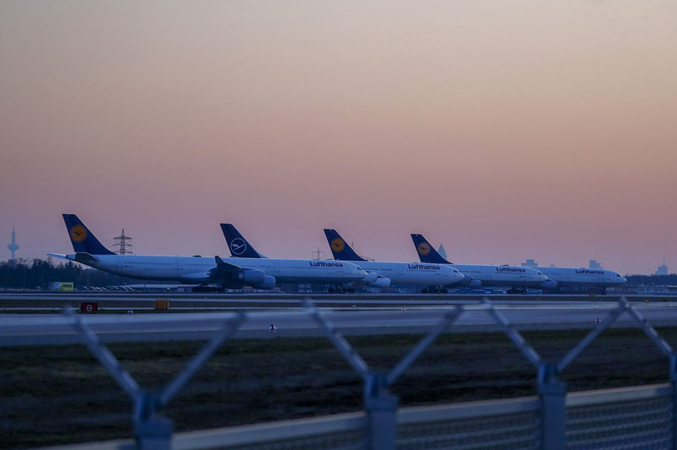
The airline, faced with a substantial loss in revenue due to the worldwide grounding of most of its fleet, is locked in multi-state bailout talks with the governments of Germany, Switzerland, Austria and Belgium. Lufthansa operates so-called flag carriers in all four nations, and has warned that it will run low on cash within weeks if it can’t reach an accord.

Like airlines the world over, Lufthansa is wrestling with a crisis that’s punctured a decades-long aviation boom. The firm is scaling back its fleet and closing the Germanwings discount arm to resize the airline group for depressed levels of travel that could last for years.

The firm isn’t alone in expecting a slow return to normality: an International Air Transport Association survey found 40% of recent travelers anticipated waiting at least six months after the virus is contained before flying again.

Lufthansa understands it has little leverage in the talks with Germany, the people said, and an agreement is likely to be reached based on terms being outlined by the state. While the company is leaving all options open, it’s unlikely to seek court protection — an idea floated this week as a last resort — due to potential reputational damage with investors and financial markets, the people said.

Lufthansa’s pilots union on Thursday said its members were prepared to take a 45% pay cut if the airline’s management promised not to enter court protection.

“These concessions are worth around 350 million euros and make a significant contribution to the viability of the company,” the VC pilots’ union said in a statement.

A spokesman for Lufthansa said talks were ongoing.

The government in Vienna could also join the German government in taking an equity stake, people familiar with the matter said. Lufthansa’s Austrian Airlines has asked the state for aid close to 800 million euros, about 300 million of which may be equity, with the remainder loans, guarantees and non-repayable subsidies.

In a Wednesday meeting with Lufthansa Chief Executive Officer Carsten Spohr, Austrian Chancellor Sebastian Kurz asked for guarantees to maintain and possibly extend Vienna airport as a hub for the group, according to people familiar with the talks. Austria is willing to take an equity stake in Lufthansa along with the German government, the people said.

“We took a step forward yesterday, the talks continue,” Austrian Finance Minister Gernot Bluemel told reporters on Thursday. Austria “isn’t ruling out anything,” he said, when asked if the country would consider taking a stake in Lufthansa.

Lufthansa’s Swiss and Edelweiss subsidiaries on Wednesday reached a deal to receive 1.3 billion francs ($1.3 billion) in credit guarantees from Switzerland’s government, the first plank in a bailout package the parent company is negotiating with the four governments.

Talks with the Belgian government are ongoing.

Apple’s iPhone sales fell as the coronavirus struck #ศาสตร์เกษตรดินปุ๋ย

#ศาสตร์เกษตรดินปุ๋ย : ขอบคุณแหล่งข้อมูล : หนังสือพิมพ์ The Nation.

https://www.nationthailand.com/business/30387096?utm_source=category&utm_medium=internal_referral

Apple’s iPhone sales fell as the coronavirus struck

May 01. 2020
File photo

File photo
By The Washington Post · Reed Albergotti · BUSINESS, TECHNOLOGY 

Apple reported that second quarter revenue inched up 1%, reflecting how the coronavirus has rocked its business from manufacturing to consumer demand.

Apple said revenue in the second quarter totaled $58.3 billion. iPhone revenue was $29 billion, down from $31 billion a year ago. Profits fell 2.7% to $11.3 billion.

“Despite covid-19’s unprecedented global impact, we’re proud to report that Apple grew for the quarter,” said Tim Cook, Apple’s CEO.

Apple’s stock dipped 2% in after-hours trading, after rising 2% earlier in the day. While the report was positive under the circumstances, Apple injected some uncertainty by holding back guidance for the following quarter.

Cook painted a rosy picture of the company’s ability to pump out new products, despite the virus, touting its launch of updated iPads, MacBook Airs and the iPhone SE, and said the company’s production was back up to typical levels by the end of February.

But that optimistic outlook only told half the story. Cook didn’t say whether its flagship iPhone, initially expected to launch this fall, would be on time or whether it would include 5G, the next-generation wireless technology competitors have already implemented.

“There’s not one person on earth who was expecting good news from Apple when they reported, but it’s the degree of the economic abyss,” said Dan Ives, an analyst with Wedbush Securities. “Apple and iPhone are just a core bellwether for consumer spending and demand, especially on technology purchases.”

Apple was exposed to the ravages of the novel coronavirus earlier than some of its technology industry peers, such as Google, Facebook and Microsoft. The virus cut off Apple’s vast and sinuous networks of suppliers and contract manufacturers in China and shuttered its stores there, preventing its customers from touching and feeling its products before they buy.

On Feb. 17, Apple warned investors that it would fail to meet its revenue guidance for the second quarter, largely because of supply chain disruptions and a drop in demand in China because of Coronavirus.

That announcement didn’t deeply spook investors, but things have gotten progressively worse, as the coronavirus has spread around the world and with unparalleled deadliness in the United States, Apple’s core market. On March 13, Apple said it would shutter its hundreds of U.S. retail stores for two weeks. That was seven weeks ago, and there’s no telling when they’ll all reopen.

On Thursday, Wall Street analysts expected, on average, that Apple would bring in $54.54 billion in revenue during the March quarter.

The good news for Apple investors is that, while sales of phones might be down, nothing about the coronavirus has weakened the lock Apple has over its customers. Apple’s launch of the iPhone SE, which starts at $400, should help the company hold onto cash strapped customers during one of the worst economic crises in history.

“Now they’ve made it a bit harder for people to just look at Android that offers more price points,” said Carolina Milanesi, an analyst at market research firm Creative Strategies.

Hardware aside, Apple’s push to diversify into services has gotten a boost from the coronavirus. Apple’s services revenue shot up 17%, to $13 billion, constituting 23% of the company’s revenue. Much of that revenue comes from recurring fees that Apple charges its customers, for things like photo storage, AppleCare and music streaming.

According to Sensor Tower, which tracks the mobile app industry, the number of new app downloads on iPads saw the first year-over-year growth since 2013. Sensor Tower says users spent $2 billion on iPad apps during the quarter, the first time it hit that level.

It also takes a hefty cut of all purchases on the App Store and a percentage of all Apple Pay sales. That customer base continues to grow, the company says, with a growing “installed base” of 1.5 billion devices.

As Thursday’s earnings report showed, it’s not easy for customers to get out of those monthly charges, even during the worst economic downturn many of them have experienced, and that’s a good thing for Apple investors. “Services, that’s Teflon,” Ives said.

Some in the global supply chain industry were eagerly awaiting Apple’s earnings report in hopes that it would provide some guidance on how to proceed with manufacturing in China. “I cannot remember a more anticipated or anxiously awaited earnings call,” said Ron Keith, founder of the Supply Chain Resources Group, which helps consumer electronics companies build devices in places like China.

Keith, for instance, said that rosy projections from Apple would provide some justification in taking a more aggressive approach in China, pushing suppliers to get key components more quickly. “They’re thought of as a very big barometer,” he said of Apple.

Apple didn’t say whether it thought things would get better next quarter, only that once it’s over, “the ending will be a good one,” Cook said.

He also expressed confidence in the global supply chain as it stands, despite criticism from some that Apple has become too reliant on China to assemble its products and produce many of the components. “If you look at the shock to the supply chain that took place this quarter, for it to come back up so quickly really demonstrates that it’s durable and resilient. So I feel good about where we are,” Cook said.