Cabinet approves plan to create regional hub of ‘next-gen’ food #ศาสตร์เกษตรดินปุ๋ย

#ศาสตร์เกษตรดินปุ๋ย : ขอบคุณแหล่งข้อมูล : หนังสือพิมพ์ The Nation.

https://www.nationthailand.com/business/30386933?utm_source=category&utm_medium=internal_referral

Cabinet approves plan to create regional hub of ‘next-gen’ food

Apr 29. 2020
By THE NATION

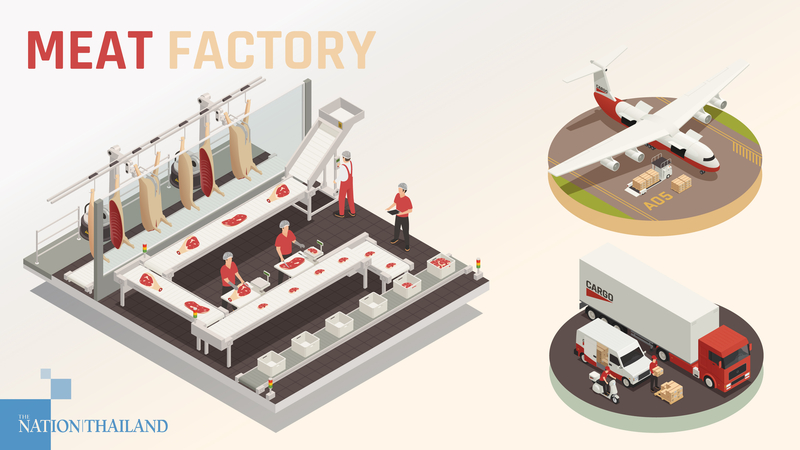
The Cabinet on Tuesday (April 28) approved an action plan to drive economic growth by transforming Thailand into Asean’s production hub for so-called next-generation processed food.

The plan lays out measures for the first phase of processed food industry development, from 2019-2027.

It covers rice, livestock, bio-food and health food products. Also incorporated are packaging and digital technology for food innovation.

The action plan will see the creation of a new generation of food makers who focus on innovation, value-added products and also intelligent packaging.

The plan will be funded by Bt6.671 billion from the 2020-2023 fiscal budget along with private investment of Bt2.224 billion.

The target is to make Thailand the Asean centre of production of next-generation food by 2027 and also place the country among the world’s top 10 food exporters.

Southwest Airlines to issue stock, debt amid travel collapse #ศาสตร์เกษตรดินปุ๋ย

#ศาสตร์เกษตรดินปุ๋ย : ขอบคุณแหล่งข้อมูล : หนังสือพิมพ์ The Nation.

https://www.nationthailand.com/business/30386948?utm_source=category&utm_medium=internal_referral

Southwest Airlines to issue stock, debt amid travel collapse

Apr 28. 2020
A Boeing 737-700 operated by Southwest Airlines flies into California's San Diego International Airport on April 27, 2020. MUST CREDIT: Bloomberg photo by Bing Guan

A Boeing 737-700 operated by Southwest Airlines flies into California’s San Diego International Airport on April 27, 2020. MUST CREDIT: Bloomberg photo by Bing Guan
By Syndication Washington Post, Bloomberg · Mary Schlangenstein · BUSINESS 

Southwest Airlines is selling shares and $1 billion in convertible bonds in a push to add liquidity as the coronavirus pandemic all but erases demand for flights.

The carrier will offer 55 million shares plus an option for the underwriters to buy another 8.25 million to cover over-allotments, according to a company statement Tuesday. The combined total represents about 12% of Southwest’s current outstanding shares. The underwriters can also buy an extra $150 million in the bonds, which are due 2025.

Southwest is following United Airlines in offering shares amid the biggest crisis in the history of the industry, as carriers rush to shore up liquidity even after receiving billions of dollars in government aid. Southwest is also cutting the number of Boeing Co. 737 Max jets it will take through December 2021 by more than half and said the travel outlook demand remains bleak.

“The U.S. economy has been at a standstill, and the current outlook for second quarter 2020 indicates no material improvement in air travel trends,” Chief Executive Officer Gary Kelly said in a separate statement as Southwest reported a first-quarter loss. “Trip cancellations remain at unprecedented levels, though they have receded from their peak in March.”

The shares fell 1% to $28.81 ahead of regular trading in New York. Southwest has dropped 46% this year, the best performance on a Standard & Poor’s index of major U.S. carriers.

Morgan Stanley, Bank of America Corp., JPMorgan Chase & Co., BNP Paribas and Citigroup Inc. are serving as the joint book-running managers of the offerings.

Southwest’s Max deliveries from Boeing will total no more than 48 through the end of next year. Also, the carrier will remove the Max from its schedule until late October of this year, as Boeing works to end a grounding that began in March 2019 after two deadly crashes.

The Dallas-based airline had been scheduled to receive 123 Max jets from Boeing and aircraft lessors through the end of 2021, Chief Financial Officer Tammy Romo said. Under the reworked delivery schedule, the company this year will take fewer than the 27 jets it had been expecting.

With dramatically fewer customers on planes, operating revenue will fall as much as 95% in April and May and revenue trends are too hard to predict after that, Southwest said.

Despite slashing capacity over the two months, the proportion of seats filled per plane will average 6% in April and 5% to 10% in May, the airline said. The average last year was more than 83%.

Cost-cutting efforts and a dramatically reduced flight schedule should lower 2020 operating costs by $2 billion and capital spending will fall $1 billion, Southwest said.

The company has temporarily parked 350 aircraft, or roughly half its fleet. It has also frozen hiring, cut executive salaries and offered workers a mix of voluntary unpaid leave and time off at reduced pay.

Southwest has raised $5.2 billion in debt since the start of the year and still has nearly $8 billion in unencumbered assets. Daily cash burn during the second quarter is estimated at $30 million to $35 million — about half as much as the airline said it had initially expected.

The airline intends to apply for a $2.8 billion secured loan with the U.S. Treasury Department, but hasn’t decided whether it will ultimately take the funds. Southwest earlier got more than $3.2 billion — part grant and part loan — in payroll support from the Treasury. The company said it is now “actively pursuing” other options for additional liquidity.

Southwest reported an adjusted loss of 15 cents a share in the first quarter, a narrower shortfall than the 30-cent loss expected by analysts. The carrier had adjusted earnings of 70 cents a year earlier. Sales fell 18% to $4.23 billion in the first three months of this year, trailing the $4.52 billion average of analyst estimates compiled by Bloomberg.

If stay-at-home restrictions start to be lifted, some improvement in travel demand may begin in June, Kelly said.

“A lot of people have made summer vacation travel plans and I think some people are anxious to begin to get back to their lives,” he said. “Seeing what demand is in July and August is real critical.”

Bangkok Airways to take to the air from May 15 #ศาสตร์เกษตรดินปุ๋ย

#ศาสตร์เกษตรดินปุ๋ย : ขอบคุณแหล่งข้อมูล : หนังสือพิมพ์ The Nation.

https://www.nationthailand.com/business/30386914?utm_source=category&utm_medium=internal_referral

Bangkok Airways to take to the air from May 15

Apr 28. 2020
By THE NATION

Bangkok Airways will resume its domestic operations from May 15, starting with the Bangkok-Samui-Bangkok flight twice daily.

All flight operations will strictly comply with safety measures and social distancing guidelines set by the Public Health Ministry and the Civil Aviation Authority of Thailand, the airline said. The reopening of airports in Sukhothai and Trat and Bangkok Airways’ other routes will be announced later.

The health and safety measures will include onboard seat distancing, suspension of in-flight food and beverage services and a ban on consumption of personal food or drink. All crew members will wear masks and gloves when on duty and passengers themselves are required to wear protective masks at all times during flights, the airline said.

Samui Airport is expected to reopen for daily operations on May 15 from 8am-7pm.

The airport has put in place safety measures to “ensure the highest level of safety for all passengers and staff”.

The measures include passenger and staff screening, body temperature checks, a requirement that staff wear face masks at all times when on duty and social distancing arrangements.

BJC to offer new debentures to retail investors #ศาสตร์เกษตรดินปุ๋ย

#ศาสตร์เกษตรดินปุ๋ย : ขอบคุณแหล่งข้อมูล : หนังสือพิมพ์ The Nation.

https://www.nationthailand.com/business/30386913?utm_source=category&utm_medium=internal_referral

BJC to offer new debentures to retail investors

Apr 28. 2020
By THE NATION

Berli Jucker Public Company Limited (BJC), the major shareholder of Big C Supercenter and a leading consumer goods and packaging products company in Thailand, has announced the public offering of its new debentures with tenures of 4 years, 6 days and 10 years, 6 days. The expected subscription period is May 28-29 and June 1.

BJC president and CEO Aswin Techajareonvikul said on Tuesday (April 28) that BJC will offer the 4-year-6-day debentures with a coupon rate of around 2.8-3 percent and the 10-year-6-day debentures with a coupon rate of around 3.4-3.5 percent after the company recently submitted its filing to the Securities and Exchange Commission of Thailand (SEC).

The 10-year-6-day debentures have a call option granting the company an early redemption right starting from the 5th anniversary of its issuance.

The proceeds of the new issuance will be used to refinance BJC’s existing debentures maturing in early June 2020.

The joint-lead arrangers for the new debentures are Bangkok Bank, Kasikornbank, Krung Thai Bank, and Phatra Securities. The features and details of the debentures are still being considered, and BJC will announce the final structure to the public once it has been finalised.

“With our diversified business portfolio, multiple revenue streams, and strengthened competitive positions of our core business, we believe BJC’s debentures will again be an attractive investment opportunity for retail investors,” Aswin said.

“As of February 14, 2020, BJC was rated ‘A+’ with negative outlook by TRIS Rating.”

CPF debentures to be offered in early June #ศาสตร์เกษตรดินปุ๋ย

#ศาสตร์เกษตรดินปุ๋ย : ขอบคุณแหล่งข้อมูล : หนังสือพิมพ์ The Nation.

https://www.nationthailand.com/business/30386836?utm_source=category&utm_medium=internal_referral

CPF debentures to be offered in early June

Apr 27. 2020
By THE NATION

Charoen Pokphand Foods (CPF) is preparing to issue debentures to retail investors and institutional investors and/or high net worth investors.

The debentures, which have been assigned “A+” by Tris Rating, will be offered to retail investors through KasikornBank, Krungthai Bank, Siam Commercial Bank and CIMB Thai Bank, and to institutional investors and/or high net worth investors through KasikornBank, Krungthai Bank, Siam Commercial Bank and Government Savings Bank, the company said.

The subscription period is expected to be at the beginning of June 2020.

Paisan Chirakitcharern, CFO of Charoen Pokphand Foods, which operates an integrated agro-industrial and food business under the vision to help the country become the “Kitchen of the World”, said the company is in the process of submitting a filing to the Office of the Securities and Exchange Commission to offer these debentures: a 4-year tenor with a coupon rate of about 2.80-3 per cent per annum; a 7-year tenor with a coupon rate of about 3.30-3.40 per cent per annum; a 12-year tenor with a coupon rate of about 3.65-3.75 per cent per annum; and a 15-year tenor with a coupon rate of about 3.80-4 per cent per annum.

The debentures offer semi-annual coupon payment. The 4-year and 7-year tenors will be offered to retail investors. The final coupon rate of each tenor will be determined and announced at a later stage.

The debentures were assigned an “A+” rating by Tris on March 31, reflecting CPF’s position as one of Thailand’s leading agro-industrial and food business operators with production bases in several countries and a variety of products and markets, the company said. The credit rating also reflects the firm’s financial flexibility from strategic investment, it added.

CPF will use the proceeds to support its general businesses and/or expand businesses and/or investments and/or refinance its existing debentures and bills of exchange maturing this year, the company said.

Retail investors can subscribe at a minimum amount of Bt100,000 or multiples of Bt100,000, the firm added.

JPMorgan to unlock trillions in liquidity with tech partnership #ศาสตร์เกษตรดินปุ๋ย

#ศาสตร์เกษตรดินปุ๋ย : ขอบคุณแหล่งข้อมูล : หนังสือพิมพ์ The Nation.

https://www.nationthailand.com/business/30386819?utm_source=category&utm_medium=internal_referral

JPMorgan to unlock trillions in liquidity with tech partnership

Apr 27. 2020
File Photo by Syndication Washington Post, Bloomberg

File Photo by Syndication Washington Post, Bloomberg
By Syndication Washington Post, Bloomberg · Molly Smith, Michelle F. Davis · BUSINESS, US-GLOBAL-MARKETS 

JPMorgan Chase is looking to help blue-chip companies untether trillions of dollars locked up in corporate supply chains globally through a new technology partnership.

The bank is working with Taulia, a platform that provides working capital solutions, to redistribute liquidity to smaller suppliers of large, investment-grade companies. The multinational firms will have the option to pay suppliers earlier with their own cash, or lean on JPMorgan’s balance sheet to keep money flowing through the network of providers.

While the partnership has been in the works since last fall, it comes at a compelling time now as global supply chains have been upended by the coronavirus pandemic, forcing governments to take unprecedented actions to prop up large and small businesses alike. Through Taulia’s network, JPMorgan will be able to help smaller firms access capital at a cheaper rate and in less time than otherwise possible, said Stuart Roberts, the bank’s global head of trade.

“We’re taking a relatively short-term risk on larger companies,” Roberts said. “I couldn’t think of a safer way to inject liquidity into a credit-stressed small- or medium-sized business right now.”

Businesses complete more than $120 trillion worth of transactions a year, but at any point, $20 trillion of that total is waiting in the supply chain to be paid, said Taulia Chief Executive Officer Cedric Bru. Clients can get on-boarded within 90 seconds, compared to the days or even weeks it takes small businesses to access credit from local banks at expensive interest rates, Bru said.

Over the past two months, investment-grade companies globally have accessed hundreds of billions of dollars through bond markets and credit lines at a relatively low cost, but smaller firms have fewer – and more expensive – options. While the U.S. high-yield bond market has opened up, it’s still quiet in Europe. In leveraged loans, the few that have come are marketing, and often pricing at double-digit interest rates. Private credit markets have been dormant.

U.S. junk bond spreads have compressed to 775 basis points from a peak of 1,100 basis points in March, but current levels are still more than double what they were in February. The widening gap caused many companies to lose access to capital, said James Fraser, JPMorgan’s global head of structured solutions within global trade.

“Being able to leverage the strength of a large, investment-grade buyer for a small supplier went from an attractive financing option to a lifeline,” he said.

JPMorgan had a legacy tech platform that was due for an upgrade. The bank looked at various other partners, and also considered building its own. It opted for San Francisco-based Taulia instead, given its AI capabilities, Roberts said.

The partnership, expected to be announced formally this week, will help JPMorgan become the biggest global supply chain finance bank, he said.

DraftKings jumps 18% in public debut during freeze on sports #ศาสตร์เกษตรดินปุ๋ย

#ศาสตร์เกษตรดินปุ๋ย : ขอบคุณแหล่งข้อมูล : หนังสือพิมพ์ The Nation.

https://www.nationthailand.com/business/30386738?utm_source=category&utm_medium=internal_referral

DraftKings jumps 18% in public debut during freeze on sports

Apr 25. 2020
The DraftKings Inc. logo in an arranged photograph. MUST CREDIT: Bloomberg photo by Andrew Harrer.

The DraftKings Inc. logo in an arranged photograph. MUST CREDIT: Bloomberg photo by Andrew Harrer.
By  Syndication Washington Post, Bloomberg · Crystal Tse, Eben Novy-Williams · BUSINESS, SPORTS, US-GLOBAL-MARKETS 

A stalled initial public offering, a failed merger, and one pandemic later, DraftKings Inc. is public.

The Boston-based sports-betting company jumped as much as 18% on its first trading day after completing a reverse merger with Diamond Eagle Acquisition Corp., a special purpose acquisition company. The $3.3 billion deal combining DraftKings and the gaming technology firm SBTech was approved Thursday.

Its shares were trading 7% higher at $18.68 on 11:01 a.m. in New York, giving the company a market value of $5.8 billion.

The DraftKings debut shows the continuing lure of both sports and public markets, even as both have been hit by the coronavirus pandemic like a 300-pound NFL lineman. And the company took plenty of hits on its road to victory.

In 2015, the company was in talks with investment banks about a potential IPO only to face a market selloff that quashed its plans. After flooding the market with advertising, it became the target of regulators and investigations that shuttered its business in many states. Two years later, it tried to merge with rival FanDuel but the transaction fell apart after pressure from the Federal Trade Commission.

From the beginning, DraftKings, along with FanDuel, also faced state regulators’ questions about the legality of their pay-to-play games.

Legal sports betting was always DraftKings’ long-term plan, though, and victory came with a 2018 U.S. Supreme Court ruling striking down a 1992 law that barred commercial sports betting in most states. DraftKings was well positioned to capitalize on the new market as states moved to allow sports gambling. In New Jersey alone, DraftKings took in almost $80 million in sports-betting revenue last year.

After last year’s rise and fall of IPOs by tech unicorns led by Uber Technologies Inc., SPACs took on a new sheen. Special purpose acquisition companies, once a last resort for owners looking to exit an investment, become a popular choice for private companies spooked by the swings in the regular IPO market. Richard Branson’s Virgin Galactic Holdings’s merger with one so-called blank-check company set up by venture capitalist Chamath Palihapitiya was a high-profile example.

Diamond Eagle, founded by former Hollywood executive Jeff Sagansky and Eli Baker, raised $400 million in an IPO in May. In December, it announced a deal to buy DraftKings, with funds managed by Capital Research and Management Co., Wellington Management Co. and Franklin Templeton committed to a private investment of $304 million. Before the deal could close, the pandemic hit, putting major sports in the U.S. and around the world in limbo as well as throwing equity markets into a panic.

The decision to pursue a reverse merger with a SPAC instead of a traditional IPO may have been the clutch play that put DraftKings across the public company goal line despite this year’s stock market rout.

Chief Executive Officer Jason Robins said that when they discussed potential avenues for going public, his team talked about the possibility of a downturn in the market. The discussion didn’t include prospects for a global pandemic. Still, at the time the market had been on an 11-year bull run, and with the 2020 U.S. presidential election approaching, some were projecting an economic dip.

“Now, looking at this in hindsight, that’s a pretty big deal,” Robins said. “Had we chosen a traditional IPO structure, odds are we wouldn’t be closing it right now.”

The DraftKings debut might encourage other companies to follow in its footsteps.

“The reason people invest in SPACs is that they have full downside protection and optionality on the upside,” said Niron Stabinsky, head of SPACs at Credit Suisse Group AG. “There’s no question that a lot of companies out there that want to and need to go public now want to look at if there’re other ways to do it that’s less risky.”

Credit Suisse, along with Goldman Sachs, Raine Group and Stifel Financial Corp., advised on the reverse merger.

Robins said it’s too early to know how or if the coronavirus pandemic will affect the company’s long-term future. He said the economic downturn could spur more states to accelerate their legalization of sports betting and online casino games, which would expand the company’s market. Consumer behavior around betting and discretionary spending could also change, which would be bad for the company if that includes tightening household purse strings.

DraftKings was founded in 2011 by Robins, Matt Kalish and Paul Liberman, all of whom will remain in its senior management.

DraftKings’ list of investors was, at one time, full of sports leagues and prominent team owners. Some, like Major League Baseball have unloaded their equity. Others, including New England Patriots owner Robert Kraft and Dallas Cowboys owner Jerry Jones have kept their stakes. The company’s stakeholders also include Walt Disney Co., which acquired its interest through its $71 billion 20th Century Fox deal completed last year that covered an array of assets.

The combined company was projected to have $540 million in revenue this year, with $400 million of that coming from DraftKings and $140 million from SBTech, Robins said last year. Robins said that was expected to grow to $700 million in 2021, with $550 million coming from DraftKings.

DraftKings shares are trading on the Nasdaq Global Select Market under the symbol DKNG.

Ryanair chief rules out Boeing Max arrival until next summer #ศาสตร์เกษตรดินปุ๋ย

#ศาสตร์เกษตรดินปุ๋ย : ขอบคุณแหล่งข้อมูล : หนังสือพิมพ์ The Nation.

https://www.nationthailand.com/business/30386737?utm_source=category&utm_medium=internal_referral

Ryanair chief rules out Boeing Max arrival until next summer

Apr 25. 2020
Passenger aircraft operated by Ryanair sit parked at London Luton Airport in Luton, England, on March 30, 2020. MUST CREDIT: Bloomberg photo by Chris Ratcliffe.

Passenger aircraft operated by Ryanair sit parked at London Luton Airport in Luton, England, on March 30, 2020. MUST CREDIT: Bloomberg photo by Chris Ratcliffe.
By Syndication Washington Post, Bloomberg · Siddharth Philip · BUSINESS, WORLD, TRANSPORTATION, US-GLOBAL-MARKETS, EUROPE

Ryanair Holdings Chief Executive Officer Michael O’Leary said he won’t take delivery of Boeing’s 737 Max jetliner until summer 2021 as air travel claws its way back from the coronavirus outbreak.

Europe’s biggest discount airline is one of the main customers for the Max with 210 orders. The jet had been grounded for a year after two fatal crashes by the time the pandemic hit European flights, and O’Leary said in an interview Friday that Ryanair doesn’t now want the planes until markets return to normal.

The Irish carrier is banking on the collapse of weaker rivals to drive growth, O’Leary said. Its flights should reach about 40% of the usual schedule in the month they resume, most likely late June or early July, increasing to 60% by September, the last month of the summer season, he predicted.

The winter timetable may operate at more-usual levels as price wars prompt people to make up for missed summer vacations.

“It would be stimulated by very aggressive airline pricing, hotel pricing, package holiday pricing,” the CEO said. Fares should return to normal by summer 2021, providing “significant growth opportunities” in a market opened up by the collapse of Britain’s Flybe Plc and Deutsche Lufthansa’s decision to close Germanwings, on top of the 2019 failure of Thomas Cook Group.

Fleet discussions with Boeing have had to take a back seat as covid-19 has roiled the travel industry, but will “return pretty rapidly” once the crisis eases, O’Leary said. He said he expects the Max to win re-certification and return to the skies for the first time since its grounding in July or August.

Ryanair is waiting on the higher capacity Max 200 variant which will take a few more months to gain clearance. The CEO said at the start of March that he expected to take his first planes in September or October, a prediction he said now sounds like “a century ago.”

O’Leary didn’t rule out switching to jets from Boeing’s arch-rival Airbus SE, but said the European company would need to cut its prices.

Ryanair doesn’t plan to raise cash by selling and leasing back aircraft, he said, unlike other carriers that are looking at the option to increase liquidity.

“The problem is that if you’re trying to do sale and leaseback now, you’re doing it at distressed prices and high interest rates,” the CEO said. “We don’t need the money and we wouldn’t want those kinds of high costs.”

THAI and Wunderman Thompson launch ‘Stay Home Miles Exchange’ campaign #ศาสตร์เกษตรดินปุ๋ย

#ศาสตร์เกษตรดินปุ๋ย : ขอบคุณแหล่งข้อมูล : หนังสือพิมพ์ The Nation.

https://www.nationthailand.com/business/30386702?utm_source=category&utm_medium=internal_referral

THAI and Wunderman Thompson launch ‘Stay Home Miles Exchange’ campaign

Apr 24. 2020
By THE NATION

Thai Airways International Pcl (THAI) in collaboration with creative agency Wunderman Thompson has launched “THAI Stay Home Miles Exchange” Royal Orchid Plus (ROP) campaign.

This follows the government’s policy requesting Thais to stay home. ROP members will be rewarded with one mile for every four hours of staying indoors from April 24 to May 26.

The campaign will offer a total of 1,000,000 miles for ROP members in Thailand, Priyasiri Juathes, THAI vice president, Product and Guest Experience Department, said.

The earned miles can be redeemed for award tickets, accommodation, and other facilities. Terms and conditions may apply. To join the campaign, download the THAI Stay Home Miles Exchange application. For Android users, download via https://bit.ly/THAIStayHome and join the campaign from April 24 to May 23 while- iOS users: download via App Store and join the campaign from April 27 to May 26.

With ridership down 95% and losses of $700 million, Amtrak looks to pandemic’s recovery phase #ศาสตร์เกษตรดินปุ๋ย

#ศาสตร์เกษตรดินปุ๋ย : ขอบคุณแหล่งข้อมูล : หนังสือพิมพ์ The Nation.

https://www.nationthailand.com/business/30386665?utm_source=category&utm_medium=internal_referral

With ridership down 95% and losses of $700 million, Amtrak looks to pandemic’s recovery phase

Apr 24. 2020
Photo credit: Amtrak

Photo credit: Amtrak
By The Washington Post · Luz Lazo · NATIONAL, BUSINESS, TRANSPORTATION 

Amtrak is projecting losses of about $700 million this year, following a 95% drop in ridership amid the coronavirus crisis, officials said Thursday.

New Chief Executive William Flynn said it is unclear how long recovery may take, but the passenger railroad is developing a plan with several potential scenarios from “a very modest level of return through the summer” to a turnaround in the fall or into the next year.

“A clear and first view of what that’s going to look like, we don’t have right now,” said Flynn, who officially joined the railroad last week.

“Ridership is down substantially today and that’s going to continue for some time,” Flynn said during a Thursday afternoon conference call with reporters. “Part of our efforts right now, and focus is to think about recovery and what does recovery look like . . . This is going to have a have a major impact on our business. We’re working through analyzing what that might be and in some extent it’s hard to estimate at this point.”

Amtrak’s research so far, Flynn said, indicates that more than half of people surveyed say it may be more than three months before they begin to travel again. The railroad is studying what a service comeback might look like, including the potential need to maintain social distancing aboard trains and adding more contactless services, he said.

Amtrak soon will be rolling out new ticket kiosks at stations that would make it easier for riders to obtain tickets, and the company and is looking at expanding options for preordering meals aboard trains and using more texting and mobile app communication to reduce passenger interactions with staff.

“What we can certainly do is mark seats available to be occupied,” Flynn said, and leave others that are not available to maintain distance between riders. He said the company is also looking at continuing the strict coronavirus cleaning and disinfecting protocols when the transition to ramp up services comes to provide, “some level of assurance” to passengers.

Flynn, a seasoned business leader with decades of experience in transportation and logistics, takes over Amtrak at one of the most unsettling times in its history. Ridership has been plummeting since early March and is down 95 percent systemwide. Future bookings are also down 95 percent year-over-year

The company has reduced or suspended service on many routes across its network, implemented pay reductions and voluntary furloughs, and suspended the 401(k) match for employees through the end of the year. Flynn himself has deferred his salary. The Northeast Regional train from Boston to Virginia is operating on a reduced schedule, and the popular Acela service has been suspended.

Amtrak received just over $1 billion in federal relief money this month to keep the railroad system running and its front-line workers on the job during the pandemic. The funding, part of the bailout package approved by Congress in late March, will help offset the loss in ticket revenue, which pays for operations, including employee salaries, federal officials said.

“Continuing to provide the service is perhaps the most significant contribution that we can make at this time of crisis,” Flynn said Thursday.

The pandemic comes as a major setback for Amtrak, which according to officials as recent as late February was on its way to breaking even for the first time it its history.

The railroad carried 32.5 million passengers last year, a record in the company’s 40-year history, and saw significant growth in both its Northeast and state-sponsored service.

Flynn said despite the setback, Amtrak will continue to aspire to make money.

“I think it is important for us as a company to have a goal to break even or do better, and I believe we can,” he said.

“The foundation was built over the last several years, the operations capability, the commitment and dedication of all of our employees . . . that foundation is still there. That foundation is solid,” he said. “And I believe that as we move forward, as ridership returns, as we can trigger the network to meet the initial level of demand and plan for growth, thinking about the vital role that our company can play in our society, in mobility and in intercity transport, yes, I believe we should aspire to break even or better over the long term.”