Dealmakers are getting creative after virus upended M&A market #ศาสตร์เกษตรดินปุ๋ย

#ศาสตร์เกษตรดินปุ๋ย : ขอบคุณแหล่งข้อมูล : หนังสือพิมพ์ The Nation

https://www.nationthailand.com/business/30384772?utm_source=category&utm_medium=internal_referral

Dealmakers are getting creative after virus upended M&A market

Mar 25. 2020
By Syndication Washington Post, Bloomberg · Dinesh Nair, Liana Baker, David Hellier · BUSINESS 

As the coronavirus roils markets, dealmakers are pulling out all their tricks to get transactions done. Auctions are accelerating in case conditions worsen. Sellers are choosing cash upfront over higher offers; and they’re doing it all over video chat while pets and children roam in the background.Welcome to M&A during a pandemic.

“I think people are grasping the fact they need to do their jobs when everyone is home, and you have to deal with your family and chores,” said David Gandler, chief executive officer of FuboTV Inc., which agreed on Monday to merge with FaceBank Group Inc. “This is creating some chaos but not too much. We all understand the situation.”

Indeed: Deals are still getting done, despite market turmoil whipsawing stocks, threatening liquidity and muddling valuation predictions. Companies announced $62.5 billion of mergers, acquisitions and investments since the virus was deemed a pandemic on March 11, according to data compiled by Bloomberg.

To be sure, that’s less than half the amount during the same period a year earlier, meaning 2020 could be one of the worst years for M&A in a decade if that pace holds. And some transactions coming together now will have been percolating since before the outbreak.

Still, private equity buyers in particular have been snapping up assets despite the volatility. Buyout firm KKR & Co.’s $4.9 billion (4.2 billion pound) deal for Pennon Group Plc’s waste-management arm Viridor Ltd. came together much faster than a regular auction, people familiar with the negotiations said.

In the early stage of the process, KKR leapfrogged the request for nonbinding bids and instead came to Pennon with a fully financed proposal on March 13, said the people, who asked not to be identified as the details aren’t public. KKR was betting that the company would prefer the certainty of a firm offer instead of risking additional bidding rounds. It was right: the parties entered negotiations within hours and announced a deal five days later.In the age of social distancing, most of the hurried negotiations took place over video conferences, the people said, with the associated technological glitches and unpredictable interruptions that those interactions entail.

The team advising gold miner Endeavour Mining Corp. on its $690 million all-share deal for Semafo Inc., announced Monday, ran into similar issues, according to Jan Sanders, a partner with Endeavour’s advisory firm Gleacher Shacklock LLP.

On-site visits and other physical due diligence took place before the pandemic ruled out in-person meetings, Sanders said. That made it possible for the deal to still come together.

Special care was taken as Endeavour Chairman Michael Beckett is 83 years old and so considered higher risk if he were to catch the virus, CEO Sebastien De Montessus said in an interview.

“What’s going to be challenging, to be frank, will be if we need to start the integration by video conference,” De Montessus said. “That’s unprecedented.”

Private equity firm Nordic Capital’s recent agreement to buy U.K. eye-treatment provider SpaMedica shows how it’s becoming a buyer’s market. Nordic won an accelerated sales process because the seller determined it had the best chance of closing the deal, according to people familiar with the matter.

“For a long time we’ve been in a seller’s market,” said Chris Abbinante, a partner with law firm Sidley Austin LLP, which wasn’t involved in the SpaMedica deal. “In the current environment, I expect that dynamic to shift.”

For example, on some deals bidders are adding so-called earnouts, or clauses that give sellers more money after the deal closes if the target company hits certain performance metrics. Long popular in the energy and technology industries they’re now popping up in other sectors to bridge pricing expectations, dealmakers said.

FaceBank and FuboTV executives wrapped up their final rounds of negotiations last week on Zoom, the popular video conferencing application from Zoom Video Communications Inc., according to FaceBank CEO John Textor.

They signed a deal on Thursday and debated delaying the announcement.

“The merger timeline is now,” Textor said in an interview. “When you get through all of that work, the last thing you want do is leave an attractive transaction on hold. Even before the pandemic, windows open and shut all the time.”

Prime members first: Amazon is ranking customers and ramping up hiring to address coronavirus demand #ศาสตร์เกษตรดินปุ๋ย

#ศาสตร์เกษตรดินปุ๋ย : ขอบคุณแหล่งข้อมูล : หนังสือพิมพ์ The Nation

https://www.nationthailand.com/business/30384770?utm_source=category&utm_medium=internal_referral

Prime members first: Amazon is ranking customers and ramping up hiring to address coronavirus demand

Mar 25. 2020
By The Washington Post · Jay Greene · BUSINESS, TECHNOLOGY, RETAIL 

SEATTLE – Amazon has added a new measure to try to triage its flood of orders and shortage of goods during the coronavirus pandemic: prioritizing its $119-a-year Prime members.

Now, the company is offering delayed delivery times for nonmembers of Prime on many nonessential items that are available – such as hair dryers, Tic Tac candies and pill pockets to help dogs take medicine.

The move follows weeks of inability to stock and ship household staples – ranging from toilet paper to hand sanitizer to bleach – at a time when shoppers are more and more reliant on Amazon while they are staying at home to prevent the spread of the virus. Amazon has said it will hire 100,000 workers, limit shipments to its warehouses from its third-party sellers, and restrict orders of “lower-priority shipments” to customers in France and Italy, where the outbreak is particularly acute.

But even Prime members have reported struggles to get many items on time. Prime Now and AmazonFresh grocery delivery spots are nearly impossible to find, and the company even temporarily shut down its Prime Pantry program, which allows customers to fill a box with household items.

The panic buying triggered by the coronavirus was as big an event as Black Friday or Cyber Monday, events for which Amazon would typically spend months planning, said David Glick, a former Amazon logistics executive who now serves as chief technology officer at Flexe, which helps retailers warehouse and deliver goods.

“In this case, the thing you planned for, Cyber Monday, happened overnight,” Glick said. “It was a shock to the system.”

(Amazon chief executive Jeff Bezos owns The Washington Post.)

Amazon spokeswoman Keri Bertolino said in a statement that some deliveries have been delayed as the company works to balance customer needs with safety of its workers.

“We’ve changed our logistics, transportation, supply chain, purchasing, and third-party seller processes to prioritize stocking and delivering items that are a higher priority for our customers,” she added.

There is no playbook to manage the crisis. “We’re learning as we go,” Amazon’s top policy and media executive Jay Carney told CBS This Morning last week. The company’s top brass, including Bezos, are holding daily “brainstorming sessions” to help customers and employees, Carney said.

“My own time and thinking is now wholly focused on COVID-19 and on how Amazon can best play its role,” Bezos wrote to employees Saturday, referring to the disease caused by the virus.

The shifting tactics illustrate how caught off-guard Amazon was by the sudden, intense surge of shopping for household staples as the coronavirus spread across the country and around the world. The online retail giant is heavily reliant on both manufacturers and third-party sellers on its site who are based in China. It has also built its own giant logistics network in the United States, including planes, trucks and a contract home delivery fleet, upping the pressure.

Amazon garnered about 38 percent of the U.S. online shopping market last year, according to estimates from the research firm eMarketer. It also has more than 100 million Prime members worldwide who pay a monthly or annual fee for benefits including guaranteed one-day shipping, free two-hour delivery and other perks. The company internally has pushed its shipping speeds, training consumers to want them faster and faster – adhering to one of its core leadership principles, “customer obsession.”

Even though the crush of business is probably generating more revenue than Amazon could have possibly expected, its inability to get customers basic products they want is frustrating shoppers such as Dylan Gerr. Like a lot of Americans, the 21-year-old University of Missouri senior was in the market for toilet paper and his local Walmart was out. He thought he lucked out, finding a few rolls on Amazon. But when he purchased the item, he learned it wouldn’t arrive until May 22.

“I’m sitting there thinking, ‘Are you kidding me?’ ” Gerr said. “I’m not going to wait until May 22.” He’s still without toilet paper.

To help resolve its issues, Amazon is taking once-unthinkable steps to lessen the bottleneck that is preventing customers from getting the products they most want. It’s now offering Prime members the ability to get some items weeks earlier than non-Prime shoppers. Prime customers looking Monday to buy a Conair 1875-watt hair dryer, for example, were promised delivery of the item by Friday, while non-Prime members had to wait until April 21.

“There are so many orders that getting stuff out the door to customers is problematic,” said James Thomson, a former senior manager in business development at Amazon and now partner at brand consultancy Buy Box Experts. “Amazon does not want to hurt its Prime customers.”

Amazon’s scramble to address the crisis has come as a rapid-fire list of decisions to try to fix the problem. Last week, the company told the third-party merchants who sell on its site that it will limit the items it receives at warehouses, prioritizing household staples, medical supplies and other high-demand products that remain difficult to find on the site.

Other cracks emerged Monday morning, when customers of Amazon Business, the company’s site targeted at business owners, could purchase an 18-pack of Charmin toilet paper not available on its main consumer site. Those listings were in error, Bertolino said, and by Monday afternoon, the company moved to make those products available to all its customers.

Amazon is also wrestling to crack down on price gouging by third-party sellers, some of whom offer astronomical prices for much-sought after goods such as masks and hand sanitizer. On Monday, Amazon said it’s monitoring prices around the clock, “through both automated and manual means,” and that it is working with law enforcement to hold price gougers accountable. It added that it has suspended more than 3,900 selling accounts in its U.S. store for violating fair-pricing policies.

Meanwhile, Amazon’s plans to hire 100,000 workers as quickly as it can have prompted a media blitz. Commercials advertise four-hour shifts picking groceries at Whole Foods, while Carney has made the rounds to the major news networks to talk about the hiring, plus safety measures and higher wages. The company is targeting its pitch at workers who have been laid off or idled as a result of the outbreak.

Bertolino declined to detail how those new hires would be deployed, except to say they’d work at warehouses, transportation operations, stores and make deliveries.

For comparison, Amazon hired 200,000 seasonal workers for its holiday season last year – a massive undertaking even while people aren’t under lockdown. And it’s facing nearly as much competition as it would for the holiday season, too, as other major retailers struggle with the same out-of-stock issues and roll out similarly ambitious hiring plans.

Walmart plans to hire 150,000 workers. Dollar General and CVS each want to hire 50,000 workers. And Monday, Instacart, the grocery-delivery service, said it’s looking to add 300,000 “full-service shoppers.”

There’s no guarantee that Amazon or the other companies will be able to solve the problem with a flurry of job openings. Logistics experts expect supply-chain disruptions to continue to ripple from China, where factory work is resuming as the country begins to emerge from its own lockdowns.

Meanwhile, workers at Amazon’s warehouses in both the United States and Europe have sounded alarms about concerns over workplace safety as the coronavirus has spread. The company has acknowledged cases in its warehouses in New York, as well as Italy and Spain. Some workers have said they are working under conditions that don’t always allow for social distancing or proper hand washing.

Amazon disputes those claims and says it’s working to keep its warehouses clean and its workers at safe distance apart from one another. The company is betting that laid-off workers at restaurants, retail stores, hotels and elsewhere will want the jobs.

“That’s the million-dollar question,” Glick said.

For all the challenges Amazon faces in getting customers what they want, it also appears to be marshaling the resources in a way some smaller rivals can’t. In addition to its massive hiring binge, Amazon is also increasing pay for hourly employees through April by $2 an hour in the United States, 2 pounds an hour in the United Kingdom, and approximately 2 euro an hour in parts of the European Union. The company said that will cost $350 million, a drop in the bucket relative to the $280.5 billion it sales it generated last year.

Few other companies have the financial wherewithal to absorb those types of costs – particularly during a crisis.

“Anyone else who is on the brink is going to get crushed,” said Jason Boyce, a onetime merchant on Amazon who is now a consultant to third-party sellers.


Boeing to shut down all Puget Sound operations for two weeks after employee dies from coronavirus #ศาสตร์เกษตรดินปุ๋ย

#ศาสตร์เกษตรดินปุ๋ย : ขอบคุณแหล่งข้อมูล : หนังสือพิมพ์ The Nation

https://www.nationthailand.com/business/30384710?utm_source=category&utm_medium=internal_referral

Boeing to shut down all Puget Sound operations for two weeks after employee dies from coronavirus

Mar 24. 2020
File photo by Syndication Washington Post, Bloomberg

File photo by Syndication Washington Post, Bloomberg
By The Washington Post · Aaron Gregg, Christian Davenport · BUSINESS 

Boeing will halt all of its production activities in the Puget Sound region of Washington State, an early national hotspot for coronavirus, for two weeks following the reported death of an employee.

The move impacts up to 70,000 employees in the Pugent Sound region who the company said would receive paid leave during the halt.

Boeing Chief Executive Officer Dave Calhoun pledged to be in close contact with the company’s customers and suppliers throughout the halt to operations. Operations at those facilities will be wound down over the next few days.

“This necessary step protects our employees and the communities where they work and live,” Calhoun said in a statement. “We continue to work closely with public health officials, and we’re in contact with our customers, suppliers and other stakeholders who are affected by this temporary suspension. We regret the difficulty this will cause them, as well as our employees, but it’s vital to maintain health and safety for all those who support our products and services, and to assist in the national effort to combat the spread of COVID-19.”

The International Association of Machinists, a union representing Boeing employees, separately told its members that an employee in the company’s Everett, Washington, factory, died from the virus. The statement did not identify the employee.

“Our hearts and prayers go out to his family,” the union wrote in a notice to its members. “This devastating fact adds to an already deteriorating situation.”

The move comes as manufacturers across the country are trying to navigate production demands with increasingly drastic state mandates designed to slow the spread of the disease. The big three automakers ― Ford, General Motors and Fiat Chrysler America ― moved to halt their operations last week.

The production halt could hamstring Boeing’s commercial production operations until further notice. Although Boeing is headquartered in Chicago, its factories in Washington state form the epicenter of its production activities. According to the company’s website about 70,000 employees in the state handle final assembly for commercial jetliners including the 737 Next Generation, 747, 767, 777, and 737 Max. The company has had factories in the region for 100 years.

The coronavirus has presented a compounding crisis for Boeing. The company was already in dire financial straights due to the ongoing grounding of the 737 Max, which the FAA grounded more than a year ago after faulty flight control systems played a role in two deadly crashes. Now the coronavirus has rippled severely throughout the global aviation industry and threatened the long-term health of the U.S. aviation industry, as global travel bans put the airline industry on hold.

Boeing’s stock price has lost about two thirds of its stock value in the past month, falling faster than the broader stock market.

The company has engineered a series of desperate measures to contain the financial damage. It drew down the full amount of its $13.8 billion loan in mid-March soon after the stock market tumble began and halted all new hires. Calhoun and board Chairman Larry Kellner announced they would forego their salaries until the end of 2020.

The company is asking for at least $60 billion in federal financial stimulus money to save the U.S. aviation industry, of which Boeing would be a primary beneficiary. The decision to ask for public funds has led to controversy internally, with former United Nations ambassador and South Carolina governor Nikki Haley abruptly resigning from its board.

Richard Aboulafia, an aerospace analyst at the Teal Group, said that at a time when Boeing is looking for a bailout from the federal government “the deep cleaning and shut down is the least of their worries. It’s not like anyone is clamoring for jets right now. No one is flying.”

According to Boeing’s website, the company employs more than 150,000 employees in the United States and in 65 countries. It reported $101 billion in 2018 revenues, with about $60 billion of that coming from its commercial airplane division and $23 billion from its defense operation.

Boeing’s defense business could prove to be somewhat of a refuge from turmoil facing its commercial business. The company said Monday that “the majority of our production and other facilities throughout the company remain open.” That includes manufacturing sites across the country where it produces aircraft and weapons for the Pentagon.

On Friday, Ellen Lord, the under secretary of defense for acquisition and sustainment, issued a memo saying that the defense industry met the Department of Homeland Security’s definition as a “critical infrastructure sector” and as a result companies are “expected to maintain their normal work schedules.”

NASA, however, has been taking a different approach.

Its facilities in Louisiana and Mississippi, where Boeing has been working on NASA’s Space Launch System rocket, are temporarily closed due to direction from the space agency.

In a memo last week, NASA Administrator Jim Bridenstine said access to the Stennis and Michoud assembly facilities “will be limited to personnel required to maintain the safety and security of the center” and that the agency “will temporarily suspend production and testing of the Space Launch System and Orion [spacecraft] hardware.”

Minor International urges PM, governor to further restrict public movement, temporarily closing Bangkok hotels #ศาสตร์เกษตรดินปุ๋ย

#ศาสตร์เกษตรดินปุ๋ย : ขอบคุณแหล่งข้อมูล : หนังสือพิมพ์ The Nation

https://www.nationthailand.com/business/30384682?utm_source=category&utm_medium=internal_referral

Minor International urges PM, governor to further restrict public movement, temporarily closing Bangkok hotels

Mar 23. 2020
William E Heinecke,
Chairman of Minor International Pcl.

William E Heinecke, Chairman of Minor International Pcl.
By The Nation

Thai hotel chain owner Minor International pleaded with Prime Minister Prayut Chan-o-cha and Bangkok Governor Pol General Aswin Kwanmuang in a letter to curb public movement and activities amid the rising number of new Covid-19 infections, warning the country is at the “tipping point”.

Here’s the letter:

Dear Prime Minister, Dear Governor,

Subject: Support for further strong measures in response to Covid-19 crisis

The rapid spread of Covid-19 is becoming the greatest threat to the global economy that we have seen in our lifetime. We applaud the strong actions that have been taken by the Thai government and the Bangkok Metropolitan Administration (BMA) to date, including restrictions on inbound travel to Thailand and the March 21 announcement by the BMA ordering the closure of malls and other businesses across Bangkok. We have seen similar action in Chiang Mai and other provinces across Thailand. We further applaud the important steps that the government has announced to support wage-earners and companies throughout Thailand during this period.

We are now starting to see an exponential increase in the number of Covid-19 cases in Thailand and it seems (based on trends in other countries) that we now are at a critical point to intervene and stop the situation from getting much worse. We are at the tipping point!

Despite this, there is still a large portion of our country that does not seem to understand the gravity of our situation and is not taking the threat seriously enough. Boxing matches continue, weddings are taking place, pubs are still serving customers and parties/social gatherings are still happening. Moreover, following the Bangkok closure announcement, we saw a large movement of people upcountry, posing further transmission risks to the country at large.

I am writing to express my full support for any further strong actions that the government may now consider to ensure that Thailand not only stems the spread of the Covid-19 virus but emerges with a healthy and intact society and economy. I strongly support clear messaging from the government urging all Thais to stay home and restrict their personal movements for the good of the country, as well as any actions that the government may take to enforce any such order. Other countries have banned all gatherings of more than 20 or 30 people, which has proven to be an effective step. I believe that under your strong leadership, the message to stay home, limit personal movement and avoid interaction with others will be taken to heart and will help us overcome this crisis.

We at Minor International believe that the risk to hotels guests, our staff and the public remains very high despite the steps already taken by the Thai government and the BMA. This is because the virus has proven to be so highly infectious and because there is simply not sufficient testing capability at present to effectively stop its spread. As such, as of today we are closing our hotels in Bangkok, with a view to extending this to other high-risk areas in Thailand. We are urging our staff to stay home and to limit any travel or indeed any out-of-home activities at all. While this will be painful in the short term, we believe that strong short-terms measures are the best way to address this and avoid large-scale job losses and disruption. We consider this to be first and foremost a health and medical crisis and we are being guided by what the health experts are recommending, despite the short-term cost to our business.

We believe that others in the private sector support and are taking a similar approach and are willing to absorb short-term economic pain in order to best emerge from this crisis in a position to get the economy back to full speed and preserve jobs and livelihoods. We are acting, in this regard, in the best interest of our more than 37,000 employees in Thailand and our other stakeholders.

Thank you again for your strong leadership in these challenging times.

Yours sincerely,

William E Heinecke

Chairman

Minor International Pcl.

Chemical producer IVL lends a helping hand by churning out PET fibre for masks #ศาสตร์เกษตรดินปุ๋ย

#ศาสตร์เกษตรดินปุ๋ย : ขอบคุณแหล่งข้อมูล : หนังสือพิมพ์ The Nation

https://www.nationthailand.com/business/30384632?utm_source=category&utm_medium=internal_referral

Chemical producer IVL lends a helping hand by churning out PET fibre for masks

Mar 23. 2020
Yash Lohia, chief recycling officer of IVL.

Yash Lohia, chief recycling officer of IVL.
By Wichit Chaitrong
The Nation

Indorama Ventures Plc (IVL), a global chemical producer, is increasing production of PET speciality fibre used to make facial masks to meet the high demand due to the coronavirus pandemic, Yash Lohia, chief recycling officer, said.

“We normally don’t produce this fibre. But because of the coronavirus, we have produced 30 tonnes so far and will produce another 150 tonnes over the next 30 days, enough for 54 million masks. You can make about 300,000 masks with one tonne,” he said during an exclusive interview to The Nation.

Countries around the world have been facing severe shortage of facial masks, as the coronavirus outbreak has been spreading leading to a surge in demand. In Thailand people cannot find facial masks at drug stores despite the government assuring adequate supplies.

Given the backdrop of the virus crisis, Lohia said that people were using more plastic for food and water packaging now due to virus concerns, in contrast to previous concerns of too much use of plastic causing global warming.

He said IVL’s manufacturing facility in China has returned to normal after the coronavirus disruption early this year.

So far, the company has been able to run its global business smoothly even though governments around the world have imposed restrictions on the movement of people.

Goods and cargo could still move freely, he said. IVL, with headquarters in Thailand, runs operations in Africa, Asia Pacific, Europe and Americas, employing 24,000 people worldwide.

IVL, the global leader in the manufacture of PET — a key material to produce drinking water plastic bottles — is optimistic about its business despite fears of a global recession as a result of the Covid-19 pandemic.

Executives do not need to travel much as each manufacturing unit in each country could operate by itself, he said referring to travel restrictions imposed as a result of the virus outbreak.

Known for its ambitious acquisition strategy, IVL this year is looking for merger and acquisition (M&A) in recycling businesses, he said, adding that his company is committed to the principle of a sustainable business by recycling as much as possible of plastic bottles.

As of March 23, IVL has recycled 50 billion PET bottles since 2011, said Lohia and claims the company could save three million barrels of crude oil and eliminate 1.65 million tonnes of carbon. IVL currently operates 12 recycling plants around the globe including Thailand.

“IVL wants to go further because we know PET is fully recyclable and uses less energy and water to produce than alternative beverage packaging,” he said. In five years, we aim to recycle 50 billion bottles a year .

To achieve this, IVL has committed up to $1.5 billion to expand its recycling business, he noted.

“We are also looking for M&A opportunities in this area,” he said.

Earlier this month, IVL formed a joint venture with Coca-Cola Beverage Philippines to establish PET value , a Greenfield integrated recycling plant with capacity to recycle 30,000 tonnes of post-consumer bottles or almost 2 billion pieces, and produce 16,000 tonnes of recycle PET per annum.

IVL will hold a 70 per cent ownership in the joint venture and Coca-Cola will own the remaining 30 per cent stake. IVL is also listed in the Dow-Jones Emerging Market and World Sustainability Indices.

Bangkok governor says bank branches in department stores can function #ศาสตร์เกษตรดินปุ๋ย

#ศาสตร์เกษตรดินปุ๋ย : ขอบคุณแหล่งข้อมูล : หนังสือพิมพ์ The Nation

https://www.nationthailand.com/business/30384622?utm_source=category&utm_medium=internal_referral

Bangkok governor says bank branches in department stores can function

Mar 22. 2020
By The Nation

Update: Commercial banks in Greater Bangkok have closed their branches in department stores except for ones located in the supermarket area of Greater Bangkok beginning Sunday (March 22).

Bangkok Governor Aswin Kwanmuang on Sunday clarified on his order of Saturday regarding closure of department stores. He said that bank branches located inside department stores in Bangkok could be open for services.

However, most banks have announced temporary closure of their branches in department stores starting from Sunday (March 22) until April 12.

Kasikornbank has closed 45 of its branches in department stores in Greater Bangkok plus three branches in Nakhon Ratchasima.

However, bank branches located in the same floor of supermarkets such as at Paragon Department store in Bangkok remain open.

Krungsri Bank has announced closure of 13 branches in Greater Bangkok but the closure list might change on Monday.

Bankers said most of their branches are located on upper floors of department stores, so they have to close them as the department stores will be closed, except in the supermarket area.

Bank customers are advised to use other branches or mobile banking channels.

WeWork under pressure as more members contract coronavirus in co-working spaces #ศาสตร์เกษตรดินปุ๋ย

#ศาสตร์เกษตรดินปุ๋ย : ขอบคุณแหล่งข้อมูล : หนังสือพิมพ์ The Nation

https://www.nationthailand.com/business/30384536?utm_source=category&utm_medium=internal_referral

WeWork under pressure as more members contract coronavirus in co-working spaces

Mar 21. 2020
By The Washington Post · Tonya Riley · BUSINESS, HEALTH, CAREER-WORKPLACE 

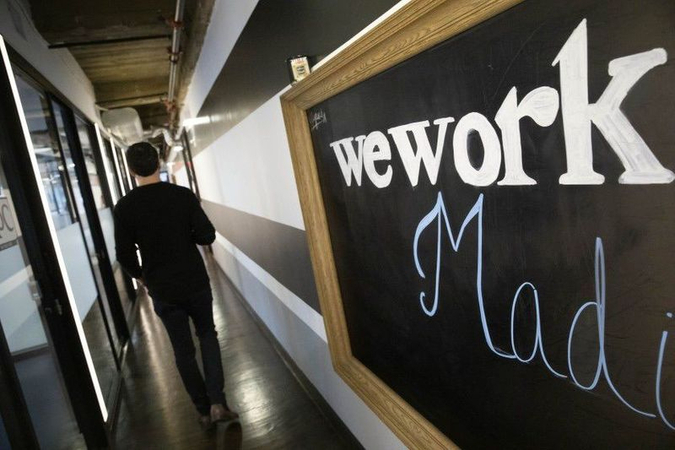
Doria Lavagnino was already working from home when she got the announcement she feared: Someone who shares office space at her WeWork location in New York tested positive for the novel coronavirus.

The co-working company assured members of the Madison Avenue location on Wednesday that it cleaned the floor on which the infected individual worked and visited just three days earlier. The site was back in business by Thursday.

But Lavagnino is disturbed that WeWork, known especially for its communal perks such as cold brew coffee or beer on tap, did not shutter the location completely or even try to help its members determine whether they interacted with the infected individual. Hours after the site reopened, the company announced that someone else tested positive and two more floors needed to be cleaned.

As government officials encourage workers to stay home, there’s a growing chorus of small business owners – a group likely to be hit hardest in the economic fallout from coronavirus – who are angry that WeWork has refused members refunds for a space they can no longer use.

“We’re told by our government that for our health to stay at home and I’ve told my employees all to stay at home,” Lavagnino, co-founder of financial planning platform CentSai, told The Washington Post. “I’m paying close to $5,000 a month in rent and I’m not there. Imagine how crippling that is to a small business.”

And the uproar is only likely to grow as the pandemic spreads. WeWork members at at least seven other different New York locations tested positive for the disease, the New York Post reported. There have been other reported cases in major cities such as Los Angeles and Chicago.

Some members have signed onto a petition on the worker advocacy platform Coworker.org calling on WeWork to close its 848 locations worldwide. There are more than 300 locations in the United States.

Jill Raney, a Washington-based WeWork member who launched the petition, says the company’s decision to remain open during a public health crisis is “unconscionable.” She says it effectively forces businesses with small margins to choose between wasting money or putting themselves at risk of infection.

“Psychologically, it’s messing with me that I’m paying for a service [that’s] not safe for use,” says Raney, who founded the digital strategy group Practice Makes Progress and is the only employee.

WeWork’s position is in stark contrast to some competitors, such as women-focused co-working collective The Wing and Washington-based meeting and event space The Cove, which shut down their sites in light of the public health concerns.

The Wing also offered members refunds. WeWork’s biggest competitor, Regus has not closed its offices and did not respond to requests for comment about whether it plans to offer refunds.

WeWork argues that staying open is, in fact, in the public interest and that the business is an essential service – especially in the time of coronavirus. That phrasing seems designed to position the company to continue to operate even in states such as New York and California which have issued orders for non-essential companies to close or reduce their workforces, though the company would not directly comment on this.

“WeWork is a service provider and we have an obligation to keep our buildings open,” the company wrote in a statement on Twitter, echoing an internal memo from chief executive Sandeep Mathrani and executive chairman Marcelo Claure. “We too have members counting on us to remain open so they can run their companies.”

The tweet quotes three anonymous members who say the company they’re providing essential healthcare and financial support services during the pandemic.

The company insists it’s taking all the proper health precautions. “Since the start of the Coronavirus outbreak, WeWork has been closely monitoring the situation and ensuring preventative measures are implemented in line with the [Centers for Disease Control], [World Health Organization] and local government guidance to protect our employees and members around the world,” Ralph Patrone, WeWork’s head of global security and safety, said in a statement to The Washington Post.

“We have a robust emergency preparedness plan in the event any member or employee contracts the Coronavirus, which includes notifying members, closing impacted floors or buildings, and working with our cleaning partners to deep clean and disinfect the space.”

The company has also suspended events at its locations around the world and allowed employees, including the front desk and other operations staffs that work at individual locations, the opportunity to work from home.

WeWork did not respond to questions about if it would consider refunding members and declined to comment on Raney’s petition. WeWork members, on Twitter and on the company’s internal app, say their request for refunds were either refused or have gone unanswered by the company.

WeWork has undergone significant turmoil at the corporate level in the past few months, something that some members believe has trickled down to its coronavirus response. WeWork founder Adam Neumann stepped down as chief executive in October after the company delayed its public offering amid concerns over his behavior and questions over the company’s finances. Now Japanese investment firm SoftBank is considering backing out of part of the planned massive bailout, the Wall Street Journal reported this week. (WeWork executives disputed that characterization in an internal memo.)

Despite WeWork’s assurance that it’s following all local government guidelines, Raney and other WeWork members expressed concerns that the WeWork offices – which can house hundreds of employees – go against warnings from local and federal officials to cap the size of gatherings.

Raney said when she last went into the Manhattan Laundry location on U Street last Friday, nothing had been done to separate communal furniture. She noticed no difference in cleaning schedules and communal drinks were still readily available.

The announcements of new cases illustrate the difficulties in containing the spread of such a highly contagious disease. “Anyone who’s been in a WeWork knows if you can’t get a conference room on your floor you’re going to another floor. You go to mail for another floor,” she said. One of the floors set to be deep cleaned at the Madison Avenue location after its second positive coronavirus case was near the mail room, Lavagnino said.

Lavagnino is troubled that the company has not answered her questions about its cleaning policies, while WeWork sent out a music playlist curated by the company to over its internal app to help them work from home.

Raney hopes that if WeWork doesn’t choose to shut down, local governments will step in. As for Lavagnino, she doesn’t plan on renewing her lease when it expires in May.

“They have an opportunity to help small businesses – but the way this has been handled was so mismanaged.”

PG&E glides toward bankruptcy exit now that state is focused on virus #ศาสตร์เกษตรดินปุ๋ย

#ศาสตร์เกษตรดินปุ๋ย : ขอบคุณแหล่งข้อมูล : หนังสือพิมพ์ The Nation

https://www.nationthailand.com/business/30384535?utm_source=category&utm_medium=internal_referral

PG&E glides toward bankruptcy exit now that state is focused on virus

Mar 20. 2020
Pacific Gas and Electric headquarters in San Francisco on Jan. 14, 2019. MUST CREDIT: Bloomberg photo by David Paul Morris.

Pacific Gas and Electric headquarters in San Francisco on Jan. 14, 2019. MUST CREDIT: Bloomberg photo by David Paul Morris.
By Syndication Washington Post, Bloomberg · Mark Chediak · BUSINESS, US-GLOBAL-MARKETS

The deepening coronavirus crisis has shifted nearly all attention away from what had been one of California’s most pressing issues: the fate of embattled utility PG&E Corp.

Now, the company is quietly edging closer to exiting the largest utility bankruptcy in U.S. history, largely intact as an investor-owned power giant.

A long-threatened state takeover is likely off the table as PG&E makes progress in talks with Gov. Gavin Newsom and his administration devotes more resources to fighting the pandemic. This week, he dropped objections to PG&E’s $23 billion financing plan, citing market turmoil. The company also won bankruptcy court approval to start sending materials to creditors who will vote on its $58 billion reorganization proposal.

PG&E’s filed for bankruptcy more than a year ago after its equipment was linked to wildfires that killed scores of Californians, triggering widespread public outrage and calls for the utility to be broken up or in put in the government’s hands. But as the coronavirus emerges as an even more urgent public issue for state and local officials, the company’s path toward proceeding with its own plan and exiting by a state deadline of June 30 is becoming clearer.

“The governor has had opportunities to forcefully object if he really wanted to stop this plan or initiate a state takeover, so his absence to do so speaks volumes,” said Philip Brendel, a credit analyst for Bloomberg Intelligence. “I believe he’s moved on to the next state crisis — the coronavirus.”

PG&E climbed as much as 6.2% Friday as stocks gained broadly.

California has been one of the U.S. centers of the coronavirus outbreak, trailing only New York and Washington in cases. Newsom on Thursday took the dramatic step of ordering all residents to isolate themselves at home to limit the virus’s spread, the country’s strictest effort so far.

An official with the Newsom administration said it remains focused on reforming PG&E, and that it continues to hold talks with the company. The administration’s preference is to keep it as investor-owned utility, but a state takeover is still an option if PG&E falls short of demands for reform, the official said.

PG&E said in a statement that discussions continue with the governor’s office and it’s making “good progress.”

Newsom still has some sway over PG&E because the utility needs state approval of its bankruptcy plan to qualify for coverage from a state wildfire insurance fund. He has said he wants changes to PG&E’s governance and management, including replacing the utility’s entire board. He also raised issues with the company’s capital structure. The Newsom official said PG&E has made progress in meeting some of the administration’s demands.

The utility has pledged reforms including replacing some directors, tying executive pay more closely to safety metrics and dividing up its operations into regional units to better respond to local concerns. PG&E has also said it’s open to a proposal that would let California regulators take greater control of the company if it gets into trouble again.

Still, the pandemic means the governor is less inclined to make a drastic move now, said Barry Moline, executive director of the California Municipal Utilities Association.

“He needs to focus his attention on this public-health crisis and societal disruption, and taking action on PG&E would probably be seen as a distraction,” Moline said. “It doesn’t take away from the reality that the bankruptcy deal with PG&E may not be the best for California, is filled with risk and guaranteed higher prices for residents.”

There have been other attempts to reshape PG&E beyond Newsom. Even as its budget is being hit by the coronavirus, San Francisco says it still wants to buy the company’s grid within the city. And a proposal by a group of a more than 200 city and county officials, led by San Jose Mayor Sam Liccardo, to turn PG&E into a giant customer-owned cooperative is still on the table.

A bill that would make PG&E a government-run entity is pending with the state legislation, said California State Sen. Scott Wiener. Still, he conceded that the coronavirus is making that effort more difficult. The state legislature is suspended until April 13, giving lawmakers a small window to step in.

“Obviously, it was always going to be a hard, uphill climb to turn PG&E into a publicly owned utility, but we were giving it our best shot,” Wiener said in a telephone interview. “Covid-19 just made it a heck of a lot harder given the need for a laser-like focus on the pandemic.”

The governor’s office is pressing for additional concessions, including putting mechanisms in place to ensure PG&E improves safety operations in the near term. The governor also wants changes to its financing plan to make sure the company can fund as much as $40 billion in infrastructure upgrades.

That could be a much heavier lift if the virus continues sending credit markets into a tailspin.

“The company is going to come out of bankruptcy financially hobbled,” said Jared Ellias, a professor at the University of California Hastings College of Law, who has been following the case. “They won’t have the financial flexibility they would have if they emerged with a clean balance sheet with less debt.”

PG&E said in filing with state regulators that the company’s plan will “put it back on solid financial footing, with sufficient resources to invest in wildfire mitigation.”

Given the crisis and market disruption, the Newsom administration likely understands that it’s best for the state and PG&E to get the company out of bankruptcy before wildfire season, said Michael Wara, a climate and energy policy professor at Stanford University.

“I think the Newsom administration thinks they aren’t going to get a better deal that’s on the table and they are trying to lock it in,” Wara said.

Bangkok Airways offers options for ticket-change, refund #ศาสตร์เกษตรดินปุ๋ย

#ศาสตร์เกษตรดินปุ๋ย : ขอบคุณแหล่งข้อมูล : หนังสือพิมพ์ The Nation

https://www.nationthailand.com/business/30384509?utm_source=category&utm_medium=internal_referral

Bangkok Airways offers options for ticket-change, refund

Mar 20. 2020
By THE NATION

Bangkok Airways has announced a host of options for passengers holding tickets,issued on or before March 17 2020 for all flights until April 30, but no longer wish to depart on the scheduled dates.

1. Reservation change (rebook)

All tickets issued on or before March 17, 2020 with travelling period until 30 April, 2020 are allowed to rebook for a new travelling date up to 31 March 2021 without rebooking fee/ no show fee. Fare difference due to different booking class (RBD) is payable upon reissuance.

All group booking, reservation, deposit made or paid on or before March 17, 2020 with travelling period until April 30, 2020 are allowed to rebook in the same booking code (PNR) for a new travelling date up to March 31, 2021 without rebooking fee. Fare difference due to different booking class (RBD) is payable upon reissuance.

2. Route Change (Reroute)

All tickets issued on or before March 17, 2020 with travelling period until April 30, 2020 are allowed to reroute for a new travelling date up to 31 March 2021 without rerouting fee. The fare difference, fuel surcharges and taxes are payable on reissuing of new tickets.

3. Refund Policy

All refund applications for tickets issued on or before March 17, 2020 with travelling period until April 30, 2020 will be eligible for full refund (no fee) when a supporting document, such as government’s travel restriction, a cancellation of incoming flights, a doctor certificate etc is submitted for consideration.

Passengers who booked their tickets through travel agencies are advised to contact their agents for assistance. Passengers who booked their tickets directly through Bangkok Airways may contact Bangkok Airways call center 1771 or +662-2706699 (24 hrs) or contact Bangkok Airways Sales Offices nationwide and overseas.

Due to the ongoing COVID-19 outbreak, many countries have imposed travel and immigration restrictions which have an impact on Bangkok Airways flights.

In addition, Thai government has approved to postpone Songkran holidays which falls on 13-15 April 2020 until further notice in order to prevent the spread of coronavirus in Thailand.

Some retailers are extending their return policy windows #ศาสตร์เกษตรดินปุ๋ย

#ศาสตร์เกษตรดินปุ๋ย : ขอบคุณแหล่งข้อมูล : หนังสือพิมพ์ The Nation

https://www.nationthailand.com/business/30384462?utm_source=category&utm_medium=internal_referral

Some retailers are extending their return policy windows

Mar 19. 2020
File photo by Syndication Washington Post

File photo by Syndication Washington Post
By The Washington Post · Jena McGregor · NATIONAL, BUSINESS

As retailers close stores, many consumers may be left wondering: What happens if I need to make a return?

Several stores that have closed brick-and-mortar locations have extended their return policy window. Apple said on its website that it will accept returns up to 14 days after they reopen stores for most products. Sephora said it will accept returns within 30 days of reopening for products bought in stores during the month preceding its closures; it also increased its online order returns to 60 days.

Macy’s, which said Tuesday it was closing stores through March 31, said in an email that it is extending its return policy by 30 days. Gap said it was extending its return window to July 1 for all purchases during the first three months of the year, while J. Crew, which is closing stores until March 28, said it is extending its return window from 30 to 60 days for orders placed starting March 1.

Other retailers that remained open said they had not yet made changes to their return policies. Home Depot said Wednesday the store had not yet modified its 90-day return policy (one year if purchased with a store credit card) and does not currently allow store purchases to be returned by mail. “Of course, this is a very fluid situation that we’re watching closely,” a spokeswoman, Sara Gorman, said in an email.

Analysts say retailers have been so consumed by the immediate questions about whether to close stores and what to do about workers that they may not yet have focused on issues such as returns.

“I don’t think they’ve gotten around to it yet,” said Neil Stern, a retail consultant with McMillanDoolittle.

While many retailers seamlessly allow returns to stores for purchases made online, the reverse is not always true when it comes to mailing in returns of items bought in stores, said Sucharita Kodali, a retail analyst at Forrester.

“Store systems are not always reconciled with online systems,” said Kodali, who said more retailers extending their return policies is “inevitable.”

Others, she said, may come up with manual workarounds, such as a skeleton crew of hourly workers in closed physical stores processing returns after meeting individual customers at the door. “It may come down to behavior like that,” she said.