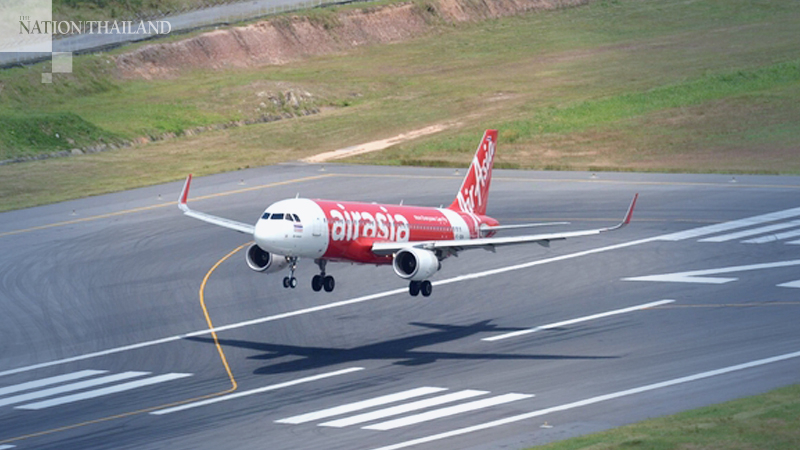
AirAsia offers options to passengers booked for Songkran flights #ศาสตร์เกษตรดินปุ๋ย

#ศาสตร์เกษตรดินปุ๋ย : ขอบคุณแหล่งข้อมูล : หนังสือพิมพ์ The Nation

https://www.nationthailand.com/business/30384439?utm_source=category&utm_medium=internal_referral

AirAsia offers options to passengers booked for Songkran flights

Mar 19. 2020
By THE NATION

AirAsia is offering flexible travel options for customers who wish to make changes to their bookings with the carrier following the government’s decision to postpone the upcoming Songkran holidays.

Passengers for flights scheduled from April 10 to 16 , which were booked on or prior to 18 March , are given the following options:

1. Move flight: One-time flight change on the same route to a new travel date on or before September 30, 2020 without additional cost, subject to seat availability; or

2. Credit account: Retain the value of your fare in your AirAsia BIG Loyalty account for future travel with AirAsia. The online credit account is to be redeemed for booking within 365 calendar days from the issuance date for your travel with us. The actual travel dates can be after the expiry date as long as our flight schedule is out.

Guests who wish to choose one of these options must notify AirAsia no less than five days prior to their original flight date. Those wishing to receive any alternative options can send a request via AVA at support.airasia.com. For group bookings made with travel agents, kindly refer to your respective third party booking agent for further assistance.

Passengers are advised to refer to Covid-19 Customer Guide to check eligibility and on how to submit request.

AirAsia is closely monitoring this situation and reserves the right to announce further policies according to the latest developments.

Second vice chairman to serve as THAI acting president #ศาสตร์เกษตรดินปุ๋ย

#ศาสตร์เกษตรดินปุ๋ย : ขอบคุณแหล่งข้อมูล : หนังสือพิมพ์ The Nation

https://www.nationthailand.com/business/30384391?utm_source=category&utm_medium=internal_referral

Second vice chairman to serve as THAI acting president

Mar 19. 2020
Chakkrit Parapuntakul

Chakkrit Parapuntakul
By THE NATION

Thai Airways International Pcl (THAI) has appointed Chakkrit Parapuntakul, THAI second vice chairman, to serve as acting THAI president with effect from March 23.

The decision was made at a meeting of the board of directors on March 18. The appointment of Chakkrit follows the resignation of THAI president Sumeth Damrongchaitham, effective from April 11.

Chakkrit accepted the position without receiving any remuneration. He will supervise the implementation of the company’s reform plans as well as set measures to tackle the Covid-19 situation.

Chakkrit Parapuntakul holds a Bachelor’s degree in accounting from Thammasat University and a Master’s in Business Administration from Angelo State University, Texas, US.

He previously held the position of director of Krungthai Bank Pcl, director of PTT Exploration and Production Pcl, director-general of Treasury Department, chairman of Dhanarak Asset Development Co, Ltd and director of Tris Corporation Co Ltd. He currently holds the position of deputy permanent secretary, Ministry of Finance and THAI second vice chairman.

KDPC granted concession for airport pick-up service #ศาสตร์เกษตรดินปุ๋ย

#ศาสตร์เกษตรดินปุ๋ย : ขอบคุณแหล่งข้อมูล : หนังสือพิมพ์ The Nation

https://www.nationthailand.com/business/30384349?utm_source=category&utm_medium=internal_referral

KDPC granted concession for airport pick-up service

Mar 19. 2020
By THE NATION

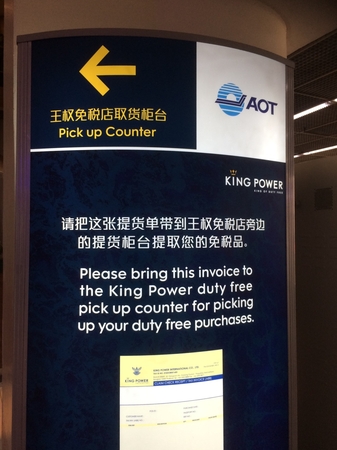
Airports of Thailand (AOT) board on March 18 granted King Power Development (KPDC) the concession for operating a duty free pick-up counter service at Don Mueang International Airport, AOT president Nitinai Sirismatthakarn said.

Contract-signing expected in Aprill, said an AOT source.

The concession will be valid from October 1, 2022 to December 31, 2032.

Big Oil’s big crisis: Saving sacred dividends from collapse #ศาสตร์เกษตรดินปุ๋ย

#ศาสตร์เกษตรดินปุ๋ย : ขอบคุณแหล่งข้อมูล : หนังสือพิมพ์ The Nation

https://www.nationthailand.com/business/30384367?utm_source=category&utm_medium=internal_referral

Big Oil’s big crisis: Saving sacred dividends from collapse

Mar 19. 2020
An oil derrick in an oilfield in Otrada, Russia, on March 5, 2016. MUST CREDIT: Bloomberg photo by Andrey Rudakov.

An oil derrick in an oilfield in Otrada, Russia, on March 5, 2016. MUST CREDIT: Bloomberg photo by Andrey Rudakov.
By Syndication Washington Post, Bloomberg · Laura Hurst, Kevin Crowley · BUSINESS, US-GLOBAL-MARKETS

To understand the crisis engulfing the world’s largest oil companies, just look at their dividend yields.

Exxon Mobil Corp., for decades considered one of the bluest of blue-chip stocks, is paying investors 10%. For Royal Dutch Shell, the Anglo-Dutch giant that hasn’t cut payments to shareholders since the Second World War, its 12-month dividend is equivalent to 14% of its current share price. BP offers a yield of 12.4%, and France’s Total 11%.Yields at those levels typically suggest one thing: a significant risk that shareholders may not get the money they’ve been promised.

No Big Oil executive would ever accept that’s true — at least for now. Even as management teams confront both the catastrophic demand destruction wrought by the spread of coronavirus and an oil-price war between Saudi Arabia and Russia, they’re determined to keep paying.

“Nobody wants to be the CEO who cuts the dividend,” said Noah Barrett, a Denver-based energy analyst at Janus Henderson Group, which manages about $375 billion. “They understand that any company that cuts, its shareholders will flow into competitors and be very, very hesitant to ever come back.”

To buy time, they’re taking the ax to capital expenditure. Exxon partially reversed course on an ambitious spending program on Monday, saying it’s weighing significant cuts after being downgraded by S&P Global Ratings. Shell’s outlook was revised to negative on Tuesday by the agency, and risks a rating downgrade unless it lowers its leverage and increases funds from operations.

Shell, Chevron Corp., and Total may also choose to save money for dividends by reducing their share-buyback programs, which are typically seen by investors as more discretionary than the quarterly cash payouts.

Chevron said last week that it’s reviewing options for cutting capital spending and curbing short-term production. BP Chief Financial Officer Brian Gilvary said the British major could curb spending by as much as 20% this year.

While market expectations for Big Oil dividends have reduced over the past two weeks, pricing in a 37% cut from 2019 dividends for European majors in 2021, Goldman Sachs analysts including Michele Della Vigna said that they do not expect a cut because of the current environment. “In past oil downturns, Big Oil on aggregate did not respond to challenging macro conditions through material dividend cuts,” they said in a research note Tuesday.

Even before the crash in prices, Big Oil was in a difficult place. The industry was the worst performing part of the stock market as investors fretted about its ability to navigate the energy transition, invest enough in keeping their businesses going and meet their obligations to shareholders.

“The situation as it stands looks pretty challenged for most of the oil majors, if you were to assume that prices will persist at these levels,” said Nick Stansbury, head of commodity research at Legal & General Investment Management, one of the largest shareholders of major oil companies. “If it sticks for six, nine months, then there will be serious questions raised about the sustainability of dividends.”

These companies’ sheer size gives them the financial flexibility to allow business to continue even in times of significant hardship. Beyond lower spending, Europe’s oil companies could opt to pay dividends to investors in scrip, where cash is substituted with new shares. BP’s Gilvary said this is one tool in his armory, but the company isn’t considering it right now.

Letting debt rise is another option, but Exxon’s downgrade shows the limit of that strategy.”They’re going to have to lean on the balance sheet,” Barrett said. “At some point though, borrowing to pay the dividend is not sustainable.”

Shell declined to comment on its dividend. Exxon spokesman Casey Norton referred back to CEO Darren Woods’s comments at the March 5 investor day when he said the company is “committed to a reliable and growing dividend.” The company has increased the payout each year for the past 37 years.

Maintaining and growing Chevron’s dividend is “top priority,” said spokesman Braden Reddall said by email, reiterating comments earlier this month from CEO Mike Wirth, who said Chevron is on track to raise its annual per-share payout for the 33rd time in 2020.

The flood of Saudi crude onto the market, coupled with slumping demand as the world’s largest economies stop people from traveling and spending, threaten to create an unprecedented oil surplus that could weigh on prices for a long time.

In an enduring slump, Shell’s first remedy would be to revise its share-buyback program. Chief Executive Officer Ben van Beurden already said in January the company would probably miss its target of buying back $25 billion of shares by the end of this year if the macroeconomic environment didn’t improve. Since then, oil prices have fallen by almost half.

Investments in clean energy could also suffer if there’s a lasting downturn. The big European oil companies have been outlining increasingly ambitious strategies to tackle their carbon emissions that will, eventually, require significant capital expenditure.

BP is the boldest so far, saying it will eliminate all its emissions from its own production and operations by 2050. Shell and Total have also made pledges to reduce emissions.

While it’s unlikely that European oil companies will backtrack on their green commitments, low crude prices are typically not good for alternative energy, said Stansbury.

Some oil companies, notably Occidental Petroleum Corp., have already responded to the current slump by cutting dividends. The debt-laden explorer will reduce its 2020 payment by about $2.2 billion, or 86%, setting up CEO Vicki Hollub for a showdown with investors to determine her future.

If Occidental’s decision sent a tremor through the market, then a dividend cut from BP or Shell would cause an earthquake. Those two companies paid out $22 billion in 2019, 20% of the FTSE 100 dividends. U.S. counterparts Exxon and Chevron hold the second and ninth spot as dividend payers on the S&P 500.

Persistent periods of low prices can dramatically reshape the industry. Between 1997 and 1999, Saudi Arabia competed against Venezuela for market share, sending Brent oil prices to as low as $10 a barrel. A wave of mergers followed, creating the era of the supermajors — Exxon coupled with Mobil, BP bought Amoco, Total combined with Elf, and Chevron merged with Texaco.

Throughout this turbulent history, these companies have managed to translate a very volatile commodity into dependable cash flows. If European oil companies can no longer fulfill that role it would be a serious concession, said Legal & General’s Stansbury.

“Cutting the dividend is “a decision no CEO wants to be associated with,” says Russ Mould, investment director at U.K. asset manager AJ Bell. “It can cost you your job.”

Ryanair to cancel almost all flights as virus locks down Europe #ศาสตร์เกษตรดินปุ๋ย

#ศาสตร์เกษตรดินปุ๋ย : ขอบคุณแหล่งข้อมูล : หนังสือพิมพ์ The Nation

https://www.nationthailand.com/business/30384371?utm_source=category&utm_medium=internal_referral

Ryanair to cancel almost all flights as virus locks down Europe

Mar 18. 2020
A Ryanair Boeing 737 landing at Dublin Airport on July 12, 2019. MUST CREDIT: Bloomberg photo by Aidan Crawley.

A Ryanair Boeing 737 landing at Dublin Airport on July 12, 2019. MUST CREDIT: Bloomberg photo by Aidan Crawley.
By Syndication Washington Post, Bloomberg · Siddharth Philip · BUSINESS, WORLD, TRANSPORTATION, US-GLOBAL-MARKETS, EUROPE

Ryanair Holdings, Europe’s biggest discount airline, said it expects to ground most if not all flights from next week as the coronavirus pandemic prompts people to avoid travel and governments lock down borders.

Starting March 24 the carrier will operate only “a very small number of flights to maintain essential connectivity,” mostly between the U.K. and Ireland, it said Wednesday.

The global airline industry needs government aid and bailout measures totaling between $150 billion and $200 billion if it’s to survive the coronavirus crisis, according to the International Air Transport Association. The group expects the outbreak to reshape the industry, with many airlines failing, others consolidating and entirely new groupings emerging.

Ryanair had said March 16 it would defer all capital and discretionary spending, halt share buybacks and freeze recruitment to hep preserve cash. It said then that the bulk of capacity would be cut.

Ryanair has a fleet of over 450 Boeing 737 narrow-body jets, as well as 25 Airbus A320 planes at its Austria unit.

Son’s empire wobbles as credit rout hits softbank debt load #ศาสตร์เกษตรดินปุ๋ย

#ศาสตร์เกษตรดินปุ๋ย : ขอบคุณแหล่งข้อมูล : หนังสือพิมพ์ The Nation

https://www.nationthailand.com/business/30384363?utm_source=category&utm_medium=internal_referral

Son’s empire wobbles as credit rout hits softbank debt load

Mar 18. 2020
Masayoshi Son, chairman and chief executive officer of SoftBank Group, in Jakarta, Indonesia, on Feb. 28, 2020. MUST CREDIT: Bloomberg photo by Dimas Ardian.

Masayoshi Son, chairman and chief executive officer of SoftBank Group, in Jakarta, Indonesia, on Feb. 28, 2020. MUST CREDIT: Bloomberg photo by Dimas Ardian.
By Syndication Washington Post,  Bloomberg · Ayai Tomisawa, Pavel Alpeyev · BUSINESS, US-GLOBAL-MARKETS

Investors are growing increasingly skittish about the stability of Masayoshi Son’s empire.

Son’s SoftBank Group Corp., one of Japan’s most indebted companies, had been chipping away in recent years at concerns about its ability to carry that burden. As the founder remade the telecom company into a tech investor, analysts reassessed the debt in terms of the value of SoftBank’s shareholdings, a gauge that had made its balance sheet appear more manageable.

But the coronavirus pandemic is threatening to undo that progress, as it pulls down equity markets and triggers the worst sell-off in credit markets since the 2008 financial crisis. It’s sparked a dramatic surge in the price of insuring against defaults around the world, including SoftBank’s. The company’s credit-default swaps have spiked to the highest in a decade.

“SoftBank has refinancing needs and constantly faces new fundraising needs, so it would be difficult to access funds if the current credit market turmoil continues,” said Hiroyuki Nishikawa, an analyst at S&P Global Ratings. The base scenario still remains that SoftBank has cash reserves to repay debt for the next two years, he added.

There has been no change in SoftBank’s financial policy of focusing on loan-to-value and having enough liquidity on hand to cover two years worth of bond repayments, the company said in an emailed statement. SoftBank said it is curbing new investments to match the current environment and acknowledged that fundraising costs are likely to rise going forward.

S&P cut its outlook on the group to negative late Tuesday, citing the broad market declines and the conglomerate’s plans for a share buyback. SoftBank shares plummeted 11% in Tokyo on Wednesday, the largest decline since 2012.

Indeed, its stock has plunged 38% in the last month. Its market value of 6.78 trillion yen ($63.5 billion) is now less than that of SoftBank Corp., the domestic telecom operation that sold shares to the public last year. SoftBank Group still owns about two-thirds of the unit, which on Wednesday rose 1.4%.

“No other company in Japan is as indebted and as exposed to the economic downturn as SoftBank,” Amir Anvarzadeh, a market strategist at Asymmetric Advisors in Singapore, who is short on SoftBank, wrote in a note to clients. It seems that Son’s “run of good luck has finally come to an end and his shoot-from-the-hip investment style is blowing up the group.”

The company is more vulnerable because of missteps at the Vision Fund, the $100 billion investment vehicle that Son set up to become the new centerpiece of his empire. The founder used the money to take stakes in scores of marquee startups, including WeWork and Uber Technologies.

But WeWork flopped in its effort to go public last year and fueled broader concern about the prospects for other money-losing startups. SoftBank engineered a $9.5 billion bailout for WeWork and had to take enormous writedowns on the value of its portfolio.

Then last month, activist investor Elliott Management Corp. disclosed a stake in SoftBank, arguing its shares were undervalued and that Son should buy back as much as $20 billion. SoftBank said on March 13 it would spend up to 500 billion yen ($4.7 billion) buying shares.

S&P responded by cutting its outlook for SoftBank, saying the decision “strongly underscores its aggressive financial management.” SoftBank shares, which typically rally with a buyback, have dropped about 18% since the announcement.

The company has traditionally enjoyed strong support from individual bond investors in Japan, thanks to the ubiquity of its brand in the country. The SoftBank name is on one of the largest wireless carriers, Japan’s leading web portal and the champion Fukuoka SoftBank Hawks baseball team. The question is whether this bedrock will hold if the current market turmoil persists. SoftBank has about 2.3 trillion yen of bonds and loans coming due in the next three fiscal years.

Son has argued that he has more than enough assets to cover the debts. The company’s most liquid investments, its stakes in Alibaba Group Holding Ltd. and the SoftBank Corp. unit, are worth about 13 trillion yen and 4.6 trillion yen respectively. Chipmaker Arm Holdings, owned entirely by SoftBank Group, is worth 2.7 trillion yen by the company’s own calculations.

“Clearly the bond market is worried, but we keep coming back to the Alibaba stake, which can more than cover SoftBank’s outstanding debt,” said Dan Baker, an analyst at Morningstar Investment Management Asia Ltd. “Selling during this turmoil means they would have to do it at a lower price, which might make it a last resort.”

SoftBank is taking steps to preserve cash. This week, the company told shareholders of WeWork that it could withdraw from an agreement to buy $3 billion of stock in the embattled co-working business.

Son has said that he wants to keep SoftBank’s loan-to-value ratio, a key metric looking at its net interest-bearing debt against the value of investments, below 25%. S&P said that the gauge would likely be about 30%-35% in the coming year or so.

“The announced buyback is a reminder that all strategic decisions will be taken by Masa Son, who in the face of market uncertainty continues to put SoftBank equity over creditors, without so much as a nod to risk management,” analysts at CreditSights including Mary Pollock wrote in a note.

Boeing asks for ‘at least $60 billion’ as Trump expresses support for bailout #ศาสตร์เกษตรดินปุ๋ย

#ศาสตร์เกษตรดินปุ๋ย : ขอบคุณแหล่งข้อมูล : หนังสือพิมพ์ The Nation

https://www.nationthailand.com/business/30384304?utm_source=category&utm_medium=internal_referral

Boeing asks for ‘at least $60 billion’ as Trump expresses support for bailout

Mar 18. 2020
File photo by Syndication Washington Post, Bloomberg

File photo by Syndication Washington Post, Bloomberg
By The Washington Post · Aaron Gregg · NATIONAL, BUSINESS

WASHINGTON – President Donald Trump said in a press conference Tuesday that he supports a bailout for Boeing, which has been reeling from the combined economic fallout of the global pandemic and a prolonged safety crisis involving its flagship commercial jetliner.

Without providing details on a bailout package the president said “we’ll be helping Boeing,” which previously confirmed it was in discussions with top government officials about short-term access to cash. Boeing’s stock price has lost 44% of its value in the past five days alone.

Trump alluded to troubles with the 737 Max jet, which has been grounded for more than a year after equipment problems played a role in two deadly crashes.

“It was unthinkable what happened to Boeing…. unthinkable,” Trump told reporters. “Probably I would [have] considered it the greatest company in the world prior to a year ago now they get hit 15 different ways. They were doing a getting… it was coming along well and then all of a sudden this hits. So we’ll be helping Boeing.”

Shortly after the president’s comments Boeing published a statement saying there should be a minimum of $60 billion in “public and private liquidity, including loan guarantees” for the aerospace manufacturing industry. The details of a potential bailout have not been announced.

“We appreciate the support of the President and the Administration for the 2.5 million jobs and 17,000 suppliers that Boeing relies on to remain the number one US exporter, and we look forward to working with the Administration and Congress as they consider legislation and the appropriate policies,” Gordon Johndroe, vice president of communications at Boeing, said in a statement sent to reporters.

“Until global passenger traffic resumes to normal levels, these measures are needed to manage the pressure on the aviation sector and the economy as a whole,” Johndroe wrote.

The company confirmed Monday that it had been in discussions with the “government leaders” about short-term access to public and private funds.

“Until global passenger traffic resumes to normal levels, these measures are needed to manage the pressure on the aviation sector and the economy as a whole,” Johndroe wrote.

Boeing’s request for public help underscores the dire financial straits the company finds itself in, as dual crises threaten to severely complicate its return to financial health. On March 13, the company drew out the full amount of its $13.8 billion private loan, citing concerns about whether it would have access to cash should the markets worsen. It also completely halted new hires.

The coronavirus pandemic and its related market volatility came at a time when Boeing’s business was already vulnerable. The company has struggled to convince regulators that the 737 Max ― the newest version of its best-selling jet ― is safe to fly after two deadly crashes in Ethiopia and Indonesia killed hundreds of people. After Boeing leadership admitted that the jet’s flight control systems played a role in both crashes regulators have continued to find problems with the plane, repeatedly pushing back the jet’s re-certification timeline. It shut down its 737 Max production lines late last year after experiencing its toughest year in company history.

Boeing has suffered along with the broader aviation industry as travel bans have slowed new bookings. Last week Goldman Sachs analysts predicted there would be 7% decline in air traffic this year that will prompt many airlines to defer purchases of new planes.

Adelson’s Las Vegas casinos stay open in city divided over virus response #ศาสตร์เกษตรดินปุ๋ย

#ศาสตร์เกษตรดินปุ๋ย : ขอบคุณแหล่งข้อมูล : หนังสือพิมพ์ The Nation

https://www.nationthailand.com/business/30384290?utm_source=category&utm_medium=internal_referral

Adelson’s Las Vegas casinos stay open in city divided over virus response

Mar 18. 2020
Billionaire Sheldon Adelson, chairman and chief executive officer of Las Vegas Sands Corp., stands during a Presidential Medal of Freedom ceremony in the East Room of the White House in Washington, D.C.,on Nov. 16, 2018. MUST CREDIT: Bloomberg photo by Andrew Harrer

Billionaire Sheldon Adelson, chairman and chief executive officer of Las Vegas Sands Corp., stands during a Presidential Medal of Freedom ceremony in the East Room of the White House in Washington, D.C.,on Nov. 16, 2018. MUST CREDIT: Bloomberg photo by Andrew Harrer
By Syndication Washington Post, Bloomberg · Christopher Palmeri, Michael Sasso · NATIONAL, BUSINESS 

MGM Resorts International and Wynn Resorts both announced over the weekend that they were closing their Las Vegas casinos until the coronavirus threat passes. But not the giant Venetian down the street.

The property, owned by billionaire Sheldon Adelson’s Las Vegas Sands, is keeping its doors open, hoping that its safety precautions — such as canceling meetings and shows and frequently wiping down slot machines — will keep employees and guests safe.
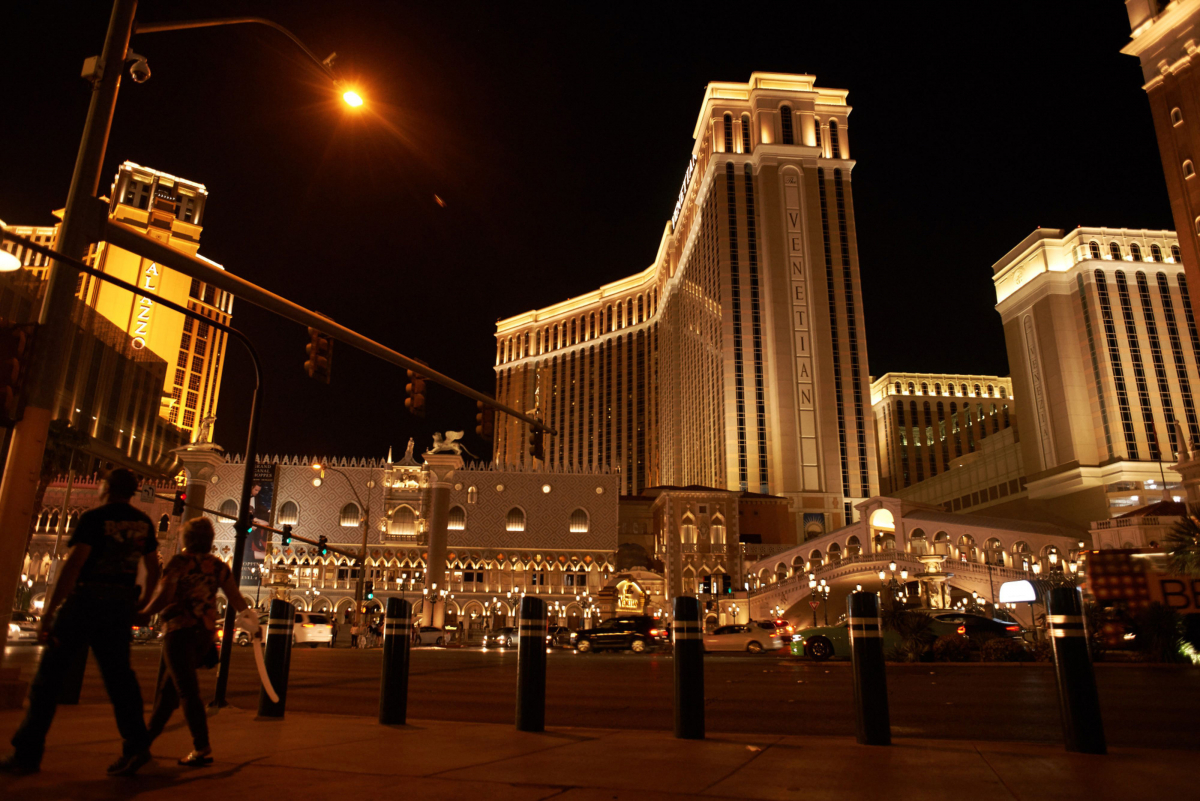
Pedestrians pass in front of the Las Vegas Sands Venetian resort illuminated at night in Las Vegas, Nevada, on April 24, 2018. MUST CREDIT: Bloomberg photo by Bridget Bennett

Pedestrians pass in front of the Las Vegas Sands Venetian resort illuminated at night in Las Vegas, Nevada, on April 24, 2018. MUST CREDIT: Bloomberg photo by Bridget Bennett

“Our team members are our most valuable asset and we have every intention of getting through this challenging situation together,” the company said in a statement. Management is still assessing the situation on a daily basis, and plans could change.

For now, the company’s position stands in stark contrast to that of President Donald Trump, a former casino owner himself whose political rise was supported by Adelson. On Monday, Trump called for Americans to avoid gatherings of more than 10 people. “We have an invisible enemy,” said the president, who was criticized by some for not recognizing the threat sooner. “This is a bad one.”

Adelson has been a close confidant of Trump and one of his biggest donors, making the apparent split more notable. In fact, the president was supposed to speak at this month’s Republican Jewish Coalition conference in Las Vegas, held at Adelson’s Venetian. Trump canceled as the virus threat escalated, and the event was postponed.

The showdown over whether to close casinos comes at a time when the industry is pleading for relief from lawmakers.

“In a matter of days, the U.S. casino industry went from a growing, thriving segment of the U.S. economy to a near standstill,” American Gaming Association Chief Executive Officer Bill Miller said in a statement seeking stimulus funding. It followed airlines making their own push Monday for $58 billion in aid from Congress.

The casino industry, like so many, is wrestling with how best to survive the pandemic. Government officials in at least a half-dozen states, including New York, Massachusetts, Ohio and Illinois, have ordered casinos to close in hopes of preventing the spread of the virus.

In some cases, the states don’t have jurisdiction — and that’s brought its own issues. Tribal nations, which operate casinos across the country, can decide if they want to shutter their resorts.

In Florida, the Seminole Tribe is keeping its six casinos open in the state, including its most profitable property in Tampa, while taking precautions to keep patrons safe, casino spokesman Gary Bitner said.

The tribe, which owns the Hard Rock brand, will close all poker rooms by 7 p.m. Tuesday, limit the number of players at table games and turn off many of its slot machines to increase distance between players. In Tampa, for example, two machines in each row of three will be turned off, Bitner said.

In Louisiana, which ordered its 20 state-regulated casinos closed on Monday, Gaming Control Board Chairman Ronnie Jones wasn’t sure if its three tribal ones were closing or not. “They aren’t required to notify us,” he said. By late Monday, he’d heard two of the three were shutting down.

In Las Vegas, the biggest U.S. casino market, operators have been divided. On Sunday, Nevada Governor Steve Sisolak ordered schools and state offices shut, but he stopped short of casinos, saying he would “strongly support” any operators that did close. MGM and Wynn went ahead and did just that.

Wynn Chief Executive Officer Matt Maddox told employees and guests he’s been consulting with an infectious disease specialist and following federal guidelines on crowds.

One issue: the threat of lawsuits. Carnival Corp. was sued last week for allowing passengers to sail in its ships during the crisis. Las Vegas employees and guests have already been diagnosed with the illness.

Some industry insiders also point to Macau, which took swift action, shutting down all public events in January, just before the big Chinese New Year, followed by a 15-day closure of the casinos in February. Business remains slow, with access limited. But the region, one of the top tourist destinations in the world, reported only 11 cases since the crisis began, with 10 having since been discharged by the local hospital, according to the government information bureau.

Other casino operators, such as Caesars Entertainment Corp., Boyd Gaming Corp. and Red Rock Resorts Inc., are staying open. Business-interruption insurance — which could be paid if a government orders a shutdown, but not if the company decides to close on its own — is one factor in the thinking.

Compounding the decision-making is the huge debt the casino industry carries, due in part to feverish dealmaking over the past few years. Caesars, for example, is being acquired by Eldorado Resorts in a transaction worth a combined $17.3 billion in cash, stock and debt when it was announced last June. Caesars and others have been drawing on their revolving credits lines, to save cash for the tough times ahead.

The Las Vegas-based operator of properties such as Caesars Palace and Planet Hollywood has canceled all live events through the end of March, closed its buffets and cut staff.

“We are taking these bold measures now and look forward to welcoming guests back to enjoy world-class entertainment experiences as soon as we are able,” Caesars said in a statement.

At Adelson’s Sands, customers still ate and gambled on Monday afternoon. Many other hotels and casinos in Las Vegas remained open, as does air travel to McCarran International Airport. A Sands employee cafeteria is being shuttered, to limit close contact, with workers being given other food options. Unlike other operators, though, Sands said: “The company is not considering layoffs or any changes to any of our existing health-care benefit plans.”

The industry has been especially hard hit by the sell-off on Wall Street. Shares of all casinos operators tumbled on Monday, with MGM down 34% and Caesars off by 28%.

But Adelson’s empire has fared a little better than most.

On Monday, Jefferies analyst David Katz upgraded Sands from a hold to a buy, citing its financial resources, flexibility and management stability. He called the stock “safe to play in traffic.”

Wikimedia’s approach to coronavirus: Staffers can work 20 hours a week, get paid for full-time #ศาสตร์เกษตรดินปุ๋ย

#ศาสตร์เกษตรดินปุ๋ย : ขอบคุณแหล่งข้อมูล : หนังสือพิมพ์ The Nation

https://www.nationthailand.com/business/30384289?utm_source=category&utm_medium=internal_referral

Wikimedia’s approach to coronavirus: Staffers can work 20 hours a week, get paid for full-time

Mar 18. 2020
By The Washington Post · Jena McGregor · BUSINESS, HEALTH, CAREER-WORKPLACE

As employees across the country juggle remote work and childcare, the nonprofit that operates Wikimedia has told workers they can work just 20 hours a week and continue to receive full-time pay.

In a letter to employees, Katherine Maher, chief executive of the Wikimedia Foundation, said: “We’re not declaring a holiday – if you are able to work more normal hours, the mission can use you. However, the world is unpredictable right now, and whether you need to care for loved ones, get groceries, or go to the doctor, your well-being is our priority. We are not tracking your time.”

Maher said the decision was made to give the foundation’s 400 employees and contractors a realistic sense of what’s expected. “We wanted to give them clear guardrails,” she said in an interview Monday evening.

When employers give generic instructions telling employees to juggle their increased workload however they can, she said, “it just creates an uncertainty and lack of clarity as [employees] try to read between the lines about what’s expected.” By creating a “ceiling” of hours, she hopes workers are able to shift to home responsibilities and think “the organization’s not going to judge me.”

Those want to keep working full-time may do so. “Many people use work as a way of channeling their stress with the world around us,” Maher wrote in her letter. “If that’s you, great!”

About two-thirds of the foundation’s workforce are software engineers and product developers — and 70 percent were already remote, with people in San Francisco, Washington, North Carolina and Minneapolis.

Maher said the site has seen an uptick in traffic. “We’ve seen a surge in interest in coronavirus,” she said. “What we’re expecting is we’ll focus our staff on shoring up the resiliency of the platform. Instead of rolling out a new update to iOS, we’re focused on presenting critical coronavirus information in the best way possible.”

People who work on the foundation’s partnerships or events teams will be redeployed to support the people who edit the site, or work on partnerships with public health entities.

How long the part-time offer will continue is unclear. Eighty percent of the nonprofit’s budget is funded by small dollar donations, Maher said, at an average of $15 to $16 from seven to eight million individuals each year.

“My feeling is what we’re really looking at now is the initial crest of impact; the economic impact is a longer curve,” she said.

Maher, who is based in San Francisco and has been working remotely since March 9, is still working full-time, though she did take a break for an hour or so Monday to make a run to the grocery store, she said.

She decided to post the letter online in hopes other employers might use similar tactics. “This is a force majeure,” she said. “Being honest with people is the only strategy that’s going to work.”

Amazon’s warehouse workers sound alarms about coronavirus spread #ศาสตร์เกษตรดินปุ๋ย

#ศาสตร์เกษตรดินปุ๋ย : ขอบคุณแหล่งข้อมูล : หนังสือพิมพ์ The Nation

https://www.nationthailand.com/business/30384295?utm_source=category&utm_medium=internal_referral

Amazon’s warehouse workers sound alarms about coronavirus spread

Mar 18. 2020
By The Washington Post · Jay Greene, Elizabeth Dwoskin · NATIONAL, BUSINESS, WORLD, EUROPE

As Amazon sales surge from shoppers stocking up on consumer staples, the e-commerce giant’s warehouse workers are raising alarms that the company is not doing enough to protect them from the novel coronavirus.

Warehouse workers in Spain and Italy have tested positive for the virus, while workers in New York and Chicago told The Washington Post that Amazon isn’t taking enough precautions as orders mount. Some said workers were sent home only after they had coughs, and signs were posted advising workers to wash their hands.

But in interviews, warehouse workers in the United States and Europe say they worry their workplaces are not safe enough and could contribute to the spread of the virus. More than 1,500 workers from around the world have signed a petition that calls on the company to take additional steps to ensure the safety in their workplace.

A worker at one of the facilities in Spain, where some colleagues have been quarantined with coronavirus-like symptoms and two others have tested positive for the coronavirus-causing disease covid-19, told The Post that he fears the warehouse may be a hot spot and wants it shut down.

“It’s an atmosphere of fear – huge fear right now,” said Luismi Ruiz, who has worked there since November 2012 and is a union representative. Amazon is spraying disinfectant throughout the warehouse and staggering employee breaks so fewer people congregate together, to try to reduce contagion.

“These measures are totally insufficient,” Ruiz added.

Amazon says it’s taking appropriate precautions to protect workers. The company says it’s following guidance from health officials regarding the operation of its facilities. And it provides workers time to use the restrooms to wash their hands.

“We are going to great lengths to keep the buildings extremely clean and help employees practice important precautions such as social distancing and other measures,” Amazon spokeswoman Kelly Cheeseman said. “Those who don’t want to come to work are welcome to use paid and unpaid time off options and we support them in doing so.”

(Amazon chief executive Jeff Bezos owns The Washington Post.)

Any disruption to Amazon’s ability to deliver goods could affect countless customers, who have turned to the company in recent days to bring canned food, cleaning supplies and more to their homes so they do not need to venture out to physical retailers and potentially spread the virus. Shoppers have turned to Amazon so frequently since the outbreak of the virus that the company has acknowledged that it’s out of stock of some household staples and that its deliveries are taking longer than usual.

It may not just be workers’ safety at stake. Research shows that the coronavirus can potentially remain viable – capable of infecting a person – for up to 24 hours on cardboard and up to three days on plastic and stainless steel, though it has primarily spread through direct person-to-person contact.

Amazon has long had a contentious relationship with some warehouse workers, who have helped fuel its rapid growth. For years, the company, which has nearly 800,000 employees worldwide, most of whom work in its warehouses, has been criticized for what some employees describe as poor working conditions, insufficient bathroom breaks and tough goals. They’ve also complained of the company’s efforts to quash unionization. Democratic presidential candidate Sen. Bernie Sanders, I-Vt., has denounced the company for paying subsistence wages to its warehouse staff.

Amid criticism, the company raised its minimum wage to $15 an hour in 2018 and has implemented other changes to improve working conditions.

Now, workers are calling on the company to better protect them from a virus that’s raced through the country and led several major retailers, including Apple, Patagonia and Nike, to temporarily shut their physical stores to contain the coronavirus.

At a New York delivery center, Jonathan Bailey, a sorting associate, said pressure from Amazon to meet the rate at which it wants workers to fulfill orders could lead workers to ignore safe sanitary practices. If Bailey and his colleagues don’t “make rate,” managers can write that up, a blemish on their record that can make it difficult to advance at the company and can lead to firings, Bailey said.

Although Amazon is encouraging workers to wash their hands, it’s not giving them enough time to do so, Bailey said. The nearest bathroom is a two- to three-minute walk in each direction, reducing the amount of time he and his colleagues have to meet company shipping expectations, he said.

“If a worker is to cough or sneeze, there is no way for them to practice good sanitary habits” and run to a restroom to wash hands, said Bailey, who has worked for Amazon since last summer. “It’s going to affect your stow rate.”

That’s one reason the worker petition calls for eliminating rate-based write-ups. The petition also demands the company provide paid sick leave even if workers don’t have a covid-19 diagnosis because testing remains difficult to get. And it seeks to make sure warehouses are shut if a worker tests positive for covid-19 and not reopened until it’s been thoroughly cleaned.

To alleviate that strain, Amazon announced plans Monday to hire 100,000 new warehouse workers in the United States. And the company intends to raise pay by $2 an hour in the U.S., 2 pounds an hour in the UK, and about 2 euro an hour in parts of the European Union, a move it expects will cost $350 million.

Amazon made a specific pitch to workers who have been furloughed by current employers who have suspended operations.

“We want those people to know we welcome them on our teams until things return to normal and their past employer is able to bring them back,” Dave Clark, senior vice president of worldwide operations, wrote in a blog post.

The additional jobs come amid growing concern about low-wage workers not having job protections to stay at home or get health coverage if they come down with the disease.

The spread of the virus is particularly acute in Europe, as is the concern among Amazon warehouse workers there. The company has added workers in Italy recently to meet increased demand, according to Matteo Rossi, who works for Transnational Social Strike, which is trying to organize Amazon workers. He worries that could impede social distancing, a practice crucial to helping stop the spread of the disease.

“Amazon warehouses are more crowded than before,” Rossi said.

Amazon confirmed that three workers at warehouses outside Madrid and Barcelona tested positive for covid-19, according to a report from the Spanish news site La Información.

A worker at an Italian warehouse in Torrazza also tested positive for the disease, and workers there are concerned about returning to the facility, according a report from the Italian news site La Stampa. Workers declared a strike Monday at a warehouse in Piacenza over concerns about containing the spread of the virus, La Stampa reported.

Christian Kraehling worries about meetings at the start of every shift, where his colleagues at a warehouse in Bad Hersfeld, Germany, are reminded of safety precautions such as using handrails when going down stairs. Those meetings include scores of workers standing shoulder-to-shoulder.

“It’s a very bad situation with the coronavirus,” said Kraehling, who has worked for Amazon for 10 years.