As virus ravages travel market, a startup seeks survival advice #ศาสตร์เกษตรดินปุ๋ย

#ศาสตร์เกษตรดินปุ๋ย : ขอบคุณแหล่งข้อมูล : หนังสือพิมพ์ The Nation

https://www.nationthailand.com/business/30384055?utm_source=category&utm_medium=internal_referral

As virus ravages travel market, a startup seeks survival advice

Mar 14. 2020
By Syndication Washington Post, Bloomberg · Sarah Syed, Tom Giles · BUSINESS, US-GLOBAL-MARKETS

From his office inside a converted century-old Berlin power station, Johannes Reck watched the bookings at his travel company evaporate.

Having built GetYourGuide over a decade from his student dorm in Zurich into one on Europe’s most highly valued startups, Reck and his three co-founders were accustomed to challenges. But what was unfolding here, with the novel coronavirus spreading across the globe, was beyond anything the team had witnessed. Bookings were down by almost half, and Reck realized that he could do with some help.

“This is the most severe shock that I’ve seen in the last 10 years,” Reck said. “The irony of Europe is that we had a fantastic start to the year, consumer sentiment was high, and then it fell off a cliff a few days ago.”

Reck picked up the phone last week to get advice from an unlikely source: Kees Koolen and Arthur Kosten, the founders of Booking.com, one of his biggest rivals, but also a business that’s been battle-hardened by shocks like the 9/11 terrorist attacks and the 2008 financial crisis.

The duo gave some valuable tips, Reck, 35, said in an interview in the red-brick headquarters. Among their advice was to keep a close eye on the data, focus on core activities, but also not to retrench too aggressively because that makes rebuilding harder once the crisis eases.

Reck is one of a young generation of entrepreneurs who have enjoyed the fruits of a decade-long bull market unencumbered by severe external shocks. But the spreading coronavirus has become a watershed moment, particularly for consumer-facing industries like travel and hospitality, because of sweeping lockdowns and travel restrictions.

An airline trade group said last week that the industry will lose as much as $113 billion in sales because of the virus. On Monday, Booking.com withdrew its forecast, citing the worsening impact of the virus on travel.

That was before Italy went into a country-wide quarantine and U.S. President Donald Trump closed the borders to most Europeans for 30 days on non-Americans who have spent the prior two weeks in Europe.

It’s a tough test for a company founded by Reck in 2009 with three former classmates. In May, SoftBank Group Corp.’s Vision Fund led a $484 million investment, valuing the company at well over $1 billion, a person familiar with the investment said at the time. The company, with more than 500 employees, also counts Singapore’s state-owned investment firm Temasek and KKR & Co. among its investors.

GetYourGuide’s platform allows travelers to book tours and experiences online from operators on the ground in the destination city. Reck said because of his Asian investors, he and his team were made aware of the impact the virus would have before it hit Europe. So long as the company can maintain and improve the customer experience in the downturn, it will thrive when the market picks up again, the CEO said.

“We had roughly two months to prepare in Europe and had a plan in place for the virus hitting here,” Reck said. The response includes strengthening customer service and reducing costs like advertising and marketing spend, consulting fees, and slowing down on hiring. The company is also looking ahead to further growth.

“We’ve not been acquisitive at all but it’s something we’re reviewing as we speak,” said Reck. Before the virus hit, GetYourGuide had already looked to Asia for potential takeover targets, according to the CEO.

Italy as a travel destination is important to GetYourGuide, but as a global market player, Reck said, the company is spread out enough so that no single target market has a majority share. And Reck said he thrives in moments of crisis because they remind him of the early startup days.

“This is how we grew the business,” he said. “It feels like we’re a startup again, with our back to the wall and we really need to deliver.”

Reck said he’s optimistic that GetYourGuide will weather the storm given his company’s lower fixed costs and support from deep-pocketed backers.

At the same time, he’s not taking any chances. On March 11, GetYourGuide sent out a companywide memo to all its employees in Berlin: an order to work from home to avoid a spread of the virus.

Keeping your distance is good for public health but tough for small businesses #ศาสตร์เกษตรดินปุ๋ย

#ศาสตร์เกษตรดินปุ๋ย : ขอบคุณแหล่งข้อมูล : หนังสือพิมพ์ The Nation

https://www.nationthailand.com/business/30384048?utm_source=category&utm_medium=internal_referral

Keeping your distance is good for public health but tough for small businesses

Mar 14. 2020
File photo /Syndication Washington Post, Bloomberg

File photo /Syndication Washington Post, Bloomberg
By The Washington Post · Jeanne Whalen · BUSINESS 

Public health officials are urging Americans to help slow the spread of coronavirus through social distancing, leading to isolation measures unseen in recent times. Cultural and sporting events are being cancelled, universities are shutting down and large office buildings are emptying out so staff can work from home.

All of that separation is vital for public health but terrible for business at all levels of the economy – first and foremost for entrepreneurs who rely on foot traffic and social gatherings to make ends meet.

“We’re about to conduct a grand experiment in the United States. We’re going to figure out exactly every task that’s part of work that can be done remotely,” said Joe Brusuelas, chief economist at RSM, an auditing and consulting firm. “Small and medium-sized firms, these are the firms that are most likely going to need temporary bridge financing…to survive a sharp, albeit transitory, decline in economic activity.”

The Small Business Administration has said it’s ready to provide low-interest loans of up to $2 million to small firms hurt by the coronavirus outbreak. “These loans may be used to pay fixed debts, payroll, accounts payable and other bills that can’t be paid because of the disaster’s impact,” the SBA said in a statement.

In a televised address Wednesday night, President Donald Trump called on Congress to devote an additional $50 billion to the SBA loan program.

Small businesses employing fewer than 500 people contributed about 44 percent of the country’s GDP and employed about 48 percent of the U.S. workforce in 2014, according to the SBA and U.S. Census Bureau. Businesses with fewer than 20 workers employed 18 percent of American workers that year.

Brusuelas estimated the disruption tied to social distancing will last eight to 10 weeks, based on outbreaks in South Korea and Italy. But no one knows for sure, and the uncertainty is rattling entrepreneurs.

“The plan is changing by the minute for us,” said Hugh Grant-Chapman, a server at Mikko cafe in Washington, D.C. People were still coming in to dine this week, but the catering business that constitutes most of Mikko’s revenue has been “destroyed,” he said.

So many events have been canceled at the last minute that the kitchen is full of prepared food no one wants, he said. “I just saw them throw away a whole thing of lentils,” he said. “We’re cutting back hours for everyone. The catering team has nothing to do.”

A few doors down, Swift Dry Cleaners is “struggling,” owner Daniel In said. “If you’re not working, you don’t need dry cleaning.”

“I don’t want to tell my employees not to come to work because I want them to be able to provide for their families,” he said. “But I can’t have people come in and do nothing.” In is considering asking his landlord for a discount on his rent.

Leon, a normally popular lunch spot, planned a promotional event Thursday meant to introduce new menu items.

“There were supposed to be 30 people here. We have two people,” said marketing manager Carlen Dickerson, motioning toward empty tables. “A lot of the offices around here are remote now.”

Simliar scenes are playing out nationwide, said Holly Wade, director of research at the National Federation of Independent Business.

The problems are particularly acute in restaurants, catering groups and any businesses that are “public-facing,” she said. But NFIB has also heard from other businesses reporting impact, all across the country.

A plastics manufacturer in Pennsylvania says a conference its employees were supposed to attend was cancelled at the last minute, costing the company money and work time. The owner of a parking lot near an airport said business is down.

John Bailey, owner of a charter-bus company employing 50 people in York, Pennsylvania, said 50 groups have cancelled trips in the last week, with more sure to cancel in the coming weeks as college sports, schools and universities shut down. He anticipates the disruption will cost his company hundreds of thousands of dollars.

On a conference call with members of the Pennsylvania Bus Association Friday, Bailey heard plenty of other dire stories. A hotel owner said tour groups were cancelling into mid May. “It’s not just the hotel room that gets cancelled,” Bailey said in an interview. Tour groups “eat in restaurants, they go to shows, the buses do rest stops, they are buying fuel along the road. Things wear out on buses and you’ve got to buy parts,” he said. “It’s going to have a real ripple effect on the economy.”

After the Sept. 11 terrorist attacks, business dried up for about three weeks, and then things rebounded, Bailey said. “With this one, there’s no end date,” he said.

David Wilcox, an economist at the Peterson Institute for International Economics, said hourly workers at small businesses could be in for considerable pain. Their shifts and income may be cut, but they won’t technically be out of work and eligible for unemployment benefits.

And without paid sick leave in many parts of the country, some employees will feel pressured to show up for work even if they feel unwell or have a loved one to care for.

“It’s going to be a very tough experience for the bottom half of the job ladder,” Wilcox said.

SoftBank plans $4.8 billion buyback after Elliott’s call #ศาสตร์เกษตรดินปุ๋ย

#ศาสตร์เกษตรดินปุ๋ย : ขอบคุณแหล่งข้อมูล : หนังสือพิมพ์ The Nation

https://www.nationthailand.com/business/30384046?utm_source=category&utm_medium=internal_referral

SoftBank plans $4.8 billion buyback after Elliott’s call

Mar 14. 2020
By Syndication Washington Post, Bloomberg · Pavel Alpeyev · BUSINESS, WORLD, TECHNOLOGY, ASIA-PACIFIC

SoftBank Group plans to spend up to 500 billion yen ($4.8 billion) buying back as much as 7% of its shares, taking a step advocated by activist investor Elliott Management Corp. to boost stockholder value.

The re-purchases will run from March 16 through March 15, 2021 and the shares will be retired, the company said Friday. SoftBank’s shares fell despite the announcement, dropping as much as 9.2% along with the broad market decline.

The scale however falls far short of Elliott’s envisioned amount. The activist investor disclosed a stake of almost $3 billion in SoftBank in February, arguing the company’s shares were substantially undervalued given assets including a stake in Chinese e-commerce giant Alibaba Group Holding. Elliott advocated for a share buyback of as much as $20 billion, along with governance changes and more transparency about its investments.

Elliott said in a statement Friday it supported the move and called the initial buyback an “important first step in addressing the company’s undervaluation.” It said SoftBank should have opportunities to pursue additional buybacks after the merger between SoftBank-backed Sprint Corp. and T-Mobile US Inc. is completed.

“Elliott trusts that SoftBank’s leadership will continue to build upon today’s progress and its demonstrated commitment to value creation,” it said.

Founder Masayoshi Son has also argued his shares are undervalued, and SoftBank itself calculates its stock may be worth more than double the current price. But the Japanese company’s portfolio of startups — which includes struggling names like WeWork and Oyo Hotels — remains particularly vulnerable to economic and market shocks from the coronavirus pandemic. The investment giant’s five-year senior credit default swaps — a hedging tool that indicates the risk of a company going under — spiked on Thursday to their highest levels since 2016.

“The buyback continues SoftBank’s practice of re-purchases following large drops in the share price,” said Justin Tang, head of Asian research at United First Partners in Singapore. “Given the long drawn-out acquisition period, it is unlikely to provide much support in the market driven by emotions.”

The past 12 months have been tumultuous for Son and SoftBank. The company unveiled a record buyback in February 2019, sparking a rally that pushed shares to the highest since its dot-com peak in 2000. Uber Technologies Inc.’s disappointing public debut and the implosion of WeWork wiped out the gains over the next few months. But SoftBank surged again after Elliott disclosed its stake and Son won approval to sell his Sprint Corp. to T-Mobile US Inc. The latest buyback comes as all of the gains from the activist’s involvement have been wiped out by the growing fears around the coronavirus pandemic.

“Given the spread between what we consider to be the fair value of our company and growing market volatility, we decided on this policy for shareholder return,” SoftBank spokesman Kenichi Yuasa said. “The amount reflects consideration of liquidity on hand and financial stability.”

Investors have grown increasingly wary about SoftBank’s and the Vision Fund’s holdings in startups that have enjoyed abundant liquidity in past years. Son met with fund managers and financial institutions in New York City this month, arguing that recent market declines were an opportunity to invest at discounted valuations. But global economic uncertainty has strained fundraising and stoked worries that startup valuations are stretched — particularly in sectors vulnerable to the outbreak such as ride-hailing and travel.

Elliott wants SoftBank to set up a special committee to review processes at the Vision Fund, the world’s largest single investment pool for tech startups. Investor Paul Singer’s firm argues the fund has dragged down the share price despite making up a small portion of assets under management, people familiar with the discussions have said.

The activist has also pushed SoftBank to sell some of its stake in Alibaba to pay for a buyback. But Son said during SoftBank’s latest quarterly financial briefing he’d prefer to sell as little as possible and that there’s “no rush” to do so.

Instead, SoftBank last month announced plans to borrow as much as 500 billion yen by putting up shares of its Japanese telecom unit as collateral, renewing questions about the Japanese conglomerate’s massive debt pile. SoftBank said the money will come from 16 financial institutions and pledged as much as 953 million shares of SoftBank Corp.

SoftBank had 19.25 trillion yen of interest-bearing debt as of Dec. 31, a 23% increase since the start of the fiscal year in April. Sprint’s imminent merger with T-Mobile will lighten the load by about 4.9 trillion yen. Still, SoftBank may find it a challenge to balance shareholder returns with big-ticket investments in technology companies. The company had 3.8 trillion yen of cash and equivalents, while more than 2.6 trillion yen of bonds are coming due in the next three years.

“Son is sending a message that the stock in cheap,” said Mitsushige Akino, an executive officer at Ichiyoshi Asset Management Co. Considering how much the overall market has plunged, “you could say that investors have received Son’s signal.”

AT&T, Comcast and other internet providers agree to help internet subscribers who can’t pay their bills due to coronavirus #ศาสตร์เกษตรดินปุ๋ย

#ศาสตร์เกษตรดินปุ๋ย : ขอบคุณแหล่งข้อมูล : หนังสือพิมพ์ The Nation

https://www.nationthailand.com/business/30384040?utm_source=category&utm_medium=internal_referral

AT&T, Comcast and other internet providers agree to help internet subscribers who can’t pay their bills due to coronavirus

Mar 13. 2020
By The Washington Post · Tony Romm · TECHNOLOGY, ENTERTAINMENT, HEALTH 

AT&T, Comcast and Verizon joined dozens of telecom providers in agreeing to aid Americans who are out of work or school because of the coronavirus, including by preserving service for those that are unable to pay their bills.

The commitments came Friday as part of a pledge orchestrated by the Federal Communications Commission, whose chairman, Ajit Pai, said the vast disruptions caused by the deadly outbreak make it “imperative that Americans stay connected”

As part of the so-called “Keep Americans Connected Pledge,” nationwide telecom giants including CenturyLink and T-Mobile and more regional providers across the country agreed for the next 60 days that they would not terminate service or assess late fees on customers and businesses that fall behind on their bills. They also agreed to open wi-fi hot spots to any American who needs them.

The announcements offer the latest illustration of the the vast, immediate impact of coronavirus. The malady has shuttered businesses and schools, where workers and educators fear mass gatherings may hasten the disease’s spread, and it threatens to overwhelm the U.S. health system as sick Americans seek much-needed tests.

To some, the Internet offers a solution: Allowing people to work, learn or talk to their doctors over tools like video chatting made possible by high-speed connections. But not everyone has, or can afford, such speedy, modern connectivity. Only about two-thirds of people in rural areas, for example, say they have broadband connectivity at home, according to the Pew Research Center, which published its findings last year.

The FCC devotes billions of dollars annually to spur the expansion of broadband networks in the most remote or neglected parts of the country, and it offers a slew of programs meant to help schools and parents afford much-needed devices to get online. But some lawmakers and regulators say it hasn’t been enough, and they have called on the U.S. government in recent days to redouble its efforts in the wake of coronavirus.

“We are going to explore the expansion of tele-work, tele-health and tele-education,” said Jessica Rosenworcel, a Democratic commissioner at the FCC, during a congressional hearing this week. “In the process we are going to expose some really hard truths about the digital divide.”

The FCC pledge announced Friday comes in addition to steps taken by individual companies in recent days as coronavirus has evolved into a pandemic. AT&T, for example, said it would lift the monthly data limits it imposes on some home broadband customers. And Comcast said it would raise the speed of customers who are part of its low-income broadband program.

In Asia, coronavirus creates medical, biotech billionaires #ศาสตร์เกษตรดินปุ๋ย

#ศาสตร์เกษตรดินปุ๋ย : ขอบคุณแหล่งข้อมูล : หนังสือพิมพ์ The Nation

https://www.nationthailand.com/business/30384037?utm_source=category&utm_medium=internal_referral

In Asia, coronavirus creates medical, biotech billionaires

Mar 13. 2020
File photo / Syndication Washington Post, Bloomberg

File photo / Syndication Washington Post, Bloomberg
By Syndication Washington Post, Bloomberg · Blake Schmidt, Venus Feng, Pei Yi Mak · BUSINESS, US-GLOBAL-MARKETS 

Gauze balls. Gauze dressing. X-ray gauze swabs. Gauze drain sponges. Allmed Medical Products makes just about any kind of gauze product imaginable. It also produces surgical masks, and its export-quality products are much sought-after in China these days.

Chairman Cui Jinhai, who founded the company based in Hubei province at the epicenter of the coronavirus outbreak, is leading the way among tycoons in China’s medical and biotech industries who have added more $17 billion in stake value even as global markets plunge, according to the Bloomberg Billionaires Index. Allmed shares have more than doubled this year, turning Cui into a billionaire.

The covid-19 pandemic has led to more than 130,000 confirmed cases and pushed the global economy toward recession, yet it’s driving a jump in sales at Asian producers of everything from rapid-test kits to face masks. The demand surge has also reached the West, boosting shares of San Francisco-based Vir Biotechnology, which is collaborating with the National Institutes of Health on coronavirus research. The stock surged 11% Thursday and has almost tripled in 2020.

The rise of stocks like Allmed may be a sign that investors desperate to find a bright spot in a gloomy global economy see no end in sight for the pandemic, with sustained demand for products used in fighting or treating the outbreak, said Nikkie Lu, a Bloomberg Intelligence analyst. Allmed’s surge was driven by a jump in domestic sales as Chinese consumers and hospitals snapped up the company’s export-quality products. Allmed didn’t immediately respond to a request for comment.

“It may be that the pandemic just started,” Lu said.

Shares of Guangzhou Wondfo Biotech, a developer of rapid-test kits and antibody tests, have gained more than 40% this year, making President Li Wenmei and his wife, Wang Jihua, a billionaire couple. Wang is the chairman.

The oasis in an otherwise dreary market has been a boon for pharmaceutical billionaires in Asia, including former doctor An Kang, the chairman and biggest shareholder of Hualan Biological Engineering, which made vaccines for the H1N1 flu virus and is doing medical research on covid-19.

Hangzhou Tigermed Consulting Co., founded by Oxford-educated billionaire Ye Xiaoping, has climbed 8% this year as the pharma research group was approved by Chinese authorities for a clinical trial of Remdesivir, a novel anti-viral drug.

Thai AirAsia X suspends Japan, S Korea flights #ศาสตร์เกษตรดินปุ๋ย

#ศาสตร์เกษตรดินปุ๋ย : ขอบคุณแหล่งข้อมูล : หนังสือพิมพ์ The Nation

https://www.nationthailand.com/business/30384029?utm_source=category&utm_medium=internal_referral

Thai AirAsia X suspends Japan, S Korea flights

Mar 13. 2020
By THE NATION

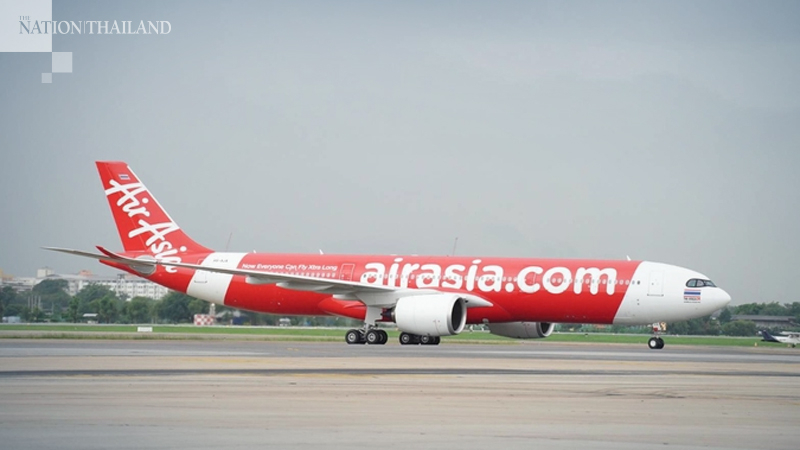
Thai AirAsia X is suspending flights between Bangkok and Tokyo, Osaka, Sapporo, Nagoya and Fukuoka in Japan from March 16 to June 16 and between Bangkok and Seoul-Incheon from March 17 to 28 in response to the Covid-19 outbreak.

Affected customers can:

• Choose a new date on the same route on or before October 16 at no additional cost, subject to seat availability

• Retain the value of their booking in a credit account linked to their BIG member account

• Obtain a full refund

These options are applicable only for direct online bookings made via airasia.com. For other types of bookings, such as through travel agents, customers should seek further assistance there.

Affected customers will be notified directly via email and SMS.

To check eligibility and learn how to submit a request, refer to the Covid-19 Refund Request Guide.

AirAsia is closely monitoring the virus situation and reserves the right to announce further policies accordingly.

Cancellations hit Trump’s hotels and clubs amid coronavirus outbreak #ศาสตร์เกษตรดินปุ๋ย

#ศาสตร์เกษตรดินปุ๋ย : ขอบคุณแหล่งข้อมูล : หนังสือพิมพ์ The Nation

https://www.nationthailand.com/business/30383975?utm_source=category&utm_medium=internal_referral

Cancellations hit Trump’s hotels and clubs amid coronavirus outbreak

Mar 13. 2020
File photo of Trump Hotel /Syndication Washington Post

File photo of Trump Hotel /Syndication Washington Post
By The Washington Post · Joshua Partlow, David A. Fahrenthold, Jonathan O’Connell · NATIONAL, BUSINESS

President Donald Trump’s family business, which owns and operates hotels and golf courses, faced a rapidly deteriorating commercial outlook Thursday as it became caught up in the wave of cancellations across the tourism industry as a result of the coronavirus.

The company also learned it had hosted its first confirmed coronavirus case: a Brazilian official who spent time with President Trump at his Mar-a-Lago Club in Florida last week.

As of Thursday evening, the Trump Organization had not changed its public posture – or outlined what measures it is taking to protect club members and guests – as the virus has spread more widely across the country, including to all nine states and the District of Columbia where the company operates in the United States.

President Trump’s decision to restrict travel from Europe did not apply to the United Kingdom and Ireland – countries where he happens to own three golf courses.

The Trump Organization is still owned by President Trump but is run by his adult sons. The company did not respond to requests for comment about how it was addressing the coronavirus.

The broader U.S. hotel industry has taken a sharp hit since the beginning of March. The industry watchdog STR reported that – during the first week of March – occupancy across U.S. hotels fell 7 percent from the same time a year earlier, and revenue per room fell even further, by 11 percent.

“This is likely to get a little worse before it gets better,” said Jan Freitag, a vice president at STR.

Event cancellations have already begun to affect the company: a group of Texas bankers called off a March 22 reception at the Trump International Hotel Washington D.C. as part of coronavirus precautions. And a convention for the auto-repair industry now won’t be held at Trump’s Doral resort in Miami.

At Mar-a-Lago, one person familiar with the club’s operations said that a multiday, lavish wedding had been postponed because of coronavirus fears, and a brunch had been called off.

These cancellations came amid news that a Brazilian official – who had met with Trump and Vice President Mike Pence on Saturday at Mar-a-Lago – had tested positive for coronavirus.

Several hours after the Brazilian official’s positive test was announced, there had been no guidance from the club about how to react, the person said.

“I was there all weekend,” said the person, who spoke on the condition of anonymity to discuss the club’s private operations. “Now, I’m concerned.”

But the club appeared to be allowing other events to proceed.

Mar-a-Lago this week has been setting up for a massive, 700-person charity luncheon – the “Wine, Women and Shoes” bash to raise money for Big Dog Ranch Rescue, an animal shelter. The chairs of the event include Trump’s daughter-in-law, Lara Lea Trump, and the daughter of Trump’s former presidential rival, Georgina Bloomberg.

The organizers said Thursday they planned to proceed despite the Brazilian official’s positive test.

“Most events have continued here in Palm Beach with strong attendance and no known community transmission of COVID-19 in Palm Beach county to date,” charity spokesman Chase Scott wrote in an email. “Additionally we will offer hand sanitizers, washing stations and, upon check-in, encourage all guests to refrain from shaking hands, hugging or kissing during the event as precautionary measures.”

An outdoor car show planned for March 20 at Mar-a-Lago, and a “Spring Fling” charity luncheon planned on March 29 at the club are also going on as scheduled, organizers said.

On Wednesday, before the Brazilian official’s positive test, the club had sent an email to members reassuring them that it would remain “your home away from home.” There would be additional hand sanitizer and heavy cleaning, but no closures, the club said then.

“We will continue to operate without disruption,” club manager Bernd Lembcke wrote, according to a copy of the email obtained by The Washington Post.

On Thursday, Florida Gov. Ron DeSantis, a Republican, recommended residents “strongly consider limiting or postponing mass gatherings in the state of Florida.”

In both Chicago and New York, small investors in the Trump hotels have received letters in recent days saying that the hotels were being given extra cleaning, and that hand sanitizers had been put out in public areas. The Trump Organization warned investors in Chicago that the coronavirus was depressing tourism across the city.

In contrast to some of Trump’s own comments – which have downplayed the danger of the virus – the Trump hotel in Chicago said it was taking significant measures: giving managers special training in hygiene, increasing the frequency of cleanings, and adding hand-sanitizer dispensers throughout the hotel’s public areas.

“Our cleaning procedures and policies at the Chicago property are meticulously followed and executed by our staff and vendors each day,” the Trump Chicago hotel’s management wrote, according to a copy of the letter obtained by The Washington Post.

Freitag,of the hotel industry watchdog group, said that hotels catering to conferences and meetings would be especially hard-hit, because those cancellations wipe out a lot of business at once, and because the complex logistics of large conferences make them difficult to postpone. They are simply canceled instead.

“The demand for meetings that is going away today will not return” for an extended time, Freitag said.

Buffett bet that infuriated Icahn is hit hard by oil crash #ศาสตร์เกษตรดินปุ๋ย

#ศาสตร์เกษตรดินปุ๋ย : ขอบคุณแหล่งข้อมูล : หนังสือพิมพ์ The Nation

https://www.nationthailand.com/business/30383964?utm_source=category&utm_medium=internal_referral

Buffett bet that infuriated Icahn is hit hard by oil crash

Mar 12. 2020
Warren Buffett, chairman and chief executive officer of Berkshire Hathaway Inc., speaks to media Omaha, Neb., on May 3, 2019. MUST CREDIT: Bloomberg photo by Houston Cofield.

Warren Buffett, chairman and chief executive officer of Berkshire Hathaway Inc., speaks to media Omaha, Neb., on May 3, 2019. MUST CREDIT: Bloomberg photo by Houston Cofield.
By Syndication Washington Post, Bloomberg · Katherine Chiglinsky, Kevin Crowley · BUSINESS, US-GLOBAL-MARKETS

It had all the trappings of a classic Warren Buffett deal. There were the preferred shares created just for him, the warrants giving him an option to buy more common stock and a hefty dividend — 8%, which came to a cool $800 million a year on the $10 billion he plunked down.

On their face, the terms were so favorable for Buffett’s Berkshire Hathaway Inc. — and so onerous for the company, the oil driller Occidental Petroleum Corp. — that fellow billionaire investor Carl Icahn seethed with indignation. It was, he wrote, “like taking candy from a baby.”

But now, some 11 months later, Buffett’s bet on Occidental is suddenly a far cry from the slam dunk that it once appeared. Few large companies, if any, in the U.S. shale patch have been hit harder than Occidental by the collapse in oil prices this week. And while Buffett’s preferred shares don’t trade, the plunge in price on the company’s common stock, down 70% in the last 12 days, and in its benchmark bonds, down 25%, provide clues about the market’s perception of the value of his investment.

The stock dropped 16% to $9.95 Thursday before trading was halted due to reaching a circuit breaker limit. It closed at $58.88 when Buffett invested last April.

For Buffett, the episode marks another setback for one of his key investments, just a year after the Kraft Heinz writedown unleashed turmoil at that business. It also raises questions once again about how he intends to use his massive cash holdings — $128 billion at last blush — with few wholly appealing investment options to choose from.

The $10 billion investment in Occidental, his first major deal in four years, was instrumental in allowing the company to win a bidding war for Anadarko Petroleum Corp. But the transaction is only exacerbating Occidental’s troubles. Previously a steady, diversified oil producer, Occidental is now a heavily indebted shale oil producer highly subject to the whims of crude prices. Buffett himself conceded last year that the success of the deal depended on the vagaries of the oil market.

“The structure of the deal was a classic Berkshire deal,” Cathy Seifert, an analyst at CFRA Research, said. “Again, timing is everything and what a difference a year makes.”

Berkshire didn’t respond to requests for comment.

Things haven’t totally unraveled on Berkshire’s investment yet, of course. For now, in fact, the preferred shares continue to throw off cash — $200 million every quarter — and also rank above the common stock when it comes to liquidation. Berkshire does also hold some common shares, but they totaled just $780 million at the end of the year, equal to only 0.3% of Berkshire’s entire stock portfolio.

Buffett’s record of preferred stock deals have often played out in his favor. He bought stakes in General Electric and Goldman Sachs during the financial crisis. Both of those preferred stakes paid 10% dividends.

But he’s been struggling to find attractive ways to put his near record cash pile to work. While his company has built up a more than $70 billion stock holding in Apple. through the end of 2019, Buffett had failed to find major transactions since his 2016 acquisition of Precision Castparts.

And while the Occidental deal was lauded by analysts at the time, it put Buffett in a notoriously volatile industry. Few predicted, of course, that a split between Russia and its one-time OPEC allies would spark a price war. The ensuing crash in those prices eventually forced Occidental to cut its dividend for the first time in three decades Tuesday. Buffett’s preferred stake was unaffected by the cut, but Berkshire’s common stock holding will feel the ripple effects unless Buffett’s company tweaked that holding since the end of the year.

Cutting capital expenditure by a third and slashing the dividend almost 90% will help drive Occidental’s break-even costs down to the low $30 a barrel range, Chief Executive Officer Vicki Hollub said in a statement Tuesday. The move, and broader stock market gains, helped the company stock surge nearly 15% that day.

But the cut to Occidental’s prized dividend limits payouts to common stockholders, including Icahn, who has been battling the company for months over the Anadarko deal.

“Buffett figuratively took her to the cleaners,” Icahn wrote in July about Buffett’s preferred stock deal. Icahn, an Occidental shareholder, said in February ahead of the oil market crash that the “ill-advised bet” on Anadarko and any slump in oil prices could jeopardize the dividend.

Icahn said late Wednesday that he had increased his stake in Occidental to about 10%, from 2.5% previously, and he renewed his attack on the company’s board. “In other cultures, they would have the dignity to resign or worse,” Icahn said by phone. “In the army, they would be court-martialed, but here they would probably grant themselves bonuses because their stock options have collapsed.”

A representative for Occidental declined to comment on Icahn’s position.

In the short-term at least, the Anadarko deal has come at a major cost to shareholders. Occidental is down 82% since its interest in Anadarko first became public almost a year ago, compared to a 49% decline in the S&P 500 Energy Index, and a similar decline in oil.

Occidental’s dwindling market value has raised speculation over whether Buffett would ever buy the company outright. While Buffett has the funds, any eventual purchase would depend on his outlook for the oil market and other variables, said David Kass, a professor of finance at the University of Maryland’s Robert H. Smith School of Business.

“It’s certainly well within the $128 billion that Buffett has to spend,” Kass said. “But would the risks far outweigh the expected reward?”

Sumeth stepping down from top THAI post #ศาสตร์เกษตรดินปุ๋ย

#ศาสตร์เกษตรดินปุ๋ย : ขอบคุณแหล่งข้อมูล : หนังสือพิมพ์ The Nation

https://www.nationthailand.com/business/30383947?utm_source=category&utm_medium=internal_referral

Sumeth stepping down from top THAI post

Mar 12. 2020
Sumeth Damrongchaitham

Sumeth Damrongchaitham
By THE NATION

Sumeth Damrongchaitham , president of Thai Airways International, has tendered his resignation from the post, effective April 11, said Transport Minister Saksayam Chidchob today (March 12).

The minister said the THAI board had informed him of the move.

BGRIM backs power tariff cut, sees big gain from declining gas price #ศาสตร์เกษตรดินปุ๋ย

#ศาสตร์เกษตรดินปุ๋ย : ขอบคุณแหล่งข้อมูล : หนังสือพิมพ์ The Nation

https://www.nationthailand.com/business/30383946?utm_source=category&utm_medium=internal_referral

BGRIM backs power tariff cut, sees big gain from declining gas price

Mar 12. 2020
By The Nation

B.Grimm Power Plc (BGRIM), one of Thailand’s leading power producers, welcomes the Cabinet’s resolution to reduce electricity charges as part of its economic stimulus package.

Though the cut  would have a minor impact on  on its revenue,  the company’s 2020’s earning would significantly increase  from declining natural gas prices, one of  the major costs.

The March 10 resolution calls for freezing the Ft, the fuel adjustment fee in May at the current rate of -11.6 satang per unit (kWh), and trimming the power charges for all types of users in April-June 2020 by 3 per cent

BGRIM President Preeyanart Soontornwata said the resolution will only affect the company’s annual revenue by a mere  0.17 per cent as the bulk of its income remains solid.

She said: “BGRIM is pleased to be part of a mission to help entrepreneurs mitigate   economic difficulties and the impact from drought by temporarily reducing charges of our power supplies to industrial customers by a similar rate  for three months, beginning in April.”

The majority of revenue would not be effected from this as up to 77 per cent  of BGRIM’s total revenue comes from power sales to the Electricity Generating Authority of Thailand (EGAT), renewable energy power projects and overseas ventures, while incomes deriving from industrial clients account for only 23 per cent , she explained.

The financial impact from the tariff cut is temporarily and fairly small in amount, she added.

The company is committed to continuously expanding its business and strengthening industrial clientele, after  recording up to 31 MW in new power sales in the first nine months of this year.

BGRIM’s power sales to industrial customers in the first two months of this year rose 1 per cent from the same period last year due to increased demand from packaging, air conditioning and other sectors.

Meanwhile, the declining price of natural gas, which accounts for more than 70 per cent  of BGRIM’s total costs, provides a significant opportunity for the company to cut costs and enhancing bottom line this year.

The average natural gas price in January-February 2020 was down by 9 per cent  compared to the same period last year.

The drop in gas price will have a positive effect on the company’s profit. The 9 per cent  drop in gas price could result in a 15% rise in earnings compared to the net earnings attributable to major shareholders in 2019 which amounted to Bt2,331 million,  Preeyanart noted.