Google travel ad revenue may be hit by coronavirus, analyst says #ศาสตร์เกษตรดินปุ๋ย

#ศาสตร์เกษตรดินปุ๋ย : ขอบคุณแหล่งข้อมูล : หนังสือพิมพ์ The Nation

https://www.nationthailand.com/business/30383471?utm_source=category&utm_medium=internal_referral

Google travel ad revenue may be hit by coronavirus, analyst says

Mar 06. 2020
File photo/The Star, ANN

File photo/The Star, ANN
By Syndication Washington Post,  Bloomberg · Gerrit De Vynck · BUSINESS 

Google’s massive travel advertising business could be hurt because the coronavirus outbreak is disrupting travel plans.

Needham & Co. analyst Laura Martin estimated spending on travel search ads will drop $1 billion in the first quarter and $3 billion in the second quarter. Most of that money would have been spent on Google, which dominates the space. Travel ads make up 10% of all search ads and accounted for about $10.7 billion of Google’s $98 billion search revenue in 2019, Martin wrote in a Thursday note to clients.

The coronavirus is slowing economic activity and ad budgets are often one of the first expenses to be cut when companies tighten their belts. Alphabet Inc.’s Google relies on millions of businesses, large and small, to buy ads on its search engine and on YouTube to keep revenue growing.

There are other signs of stress on the travel industry. Airline stocks have tanked, with United Airlines Holdings Inc. falling 39% and Deutsche Lufthansa dropping 31% since the outbreak began. Booking Holdings and Expedia Group, two of Google’s largest ad buyers, have slumped, too.

Needham’s Martin kept her buy rating on Alphabet shares because she expects consumer spending and travel advertising will be “back to normal” by the second half of 2020.

Exxon taps brakes on Permian Basin after virus hammers oil #ศาสตร์เกษตรดินปุ๋ย

#ศาสตร์เกษตรดินปุ๋ย : ขอบคุณแหล่งข้อมูล : หนังสือพิมพ์ The Nation

https://www.nationthailand.com/business/30383466?utm_source=category&utm_medium=internal_referral

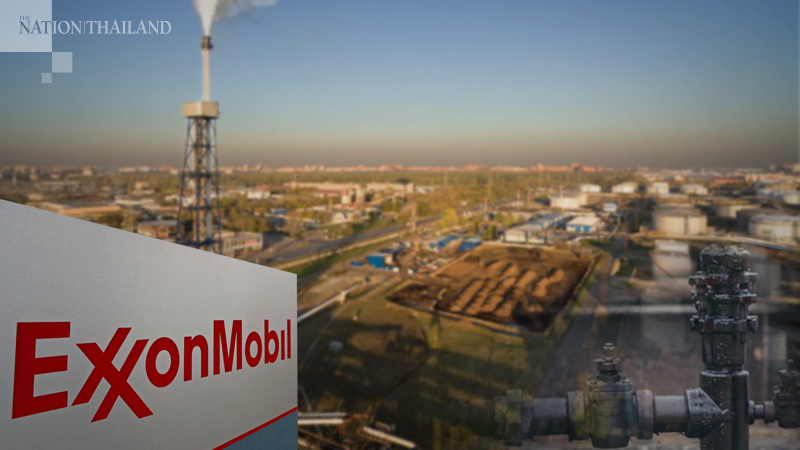
Exxon taps brakes on Permian Basin after virus hammers oil

Mar 06. 2020
By Syndication Washington Post, Bloomberg · Kevin Crowley · BUSINESS, US-GLOBAL-MARKETS 

Exxon Mobil is slowing the pace of its flagship shale project in the Permian Basin, one of the first signs that the oil majors are throttling back on production in response to the recent slump in prices.

The U.S. energy giant will cut Permian production growth by about 10% over the next two years, the company said at its analyst day in New York on Thursday, but will stick to its long-term plan to almost triple output from the basin by 2024.

The slowdown wasn’t enough to appease investors, concerned about Exxon’s massive spending program in the face of a global oil supply glut that’s aggravated by the impact of the coronavirus on demand. The stock dropped as much as 5.1%, making Exxon the fourth-worst performer in the S&P 500 Energy Index. OPEC leaders recommended a large cut to oil production at a meeting in Vienna Thursday but Russia is reluctant to sign off on the plan.

Oil prices have plunged more than 20% this year, with Goldman Sachs this week joining pessimists that forecast demand will contract in 2020 for only the fourth time in 40 years. The pressure is particularly acute for Exxon. Its shares have dropped to a 15-year low as it continues to spend heavily on new projects through the downturn as part of a counter-cyclical strategy.

“We’ve got a very challenging short-term margin environment which is now being compounded by the growing economic impact of the coronavirus,” Chief Executive Officer Darren Woods said at the investor presentation. Exxon will therefore “adjust the place of development.”

The Permian pullback means this year’s capital spending will be not more than $33 billion, the low end of its previously targeted range. Even so, Exxon said its long-term plans were unchanged, with spending rising to as much as $35 billion a year through 2025.

The scale of Exxon’s spending has meant the oil behemoth has failed to cover its dividend payments with cash flow for eight out of the last 10 quarters, relying on asset sales and borrowing to make up the difference.

Exxon may not be slowing down enough to soothe wary investors, Biraj Borkhataria, an analyst at RBC Capital Markets, wrote in a note to clients Thursday. As such, Exxon’s plans “leave us thinking that XOM is in for another tough year,” Borkhataria said, referring to Exxon’s ticker symbol.

The longer a price recovery takes, “the longer XOM generates weaker free cash flow and returns versus peers, and the more likely investors start to question the premium multiple it trades on,” he said.

Woods stressed his faith that low prices would be a short term phenomenon as rivals seem willing “to repeat the sins of the past” of under-investing in the world’s future oil and gas needs. That sets the “stage for a significant upswing” he said, without forecasting when it will happen.

“If you’re going to generate returns higher than everyone else, you can’t do it following them,” Woods said.

Exxon will rely on its “financial capacity” to borrow at a time when debt is “available at historically low cost,” Woods said. Its shares were down 4.2% to $50.22 at 11:14 a.m. in New York amid a broader equities decline.

The company’s Permian pullback is another sign that U.S. shale growth may be slowing. West Texas Intermediate crude prices have dipped well below $50 a barrel, a level at which many of the independent operators in the Permian are thought to be losing money. Shale producers have been cutting spending and hiking dividends as investors demand better returns.

To execute its Permian slowdown, Exxon will cut 20% of its rigs in 2020, senior vice president Neil Chapman said. The oil major was running 18 rigs in the Midland side of the basin and 40 in the Delaware earlier this year. Overall Permian production will reach 600,000 barrels a day by 2021, about 10% lower than the previous guidance.

Exxon’s short-term slowdown in the Permian stands in contrast to plans by rival Chevron Corp., which this week increased its output target for the basin to fund as much as $80 billion of dividends and share buybacks over the next five years.

Chevron told investors Tuesday that it sees its Permian output plateauing at 1.2 million barrels a day by the mid-2020s with capital spending of about $4.5 billion a year.

A former Uber executive was ordered to pay Google $179 million. Then he filed for bankruptcy. #ศาสตร์เกษตรดินปุ๋ย

#ศาสตร์เกษตรดินปุ๋ย : ขอบคุณแหล่งข้อมูล : หนังสือพิมพ์ The Nation

https://www.nationthailand.com/business/30383465?utm_source=category&utm_medium=internal_referral

A former Uber executive was ordered to pay Google $179 million. Then he filed for bankruptcy.

Mar 06. 2020
File photo/ Syndication Washington Post, Bloomberg

File photo/ Syndication Washington Post, Bloomberg
By The Washington Post · Reed Albergotti · BUSINESS 

SAN FRANCISCO – Anthony Levandowski, who once ran Uber’s self-driving car unit, was ordered Wednesday to pay $179 million to rival Google, prompting the software engineer to file for bankruptcy protection.

The enormous award, which was approved by a Superior Court judge in San Francisco and was confidential but disclosed in a Securities and Exchange Commission filing, casts new light on one of Silicon Valley’s most heated dramas. It is also another blow to Levandowski, once a rising star in the tech industry who now faces criminal charges for allegedly possessing trade secrets that belong to Google.

Levandowski left Google in 2016 to form Otto, an autonomous trucking company. In August of that year, Uber acquired Otto for $700 million. (Uber ultimately paid much less than that because Otto employees either left or were terminated before their stock options were allowed to vest.) Six months later, Google sued Uber, alleging that the ride-share company conspired with Levandowski to steal trade secrets from Google’s autonomous driving unit, called Waymo. Uber settled in February 2018, five days into a blockbuster trial, agreeing to pay more than $244 million to Google.

But Google had also brought a case against Levandowski in arbitration, and in December, a panel awarded Google the vast sum. That award was subject to court review and was finalized in California state court on Wednesday.

As part of his employment with Uber, the ride-hailing service had agreed to pay Levandowski’s legal fees, including any judgments against him. But Uber said in an SEC filing Monday that responsibility for the fees is “subject to a dispute between the two parties.”

Uber declined to comment Wednesday. Levandowski did not immediately respond to a request for comment.

In August, federal prosecutors with the Northern District of California indicted Levandowski, alleging he stole or attempted to steal confidential files from Waymo. The 33-charge indictment could land Levandowski in prison for up to 10 years. He has denied the charges.

During the civil case between Uber and Google, Levandowski exercised his Fifth Amendment rights against self-incrimination when he refused to turn over documents in the case. The judge in the case later recommended that federal prosecutors open a criminal investigation.

In emails, Wells Fargo executives griped about scrutiny, mulled using charity as leverage #ศาสตร์เกษตรดินปุ๋ย

#ศาสตร์เกษตรดินปุ๋ย : ขอบคุณแหล่งข้อมูล : หนังสือพิมพ์ The Nation

https://www.nationthailand.com/business/30383464?utm_source=category&utm_medium=internal_referral

In emails, Wells Fargo executives griped about scrutiny, mulled using charity as leverage

Mar 06. 2020
File photo/Syndication Washington Post, Bloomberg

File photo/Syndication Washington Post, Bloomberg
By  The Washington Post · Renae Merle · BUSINESS, COURTSLAW, CONGRESS, PERSONAL-FINANCE

WASHINGTON – Last year, Wells Fargo’s then-interim chief executive, Allen Parker, thought he had struck a deal.

Regulators had fined the bank $1 billion for consumer abuses, including opening millions of accounts consumers didn’t want. A senior political appointee at the Consumer Financial Protection Bureau, Eric Blankenstein, told Parker that any additional investigations would be resolved privately – and without additional fines.

“Eric also assured me that there would continue to be ‘political’ oversight of the engagement with us,” Parker said in an email to a member of the bank’s board of directors.

The email exchange was uncovered during a year-long investigation of the San Francisco-based bank by the House Financial Services Committee that found widespread problems with how Wells Fargo and its board of directors have responded to more than three years of scandals in its operations. The backchannel communications between Blankenstein, the Trump administration appointee who resigned under a cloud, and Parker potentially undermined career bureau officials who were not aware of the arrangement, the more than 100-page report found.

Wells Fargo is “a reckless megabank with an ineffective board and management that has exhibited an egregious pattern of consumer abuses,” Rep. Maxine Waters, D-Calif., chair of the committee, said in a statement.

In a call with reporters, Waters said Thursday she was considering whether to refer the bank’s former CEO, Tim Sloan, to the Department of Justice for making “misleading” statements while testifying before the committee last year.

“I am looking very closely at whether there will be a referral,” she said.

Sloan, who now works as an adviser for Fortress investment group, could not immediately be reached for comment.

A Wells Fargo spokesperson, Jennifer Dunn, said the bank is still reviewing the report and declined to comment further. Blankenstein and Parker couldn’t immediately reached for comment.

Wells Fargo’s current CEO, Charles Scharf, is scheduled to appear before the House committee Tuesday, and two members of the committee’s board of directors are scheduled to appear on Wednesday.

The report also found that the bank’s regulators, including the Office of the Comptroller of the Currency and the Federal Reserve, were aware of the bank’s problems for years before acting and that Wells Fargo was slow to address its problems. The bank’s board of directors failed to hold senior executives accountable and appeared reluctant to become directly involved in resolving matters, the committee found.

In 2017, then-vice chair of Wells Fargo’s board, Betsy Duke, questioned why CFPB was including her on emails about actions the bank needed to take, according to the report. “Why are you sending it to me, the board, rather than the department manager?” she asked a CFPB official in an email, according to the report.

A CFPB official later said Duke’s response came as a “surprise” since board members “would not typically object to receiving communication from a regulator,” according to the report.

Duke, who is now chairs the board, is scheduled to testify on Wednesday.

Waters said Thursday that she planned to call for the resignation of Duke and another board member, James Quigley. In an email, Quigley resisted attending a meeting about the bank’s troubles because he was overseas on vacation. “Strong boards are essential to strong governance,” Waters said. “They should be shown the door.”

The report also states that Wells Fargo executives seemed more interested in getting out from under federal scrutiny quickly “instead of taking the necessary time to address the weaknesses” within the bank. In another email exchange included in the report, Duke appears to press bank executives to quickly resolve matters with regulators.

“After what I have seen in the last month, I believe our credibility and perhaps even viability as a company is dependent on successfully exiting these consent orders,” she said in a 2018 email. “This is too good of a company to have to operate under the restrictions of a troubled one.”

Among the country’s largest and most profitable banks, Wells Fargo has struggled to overcome the sales scandal, which ballooned as the bank admitted to other consumer abuses, including mistakenly foreclosing on hundreds of clients and repossessing the cars of thousands of others.

Last month, the bank reached a $3 billion settlement with the U.S. Department of Justice and the Securities and Exchange Commission, acknowledging that for more than a decade thousands of employees falsified records, forged signatures, and misused customers’ personal information in order to meet unrealistic sales goals, opening millions of accounts consumers didn’t want in the process.

But the report is likely to reinforce Democrats’ concerns the bank has not been aggressive enough in reforming its culture. In one 2017 exchange, the bank’s former CEO was told about a plan to use a promised charitable donation as leverage to escape reforms it had already agreed to.

In the 2017 email, Michael Loughlin, then the bank’s chief risk officer, discussed a plan for setting aside $200 million to compensate consumers harmed by its fake account scandal.

If any money was left over, the bank could give it to charity, Loughlin told then-CEO Tim Sloan, but only if Wells Fargo’s regulators agreed to let the bank out of its consent orders. “If they do not, no donation. Put the onus back on them,” he said.

In anticipation of next week’s hearings, Wells Fargo has announced changes including that it would raise its minimum wage for thousands of its employees to between $15 and $20 an hour and begin offering accounts with no overdraft or insufficient funds fees.

But Scharf is likely to face a skeptical audience next week when he will become the third Wells Fargo CEO in three years to appear before Capitol Hill. His predecessors struggled under intense questioning from lawmakers and eventually were forced to resign.

“He has to demonstrate that he is an outsider and that he is actively working on the bank’s problems,” said Ed Mills, a Washington-based policy analyst with Raymond James. “It is one thing to have a plan on paper. It’s another for its to hold up to congressional scrutiny.”

Amazon nixed ‘green’ shipping proposal to avoid alienating shoppers #ศาสตร์เกษตรดินปุ๋ย

#ศาสตร์เกษตรดินปุ๋ย : ขอบคุณแหล่งข้อมูล : หนังสือพิมพ์ The Nation

https://www.nationthailand.com/business/30383462?utm_source=category&utm_medium=internal_referral

Amazon nixed ‘green’ shipping proposal to avoid alienating shoppers

Mar 06. 2020
An Amazon Prime Air cargo jet at Cincinnati/Northern Kentucky International Airport in Hebron, Ky., on Aug. 16, 2017. MUST CREDIT: Bloomberg photo by Luke Sharrett.

An Amazon Prime Air cargo jet at Cincinnati/Northern Kentucky International Airport in Hebron, Ky., on Aug. 16, 2017. MUST CREDIT: Bloomberg photo by Luke Sharrett.
By Syndication Washington Post, Bloomberg · Matt Day · BUSINESS, TECHNOLOGY, RETAIL 

A few years ago, Amazon.com’s quick delivery team debated doing something radical for the e-commerce giant: asking shoppers to consider the environment.

The team building Amazon’s Prime Now same-day delivery service knew that the quickest delivery options tended to be the worst for the planet. A guaranteed one-hour delivery window sometimes meant sending couriers in mostly empty vehicles darting to far-flung neighborhoods, all the while emitting roughly the same greenhouse gas emissions as a fully loaded truck or van.

Someone on the team proposed showing customers a “Green” shopping delivery option, a slightly slower delivery speed designed to give Amazon more time to cluster orders together and send out densely packed vehicles, saving on fuel, driver salaries and carbon emissions.

The idea was one of at least two instances in recent years when Amazon teams debated telling customers more about the environmental impact of their shipping choices, according to two people familiar with the episodes. Neither was implemented, in part, because of the risk that shoppers would think twice before clicking “Buy Now,” the people say.

“It was all efficiency and bottom-line focused,” says one of the people, who requested anonymity to discuss an internal matter. “If you don’t have top-down goals around sustainability, there are always going to be tradeoffs.”

Amazon in the last year has made some big climate commitments, following calls from shareholders, activists and employees to do more to offset the company’s contribution to the greenhouse gas emissions blamed for warming the planet. In September, Chief Executive Officer Jeff Bezos pledged to erase Amazon’s contribution—some 44.4 million metric tons of carbon dioxide equivalent in 2018—and make Amazon’s business carbon neutral by 2040. Last month, Bezos raised the stakes, saying he would spend $10 billion of his personal fortune on projects to combat climate change.

But Amazon’s push to make its operations more climate friendly is at odds with elements of the company’s core business practices, some current and former employees and outside observers say. Bezos’ company is, in many ways, designed to promote consumption. From one-click shopping to one-day shipping, many employees are encouraged to focus on a set of goals geared toward removing barriers to shopping and inventing new ways of pleasing customers before they think to ask. That obsessive focus has helped make Amazon the largest online retailer in the world. It also makes climate activists and sustainability experts—many of whom cheer the company’s bold new goals—skeptical of Amazon’s odds of success.

“What they’re trying to do is create a climate and a culture of consumption,” says Raz Godelnik, a professor at the New School’s Parsons School of Design who focuses on sustainability. “That means more products will be manufactured, more products will be shipped, more products will be returned. If you just look at the numbers, it means overall, a zero carbon contribution is not possible.”

Amazon says its commitments represent “a very aggressive and important goal.”

“Not only are we committed to the Climate Pledge to be net-zero carbon by 2040 . . . we are actively working to recruit others to join us,” a spokesman said in an emailed statement. “We are making significant investments in renewable energy, carbon neutral transportation, sustainable materials, closed-loop systems and resource efficiency improvements to achieve our sustainability goals.”

Amazon’s first efforts to address its environmental impact more than a decade ago were designed to cut costs by weeding out waste. Programs to reduce the size of boxes Amazon ships to customers, and eliminate hard-to-open plastic packaging, continue today. The company also deputized employees to seek out inefficiencies in their day jobs, removing light bulbs from vending machines and, in the case of a Scottish warehouse, shutting off a hot water heater during the summer months.

At the same time, the company asserted that online shopping was better for the planet than what came before. “We believe that e-commerce is inherently more environmentally friendly than traditional retailing, and we believe that we will continue to innovate in this area over time,” the company said in a 2011 filing, language Bezos and other top executives have echoed with little change in the years since.

The logic makes some intuitive sense: 100 people driving cars to the store to pick up an item is hugely wasteful compared with a single truck that makes rounds to each person’s doorstep.

The trouble is, the world is messier than the talking point, people who study logistics and shopping habits say. One shopper might grab the week’s groceries on the way home from work, likely a more efficient trip than arranging for a refrigerated truck to stop by the house. Some online deal hunters wipe out any environmental benefit of online shopping by making a trip to a store to try out a product in person. And others, freed from the need to go to the store, might jump in the car for a trip to do something fun.

“The complexity is tremendous,” says Anne Goodchild, who leads the University of Washington’s research on supply chains and logistics.

Five months before Amazon announced plans for a zero-carbon future, the company complicated its task, announcing it would make one-day delivery standard for members of its Prime free shipping program. Since Amazon’s previous two-day unlimited shipping guarantee was introduced in 2005, Amazon has been at the forefront of raising expectations that not only should shoppers be able to buy basically anything online, but the stuff should arrive quickly.

Researchers say faster delivery speed tends to mean more emissions, either from the waste of a partially empty truck rushing to meet a delivery deadline, or a trip in the belly of a cargo plane from a distant warehouse.

“Buying online or not doesn’t account for the main variable,” Goodchild says. “The main variable is how far away did something come from. And then how quickly did you demand that it get to you.”

Amazon says that, for its own operations, faster shipping doesn’t necessarily mean more emissions. By staging inventory in depots closer to shoppers and leveraging the massive order volume of the largest online retailer, the company is able to deliver packages more efficiently than outside research would suggest, a spokesperson said. Embedded in that assurance is expectations for ever more growth at Amazon: a bigger slice of retail sales means more deliveries to more neighborhoods, which in turn leads to more optimized routes and, theoretically, fewer emissions.

“What they’re saying is if we reach a high enough level of demand for essentially any delivery window, then we can likely do it in a more environmentally friendly manner than anybody else could do on their own,” says Teddy Forscher, who is studying the relationship between online shopping and transportation at the Institute of Transportation Studies at the University of California, Berkeley.

Amazon hasn’t released numbers to back up its claims about delivery efficiency, but outside data do support some elements of the company’s premise. In 2019, Amazon packages started their journey to customer doorsteps 25% closer than shipments by other e-commerce companies, according to data from Rakuten Intelligence, which tracks emailed customer receipts. Amazon packages also spend a day less in transit, on average.

That effortless shipping makes it possible for people to click “Buy Now” without thinking too hard about the cost, shoppers say. “Amazon makes it really easy to click through things,” says Katie Ferrara, a songwriter in Los Angeles, who gets about two or three Amazon deliveries a week. Most of her orders, from guitar cables to clothing she can’t find in local stores, tend to be single purchases, including the occasional impulse buy. “I know it’s probably not the best for the environment,” she says.

When shoppers do try to buy items in bulk, Amazon most often sends them packaged individually, which is partly the result of third-party sellers on Amazon’s site who often mail their own inventory. Among orders containing multiple items, more than 60% come in separate packages, according to Rakuten data covering the first half of last year. For other retailers, orders containing multiple items come in separate packages just 27% of the time.

Amazon, which says its deliveries generally emit less carbon than physical shopping trips for the same set of items, is working behind the scenes to make its operations more efficient without customers knowing or having to change their behavior. The company says it expects to receive its first electric delivery truck from Rivian Inc. in 2021, and have 100,000 of them on the road by 2030. The company cites the purchase of electric vehicles, typically more expensive than conventional diesel- or gasoline-powered models, as a sign of its commitment to meet its zero-carbon goal, even if it adds costs.

The order may help jumpstart production of fossil-fuel-free delivery vehicles, which has so far failed to keep up with demand. FedEx Corp. and United Parcel Service Inc., which each have thousands of electric or alternative-fuel vehicles on the road, both saw their emissions rise in 2018, the most recently reported year, as surging e-commerce orders outpaced their ability to acquire new vehicles.

“The e-commerce boom has changed buyer behavior—consumers have become accustomed to getting nearly anything they want, when and where they want it,” UPS said in its sustainability report.

UPS, which gives customers the option to offset the emissions associated with their shipments, is among the companies that have decided to enlist customers in making operations greener. In Britain, grocers Ocado and Sainsbury’s both show customers during checkout which delivery slots are better for the environment.

Amazon, which left that option on the table with the abandoned “Green” Prime Now window, has experimented with similar concepts that emphasize efficiency, but shy away from some of the environmentally friendly branding.

The company last year unveiled “Amazon Day,” an option for shoppers to cluster their deliveries on a single day of the week. The marketing of the new service touts convenience and simplifying shoppers’ busy lives, before noting that the program is “one of many sustainability initiatives” underway. A separate program aimed at efficiency offers customers store credit or discounts if they opt for slower shipping on an in-demand product. The company declined to say how many shoppers use those options.

Godelnik, the New School professor, says such behind-the-scenes nudges may not be enough. Amazon may have to involve its own customers, or use its influence to change their shopping behavior, before it will zero out its environmental impact.

“Amazon for me is a reflection of business as usual,” Godelnik. “You can talk all day about the climate crisis, but if you see packages come and go, and everything looks normal. Production, consumption. What’s the crisis?”

Still, Godelnik, who lives in Princeton, New Jersey, and does most of his shopping on Amazon, doesn’t typically use the company’s no-rush shipping options himself. “I’m very bad at it, I have to admit,” he says. “Prime, it’s just addictive.”

Lego CEO undaunted by virus fear, sees 60% more China shops #ศาสตร์เกษตรดินปุ๋ย

#ศาสตร์เกษตรดินปุ๋ย : ขอบคุณแหล่งข้อมูล : หนังสือพิมพ์ The Nation

https://www.nationthailand.com/business/30383457?utm_source=category&utm_medium=internal_referral

Lego CEO undaunted by virus fear, sees 60% more China shops

Mar 06. 2020
Pedestrians walk past a Lego installation in Shanghai on Dec. 28, 2018. MUST CREDIT: Bloomberg photo by Qilai Shen.

Pedestrians walk past a Lego installation in Shanghai on Dec. 28, 2018. MUST CREDIT: Bloomberg photo by Qilai Shen.
By Syndication Washington Post, Bloomberg · Christian Wienberg · BUSINESS 

The chief executive of Lego says the novel coronavirus only represents a short-term blow to China’s economy that won’t change the toymaker’s expansion plans in its fastest growing market.

Lego reported record sales on Wednesday and said growth in 2020 will once again be led by China. It’s targeting almost 60% more stores there this year, bringing the number to 220.

“Despite any challenges there may be, we expect to be able to reach that number,” CEO Niels B. Christiansen said in a phone interview on Wednesday. “We’re family owned, which gives us the ability to plan long term and focus on the investments that will help in the future.”

The situation in China creates “some short-term uncertainties, but it doesn’t change the long-term strategy with our investments” in the country, he said.

The coronavirus has already triggered mass panic, as its potential to disrupt trade feeds a market sell-off. In response, central banks have started adding emergency stimulus, amid warnings that the virus will dent global growth.

The Lego CEO says it’s too early to judge how the virus will affect 2020 sales. The company will continue to rely on its so-called branded stores to draw in crowds of customers in new cities, a model the CEO says tends to result in a bump from all other sales channels.

For now, China is dealing with more than 80,000 cases of coronavirus, with the outbreak shuttering shopping malls and emptying streets as the authorities urge residents to stay at home.

But Christiansen points out that just because shoppers aren’t going to stores doesn’t mean they’re not still buying, given the ubiquitousness of online commerce.

“In the short term, there may be a shift in where we sell,” he said. “This is what typically occurs and we’re well positioned when it happens. We’re always trying to move our sale to the channel where we see the demand.”

For Lego, committing to China is a question of simple demographic logic. “By 2032, 90% of the world’s two billion children will live outside Europe and North America, with more than three quarters of these living in Eastern Asia. As a result, we are stepping up investment in the growth markets of tomorrow,” the company said in its annual report. It’s a strategy that has so far fed record revenue growth.

Earlier this year, Lego briefly closed its China office, as well as its factory in Jiaxing. But both have since been opened again, Christiansen said. Lego’s factory in China mainly serves the Asian market. Lego also has a Mexican site that produces for the Americas. On top of that, the company has factories in the Czech Republic, Hungary and Denmark for its European stores.

“We have the advantage over some of our competitors that we have a more flexible supply chain,” the CEO said. “Because the products are the same, we can use some factories to help in other regions, if capacity is needed.

MINT takes Thai franchise rights for Bonchon chicken outlets #ศาสตร์เกษตรดินปุ๋ย

#ศาสตร์เกษตรดินปุ๋ย : ขอบคุณแหล่งข้อมูล : หนังสือพิมพ์ The Nation

https://www.nationthailand.com/business/30383423?utm_source=category&utm_medium=internal_referral

MINT takes Thai franchise rights for Bonchon chicken outlets

Mar 05. 2020
By THE NATION

Minor International Plc (MINT) announced on Thursday (March 4) that it had acquired an effective 70-per-cent stake in Spoonful Pte Ltd of Singapore and Spoonful (Thailand) Co Ltd in the total amount of Bt2.48 billion.

Spoonful SG is the master franchise rights holder of Bonchon in Thailand and its Thai affiliate is in charge of the chain’s future expansion here.

MINT has effectively become the operator of Bonchon in Thailand and master franchise licensee with long-term territorial rights and the ability to expand and sub-franchise.

The acquisition amplifies MINT’s belief in the growth potential of the fried-chicken market.

Bonchon will in turn take advantage of MINT’s strengths to execute current and future strategic plans to ensure strong and sustainable returns.

MINT aims to have more than Bonchon 150 restaurants throughout Thailand by the end of 2024.

Given its outlet and delivery platform, there is significant opportunity for store expansion in terms of geography, channel and type of outlet.

Bonchon will be able to utilise MINT’s delivery app and delivery fleet, as well as its centralised sourcing for efficient pricing and assured quality and availability.

Bonchon’s same-store sales remained resilient in the first two months of 2020 despite the Covid-19 situation, supported by its strong delivery sales.

Bonchon’s superior operating metrics to the market, including gross margin and EBITDA margin will allow it to withstand the negative impacts that could potentially arise in this challenging operating environment.

“This latest investment in the master franchise rights of the Bonchon brand in Thailand emphasises our strategy to enhance our portfolio offerings and further strengthen the restaurant business in Thailand,” said Minor Food chief executive Paul Kenny.

“With almost 10 years of presence in the country, Bonchon brings a highly loyal customer base of Thai millennials and Generation Z, which we will further build on.”

United Airlines cuts domestic flights by 10% as coronavirus saps demand #ศาสตร์เกษตรดินปุ๋ย

#ศาสตร์เกษตรดินปุ๋ย : ขอบคุณแหล่งข้อมูล : หนังสือพิมพ์ The Nation

https://www.nationthailand.com/business/30383397?utm_source=category&utm_medium=internal_referral

United Airlines cuts domestic flights by 10% as coronavirus saps demand

Mar 05. 2020
By The Washington Post · Michael Laris · NATIONAL, BUSINESS, TRANSPORTATION

United Airlines will cut domestic flights by 10% and international flights by 20% next month, and executives are planning “similar reductions” in May, the airline said Wednesday, underscoring the drop in demand for air travel given the worldwide spread of coronavirus.

Many major U.S. firms have paused non-essential travel, scientific conferences have been canceled, and some would-be passengers have balked at flying during a time of high uncertainty.

“We sincerely hope that these latest measures are enough, but the dynamic nature of this outbreak requires us to be nimble and flexible moving forward in how we respond,” United chief executive Oscar Munoz and President Scott Kirby said in a statement.

The airline is seeking volunteers at the company to take unpaid leaves of absence, and is instituting a hiring freeze “except for roles that are critical to our operation,” the executives said, noting that management and administrative salary increases are also being delayed.

United said “given the high level of uncertainly regarding travel,” no change fees will be charged for any domestic or international tickets purchased between March 3 and March 31.

United pointed to sharp cutbacks in flights by other airlines, saying that Cathay Pacific “had canceled more than three-quarters of its weekly flights in March,” and British Airways is making deep cuts later this month given the “large decline” in ticket purchases.

“Airlines are experiencing double-digit declines in demand, and on many routes traffic has collapsed,” Alexandre de Juniac, director general of the International Air Transport Association, said in a statement. The group noted that China’s Ministry of Transport “reported an 80% annual fall in volumes in late January and early February.”

Globally, travel demand still rose 2.4% in January, compared with the same period the year before, the group said. Those figures only partially reflected the impact of travel restrictions, some of which did not begin until late January, the group said. Still, it marked the lowest increase in demand for travel since April 2010, during “the volcanic ash cloud crisis in Europe that led to massive airspace closures and flight cancellations.”

Travel in December, by contrast, was up 4.6% from the same month the previous year. The signs of slowdown reflect the “tip of the iceberg in terms of the traffic impacts,” de Juniac said.

The U.S. Travel Association reiterated that the outbreak is “expected to disrupt inbound travel, particularly from fast- growing Asian markets, over the coming months.”

United is cutting back flights to Asia and suspending its trips to Hong Kong, Beijing, Shanghai and Chengdu, in Sichuan province.

United said its “aggressive” actions are designed to minimize impacts as much as possible, for example by cutting the weekly frequencies of certain flights, targeting routes that have alternatives “via other United hubs,” and delaying the start of seasonal travel. The airline said it would not completely cut off flights to any of its domestic destinations.

United said the specific schedule changes would be made public Saturday.

Airbus weighs A330 output cut after largest buyer seeks deferral #ศาสตร์เกษตรดินปุ๋ย

#ศาสตร์เกษตรดินปุ๋ย : ขอบคุณแหล่งข้อมูล : หนังสือพิมพ์ The Nation

https://www.nationthailand.com/business/30383396?utm_source=category&utm_medium=internal_referral

Airbus weighs A330 output cut after largest buyer seeks deferral

Mar 05. 2020
By Syndication Washington Post, Bloomberg · Siddharth Philip, Charlotte Ryan · BUSINESS 

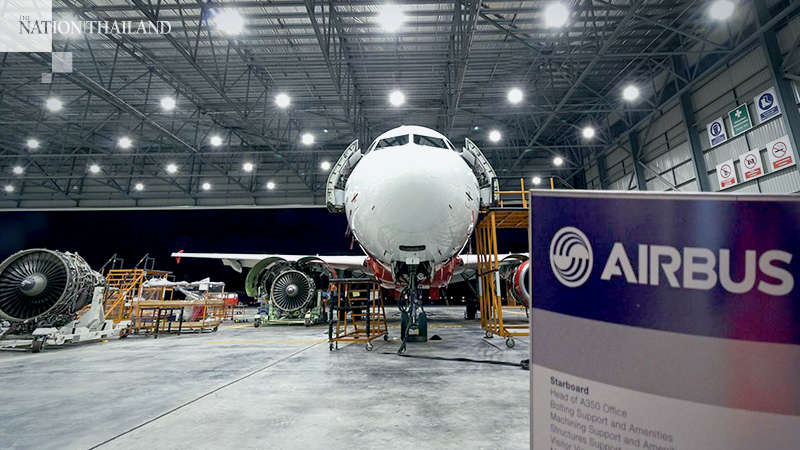
Airbus is considering a cut in production of its A330neo jet after the biggest customer for the wide-body said a coronavirus-driven slump in travel had forced it to defer deliveries, according to people familiar with the matter.

The European planemaker is reviewing its production plans and may make a decision as soon as this month, the people said, asking not to be identified because the deliberations are private. In a filing last month, AirAsia X, the long haul unit of Malaysian low-cost carrier Air Asia Group, which represents about one-fourth of outstanding orders for the model, said it would postpone deliveries of its new A330neos.

The prospect of a reduction, coming on the heels of a recent cutback in A330 annual output to 40 jets, illustrates just how quickly the damage from the travel slowdown is rippling through the aerospace industry. The epicenter is in China, where flights have fallen by as much as 80% and forced a government takeover of HNA Group.

An Airbus spokesman declined to comment on its plans. Chief Executive Officer Guillaume Faury told French senators Wednesday that Airbus expects an “even tougher” year on long-haul routes.

AirAsia X, one of the largest foreign airlines operating in China, said in late February that the market represents 30% of its capacity, and it expects “major headwinds” from the outbreak during the first half of this year. The company said it may switch to single-aisle planes on thinner routes to better line up with demand.

AirAsiaX will also seek to return some older planes to lessors early, it said in a Feb. 27 filing. “Routes within a six-hour radius from our Kuala Lumpur hub will then be replaced with A321 aircraft when the market recovers.”

The market for wide-bodies was already soft when the coronavirus first started to upend travel earlier this year. In February, Airbus scaled back output plans for A330 aircraft by about 25% this year from 53 in 2019. It also said it would hold production of the larger A350 at 9 or 10 per month. U.S. rival Boeing Co. said in late January that it planned to reduce production of its 787 Dreamliner to 10 a month in early 2021 from a planned rate of 12 this year.

A thin backlog for the A330neo makes a potential pullback especially tricky for a model that hasn’t sold particularly well. AirAsia X had 76 on order out of a total of 292 for Airbus, based on the planemaker’s January order and delivery data. Iran Air has orders for 28 of the aircraft, frozen since U.S. President Donald Trump reimposed sanctions in 2018, along with 16 A350 orders.

While wide-bodies generate more profit per aircraft, airlines are switching to smaller and more-fuel efficient single-aisle aircraft that can go long distances. Toulouse, France-based Airbus has seen demand for its A320 family of narrow-body aircraft soar, especially for larger and longer-range variants.

For Chicago-based Boeing, the 787 Dreamliner has provided a stable source of cash flow over the past year, while its 737 Max has been grounded. It produced 14 a month during 2019.

Carriers across the world have pared flights and grounded jets following the spread of the coronavirus beyond China, and are bracing to see how demand holds up during the coming Easter holiday season. Deutsche Lufthansa AG, Ryanair Holdings Plc and British Airways-parent IAG SA, have cut capacity as companies reduce business travel and flyers chose to stay home.

“It’s too early to say if there will be a ripple effect onto the industrial side of this industry,” Airbus commercial chief Christian Scherer said Tuesday at an event in Brussels. “History tells us that the resilience is there. With SARS, for example, within eight months we were experiencing traffic that was higher than when it started.”

IRPC forms JV with Japanese giant to strengthen specialty portfolio #ศาสตร์เกษตรดินปุ๋ย

#ศาสตร์เกษตรดินปุ๋ย : ขอบคุณแหล่งข้อมูล : หนังสือพิมพ์ The Nation

https://www.nationthailand.com/business/30383374?utm_source=category&utm_medium=internal_referral

IRPC forms JV with Japanese giant to strengthen specialty portfolio

Mar 04. 2020
Noppadol Pinsupa, president of IRPC Pcl

Noppadol Pinsupa, president of IRPC Pcl
By The Nation

IRPC has acquired 50 per cent of Mytex Thailand’s shares, allying with Japanese firm JPP to gain more market share in Southeast Asia.

Noppadol Pinsupa, president of IRPC Pcl, said: “The company signed the joint venture [JV] contract with Japan Polypropylene Corporation [JPP], a leading petrochemical company which owns an in-line compound technology, to acquire 50 per cent of Mytex Polymers (Thailand) Co Ltd’s shares. Mytex Thailand engages in the production and sales of Polypropylene [PP] and PP compound for automotive parts in Thailand and Southeast Asia.

“The partnership with JPP will increase our specialty or in-line PP compound market share. IRPC’s PP compound production unit started the operation in late 2017 with a capacity of 140,000 tonnes per annum. The unit utilises a technology owned by JPP, an expert in PP compound formulas and production, which results in operation and energy efficiency.”

“This collaboration will strengthen IRPC’s core business, allow the company to enter the automotive market quicker and increase the competitive capability. This is a significant step for IRPC to boost up the specialty portfolio in accordance with the company’s strategy through PP compound development in response to the needs of automotive industry, both combustible and electric vehicles. The development will cover safety, product lifetime, and operational efficiency in order to respond to not only the automotive industry but also other industries.”

He said JPP and IRPC are applying for the approval from government authorities in relevant countries to comply with the competition laws. “Upon securing the necessary approvals, we will begin the joint operation in the second half of 2020. I’m confident that this collaboration will increase the competitiveness sustainably,” he added.