Big banks want regulation eased because of coronavirus. Experts call it opportunistic. #ศาสตร์เกษตรดินปุ๋ย

#ศาสตร์เกษตรดินปุ๋ย : ขอบคุณแหล่งข้อมูล : หนังสือพิมพ์ The Nation

https://www.nationthailand.com/business/30383312?utm_source=category&utm_medium=internal_referral

Big banks want regulation eased because of coronavirus. Experts call it opportunistic.

Mar 04. 2020
File photo / Syndication Washington Post, Bloomberg

File photo / Syndication Washington Post, Bloomberg
By The Washington Post · Renae Merle · BUSINESS, HEALTH

The country’s biggest banks are asking federal officials for long-sought regulatory relief as part of the government’s efforts to contain the economic fallout from the coronavirus, requests that experts lambasted as opportunistic and unnecessary.

The Bank Policy Institute — a lobbying group for big banks including Bank of America, JPMorgan Chase, Wells Fargo and Citigroup — is recommending, among other things, that the Federal Reserve lower capital requirements and ease the periodic “stress tests” banks take to prove they can survive another economic crisis.

The Federal Reserve could “make changes to its bank regulations or enact promptly already planned regulatory changes that would not reduce safety, soundness or financial stability,” the group said in a note titled “Actions the Fed Could Take in Response to COVID-19” signed by Greg Baer, its chief executive; Francisco Covas, head of research; and Bill Nelson, the chief economist.

The recommendations are “transparently opportunistic,” said Jeremy Kress, an assistant law professor at the University of Michigan School of Business. For years, the banking industry resisted calls for higher capital requirements that could have been used as a buffer, or a rainy-day fund, during economic turmoil, he said. Those buffers could have been turned off now to give the industry more flexibility to make loans during the current economic uncertainty, Kress said.

But without those buffers reducing existing capital requirements, which are currently set at minimum levels, the timing could be risky, he said.

“The whole idea of capital requirements and stress-testing banks is to make sure they have enough cushion to absorb losses” during an economic crisis, Kress said.

Sen. Sherrod Brown, D-Ohio, ranking member of the Banking Committee, said in a statement that: “My priority right now is ensuring that our federal, state and local health agencies have the resources they need to keep Americans safe. It’s not the time to reduce financial system protections to bolster the bottom lines for Wall Street.”

Several of the group’s largest members, including Wells Fargo, Bank of America and Citigroup, declined to comment on the BPI’s efforts. JPMorgan Chase, the country’s largest bank, is “ready to help” with the government’s coronavirus response, spokesman Andrew Gray said in a statement. “Our primary focus as a bank is to consistently provide credit and capital to support clients, customers and communities through this uncertain period,” he said. The bank stands by efforts by regulators to “help lenders freely, fairly and better serve their customers,” Gray said, but “this issue is up to the regulators and should not be used to push for unrelated regulatory changes.”

The Fed made an emergency interest rate cut Tuesday, slashing the benchmark U.S. interest rate by half a percentage point, but has made no mention of the industry’s desired regulatory relief. “We saw a risk to the outlook of the economy and we chose to act,” Fed Chair Jerome Powell said at a news conference shortly after the rate-cut announcement.

Treasury Secretary Steven Mnuchin told reporters after a Capitol Hill hearing Tuesday that he is talking to bank regulators about potential regulatory relief measures.

The staff of the Financial Stability Oversight Council, a group of high-level regulators, is also scheduled to discuss the coronavirus during a meeting this week, according to a person familiar with the planning but not authorized to speak publicly.

Wall Street has scrambled to respond to the spread of the virus, which now has a global death toll of more than 3,000. Morgan Stanley is requiring any person, including employees, entering its offices anywhere in the world to disclose whether they had recently traveled to mainland China, Iran, Italy, Japan or South Korea, according to a person familiar with the bank’s policy but not authorized to publicly discuss it. It has also postponed some events and is hosting others virtually, the person said.

At the bank’s annual meeting earlier last week, JPMorgan Chase CEO Jamie Dimon said he dreamed about the coronavirus. “I had this nightmare that somehow in Davos, all of us who went there got it, and then we all left and spread it,” he said, according to CNN. “The only good news from that is that it might have just killed the elite.”

In the note from the Bank Policy Institute, the group says it supports “easing monetary policy” but goes on to recommend some long-sought regulatory changes. “All of these reforms are designed to allow banks to deploy their abundant capital and liquidity to continue lending in support of the economy,” Baer, the group’s president, said in a statement. “We have been proposing many of these reforms for years with a moment like this in mind; it would be strange to abandon them when they were potentially most needed.”

The banking industry has scored significant wins rolling back regulations during the Trump administration. Federal regulators earlier this year proposed weakening key post-financial-crisis restrictions on risky trading known as the Volcker rule. It has also proposed allowing big banks such as JPMorgan Chase and Bank of America to submit their full “living wills” — plans for their closure during another economic crisis — less often.

But some bankers have grown concerned that post-financial crisis rules could still limit their ability to lend to troubled companies during an economic downturn.

Deregulation has already gone too far, and the coronavirus could pose unique challenges to the financial system that are still unclear, said Larry White, a professor at New York University School of Business. As the virus spreads some people may not be able to work, shop and travel, he said, and “that is a problem for businesses because at the end of the day they won’t be able to sell stuff.”

“But I am not sure that is a good argument for, ‘Oh, we need to do something about liquidity.’ That is overreach by BPI,” White said.

Kirin considers buybacks, dividends as investor challenge looms #ศาสตร์เกษตรดินปุ๋ย

#ศาสตร์เกษตรดินปุ๋ย : ขอบคุณแหล่งข้อมูล : หนังสือพิมพ์ The Nation

https://www.nationthailand.com/business/30383304?utm_source=category&utm_medium=internal_referral

Kirin considers buybacks, dividends as investor challenge looms

Mar 04. 2020
By Syndication Washington Post, Bloomberg · Lisa Du, Grace Huang · BUSINESS, WORLD, RETAIL, ASIA-PACIFIC
Facing a challenge from a vocal investor fund that wants to restructure its business, Japanese beer giant Kirin Holdings is dangling the prospect of share buybacks or dividends to win shareholders.

Chief Executive Officer Yoshinori Isozaki said that Kirin is considering more ways to reward shareholders, according to prepared remarks for a press briefing Tuesday during the company’s investor day. Pushing back against criticism from activist investor Independent Franchise Partners (FP), with whom the company has been embroiled in conflict, he said that Kirin is not deviating from its main focus of beer.

Kirin has been in defense mode about its wellness and pharmaceutical business, which FP wants it to dispose of. The London-based fund has put in shareholder proposals for its annual meeting on March 27, which requests Kirin to undertake a 600 billion yen ($5.6 billion) buyback funded by a disposal of its health-related businesses. It’s also demanding the company to add two independent directors and revamp its executive compensation.

Shares of Kirin, Japan’s second-largest beermaker, have fallen 16% since FP’s proposals were made public Feb. 14, compared to a 12% drop in the benchmark Topix Index.

Isozaki’s remarks are the latest in a back-and-forth spat that started last month over FP’s desire to see Kirin exit its health-care business, including its majority ownership of pharmaceutical company Kyowa Kirin Co., and its stake in beauty brand Fancl Corp. But the brewer says that its wellness segment is being set up take advantage of a market in Japan that could double to 4 trillion yen by 2024, according to its investor day presentation.

Kirin last month rejected a compromise from FP to withdraw its other requests if the company agreed to revamp its board with their suggested directors.

In an interview with Bloomberg on Feb. 27, Kirin’s Chief Financial Officer Noriya Yokota described FP’s suggestions as “drastic.”

“If we just focus on beer, we won’t be able to grow at the speed that we want,” he said.

Vocal investor activity has blossomed in Japan in the past year, shaking up what was previously a staid corporate landscape. Last year, there was a tussle for control of Unizo Holdings Co., while Oasis Management Co. pushed Tokyo Dome Corp. to modernize its entertainment complex in the megalopolis.

While it’s still unclear how successful these campaigns will be, a multi-year push by the government to overhaul corporate governance is making investors more confident that they can get companies to change.

These are debt-bloated companies the coronavirus threatens to drag down #ศาสตร์เกษตรดินปุ๋ย

#ศาสตร์เกษตรดินปุ๋ย : ขอบคุณแหล่งข้อมูล : หนังสือพิมพ์ The Nation

https://www.nationthailand.com/business/30383302?utm_source=category&utm_medium=internal_referral

These are debt-bloated companies the coronavirus threatens to drag down

Mar 04. 2020
Pedestrians wear protective masks while walking along a street in New York on Feb. 27, 2020. MUST CREDIT: Bloomberg photo by Jeenah Moon.

Pedestrians wear protective masks while walking along a street in New York on Feb. 27, 2020. MUST CREDIT: Bloomberg photo by Jeenah Moon.
By Syndication Washington Post, Bloomberg · Denise Wee, Olivia Rockeman · BUSINESS 

From Richard Branson’s Australian airline to U.S.-based cinema chains and casino operators, the companies most vulnerable to the coronavirus outbreak are facing mounting pressure in global credit markets.

An escalating outbreak that drives off customers and revenue could lead to ratings downgrades, hinder refinancing efforts, and in some cases trigger defaults. And it’s more than just travel companies: Debt-laden commodities producers, shipping firms and luxury automakers have endured waves of selling by bondholders as they ratchet down expectations for global growth.

Investors who’ve spent years pouring money into nearly everything the credit markets had to offer are balking now that the outbreak has spread to more than 65 countries. That’s stoking fears of a prolonged slump in riskier assets. While central banks from the U.S. to the U.K. and Japan have all said they stand ready to roll out stimulus to support credit markets, it’s not clear the tactic will work if the problem is an historic slump in consumer demand.

“We should all be worried,” said Azhar Hussain, head of global credit at Royal London Asset Management, who manages 6.1 billion pounds ($7 billion) of assets. “First-order effects are likely to be travel and cyclicals with long supply chains, but the concern is that it spreads to the developed-market consumer.”

Diamond Hill Capital Management’s Bill Zox and John McClain told investors Monday morning that they see little upside from more rate cuts if business activity is increasingly disrupted by the virus and everyone is forced to work from home. “Corporate CFOs won’t be Skyping in plans for new capital projects,” they wrote.

Below are some of the companies on the watch lists of credit investors and ratings firms as the human and economic toll of the virus increases.

Airlines:

— Virgin Australia Holdings: The carrier, part of billionaire entrepreneur Richard Branson’s Virgin Group, saw its $425 million of bonds due in 2024 plunge nearly 12 cents since the start of last week to a record low of 85.2 cents on the dollar on Monday. The airline warned last week that the coronavirus is expected to reduce earnings by A$50 million ($33 million) to A$75 million in the second half of 2020. S&P Global Ratings last week lowered its outlook on the company to negative, citing restrictions on inbound tourism from Chinese nationals.

— Garuda Indonesia: The flag carrier’s $500 million global sukuk due in 2020 has slumped nearly 37 cents since the start of last week to a near record low of 60.6 cents on the dollar on Tuesday. Tourism to the country is faltering, and the government forecasts $4 billion of losses on travel restrictions.

— Airline vendors are also feeling the pressure. WiFi companies Gogo Inc. and Global Eagle Entertainment Inc., which provide passenger internet for airlines including United, Delta and Southwest, are declining in debt and equity markets on concern that if more companies suspend business travel, the demand for in-flight WiFi could drop significantly. Both companies carry some of the weakest junk ratings and high debt relative to their earnings.

Gaming:

— Codere: If the spread of the virus in Europe isn’t contained, the Spanish gaming company may find it more difficult to refinance bonds due next year, according to Lucror Analytics. The debt, 500 million euros of notes due in November 2021, has plunged 9 cents on the euro since Feb. 21 to about 87 cents, Bloomberg data show.

— Macao casinos: China’s gambling hub shut down 41 casinos for 15 days to contain virus exposure, triggering a record drop in gaming revenue in February. March may bring more of the same, writes Bloomberg Intelligence’s Margaret Huang.

— That could pressure U.S. casino companies with significant business in Macau. MGM China, a unit of MGM Resorts International, sought to ease covenants tied to a HK$9.75 billion ($1.25 billion) loan to address what MGM China CEO Grant Bowie said “may be an extended recovery period.” The company’s junk-rated $750 million of notes due in 2026 have dropped 5.25 cents on the dollar to a nine-month low of 101.25. Meanwhile, the $1 billion of notes that Wynn Resorts Ltd.’s Macau unit issued in December have plunged to 97 cents from almost 102 on Feb. 12.

Travel:

— Cruise lines: Passenger ships have been among the worst-hit in markets after a quarantined ship off Japan’s coast with more than 600 confirmed cases led to cancellations and profit warnings. While most of the sector brags of investment-grade ratings and relatively strong balance sheets, the escalating crisis is raising concern that those ratings may be at risk if the virus isn’t contained. Take the credit-default swaps market, where credit investors buy insurance against losses. For cruise operator Royal Caribbean Cruises Ltd., the cost of the contracts has more than tripled in less than a week.

— Tui: The German travel service provider was downgraded to BB- from BB with a negative outlook on Friday by S&P, which said the coronavirus could jeopardize bookings, adding to risks it was already facing from the grounding of Boeing’s 737 Max and unusual weather patterns. Tui’s 300 million euros of notes due in October 2021 have dropped almost 7 cents on the euro to 95.

Entertainment:

— Companies and municipalities have been shutting doors to venues like museums, casinos and movie theaters to prevent widespread exposure. AMC Entertainment Holdings Inc.’s bonds plunged to stressed levels last week after the chain closed 22 of its 47 theaters in Italy. While the closures in aren’t expected to have a major impact on the company, an outbreak in the U.S. could be a problem, Chief Executive Officer Adam Aron said on an earnings call Thursday. The company has already been suffering from a decline in movie theater attendance, reporting that ticket sales in the U.S. slipped 4.4% in 2019. AMC’s $600 million of notes due in 2025 dropped to 81.5 cents on the dollar to yield more than 10%.

Energy:

— The world is facing the biggest commodity demand shock since the global financial crisis as the virus outbreak spreads, according to Goldman Sachs. Oil and gas companies across the globe have come under pressure amid fears of a global slowdown. Some, such as Chesapeake Energy Corp. and Whiting Petroleum Corp., have plunged to distressed levels in credit markets, with Chesapeake’s notes due 2025 dropping to 60 cents on the dollar and Whiting’s plunging to about 38 cents.

–In Asia, India’s Vedanta Resources Ltd.’s 2024 bonds fell 7.5 cents last week as the virus weighed on commodity prices, and Indonesia’s Medco Energi Internasional Tbk has also fallen some in the bond market.

Shipping

–China has grown into the maritime industry’s main source of cargoes, and sailings to ship goods to consumers around the world has been disrupted. As the virus wreaks havoc on physical supply chains and global trade, the shipping industry is rife with canceled voyages, idle containers and falling rates. CMA CGM, the world’s third-largest shipping company is seeking to refinance $1 billion of debt coming due next year, but coronavirus might disrupt the plans of the highly leveraged shipping operator, which opened shop in Shanghai in 1992. The company’s notes due January 2025 are currently up 1 point to 65 cents, but were trading at 70 cents last Monday.

Autos

–Aston Martin’s bonds lost around 6 cents on the dollar last week, with its April 2022 notes bid at around 92 cents on Monday after it declined to divulge its latest sales figures for a new SUV. The company is relying on growth in China to double its sales output. Notes issued by Jaguar Land Rover also lost around 6 cents on the euro in the same period. Its November 2024 notes were bid at around 95 cents on Monday as coronavirus fears nixed its plans to issue a U.S. dollar bond.

Thermo to buy Qiagen for $10 billion in 2020’s top health deal #ศาสตร์เกษตรดินปุ๋ย

#ศาสตร์เกษตรดินปุ๋ย : ขอบคุณแหล่งข้อมูล : หนังสือพิมพ์ The Nation

https://www.nationthailand.com/business/30383288?utm_source=category&utm_medium=internal_referral

Thermo to buy Qiagen for $10 billion in 2020’s top health deal

Mar 03. 2020
By Syndication Washington Post, Bloomberg · Ed Hammond, Aaron Kirchfeld, Nabila Ahmed · BUSINESS 

U.S. laboratory equipment maker Thermo Fisher Scientific agreed to buy Qiagen, a Dutch maker of tests for diseases including cancer and the new coronavirus, for about 9 billion euros ($10 billion) in the biggest health-care acquisition so far this year.

Investors will get 39 euros in cash for every Qiagen share, Thermo Fisher said Tuesday. That’s 23% higher than Monday’s closing price. Qiagen also sells products for food and forensic testing. Bloomberg earlier reported the companies were nearing a deal after reviving discussions that broke off late last year.

The purchase would rank as one of Thermo Fisher’s largest after the company spent $13.6 billion for Life Technologies Corp. to gain DNA-testing capabilities in 2014. Deals have heated up in the industry after a slow start to the year, with this coming one day after Gilead Sciences Inc. agreed to buy Forty Seven Inc. for about $4.9 billion to advance into cancer treatments.

Qiagen shares surged as much as 22% in Frankfurt, the biggest gain in almost two decades. Thermo Fisher said the purchase will boost its earnings per share immediately after the deal is closed, which is expected in the first half of 2021. The company expects synergies of $200 million in the third year after completion.

Thermo Fisher will assume 1.26 billion euros in net debt, and it will finance the purchase through cash, bridge financing and new debt.

When a new coronavirus emerged out of China in January, Qiagen got to work on a test to detect the virus in bodily fluids. The test is now being evaluated at four hospitals in China and one in France. The diagnostic gives results in about one hour.

Qiagen’s stock took a hit last October as Chief Executive Officer Peer Schatz announced he would step down after 15 years at the helm and the Dutch company slashed its forecast for quarterly sales growth.

The testing company started exploring options after receiving approaches from several possible buyers, then ended them in December, saying the proposals weren’t compelling enough. Qiagen said its board backs the Thermo Fisher transaction.

JPMorgan and Morgan Stanley are advising Thermo Fisher. Qiagen hired Goldman Sachs and Barclays Bank.

Jubilee Enterprise aims for glittering 8-10% growth #ศาสตร์เกษตรดินปุ๋ย

#ศาสตร์เกษตรดินปุ๋ย : ขอบคุณแหล่งข้อมูล : หนังสือพิมพ์ The Nation

https://www.nationthailand.com/business/30383261?utm_source=category&utm_medium=internal_referral

Jubilee Enterprise aims for glittering 8-10% growth

Mar 03. 2020
By THE NATION

Jewellery company Jubilee Enterprise is targeting sales growth of between 8 and 10 per cent this year, according to chief executive officer Unyarat Pornprakit.

Of the total, the company’s existing 132 stores will contribute between 6 and 8 per cent growth, while between 2 and 3 per cent growth will come from planned new stores and the launch of new collections.

The firm aims to open 3-5 new stores this year.

The company posted revenue of Bt1.8 billion last year, up 16.7 per cent, with a net profit of Bt262.2 million, up 37 per cent.

BGrimm sees good prospects for business expansion despite virus outbreak #ศาสตร์เกษตรดินปุ๋ย

#ศาสตร์เกษตรดินปุ๋ย : ขอบคุณแหล่งข้อมูล : หนังสือพิมพ์ The Nation

https://www.nationthailand.com/business/30383263?utm_source=category&utm_medium=internal_referral

BGrimm sees good prospects for business expansion despite virus outbreak

Mar 03. 2020
BGrimm CEO Preeyanart Soontornwata

BGrimm CEO Preeyanart Soontornwata
By The Nation

BGrimm Power Plc appears to have weathered the economic downturn and adverse impact so far brought about by the Covid-19 outbreak, the company said in press release.

“January 2020 figures show that while some industrial customers such as some auto parts manufacturers reduced their power off-take due to the economic condition, many other customers boosted their power purchases amid increasing demand,” BGrimm CEO Preeyanart Soontornwata said.

For instance, packaging firms such AJ Plast and Universal Polybag increased their power purchases in January by 20 per cent over the same period last year, according to Preeyanart. Air conditioner and home appliance producers including Toshiba Consumer Products (Thailand) and Toshiba Carrier (Thailand) raised their purchases in the month by 9 per cent, while new customer Tenma (Thailand) pushed overall delivery to the electronics group by 32 per cent.

BGrimm is on course to expand its clients’ long term contracts, with 31MW in additional power sales this year, the press release said. The company recently clinched a deal to supply 8MW to a new customer as part of the overall 31MW due for delivery to users in Rayong Industrial Estate in 2020.

Some 130 factories have signed up for energy supplies from 17 BGrimm facilities.

“There are industries including data centre businesses, petrochemical and steel which require quality and reliable power supply and which can well become our customers,” Preeyanart pointed out, adding that the company is regularly monitoring demand.

Regarding the drought situation, BGrimm has implemented water management measures to optimise water use and conserve resources in accordance with sustainability guidelines.

Most of the water used by BGrimm’s facilities comes from recycling or is treated wastewater from industrial plants.

The company is confident it will be able to continuously produce reliable power to meet the needs of customers throughout the year, she said.

Allianz Ayudhya outlines strategies to maintain growth momentum despite challenges #ศาสตร์เกษตรดินปุ๋ย

#ศาสตร์เกษตรดินปุ๋ย : ขอบคุณแหล่งข้อมูล : หนังสือพิมพ์ The Nation

https://www.nationthailand.com/business/30383255?utm_source=category&utm_medium=internal_referral

Allianz Ayudhya outlines strategies to maintain growth momentum despite challenges

Mar 03. 2020
Bryan Smith

Bryan Smith
By THE NAION

Allianz Ayudhya Assurance expects to generate 20 per cent growth in the agency channel and 10 per cent growth in the Health portfolio in 2020.

Bryan Smith, president and chief executive officer, Allianz Ayudhya Assurance, said that with the ongoing digital transformation driving customer service and our focus on protection solutions for our customers, “we are confident that Allianz Ayudhya will maintain its customer satisfaction leadership for another consecutive year”.

He said that despite the economic slowdown last year, Allianz Ayudhya performed well in many aspects.

The company last year generated Gross Written Premium (GWP) of Bt32 billion. Total Annualised New Premium (ANP) was Bt5.97 billion, growing 15 per cent.

The Agency channel was the main premium contributor and achieved the strongest results in a decade with ANP of Bt2.383 billion and growth of 20 per cent.

Bancassurance posted ANP of Bt1.399 billion, growing 6 per cent. Direct Marketing remained No 1 in the market for the 11th consecutive year with ANP Bt1.934 billion, a jump of 18 per cent in the year.

Health and protection remain its core products. Last year it established a Health Profit Centre for the company which generated ANP Bt2.045 billion and a growth of 18 per cent year on year, against a market growth of 10 per cent.

Allianz Ayudhya successfully embarked on digital transformation by using technology to uplift services and accelerate turnaround time to its partners and policyholders, he added.

One significant innovation was the implementation of a Straight Through Process System (STP) allowing policies to be issued to customers within five minutes.

Its partnership with the premier health network at BDMS included the use of API’s (Application programming interfaces) allowing real-time data transfer that significantly reduced the outpatient claim process from 30 minutes to less than three minutes.

“We also saw the adoption of our agency sales tool – AZD (Allianz Discover) to be used by 76 per cent of our agents. AZD now allows agents to submit applications anywhere, anytime and this paperless system supports our direction towards sustainability,” Smith said.

In terms of customer satisfaction, based on the NPS (Net Promoter Score) survey conducted by a third-party research agency, Allianz Ayudhya is ranked as No 1 in the life insurance market in Thailand with a score of 18.1 points, against a market average at 13.7 points.

“Despite a successful in 2019, this year we have already noticed many challenges. These include digital disruption, the low interest rate environment and the economic slowdown, especially the impact from the ongoing outbreak of Covid-19. To ensure that we maintain our strong growth, Allianz Ayudhya’s strategies remain very focused:

Digitalization: Digital transformation will continue, Smith said. “Adoption rates of Allianz Discover by agents are expected to reach 100 per cent. Our partnership with BDMS will be extended to cover inpatient claims and allow a dramatic reduction in processing times for customers checking out from the hospital. We also plan to grow our Healthy Living community to reach 180,000 members this year.”

Protection leadership: Health products remain our core focus, he said. “Leveraging from our partnership with BDMS, we plan to grow the co-developed My First Class portfolio by 40 per cent. This is in line with the need for protection in Thailand with less than 10 per cent of people covered by health insurance at this time. For the agency channel, we plan to have health riders increase to 42 per cent of all sales. Finally, in the next two weeks, Allianz Ayudhya will launch a new health product which we feel will be very popular in our market.”

Strong multi-distribution channel. For agency, they expect to recruit 6,000 new agents in 2020, he said, adding their new Health Profit Centre will help to drive the growth of health, with agency as the key channel for driving protection offerings.

Virus scare hits New York Times ad sales, drags down publishers #ศาสตร์เกษตรดินปุ๋ย

#ศาสตร์เกษตรดินปุ๋ย : ขอบคุณแหล่งข้อมูล : หนังสือพิมพ์ The Nation

https://www.nationthailand.com/business/30383238?utm_source=category&utm_medium=internal_referral

Virus scare hits New York Times ad sales, drags down publishers

Mar 03. 2020
By Syndication Washington Post,  Bloomberg · Gerry Smith · BUSINESS

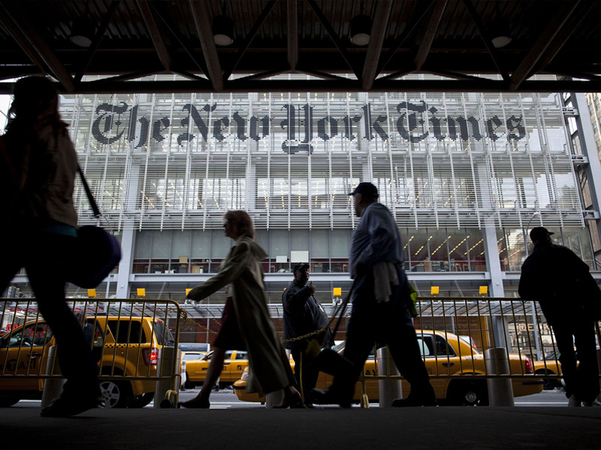
New York Times Co. warned that advertising bookings are slowing down as coronavirus makes companies more cautious, a message that sent publishing-industry stocks sliding on Monday.

Ad sales will drop by a rate in the mid-teens this quarter, with digital advertising down 10%, Chief Executive Officer Mark Thompson said. Subscriber growth has held steady, as has subscription revenue, which the company has leaned on more heavily in recent years as the print advertising market shrinks.

New York Times shares fell as much as 4.8% to $35.68. Other newspaper and magazine companies also declined: Gannett, the largest U.S. newspaper company, dropped as much as 9.5%, Tribune Publishing slipped 4%, and magazine publisher Meredith fell 6.5%. The S&P 500, by contrast, was up 2.4% as of 1:16 p.m. in New York.

The warning from The Times signals that businesses are taking steps to rein in spending because of anxiety over how the spread of the coronavirus will affect consumer behavior. As of last week, about 220 companies in the S&P 500 index had raised concerns about the virus affecting results, including Apple and Microsoft.

The coronavirus is likely to reduce ad buying, but not all media companies will be affected equally, according to Brian Wieser, global president of business intelligence at the advertising giant GroupM.

Wieser said supply-chain issues in China related to the virus “will disproportionately impact global media owners whose ad revenues depend on Chinese manufacturers.”

While the advertising impact from a potential recession is hard to anticipate, “it is highly likely that the impact will be negative, with growth in some countries softening, others going flat and others declining,” Wieser said Monday in a note to clients.

TV companies could do better, he said, because people will be staying home more, while outdoor advertising firms could fare worse because fewer people will see their billboards.

The upcoming Olympics are another question mark. Many advertisers create large ad campaigns around the Games, which are scheduled for July and August in Tokyo.

“It will be particularly critical for those marketers to establish potential backup plans in the event the Olympics do not occur,” Wieser said.

Amtrak names former Atlas Air executive Flynn as new CEO #ศาสตร์เกษตรดินปุ๋ย

#ศาสตร์เกษตรดินปุ๋ย : ขอบคุณแหล่งข้อมูล : หนังสือพิมพ์ The Nation

https://www.nationthailand.com/business/30383237?utm_source=category&utm_medium=internal_referral

Amtrak names former Atlas Air executive Flynn as new CEO

Mar 03. 2020
William Flynn will be Amtrak's next chief executive and president, starting April 15. MUST CREDIT: Amtrak

William Flynn will be Amtrak’s next chief executive and president, starting April 15. MUST CREDIT: Amtrak
By The Washington Post · Luz Lazo · NATIONAL, BUSINESS, TRANSPORTATION 

Amtrak has named a veteran transportation executive as its new president and chief executive, the company announced Monday.

William Flynn, a business leader with decades of experience in transportation and logistics, will take the top job at Amtrak on April 15. He will replace Richard Anderson, who has served as Amtrak’s top executive since July 2017.

Anderson will remain at the company as a senior adviser to Flynn through the end of 2020.

“Bill is the right executive to lead us into the future,” said Anthony Coscia, chairman of Amtrak’s board of directors, praising Flynn as the best leader to build upon Amtrak’s growth.

“Bill brings a very long track record of keeping companies strong and building upon their strength, and we think that’s what we are going to see now in someone who will have a longer time horizon as CEO of the company,” Coscia said.

Flynn, 66, comes to Amtrak with a robust résumé in transportation. He retired from Atlas Air Worldwide Holdings in January, after a 13-year tenure of serving the global airfreight and military and passenger charter markets as president, chief executive and board chairman. Before joining Atlas Air, Flynn held senior roles at CSX Transportation, Sea-Land Services and GeoLogistics.

Amtrak officials say they expect Flynn to stay at Amtrak for a longer than his two predecessors, and to carry on the progress made in recent years, including record-setting growth, financial milestones and service improvements.

Amtrak carried 32.5 million passengers last year, a record in the company’s 40-year history. The company also inched closer to breaking even in the last fiscal year, reporting that its operating revenue rose to $3.3 billion, up by 3.6% from the previous year. The revenue growth, Anderson and Coscia say, will lead Amtrak to positive earnings for the first time.

“Our balance sheet is essentially free of debt now. As we look at our operations, we’ve run better on-time operations than we have in quite some time and this year we’re projected to break even on an operating basis, which would make us the most efficient government-owned inner-city rail operator in the world,” Anderson said in an interview Monday.

Amtrak officials say the growth is the result of years of investments and operational changes, including more robust partnerships with states, which has led to an increase in short-distance service in some states, such as Virginia and California.

Under Anderson’s leadership Amtrak expanded the Acela brand with nonstop service between the District of Columbia and New York last year, and has made improvements such as improving WiFi and refurbishing train interiors. A new high-speed Acela fleet will be entering service in the Northeast Corridor next year.

While Amtrak says the changes have been effective in turning the company into a revenue-making entity, they haven’t been without criticism. Anderson has pushed airline-like practices to cut costs, including changing onboard kitchen service to prepackaged meals, introducing new cancellation fees and most recently making the lowest fare tickets nonrefundable.

“We believe that much of the turnaround work at Amtrak is either completed or well underway,” Anderson said. Anderson had made a commitment to lead the government-owned company for three years.

Still Amtrak is faced with major challenges, including billions needed to maintain and rebuild aging infrastructure in the Northeast, the country’s busiest rail corridor. It also has to convince the White House to make such investments. President Donald Trump’s proposed budget would cut Amtrak’s funding by more than half, and the administration has held onto funding for critical infrastructure projects in recent years.

Flynn, in a statement, praised Amtrak’s leadership and employees for the work done in “modernizing the company for the 21st Century” and said it would be “a privilege to join them in continuing this work and advancing something as important as Amtrak’s mission.

“Amtrak’s future is incredibly bright and I’m excited to join the team,” he said. “Amtrak service is vital to millions of Americans across the nation and by improving the customer experience, driving safety, and strengthening our partnership with states and other stakeholders, we can do much more for the American people.”

With chefs idle and vegetables rotting, China’s virus-hit restaurants say their goose is cooked #ศาสตร์เกษตรดินปุ๋ย

#ศาสตร์เกษตรดินปุ๋ย : ขอบคุณแหล่งข้อมูล : หนังสือพิมพ์ The Nation

https://www.nationthailand.com/business/30383236?utm_source=category&utm_medium=internal_referral

With chefs idle and vegetables rotting, China’s virus-hit restaurants say their goose is cooked

Mar 03. 2020
By The Washington Post · Gerry Shih · BUSINESS, WORLD, HEALTH, US-GLOBAL-MARKETS, ASIA-PACIFIC

BEIJING – In the remote subtropical hills of southwest China, 80 miles from the Laos border and 1,200 miles from the heart of the coronavirus outbreak in Wuhan, Yao Tonghua is facing a serious cash crunch.

Yao borrowed heavily two months ago to put down $10,000 for a five-story building she hoped would become a palace of Sichuan cooking. Then came the epidemic. Her seven cooks now lounge around empty tables meant for 100 diners. Vegetables rot in the yard. Fish bob inside tanks, neglected.

“I thought the disease was confined to Wuhan and would have little impact on a small and far-flung city like ours,” said Yao, who is contemplating laying everyone off and selling the restaurant to stem mounting losses but is worried she wouldn’t find a buyer. “This is getting more and more hopeless by the day.”

Several weeks into an epidemic that brought the country to a standstill, Chinese officials and economists are increasingly worried about the devastation wrought on a crucial part of the economy: restaurants and retailers, karaoke halls and family-owned factories – countless small and midsize businesses that collectively employ 80 percent of China’s workers and produce 68 percent of the country’s business revenue.

“Only 30% of small and medium businesses nationwide have resumed work,” Shu Chaohui, an official at the Ministry of Industry and Information Technology, told reporters Tuesday. “It’s a pretty severe situation.”

How severe is it? A nationwide survey led in February by Peking University found half the country’s small businesses will run out of cash within three months, and 14% might not survive past mid-March. Unlike large state conglomerates or multinational companies that could weather the storm, China’s small businesses say they simply do not have cash reserves to continue paying wages and rent.

And while manufacturing giants that mass-produce gadgets such as Apple iPhones can rely on the government to charter buses and trains to shuttle migrant workers back to their factories, nearly 40% of smaller businesses say they cannot get their workers back to Chinese cities, because of transportation bottlenecks and quarantine restrictions, according to the Peking University study.

The Chinese government has been trying to prop up these small, vulnerable businesses – but with uncertain consequences. Ministries and bank regulators have been pressuring banks to extend loans to cash-strapped businesses. They have asked lenders to push back repayment deadlines or look the other way when payments are late. They have also waived requirements for businesses such as paying for social security.

Beyond that, experts say, policy options are limited when swaths of the country are effectively under lockdown and a cloud of anxiety. People simply do not want to go out and spend.

“If people don’t eat at restaurants, that doesn’t just affect the restaurant but also the seafood supplier or farmer. If people don’t shop for clothes, that affects the silkmaker and weaver,” said Dai Ruochen, a Peking University economist who helps lead the survey group. “The economic impact isn’t contained, it sends ripples up level by level.”

Then there is the effect on employment. In recent weeks, companies across the country have posted online notices apologizing to customers for closing and to employees for mass layoffs.

In the once buzzing metropolis of Shenzhen, Cao Tianfei closed a roast-fish restaurant and paid a $36,000 penalty to break his rental contract in a mall that was shut down for two weeks in February. He laid off 15 workers.

“I felt like I abandoned my kids,” he said. “But I had no choice. Every morning I wake up, rent and salaries just get sucked out of me.”

Cao said the unpredictable nature of the epidemic had scrambled his planning. “I’ve never considered borrowing money from the bank, because I can’t see the end of the virus,” he said. “Even if it ended today, it would still be a long way for us to get out of this.”

To counter the uncertainty, China’s leaders have tried to project calm. National authorities have set a late-April target for the virus to be fully contained, and a central-bank official took to international media to tout how China has rolled out no less than 30 policy measures, many of which specifically target “small and micro” businesses, to ensure a quick rebound.

“The most likely scenario is a V-shaped curve, which means a decline in economic activities followed by a rapid recovery, with the total economic impact relatively contained,” People’s Bank of China deputy governor Chen Yulu predicted in a Financial Times op-ed.

But there are risks to China’s desperate attempt to restart its economy, and many businesses will inevitably die off, economists predict.

Chinese authorities’ hands are tied when it comes to asking banks to forgive late payments or issue even more risky loans to bail out faltering businesses, said Andrew Collier, a managing director at Orient Capital Research who frequently speaks to Chinese bank executives.

The coronavirus hit at a time when many Chinese banks were already wobbling with bad loans and households and businesses were burdened by massive levels of debt.

China’s leaders “are trying to straddle between having an economic meltdown and crashing the banks,” Collier said. He added, “They will rather let some businesses go belly up than watch banks collapse.”

– – –

Across the country, a few small businesses are hoping to survive by creative means rather than government bailout.

Owspace, a chain of bookstores and cultural spaces that is popular with China’s urban literary and art crowd, is asking book lovers to make online donations of between $7 and $1,100 as revenue plunges 80 percent. Expatriates in Beijing recently launched a GoFundMe crowdfunding campaign to raise $330,000 to save Comptoirs de France, a long-established bakery chain with 16 locations.

Holed up in an apartment in Wuhan, Zuo Weiwei, an entrepreneur who has been selling cosmetics and nutritional supplements online, said the congestion and breakdown in China’s shipping industry forced her to end her business.

“Dozens of customers who had preordered products from me asked for refunds,” she said. “I simply couldn’t take it anymore.”

Hundreds of boxes of beauty masks, dietary supplements and silver-coated Buddhist amulets lay piling up in her house. Under these circumstances, Zuo said, she is drastically downsizing her ambitions.

“I’ve given up hopes of selling stuff and making a fortune,” she said. “My wish for this year is for me and my family to stay healthy and not get infected.”