Major airlines, U.S. officials clash over virus-related passenger tracking #ศาสตร์เกษตรดินปุ๋ย

#ศาสตร์เกษตรดินปุ๋ย : ขอบคุณแหล่งข้อมูล : หนังสือพิมพ์ The Nation

https://www.nationthailand.com/business/30383220?utm_source=category&utm_medium=internal_referral

Major airlines, U.S. officials clash over virus-related passenger tracking
Mar 03. 2020
By The Washington Post · Jeff Stein, Lena H. Sun, Lori Aratani · NATIONAL, BUSINESS, TRANSPORTATION

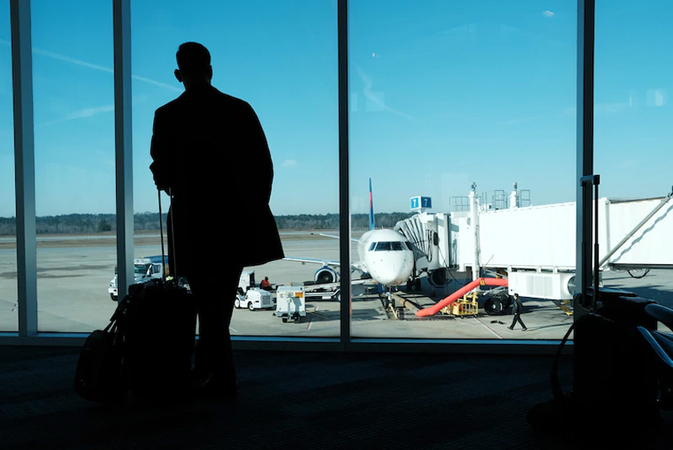
WASHINGTON – U.S. officials are pressuring airline executives to turn over the email addresses and phone numbers of international passengers as the Trump administration tries to track who may have been exposed to the coronavirus, according to five people briefed on the situation.

Government officials have said they need the data so they can warn local authorities about who might have been exposed to the virus. But the airline industry has balked, saying the federal government should instead share information it already collects between different agencies and come up with a system for obtaining the rest.

The impasse has dragged on for weeks despite concerns about the growing number of people with coronavirus in the United States. It has become a top issue of the Trump administration’s virus task force and U.S. lawmakers. Airline executives are slated to meet Wednesday with Vice President Mike Pence.

The airline industry has pushed Congress to intervene, with some lobbyists asking lawmakers to insert a provision in an emergency spending package that would effectively absolve the airlines of having to track some of the data.

The failure to resolve the issue could complicate the government’s efforts to contain the outbreak’s spread. United Airlines, Delta Air Lines, and American Airlines deferred questions to Airlines for America, a lobbying group that represents the airline industry. Airlines for America said collecting the data shouldn’t be the airlines’ job since the government already has much of it in existing databases. They also said it would take up to a year for the airlines to set up the tracking system.

Even though both sides have been fighting over the data for weeks, the battle has taken on new urgency in recent days.

The Centers for Disease Control and Prevention is asking airlines to collect and – when ordered – submit data from passengers on select international flights within 24 hours. That data might include an email, a phone number and an address in the U.S., to the agency. In the event a passenger on a flight develops COVID-19, that information would enable health officials to reach others who may have been exposed, a system known as “contact tracing.” On Feb. 7, the Department of Health and Human Services issued an interim rule requiring certain passenger data to be shared with federal officials.

“Contact tracing is effective at reducing cases of communicable disease at the early stages of a potential outbreak if the contacts are notified as soon after initial exposure as possible,” the CDC said in announcing its Feb. 7 policy. “If an efficient contact system is not in place when the first ill passengers arrive, the benefits of the contact tracing are greatly diminished.”

The CDC has growing concerns about getting the information it needs to for its contact tracing program, saying that under current regulations it can take nearly two weeks to get the traveler data. Even then, some of the information is incomplete.

The passenger data issue has raised alarms at meetings of the U.S. coronavirus task force, according to an official at the U.S. Department of Health and Human Services, who was granted anonymity to speak candidly about internal meetings. Ken Cuccinelli, acting deputy secretary of the Department of Homeland Security, also flagged the issue during internal administration meetings on Saturday, according to another official familiar with the discussions.

Officials say there is greater urgency given the Trump administration’s new travel restrictions affecting Iran, Italy and South Korea. With cases emerging in recent days in Washington state, Delaware, Rhode Island, Florida and New York, the federal government and airline industry face enormous pressure to put in place a tracking system amid fears of the coronavirus’ spread.

“When the goal is containment, timing is of the essence,” said Josh Michaud, associate director for global health policy at the Kaiser Family Foundation. “The earlier you are able to find these people, get them into testing and if needed quarantine, the more likely you are to prevent future spreading.”

In the three weeks since this HHS’s Feb. 7 rule was put into effect, airlines have turned over some information but it has been “incomplete,” according to the HHS official. U.S. officials want to know who was traveling on planes that were later determined to be transporting a passenger who had the coronavirus. For example, if a passenger on a flight from Italy two weeks ago tested positive for the virus last week, CDC officials want to track down fellow passengers on that flight to monitor their health and, if necessary, determine who else might have been exposed.

Right now, when a plane from China lands in the United States, U.S. citizens who are not sick and not showing symptoms are given instructions at the airport to monitor themselves for respiratory symptoms, such as fever, cough or difficulty breathing. After they reach their final destination, they are supposed to stay home and monitor their health for 14 days from the time they left China. If they develop symptoms they are supposed to contact their health-care providers and their local public health authorities.

The CDC wants passenger data from the airlines so they can pass it on to states and counties, allowing those front-line authorities to “call in and check in on” those individuals to make sure they are not sick, the official said. CDC officials regard this basic information as critical to their efforts to control the spread of the virus.

The airlines have been warning the government at least since the beginning of February that they lack the capacity to quickly set up the tracking system, said Nicholas E. Calio, CEO of Airlines for America. Creating the system could take a year or longer, Calio said, and airlines often do not have the necessary passenger information available to them if flights were booked with a third party.

Most of the airlines’ current systems would also have to be reprogrammed to collect additional data, while the airlines contend they have no way of verifying the information they receive is accurate.

“We have some of the information, but we don’t have all of it,” said Sharon Pinkerton, senior vice president for legislative and regulatory policy at Airlines for America.

In a letter to HHS, Calio wrote that roughly 74 percent of all passengers list a phone number and 56 percent list an email address in the “passenger name record,” a type of government database that tracks travelers. Calio also said that the airline industry was willing to work with the federal government to address any gaps.

Airline companies have asked congressional lawmakers to require HHS to create a portal that sends passenger information to the CDC, according to a memo sent by industry lobbyists to lawmakers and described to The Washington Post.

Such a legislative measure would effectively absolve the airlines from having to track and send the information to the CDC, but is unlikely to be approved when Congress takes up the broader emergency package this week, according to two congressional aides speaking on the condition of anonymity to describe fast-moving negotiations. Calio said the airlines are willing to pay for the costs to develop an online database in which travelers directly provide their information to the CDC.

Lawmakers are hoping to resolve the impasse quickly. In addition to the meeting between airline executives and Pence, airline lobbyists are also expected to meet this week with U.S. lawmakers, including Sen. Ted Cruz, R-Texas, who chairs the Subcommittee on Aviation and Space, as well as members of the Senate Committee on Commerce, Science, and Transportation.

Target adds a slice of Brooklyn with Boar’s Head meats, cheeses #ศาสตร์เกษตรดินปุ๋ย

#ศาสตร์เกษตรดินปุ๋ย : ขอบคุณแหล่งข้อมูล : หนังสือพิมพ์ The Nation

https://www.nationthailand.com/business/30383206?utm_source=category&utm_medium=internal_referral

Target adds a slice of Brooklyn with Boar’s Head meats, cheeses

Mar 02. 2020
Empty shopping carts at a Target store in the Queens borough of New York on Nov. 28, 2019. MUST CREDIT: Bloomberg photo by Bess Adler.

Empty shopping carts at a Target store in the Queens borough of New York on Nov. 28, 2019. MUST CREDIT: Bloomberg photo by Bess Adler.
By Syndication Washington Post, Bloomberg · Matthew Boyle · BUSINESS, RETAIL 

Target Corp. wants a bigger cut of the nation’s grocery budget. To get, it the retailer is adding Boar’s Head meats and cheeses to its aisles.

Target is bringing between 50 and 200 items from Brooklyn-born Boar’s Head to as many as 200 of its stores this year, ranging from maple-glazed turkey breast to sweet-chili garlic hummus and provolone cheese slices. The products, which include grab-and-go sandwiches and salads, have been available in a half-dozen stores in New York for the past few months.

The launch — years in the making — represents the latest attempt by Target to forge deeper ties with well-known consumer brands, following its moves last year to expand its selection of jeans from Levi Strauss & Co. and open mini-stores tied to Walt Disney Co. merchandise. It’s also the next step in Target’s push to bulk up its grocery business, which accounts for 20% of its revenue but has never been a signature category for the cheap-chic discounter like apparel or home decor.

“They’re an incredible brand with a long history,” said Stephanie Lundquist, Target’s executive vice president and president of food and beverage. “We’ve been in conversations with them for some time.”

Established in 1905 by Frank Brunckhorst and now based in Sarasota, Florida, Boar’s Head has long been a staple of New York City’s delis and grocery stores and is now found in supermarkets coast to coast. Target, though, represents its first big-box retail partner. And while Boar’s Head is known for its pre-sliced meats, prepared sandwiches, wraps and salads will account for half of the offerings at Target.

That’s smart, as sales of refrigerated lunchmeats in the U.S. are flat, according to data trackers Nielsen Co. and Packaged Facts. Consumers perceive those meats as overly processed and less healthy, Packaged Facts analyst Jennifer Mapes-Christ said. Boar’s Head products, she said, are viewed as better for you, particularly its Simplicity line — launched in 2016 — which contains no antibiotics, nitrates or preservatives.

The partnership doesn’t include any exclusive products, and it’s not yet known if the brand will expand into all of Target’s 1,800 U.S. locations, which include more than 100 smaller stores in urban areas and college campuses with a bigger range of grab-and-go items. Target’s comparable sales of food and beverages have increased for nine straight quarters, and its new Good & Gather private grocery brand will expand from 600 to 2,000 items this year.

Lundquist, who ran Target’s human-resources division before taking the reins of the grocery group last year, will likely share more details of her plans at the company’s investor day on Tuesday.

Nokia’s new chairman picks close ally to put it back in 5G Game #ศาสตร์เกษตรดินปุ๋ย

#ศาสตร์เกษตรดินปุ๋ย : ขอบคุณแหล่งข้อมูล : หนังสือพิมพ์ The Nation

https://www.nationthailand.com/business/30383204?utm_source=category&utm_medium=internal_referral

Nokia’s new chairman picks close ally to put it back in 5G Game

Mar 02. 2020
Pekka Lundmark, incoming chief executive officer Nokia, during a news conference at the Nokia Executive Experience Center in Espoo, Finland, on March 2, 2020. MUST CREDIT: Bloomberg photo by Roni Rekomaa.

Pekka Lundmark, incoming chief executive officer Nokia, during a news conference at the Nokia Executive Experience Center in Espoo, Finland, on March 2, 2020. MUST CREDIT: Bloomberg photo by Roni Rekomaa.
By Syndication Washington Post, Bloomberg · Niclas Rolander · BUSINESS, WORLD, US-GLOBAL-MARKETS, EUROPE

Nokia’s next chairman, Sari Baldauf, is getting a headstart by choosing a combative dealmaker to put the network equipment maker back in the race for 5G networks.

Fortum CEO Pekka Lundmark, who will replace Rajeev Suri in September, is a long-term Baldauf ally who is riding high after winning a long, politically-sensitive battle for control of German energy company Uniper.

Lundmark will need more of that staying power to dig Nokia out of the worst crisis since the collapse of its wireless handset business a decade ago. The Finnish company is falling behind Chinese rival Huawei Technologies Co. in the battle to dominate 5G rollouts and its shares have lost a third of their value in a year.

Baldauf is following the playbook of Nokia’s Swedish arch-rival Ericsson, which also appointed a corporate veteran from its home country to take a fresh look at a faltering business. The move has paid off after CEO Borje Ekholm simplified Ericsson by selling some units, exiting unprofitable contracts and investing in the company’s core products.

Lundmark and Ekholm are the same age, 57, and are both trained engineers. Ekholm has been rewarded with a 44% share price gain since he started the job in January 2017.

“We expect Nokia to introduce large structural reforms and austerity measures under its new management in order to lay the foundations for a healthy long-term business,” Mikael Rautanen, an analyst at Finnish brokerage Inderes, wrote in a note.

Nokia shares rose as much as 4.9% on Monday before falling back to trade up 0.2% as of 1:49 p.m. in Helsinki.

Huawei has sucked business opportunities away from Nokia and Ericsson and concerns that the Beijing government could use the Chinese vendor’s equipment for spying have yet to bring a dividend for its two rivals.

Under Suri, Nokia went all-in on a strategy to broaden its portfolio so it could provide a full suite of products and services for operators who are building new networks. The approach is being sorely tested during the first wave of 5G rollouts, where the focus is on replacing base stations and radio access networks.

After a shock profit warning last year, Nokia is now exploring options ranging from asset sales to mergers, people familiar with the matter said last week. Chairman Risto Siilasmaa said Monday that no strategic actions are underway and that Lundmark will get a chance to make any adjustments he sees fit after he starts work in September.

Lundmark got his first training in business leadership at Nokia during the 1990s, when it transformed itself from an unwieldy conglomerate into a global leader in mobile phones and network equipment.

Baldauf, who succeeds Siilasmaa as chairman next month, was Lundmark’s boss through much of that period, and later recruited him to Fortum from Konecranes Oyj.

“I wasn’t really planning on leaving, but then Sari Baldauf called,” Lundmark told Finnish public broadcaster Yle in December, explaining his decision to leave the crane maker. “After ten years it may be good for a company, as well as the CEO, to have someone else take over and bring in fresh ideas.”

Lundmark’s Uniper victory cost the German company’s CEO and chief financial officer their jobs. While he insisted that he’d wanted a friendly partnership with Uniper, the executive teams fell out in a spectacular fashion in one of Europe’s most acrimonious energy takeovers in years.

The wisdom of the move on Uniper is still to be seen: The deal plays to Fortum’s strength in generating power from hydro and nuclear plants in Northern Europe, while throwing it into the bear pit that is the German energy market and the country’s politically-charged exit from coal.

THAI losses Bt12 billion in 2019 #ศาสตร์เกษตรดินปุ๋ย

#ศาสตร์เกษตรดินปุ๋ย : ขอบคุณแหล่งข้อมูล : หนังสือพิมพ์ The Nation

https://www.nationthailand.com/business/30383163?utm_source=category&utm_medium=internal_referral

THAI losses Bt12 billion in 2019

Mar 02. 2020
By THE NATION

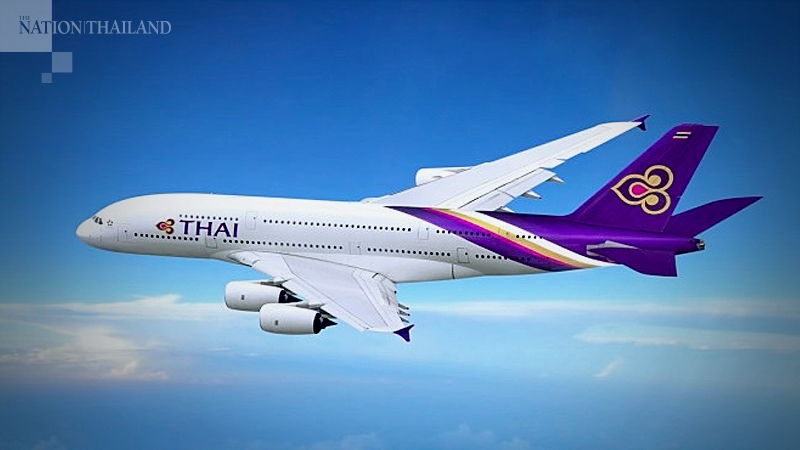
Thai Airways International (THAI) and its affiliates witnessed a net loss of Bt12.017 billion in 2019, Bt448 million – or 3.9 per cent – higher than the previous year, the airline announced today (March 2). This translates to Bt5.52 loss per share, Bt0.19 higher than the previous year, or 3.6 per cent.

Vice president of finance and accounting Nattaphong Smit-Ampaisal said that in 2019 the company was affected by several negative factors, including a slowdown in global economic expansion, the US-China trade war, natural disasters, the strengthening of the baht – which was the highest in six years – as well as a price war with other airlines.

“Furthermore, the company and its affiliates had to set aside Bt2.689 billion as a reserve fund for employees who wished to retire early,” he said, referring to the State Enterprise Labour Committee’s announcement that requires state enterprises to pay early retirement packages equal to 400 days of wages to employees who had been working more than 20 years, from the previous requirement of 300 days. The regulation came into effect at the start of the third quarter of 2019.

According to Nattaphong, in 2019 THAI and its affiliates earned Bt184.046 billion in revenue, Bt15.454 billion lower than the previous year, or 7.7 per cent.

“The revenue from passenger and cargo transport decreased by 8.6 per cent, or Bt15.767 billion, while the total expenditure stood at Bt196.470 billion, Bt12.088 billion, or 5.8 per cent, lower than last year.”

Nattaphong attributed the drop in expenditure to decreasing fuel cost by 9 per cent, or Bt5.421 billion.

THAI and its affiliates have 103 planes in operation, with an aircraft utilisation rate of 11.9 hours per day, lower than the previous year’s 12 hours per day. The reported cabin occupancy factor in 2019 was 79.19 per cent, higher than the previous year at 77.6 per cent, with 24.51 million passengers, an increase of 0.8 per cent from the previous year.

As of December 31, 2019, THAI and its affiliates possessed total assets of Bt256.665 billion, Bt12.056 billion lower than in 2018, or 4.5 per cent. Total debt in 2019 stood at Bt244.899 billion, Bt3.366 billion lower than the previous year, or 1.4 per cent. Shareholders’ equity was Bt11.766 billion – Bt8.69 billion, or 42.5 per cent, lower than the previous year.

Related story: Temporary salary cut for THAI boss, top execs

TikTok marketers chase billions of views in uncharted terrain #ศาสตร์เกษตรดินปุ๋ย

#ศาสตร์เกษตรดินปุ๋ย : ขอบคุณแหล่งข้อมูล : หนังสือพิมพ์ The Nation

https://www.nationthailand.com/business/30383133?utm_source=category&utm_medium=internal_referral

TikTok marketers chase billions of views in uncharted terrain

Mar 01. 2020
By Bloomberg · Sarah Frier, Kurt Wagner · BUSINESS, TECHNOLOGY, US-GLOBAL-MARKETS

In an October post on TikTok, digital magician and video star Zach King walks up to the counter at Chipotle to receive a burrito bowl with chips. After he pays, he jumps and his clothes change in an instant into astronaut gear. Soon, everything in the store is floating in apparent zero gravity.

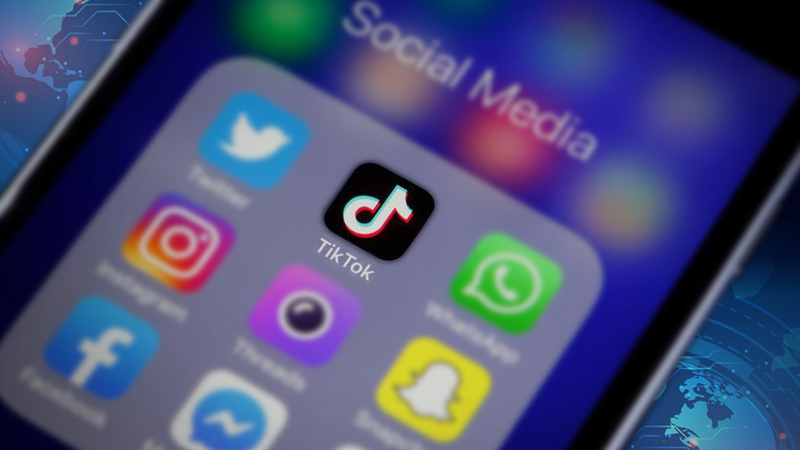
Another star, Brittany Broski — known as “kombucha girl” — posted on the video-sharing app around the same time, biting into a Chipotle burrito and then suddenly sporting a mad-scientist wig. The famous pomeranian, @jiffpom, turns into a vampire after touching Chipotle. All of these TikTok videos were tagged #boorito, for a U.S. advertising campaign promoting $4 burritos on Halloween. It’s the most viral campaign Chipotle has ever done, based on one measure: the hashtag has 3.9 billion views on TikTok.

That’s a surprising metric given that TikTok has been downloaded only about 145 million times in the U.S, according to Sensor Tower. The viral social media app, where people post funny videos set to music, won’t disclose what counts as a “view,” so it doesn’t necessarily mean 3.9 billion people saw a #boorito post, or that they were in the market to purchase a burrito. Still, numbers that high are gratifying for marketing executives justifying their experiments on a relatively new social platform, without much other data to go on and few ways to target their messages to a tailored audience.

“The numbers are massive,” said Tressie Lieberman, a vice president of digital marketing at Chipotle Mexican Grill Inc. It’s not the restaurant chain’s only campaign that has crossed the 1 billion threshold on TikTok. “I don’t know that any brand has ever gotten that on YouTube,” she added. The company said Boorito sales were 15% higher than a year earlier.

TikTok, owned by Chinese internet giant ByteDance Inc., built its U.S. presence off the 2017 purchase of a similar app, Musical.ly, which was popular with young teens. After an advertising blitz on Facebook and Snapchat, TikTok soared in the charts to become a sensation among a younger audience for its feel-good content. Now, marketers are starting to experiment. They mention it alongside Snapchat as a way to reach the elusive teen demographic, to build their preference for brands just as they’re achieving independent spending power. According to influencer analysis firm Captiv8, 69% of TikTok users are age 14 to 26.

Still, venturing into TikTok ads can be complicated, and the return-on-investment unproven. One can’t simply run the same ad created for Facebook or YouTube. The format is skits, set to music, that work on a phone held vertically and repeat over and over. Brands can run a campaign to promote a hashtag, like #boorito, which can cost around $150,000; they can pay to take over the homescreen of the app, which can cost $50,000 a day for a guaranteed 5 million views; or can even run a campaign with the ability to buy a product within the app, according to case studies reviewed by Captiv8. TikTok said prices fluctuate based on an advertiser’s goals. Any effort requires careful coordination with both the TikTok sales team and outside “creators” — stars such as King and Broski, the TikTok equivalent of Instagram influencers, who are paid separately.

If a brand is spending enough, they can get an introduction to the creators through the company. Other times advertisers have to find connections on their own or through an agency. Since the success of #boorito, Chipotle pays TikTok stars special attention, sometimes catering food to a Los Angeles mansion known as the Hype House, which is full of skit-makers collaborating on projects.

Any time a new social media platform starts reaching a mass audience, the people who were there first reap the biggest rewards. Charli D’Amelio, whom the New York Times recently called the “reigning queen” of TikTok, started her career there in the summer of 2019 and now has 30.6 million followers. Other previously unknown teens have also seen a dramatic rise.

The same is becoming true for advertisers. Brands can pay to promote a hashtag challenge for more people to see it, in the hopes that TikTok’s users will create videos using the hashtag on their own, thereby increasing its reach. The National Football League saw more than 1 billion views for its #WeReady hashtag ahead of the Super Bowl in early February. Makeup company MAC saw 2.6 billion views for the tag #YouOwnIt.

That enormous reach is possible, in part, because the TikTok sensation in the U.S. is so new that it doesn’t have many advertisers — which means less competition for eyeballs and fewer constraints by the platform to limit or throttle an ad’s visibility.

“This type of virality just does not happen on Instagram or Facebook or YouTube,” said Krishna Subramanian, cofounder of Captiv8. “Getting to those billions of views is something that’s happening frequently. It’s something we haven’t seen on any other platform for quite some time.” The amount the creators make is similar to what Instagram influencers make on that app’s disappearing stories product. The biggest stars — such as Loren Gray, with 39.6 million followers — can garner $175,000 for a single sponsored TikTok video, Subramanian said.

TikTok is new enough that most advertisers are still learning what works on the service. Some have had early success. ELF Cosmetics created an original song for people to use in the background of their own videos, and there are 1.7 million videos on TikTok that use the song. It was so popular that it was even trending on Spotify. The associated hashtag, #eyeslipsface, has 4.5 billion views.

Anish Dalal, chief executive of digital-marketing company Sapphire Apps Media, has developed his own playbook for TikTok. In some cases, he’ll scour the app for new, popular music that users are uploading and use that same audio clip in his own ads. One current option is the ability to target an ad to TikTok users looking for a specific hashtag. Dalal creates a new hashtag for a brand’s campaign, and pays influencers to create dozens of videos using the hashtag. Once that hashtag is big enough to lure in regular users, he starts running ads targeting the hashtag.

The clients we work with “were excited to try something new,” Dalal said. “What we tell brands is, this is essentially Instagram in the early days.”

The first-mover advantage will be short-lived. TikTok is already testing a self-service advertising tool, which will make it possible for any brand to buy ads. Snapchat parent Snap Inc. went through a similar transition in 2017, moving from selling expensive ads with a personal touch to a model where anyone could buy them online. The prices for its ads dropped, but eventually the company started building more advertiser relationships and a more stable business.

To be successful with that strategy, though, TikTok will have to build more targeting options and controls for advertisers, according to Meghan Myszkowski, head of North American social media advertising at the ad agency Essence. Showing an ad to everyone can translate to a larger viewership, but isn’t necessarily efficient. Brands may waste money showing ads to an irrelevant audience, or run the risk of their ad appearing directly before or after a video that it wouldn’t want to be associated with. TikTok lets its advertisers target using basic information like a user’s location and gender; it’s less granular than what is offered by TikTok’s larger rivals, Instagram and YouTube, where ads can be targeted to specific interests and purchasing behavior.

But in order to improve TikTok’s targeting, the app will have to gather more detailed information about its users’ behavior — something that may prove tricky, as the U.S. government scrutinizes the app’s Chinese ownership. American lawmakers have warned the app could be a security threat; TikTok has repeatedly said it’s not influenced by the Chinese government and rejects the idea that U.S. user data is vulnerable. The Committee on Foreign Investment in the U.S., better known as CFIUS, is reviewing ByteDance’s purchase of the business that became TikTok, Bloomberg News has reported.

Essence ran some TikTok ads in the first half of 2019, but Myszkowski said the agency has pulled back until TikTok builds more advertiser controls.

“With risk can come great return,” Myszkowski added. “If you’re willing to take the risk.”

Spike in coronavirus cases disrupts Samsung, LG, Hyundai plants #ศาสตร์เกษตรดินปุ๋ย

#ศาสตร์เกษตรดินปุ๋ย : ขอบคุณแหล่งข้อมูล : หนังสือพิมพ์ The Nation

https://www.nationthailand.com/business/30383113?utm_source=category&utm_medium=internal_referral

Spike in coronavirus cases disrupts Samsung, LG, Hyundai plants

Mar 01. 2020
Samsung Electronics’ plant in Gumi (Samsung Electronics)

Samsung Electronics’ plant in Gumi (Samsung Electronics)
By The Korea Herald/ANN

The novel coronavirus is disrupting the plants of Korea’s major conglomerates, as new confirmed cases reported one after another involve their employees.

On Sunday, Samsung Electronics confirmed its third case of COVID-19 infection, of a worker at its smartphone plant in Gumi, North Gyeongsang Province.

The Gumi site produces next-generation smartphones such as the Galaxy Z Flip and Galaxy Fold. The assembly line where the employee worked is temporarily closed and expected to be fully functional early next week.

On Feb. 22, a facility in Gumi was shut down for about three days as an employee of the smartphone division was confirmed with COVID-19. Six days later, one more employee of the firm’s network business division at the Gumi plant was also confirmed.

LG Display shut down its module plant Saturday for three days after an employee of a bank on the campus of the Gumi plant was confirmed to be infected. The plant assembles small and medium-sized liquid crystal display and organic light-emitting diode panels and components.

The Gumi industrial complex, home to leading Korean companies, including Samsung and LG, is nearby Daegu, in an area that has more than 70 percent of the confirmed COVID-19 cases in Korea.

Hyundai Motor’s Ulsan plant also found a confirmed case of COVID-19 infection Friday. The automaker halted operations of the facility and identified the workplace, route and points of contact of the confirmed patient. The plant produces large sport utility vehicles such as the Palisade and Genesis GV80.

Korean carmakers have already been slowing down their factory lines and suspending production lines for a few days due to the disruption of parts supplies from China last month.

Last week, Lotte Foods, SK Telecom and LS Group closed their respective headquarters in Seoul after employees there were found to have been infected.

Alongside businesses here, Korean companies are having difficulties in doing business on the global market, as foreign countries have been restricting Koreans from traveling to their countries. As of Sunday, the number of countries that limit Korean entry increased to 71 countries, including Vietnam, where more than 3,000 Korean firms have a business presence.

Global companies are also restricting their employees from traveling to Korea in response to the spread of the new COVID-19 infection. Google has restricted its employees from traveling to Korea and Japan. Uber has limited its employees from traveling to Korea, Iran, Italy and China. Amazon went further, blocking its employees from moving even within the US.

By Shin Ji-hye (shinjh@heraldcorp.com)

Kasikornbank sells stake in Ajinomoto for Bt5.9 billion #ศาสตร์เกษตรดินปุ๋ย

#ศาสตร์เกษตรดินปุ๋ย : ขอบคุณแหล่งข้อมูล : หนังสือพิมพ์ The Nation

https://www.nationthailand.com/business/30383093?utm_source=category&utm_medium=internal_referral

Kasikornbank sells stake in Ajinomoto for Bt5.9 billion

Feb 29. 2020
By THE NATION

Kasikornbank has sold its entire stake in Ajinomoto Co (Thailand), or AJT, to the latter’s parent company, Ajinomoto Co Inc (Ajico), according to its filing to the Stock Exchange of Thailand on Friday (February 28).

The total transaction value is Bt5.972 billion.

The bank entered into the transaction with Ajico on Friday. The shares represent 5 per cent of AJT’s total outstanding shares.

The shares are expected to be transferred within March.

Nakhonchai Air targets secondary cities to improve the lot of locals #ศาสตร์เกษตรดินปุ๋ย

#ศาสตร์เกษตรดินปุ๋ย : ขอบคุณแหล่งข้อมูล : หนังสือพิมพ์ The Nation

https://www.nationthailand.com/business/30383075?utm_source=category&utm_medium=internal_referral

Nakhonchai Air targets secondary cities to improve the lot of locals

Feb 29. 2020
By THE NATION

Nakhonchai Air, operator of domestic coaches and courier service, generated revenue of Bt1.79 billion in 2019 while targeting secondary tourist cities.

It plans to operate on a new route — Bangkok-Lamphun — from this April, Kreawan Wongrakmit, president of Nakhonchai Air Co Ltd, said.

The company generated income in 2019 of Bt1.795 billion with average passengers for the year at 4.1 million people, roughly the same as in the previous year.

“Last year Nakhonchai Air opened new routes from Bangkok to Sanom district in Surin province and to Paksaeng district in Ubon Ratchathani province,” she said. “Currently we have 41 routes nationwide.”

Kreawan added that the company was planning to open a new route to Lamphun this April. “We will add more trips on the Bangkok-Surin route, increasing from 10 trips a day to 14, and on the Bangkok-Buri Ram route from 11 trips a day to 16 by June, as well as open a new branch office in Ayutthaya province next month, which will help facilitate customers who wish to travel to Chiang Rai, Chiang Mai, Nan and Uttaradit.”

In the long-term, Kreawan said the company will expand routes to connect downtown areas of main tourist provinces to secondary tourist provinces to enlarge the tourism network and disperse capital and investment to rural communities. “This business plan is in compliance with the government’s policy to stimulate the economy of local communities and increase employment for local people to reduce overcrowding in big cities,” she added.

At present Nakhonchai Air have a fleet of 56 coaches comprising 12 NCA First Class and 34 NCA Gold Class. “By 2021, we expect to add 45 coaches with a budget of Bt315 million,” said Kreawan.

Coronavirus pandemic: Split trading desks, hourly Clorox may follow banks’ travel bans #ศาสตร์เกษตรดินปุ๋ย

#ศาสตร์เกษตรดินปุ๋ย : ขอบคุณแหล่งข้อมูล : หนังสือพิมพ์ The Nation

https://www.nationthailand.com/business/30383060?utm_source=category&utm_medium=internal_referral

Coronavirus pandemic: Split trading desks, hourly Clorox may follow banks’ travel bans

Feb 29. 2020
File Photo

File Photo
By Syndication Washington Post, Bloomberg · Jenny Surane · BUSINESS, US-GLOBAL-MARKETS 

Big banks around the world are rushing to ensure they can keep Wall Street humming through a coronavirus pandemic. The travel curbs have begun — the next steps will upend daily life on trading desks.

Firms are prepping plans that include: Activating backup sites and splitting up teams, so if an outbreak hits one office, their colleagues can continue elsewhere. Sanitizing every surface hourly — from traders’ desks and phones to the elevator buttons. Shutting company gyms and maybe cafeterias. Designating rooms to send sickened staff until an ambulance arrives.

It’s a snapshot of what life might look like on Wall Street and across an industry that can’t take a break as global markets swoon over the prospect the virus will run rampant. The plans were described by Regina Phelps, a four-decade veteran of continuity planning and the founder of Emergency Management & Safety Solutions.

She said she’s urging clients — which have included the World Bank, Wall Street custody giant Northern Trust Corp. and the three largest U.S. credit-card networks — to hone their plans now for a situation that could develop quickly.

“If you get the first case in your office, you need to know exactly what you’re going to do,” Phelps said. “The health department will shut you down for 14 days. Then what?”

JPMorgan Chase, the world’s biggest trading house, restricted all non-essential travel globally this week. It told employees in a memo to start testing their ability to work remotely. Other major banks have curbed travel to affected regions.

Phelps and other consultants predict Wall Street will place personnel further apart along notoriously crowded desks. Some can work from home, but that isn’t possible for everyone. Many roles rely on access to closely guarded internal systems and third-party trading venues. For banks, it’s also easier to monitor traders for compliance and risk management when they’re in the office.

Some financial firms don’t have companywide systems for tracking absences in real time. Instead, employees who aren’t feeling well notify their managers, who make adjustments on the team. That must change, Phelps said, so that senior executives can detect potential outbreaks faster.

In the U.S., the Federal Financial Institutions Examination Council has been requiring banks to create plans for a potential pandemic for more than a decade. That includes programs to prevent an outbreak from spreading inside a firm, but also steps to continue communicating with customers.

But big banks have been publicly tight-lipped about what specific steps they may take to bolster their domestic operations. Privately, some senior executives acknowledge that they’re still trying to decide. So life on Wall Street still looks relatively normal, even as U.S. authorities shift their tone to say the question is no longer if, but when, the virus may arrive.

Still, measures prescribed by consultants can be seen abroad. As outbreaks erupted in South Korea, banks including UBS Group AG and Citigroup Inc. began splitting workers among different locations to ensure business can continue. Some locations in Europe may follow suit as the virus spreads there.

“As you can imagine, it’s a bit tense,” said Zoeb Sachee, head of European government bond trading at Citigroup.

Many U.S. banks have built backup sites so they can maintain operations for clients during storms or other natural disasters, said Michael Faber, global head of business continuity management at interdealer broker TP ICAP Plc. But those facilities can also help firms weather a pandemic.

“If you’re trading a product and you’ve got 10 people on the desk, why not move three to five of those brokers or traders to that recovery site?” Faber said. “If somebody does come into the office and potentially infects or ensures that the whole desk needs to go into quarantine, the service for the client can still continue.”

For now, traders in New York and London are concentrating on keeping up with the wild volatility of markets. By the close of trading on Thursday, the S&P 500 had its fastest correction on record.

“Busy!” said Peter Chatwell, head of European rates strategy at Mizuho International, referring to the bank’s trading floor. “Full of client activity!”

United, other airlines cut more flights to Asia as concerns about coronavirus grow #ศาสตร์เกษตรดินปุ๋ย

#ศาสตร์เกษตรดินปุ๋ย : ขอบคุณแหล่งข้อมูล : หนังสือพิมพ์ The Nation

https://www.nationthailand.com/business/30383058?utm_source=category&utm_medium=internal_referral

United, other airlines cut more flights to Asia as concerns about coronavirus grow

Feb 29. 2020
By The Washington Post · Lori Aratani · NATIONAL, BUSINESS, WORLD, HEALTH, TRANSPORTATION 
Airlines are reducing more service and offering fee waivers to travelers headed to Asia and other parts of the world where coronavirus infections are growing.

On Friday, United Airlines announced it would cancel some flights to Japan, Singapore and Seoul. The airline also said it would extend cancellations of flights between the U.S. and China through the end of April. American and Delta have already suspended China service though the end of April.

“We will stay in close contact with the CDC and other health organizations as we continue to evaluate our schedule,” United said in a statement.

The announcement came as the World Health Organization raised it assessment of the coronavirus to “very high,” citing the risk of spread and impact.

Delta Air Lines this week also suspended service between its hub at Minneapolis/St. Paul and South Korea beginning Feb. 29 through the end of April. It is reducing flights to and from South Korea from Atlanta, Detroit and Seattle through April 30 and is delaying the launch of service between Incheon and Manila. Those flights, set to launch March 29, will now begin on May 1, the airline said.

Earlier this week, Hawaiian Airlines suspended nonstop service between Honolulu’s Daniel K. Inouye International and Incheon International airports starting March 2 through the end of April. The airline is also offering to waive change fees for travels between Honolulu and South Korea through May 1.

United, American and Delta also have extended travel waivers for flights to and from Northern Italy, which has seen a significant uptick in the number of infections.

The moves come amid concerns about the virus, which has continued to spread worldwide. The covid-19 disease, once centered in China, has now spread worldwide, with the number of new infections in other countries outpacing the number in China. South Korea, which said the number of people infected is now more than 2,300, has been among the hardest hit, but Italy too is working to contain an outbreak in the northern region of the country. On Friday, France and Germany reported increases in the number of infections.

The travel industry – from airlines to hotels to cruise ships – has been hit hard.

A survey released this week by the Global Business Travel Association estimated the virus could potentially cost the industry $46.6 billion per month. That number translates to $559.7 billion annually.

A snap poll of association members this week, found that the virus has had a major impact on business travel to Asia, with 95 percent of companies reporting cancellations or suspensions of all business travel to China. In January, all three major U.S. carriers announced they were halting all fights to China and to Hong Kong. About one-fourth of those surveyed said they’ve also canceled or suspended travel to Europe.

“It is clear that the coronavirus is having a significant – and potentially very costly – effect on our members, their companies and on the overall business travel industry,” said Scott Solombrino. GBLT’s chief operating officer. “It is fundamentally affecting the way many companies are now doing business. If this turns into a global pandemic, the industry may well lose billions of dollars – an impact that will have negative ramifications for the entire global economy.”