$930 million set for Banpu investments this year #ศาสตร์เกษตรดินปุ๋ย

#ศาสตร์เกษตรดินปุ๋ย : ขอบคุณแหล่งข้อมูล : หนังสือพิมพ์ The Nation

https://www.nationthailand.com/business/30383041?utm_source=category&utm_medium=internal_referral

$930 million set for Banpu investments this year

Feb 29. 2020
Somruedee Chaimongkol, the company's chief executive officer

Somruedee Chaimongkol, the company’s chief executive officer
By THE NATION

Banpu Plc, a leading integrated energy solutions company, has set an investment budget of US$930 million this year, said Somruedee Chaimongkol, the company’s chief executive officer on Friday (February 28).

Of the total, 90 per cent will be spent on the expansion of its natural gas and renewable energy businesses to boost its total production capacity.

She added that the company was in talks with partners in US and Asia to seek investment opportunity in the Liquefied Natural Gas (LNG) business.

Banpu reported a total revenue of US$2.759 billion for 2019, a decrease of 21 per cent year on year.

The company is moving forward with ‘Greener’ strategy by fostering green energy business growth, fueled by increased proportion of shale gas business, and establishing Banpu NEXT Company Limited to develop and expand clean energy and energy technology businesses in line with the world’s future energy trend.

Somruedee said that Banpu would continue to strengthen and balance the business ecosystem between its core business groups — Energy Resources, Energy Generation, and Energy Technology with a focus on creating business growth that responds to the energy trend of the future.

To pursue sustainable growth through the Greener & Smarter strategy, Banpu invested US$ 770 million in December last year to acquire a shale gas asset in Barnett, Texas. The state is the biggest shale gas consumer in the US, representing 15 per cent of the country’s total demand.

The investment in Barnett has the potential of a quick payback within 6 years, while its gas reserves would last for 16 years.

Central Retail earmarks Bt18 bn for expansion #ศาสตร์เกษตรดินปุ๋ย

#ศาสตร์เกษตรดินปุ๋ย : ขอบคุณแหล่งข้อมูล : หนังสือพิมพ์ The Nation

https://www.nationthailand.com/business/30383037?utm_source=category&utm_medium=internal_referral

Central Retail earmarks Bt18 bn for expansion

Feb 28. 2020
Chief executive Yol Phokasub

Chief executive Yol Phokasub
By THE NATION

Central Retail Corp (CRC) will invest Bt18 billion in expanding its markets this year.

Its plans for each country are as follows:

• Thailand: Opening three Robinson Lifestyle branches, seven Thai Watsadu stores and three Baan and Beyond stores, as well as expanding its food and specialist outlets

• Vietnam: Opening another six Big C / Go stores, refreshing four others and expanding non-food businesses such as LookKool, Kubo and SuperSports

• Italy: Refurbishing stores in Florence and Rome, with the focus on leadership in the lifestyle luxury segment.

Chief executive Yol Phokasub said that, amid financial uncertainties posed by the global and Thai economic slowdown, the strong baht, the Covid-19 outbreak, reduced tourist arrivals and declining consumer confidence, CRC must exercise caution in its operations, closely monitor the issues and use technology to manage costs effectively.

CRC revenues grew 8 per cent last year to Bt222.7 billion and profits increased 11 per cent to Bt12.36 billion.

Salary halved for boss of Bangkok Airways #ศาสตร์เกษตรดินปุ๋ย

#ศาสตร์เกษตรดินปุ๋ย : ขอบคุณแหล่งข้อมูล : หนังสือพิมพ์ The Nation

https://www.nationthailand.com/business/30383036?utm_source=category&utm_medium=internal_referral

Salary halved for boss of Bangkok Airways

Feb 28. 2020
By THE NATION

Bangkok Airways Plc (BA) will impose stringent cost-reduction measures, including cutting the salaries of high-ranking executives, in response to the global economic slowdown and the impact of the Covid-19 virus, it said on Friday (February 28).

Thai Airways International (THAI) had earlier also announced a reduction of between 15 and 25 per cent in salaries and other perks for executives, from the president down, to trim costs in the midst of the virus outbreak.

“Due to the economic downturn and the outbreak of Covid-19 affecting various industries worldwide, particularly the tourism and aviation sectors, Bangkok Airways has reviewed and adjusted its strategic plan in response,” said BA president Puttipong Prasarttong-Osoth.

The plan includes measures to reduce expenditures in order to continue effective business operations. The measures will be in effect from Sunday “until further notice”.

They include:

• A decrease in flight frequency and flight terminations on certain routes according to passenger demand

• Salaries halved for the CEO/president, executive vice president of corporate administration and senior vice president of finance and accounting

• No salary increments in 2020 for department heads

• Certain benefits reduced for all management and employees

• All station managers (overseas and elsewhere in Thailand) to return to Bangkok

• All staff take leave without pay of 10-30 days depending on job level

The airline said the measures will not affect aviation and flight operation safety or passenger services.

BA’s total revenue last year was Bt28.6 billion, up by 2.4 per cent compared to 2018. Net profit was Bt356.7 million, up by 35.3 per cent.

The airline carried 5.86 million passengers last year, down 1.6 per cent from 2018.

A Best Buy program gets shoppers to pay twice the list price on big-ticket items #ศาสตร์เกษตรดินปุ๋ย

#ศาสตร์เกษตรดินปุ๋ย : ขอบคุณแหล่งข้อมูล : หนังสือพิมพ์ The Nation

https://www.nationthailand.com/business/30382988?utm_source=category&utm_medium=internal_referral

A Best Buy program gets shoppers to pay twice the list price on big-ticket items

Feb 28. 2020
By The Washington Post · Abha Bhattarai · BUSINESS, PERSONAL-FINANCE, RETAIL

Best Buy last spring began offering a splashy lease-to-own program to customers who had been rejected for its store credit card. Progressive Leasing, executives said, would help cash-strapped shoppers buy big-ticket items they couldn’t otherwise afford.

“This is a great offer,” chief executive Corie Barry said in an earnings call last year. “It’s great for our brand. It’s great for our customers.” It also could bring in tens of millions of dollars in revenue each year, internal documents show.

But some store and corporate employees say the program has become polarizing. They contend it preys on the chain’s most financially vulnerable shoppers, who often end up paying twice the list price for electronics, appliances and mobile phones.

Participants are required to pay a one-time $79 fee and allow Progressive Leasing to access their checking accounts for the payments — which are automatically withdrawn and timed to the frequency of their paychecks — for 12 months. By the end of the year, they would have paid 2.09 times the purchase price, according to interviews with customers and employees, and leasing agreements obtained by The Washington Post. Early repayment can lower the final cost, though the $79 fee is nonrefundable.

“It feels abusive and gross,” said a former assistant store manager who was there for the program’s launch. He spoke on the condition of anonymity because he is still on the company’s payroll. “You look at the terms and we are charging more than $2,000 for a $1,000 product.”

Matt Furman, a spokesman for the Minneapolis-based company, said the program provides a valuable service. Most consumers use it to buy computers, major appliances and mobile phones.

“If it were not for a lease-to-own program at our stores, many of these individuals would be making these purchases from rent-to-own retailers or using payday loans,” he said. “Our view is that these are clearly poor alternatives.”

Tens of thousands of Best Buy customers have used Progressive Leasing more than once in the past year, he said, noting it is “very common” for shoppers to pay off their purchases within 90 days — a threshold that confines the final cost to the $79 fee and purchase price.

Best Buy provided price comparisons of its products with those being offered by a popular lease-to-own company. An Acer Chromebook that sells for $199 at Best Buy, for example, would cost $495 over 12 months with Progressive Leasing. At Rent-A-Center, it could cost as much as $860, according to its website. That same purchase on the Best Buy Citibank credit card — which has a 27% interest rate and requires a monthly minimum payment of $29 — would cost $218 over eight months, according to Ted Rossman, an industry analyst at Creditcards.com.

Payday loans, meanwhile, typically have interest rates above 300%.

Best Buy is among a growing group of retailers partnering with outside firms to offer delayed-payment and lease-to-own programs to attract younger and lower-income shoppers who might not have bank accounts or good credit. Target, J. Crew, H&M and others are partnering with companies like Affirm, Afterpay, Sezzle and Klarna on such programs, which experts say have picked up in the past decade as new credit card accountability rules have made it more difficult for consumers — particularly those with spotty or no credit histories — to qualify for credit cards. Many of these programs don’t charge interest or fees right away, though that can change if consumers fall behind.

Progressive Leasing, they say, signals a new extreme in the way retailers do business. The program — which is owned by rent-to-own furniture chain Aaron’s — essentially buys the product and leases it to the customer. Best Buy gets paid right away, while Progressive Leasing takes on any risk of nonpayment. The program is offered at more than 30,000 stores by some of the country’s largest retailers, including Lowe’s, Big Lots and Kay Jewelers.

Last week, Aaron’s announced it would pay $175 million to the Federal Trade Commission to resolve an investigation into Progressive Leasing’s disclosure practices. The company said it also would “enhance certain compliance-related activities” related to its rent-to-own programs.

“It’s a very controversial model with very, very high fees,” said Rossman, of Creditcards.com. “But it’s becoming a huge business for retailers at a time when so many bricks-and-mortars are struggling.”

In 2018, Progressive Leasing reported $2 billion in revenue from 1.6 million leases. Its target market, the company says on its website, is the 35% of Americans with subprime credit scores. Nearly 40% of Americans don’t have $400 to cover emergency costs, according to the Federal Reserve.

Best Buy, which has about 980 U.S. stores, offers Progressive Leasing in 45 states and plans to make the program available online this year. (It is not offered in Wisconsin, New Jersey, Wyoming, Vermont and Minnesota, which have strict laws on rent-to-own contracts.) Analysts at UBS estimate the arrangement could generate much as $4 billion a year for Best Buy, which had $43.6 billion in revenue last year.

Barry said in an earnings call last year that the program was having “a positive impact” on sales, but did not provide specifics. Roughly 65% of consumers who used Progressive Leasing were new to Best Buy, or had not shopped at the company in the past year, she said.

Amanda Stevens, 40, recently used Progressive Leasing to buy a Ring doorbell, security camera and Nintendo Switch at Best Buy. She said she’s used the program before — to buy a refrigerator at Lowe’s and two fireplaces and a bed at Big Lots — and likes the ease of weekly payments that are automatically deducted from her bank account. This time, she plans to pay off her purchase using the money from her tax return.

“I like it,” said Stevens, a cashier at a big-box store in Farmington, Maine. “Who has that much cash on them? Certainly not I.”

On online forums and social media, Best Buy employees referred to the program as “regressive leasing” and shared memes comparing the retailer to payday loan sharks. Some employees said they had shared their concerns with management, but were told that the program was lucrative for the company.

“The way Best Buy wants us to push this program is troubling,” said a mobile specialist in Lansing, Michigan, who spoke on the condition of anonymity because he feared reprisal. “You’re targeting a population that’s already down on their luck. Progressive Leasing is like saying, ‘Hey, you’re already in a bad situation. Let’s make it worse.’ ”

The program, employees said, builds on Best Buy’s Citibank branded credit card, which brings in one-quarter of total sales. The electronics giant has turned around its business in recent years, and on Thursday reported its 12th straight quarter of sales growth. Executives said continued demand for phones, computers and appliances had helped boost sales during what was a tough holiday season for many retailers.

Data show that card-holding consumers tend to buy more, and spend more frequently, than other shoppers. Progressive Leasing, employees said, is an attempt to re-create that model among lower-income shoppers who don’t qualify for the Citibank card.

“No employee wants to tell a customer they’ve been declined for financing,” Barry told investors in September. “Up until recently that was literally the only option we had. Now customers can hear about a second option to get the products and services they want from who they want, meaning a big win for all of us.”

Best Buy pointed to an example at a Victorville, California, store, where a couple recently came in after their refrigerator had broken down. They’d already been to two other stores, where their applications for credit cards were declined.They didn’t qualify for Best Buy’s store card, either. “But we were able to say, ‘We have a plan B for you,'” said Jessica Propernick, 34, a sales manager at the store. They were approved for Progressive Leasing and went home with a new fridge. “They were so thankful to have an option that they hugged the appliance supervisor.”

But some employees remained skeptical. “It can help some people but it’s very misleading for others,” said Joshua Howard, who until last month worked in the premium home entertainment department of a Best Buy store in Memphis. “I felt really bad offering it.”

It was difficult, he said, to “fully explain what the customer was getting themselves into,” even though he had firsthand knowledge of the program. Three years ago, he and his wife bought a $700 mattress at Mattress Firm using Progressive Leasing. They planned to pay it off within 90 days, but miscalculated. When he called on Day 91, the company told him there was nothing they could do: He ended up paying $1,400.

“Ever since then it’s left a bad taste in my mouth,” he said. “Very few people actually benefit from this.”

PNC bank accused of hiding video of wealth manager’s assault #ศาสตร์เกษตรดินปุ๋ย

#ศาสตร์เกษตรดินปุ๋ย : ขอบคุณแหล่งข้อมูล : หนังสือพิมพ์ The Nation

https://www.nationthailand.com/business/30382987?utm_source=category&utm_medium=internal_referral

PNC bank accused of hiding video of wealth manager’s assault

Feb 28. 2020
By Syndication Washington Post, Bloomberg · Max Abelson · BUSINESS

Damara Scott, a former wealth manager for PNC Financial Services, won $2.4 million from the bank earlier this month in a lawsuit that said she was groped by a customer with a history of harassing women there.

Now Scott is asking for a new trial, alleging that PNC hid key evidence from her for years, and possibly altered it before finally handing it over.

Nancy Erika Smith, Scott’s lawyer, said in an interview that she was putting away files after the trial when she saw in photos what looked like bank security cameras, then demanded the video. What PNC sent her shows a man waiting for Scott at a branch in New Jersey in 2013 and following her to a car — but key footage is absent.

“They produced the video they hid from the police, the prosecutors, us, the jury, the court,” Smith said. “And guess what’s missing? The five seconds of the assault.” Video reviewed by Bloomberg shows the surveillance footage skips several seconds just after the man follows Scott to a car.

“It is shocking — never seen anything like it in my 40 years as a lawyer,” Smith said.

PNC will “vigorously oppose” Scott’s motion for a new trial, according to Marcey Zwiebel, a spokesperson for the Pittsburgh-based bank.

“PNC did not deliberately hide the video from plaintiff,” Zwiebel said. “It is also not true that the video was altered to omit an assault.” She said she couldn’t immediately address the gap in the video, but that the footage “reflects all activity involving plaintiff and the customer.”

Scott has said she was traumatized by the encounter in Glen Ridge, and that the bank had failed to properly protect her. The $2.4 million she won was for compensatory damages, and she’s now asking for a new trial for punitive damages.

The man, Patrick Pignatello, died soon after the alleged assault. He owned a construction company, according to an obituary, and was known around town as “Mr. Glen Ridge.”

Airlines upended with coronavirus posing ‘9/11-type’ travel risk #ศาสตร์เกษตรดินปุ๋ย

#ศาสตร์เกษตรดินปุ๋ย : ขอบคุณแหล่งข้อมูล : หนังสือพิมพ์ The Nation

https://www.nationthailand.com/business/30382986?utm_source=category&utm_medium=internal_referral

Airlines upended with coronavirus posing ‘9/11-type’ travel risk

Feb 28. 2020
File Photo/Syndication Washington Post, Bloomberg

File Photo/Syndication Washington Post, Bloomberg
By Syndication Washington Post, Bloomberg News · Esha Dey · BUSINESS, TRANSPORTATION 

U.S. airline shares are on pace for the biggest five-day rout since March 2009, and two Wall Street analysts warned that the drubbing is poised to get worse as the new coronavirus crimps travel demand.

Deutsche Bank’s Michael Linenberg cut his recommendation to hold from buy on six carriers, citing the rising risk that the outbreak “will disrupt travel patterns beyond China.” Daniel McKenzie of Buckingham Research said industry stocks could drop another 15% to 20% and “potentially more, depending on the severity of the economic fallout” from the virus.

“If the collapse in demand to Asia is a sign of things to come in other geographic entities, the stocks are not even close to discounting the potential demand fallout from a broader spread,” McKenzie said in a Thursday report. He downgraded seven U.S. airline stocks, including American Airlines and United Airlines, to hold from buy.

The sell-off reflects increasing fear that the coronavirus will upend U.S. airlines’ long profit bonanza over much of the last decade, which had followed a wave of industry consolidation. While the big carriers have already suspended flights to China, they have been banking on continued strength at home and in other overseas markets.

A Standard & Poor’s index of the five largest U.S. airlines tumbled 2.5% at 11:20 a.m. in New York to the lowest intraday level in more than three years. In Europe, Air France-KLM, Deutsche Lufthansa and British Airways owner IAG also posted steep declines.

McKenzie said his downgrades were behind the curve, as Buckingham had mistakenly anticipated that the virus would be contained. Those hopes took a blow this week by warnings from the U.S. Centers for Disease Control and Prevention and others.

“Over the past two days, the CDC and other experts have warned that containment is unlikely, which creates a far more challenging demand picture,” McKenzie said.

If the collapse of demand in Asia extends to the more lucrative European and domestic markets, the industry may face a “financial crisis-type or 9/11-type demand and earnings shock,” he said. The possible return this year of Boeing Co.’s grounded 737 Max aircraft could add additional seats and potentially crimp airfares, further threatening airline profits.

Even domestic-focused airlines are making adjustments. JetBlue Airways Corp. said Wednesday that it would stop charging ticket change and cancel fees through March 11 to give customers “some peace of mind” about their plans if the virus situation changes. Such measures are likely to help support ongoing sales as coronavirus dominates news headlines.

Deutsche Bank’s Linenberg lowered his rating to hold from buy on JetBlue, Delta Air Lines, Alaska Air Group and Spirit Airlines, as well as on American and United.

He said he was concerned that the crisis will start to hurt peak travel periods such as spring break, Easter travel and early summer.

In addition, the growing number of corporate travel restrictions was “disconcerting,” he said, as business travelers tend to be “demand-inelastic and represent one of the industry’s most lucrative revenue streams.”

Wells Fargo fined $35 million for giving improper investment advice #ศาสตร์เกษตรดินปุ๋ย

#ศาสตร์เกษตรดินปุ๋ย : ขอบคุณแหล่งข้อมูล : หนังสือพิมพ์ The Nation

https://www.nationthailand.com/business/30382981?utm_source=category&utm_medium=internal_referral

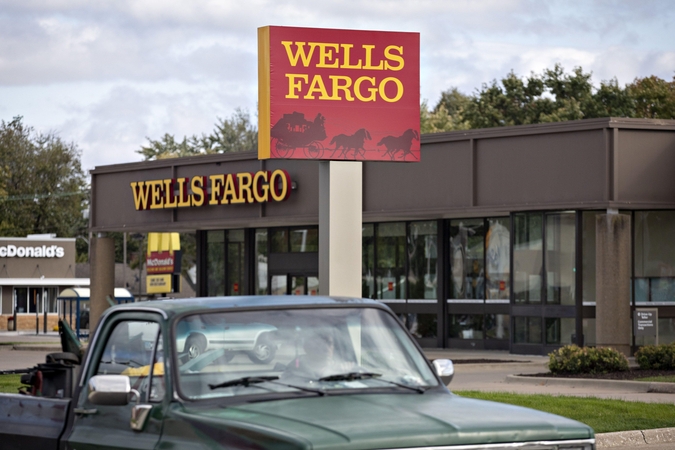
Wells Fargo fined $35 million for giving improper investment advice

Feb 28. 2020
By The Washington Post · Renae Merle · BUSINESS 

Wells Fargo will pay a $35 million fine for improperly recommending risky investments to some of its clients, including senior citizens and retirees, the Securities and Exchange Commission said Thursday.

These clients were encouraged to buy a risky version of an exchange-traded fund, known as an ETF, according to the SEC’s cease-and-desist order. These “single-inverse ETFs” use complex financial engineering to deliver big profits when stocks fall.

But these types of ETFs can lead to devastating losses when held for more than a day and are traditionally recommended only for sophisticated investors.

Wells Fargo recommended that some clients hold them for “months or years” even though they had “moderate or conservative risk tolerances,” according to the SEC settlement. “Some of these clients had little or no relevant investing experience.”

Wells Fargo said in a statement that it will no longer sell “single-inverse ETFs” in its “full-service brokerage” but that customers could still buy them from other providers.

The $35 million penalty will be distributed to Wells Fargo investors who were harmed, the SEC said.

Wells Fargo was sanctioned by the industry’s self-regulator, the Financial Industry Regulatory Authority, in 2009 for sales practices around these ETFs, but the conduct continued until 2019, according to the SEC. “Wells Fargo’s policies and procedures relating to single-inverse ETFs . . . were not reasonably designed to prevent and detect unsuitable recommendations of these complex products,” the SEC said.

This comes as Wells Fargo struggles to repair its image after admitting to consumer abuses. Last week, it reached a $3 billion settlement with the Justice Department and the SEC to settle charges that its aggressive sales goals led to widespread consumer abuses, including millions of accounts opened without customers’ consent.

AB InBev cuts CEO bonus as brewer sees worst quarter in decade #ศาสตร์เกษตรดินปุ๋ย

#ศาสตร์เกษตรดินปุ๋ย : ขอบคุณแหล่งข้อมูล : หนังสือพิมพ์ The Nation

https://www.nationthailand.com/business/30382976?utm_source=category&utm_medium=internal_referral

AB InBev cuts CEO bonus as brewer sees worst quarter in decade

Feb 28. 2020
All the bars in Navigli are close after a regional ordinance that declares the closure of all bars after 6 p.m. in Milan on Tuesday, Feb. 25, 2020. MUST CREDIT: Bloomberg photo by Camilla Cerea

All the bars in Navigli are close after a regional ordinance that declares the closure of all bars after 6 p.m. in Milan on Tuesday, Feb. 25, 2020. MUST CREDIT: Bloomberg photo by Camilla Cerea
By Syndication The Washington Post, Bloomberg · Thomas Buckley

Anheuser-Busch InBev NV, the world’s largest brewer, cut its chief executive’s bonus and forecast the steepest decline in quarterly profit in at least a decade as the coronavirus slows barhopping.

First-quarter earnings will drop about 10%, the company predicted Thursday. AB InBev also said last year was disappointing. Chief Executive Officer Carlos Brito’s bonus was curtailed after the biggest jump in raw material costs in a decade eroded profit growth. The stock fell as much as 8.2%, approaching an eight-year low.

For a company that says its main product brings people together, the coronavirus presents a particular problem as consumers in China avoid going out in public. Shipments had already started to slow in that market at the end of last year, leading the brewer to lower its guidance. While AB InBev is betting on a rebound in the later part of this year, the lower end of the 2020 forecast of 2% to 5% would be the weakest growth in four years.

The Budweiser maker has reopened over half of its 33 breweries in China and has permission from the government to restart the remainder of them, except for a facility in Wuhan, the epicenter of the disease outbreak.

Brito told Bloomberg that he got a bonus in the first half but not in the second as the company amended its usual practice of paying a bonus on an annual basis. It’s a rare move for the brewer, which cut bonuses for its top management in 2017 after a bad year.

“I’m never worried about the share price, I’m focused on our business,” the CEO said, speaking in a phone interview. “What I tell our people is this: Guys, we have an amazing talent pool and an amazing set of brands. Sometimes there is a lag, but if the business performs, the share price will follow.”

The company was one of the first to reopen its office in Shanghai, with government officials attending the event. AB InBev has shipped in about 1 million hygienic masks that it’s distributing to employees and local communities.

The brewer is reallocating the distribution of its beers from nightlife venues, its most profitable points of sale in China, to other avenues of sale such as e-commerce.

Profit fell 5.5% on an adjusted basis before interest, taxes, depreciation and amortization in the fourth quarter, the Leuven, Belgium-based brewer said Thursday. Analysts expected a drop of 1.9%.

The disease outbreak has wiped about $170 million off AB InBev’s earnings in China in January and February and $285 million off revenue.

AB InBev sold a stake in its Asia-Pacific unit Budweiser Brewing in September to help reduce debt and to serve as a vehicle for mergers and acquisitions.

AB InBev is known in the consumer-goods industry for giving outsize responsibility to young employees and generously rewarding them if they meet stringent sales growth and profitability targets. It’s given AB InBev some of the most impressive margins in the brewing industry. Still, the brewer is struggling to sell old-line brands such as Budweiser and Bud Light amid the growth in craft beer and hard seltzers.

Thaicom 5 deorbited #ศาสตร์เกษตรดินปุ๋ย

#ศาสตร์เกษตรดินปุ๋ย : ขอบคุณแหล่งข้อมูล : หนังสือพิมพ์ The Nation

https://www.nationthailand.com/business/30382950?utm_source=category&utm_medium=internal_referral

Thaicom 5 deorbited

Feb 27. 2020
By THE NATION

Thaicom Public Company Limited announced today (February 27) the successful migration of its customers from Thaicom 5 to Thaicom 6 and other satellites under its operations.

A statement from the company said it had overcome  the technical problems in providing continuity of services to its customers. The migration and service restoration were accomplished  on February 20,  Meanwhile, the company completed the deorbiting of Thaicom 5 on February  20 at 4.52 pm (local time).

On December 17,  Thaicom 5 experienced a technical issue causing limitations to monitoring of its  status.  The company  performed several unsuccessful attempts to tackle the problem, leading to the suggestion of  deorbiting  the  satellite from its  manufacturer.

Thaicom 5 had provided reliable satellite communication services for 14 years since its launched in May 2006.

The company would like to thank the Ministry of Digital Economy and Society (MDES) and the National Broadcasting and Telecommunications Commission (NBTC) for their prudent decision to support and approve of the relevant process, according to the statement .

Amazon merchants spooked by coronavirus fallout curtail ad spending #ศาสตร์เกษตรดินปุ๋ย

#ศาสตร์เกษตรดินปุ๋ย : ขอบคุณแหล่งข้อมูล : หนังสือพิมพ์ The Nation

https://www.nationthailand.com/business/30382912?utm_source=category&utm_medium=internal_referral

Amazon merchants spooked by coronavirus fallout curtail ad spending

Feb 27. 2020
The Amazon.com logo on a smartphone. MUST CREDIT: Bloomberg photo by Jason Alden.

The Amazon.com logo on a smartphone. MUST CREDIT: Bloomberg photo by Jason Alden.
By Syndication The Washington Post, Bloomberg · Spencer Soper

Chuck Gregorich, who sells China-made patio furniture on Amazon.com, expects to lose as much as $2 million in sales this year due to factory closings and other coronavirus-related slowdowns. So he’s cutting his ad spending on Amazon and thinking about raising prices to avoid running out of inventory. The sudden shift in sales tactics by merchants like Gregorich threatens Amazon’s fastest-growing and profitable revenue source.

“If we’re going to run out, why not run out at full price,” he says. “We have to make sure the sales we have are as profitable as they can be.”

Amazon merchants spent about 6% less on advertising over the past two weeks than they did a year ago, says Daniel Knijnik, who runs Quartile Digital, a New York firm that helps manage Amazon advertising for 2,300 brands selling goods on the site. Many of them are small outfits forced to react more quickly than big brands selling to the likes of Walmart and Target, he says, because they lack the inventory stockpiles and alternative suppliers their larger counterparts can draw on.

Amazon’s advertising sales are a small piece of overall revenue, but they help the company offset the huge costs of storing and shipping millions of products. In the holiday quarter, what Amazon calls “other” revenue-most of which is advertising-totaled $4.78 billion, up 41% from a year earlier.

Like many of its tech industry peers, Amazon started 2020 predicting strong sales growth. Now mounting fears of a pandemic and the related economic fallout has put those rosy projections in question. Amazon’s shares have dipped 5.9% so far this week, tracking the decline in the S&P 500 Index. The falloff in advertising could be a harbinger of worse news to come.

Amazon last month forecast sales of $69 billion to $73 billion in the current quarter and has not adjusted that outlook in response to the coronavirus. Apple warned that it is likely to miss its sales forecast for the current quarter due to the outbreak, which disrupted smartphone production and forced store closings in China. “We are monitoring developments related to COVID-19 and taking appropriate steps as needed,” Amazon said in an email, using the official name for the virus.

The company is taking other previously unreported measures to soften any virus impact for smaller sellers. On Feb. 7 Amazon advised merchants that they could put their accounts in “vacation status” to avoid getting penalized by its algorithms if they suspected items would run out of stock. It also instructed merchants to cancel any customer orders they would not be able to fulfill. “If your performance metrics have been impacted by this event, please include a brief description of how your business was impacted when you respond to the relevant performance notification,” Amazon said in a notice. “We will consider this unforeseen event when we evaluate your account’s recent performance.”

More than half of the items sold on Amazon come from independent merchants like Gregorich, who pay the company a commission only when shoppers buy their goods. That puts Amazon in a very different position than traditional retailers when reacting to supply-chain disruptions. Walmart and Target remain in constant contact with their wholesale suppliers about postponing delivery deadlines and finding alternative sources for products to keep shelves stocked. Amazon has those relationships as well, but has less direct contact with smaller merchants.

Its marketplace is largely managed by machine, with algorithms deciding in real time which products people see. Prices, consumer feedback, advertising and the speed of delivery all factor into the calculation. Amazon’s algorithms can punish merchants whose products sell out by making it harder for shoppers to find their wares, giving sellers an incentive to protect their inventory until they can replenish it. Cutting ad spending is the easiest lever for them to pull.

“We have reduced our ad spend and have identified the stock level where we’ll increase prices to slow down the rate of sale even more,” says Jerry Kavesh, a Seattle merchant who sells cowboy boots and hats on the site.

Mark Looram, managing director of GTO Limited, which oversees factory operations in China and the Asia Pacific region for big importers, expects prices for China-made products to shoot up on Amazon more quickly than at competing retailers that have more control. “One of the major differences with Amazon sellers is that they control their pricing and can increase or decrease depending on market conditions,” he says.

Price spikes can attract the attention of regulators. In 2017, after back-to-back hurricanes struck Florida and Texas, Amazon fielded complaints of price-gouging on bottled water. In fact, the high price reflected the expense of quickly shipping a heavy case of water across the country when local supplies were depleted. It was an example of how Amazon’s machines, designed to help match supply with demand, lack the judgment of a human touch.

So far, there haven’t been reports of virus-related shortages of essentials in the U.S. Instead, merchants are facing delays in replenishing inventory of things like dog treats, wine refrigerators and patio umbrellas. With no clear answers about when China will be back to full production, sellers are trying to stretch out what they have until new supplies roll in. Even with those adjustments, some merchants have already run out of stock.

“I have clients in various categories that are getting crushed because of the coronavirus,” says Dan Brownsher, who runs Channel Key, a Las Vegas e-commerce consulting business with more than 50 customers who sell products on Amazon. “What was supposed to ship in February or March now won’t be shipped until April. We have items out of stock that won’t be back until April.”

Virus-related disruptions will be most immediate to those selling spring and summer seasonal goods like inflatable pool toys and patio umbrellas, which could push any impact on Amazon into the second quarter.

Gregorich might have to hold off introducing a new line of patio furniture until next year. He ordered 14 containers of products from a Chinese factory, which recently refunded his deposit because it can’t complete the order in time. He’s keeping in touch with the factory in case it can make part of the order before the outdoor furniture selling season ends in the summer.

“We told the factory to let us know where they are and maybe get a partial order in the summer and still make some sales so we don’t miss the whole season,” he says. “We’re going to miss that product this year.”