Lego sets its sights on a growing market: Stressed-out adults #ศาสตร์เกษตรดินปุ๋ย

#ศาสตร์เกษตรดินปุ๋ย : ขอบคุณแหล่งข้อมูล : หนังสือพิมพ์ The Nation

https://www.nationthailand.com/business/30380673?utm_source=category&utm_medium=internal_referral

Lego sets its sights on a growing market: Stressed-out adults

Jan 17. 2020
Cris McDonough, 57, of Connellsville, Pa. builds Legos during a BYOB adults-only build event at Brooke's Block Party, an event space. MUST CREDIT: Photo by Justin Merriman for The Washington Post.

Cris McDonough, 57, of Connellsville, Pa. builds Legos during a BYOB adults-only build event at Brooke’s Block Party, an event space. MUST CREDIT: Photo by Justin Merriman for The Washington Post.
By The Washington Post · Abha Bhattarai

Elisabeth Briggs finds calm in clicking small, interlocking bricks together and turning piles of multicolored plastic into something recognizable.

Sometimes she has a beer while playing with Lego bricks – at 37, she’s allowed – or watches TV. But she keeps the instructions close by, following them to the block.

For Briggs, this ritual has become a kind of guided meditation with a tangible reward at the end: a big city skyline, perhaps, or an iconic building she can display in her office. She picked up her first Lego building set, a 321-piece replica of the Eiffel Tower, for $35 after a trip to Paris, and now has nearly three dozen kits that mirror her travels, including Buckingham Palace, the Louvre and the Golden Gate Bridge.

“It’s fun to zone out and follow someone else’s instructions,” said Briggs, a math teacher at Olympic College near Seattle. “It wasn’t until I got older – and had a job and more money – that I saw value in that.”

Lego, the world’s largest and most profitable toy maker, is zeroing in on a growing demographic: Stressed-out adults. The 87-year-old Danish company increasingly bills its brightly colored bricks as a way to drown out the noise of the day and perhaps achieve a measure of mindfulness. The company’s newest kits – which include the Central Perk cafe from the sitcom “Friends” and a vintage 1989 Batmobile – tap into Gen X nostalgia, while its Ideas and Forma lines are being targeted to adults who want to occupy their hands but keep their minds loosely engaged.

Susan Lewis, 61, left, Lori Griffith, 43, center, and CJ Paxinos, 43, all of Connellsville, Pa., build with Lego bricks during an BYOB adults-only build event at Brooke's Block Party. MUST CREDIT: Photo by Justin Merriman for The Washington Post.

Susan Lewis, 61, left, Lori Griffith, 43, center, and CJ Paxinos, 43, all of Connellsville, Pa., build with Lego bricks during an BYOB adults-only build event at Brooke’s Block Party. MUST CREDIT: Photo by Justin Merriman for The Washington Post.

Adults have become a coveted market for toy makers confronting increased competition and waning sales growth, and it doesn’t hurt that they’re more likely to drop $800 on a 7,541-piece Star Wars Millennium Falcon set or $400 for the Harry Potter Hogwarts Castle on Briggs’s wish list.

“Adults with high-pressured jobs are telling us they’re using Lego to disconnect from the mania of the day,” said Genevieve Capa Cruz, Lego’s audience marketing strategist. “They’re looking for a relaxing, calming experience – and they like instructions because that’s what helps them be in the zone.”

The company spent the past five years revamping instruction manuals to make kits foolproof for frazzled adults, she said. Last year, Lego introduced a line of koi fish and shark models with soothing movements to appeal to builders in search of a “joyful creative challenge.”

Lego’s appeal, of course, has long spanned generations. Adult Fans of Lego – known colloquially as AFOLs – have inspired dozens of Facebook and Reddit groups and at least one “blocumentary.” A new book aims to teach older users how to use the bricks as a form of stress relief, not to create complicated models but to simply revel in the process. And a competition show, LEGO Masters, which premieres next month on Fox, pits adult builders against each other. (Think “The Great British Bake Off,” for Lego.)

But the toy giant is increasingly looking beyond die-hard hobbyists to court the casual builder in search of modern-day tranquility. “Need an escape?,” asked a recent Lego ad on Instagram. “Building with Lego bricks reduces stress and improves your well-being. It’s zen, in the shape of a brick.”

Zach Stephens, 38, of Connellsville, Pa., looks through a pile of Legos during an BYOB adults-only build event at Brooke's Block Party. MUST CREDIT: Photo by Justin Merriman for The Washington Post.

Zach Stephens, 38, of Connellsville, Pa., looks through a pile of Legos during an BYOB adults-only build event at Brooke’s Block Party. MUST CREDIT: Photo by Justin Merriman for The Washington Post.

Mindfulness is a meditative practice rooted in ancient Buddhism and Hinduism that focuses on the present without dwelling on the past or worrying about the future. It has been shown to alleviate stress and anxiety, improve sleep, and even lower blood pressure. In recent years, mindfulness has become a mainstream buzzword, with corporations like Apple, Nike and HBO adding meditation rooms for employees, and apps like Headspace and Calm promising to help the masses find peace. And Lego is hardly alone in latching on to it as a selling point: Companies now offer “mindful knitting” workshops, while a growing roster of books promises mindfulness through coloring, crosswords and crafting.

Any repetitive activity – embroidering, sweeping, or yes, clicking together Lego bricks – can help strike the right balance between mental engagement and relaxation, says Carrie Barron, Director of Creativity for Resilience at the University of Texas at Austin’s Dell Medical School. “To focus singularly on a task is a form of mindfulness.”

And, she added, Lego’s instruction booklets serve an important role, too: “We like to have structure and a clear path. The idea that ‘if you follow this, you’ll achieve that,’ is very appealing.”

– – –

Abbie Headon hadn’t touched a Lego for a good 20 years when the Danish toy giant called with an assignment: Write a book for stressed-out adults, like her, who hadn’t played with the blocks in decades. She bought a small bag of pieces and got to work.

“The point is to free your mind of other distractions and focus on play, even if you just have a handful of pieces,” said Headon, 44, who is based in England.

Her 160-page book, “Build Yourself Happy: The Joy of Lego Play,” was released in the United States last month. Chapters like “Be a Child Again” and “Builds to Help You Sleep” implore adults to play in new ways: Build something with your eyes closed. Create a rainbow. Build the tallest tower you can. There are also practical considerations: A chapter on “the life-changing magic of tidying your Lego bricks” offers suggestions on sorting and storage.

“The fun isn’t just, I’m going to build this and it’s going to be perfect,” Headon said. “That’s one of the great things about Lego: There’s no risk. You can always just take it apart and start again.”

These days Headon keeps a cardboard box of Lego pieces on her desk. They’re therapeutic, she says, even if she’s not actively playing with them.

“I like to have something in my hand when I’m thinking, so I’ll grab a few Lego pieces and click them together and apart,” she said. “It’s very satisfying.”

The earliest Lego bricks, introduced in Denmark in the late 1940s, consisted mainly of rectangular pieces in a handful of colors. Over the next decade, it added doors and roofs, as well as trees, bushes, road signs and curved plates, according to the online database Brickset. By the time it started exporting to the United States in 1961, sets had become more elaborate, replicating airplanes, boats and fire stations.

But by the late 1990s, the company was on rocky ground. The simple plastic brick had fallen out of favor as children became enthralled with video games, computers and fads like the Tamagotchi digital pet. Lego posted its first-ever loss in 1998.

The following year Lego forged its first licensing deal, with the “Star Wars” franchise, a move that “basically saved the company,” says industry analyst Chris Byrne. Annual sales jumped nearly 30% that year, as Lego shifted its focus away from open-ended play and toward more branded kits. Similar licensing agreements with Disney, Marvel Super Heroes and Harry Potter followed. Last year Lego posted a $1.2 billion profit on $5.4 billion in sales.

Even so, Lego is facing many of the same head winds as its rivals. Sales growth has held steady at about 4% since 2018, a sharp drop from the 17% a year average seen the preceding decade. Competition is growing – not only from other toy makers, but also smartphones and apps that are devouring a bigger portion of children’s allowances. Plus, analysts say, today’s parents would rather spend on experiences than stuff. U.S. toy sales fell about 5.5% in the first nine months of this year, according to NPD Group.

Selling blocks – or puzzles or action figures – to adults has become one way for toy makers to counteract the slowdown. Competitors like Playmobil are taking note too, by rolling out programs that they say will help corporate employees “find new business solutions.”

Zach Stephens, 38, of Connellsville, Pa., looks through a pile of Legos during an BYOB adults-only build event at Brooke's Block Party. MUST CREDIT: Photo by Justin Merriman for The Washington Post.

Zach Stephens, 38, of Connellsville, Pa., looks through a pile of Legos during an BYOB adults-only build event at Brooke’s Block Party. MUST CREDIT: Photo by Justin Merriman for The Washington Post.

“The rise of adult fans is driving the toy industry,” said Byrne, a New York-based consultant who bills himself as the Toy Guy. “Who do you think is buying the $499 Death Star or the $399 Hogwarts Castle? That’s all being made for adults who have their own money to spend.”

– – –

The submissions pour in by the dozens – and more often than not, they’re hankering for an earlier era.

Scroll through Lego Ideas, the crowdsourcing platform the company introduced in 2008, and you’ll see proposals for sets commemorating the 1964 musical “Mary Poppins” and “The Golden Girls,” the NBC sitcom that first hit airwaves in 1985. Lego fans vote on their favorites, and a panel green lights a handful of projects each year. Recent approvals include a “Ghostbusters” 30th anniversary set, a DeLorean Time Machine from the 1985 film “Back to the Future,” and a Beatles-inspired yellow submarine.

“There is so much nostalgia, especially among Gen X,” said Capa Cruz of Lego.

This generation of Americans, sandwiched between baby boomers and millennials, was the first to grow up with Lego, Byrne says. Now in their 40s and 50s, they are among a growing group of adults hoping to unplug from their phones and computers.

When Brooke Deason opened a block-building events space six years ago, she envisioned Lego-filled birthday parties, summer camps and youth leagues.

But she quickly found another group clamoring to play: parents.

She now hosts regular adults-only evenings where locals sip wine and put together “Doctor Who” sets and replicas of Frank Lloyd Wright’s Fallingwater. One group of dads has been working on a 1,366-piece Star Wars Imperial Star Destroyer for two years.

“It’s like a blast to the past, straight to our childhoods,” said Deason, 40, who lives in Connellsville, Pennsylvania. “It took me by surprise, but it makes sense: Life is so structured. But with Lego, you can do anything.”

Deason has a few million Lego pieces, which she organizes by type and color. The Star Wars and architecture sets, she says, are the most popular among adults, who almost always look for the instruction manuals.

“The younger kids come in and it’s all about their imaginations – playing pretend, building zombie towns,” she said. “But at some point that gets lost. The adults seem to value the final finished project. That’s where they get their satisfaction.

Nestle to spend up to $2.1 billion on recycled-plastic plan #ศาสตร์เกษตรดินปุ๋ย

#ศาสตร์เกษตรดินปุ๋ย : ขอบคุณแหล่งข้อมูล : หนังสือพิมพ์ The Nation

https://www.nationthailand.com/business/30380677?utm_source=category&utm_medium=internal_referral

Nestle to spend up to $2.1 billion on recycled-plastic plan

Jan 17. 2020
By Syndication Washington Post, Bloomberg · Corinne Gretler

Nestle plans to spend as much as 2 billion Swiss francs ($2.1 billion) in a plan to push the plastics industry to address the dearth of recycled packaging that’s safe to use for food.

The KitKat maker will earmark more than 1.5 billion francs to pay a premium for such plastic to encourage production, the company said Thursday. Recyclers have tended to neglect that market because of the difficulties in making non-toxic food-grade packaging.

“Food-grade recycled plastic is extremely expensive today, and nobody wants to pay — so nobody makes it and prices don’t come down,” Chief Executive Officer Mark Schneider said at a media event in Zurich. “We want to use our scale aggressively to build stable demand.”

Nestle said it has other projects in the field, including a 250 million-franc venture capital fund to develop packaging technology. The company said it will try to mitigate the impact of higher plastic costs through efficiencies.

Food and beverage makers have increasingly come under pressure from consumers and environmental groups for using too much plastic. Nestle has pledged to make all of its packaging recyclable or reusable by 2025, and it said aims to reduce use of newly made plastic by a third by the same year. That falls short of a goal for a 50% reduction at Unilever, which is testing refill stations for products like laundry detergent and shampoo.

Greenpeace, which has urged Nestle to focus on delivery systems based on containers that can be refilled and reused, said reducing single-use plastic should not lead to “false solutions” like recycled content and material substitution.

“If Nestle wants to stop polluting the world, it needs to end its reliance on plastic,” Matthias Wuethrich, senior campaigner at Greenpeace Switzerland, said in an e-mailed statement.

As of 2025, the European Union will require that at least 25% of the material in beverage bottles consist of recycled plastic.

Nestle opened a research site near Lausanne last year to develop packaging that’s less harmful to the environment, such as fully biodegradable paper-based water bottles and refillable containers.

Like rivals PepsiCo and Danone, the Swiss company is experimenting with water dispensers in an attempt to shift to selling beverages without bottles.

“The environmental issue will remain a topic in the next few years, and companies will have to back up words with real investments,” said Patrik Schwendimann, an analyst at Zuercher Kantonalbank. “The whole industry will face higher costs. The positive return is that companies will look good to the public.”

Nestle shares climbed as much as 0.9% in Zurich. They have gained 26% over the past year.

Toyota Leasing first issuer of corporate bond under blockchain platform #ศาสตร์เกษตรดินปุ๋ย

#ศาสตร์เกษตรดินปุ๋ย : ขอบคุณแหล่งข้อมูล : หนังสือพิมพ์ The Nation

https://www.nationthailand.com/business/30380670?utm_source=category&utm_medium=internal_referral

Toyota Leasing first issuer of corporate bond under blockchain platform

Jan 17. 2020
The blockchain or distributed ledger technology (DLT) reduces the cost of issuing and provides real time information on bond holding, says Chuenkamol Boobphakam, president of the Toyota Leasing (centre).

The blockchain or distributed ledger technology (DLT) reduces the cost of issuing and provides real time information on bond holding, says Chuenkamol Boobphakam, president of the Toyota Leasing (centre).
By The Nation

Toyota Leasing (Thailand) Co Ltd has become the first corporate bond issuer on a blockchain platform supported by the Thai Bond Market Association, Securities and Exchange Commission (SEC) and Bank of Thailand.

The Bt500-million bond issued last month with 11-month and 29-day maturity were successfully sold to institutional investors and high net-worth individuals.

Executives of parties involved in the bond issuance briefed the press on Thursday (January 16).

Sa-ard Theerarojanawong, executive vice president of Bangkok Bank, lead manager of the issuance, says that blockchain shortens the time for bond-issuing preparation to just three days from seven to eight days.

The blockchain or distributed ledger technology (DLT) reduces the cost of issuing and provides real time information on bond holding, said Chuenkamol Boobphakam, president of the Toyota Leasing.

Her company, she said, has been active in the bond market with an outstanding corporate bond value of Bt90 billion. It ranks eighth among top issuers.

President of the Thai Bond Market Association Tada Phutthitada said more features will be added to the blockchain bond platform such as e-bond passbook which will inform bond holders about forthcoming coupon payments and other information.

PTT board nods to Bt180.814 bn investment for five years #ศาสตร์เกษตรดินปุ๋ย

#ศาสตร์เกษตรดินปุ๋ย : ขอบคุณแหล่งข้อมูล : หนังสือพิมพ์ The Nation

https://www.nationthailand.com/business/30380669?utm_source=category&utm_medium=internal_referral

PTT board nods to Bt180.814 bn investment for five years

Jan 16. 2020
By THE NATION

PTT Plc’s board has approved the five-year (2020-2024) investment plan of PTT and its wholly-owned subsidiaries in an aggregate amount of Bt180.814 billion, according to its filing to the Stock Exchange of Thailand on Thursday (January 16).

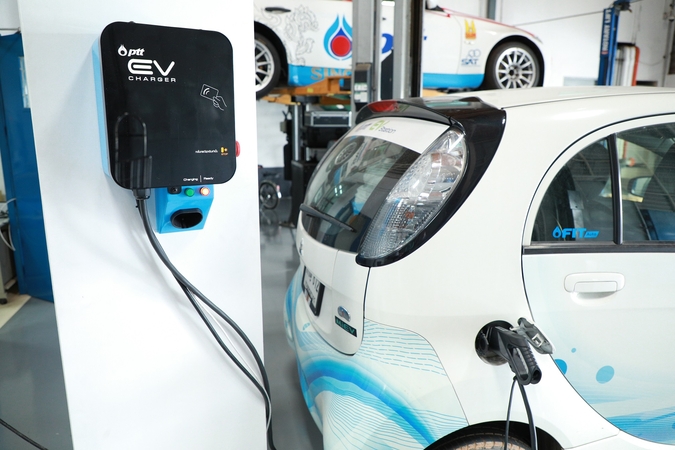
PTT’s investment plan focuses on core businesses, mainly in the gas group in both PTT-own operations (gas business and gas Transmissions) and its wholly-owned subsidiaries such as expansion of liquefied natural gas (LNG) production to terminal capacity as well as other investments in joint ventures and wholly-owned subsidiaries, such as investments in oil and non-oil businesses in Thailand and overseas.

Additionally, PTT has set Bt203.583 billion in provisional capital expenditure for the next 5 years to enhance product value and synergy within the group, from core businesses’ expertise including LNG Value Chain and the gas-to-power project, as well as new investments in energy businesses in accordance with the national development plan and the trends of technology disruption, consumer behaviours and clean energy.

Telenor’s Sharad Mehrotra named new CEO at dtac #ศาสตร์เกษตรดินปุ๋ย

#ศาสตร์เกษตรดินปุ๋ย : ขอบคุณแหล่งข้อมูล : หนังสือพิมพ์ The Nation

https://www.nationthailand.com/business/30380665?utm_source=category&utm_medium=internal_referral

Telenor’s Sharad Mehrotra named new CEO at dtac

Jan 16. 2020
 Alexandra Reich

Alexandra Reich
By THE NATION

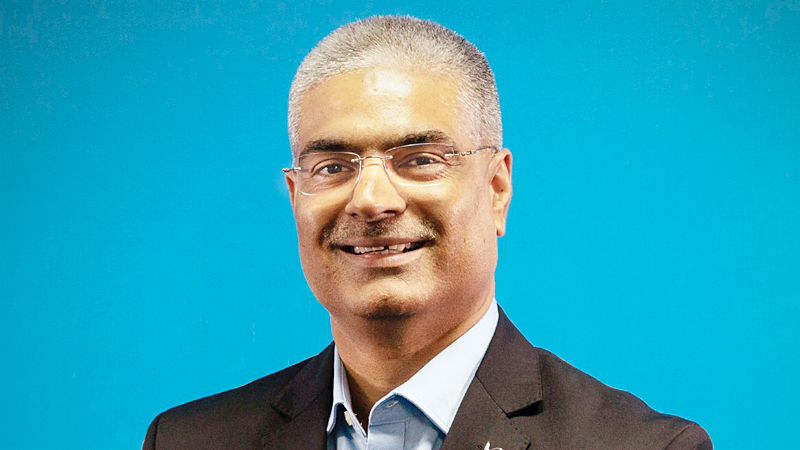
Directors of Total Access Communication (dtac) have appointed Sharad Mehrotra chief executive, effective February 1, the telecom firm announced in a press release on Thursday (January 16).

Mehrotra, currently CEO at Telenor Myanmar, will replace Alexandra Reich, who is seeking new leadership opportunities elsewhere.

Dtac informed the Stock Exchange of Thailand the same day that its board had acknowledged Reich’s resignation and approved Mehrotra as her replacement, both changes effective February 1.

Reich assumed the top position at dtac in August 2018.  Prior to dtac, she served as CEO of Telenor Hungary and Head of Telenor Group’s Central Eastern Europe Cluster.

“I am very pleased to welcome Sharad Mehrotra,” said board chairman Boonchai Bencharongkul. “With his vast experience in mobile operations in highly competitive markets, he brings insights and knowledge that I am convinced will serve dtac and its customers well.

Sharad Mehrotra

Sharad Mehrotra

“Dtac is currently on a strong positive trajectory and I look forward to supporting Sharad and the team as they continue to strengthen the company’s market and financial performance.”

Mehrotra joined Telenor 12 years ago and has served in senior management positions across Asia, as CEO of Telenor India and most recently as CEO for Telenor Myanmar.

Prior to leading Telenor India, he was Head of Distribution for Telenor in Asia, based in Thailand. Before joining Telenor, Mehrotra worked at Ericsson, Aircel and BPL Telecom in India.

“I am very excited to return to Thailand and join the dtac team,” he said. “This is an important time to advance Thailand’s digital ambitions and I look forward to being part of these efforts and connecting dtac’s customers to what matters most to them.”

Mehrotra holds a bachelor’s degree in electronics engineering from Pune University and an MBA in marketing management.

Boonchai thanked Reich for her contributions as CEO.

“Alexandra Reich made a personal commitment to never stop doing what is right for our customers and managed to turn dtac around in a very challenging market,” he said. “Her achievements are reflected in dtac’s financial performance and share-price development and through the appreciation of customers, employees and stakeholders. I am confident we now have a solid foundation for sustainable growth.

Reich expressed pride in the firm’s achievements in the last year and a half.

“We secured the transition from concession to licence and together we were able to initiate a turnaround of the business,” she said.

“Today dtac is on the right path for future growth, with an improved network experience and a renewed customer focus. I am very grateful for the time spent in this wonderful country. Now it is time for me to keep learning and exploring new opportunities.”

Big C eyes Tesco’s business in Thailand #ศาสตร์เกษตรดินปุ๋ย

#ศาสตร์เกษตรดินปุ๋ย : ขอบคุณแหล่งข้อมูล : หนังสือพิมพ์ The Nation

https://www.nationthailand.com/business/30380658?utm_source=category&utm_medium=internal_referral

Big C eyes Tesco’s business in Thailand

Jan 16. 2020
By THE NATION

Retail operator Big C Supercenter is keen on acquiring Tesco Lotus’s business in Thailand to bolster its position in the market, said president Aswin Techajareonvikul, adding that the company had already made an offer to Tesco.

Tesco, one of the world’s largest retailers, said last year that following inbound interest, it had commenced a review of the strategic options for its businesses in Thailand and Malaysia, including an evaluation of selling its interest in the two countries.

The evaluation of strategic options is still at an early stage, no decisions concerning the future of Tesco Thailand or Malaysia have been taken, and there can be no assurance that any transaction will be concluded, it said in a recent statement.

Centro Condo Bangsaen promises to fill condo supply gap in East #ศาสตร์เกษตรดินปุ๋ย

#ศาสตร์เกษตรดินปุ๋ย : ขอบคุณแหล่งข้อมูล : หนังสือพิมพ์ The Nation

https://www.nationthailand.com/business/30380651?utm_source=category&utm_medium=internal_referral

Centro Condo Bangsaen promises to fill condo supply gap in East

Jan 16. 2020
By THE NATION

Venture Global Holding, a joint venture between Singapore-based ABN and a veteran Thai property company, has latched onto the rising investment opportunities in Bang Saen in Chonburi and the Eastern Economic Corridor (EEC) with the launch of its first project, the Centro Condo Bangsaen.

The Bt550-million low-rise condominium will feature 304 units close to the Laem Thong Department Store and Burapha University.

Austin Tan, chief project officer at Venture, noted that the Thai economy has grown fast and steadily for the past four decades, with the government’s support for infrastructure development assuring strong future growth potential.

“Seeing strong investment potential outside Singapore, especially in Thailand’s tourist destinations and big cities, ABN was convinced that investment in the Thai property market would be successful,” he said. “That’s when Venture Global Holding was established.

“The Centro Condo Bangsaen is our first initiative in Thailand and will lead to many more exciting projects in the future. We want to see healthy economic growth both in Thailand and Singapore.”

Ray Heng, Venture’s chief finance officer, expressed confidence in Bang Saen’s investment potential.

Given its proximity to Bangkok and Pattaya and its location within the EEC, which is expected to attract US$45 billion worth of investments, the beach town offers enormous investment and employment potential.

“The government’s huge investment in transport and logistics will make it very convenient to travel between Bangkok and Chonburi, especially by high-speed train. Seeing the window of opportunity open wide, we were not hesitant to make an investment here.”

Chief executive Pheerapol Rangsimanurak said Bang Saen will not only be a tourist destination but also an economic hub for the country.

By 2024, the high-speed train linking three airports will be open, which will further boost investment and tourism. Burapha University, the No 1 university in the East, adds greater potential to the region as more and more foreigners enrol, especially from China.

Venture determined that land prices in the area rose by 30-50 per cent in recent years and there is high demand for good residential units. More people are moving there, but supply has remained unchanged.

Return on investment in the Centro Condo Bangsaen is 5-8 per cent.

“It’s one of the first condominium projects developed in 2-3 years,” said Pheerapol. “Our management team has vast experience in the local property market. With financial support from our Singaporean partner, we are financially healthy and have the full capability to meet specific needs of locals and investors.”

Chief operating officer Jakkaphan Bamphenkiatkul said the project combines modern design with nature.

The two eight-storey buildings, covering two rai 82.4 square wa, are in the city centre, next to Park in Market, and only 200 metres from Laem Thong, 400m from Burapha University and 1.5km from Bang Saen Beach.

There will be more common areas for residents and an overflow swimming pool and fitness centre with great views.

Energy saving and heat dispersal will also be part of the design, as will safety excellence – based on the “Triple Security” concept encompassing a front security booth, building entrance and unit entrance with a digital locking system.

All units will be fully furnished. Prices start at Bt1.49 million for 28sqm (about Bt50,000 per sqm). A pre-sale of 99 units for VIPs is scheduled for January 23-19 at Central Chonburi.

Tesla is once again the most shorted American stock #ศาสตร์เกษตรดินปุ๋ย

#ศาสตร์เกษตรดินปุ๋ย : ขอบคุณแหล่งข้อมูล : หนังสือพิมพ์ The Nation

https://www.nationthailand.com/business/30380640?utm_source=category&utm_medium=internal_referral

Tesla is once again the most shorted American stock

Jan 16. 2020
File Photo

File Photo
By Syndication Washington Post, Bloomberg · Elena Popina 

Tesla Inc. bears won’t let anyone steal the title for the most-shorted stock. Not even Apple Inc.

A parabolic spike in shares of the electric carmaker hasn’t stopped short sellers from betting the stock will go down. They drove the total dollar amount of shares borrowed to sell the stock short to $14.5 billion on Wednesday, data by financial analytics firm S3 Partners showed. That’s above the $14.3 billion invested in a bet Apple will go down.

The iPhone maker overtook Tesla as the most-shorted U.S. stock on Sept. 20 and had held that position until Wednesday. The dollar amount of short interest in Apple, however, is of little surprise given the size of the tech giant’s $1.4 trillion market capitalization.

Tesla, whose market cap is 14 times smaller than Apple’s, has long been a site of a tug-of-war between its bulls and bears, which often came at a price. This year through Tuesday, Tesla short-sellers have racked up $2.8 billion in net-of-financing mark-to-market losses, S3 Partners’ data show. This compares with losses of $2.89 billion for all of 2019.

Tesla has been on a roll since late October amid a host of positive news around its deliveries and China plant. Apple has gained 19% since early December and at least 10 analysts have upped their price targets on the stock this year amid optimism over the company’s growth.

U.S. banks reported blockbuster 2019 profit with the help of consumers’ credit card debt #ศาสตร์เกษตรดินปุ๋ย

#ศาสตร์เกษตรดินปุ๋ย : ขอบคุณแหล่งข้อมูล : หนังสือพิมพ์ The Nation

https://www.nationthailand.com/business/30380630?utm_source=category&utm_medium=internal_referral

U.S. banks reported blockbuster 2019 profit with the help of consumers’ credit card debt

Jan 16. 2020
By The Washington Post · Renae Merle

A growing tide of consumer debt helped propel some of the country’s largest banks to large profits last year.

JPMorgan Chase, the country’s largest bank, said this week that it earned a record $36 billion profit last year with credit card loans increasing 8%. U.S. Bancorp said Wednesday that it brought in $7 billion last year with the help of a 7.6% increase in its credit card business.

Citigroup, which reported a profit of $19 billion last year, said that its branded cards business increased 8% in North America last year. Even Wells Fargo, which has been struggling to rebound from a series of scandals, found a bright spot with consumers, reporting that credit card loans were up $2 billion during the fourth quarter.

“The credit card market, it’s still a leading growth driver for the consumer bank,” said Ken Leon, director of equity research at CFRA Research.

Consumers’ growing debt loads, expected to increase $80 billion last year, are a cause for concern among some economists but show no sign of slowing. Consumers have shifted away from cash and toward online shopping, making credit cards ubiquitous, industry analysts say. Meanwhile, the strong economy and low unemployment has kept delinquencies low.

“Even though consumers are confident, people are still carrying significant debt,” said Ted Rossman, an analyst for Creditcards.com. “From a bank’s perspective that is a big money maker. From a consumer’s perspective I would encourage everyone to pay that down.”

Consumers’ appetite for credit cards has not been dampened by relatively high interest rates. The average rate is 17.3%, near a record high, for consumers with a good credit score, according to CreditCards.com, which surveys the country’s 100 most popular cards. The cost is steeper for consumers with lower credit scores, 25.3%, according to the site.

Bernie Sanders, I, the Vermont senator running for the Democratic nomination for president, and Rep. Alexandria Ocasio-Cortez, D-N.Y., introduced legislation last year to cap credit card interest rates at 15% but the measure hasn’t gained any ground. And banks haven’t significantly lowered rates they charge on credit cards despite several interest rate cuts by the Federal Reserve, bolstering the industry’s profits, analysts have said.

“Vulnerable borrowers are the most vulnerable to the higher interest rates,” Rossman said.

Such high rates made it difficult for Jonathan Isaza, a Florida college student, to pay off his debt. After moving out on his own, Isaza said was making just $10 an hour. But didn’t initially factor in the cost of car insurance in his budget and accumulating about $2,000 in credit card debt.

“Honestly this is unusual to me. I took a personal financial management class in high school that taught me how to save and budget my money well and how to develop good credit,” he said in a Twitter exchange. “Ironically enough, I’m a finance major.”

The high interest rates, nearly 20%, made it difficult to pay down the debt, Isaza said. “I would pay what I could but since the balance was high at the time the interest would put it back to where it was,” he said.

Eventually Isaza said he found a better-paying job and switched insurance companies, helping him drive down his debt. “I can finally start saving,” he said.

Joe Martin, a marketing executive in Utah, is among many consumers who are able to avoid interest changes by paying off their bill every month. Martin pays a yearly fee for two credit cards he uses for routine purchases while accumulating reward points for free flights and hotel stays.

“I have always paid things off quickly,” Martin said, adding that it is a habit his parents encouraged.

He is at the “heart of the storm” of new credit card offers but has yet to be tempted, Martin said. “We go to Costco frequently and they have a [credit card] offer but I don’t necessarily need that.”

Also driving profits for banks are “swipe fees” that card companies collect from retailers, typically 2% of the total purchase, industry analysts say. The more consumers use their cards, the more companies earn – whether the customer carries a balance or not.

Wells Fargo reported that the volume of credit card purchases increased 4% during the fourth quarter and that the number of active accounts had reached 8.1 million. Last year, JPMorgan Chase said merchant processing volume increased 11%.

“The most profitable customers for credit companies are high income people who spend a lot and pay their bill on time,” said Aaron Klein, a Brookings Institution fellow.

SCB sets aside Bt20 bn to gain digital edge #ศาสตร์เกษตรดินปุ๋ย

#ศาสตร์เกษตรดินปุ๋ย : ขอบคุณแหล่งข้อมูล : หนังสือพิมพ์ The Nation

https://www.nationthailand.com/business/30380611?utm_source=category&utm_medium=internal_referral

SCB sets aside Bt20 bn to gain digital edge

Jan 16. 2020
By THE NATION

Siam Commercial Bank (SCB) has earmarked Bt20 billion to invest in promising new businesses, chief executive Arthid Nanthawithaya said on Wednesday (January 15).

The intention is to foster its digital competitiveness through moves undertaken on its own or via partners.

The allocation is separate from SCB’s regular investment budget.

Arthid said the bank is keen to invest several million baht in each of several undisclosed companies, but the budget need not be depleted this year alone.

In a separate matter, SCB and Ayeyarwady Bank (AYA Bank), the second-largest bank in Myanmar, on Wednesday signed an agreement to collaborate in developing cross-border payments and fund transfer services between the countries.