Boeing’s new CEO takes reins with company integrity in doubt #ศาสตร์เกษตรดินปุ๋ย

#ศาสตร์เกษตรดินปุ๋ย : ขอบคุณแหล่งข้อมูล : หนังสือพิมพ์ The Nation

https://www.nationthailand.com/business/30380500?utm_source=category&utm_medium=internal_referral

Boeing’s new CEO takes reins with company integrity in doubt

Jan 14. 2020
The Boeing logo hangs from an entrance to its factory in Sheffield, England, on Oct. 25, 2018. MUST CREDIT: Bloomberg photo by Matthew Lloyd.

The Boeing logo hangs from an entrance to its factory in Sheffield, England, on Oct. 25, 2018. MUST CREDIT: Bloomberg photo by Matthew Lloyd.
By Syndication Washington Post, Bloomberg · Julie Johnsson

The opening gambits by Boeing’s new boss show the risks Dave Calhoun is willing to take to reset the deeply troubled planemaker.

Calhoun, who officially takes charge Monday, pushed to release humiliating internal messages last week even though they may darken public perception for years to come — with Boeing’s own employees suggesting rot in a once-vaunted safety culture, and mocking designers and regulators on the ill-fated 737 Max. He also was heavily involved in the decision to drop Boeing’s long-held opposition to simulator training for Max pilots, said people close to the company.

Those steps are just the start as Calhoun settles into a 36th-floor suite at Boeing’s Chicago headquarters, entrusted with turning around a company that has been widely censured for its arrogance, failure to take responsibility after two crashes killed 346 people, and unrealistic estimates of when the Max would be cleared to fly again. The bungling cost former CEO Dennis Muilenburg his job, and the bad news is far from over: Boeing is expected to reveal one of the largest writedowns in its history this month along with fourth-quarter results.

“The company has a unique opportunity to get all the bad news on the table now,” said Jim Schrager, professor of entrepreneurship and strategy at the University of Chicago’s Booth School of Business. “It’s time to get this right and make the turnaround.”

The accounting charge is likely to be in the $6 billion range, said Cowen & Co. analyst Cai von Rumohr, as Boeing balloons its reserve to compensate airlines to $12 billion. That’s another risk for investors, who have taken a hit from the crisis while dodging a full-fledged meltdown.

Boeing climbed less than 1% to $331.03 at 9:40 a.m. in New York. Through last week, the shares had tumbled 22% since the second Max crash prompted a worldwide flying ban in March. That was the biggest drop on the Dow Jones Industrial Average.

Calhoun, a former General Electric Co. executive who became a senior leader at Blackstone Group Inc., is far from an outsider at Boeing. He has served on the aerospace titan’s board for a decade, and he took over from Muilenburg as chairman in October. That means he is identified with the moves that have left the company’s standing with consumers, lawmakers and regulators in shambles.

Boeing’s reversal on simulator training was approved by the Calhoun-led board at its meeting in December, said people familiar with the deliberations, who asked not to be identified because the discussions were private.

When directors asked to Calhoun to take charge, they vowed to make Boeing more transparent. With his support, interim CEO Greg Smith followed through last week by releasing a new batch of internal messages that a key lawmaker in the U.S. Congress called “incredibly damning.”

In one exchange, a company pilot said the Max was “designed by clowns, who in turn are supervised by monkeys.” In other messages, employees bragged of their ability to hoodwink regulators.

Calhoun has already begun reaching out to the Federal Aviation Administration, which delivered a rare public rebuke of Muilenburg shortly before he was ousted in December. His top priority as CEO will be to look inward to the company’s issues and cultural rifts and to spend meaningful time in its Seattle manufacturing hub, said a person close to the board.

Revamping Boeing’s culture is especially critical for Calhoun and Larry Kellner, the former Continental Airlines chief who replaced him as Boeing chairman, given the lapses that have come to light from blue-ribbon panels poring over the Max’s development.

“It seems like there’s been an absolute breakdown,” said Bloomberg Intelligence analyst George Ferguson. “They’re going to have to find a way to ditch the arrogance. It’s hurt their relations with the FAA, customers and suppliers.”

The crisis has also left Boeing at risk of losing ground to Airbus in the global aerospace duopoly. Calhoun is convinced there is a way to simplify strategy and planning for Boeing’s numbingly complex operations, said the person familiar with the matter.

Then there’s the challenge of revitalizing a demoralized workforce. Muilenburg, an engineer and Boeing lifer, had pledged to reorganize the company’s engineering corps and create buffers to insulate workers from undo pressure from business managers. That task now falls to Calhoun, an accountant by training.

Some former colleagues at GE, where Calhoun spent 26 years, consider him close in personality to Jack Welch, said Rick Kennedy, author of “GE Aviation: 100 Years of Reimagining Flight.”

“He will make hard decisions at Boeing and he won’t hide behind them,” said Kennedy, a retired spokesman who worked closely with Calhoun for four years at GE’s aviation division. That extends to personnel decisions.

“It won’t be a cozy world,” Kennedy said.

Calhoun’s task is daunting. It could take months before the Max is back in service, and more than a year after that for the company to nurse its suppliers back to health and return the 737 to pre-crash production levels.

Other aircraft programs faced stumbles of their own, with the 777X airplane, KC-46 military tanker and Starliner spacecraft suffering high-profile problems and delays.

At GE Aviation, Calhoun built a team that included David Joyce, who went on to become the division’s long-time leader. While the aerospace industry was mired in a recession following the 9/11 attacks in 2001, Calhoun pitched Boeing hard on a cutting-edge engine for the plane that became the 787 Dreamliner.

The GEnx turbofan wasn’t an easy sell to GE management either.

“Calhoun had to make a very aggressive business case in a very horrible market,” Kennedy said.

The GEnx went on to become the fastest-selling engine of its kind at GE, with 2,700 units in service or on order. And it provided key concepts for the smaller Leap power plant in the Max and many of Airbus’s A320neo jets. The Leap, produced by a GE-Safran SA alliance, has garnered 19,000 orders and commitments.

More recently, Calhoun has been instrumental in turning around Caterpillar as chairman and Nielsen Holdings as CEO. During his seven-year tenure leading the television ratings giant, which included taking it public, he took home at least $235 million in cash and stock sales.

For 62-year-old Calhoun, whose name had circulated in previous Boeing CEO searches, turning the manufacturer around would be the pinnacle of a four-decade career. What’s not known is how long he intends to stay at Boeing, where executives traditionally leave at age 65.

Will he be the visionary who pushed GE to bet big on a new engine in a horrible market? Or will the Wall Street veteran be content to “stabilize the company and then continue the cash-extraction process?” asked analyst Richard Aboulafia of Teal Group.

By Aboulafia’s reckoning, Boeing spent $78 billion on shareholder returns over the past 15 years while milking the lucrative 737 and treating engineers as an expendable cost center. The cash cow is now vulnerable, and Boeing has no product to counteract the sales success of Airbus’s longest-range narrow-body jets.

If Boeing doesn’t tilt its strategy back to emphasizing product investment over stock buybacks once the Max crisis abates, it will hand its European rival the chance to build an insurmountable lead, Aboulafia warned.

“It will take five years to show up, 10 years to really show and 15 years to be irreversible,” Aboulafia said. “Game over.”

– – –

Bloomberg’s Anders Melin contributed.

NBTC to mull payout for MCOT’s handover of 2600MHz #ศาสตร์เกษตรดินปุ๋ย

#ศาสตร์เกษตรดินปุ๋ย : ขอบคุณแหล่งข้อมูล : หนังสือพิมพ์ The Nation

https://www.nationthailand.com/business/30380486?utm_source=category&utm_medium=internal_referral

NBTC to mull payout for MCOT’s handover of 2600MHz

Jan 13. 2020
By THE NATION

The National Broadcasting and Telecommunications Commission (NBTC) board will consider on Wednesday (January 15) the compensation amount MCOT will receive for handing over its 2600MHz band to NBTC for an auction, NBTC secretary-general Takorn Tatasith has said.

The NBTC had recalled MCOT’s 2600MHz band totalling 150MHz. It has combined the band with other 2600MHz band totalling 40MHz it reclaimed from the Public Relations Department.

The combined amount of 2600MHz will be auctioned off on February 16. Auctions will also be held for 700MHz, 1800MHz, and 2.6GHz.

The NBTC reportedly proposed to the board that MCOT be compensated with more than Bt11 billion.

Four companies have already picked up bid documents for the 2600MHz, namely TrueMove H Universal Communication of True Corp Group, dtac TriNet of Total Access Communication, CAT Telecom and TOT.

Grab ties up with Chubb to offer travel insurance purchase on its app #ศาสตร์เกษตรดินปุ๋ย

#ศาสตร์เกษตรดินปุ๋ย : ขอบคุณแหล่งข้อมูล : หนังสือพิมพ์ The Nation

https://www.nationthailand.com/business/30380473?utm_source=category&utm_medium=internal_referral

Grab ties up with Chubb to offer travel insurance purchase on its app

Jan 13. 2020
Grab has collaborated with insurer Chubb to launch a travel insurance product for Grab's Singapore customers, both companies said on Monday.PHOTO: SCREENGRAB FROM GRAB

Grab has collaborated with insurer Chubb to launch a travel insurance product for Grab’s Singapore customers, both companies said on Monday.PHOTO: SCREENGRAB FROM GRAB
By The Straits Times

SINGAPORE – Grab is making its first foray into the consumer insurance business in a tie-up with Chubb offering travel insurance to its Singapore customers.

Starting on Monday (Jan 13), a new insurance tile has been added on the Grab mobile app for the purchase of the product, called Travel Cover, at $2.50 a day covering any destination globally.

Travel Cover will be rolled out to other Grab markets in South-east Asia in the coming months, the partners said in a joint release on Monday. The product is distributed by GrabInsure Insurance Agency, Grab Financial Group’s insurance platform.

Tom Duncan, head of insurance at Grab, said Travel Cover is an example of how Grab leverages its GrabInsure platform to deliver “on-demand” insurance products.

“We will continue to work closely together (with Chubb) to expand the product offering and address the differing consumer needs across the region,” he added.

Scott Simpson, country president of Chubb in Singapore, said: “Our partnership with Grab allows us to develop more customer-centric insurance solutions that align with the varied lifestyles of consumers.”

Grab’s “super app” in Singapore has grown from ride-hailing to payment services, food delivery, package delivery, hotel bookings, show ticket purchases and on-demand video streaming.

An earlier tie-up with Chubb offered Grab users free travel insurance covering personal accidents and flight delays with hotel bookings made through the Grab app.

To celebrate the launch of Travel Cover, the first 20,000 customers can purchase the product at a discounted price of $1a day till Feb 29 for trips within the Asia Pacific region, said the companies.

Egat looking at energy innovation joint venture #ศาสตร์เกษตรดินปุ๋ย

#ศาสตร์เกษตรดินปุ๋ย : ขอบคุณแหล่งข้อมูล : หนังสือพิมพ์ The Nation

https://www.nationthailand.com/business/30380368?utm_source=category&utm_medium=internal_referral

Egat looking at energy innovation joint venture

Jan 13. 2020
By THE NATION

The Electricity Generating Authority of Thailand (Egat) will in June pitch to the Cabinet a plan for an energy innovation joint venture with private partners.

Egat governor Viboon Rerksilathai said Egat proposes to hold a 40-per-cent stake in the venture, with the Ratch Group and Electricity Generating Public Co Ltd holding 30 per cent each.

The state agency’s board approved the plan last month.

The venture, expected to have registered capital of Bt600 million, will be involved in the development of a smart city and smart grid. Some of its capital will be invested in startups via Innospace (Thailand).

AOT launches fresh round of bidding for Don Mueang concession #ศาสตร์เกษตรดินปุ๋ย

#ศาสตร์เกษตรดินปุ๋ย : ขอบคุณแหล่งข้อมูล : หนังสือพิมพ์ The Nation

https://www.nationthailand.com/business/30380369?utm_source=category&utm_medium=internal_referral

AOT launches fresh round of bidding for Don Mueang concession

Jan 13. 2020
By THE NATION

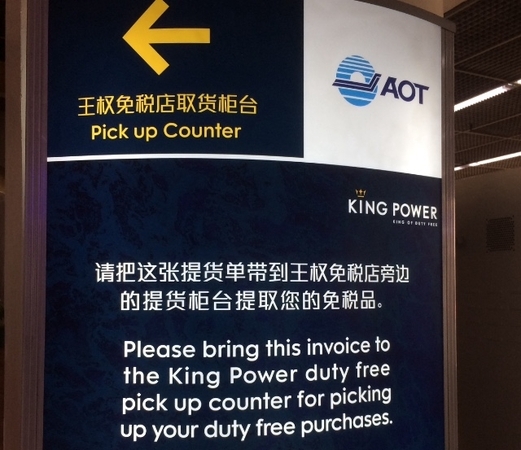
Airports of Thailand (AOT) will sell again bid documents for the concession to run a duty-free pick-up counter service at Don Mueang International Airport, AOT president Nitinai Sirismatthakarn said.

The documents will be available on January 20, he added.

AOT recently cancelled the previous bidding as King Power Group was the only company to pick up the tender documents.

He added that AOT had not revised any details in the documents for this fresh round of bidding.

If King Power turns out to be the only company picking up the bid documents, AOT will go ahead with the bidding process because it would show that no one else was keen to bid for the concession.

Last month the AOT board agreed to grant King Power Duty Free Coa duty-free concession at Don Mueang International Airport.

King Power was the lone bidder for this concession, which will be valid from October 1, 2022 to March 31, 2033.

Samsung’s market cap rises to world’s 18th #ศาสตร์เกษตรดินปุ๋ย

#ศาสตร์เกษตรดินปุ๋ย : ขอบคุณแหล่งข้อมูล : หนังสือพิมพ์ The Nation

https://www.nationthailand.com/business/30380455?utm_source=category&utm_medium=internal_referral

Samsung’s market cap rises to world’s 18th

Jan 12. 2020
(Yonhap)

(Yonhap)
By The Korea Herald/ANN

Blue chip Samsung Electronics, listed on South Korea’s main bourse Kospi, hit a record high last week pulling its market cap to the top 20 global list.

The tech giant is expected to extend its winning streak on a widely optimistic forecast of its 2020 performance on the back of the recovering semiconductor market, according to industry sources.

According to Bloomberg’s data, the total market valuation of Samsung as of Thursday last week came at $301.6 billion, the 18th-highest worldwide. This is 10 notches up from the 28th position earlier last year when it was $206.5 billion.

During this period, the stock price of Samsung has jumped 51 percent from 38,750 won a year ago to 58,600 won. By Thursday, the stock price of the Korean tech firm reached a high of 58,600 won, breaking its previous record of 57,520 won set in November, 2017, when the semiconductor super-cycle reached its zenith.

The stock price further rose higher to 59,500 won on Friday. The market cap of the company is currently at 355.2 trillion won.

The latest increase in its market cap allowed the company to surpass that of AT&T ($281.7 billion), Intel ($256 billion) and Verizon ($243.9 billion).

The stock’s performance has been largely backed by foreign investors. During Jan. 1-10, foreign buyers have acquired 626.8 billion won worth stocks, while buying its preferred shares amounting to 26.9 billion won.

The latest turnaround came after memory chip prices began to recover.

The company’s operating profit in the fourth quarter last year is estimated to reach 7.1 trillion won. The recent easing of trade tensions between the US and China and increasing demand for smartphones and data servers are expected to help Samsung gain ground in the future.

According to market watchers, its stock price could reach possibly as high as 67,931 won. According to a report by IBK Securities, Samsung’s operating income this year could reach some 58.8 trillion won.

From 2018-19, Samsung’s share price has declined since the end of semiconductor supercycle. Its net profit in 2019 decreased by 52.9 percent to go down to 27.7 trillion won, marking the lowest since 26.4 trillion won in 2015.

By Shim Woo-hyun (ws@heraldcorp.com)

FAA proposes $5.4 million fine for Boeing over defective 737 Max wing parts #ศาสตร์เกษตรดินปุ๋ย

#ศาสตร์เกษตรดินปุ๋ย : ขอบคุณแหล่งข้อมูล : หนังสือพิมพ์ The Nation

https://www.nationthailand.com/business/30380404?utm_source=category&utm_medium=internal_referral

FAA proposes $5.4 million fine for Boeing over defective 737 Max wing parts

Jan 11. 2020
File Photo:Getty Images

File Photo:Getty Images
By The Washington Post · Ian Duncan 

FAA proposes $5.4 million fine for Boeing over defective 737 Max wing parts.The Federal Aviation Administration said Friday that it was seeking to penalize Boeing $5.4 million over allegations that it wrongly told the agency that defective wing parts were safe to use on its 737 Max jets.

The proposed penalty is on top of a $3.9 million penalty the agency issued in December over the same issue in older generation 737s.

The parts are called “slat tracks” and are used to guide parts of the wing that help the plane take off and land.

The FAA accused Boeing of doing too little to oversee its suppliers and then submitting aircraft to the agency for final safety approvals despite determining that the parts had failed a strength test. The problem affected 178 Max jets, the FAA said.

Boeing has 30 days to review the new fine.

The proposed penalty comes as Boeing faces ongoing scrutiny over the development of the Max, which was involved in two deadly crashes in a span of five months between 2018 and early 2019 that killed 346 people. The plane was grounded shortly after the second crash and is still under safety review by American and international regulators.

Boeing did not immediately respond to a request for comment on the new proposed penalty. In a statement issued after the first one, the company said any affected Max planes would be reviewed before the plane is cleared to fly again.

Boeing also said it has “not been informed of any in-service issues related to the slat tracks themselves.”

The lengthy safety review after the crashes led to the ouster of Boeing chief executive Dennis Muilenburg last month and prompted the company to announce that it would halt production of the Max.

Boeing came under renewed criticism this week after it disclosed internal emails late Thursday that showed employees disparaging regulators and striving to minimize training requirements for the Max.

The FAA has also faced questions over its relationship with Boeing, with some lawmakers accusing the agency of being excessively cozy with the company. But in recent months, the agency has sought to demonstrate that it is using its powers to hold Boeing accountable, including by proposing the first fine in December.

Boeing also had 30 days to review that penalty, and the company and the FAA didn’t immediately respond to a request for comment about the outcome of that review.

At a congressional hearing in December, a former Boeing manufacturing manager testified that factory workers faced extraordinary pressure as the company sought to deliver the new Max to its customers. As Boeing pushed to make more planes each month, the former manager said the result was a “factory in chaos.”

Democratic lawmakers have accused the company of putting its financial ambitions ahead of safety, but the company said there was no indication any manufacturing issues contributed to the two crashes.

Also Friday, the FAA said it was proposing to levy a $3.92 million fine against Southwest Airlines, alleging that the company had incorrectly calculated weight and balance information on more than 21,000 flights.

That information is used to determine how the plane should be loaded, the FAA said, including how many passengers and fuel can be carried and where cargo should be put.

In a statement, Southwest said the problem occurred when the airline was transferring data from one computer system to another in the spring of 2018 and that it had since strengthened its process for managing the information.

“Southwest Airlines will continue working with the FAA to demonstrate the effectiveness of our controls and processes and seek to achieve an effective and appropriate resolution to this proposed penalty,” the company’s statement read in part.

Boeing’s departing CEO leaves company with $62 million amid 737 Max supplier layoffs #ศาสตร์เกษตรดินปุ๋ย

#ศาสตร์เกษตรดินปุ๋ย : ขอบคุณแหล่งข้อมูล : หนังสือพิมพ์ The Nation

https://www.nationthailand.com/business/30380403?utm_source=category&utm_medium=internal_referral

Boeing’s departing CEO leaves company with $62 million amid 737 Max supplier layoffs

Jan 11. 2020
File Photo: Getty Images

File Photo: Getty Images
By The Washington Post · Aaron Gregg, Douglas MacMillan 

Boeing’s departing CEO leaves company with $62 million amid 737 Max supplier layoffs. Boeing’s outgoing chief executive, who was terminated last month for his handling of the 737 Max crisis, will exit the company with more than $62 million, the company said in a filing on Friday.

The airplane manufacturer said Dennis Muilenburg forfeited a severance package worth $14.6 million. However, he is contractually obligated to receive equity and pension benefits valued at $62.2 million, the company said. In addition, Muilenburg also retains stock options currently worth about $18.5 million.

Boeing announced the details of Muilenburg’s exit package on the same day Spirit AeroSystems, one of the largest suppliers of the 737 Max, sent layoff notices to roughly 2,800 employees at its Wichita plant, citing “ongoing uncertainty” involving Boeing’s 737 Max jet, airplane parts supplier.

About half of Spirit’s annual revenue comes from supplying parts for the Max, which has been grounded for 10 months following two fatal crashes. In December, Boeing announced it would indefinitely halt production of the Max beginning in January.

The firing of Muilenburg, who had worked for Boeing for more than three decades, was a desperate attempt by the company to win back the trust of regulators and the public after crashes of its 737 Max aircraft led to the deaths of 346 people and accusations that Boeing had misled regulators and its customers.

His successor as CEO, David Calhoun, stands to receive a compensation package valued at $28 million, including a long-term incentive award of $7 million if he reaches a number of milestones, including the “full safe return to service” of the 737 Max, Boeing said on Friday.

The company also said Kevin McAllister, an executive fired last year after a rocky tenure overseeing the commercial plane division, will receive a lump sum of $14.75 million to compensate him for a pension he forfeited when he left General Electric in 2016.

The rich compensation of Boeing’s executives contrasts with the economic challenges now facing rank-and-file workers affected by the 737 Max grounding.

Spirit said in a news release that Boeing has not told it how long the production suspension will last, or given it any information about what future production rates might look like. Boeing, in turn, is waiting for word from the Federal Aviation Administration on when the planes will be cleared to fly again.

“The difficult decision announced today is a necessary step given the uncertainty related to both the timing for resuming 737 MAX production and the overall production levels that can be expected following the production suspension,” Spirit AeroSystems president and chief executive Tom Gentile said in a statement.

The company expects to conduct further layoffs “later this month” at two factories in Oklahoma. More layoffs could follow after that, the company warned.

Regulators have concluded that equipment flaws played a role in a pair of deadly plane crashes of the 737 Max that killed 346 people in Indonesia and Ethiopia. For more than a year, Boeing has been working on a set of fixes designed to make the plane safer. But the timeline for clearing the plane to fly again has continually been pushed back as more technical problems were discovered.

The Spirit layoffs are the most significant job market impact yet from more than a year of upheaval in Boeing’s commercial airplanes division. The engineers, machinists and other tradesmen who work on Boeing’s assembly lines have been somewhat insulated from the turmoil because Boeing kept its production line open throughout the extended grounding, hoping the FAA would quickly deem the planes flightworthy.

It wasn’t until December that the Chicago-based aerospace giant announced it would stop producing the 737 Max in January.

Boeing still does not anticipate any layoffs or furloughs, a company spokesman said Friday. But hundreds of suppliers spread across the U.S. have no such assurance. Moody’s ratings agency identified 24 companies with varying levels of exposure to the crisis, including General Electric, Honeywell and numerous specialized providers.

“Boeing’s late-December directive to cease deliveries changed everything,” Moody’s analysts wrote in a note to investors.

Boeing has described its production halt as “the least disruptive decision to maintaining long-term production system and supply chain health,” and pledged to work with suppliers to lessen the impact when possible.

“We regret the impact this has had on Spirit AeroSystems,” a Boeing spokesman said Friday. “We remain focused on safety and quality as we assess our production needs, and are working with all of our suppliers to ensure production system stability to support the 737 MAX return to service.”

A representative from the International Association of Machinists, a union that represents Spirit workers in Wichita, pledged to look for ways to lesson the impact on workers.

“Machinists members and their families in this community have some tough decisions in front of them,” Cornell Beard, president and directing business representative of the union’s Wichita district, said in an email.

Rep. Rick Larsen, D-Wash., chairman of an aviation subcommittee and whose district includes a major Boeing factory, said Spirit’s announcement took the disruption from the continued grounding to another level.

“It’s getting to the point where it’s not just a delay, or produce and put pieces aside until the thing gets built, now it’s really starting to attack people in terms of making them move or just totally laying them off,” he said. “That’s frustrating, it disheartening, it’s disconcerting.”

Maryland looks to pioneer taxes on digital advertising #ศาสตร์เกษตรดินปุ๋ย

#ศาสตร์เกษตรดินปุ๋ย : ขอบคุณแหล่งข้อมูล : หนังสือพิมพ์ The Nation

https://www.nationthailand.com/business/30380402?utm_source=category&utm_medium=internal_referral

Maryland looks to pioneer taxes on digital advertising

Jan 11. 2020
By The Washington Post · Erin Cox 

ANNAPOLIS, Md. – Two powerful Maryland politicians want that ad chasing you around the Internet to pay the state for the privilege of collecting your data.

Maryland’s current and former Senate presidents have proposed a novel way to pioneer taxes on targeted digital advertising, a plan they estimate could deliver more than $100 million per year to help pay for a sweeping education overhaul.

In what appears to be first-in-the-nation legislation, social media companies such as Facebook and Google would face as much as a 10 percent tax on the revenue from digital ads that target Maryland IP addresses.

It’s part of new Senate President Bill Ferguson’s effort to tap untaxed corners of the modern economy, and he deployed one of the state’s most savvy political minds to get it passed: his predecessor, Senate President Emeritus Thomas Mike Miller Jr.

“I figure it’s better the Russian trolls help fund education than property tax, or income tax, or sales tax,” Miller, D-Calvert, said in an interview, referring to the Kremlin’s use of social media platforms to interfere in the 2016 election. Miller, who ended his 33-year tenure in power this week, has forced some of Maryland’s most controversial policies into law, most recently the legalization of casinos.

The proposal comes as big technology companies face increasing global and domestic pressure to submit to regulation.

The Maryland legislation would apply broadly to the most ubiquitous forms of online advertising: banner ads, pop-up ads in the middle of websites and search engine ads – including the ones tailored from a user’s browsing history.

The details of administering Maryland’s proposed tax would be determined by the state’s tax collector, but the legislation relies on self-reporting from tech companies.

Maryland leaves it up to companies to report how much revenue the firms earn from digital ads on devices that either have an Internet Protocol address in the state or “is known or reasonably suspected” to be used here. If that revenue exceeds $1 million, the legislation would require companies to file a state tax return estimating how much they owe in digital advertising taxes. The companies would have to keep records of advertising sales.

Ferguson, the Baltimore Democrat who drafted the plan, said he was inspired by economist Paul Romer, a Nobel laureate who suggested earlier this year that such a tax could use market forces to shift tech companies’ business models – creating a disincentive for profiting off the collection of private data.

The proposal, Ferguson said, could both fund a sizable chunk of the education changes he’s championing and put “some guideposts around the intrusive aggregation of data of individual Marylanders.”

“It’s an assessment on the platforms for the use of Marylanders’ data, for which, right now, companies are not paying a cost to access,” he said.

Internet advertising is big business: The Interactive Advertising Bureau reported 2018 digital ad revenue exceeded $100 billion nationwide, and it grew 21.8 percent from 2017.

Representatives of Facebook and Google declined to comment on the legislation.

It was not immediately clear whether the legislation would apply to other online platforms that host digital ads, such as The Washington Post.

Companies with less than $100 million of annual, global online advertising revenue would be exempt. The graduated tax rate would climb from 2.5 percent for firms with $100 million in online sales to 10 percent for those with $15 billion in global advertising revenue.

The approach also raised questions about the limits of taxing Internet commerce. While other states have expanded their sales taxes to apply to digital products such as streaming services or music downloads, it appears none has created a new tax for digital advertising, according to Maryland tax experts and others.

Robert Callahan, a senior vice president for the Internet Association, which represents many big tech firms, said in a statement: “while we are still reviewing the proposal, we have serious initial concerns. The bill appears to stand on questionable legal footing and unfairly discriminate against a single segment of the advertising sector.”

The Internet Tax Freedom Act, originally passed in 1998 and reinstated several times, sets limits on the taxation of Internet access and bars taxation on certain things, such as taxes on emails.

Ferguson and other state lawmakers are searching for a way to raise money to pay for a $4 billion per year revamping of public schools, a set of proposals known as the Kirwan recommendations. Ferguson and his counterpart in the House of Delegates, Speaker Adrienne Jones, D-Baltimore County, pledged not to hike property, income or sales tax rates to pay for them.

Republican Gov. Larry Hogan, who has derided the school changes as “pie-in-the-sky” and too costly, declined to comment on the prospect of taxing targeted digital ads.

“If or when the legislature finally releases a detailed plan to pay for Kirwan’s massive price tag, we will certainly take a look at it,” Hogan spokesman Michael Ricci said in an email. “The question remains: where is all the money coming from?”

Hedge fund PointState stops clients from cashing out in full #ศาสตร์เกษตรดินปุ๋ย

#ศาสตร์เกษตรดินปุ๋ย : ขอบคุณแหล่งข้อมูล : หนังสือพิมพ์ The Nation

https://www.nationthailand.com/business/30380393?utm_source=category&utm_medium=internal_referral

Hedge fund PointState stops clients from cashing out in full

Jan 11. 2020
By Syndication Washington Post, Bloomberg · Suzy Waite 
PointState Capital, the macro hedge fund started by former traders for billionaire Stan Druckenmiller, is blocking investors from getting all their cash back when they ask to pull money from the firm.

Clients who withdrew their investments at the end of last year will get 88% back in cash, according to a letter to investors seen by Bloomberg. The remaining 12% will be distributed as shares in new vehicles created to hold assets with “somewhat limited liquidity” that could take time to sell. Redemptions on March 31 or later may be subject to similar terms, the letter states.

“We’ve concluded that this is the most appropriate way to fairly and equitably balance the interests of all of our investors,” the letter states. PointState has a “high degree of confidence” in the assets being transferred.

The cash freeze is a fresh blow for PointState. Its main fund has failed to recover from its 2018 losses, when it dropped 19%. The fund finished 2019 on a high, up 3% in December, though performance for the year was flat to slightly down, depending on share class, according to a person with knowledge of the matter. The firm has rarely opened to new money since it began trading in 2011, but was meeting investors in November to raise fresh cash. Its assets under management have nearly halved from a peak of $10 billion.

PointState has suffered a number of senior departures, including co-founder Josh Samuelson and portfolio manager Greg Ley.

A spokesman for New York-based PointState declined to comment.

During the depths of the financial crisis, many hedge funds put hard-to-shift assets into so-called side pockets to buy time to raise cash as clients stampeded toward the exit.

These “special purpose vehicles” are designed to give fund managers time to get the best price for assets, rather than dump them in a fire sale to satisfy redemption requests. More than a decade later, billions of dollars of the assets remain to be sold.